
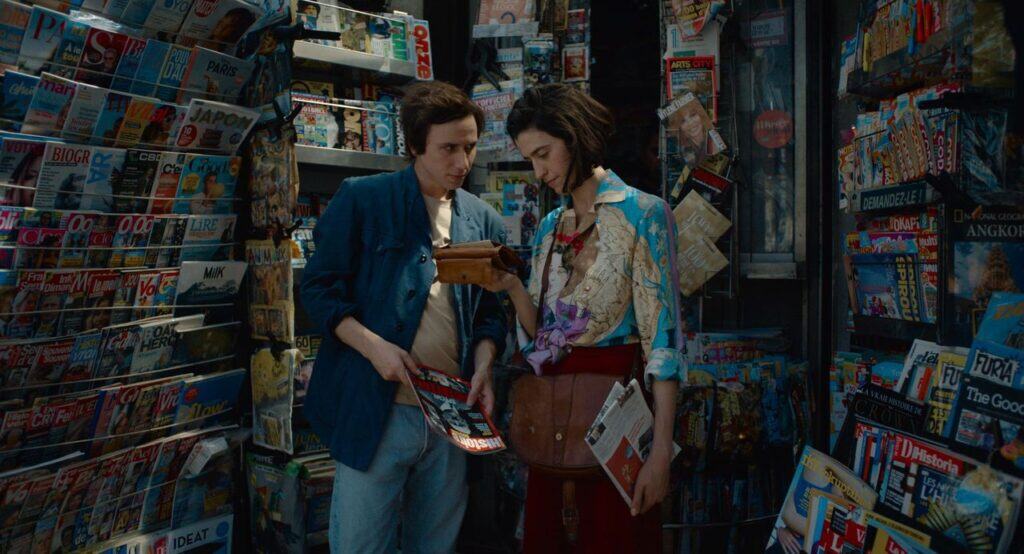
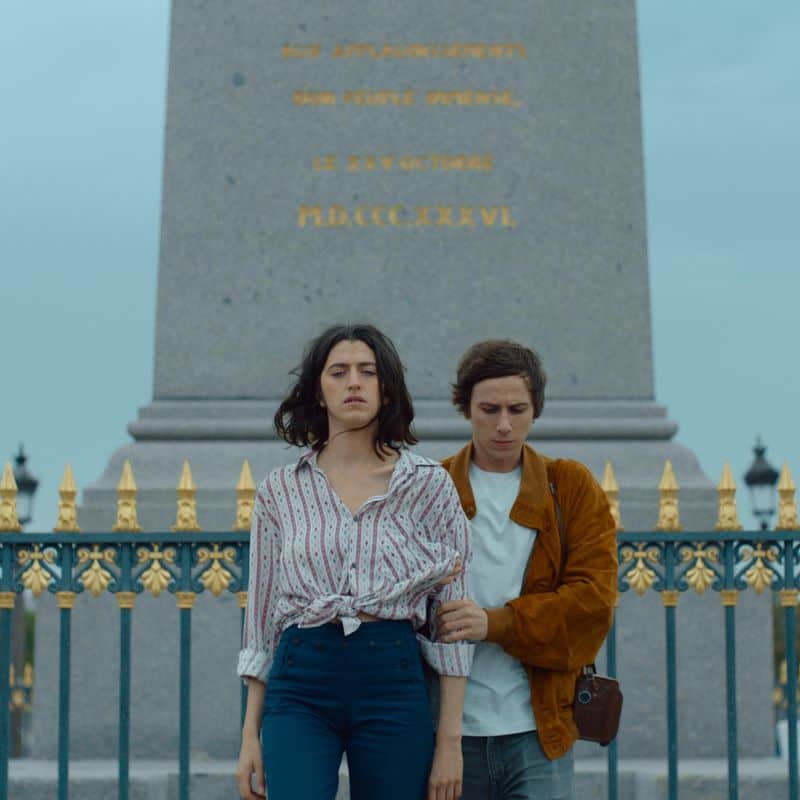
A boy meets a girl in the middle of Paris. She is kneeling in the Place de la Concorde, recreating Marie Antoinette’s execution. She is drawn to these things: tragedies, murders, the darker folds of history. When he tells her that Marie Antoinette’s hair would have been chopped off before the guillotine fell, the girl asks him to cut her own hair.
So begins Paul and Paulette Take a Bath, Jethro Massey’s debut feature film. With this off-kilter meet cute, Paul is quickly folded into the dark fantastical world of Paulette, taking her from one site of terrible tragedy to the next. Together they move through history, restaging Paris’s morbid past in their game of macabre reenactments. But as their journey edges closer to more recent memory, the playfulness begins to curdle, and the film asks where fascination ends and discomfort begins.
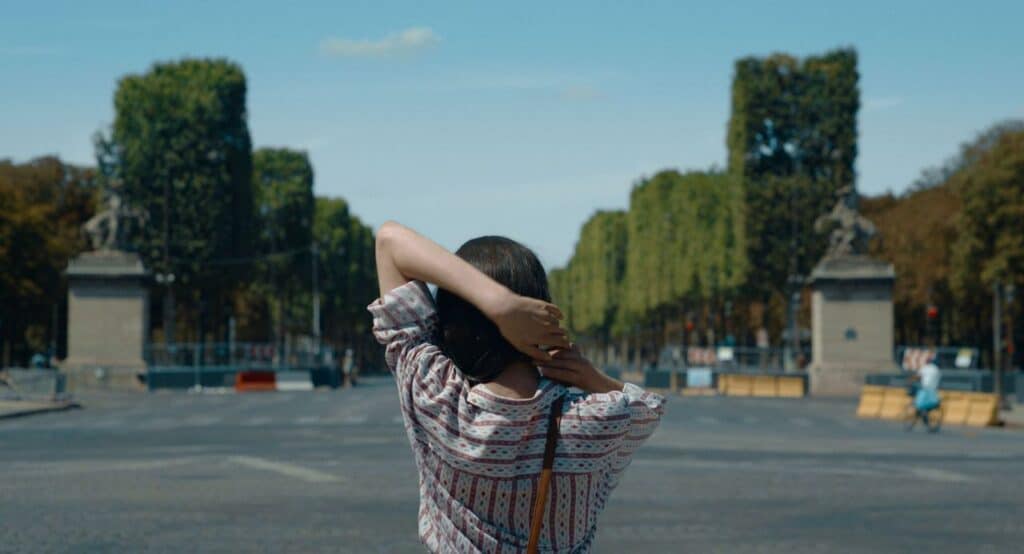
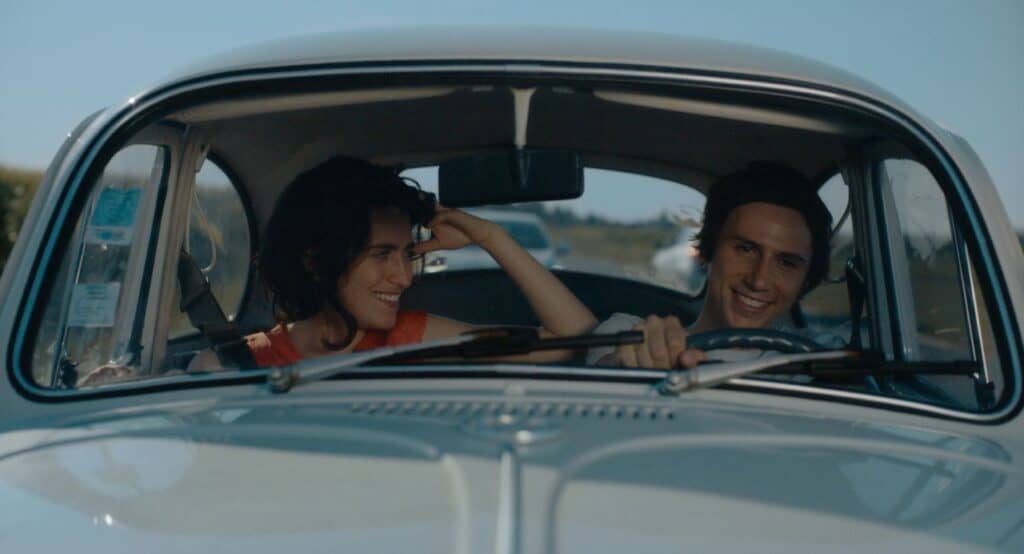
Massey confronts these themes with a striking lightness of touch. Borrowing the familiar structure of the rom-com, Massey reshapes it from within, using its conventions to explore less-travelled paths of intimacy, friendship, and the ways history weighs on human connection. At once playful and macabre, Paul and Paulette Take a Bath lingers in the uneasy spaces between love and morbidity, asking what it is that draws us so much to darkness.
In a conversation with The Cold Magazine, Massey discusses the process of making this film, and trying to find an answer to the questions it raises.
Cold Magazine (CM): Could you tell me about the inspiration behind the film?
Jethro Massey (JM): I’ve been living in Paris for 20 years now, and I came in with a very romantic vision of Paris; you know, the poets, the art. But as you spend time there, you start seeing the darker history of the city, and that really fascinated me.
One day I saw this very famous photograph of Lee Miller in a bathtub in Adolf Hitler’s apartment in Munich, which she took on the day he committed suicide in Berlin. She didn’t know that, but she happened to be in his apartment, and she took this photograph after months photographing the Nazi atrocities across France and Germany. It really stuck with me for years. Why did she choose to take a photograph of herself in the bathtub? Why not at his desk in his living room? Then one day, I saw a friend post a picture of himself in Winston Churchill’s bathtub. When I saw that, it sparked something.
I said, there’s something about this intimate space and our fascination with famous people, with these horrors. And I thought, well, what if I had a story about two characters who make it their hobby to go to these places where terrible things have happened, and recreate the scenes of crimes, executions, murders. There’s something that happens when you go to a place and you tell a story about it. It changes, and it changes the way we feel inside.
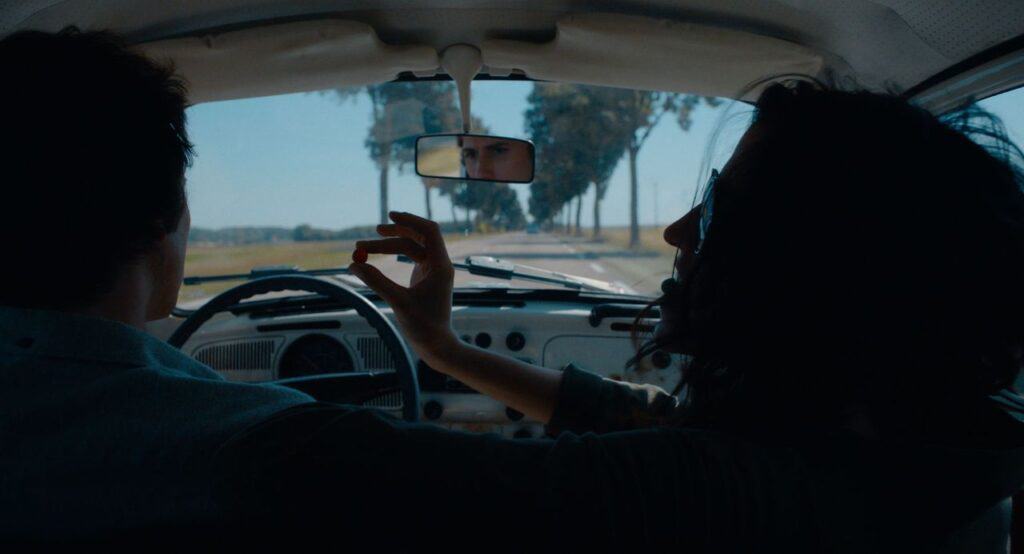
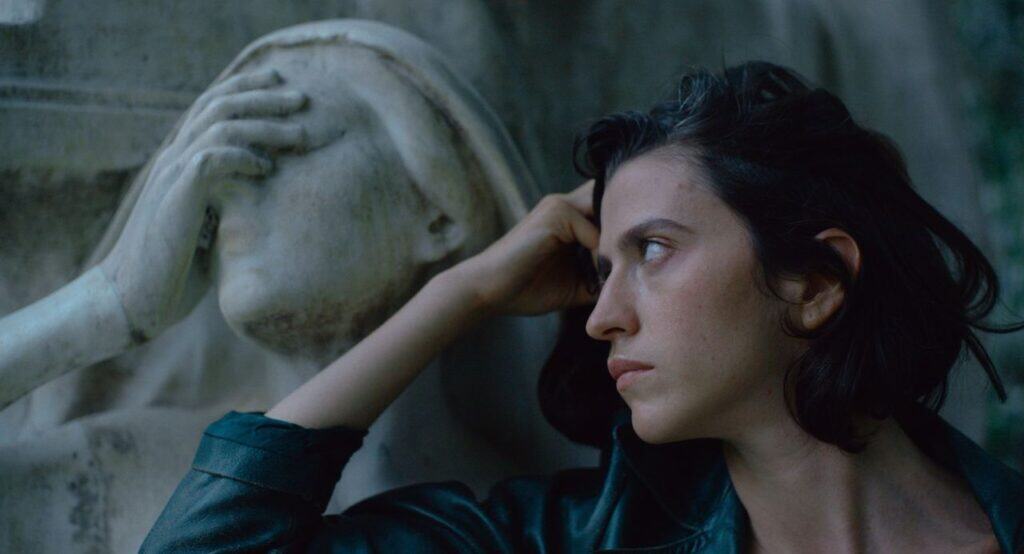
CM: How did you choose the different locations with their corresponding tragic histories?
JM: I realised what would be interesting was if Paul and Paulette journeyed through French and European history, starting very far back in time, and slowly they would work through things that are increasingly contemporary. My theory was that the closer we get to today, the more uncomfortable their game would become. At some point, they would cross the line for audiences, but that line may be different for different people. I wanted to touch on this very dark European history, colonial history, researching locations where you really feel that history coming through.
CM: I wanted to follow up on the idea of romance, of Paris as a romantic city. The film at large plays with the conventions of the rom-com, which dissolve as it progresses. How did you go about engaging with the genre?
JM: I knew I was writing my first feature film, and I didn’t want it to be a heavy film to watch. I started out saying, I’ll use the romantic comedy structure. But I also had a few questions in my mind about what romantic comedies generally say. I thought it would be interesting to deconstruct that and present something a little different, a film that doesn’t end the way that we expect a love story to end.
Often enough, you have a male lead and he’s so in love with the female lead that everybody wants them to end up together, purely because of the strength of the male lead’s love. That always rings a little untrue to me, and it’s something that I wanted to address and turn on its head. I wanted to make a film that didn’t say a failed relationship is a failure. I think friendship is underrepresented in film, and I wanted to have a film that talks about friendship as much as it talks about love and romance.
CM: The character of Paulette with her fascination for all these dark things, when we first meet her, she comes across as a classic rom-com quirky type. But as the film progresses, we really get to know her. I wanted to ask about the process of writing her character, and how you went about making her such a complex person.
JM: I think the audience comes into the film through Paul’s eyes. But, to me, it was both their story. It’s called Paul and Paulette, and she’s the one leading this game. So, she has these layers underneath that we want to peel away and discover, and it was important to me that I wrote two strong characters who could play off each other.
There was something to me about these two characters who were really investigating intergenerational trauma, let’s say on a historical level. What do we do with our terrible pasts? But Paulette is also dealing with something very similar on a personal level. She has her own family history that is difficult and complicated, which she certainly feels the weight of. There was a question of how do we deal with our ancestors’ past and live well in our own skin?
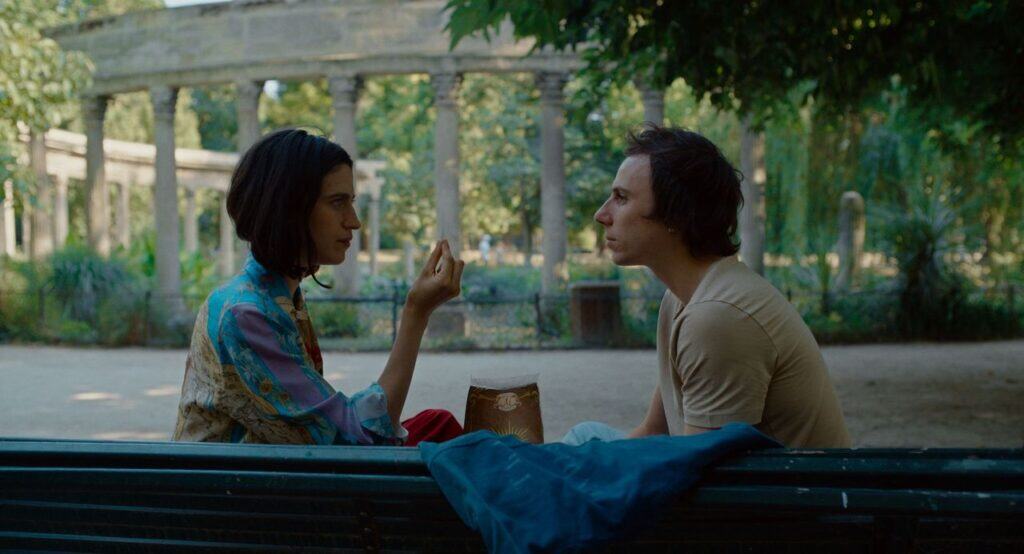
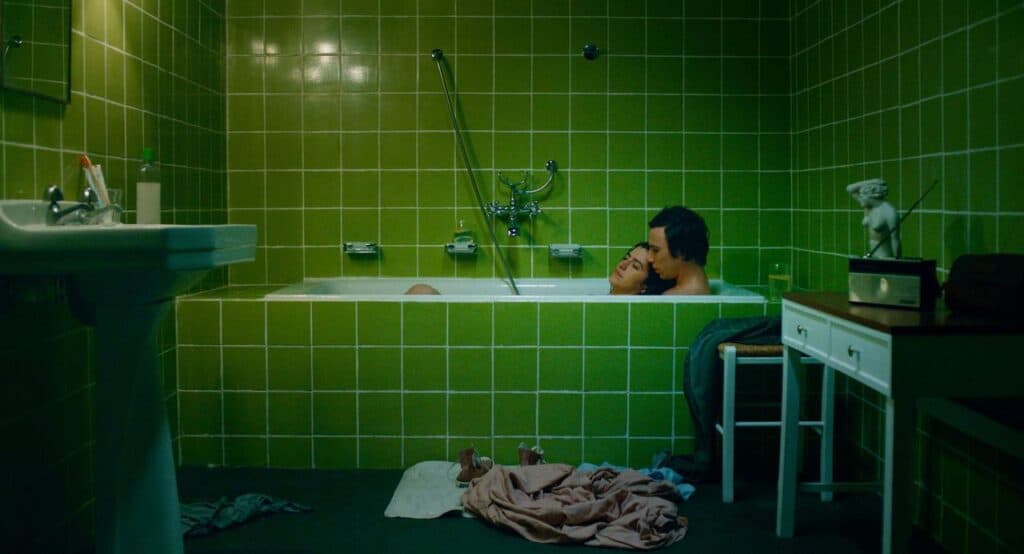
CM: On the other hand you have Paul and how we never really find out what his association is with this kind of dark history, or why he knows so much about it. I was wondering if it connects to his passion for photography?
JM: There is something about photography, about being an observer of the world. There’s also something with Paul, something I’ve seen a lot, which is that he arrives to Paris as an outsider, wanting to belong. So, he ends up reading so much about the history that he knows more than the actual natives. I think it’s about trying to feel legitimate in a city where sometimes, especially in Paris, it can feel a little cold.
CM: There is one scene particularly when Paul and Paulette take the game into a more erotic place, it made me think about Eros and Thanatos, how we bring death into everything. After making this film, did you come to any conclusions about why we’re all so collectively obsessed with morbidity?
JM: That’s the question I was asking myself as I was writing the film. I don’t know if there are any good answers, but we do turn our heads when we see an accident in the street and we want to look and we don’t want to look. We do watch true crime, and we watch horror films. We’re all drawn to it. I think there’s something about danger that is exciting, about skirting the line, about pushing boundaries – not for everybody, but it’s certainly something people seek out.
I also think there’s something playful in these things. When kids are trying to understand the world, what are they doing? Whether they’re playing with dolls or Star Wars figurines, they’re enacting things to better understand the world. I think you could say that’s maybe what Paul and Paulette are doing, they’re just grown-ups playing with history.
I think, as well, when you go into the erotic, you have role-play and things like that, and I think there’s an element of people trying to understand themselves and their desires. So you have all these things, the playful and the erotic and the historic and death, and I can’t put my finger on it exactly, but they all tie together somehow. It’s interesting when you put things like this on a film, and you don’t have the answers, but you let the audience make the links that they want with it.
CM: Moving to religion, I wanted to ask why you chose to incorporate Catholicism in the film, through the church setting and the tasting of the host?
JM: The host is such a powerful thing. In other parts of Christianity it’s treated as a symbol of Christ, whereas in Catholicism the host literally becomes Christ’s body when you eat it. It’s about as dark and close to death as you can get. It fascinated me. I wasn’t brought up Catholic, but I’d seen people going up and receiving the Eucharist, and I always wanted to taste it. I remember a friend saying to me what Paulette says: “we’ll just go to a church and pretend you’re Catholic.” But, of course, the power is in the imagination of the person – it only becomes Christ when they believe it does. It’s the same thing as telling a story about a place. It’s a bathroom, until you say whose bathroom it is. It’s a piece of bread, until you say whose body it is.
The other thing that was important to me was the idea of symbolism. Adolf Hitler is the symbol for evil; Marilyn Monroe is the symbol for glamor. But I wanted to unpack these things. The most powerful of all those symbols is the cross. If you show people a cross, immediately they will think about Christianity. But ultimately, that symbol is a man dying. It’s an execution. So I wanted that to be there in the film, because it’s the original [symbol]. You can have Marie Antoinette under the guillotine and Jesus on the cross. They’re both executions, but we think about them in very different ways because of everything we associate with them.
Paul & Paulette Take a Bath releases in UK & Irish cinemas on the September 5th.