
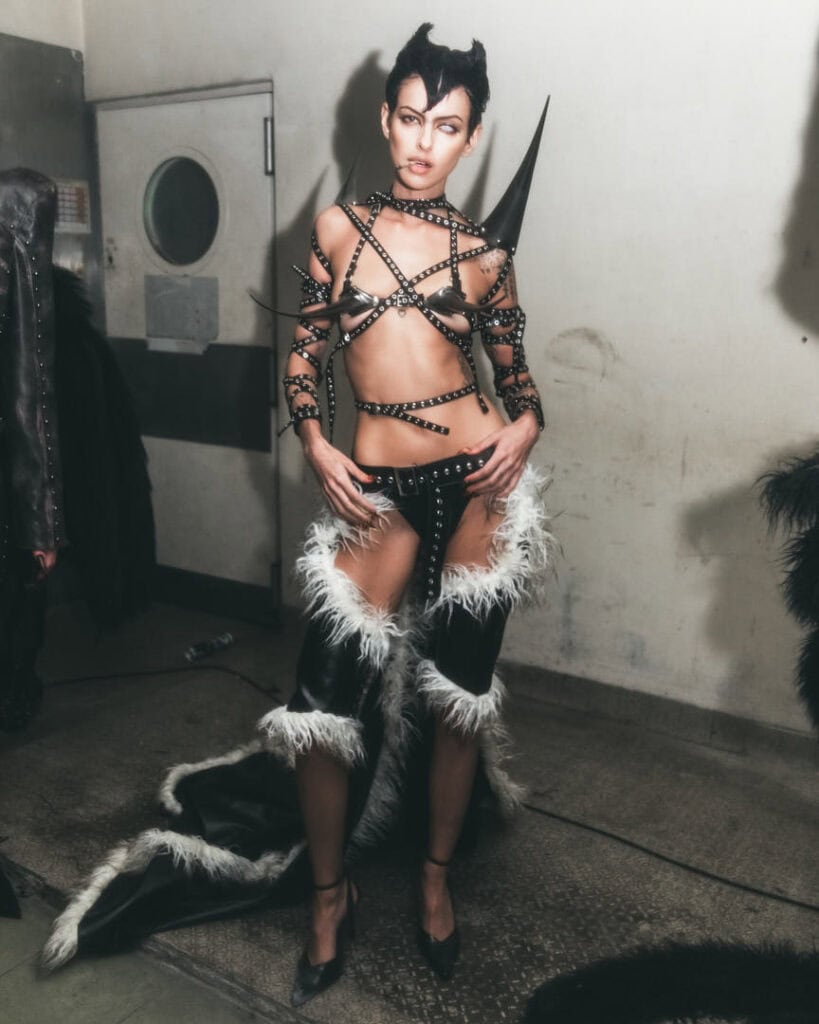
For SS26 JUDASSIME presented Lost Highway at the end of a very busy Paris Fashion Week. The unassuming street level would never do justice to what would lie therein. Guests started slowly piling up, excitedly chattering in the street. Looks were so complex and outlandish, that you couldn’t quite tell if models accidentally became trapped in the queue (looking for backstage). We quickly realised that this show would not only become home to a series of intricate designs, expansive worlds, and a deep set narrative based in destruction and rebirth. Not only this, but it would represent a temporary reprieve for the like-minded, queer, expressive, and bold.
Descending the stairs, we were instructed to enter on floor -1. Smoke machines left the air in the bunker-esque space feeling dense, though the cool cement walls and floors kept heat ascending and off of guests. The floor was rife with inlaid crater-like structures, each containing a mirror inside. Reflecting pools were a common theme throughout the runway experience, with various circular mirrors propped up on stilts, leaning outwards. Various reflective surfaces extended off of cement pillars — some models occasionally peeked into each of these mirrors as they passed by. As if forgetting where or who they were for a brief moment, only to be swiftly reminded upon viewing their own reflection.
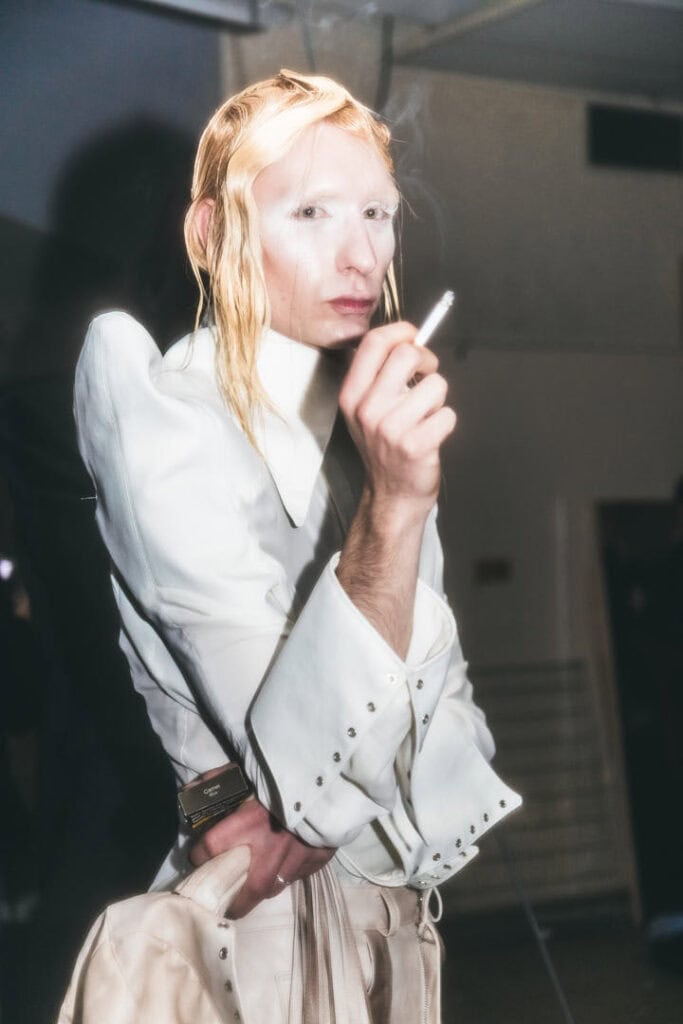
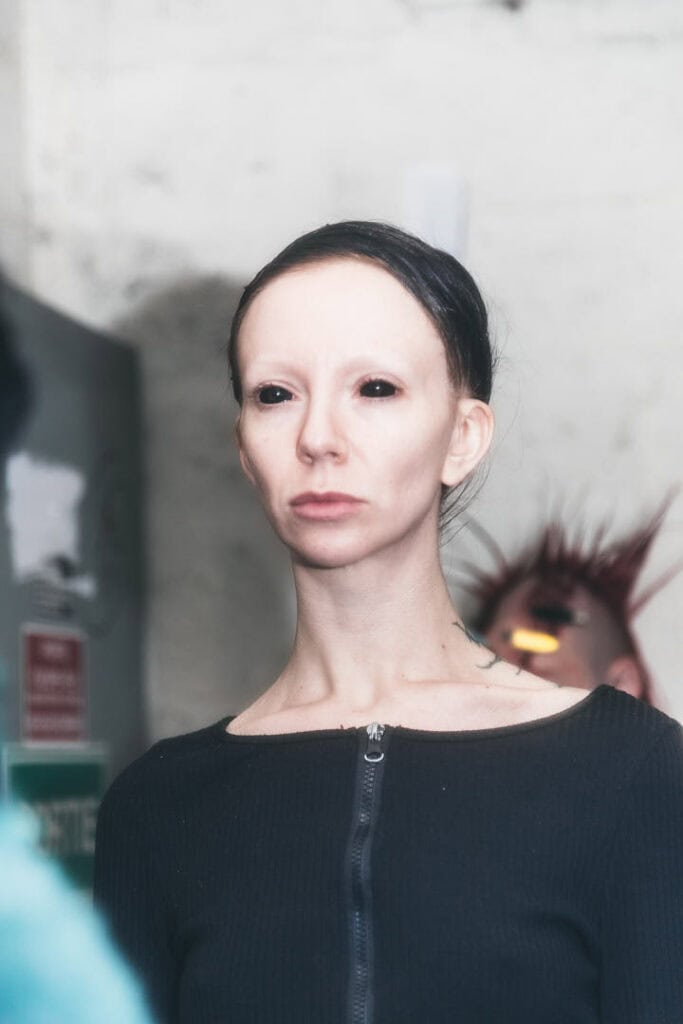
At the start of the show, a singular guitarist was positioned at the top of the U-shaped runway. Models could be seen slinking and skulking by. Each model seemingly presented a different caricature, which played into the wider narrative unveiling itself on the runway. For those who wish to become born again, there must be a level of destruction, a separating from the self in order to achieve a newfound existence. Reflections of the self were quite literally shattered in the finale of the show. The singer in duo SKEMER initially walked the runway, only to eventually take the mic toward the end of the show. Screaming in agony, the room was completely shaken and awestruck as models rammed their heels directly into each of the mirrors on the floor. Reflections smashed, so the pathway to complete renewal could reveal itself.
The heavy ambient bass and smoke-filled room added to the dark allure of the venue and each of the ensembles. Models were covered in faux furs and tightly bound in corsets, while others donned intricate mouthpieces. Harsh metal spikes extended from the chest, as well as mouths — emulating that of a monstrous jaw. Guests were in awe from first look to finish, truly showcasing that queer expression belongs on the runway. This collection was rough as much as it was vulnerable, further establishing the ways that fashion is not merely about what one may wear, but the ways external presentation may open wider conversations and means of connection.
We had the chance to pick the designer’s brain about the debut runway show — read for our interview with JUDASSIME below.
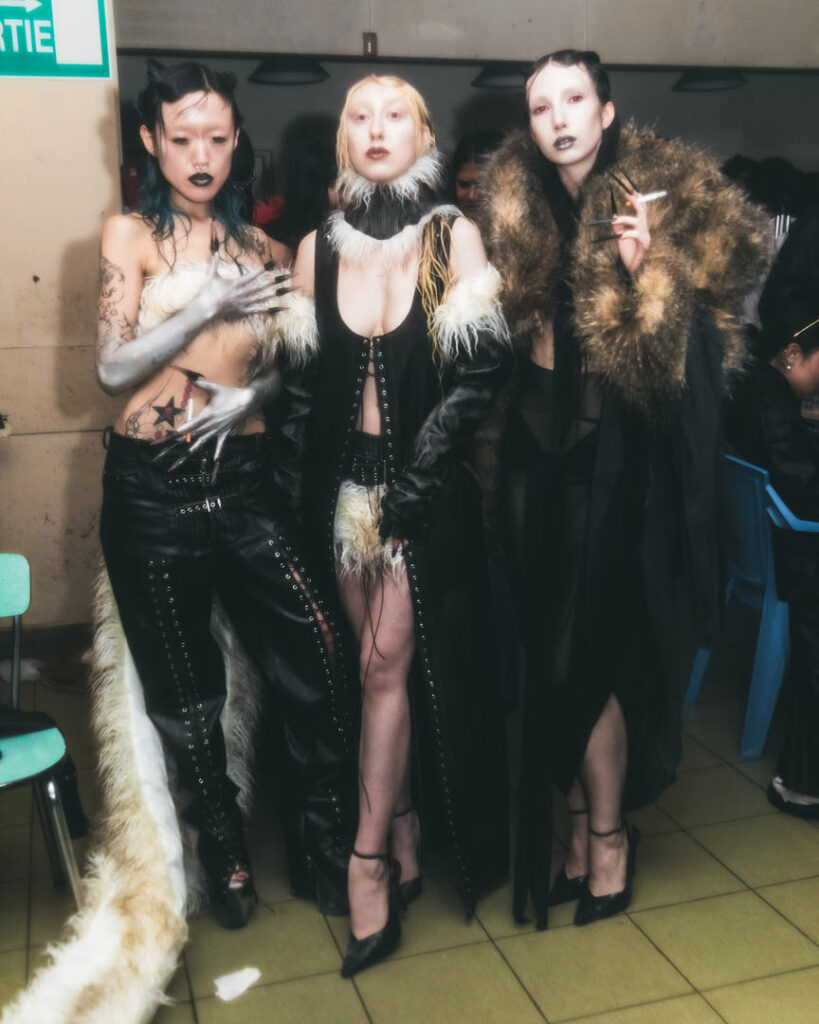
Cold Magazine (CM): When you consider notions of trauma and rebirth — do you feel that decay is a necessary part of this process? How do we surpass the difficulties that seek to restrict us?
Judassime (J): Automatically, yes. I think after such heavy experiences in life, there is a part of self that gets destroyed and torn apart, and in the process of rebirth and reconstruction, you have to shed your skin for a new one to appear. And I believe as part of everything, there will always be a part of those experiences following you everywhere through life. It’s your choice to let them defy you or to let them go away, but also those experiences are going to build you if you want it or not.
CM: How were you hoping the audience would be impacted by this collection?
J: I want the audience to have a question mark in their head, a confused kind of feeling of how do we survive this world and how do we navigate self-reconstruction through self-reflection? I always like to create art and fashion with an open question where everyone can reflect and redefine themselves through it or discover more of what the world is made of. It might be dark, but it’s a part of reality we can’t escape.
CM: What was the creative direction behind the movement coaching of each of the models?
J: Each silhouette in the collection has a story or a character that defines it clearly, so when it came to coaching each model, I first told all the models the story of the collection and then went to each model to tell them the story of their character for them to understand as much as they could and present their silhouettes in a unique way that would fit the storyline.
CM: It felt as if each of them occupied a specific caricature of the experience associated with going through and surpassing traumatic events. Was this intentional?
J: Yes, for sure, there are layers to each look that are defying the stages of surpassing those experiences. Each look, as I said, has its own story and identities; they all have something so personal that I want them to all have a character that is unique to themselves.
CM: What was the most exciting piece you witnessed come to life on the models? What did you think when you first saw hair, makeup, done, the look complete and ready to walk?
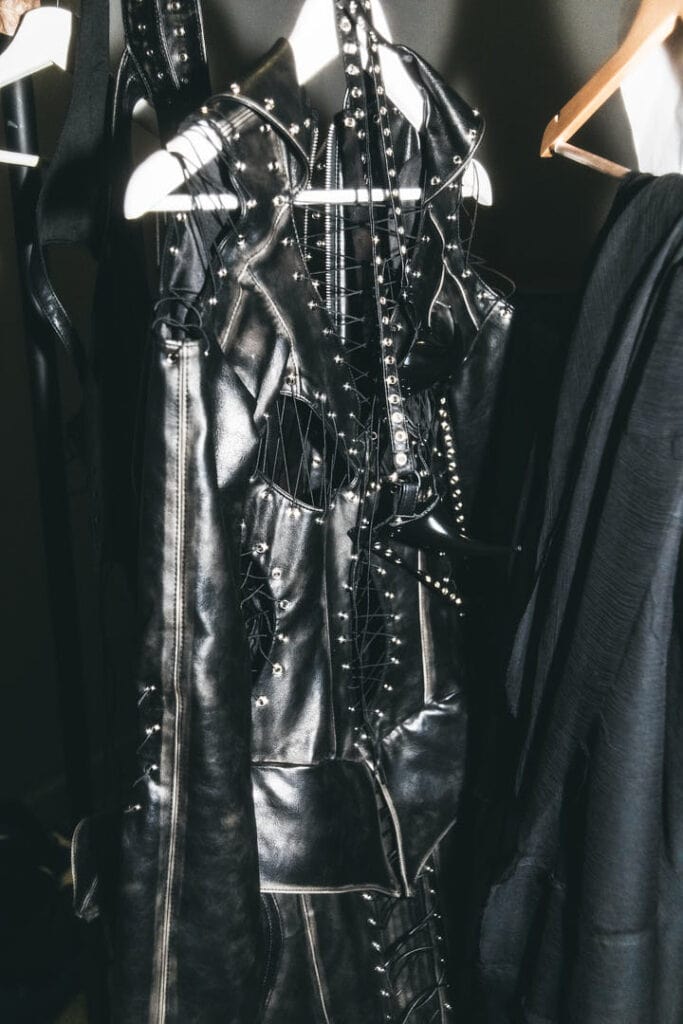
J: I think personally I have two of them. Entangled, which is a couture look, this one got created in the most chaotic part of my last year, in a very dangerous zone of my life where I was stuck in decisions that could mean life or death. It’s a testament to surviving.
And the second one has to be Feral. I think to this day this is my favorite in terms of shapes, textures, and wearability, it is also to my liking my best ready to wear but also still a couture and over-the-top elements that just elevate it. And on top of that it’s presented on my trans sister and muse icon Shinto which embodied the look to perfection.
CM: Can you give our community more insight into the model in the all red corset outfit, mouth bound by a mask which emulated monstrous teeth and arms bound behind her back. What story were you telling with this specific look?
J: The Venus Flytrap look, yes. She becomes the monster they forced her to be. Transformed against her will, she devours instead of blooming. Once delicate, now terrifying, she drags the viewer into her trap.
CM: Why do queer people/designers/brands and models deserve to be at fashion week? What does it allow for the wider fashion industry when we find community in these otherwise overly-exclusive, and often heteronormative spaces?
J: Because they just do. Point period. I think this community has way more to offer in terms of creativity, performance, and anything else. I do believe this system has to be shaken and turned upside down because heteronormative is just getting boring and old.

CM: Tell us more about the direction behind the music? What inspired the choice to incorporate live performance in order to wrap the show?
J: The ambient soundtrack of the show was created by the amazing Tori Drake and was inspired by a gloomy morning in a disturbing forest kind of feeling. And the end performance of the show is by my dearest friends Kim Peers and Mathieu Vandekerckhove, who together form a band called SKEMER, and they performed one of my favorite tracks of theirs called “ Apocalypse”. I just truly love inviting friends to perform on my shows and be part of those moments. I will always take my chosen family around with me to create magical moments like those. It was just the perfect fit and the perfect timing.
CM: At the very end, the singer screamed and models began smashing the mirrors which were cratered into the cement floors with their heels – what did this symbolise?
J: It symbolises the chaos and the breakthrough that we are obligated to go through after such trauma. Breaking the mirrors is refusing to look at the reflection of yourself in that state and believing in yourself so hard in that state that you have to shatter everything around you and just run for yourself. There is no one in this world that can project a forced image of yourself on your own person. You have to create it yourself.