Artist and director Ben Kreukniet has long developed a practice that moves fluidly across installation, live performance and generative systems, weaving together technological research and human behaviour to create immersive environments where light, movement and sound become tools of perception. After serving as creative director of the London-based collective United Visual Artists and collaborating with major cultural institutions and fashion brands worldwide, Kreukniet now extends his language into the textile medium with Tapestry Series, a body of work that translates time-based computational processes into materially fixed yet temporally charged objects.
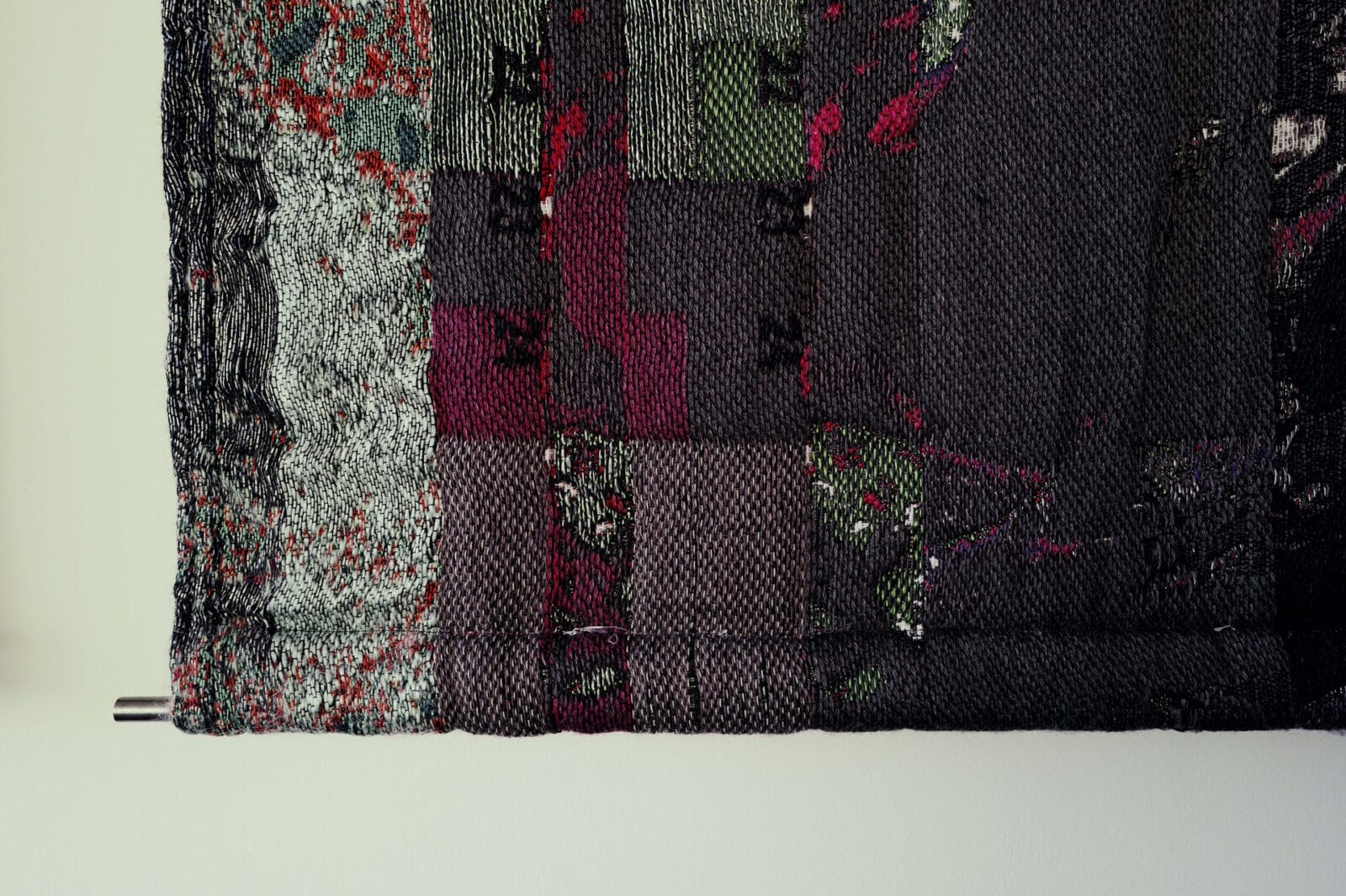
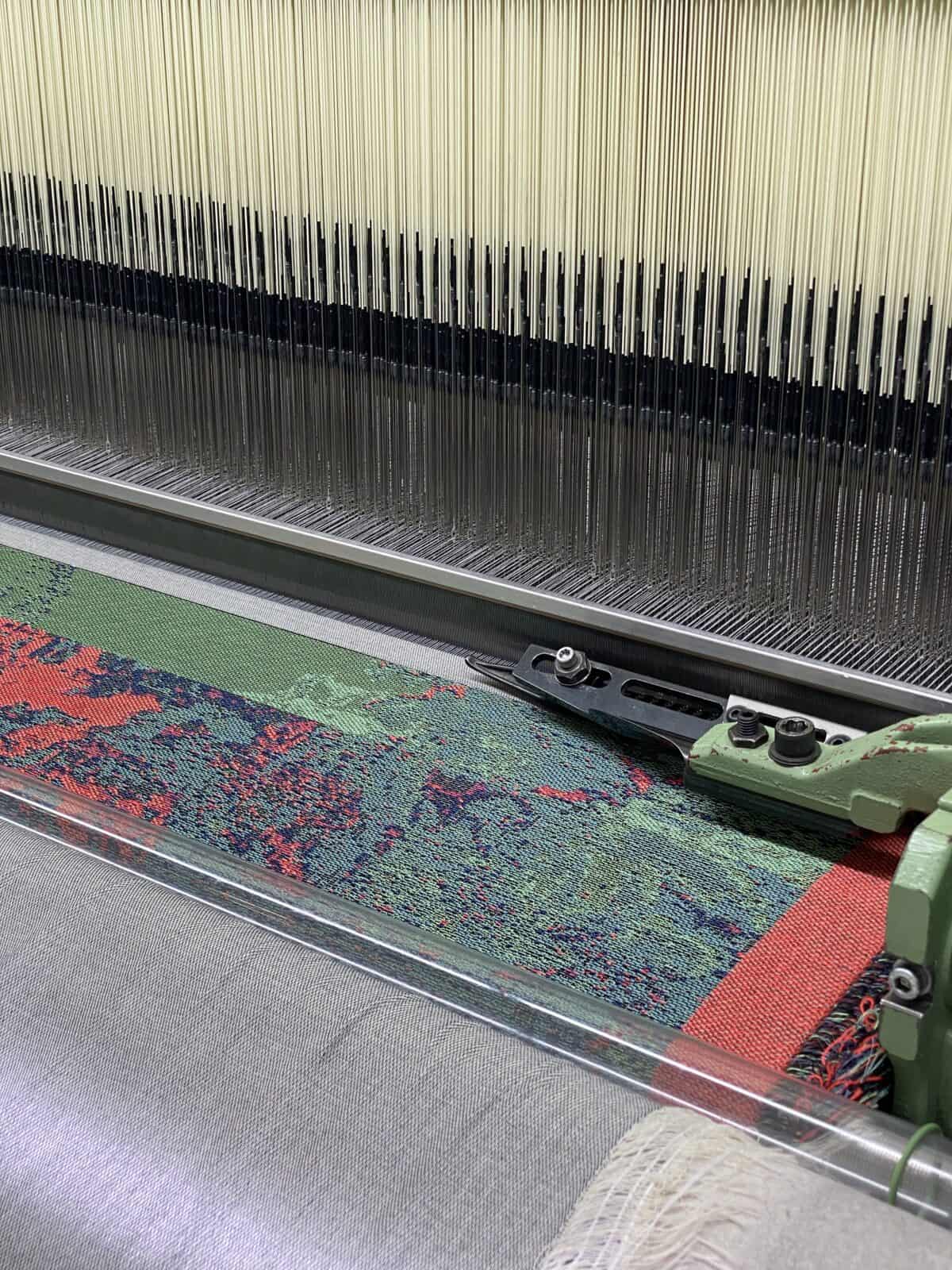
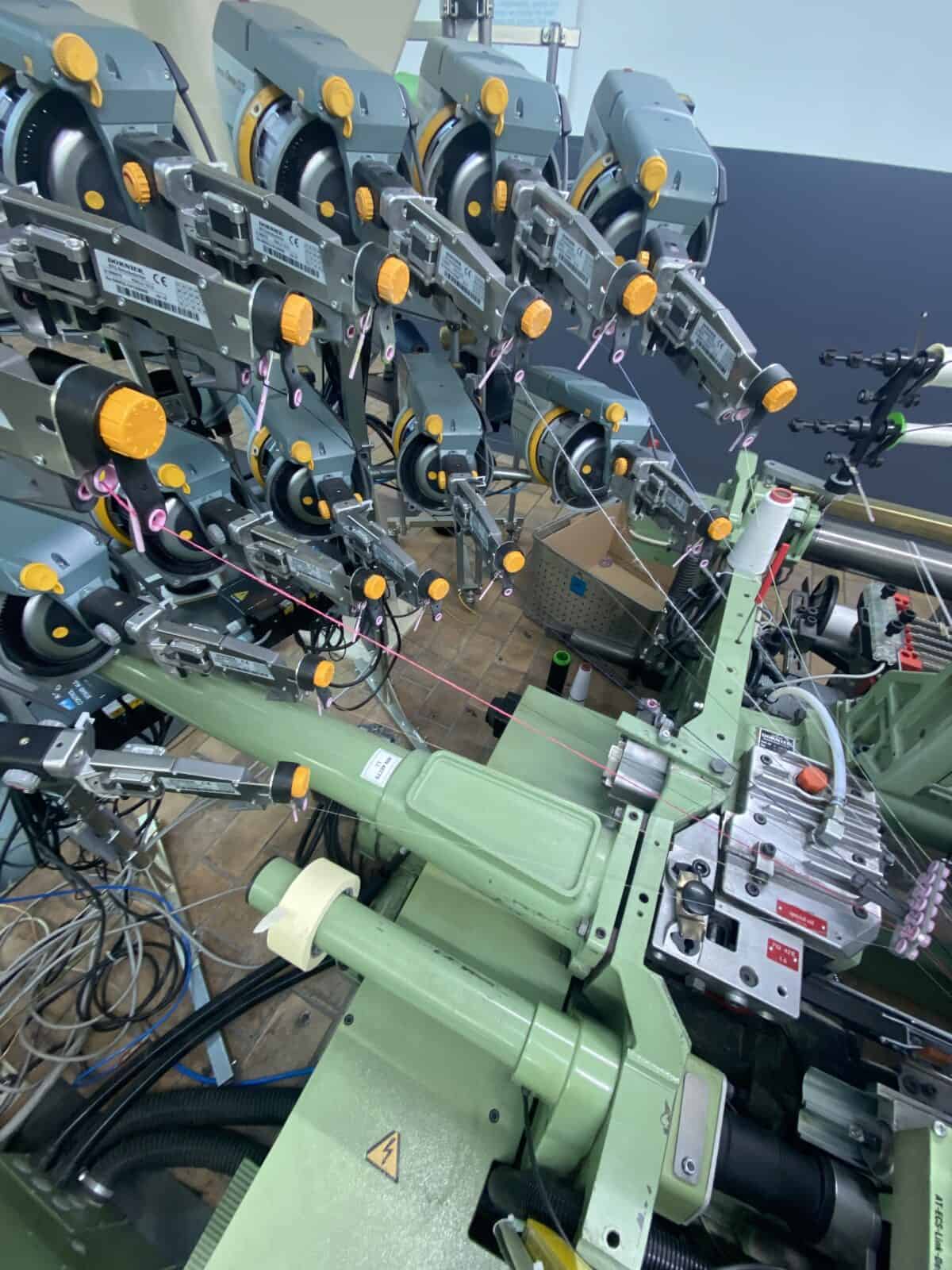
Rather than seeking a faithful reproduction of the digital image, fabric becomes a new system of constraints: a site where slowness, optical blending and material resistance reshape the generative logic at the heart of his practice. Working with Jacquard looms, a type of early programmable machine, Kreukniet positions weaving as both computation and craft, allowing digital sequences to be condensed, fragmented and recomposed into tactile surfaces.
In this interview, Kreukniet reflects on the tension between control and unpredictability, the shift from digital speed to material deceleration, and how textiles have opened new ways of thinking about process, perception and the evolving life of an artwork.
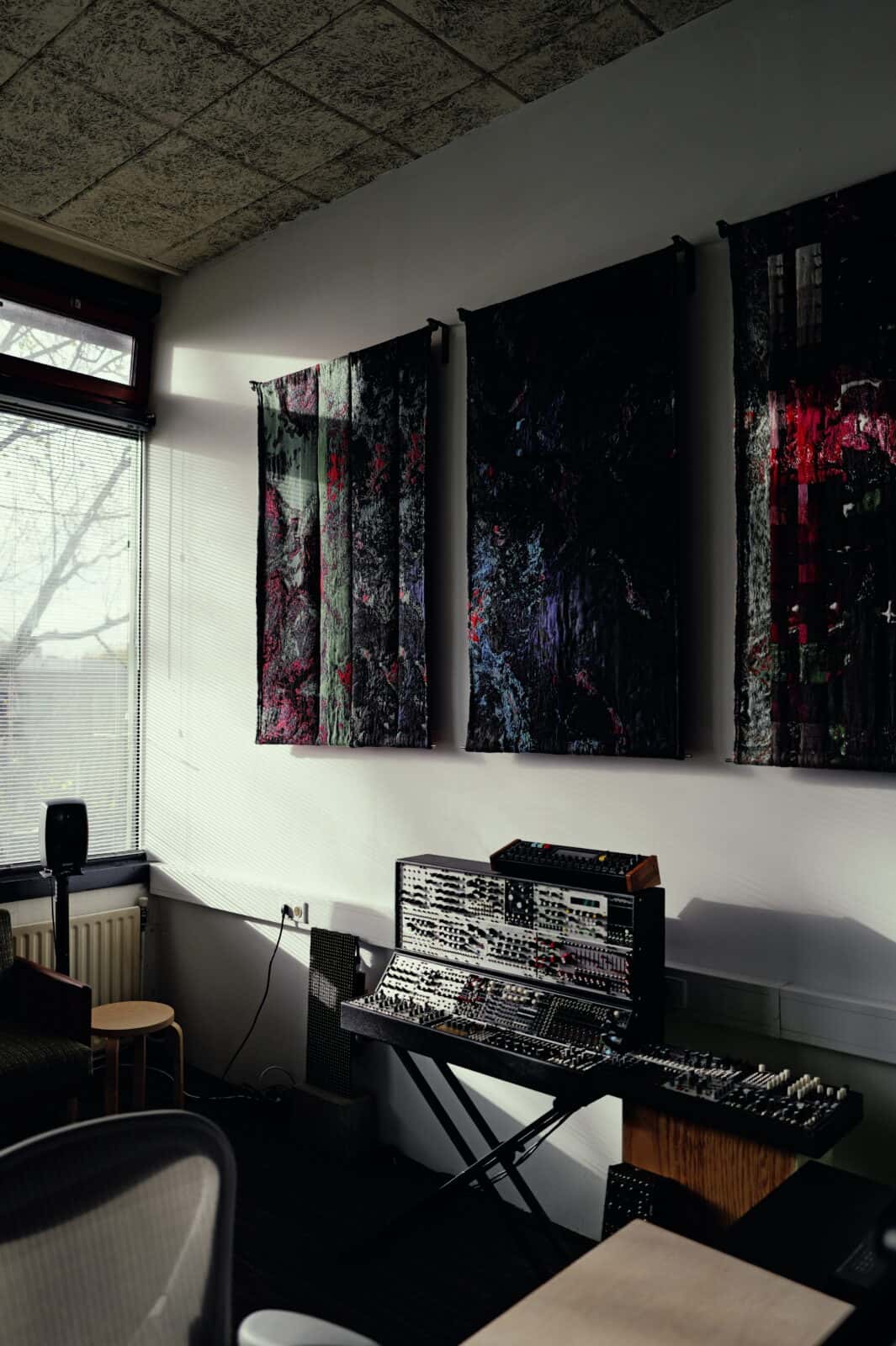
The Cold Magazine (CM): Your practice moves across installations, live performance and now textile works. When beginning a new project, what tends to come first for you: a conceptual question, a system, or a material constraint and how does that initial choice shape the work that follows?
Ben Kreukniet (BK): Each work or project is an excuse to explore an idea – starting with a question but with an openness for that question to evolve. Through the process of developing the system behind each work, new questions come up that sometimes morph the initial inquiry or even divert the path entirely. It’s an active process where I look for connections (that may or may not actually exist) between multiple projects I’m working on in parallel. Textiles offer me a new material constraint because the colours don’t mix like they do with video or light, and working with them in turn influences my work in digital media.
CM: Many of your projects operate through carefully designed systems that allow for unpredictability. At what moment does the work begin to surprise or resist you, and how do you decide whether to intervene or let the system lead?
BK: Projects develop in stages. I start more structured to define rules, build a process and then once that is established I can begin to explore uncertainty within the system. I would like to say that I can always see the final result up front but this is absolutely not true. I’m constantly surprised, or rather the response and feeling of ‘making the work’ is just so much stronger than ‘thinking about it’. Of course some discoveries result in reconsidering some of the rules you started with. Constraints are useful until they’re not.
CM: You’ve described your work as a way of exploring “ways of being.” How much of this exploration is intentional from the outset, and how much only becomes visible through the act of making and testing?
BK: Most of my work is time based – whether creating installations with video, light or movement, or creating forlive performances – and I spend a lot of time on the transformations between each state. In this way exploration is a key factor because whilst you can predefine your intent you have to respond to how the work feels and adapt. I really enjoy this process and experiencing the evolution of work this way. Elements that get edited out or don’t fit can become the starting points for subsequent works. A lot of my work plays with aspects of human perception and so the experience of it is fundamentally important.
CM: The Tapestry Series translates a time-based, generative process into a materially fixed object. What were the key decisions involved in selecting which moments of the animation would be condensed and preserved?
BK: Given that generative processes are inherently good for fast iteration, restricting to just a few still frames was quite a challenge and I’ve changed my approach on this over time. I started by recording three frames of a sequence into the red, green and blue channels of an image to embed some progression. I’ve since explored deconstructing the images further, taking slices from different points in time and sewing them together to create new compositions. Similar to a slit scan technique in photography. In the end I’m not looking to create a faithful reproduction of the original image, but using the image(s) as a starting point for exploration.
CM: Working with the Jacquard loom, an early programmable machine, introduced a different tempo and lineage into your process. How did engaging with this technology reshape your understanding of computation, craft and authorship?
BK: The weave patterns in Jacquard feel very familiar to coded structures and processes I use in working with video. When working with the Jacquard loom I went between sitting at a computer preparing weave files and then moving to the machine to produce the weave. A process not unlike preparing video sequences for a live rehearsal and doing run-throughs with a band. You prepare a sequence, observe, take notes, adjust and repeat. The Jacquard looms are really loud too. I see a huge parallel with music and music notation. As for craft, to me craft is about expertise and mastery isn’t my motivation. But I am looking for precision. I’m looking to understand the medium and the tools with just enough control to incorporate them with intention and predictability.
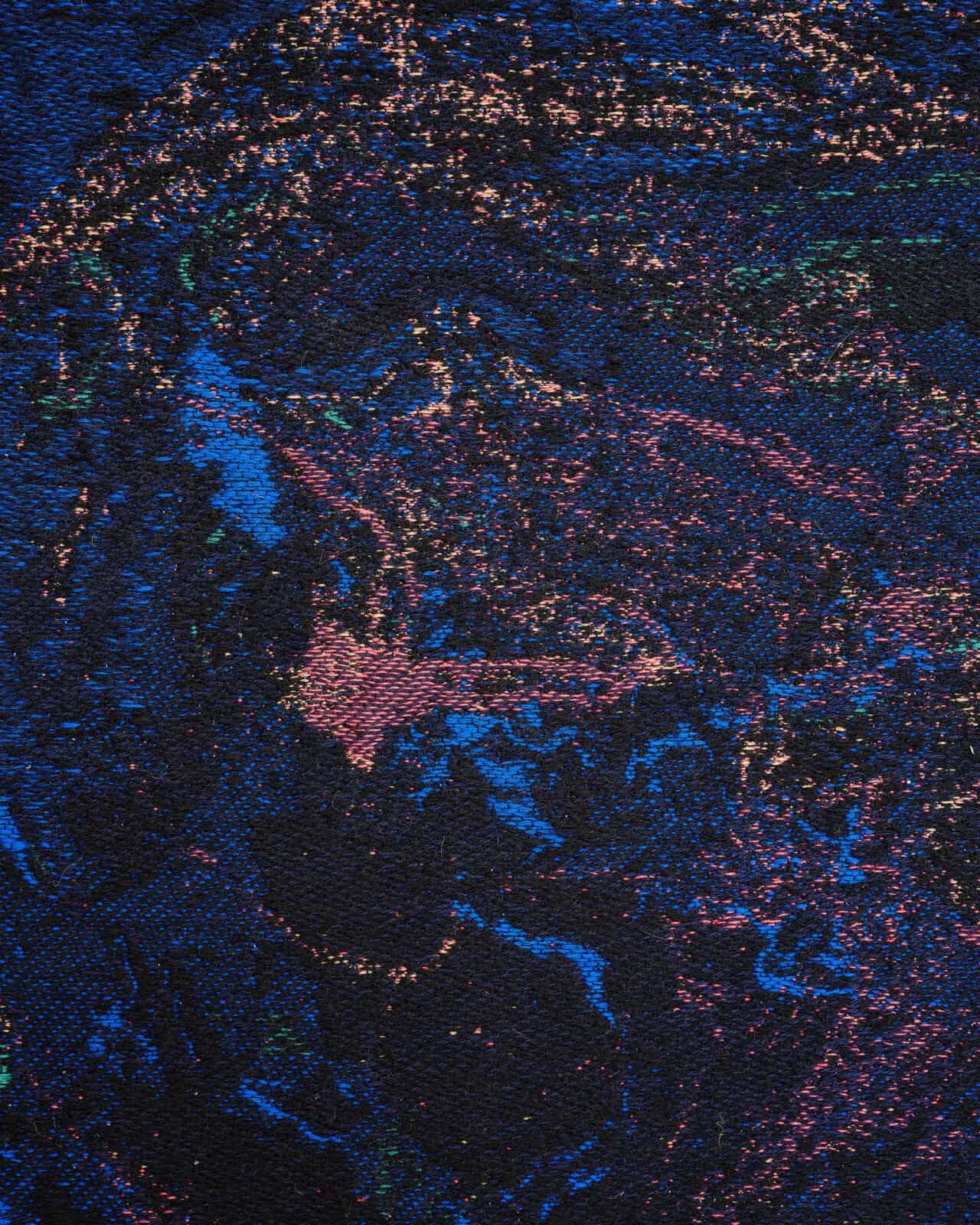
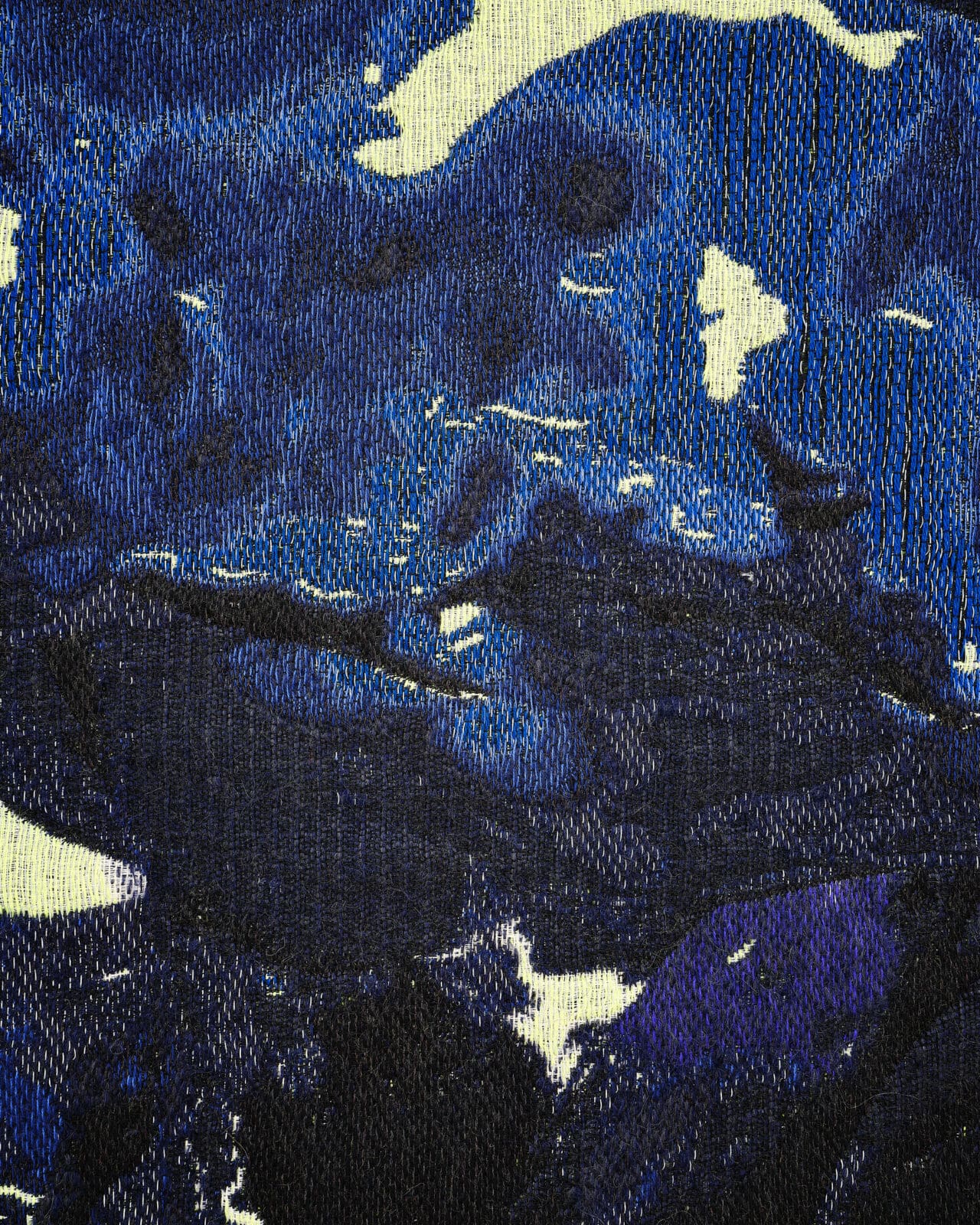
CM: You restricted yourself to 8–10 thread colours, which required the use of optical mixing and perceptual blending. Did these limitations push your visual language in unexpected directions?
BK: Being limited to 8-10 threads was a welcomed limitation. For me the challenge was in how the colours mix (or don’t) compared to video. This reality forced me to decide whether to choose threads to create the most faithful representation of the source image(s) or to embrace this selection process as a potential re-mapping of the idea. I explored both of these avenues – allowing myself to iterate quite far from the source image in some weaves. It’s great to get to the end of the day surprised by where you ended up. Unexpected outcomes can be reverse engineered back into the images or processes I started with.
CM: You’ve spoken about the tension between the speed of digital systems and the slowness of textile production. How did this enforced deceleration affect your relationship to detail, resolution and theidea of completion?
BK: The speed at which you can work with digital systems creates a momentum that fuels the process – you can iterate fast and quickly go from one idea to the next. This deceleration forced me to focus on one element of an idea for longer and to stand back and look at the result for much much longer, but the medium also brings longevity. Now I’m looking at decisions I made years ago through very different eyes than when I made them, but they’re done and they’re hanging on the wall and it feels like they exert a force back onto the work I’m doing now. For better or worse, a sort of feedback loop.
CM: Across installations, performances and now tapestries, how do you recognise when a work is finished? Is that decision driven by intuition, structural logic, or the context in which the work will exist?
BK: If installations are assemblies then I see these tapestries as components. Whilst each needs to reach a sort of completion on its own, it doesn’t have to tell the whole story. After some time zoomed in to a specific piece I have to zoom out and see it in perspective of other works or parts of my practice. An installation, a live performance and other isolated outputs can all be part of one exploration that inform each other.
CM: Looking ahead, what questions are you currently most interested in testing through process and material, rather than resolving at a purely conceptual level?
BK: I’m not looking for resolution of ideas, I’m more interested in the process than the result. I’m also conscious that I have control over what I do but not over how people respond or the opportunities that come my way. So my focus is on where I invest my time, working with the right people, pushing out of my comfort zone, being intentional without overthinking, keeping momentum and optimism. Easier said than done.