“It seems like a first world problem. A show’s been canceled. But it’s showing a bigger picture. Every minority is getting hit. Lesbians are being hit. Trans people have been hit. There are literally laws against trans women in the UK. This is just showing how society is regressing when we’re supposed to be progressing,” Thea Hallow, artist and season 1 cast member of I Kissed A Girl, explains.
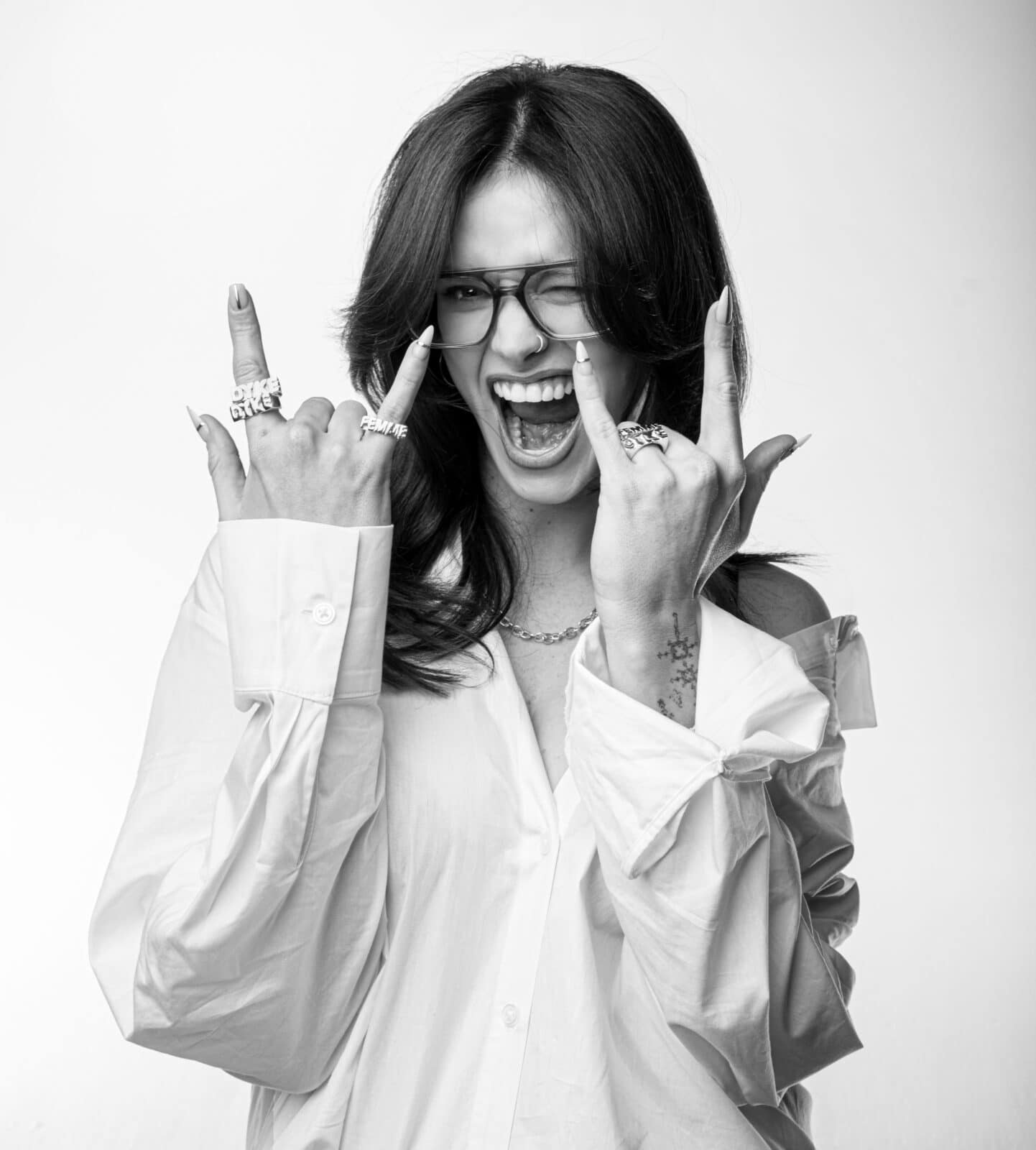
Lesbian Visibility Week lands in the wake of the BBC’s announcement of the axing of the I Kissed A franchise, the UK’s first exclusively queer dating show. The cancellation of a TV show usually conjures backlash from fans, but this time it felt remarkable. Publications covered the outrage, creators across the globe howled through their phones, outlining exactly why this was something to incite for and a Change.org petition was signed over 15,000 times (at time of writing) demanding the BBC recommission the shows and ring-fence funding for LGBTQ+ programming.
Amy Spalding, the break out star from season 1 of I Kissed A Girl and founder of viral queer jewellery brand SLT Studios, said that she was devastated but not shocked. “Who’s surprised? Queer story lines and queer stories sidelined again while straight storylines blossom in their thousands”. She articulates a feeling many had: the cancellation feeling particularly cruel as so few shows engage with queerness, let alone centre it.
“Gay women don’t really occupy space in the media that much. There might be a token lesbian on a soap or something. It’s important that it’s not a novelty, not a tick box.” Georgia Robert, fellow IKAG cast mate says. “That was the biggest thing about the show: I’ve never been in an environment where straight people were the minority. I’ve never had that anywhere before, anywhere since.”
Let’s check the stats quickly. GLAAD’s 2024–25 ‘Where We Are on TV’ report found that LGBTQ characters on broadcast TV have fallen by 62% since 2021-22, with lesbian characters dropping from 31% to 26% of all broadcast LGBTQ representation in a single year.
41% of all LGBTQ TV characters are not set to return to screens in 2026. And of course despite I Kissed a Girl winning Best Media Moment at the DIVA Awards, being nominated for a GLAAD Award, and being picked up by Hulu in the US, the BBC cited ‘funding challenges’ as to why they weren’t to renew it. Sure.
Politically, we are in a particularly fearsome time. A rise in anti-woke sentiment, with mass rollbacks on DEIs and new laws targeting trans women make for a particularly nasty cocktail. Don’t be mistaken – this is happening in Britain too. The UK is dropping considerably in queer rights rankings such as the ILGA chart, currently placing 22 out of 49 countries in Europe, when in yesteryear we hovered around the top of the list like a grade A student.
“In a time as politically scary as this, shows like this were a life line… to see them being defunded is just proof that we have so far to go. It is proof of the systemic bias of the political landscape.” In a video posted in response to the news of the cancelation, Amy is visibly frustrated. She ends with a rallying cry. “Email me. DM me. Anyone who wants to keep fighting the good fight to keep shows like this on air, let’s do something about it.”
And so, she did do something about it.
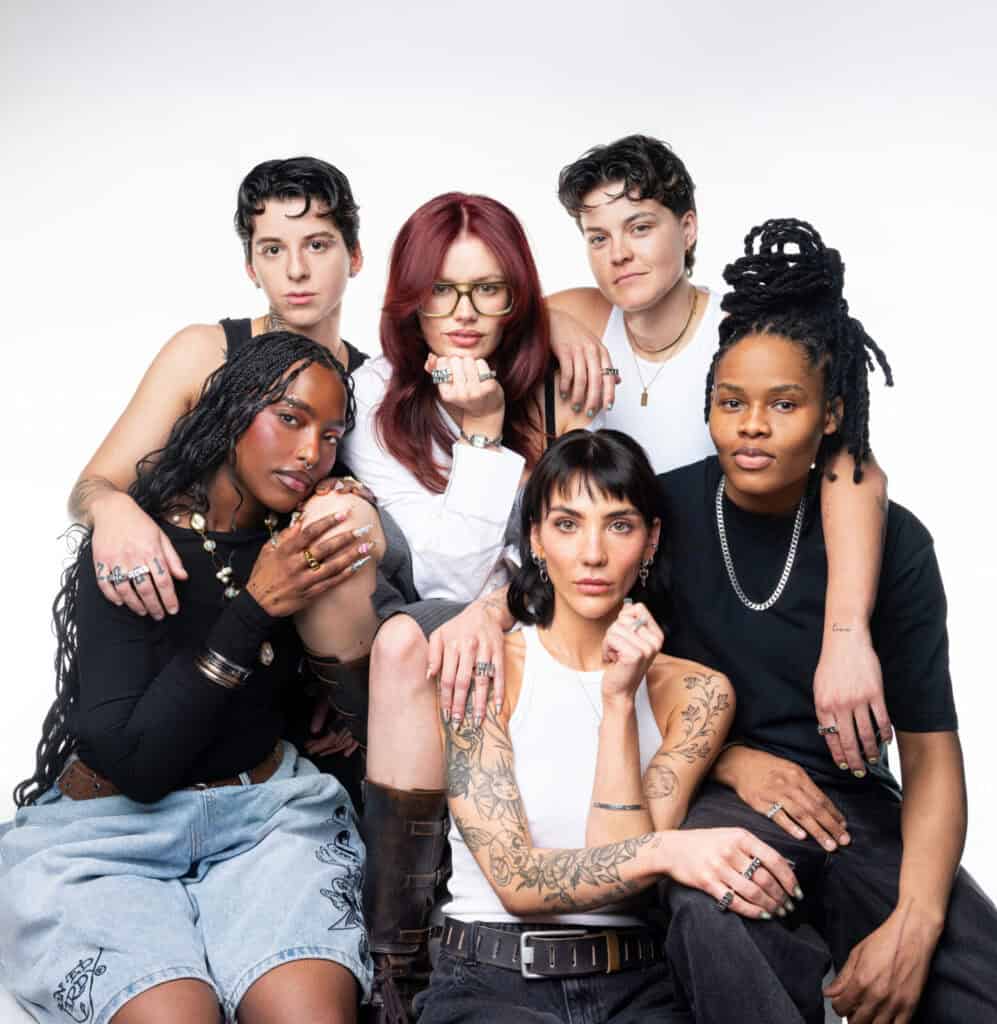
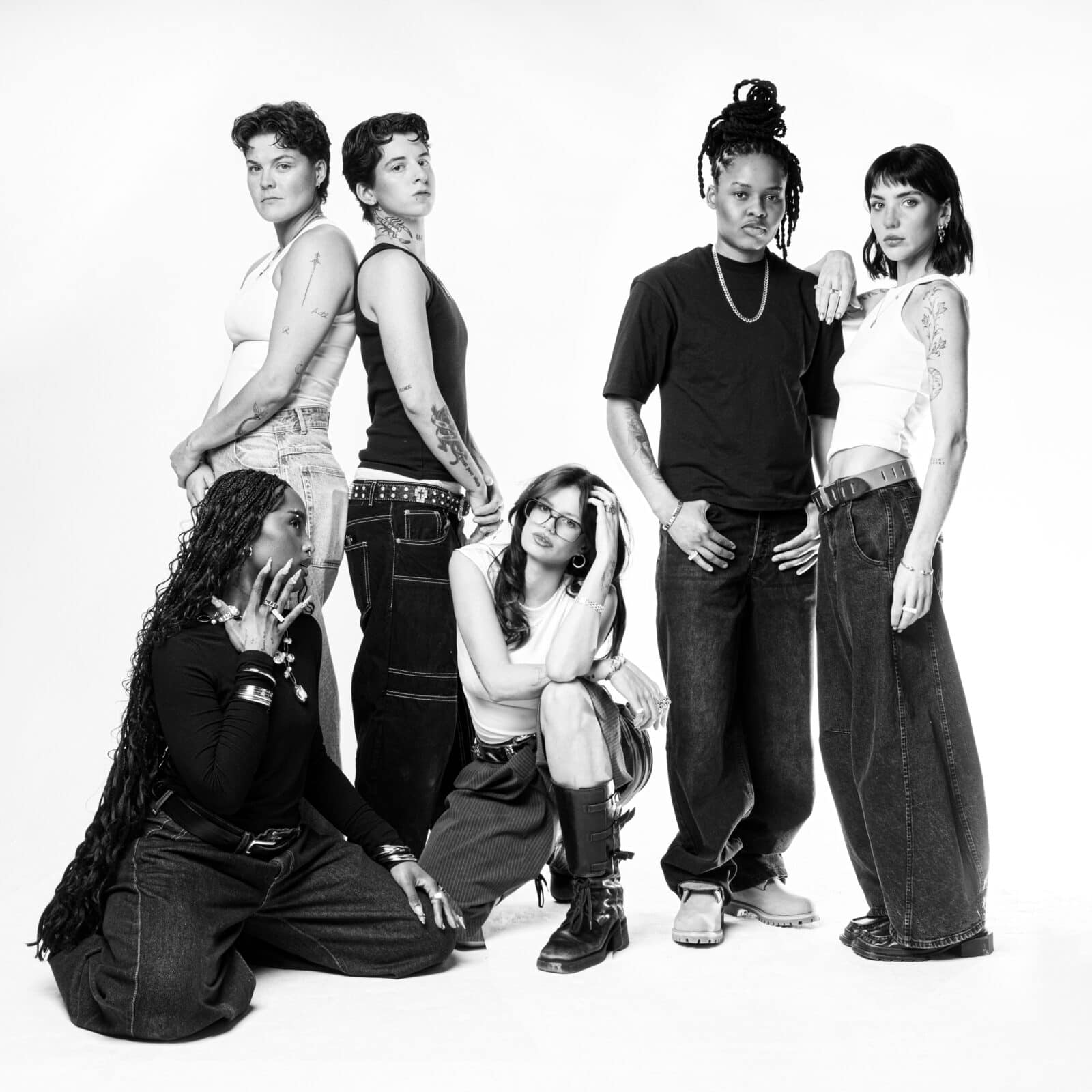
Reuniting the I Kissed A Girl girls for a photoshoot in celebration of Lesbian Visibility Week, Amy and the cast members did what the queer community has done for time; relying on itself, galvanising and digging their (often literal) boots into the sand. Coming together to reflect on what the cancellation means for the community, and why visibility has never felt more urgent, Thea makes their stance clear: “If you’re going to be revolutionary, stand on it. Change is not made by following trends. Being iconic doesn’t exist if you just follow what is safe.”
“Not a lot of people are lucky enough to be out in the open. For some people it’s not safe – especially living in certain households.” Fiorenza Coccozza says. “Sometimes this representation is all we have. Online, in the media, in movies and TV shows. That’s their safe space.”
“If you can’t see yourself represented on TV,” Cara Kinney, who grew up in Northern Ireland, “especially if you’re from somewhere rural – how are you supposed to live it yourself?” Nae Stoute adds, “The Black lesbian community needs more representation – you don’t really see us a lot on TV.”
When it comes to queerness, joy is often resistance. I am reminded of this when I look around the set. It is clear the love and respect these women have for each other.
“I Kissed a Girl showed lesbians beyond their sexuality. It was just a group of women who happened to also be lesbian.” Thea points out the charm of the show “We were just existing and living: not weird, not niche, just normal.” The normalcy of the show was groundbreaking, allowing girls across the globe to be able to envision different futures for themselves. Queers have known for time that they cannot rely on governments, institutions or systems for safety, or to have our best interests at heart. This is a heartbreaking reality but, in turn, it means reliance on our own independent networks and systems are paramount. Reimagining futures together, creating our own paths forward. It feels trite to use this analogy, but with these girls passing the mic, taking to alternative platforms, standing up for representation and what they believe to be right – it feels like even without government funding the fig tree is in full bloom. Lana del Rey said it best- “hope is a dangerous thing for a women like me to have – but I have it”.