
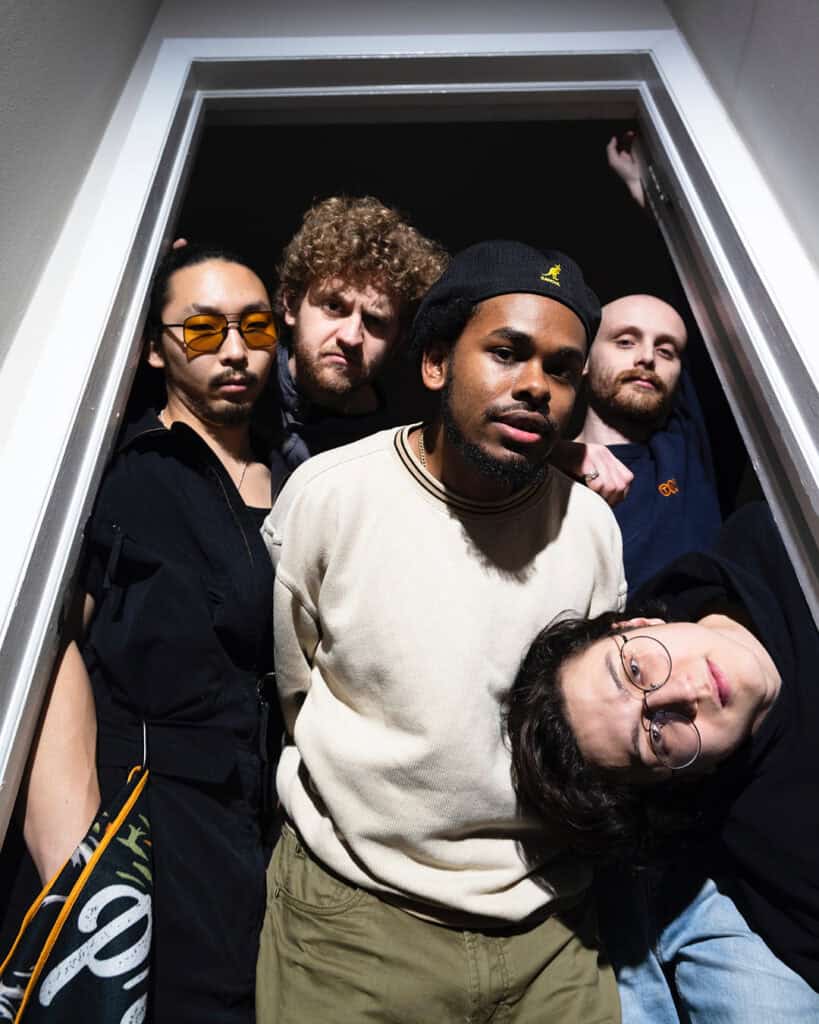
Mario Hoi can still shred the bass despite his arm brace, which he bought for $12 at a CVS. Earlier this week, he burned the shit out of his hand and forearm during his barista shift. The motion he uses to recount the espresso machine’s deadly steam-blast is the same one he uses to describe his band’s ethos. Indeed, Libby Quinn’s sound is flammable.
It’s a relentless drive forward: drums chugging, sax sliding, and vocals barrelling. Libby’s songs often open with one or two addictive guitar riffs stacked together in a grungy, thrashy, or indie dialogue. The guitars lift the rest of the instruments into head-banging peaks or drag them down into ambient valleys, cut out, and finally return to solder everything together. Meanwhile, the bass is funky and freakishly complex, the drums jazzy but powerful, and the vocals might be screamy, snarly, or bouncy à la nascent hip-hop.
But even when their noise is too dissonant to pull apart, and Josh’s sax is squawking at the upper edge of its range, Libby Quinn’s chaos is controlled. Though the band embodies contemporary post-punk by fusing varied influences, genres, and instruments, it is almost anti-punk in its members’ musicality and improvisation chops. The four former jazz students of programs at Hofstra and The New School (plus one self-taught guitarist, Tyler) know the theory well enough to break it open.
Their 2023 single, Jesus in Tokyo, epitomizes their strengths and individuality as a project. It’s both atonal and melodic, featuring irreverent lyrics (which reference Guy Fierri’s Food Network show Diners, Drive-Ins, and Dives) and a poignant sax solo. Overall, the tune makes you want to move – dance, more than punch anyone.
That’s the energy they endeavor to incite at their shows: Jumpy, dancy moshing in a kinetic though occasionally entranced pit. Somewhere between hardcore and what Tyler calls a “too-cool-for-school” crowd. So far, they’ve succeeded.
“We see that our fans want to go hard, but pull back, too,” says Tim (guitar and synth).
“There’s an etiquette to it,” says Josh (vocals and sax).
“It’s like riding a rollercoaster to an awesome soundtrack,” says Mario.
Frontman Josh is the key to setting that tone. In Libby’s recordings, Josh gasps for air between clauses, intimating a fraction of the energy he brings to live performances. The spirit isn’t manic, just high. His greatest strength as a performer is his ability to connect with and rile up the crowd.
On stage, the band is in constant conversation with the audience and each other. Libby’s members watch and listen to one another live as if still writing, tweaking, and exploring alternate endings. As with jazz, every performance is different. In fact, the group’s first time playing all together was at a rooftop show, where two members started in the audience and eventually grabbed instruments to join in. The serendipitous sounds Libby produces live often inspire new versions of songs and LP ideas back in the studio.
Libby’s collaborative songwriting process edifies their intrinsic musicianship. Members will individually record their studio sessions, play them back once they’re home, haphazardly cut and paste different sections together, and share the clips to their group chat.
“Josh will send us a text at 4 am saying ‘I think I have it worked out’ and it’s four-minutes-long with crazy midi drums, plus us playing, plus synth horns, and it’s like: This guy was cooking,” says Tim.
The band pulls inspiration from themselves, Buzzcocks, Charlie Parker, Black Midi, and cult cinema. Libby Quinn was the name of a composer who wrote music for 1960s horror films including The Incredibly Strange Creatures Who Stopped Living and Became Mixed-Up Zombies. Josh might be the only person who has ever watched it from start to finish.
“We’re just synthesizing everything,” says Tyler. When choosing venues to play at and especially other bands to play with, Libby values experimentation and the DIY aesthetic more than genre. The other bands don’t need to sound like them – they just need to be doing something special. Punk, after all, has historically better described a scene than a genre. Libby plays alongside the loosely post-punk Cohort B (NYC), Sophie’s Body (Boston), and Lahnah (Philly), but also a solo artist and professor from upstate called Laughter Has Long Legs who wears a cardigan and a mask and live-loops samples until everyone cries. Their dream collab is with an electronic duo called Macula Dog who harness themselves to their instruments and lighting components.
Libbi Quinn and the band on the street: raw punk attitude meets tight, focused musicianship.
“Bravery, honesty, sincerity,” says Josh, “Whatever it is – whatever sound it creates – I could love it, be inspired by it, and utilize it for what we’re making creatively.”
This week, in a 10×15 foot Bed-Stuy box, Libby Quinn is practicing their unreleased singles and getting ready to go on tour. They’re looking forward to jumping into crowds and bursting into flames.


