
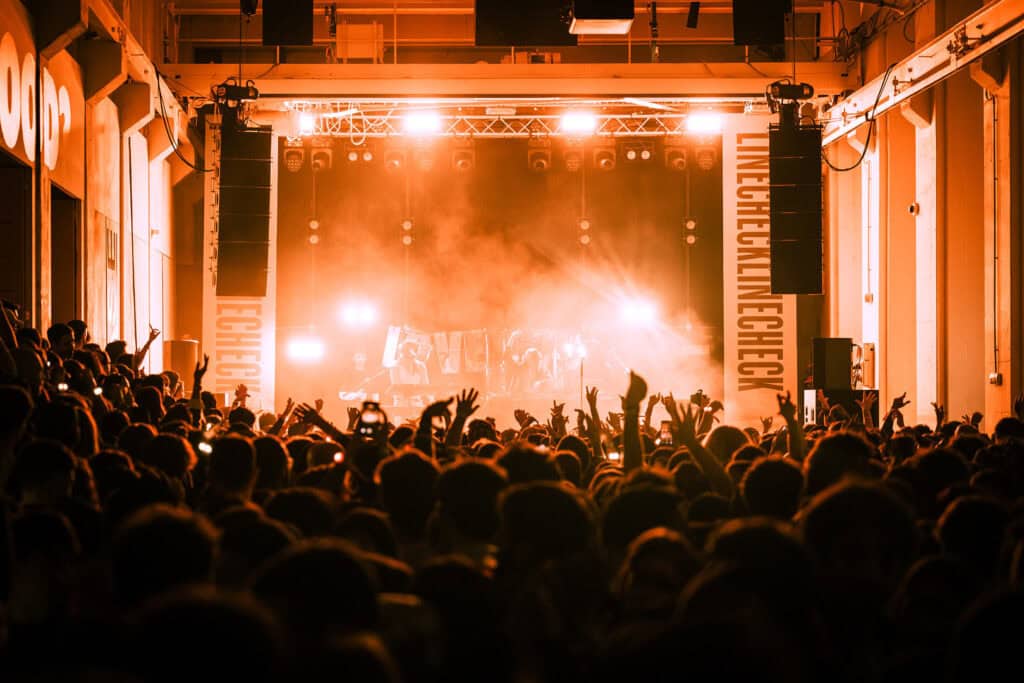
For this year’s edition of Linecheck, running from November 17–22, we spoke with Anna Zò, director of Linecheck Music Meeting & Festival and member of the Music Innovation Hub team, an organization that has long been reshaping the music industry into a laboratory for fairer, more responsible, and collaborative practices. Her clear, pragmatic vision frames music as a space that can still generate real transformation, as long as its impact is shared and measurable. In this conversation, Anna takes us behind the scenes of a festival that defines itself as an “ecosystem in motion”, reflecting on the legacy she hopes to leave within the Italian creative landscape: a more connected and conscious network, one that listens to the urgency of the present while remaining open to what lies beyond.
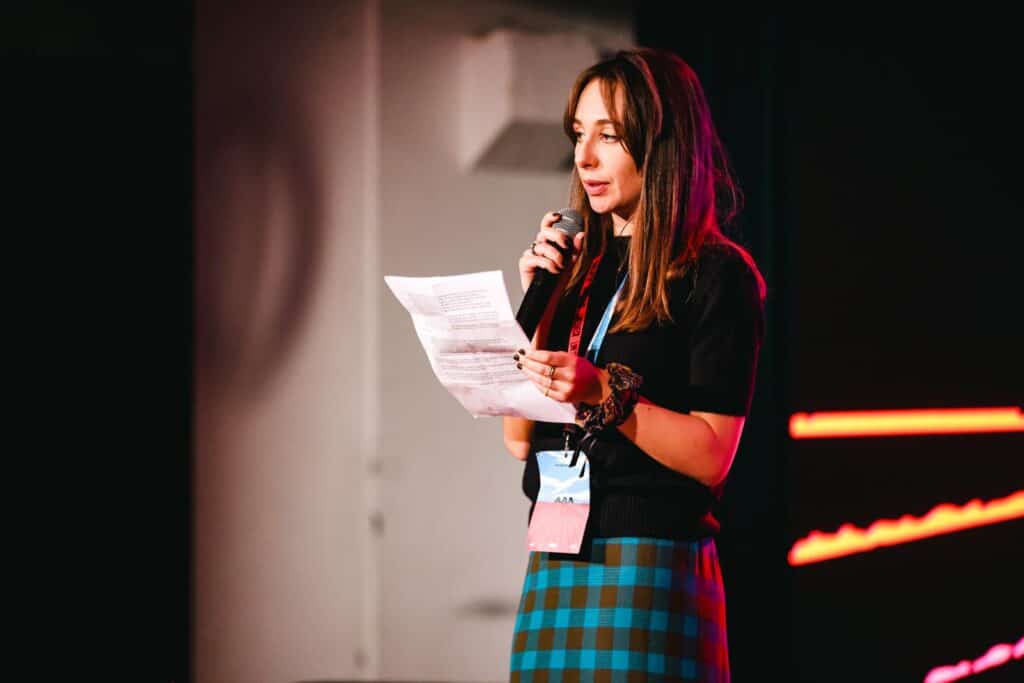
Linecheck is not just a festival but an “ecosystem in motion.”
When curating the program, how do you ensure that sustainability doesn’t remain abstract but becomes a concrete, everyday practice?
Linecheck is a B2B conference, meaning it speaks to professionals who must deal with these challenges in their day-to-day work not simply apply abstract labels or digest packaged concepts. We do this by bringing in models and case studies from around the world: real, accessible, and replicable examples of sustainability practices. We look at their criticalities and contradictions first, as well as their merits and positive impacts. The program is full of these examples, especially across the Social Change Summit – Act In Synch Edition. We also approach sustainability not only from an environmental perspective but from a social one too, adopting diverse viewpoints and tackling these issues on multiple levels, beyond what is most immediate or superficial.
“Sustainable music business” has become a widely used expression, sometimes an empty one.
What, for you, are the real indicators that a music project is generating ethical impact—not just greenwashing?
More than indicators, there are data. Indicators can be felt; data can be measured. Impact-measurement tools are growing quickly and are increasingly being adopted across the music sector. Initiatives like EarthPercent (for environmental conservation), Keychange (for gender representation), or Elisa’s San Siro concert with Music Innovation Hub (focused on reducing CO₂ emissions) are traceable actions with measurable and in these cases, measured impacts.
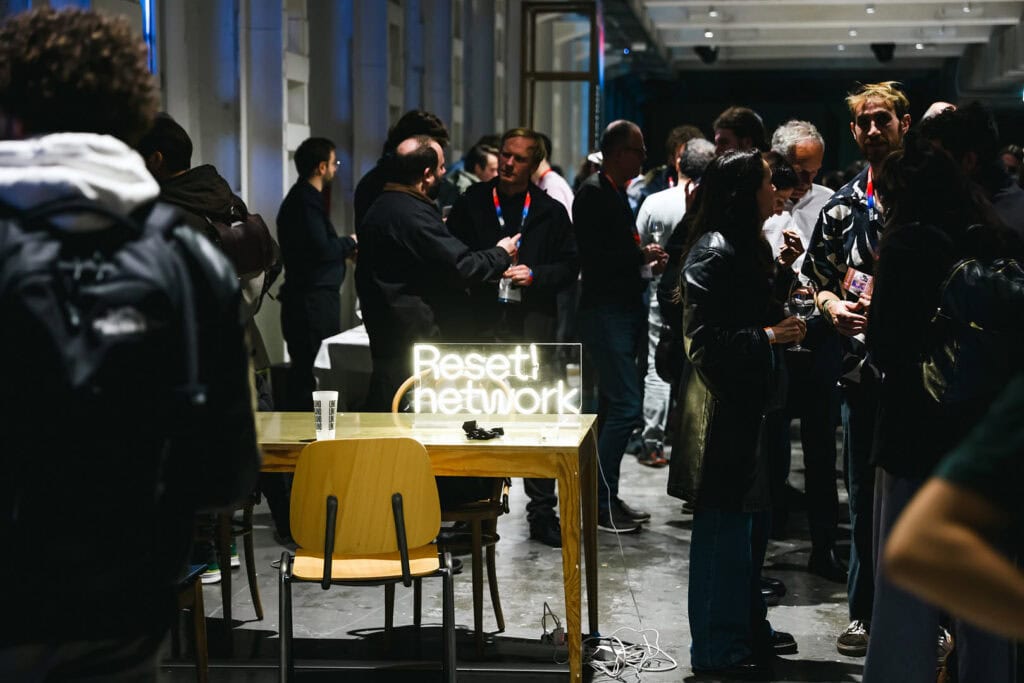
Linecheck gathers people working across creativity, activism, and technology.
Why do you believe the future of music no longer depends on individual talent, but on building communities and alliances?
I believe individual talent can be amplified through alliances, and that it can contribute to creating meaning and community. Linecheck is a platform not just an event that connects systems rather than individuals, allowing challenges to be tackled with more strength, messages to be voiced more loudly, and conversations about the present to include more diverse perspectives. This year’s program reflects this vision clearly: rather than spotlighting a single artist or company, we look at networks, partnerships, residencies, co-design, co-creation, and co-production a cooperative rather than competitive logic toward the music ecosystem and the society around it.
The music industry is often seen as fast-paced, competitive, and precarious.
From the inside, what does it mean to design an event that tries to slow down, listen, and create value instead of constantly burning energy?
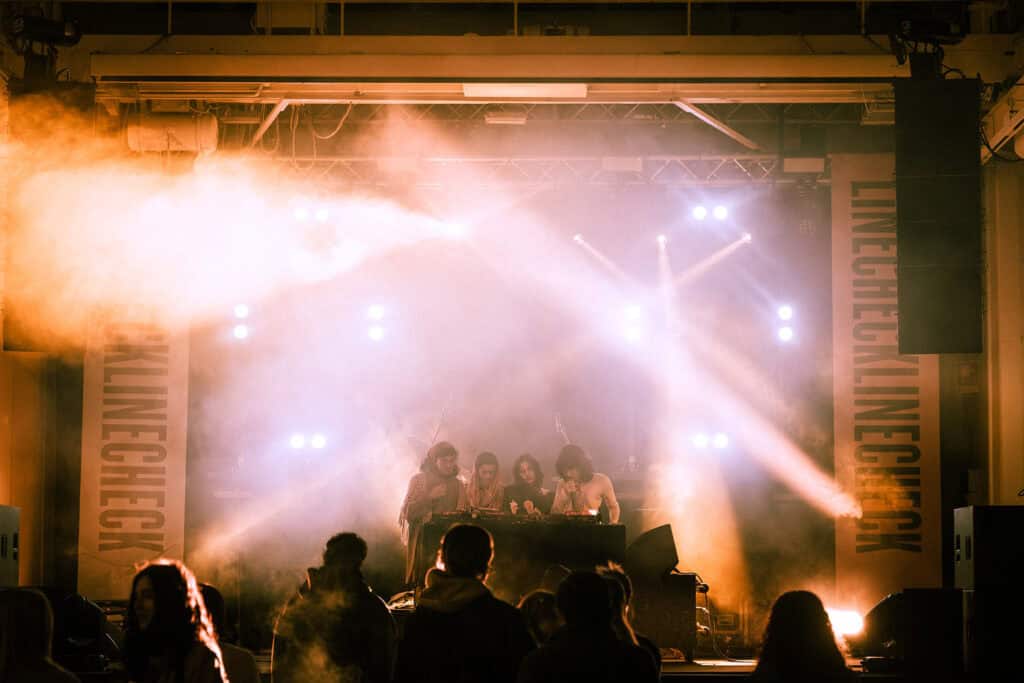
When it comes to slowing down, we still have a long way to go. We’re often the first to fall into a kind of “bulimia,” filling our schedules with content and activity. To our credit, we do it out of passion and curiosity more than performativity or the pursuit of some unreachable goal. Next week Milan will be so full of events, stimuli, and FOMO that talking about deceleration might sound hypocritical yet we have to start somewhere. It’s a delicate theme for the times we live in and a challenge for many people, not just in our sector. At Music Innovation Hub (Linecheck’s “mother” social enterprise), we’re working on it by shifting our activities toward new KPIs and investing heavily in impact measurement. The real challenge is to maintain and even amplify our ability to generate value without dispersing energy or getting distracted by the hyper-stimulation around us. We’ll discuss this in a panel on Thursday at noon, focusing on artists’ careers, but these are urgent reflections for the entire music value chain ours included.
If you had to define Linecheck’s legacy in one sentence, without numbers or results, what would it be? What kind of change do you want to leave within the Italian creative scene?
A connected ecosystem—one able to listen to the urgencies of its time and look outward toward the new and the different.
Interviews usually highlight successes and rarely mistakes. I find mistakes more revealing.
What’s one mistake you’ve made that you would advise the next generation to avoid?
This question about “new generations” makes me smile—I’m not even 30 yet, but I do realize the generation entering the music sector today is different from mine. I don’t think I have enough distance or years of experience to identify one specific mistake to avoid. I make mistakes every day—not out of modesty, but because I genuinely feel I’m learning and growing through trial and error. One recurring mistake I still struggle with, but that I’m working on and therefore feel I can give advice about—is a lack of patience. It ties back to what we said earlier about slowing down. Things happen, change, evolve, and often I burn through my energy trying to control them or accelerate their pace. Sometimes it’s necessary; sometimes it only leads to frustration and stress that spill into the surrounding environment and contaminate it. So my advice is: commit every day to what you love and believe in, but also learn to trust the process sometimes.