
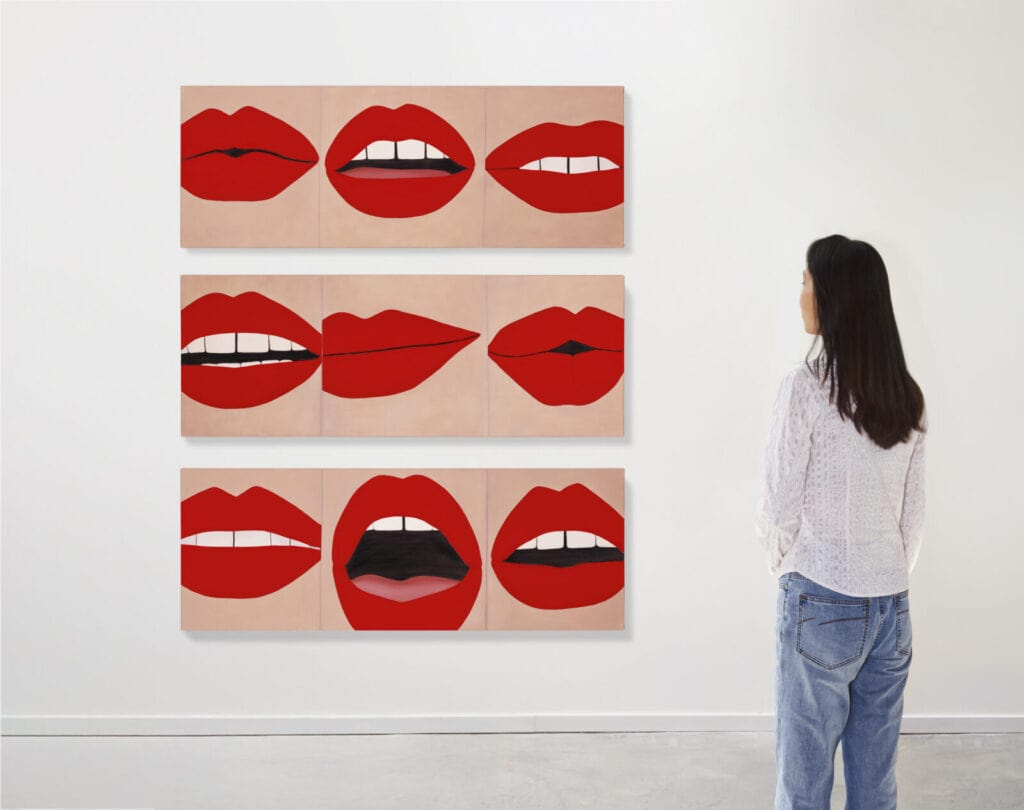
Lize Bartelli’s paintings focus on acts of looking – both at others and at oneself. Through cropped bodies and cosmetic gestures, the Brazilian-born, London-based artist questions how the concept of femininity is learned, repeated then absorbed over time.
Her latest solo exhibition, The Hour of the Star, opened at Pipeline Contemporary on January 23, 2026. The show presents 14 new paintings that examine symbols of glamour, beauty and self-presentation through which modern feminine identity is perceived.
This is Bartelli’s third solo exhibition, following her London debut, Last Night I Dreamt That Somebody Loved Me in June 2025. Known for her graphic, precise approach, Bartelli reduces her subjects – often cropped body parts, makeup application and emblematic objects – to elemental forms on canvas, revealing both vulnerability and assertion in her depictions of feminine identity.
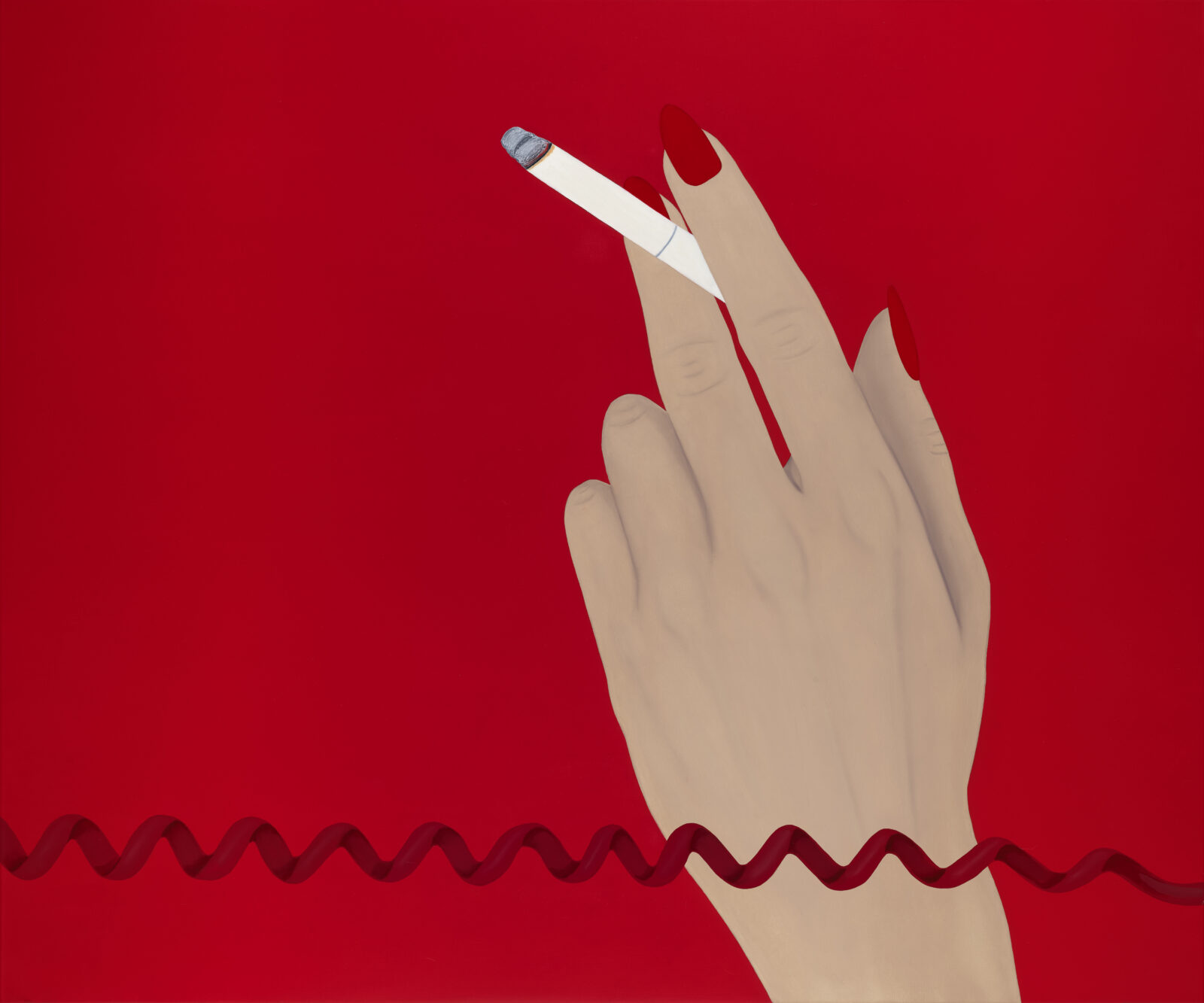
Lonely Call, 2025
Pencil and oil on canvas
100 x 120 cm
Unique
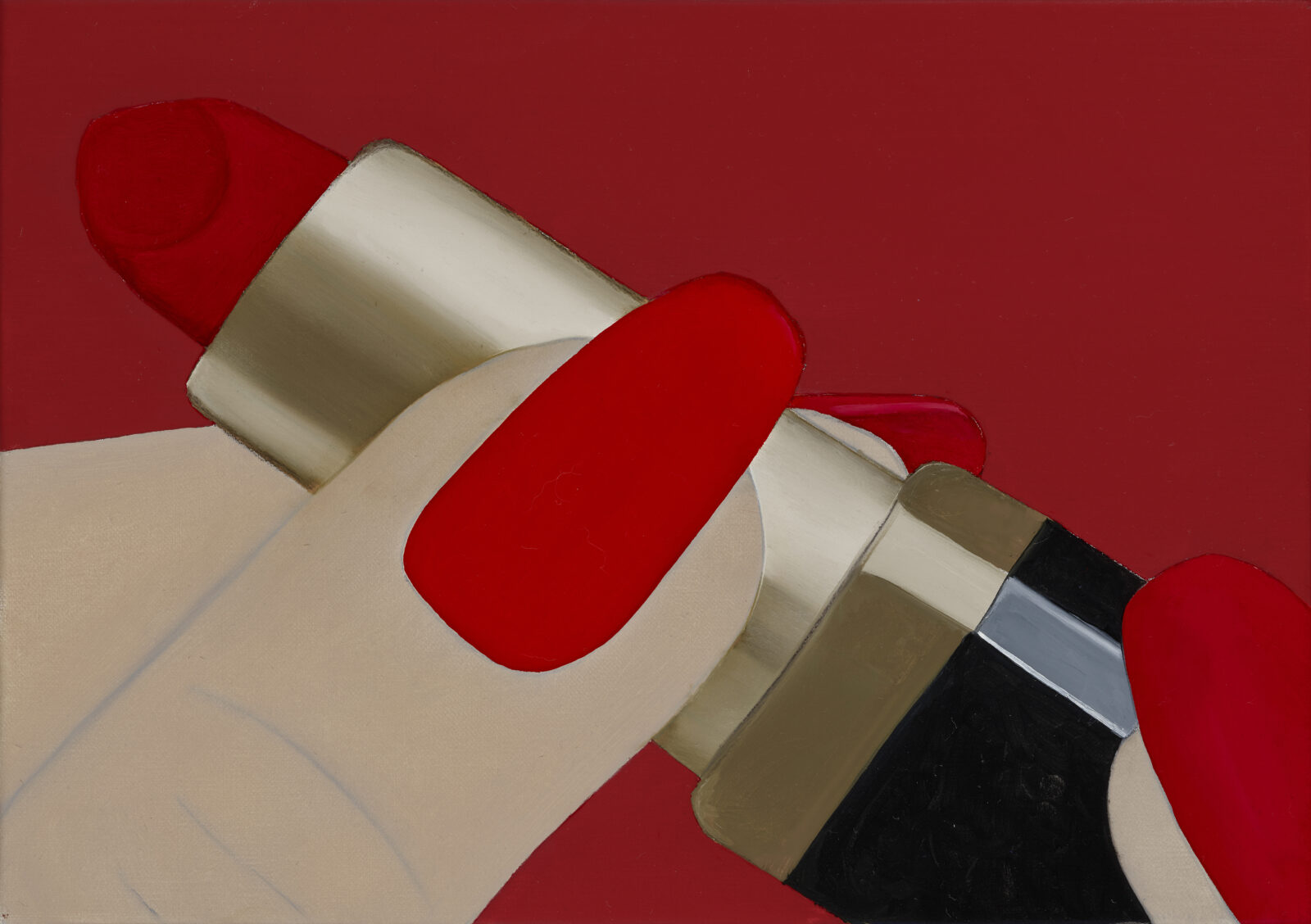
On the money or Lipstick, 2025
Pencil and oil on canvas
21 x 29.7 cm
Unique
In celebration of the exhibition’s opening, Bartelli shared insight with us into the development of the new body of work.
The Cold Magazine (CM): This exhibition follows your UK debut last Summer, Last Night I Dreamt That Somebody Loved Me. In what ways does The Hour of the Star continue the conversation opened by your first exhibition?
Lize Bartelli (LB): The Hour of the Star carries the same DNA as Last Night I Dreamt That Somebody Loved Me, but with a clear shift in focus. While my earlier series centred on longing and acceptance, this one turns to the question of being seen, and how that experience shapes our identity.
But on a technical level, the two series feel very different to me. In this new body of work, I push the contrast between pencil and paint. I am making a conscious choice to create stronger contrasts, using thin layers of paint over pencil to represent the skin and to create a sort of tension between the fragility of human skin and the hardness of objects, the non-human. This is why the objects are more realistic, and the human body more drawing-like in comparison.
CM: Do you see these new bodies of work as marking a shift in your practice, or is it more of a deepening, going further into questions of femininity and identity that were already present before?
LB: I do experience it as a shift, but a structural one rather than a conceptual one. My intention is the same, and the questions I look at are, too: femininity, identity, and also performance. What has changed is their representation, which has become more focused.
Before I began painting in June 2025, it was clear to me that I would work predominantly with a single colour: red. In other words, I have simplified. In Marilyn, for example, I painted the red lips, the slightly gapped teeth, a recurring visual detail in my practice and the hand holding the lipstick at an enlarged scale – three elements, three colours, enough to suggest the embodiment of what it means to be an attractive, glamorous woman, as described in Clarice Lispector’s The Hour of the Star.
Also, for me, red lipstick is particularly interesting because it carries a very rich history, containing glamour, desire, attitude and even violence within a single gesture. In that sense, it became not just a colour or an object in the series, but a protagonist within it.
CM: You have spoken previously of how your work often navigates the tension between what is intrinsic and what is imposed upon femininity. When you’re painting, how do you sense where that line is? Is it it ever stable?
LB: The question around what is intrinsic to us and what is shaped or imposed by culture is at the very core of my ongoing research. It’s the thread that runs through everything I do. Although it often enters the work through femininity, I don’t think it’s a question that belongs only to women. I think we are all affected by it as human beings, the way we slowly absorb expectations, images, norms, and desires, and how that process can move us closer to, or further away from, a sense of our own essence.
That’s also where I see a clear parallel between Macabéa [the main character]’s fascination with Hollywood stars in Clarice Lispector’s novel and our contemporary relationship to social media and online images. When I’m painting, I don’t experience that line as something stable or clearly defined. In fact, the more I work with it, the more I realise how entangled those layers are.
The paintings don’t try to separate them or offer answers, they hold that uncertainty. For me, the work is a way of staying with the question, and of trying to understand it more deeply, rather than resolving it.
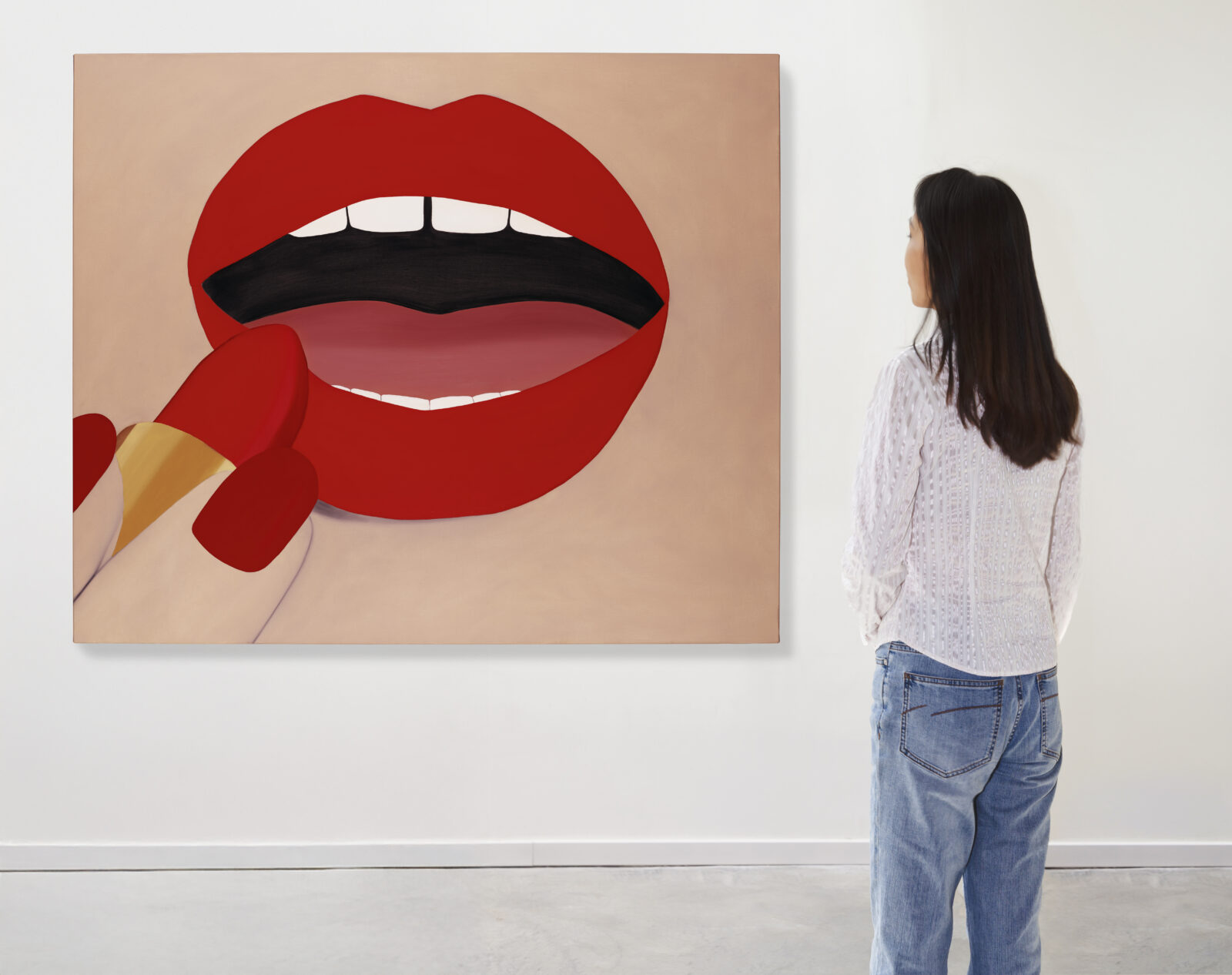
Marilyn, 2025
Pencil and oil on canvas
100 x 120 cm
Unique
CM: You’ve spoken about colour not as identity, but as emotion and tension – such as within Marilyn. When you begin a painting, does colour lead the image, or does the image demand a certain colour logic?
LB: I think of colour as a language. To me, colour is emotional and physical, and this time also structural. Before I started painting this series, I made a conscious decision to let red function as the structure of the work. As I painted one work after another, it became clearer to me that choosing red as the structure of the series had been the right decision, no longer just a symbolic detail, no longer just one colour among others.
The best example is Lonely Call, the last work I completed and perhaps the most challenging of the whole series. It shows how red can become the central character, carrying the tension of desire, loneliness, and the wish to become known. It also touches on the contradiction between wanting connection and fearing exposure. The telephone became a very precise symbol for me because it holds that tension so clearly, the desire to reach out alongside the desire to hide. I’m interested in objects not just for what they are, but for the layers of meaning they carry.
CM: Do you think of your paintings perhaps as propositions – or proposals about what femininity can look like?
LB: I don’t think of the movie stars [within this series of work] as people in my paintings; I do not represent them. What I am representing is the idea of glamour and how these figures have constructed their persona, and more broadly, how we all construct our own image, especially in the contemporary world. There is a passage in Clarice Lispector’s The Hour of the Star where Macabéa, the main character fascinated with Hollywood stars, puts on lipstick and goes beyond the lines of her lips to make them bigger like Marilyn Monroe.
It’s tender, but also very profound in showing identity as something performed, projected, and learned rather than innate. In my work, I have represented a few cropped gestures of women applying lipstick or eye pencil, like Brigitte (for Brigitte Bardot, who has left such a mark on eye-make-up style), or Elizabeth, all applying lipstick almost as a ritual a gesture through which identity is shaped, rehearsed, and imagined.
That feels especially present today with social media and other platforms, where these performances become more intense, we’re constantly exposed to edited realities and at times can’t help but compare ourselves to them, which amplifies this sense of performance everywhere.Lize Bartelli: The Hour of the Star is on view January 23 until February 21, 2026 at Pipeline Contemporary, Second Floor, 1 Windmill St., London W1T 2JN.
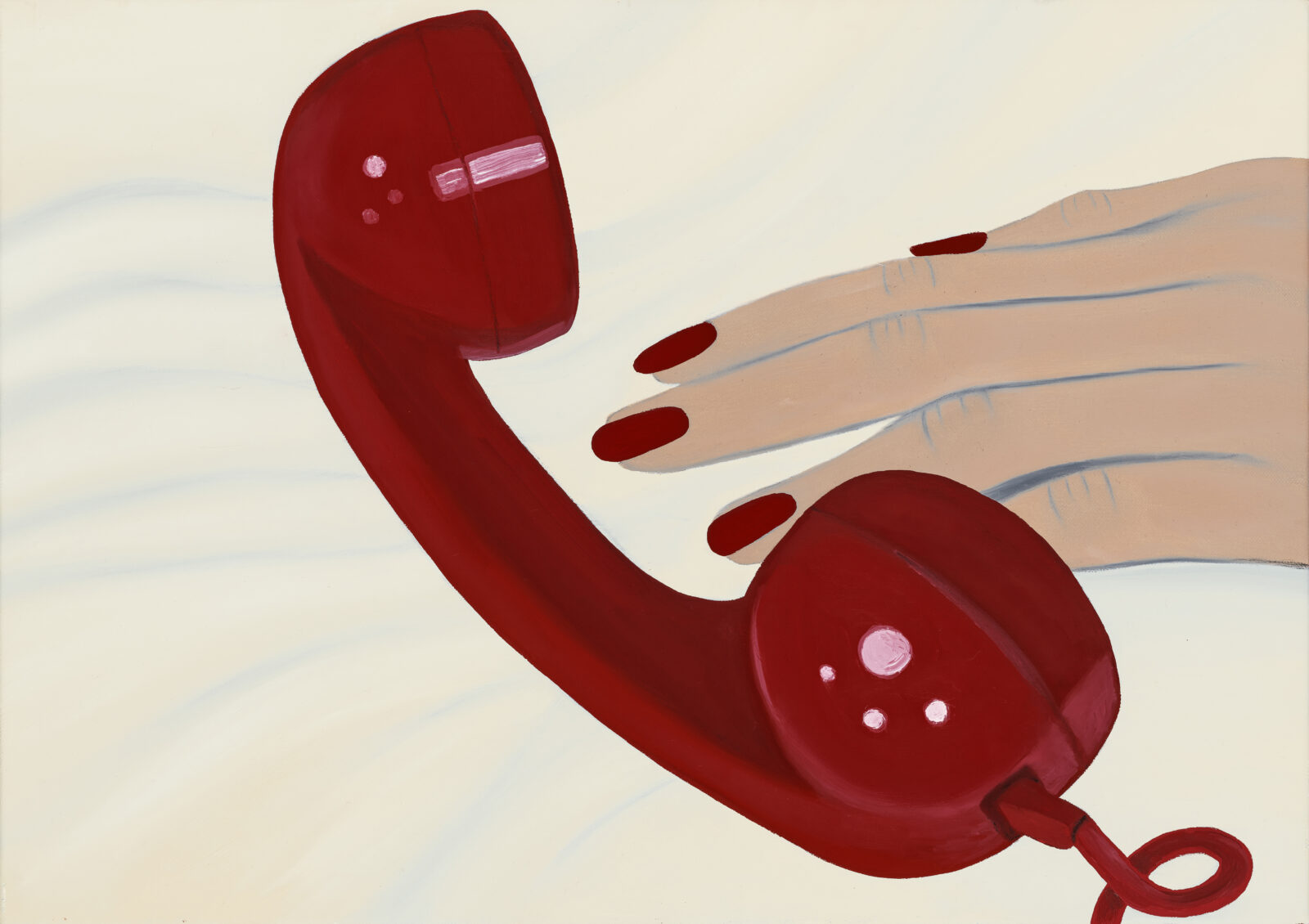
Hangin’ on the telephone, 2025
Pencil and oil on canvas
30 x 42.5 cm
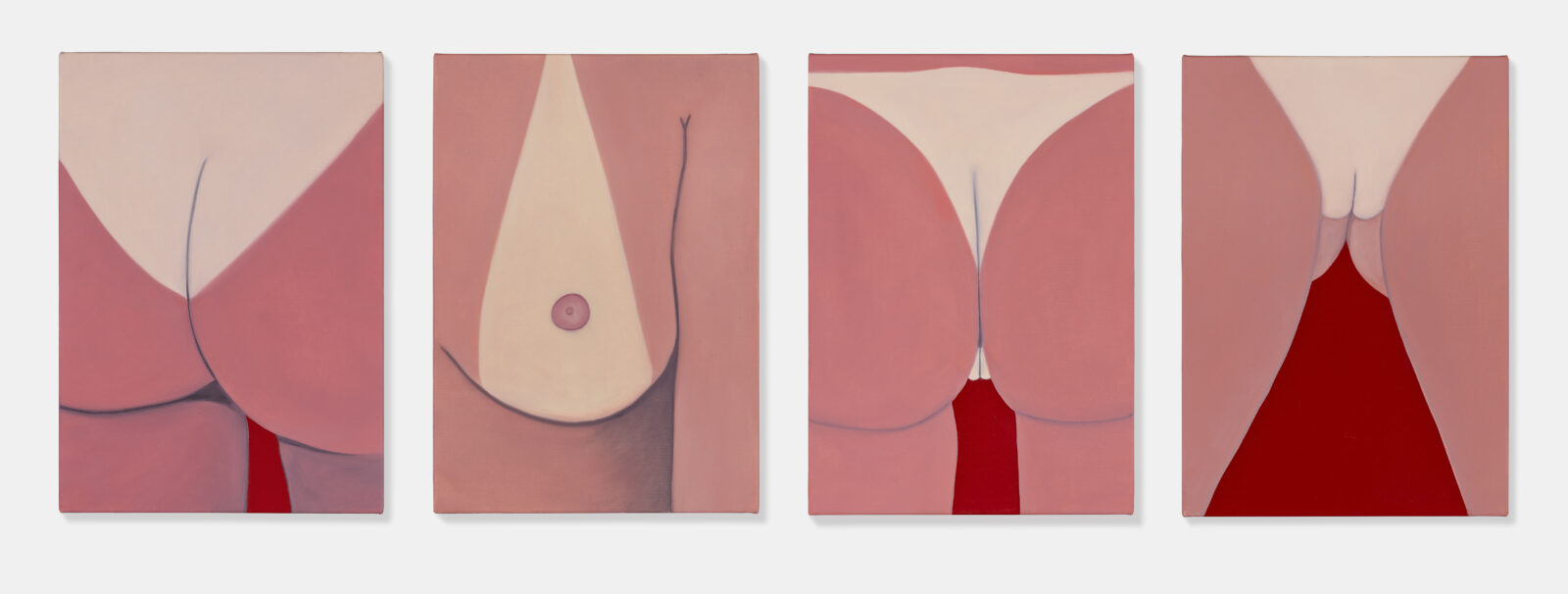
Carioca 1, 2, 3, 4 2025
Pencil and oil on canvas
42.5 x 30 cm
Unique