
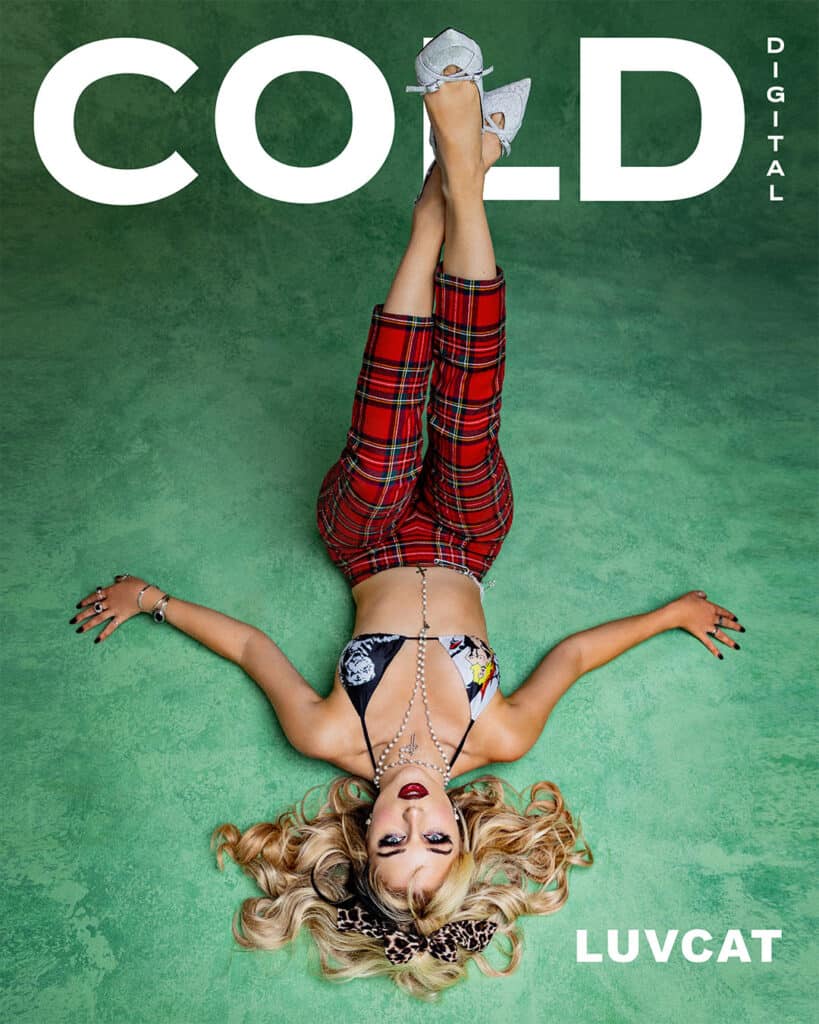
According to apocryphal legend, Luvcat is a circus runaway born on the Parisian Seine to the forlorn dirges of Leonard Cohen. This made her February performance at the French capital’s art deco behemoth L’Olympia – supporting wily britpop staples The Libertines – something of a natural homecoming. In the seven months since, the artist has been everywhere, including the Northern Music Awards stage to win Best Breakthrough Act and back to Paris to play with your favourite artist’s favourite artist Chappell Roan at Rock en Seine, a pop star with whom she shares an affinity for the baroque, the melodramatic, and the heartbroken. With the fresh release of a cinematic new single in “Blushing” and the announcement of an impending debut album, dropping October 31st, The Cold Magazine looks back at our chance encounter with the Scouse superstar for our August digital cover.

There’s something about Luvcat. A rare enigma in an age of churning virality and militant stan surveillance, Luvcat – named for the warbling track by The Cure – is both singular performer and compendium of odd, mistruthful mythologies: whispers of a birth on a tugboat on the Parisian Seine; rumours of an escape to the circus at age 16, where she was sidelined by a tragic accident. She is chameleonic, a shapeshifter, metamorphosising from a murderous housewife in one track to a tragically raging bull in another (although all forms are a hit; Luvcat, at the time of the original interview, had just three songs out on Spotify, but all had registered well over one million streams).
Despite her whiplash trajectory toward success and all these undulating shades to her personality, though, some things never change: the bleach blonde do with a suggestive dark streak; the timeless, Tim Burton red lip; and the mischievous twinkle to her eye. Now touted by everybody from Rolling Stone to the Grammy’s as one-to-watch for 2025 (she is just coming off supporting slots with the Last Dinner Party and the Libertines), Luvcat’s sudden rise hides in its apparent prestissimo a decade of good old-fashioned toil – namely her teenaged attempts at folk-music stardom that pinnacled with a gig supporting The Waterboys at 14.
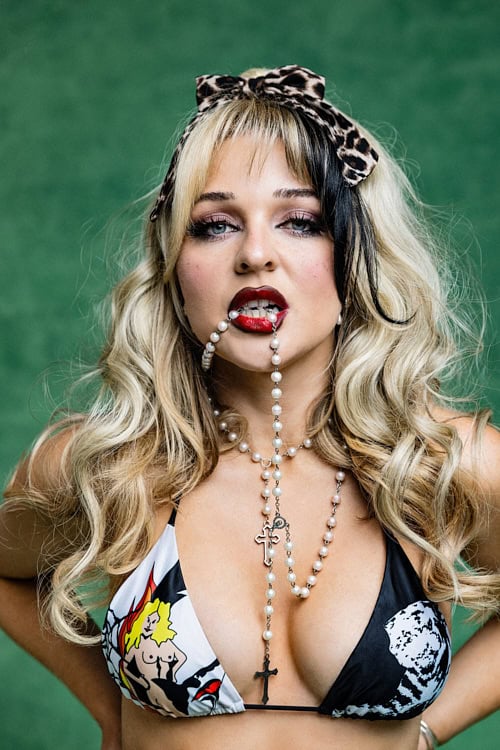
Now, Luvcat seems to have found the skeleton key, having well exchanged these shackling roots for a campy murder ballad here; a softly tragic, slightly deranged plea for dinner at a French brasserie there. It’s all performance, artifice, and a Black Swan ballet of the most seductive kind, a new, winking, and devotional take on rock that has given her the turning heads and stares of admiration she has always pined after – as she croons in one of her catchier tracks, she just wants to “make love and lots of money”.
(The Cold Magazine) CM: I was trawling through some comments on your YouTube videos earlier because I feel like people always have interesting things to say down there and I came across a comment on the “Dinner @ Brasserie Zédel” video saying, “this is so luvcat core.” How would you sum up “luvcatcore”, if you had to.
Luvcat (LC): I guess it ended up being lots of leopard print and red wine and lace and red velvet and chequer board floors. It’s all these things from my past that I’ve drawn in. I grew up adoring the Alice in Wonderland books, so I wanted to pull loads of things from Lewis Carroll. That’s why we have those roses with eyes on them, they come from the garden scene in Alice in Wonderland where all the garden starts to sing. We wanted to do Alice in Wonderland with a sinister undertone.
CM: There’s something to your aesthetic, I find, that’s also very devotional. All these pining, yearning lyrics and especially, on the topic of your visuals and cover art, that Catholic sacred heart on the “Matador” single cover. Is devotion, in any sense, a big part of your life?
LC: Absolutely. I’m devoted in all ways. It’s the only way I really know how to love. “Matador” is about that feeling of devotion and that’s what the sacred heart symbolises to me, with the knives sticking out of it. That song was about me being the bull who just wants love and a matador always aggravating with a red cape. Then that carried on into the next single “He’s My Man”, which was about devotion in another way, where it becomes obsession. And “Brasserie Zédel”, you could consider that devotion in the sense of meeting somebody and just fantasising about a life with them.
CM: This all feeds into the “dark romantic” side of what we could call “luvcatcore”, which comes up as a theme in lots of interviews and pieces about you, I find. For me, dark romanticism seems to be this very Gothic, very macabre, and also very erotic take on desire. So in “He’s My Man” you’re imagining yourself as a bored housewife slowly killing her husband because “he’s happiest with me”; in “Matador”, you’re “full of spit and spite” and “just want love” but get “gore”. Why do the dark and the romantic go together for you, what is your attraction to these darker themes?
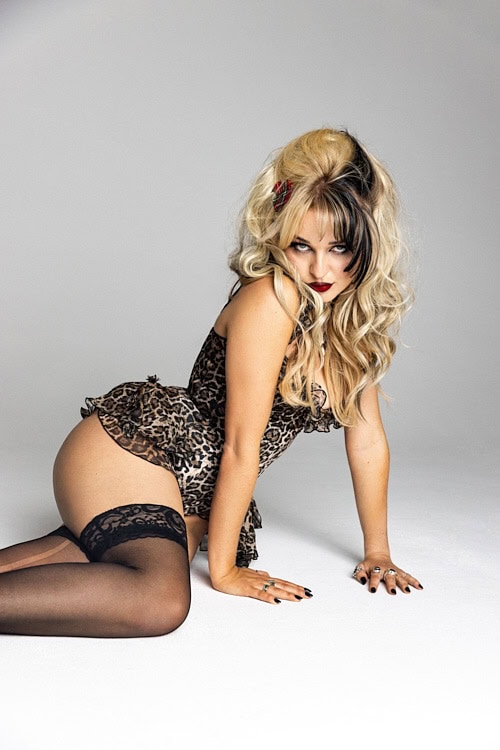
From a young age I also gravitated not necessarily toward horror, I don’t like horror very much as a genre, but toward the alternative world, toward Gothic architecture, Gothic literature, all aspects of Gothicness appealed to me. That’s something I really like to explore in the songs because you can use so many cool metaphors and delve further into that world. In reality, I’m actually quite happy and it’s strange because when I’m happiest I can write these quite dark songs. I just find it fascinating to look in on that otherworld that exists out there.
CM: That’s definitely something I find going on in a lot of media right now too. Gothic seems to be having a modest revival with Robert Eggers’s Nosferatu and musicians like Ethel Cain, who just released her really sinister album Perverts. Writing in DAZED Magazine, writer Emma Garland recently looked at this media and also declared “everybody is horny again” in quite a strange way, that our culture has become attracted to “deviance” and the darker sides of sexuality after “a decade of prudishness and moral sanctimony.” Right now, it’s all about types of love and lust and yearning that are super separate from those hyper-idealised forms of romance you might be used to seeing on TV or hearing in music. Why do you think that we, as a culture, have become fixated on the dark side that you like to sing about too?
LC: As humans we’re always drawn to madness and chaos. There’s a Joni Mitchell line that I love and it’s, “I’m frightened by the devil, but I’m drawn to those ones who ain’t afraid.” That’s like me – I love the mad characters who can introduce me to new things and to corruption and to everything else. It’s just much more interesting to live that way.
I do also have one foot in that classical romantic world too, though. I grew up watching ‘50s movies and Fred Astaire and Ginger Rodgers dancing together and it being that old-school, sweeping-strings sort of romance. That’s part of it for me, but I do like the deviant character and I want my music to encompass both of those things, the grand romance mixed with a playful take on my sexuality. I don’t want it to be too on the nose.
CM: Another piece of recent media that strangely came to mind when I was watching back your videos was Caroline Fargeat’s body-horror The Substance. Especially in the video for “Dinner @ Brasserie Zédel”, there’s overlaps in themes of transformation, dreams clashing with reality, Hollywood glamour and beauty, and especially food, which also plays a key role in the “He’s My Man” video. Is there any significance to food in the Luvcat mythology.
LC: Food, along with love, money, and sex, are the four things that are most important to me, and I think to most other people as well. Food is erotic, it’s another way of foreplay to people, it’s another way of showing affection. But it’s also a way of showing the grotesque. I really wanted, in “Brasserie Zédel”, to have somebody cutting into a greasy egg and the bacon spitting fat because I wanted it to feel visceral and nasty as well as beautiful. I like having a juxtaposition in the music and that’s why I make this rotten cake in “He’s My Man” and I’m chain-smoking cigarettes and ashing them in the batter. It’s supposed to be disgusting and revolting while having that next to the high glam and the big hair and everything else.
CM: Where does that very over-the-top, dark glam fashion aesthetic come from for you?
LC: From a very young age, The Cure was my main visual inspiration. Just their colour palette and the way they did the darkness so well. You would still come away from listening to them feeling light, even though they were singing very dark, very obscure songs sometimes.
After that, in my very early teens, it was My Chemical Romance and emo bands that were doing it, singing about death. I don’t like talking about death, but it somehow always tethers into my songs because there’s a romance in death. So I end up singing about it, even though in reality I’m a bit of a wimp and I don’t like death and I don’t like gore or anything like that!
CM: I was thinking about your transition to singing this very earnest folk music in your early years to your current brand of Gothic-meets-baroque cabaret rock and I feel like it actually makes quite a lot of sense, since folk music is really indebted to telling stories about loss and emptiness and heartbreak, all these tragic ballads you get. It’s really about telling a story – Dylan is the only musician to ever win a Nobel Literature Prize – like you do now. How much of Luvcat, in its current form, do you think is indebted to your earlier music and experience?
LC: Having traditional roots has informed everything going forward. And you’re right, folk music is very much singing about dark themes. I also grew up listening to lots of Irish music as well and it’s full-on and it’s a lot of yearning and singing about dark subjects.
One of my earliest songs was called “Black Dog” and it was about depression, about somebody I knew who was suffering from that, and that has fed into what I’m doing now. Especially after the pandemic and a few things that happened to me, I wanted to look at everything with new eyes and present it in a more tongue-in-cheek way. I was just tired of taking everything so seriously. That’s the difference [between then and now]. With Luvcat, I just want to have more fun and fuck around on stage instead of making everything uber sincere.
CM: Because you’re such a storyteller though and there’s such a textural richness to your music, your music really resists the “TikTokification” trend a lot of people decry in contemporary music – shorter songs, chasing instantaneous pleasure and virality –, which is a little ironic, because you got your big break on TikTok. How do you think TikTok is affecting music and the industry; is it net positive or net negative in the grand scheme?
LC: I think it’s a net positive, as much as I wish I could be an old-school artist and chuck my phone in a river. I’m just playing the cards that we’ve been dealt. We live in this generation and we have no choice in that, so we just have to roll with it.
I’m also not somebody who was blessed with parents in the industry or a big bank account, so social media was the only way I could reach anyone. I didn’t expect it [going viral], but when it started happening, I just carried on doing it and it worked. I don’t have TikTok or social media in mind when I’m writing music, but it’s a nice way to test something and see what resonates. For instance, “He’s My Man” was never meant to be our second single – it wasn’t even going to be a single, it was going to be a B-side. And then from a shitty video at a show it picked up and I was like, “Well! I always loved this song.” But nobody in any meeting ever did or picked it out, so that was nice because it let the listener totally guide us and we respected that, we went with that, and we changed our plans. It made everybody a bit cross because we were a bit underprepared, but it was the right thing to do.
Seasons play into this as well for me. Certain songs just have the right timing when they should be heard. You just have to listen to the wind with those things.
CM: What songs are timeless for you? What’s the one song you wish you could’ve written?
LC: Probably “Dance Me to the End of Love” by Leonard Cohen. Each verse goes through the beauty and madness and sadness of love up until the wedding and the children and the grave and I think it’s one of the most beautiful love songs ever written.
Maybe “Take It With Me” by Tom Waits too. Anything lyrically profound like that gets me right in the guts.
CM: And are there any smaller bands right now influencing what you’re doing?
There’s a band in South-east London where I started playing in all the pubs called Sleaze and they’re going to be opening for us in the future. They’re wicked! The lads in my band are also in a band called Big Society too and they’re going to be opening for us. They’re the coolest.
Luvcat’s debut album, Vicious Delicious, releases October 31st, via AWAL.