
“What is your craft?”
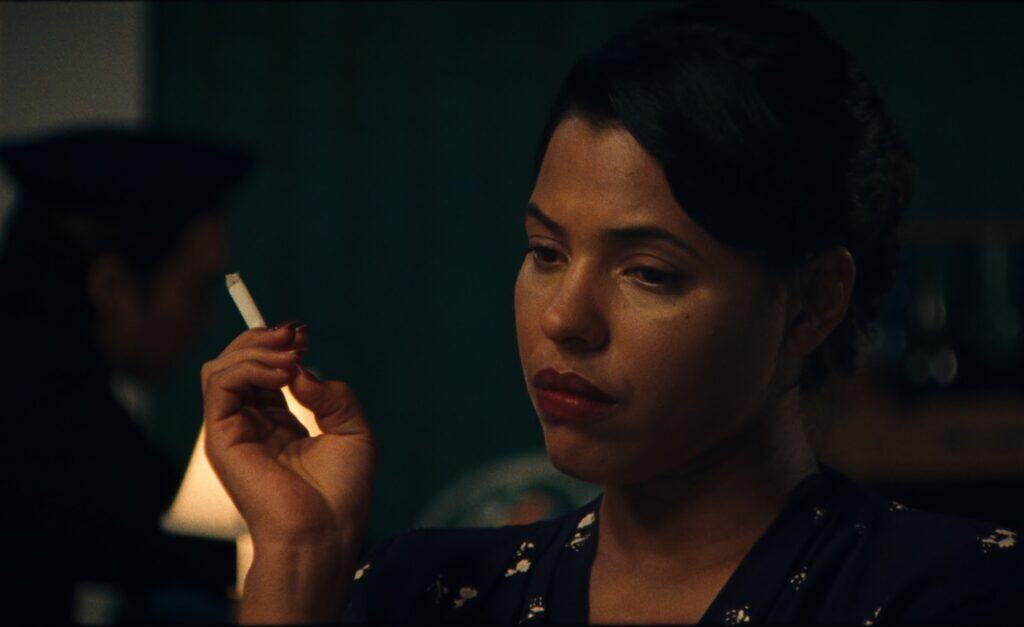
This was the first question I asked Madeleine Hunt-Ehrlich, the creative mind behind the 2024 film The Ballad of Suzanne Césaire, an unconventional biopic of the surrealist, pan-African Caribbean writer Susanne Césaire, known for her essays on surrealism and colonialism. As Hunt-Ehrlich observes, the creative industries encourage us to “index” ourselves, to “figure out what box things belong in”. Thus, the classic question every creative receives on a constant loop: “what are you?” For some of us, the answer is easy: A screenwriter. A jazz musician. A theatre director. A painter. But for others like Hunt-Ehrlich, whose practices span genres, mediums, and styles, the answer is ever-changing, evolving in defiance of stringent industry dictums or established career paths.
Prior to our interview I came across dozens of descriptors for Hunt-Ehrlich’s practice, assigned to her by various publications: writer, filmmaker, director, visual artist, etc. “I always felt the most comfortable with ‘filmmaker’”, Hunt-Ehrlich clarifies, “films have all these disciplines within them.”
Indeed, in the last five years Hunt-Ehrlich has made a name for herself as an exciting new voice in both the art and cinema scenes. Her successes include Too Bright to See (Part I), an “experimental narrative artwork” displayed as part of the prestigious Whitney Biennial at New York’s Whitney Museum, numerous short films – many of which centre on the inner lives and overlooked stories of black women – and of course, The Ballad of Suzanne Césaire itself, which screened at TIFF, the New York Film Festival, and at the Barbican earlier this year.
Hunt-Ehrlich, then, has a career that straddles the seemingly disparate worlds of art and cinema. She’s acutely aware of the differences between these two realms – the art world is the world of collectors and curators, biennials and fairs. The film industry (at least in the popular imagination) “is primarily concerned with commerce”, Hunt-Ehrlich observes, referencing the big Hollywood blockbuster crowd-pleasers that dominate the cultural conversation. Consequently, “[independent] cinema has to add all these hyphens to itself to explain why it exists. If it’s not making a hundred million dollars and selling out screens across six markets […] then it has to defend itself”. Once more, the artist is asked: what exactly are you? And why should we care?
“We are at such a crossroads for cinema”, Hunt-Ehrlich muses, “there’s a real crisis of not only identity, but it’s [also] existential [concerns].” So how can cinema survive in a world where creativity is increasingly automated? Hunt-Ehrlich offers one possibility: “there’s an interesting comparison between luxury fashion and the cinematic feature – or the feature that identifies as cinema.” Quoting fashion designer Rachel Scott, she adds, “‘luxury is something that is handmade’ […] I love that idea in terms of film, too.”
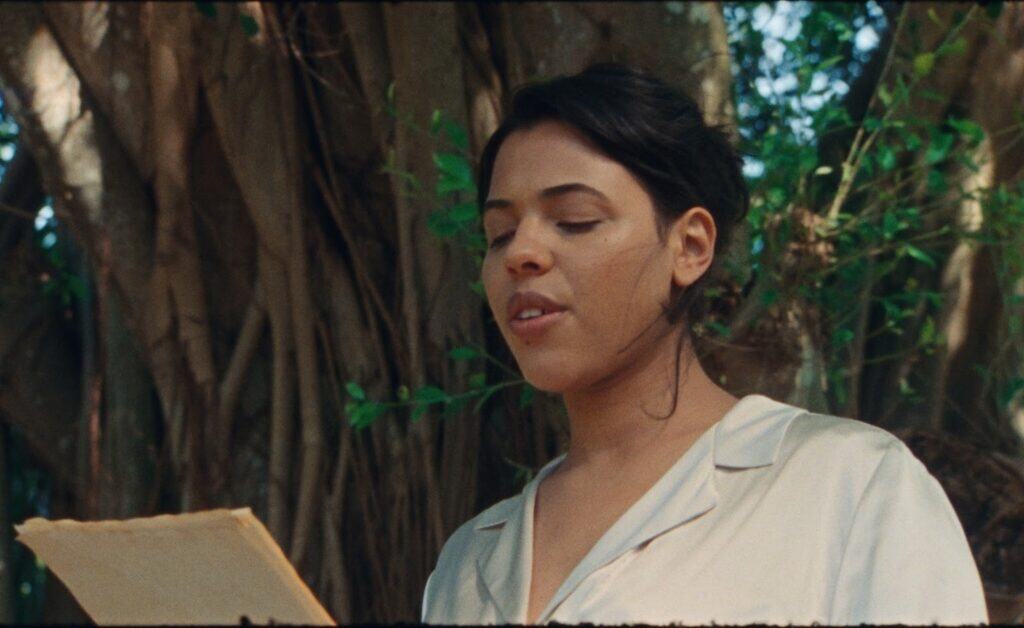
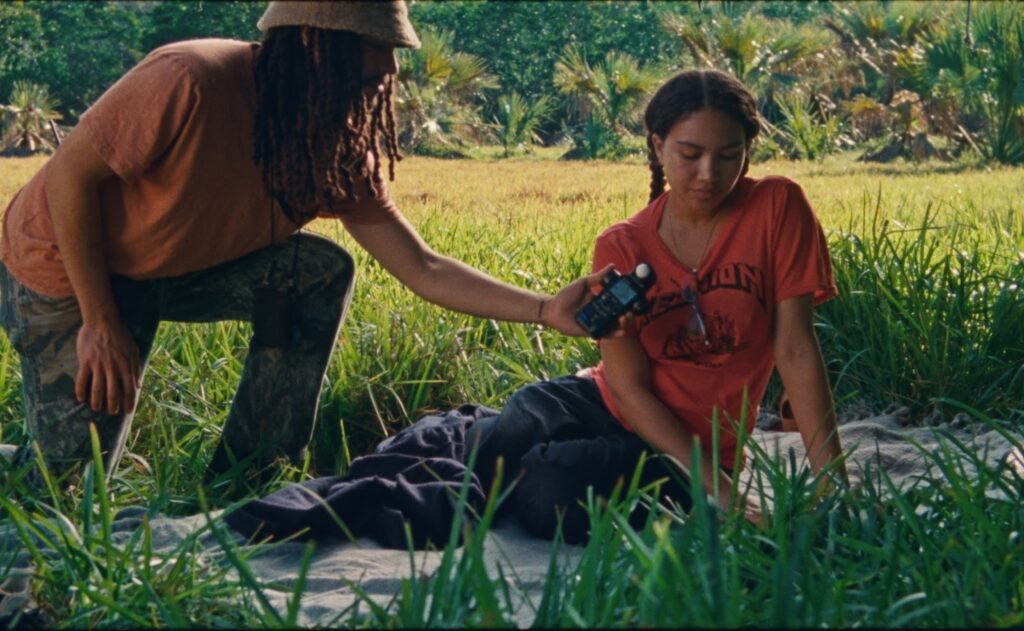
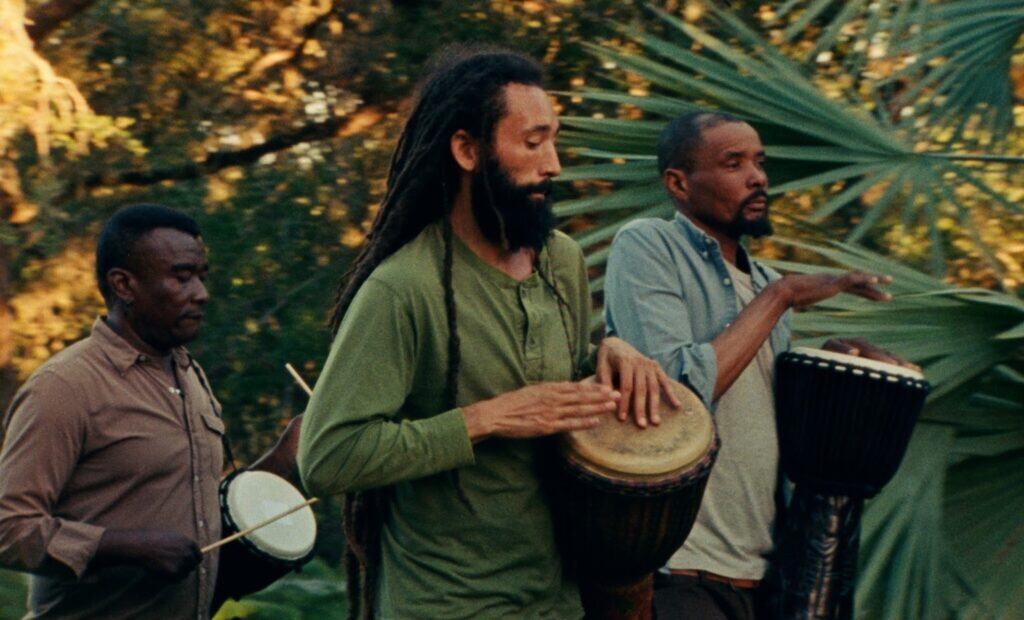
So what is ‘luxury’ or ‘handmade’ cinema? The Ballad of Susanne Césaire might be one such example. A “post-biopic” of the surrealist, pan-African Caribbean writer Susanne Césaire, Hunt-Ehrlich’s film embodies Susanne Césaire’s own assertion that the surreal is “young, ardent, and revolutionary”, deconstructing conventional notions of the cinematic biographic form. Hunt-Ehrlich references curator June Givani, founder of the Pan African Cinema Archive in London, and Derek Jarman as key influences, figures who bring marginalised narratives to the forefront and embrace the “luxury”/craft rather than the “commerce”, of cinema.
The Ballad of Susanne Césaire has not yet been widely screened outside of its festival runs and a few special screenings (though a streaming date is upcoming). I ask Hunt-Ehrlich how she feels about the challenges of sharing her film with the world, of giving it longevity outside the festival circuit. She agrees that in a world where we are constantly inundated by stuff, “it’s hard to break through the noise”; indeed, a film’s marketing budget can sometimes exceed its production costs. But, perhaps thanks to her experience in the art world, Hunt-Ehrlich muses that “the stars of the future are going to be curators”, people who are willing to trawl through the “noise” to deliver audiences the quality art they seek.
Words such as “luxury” and “curation” can convey exclusion, a history of certain narratives and identities being prioritised while others are diminished, ignored, or erased entirely. However, Hunt-Ehrlich’s work suggests that, in this increasingly commercialised, artificially-generated culture where financial gain takes priority over experimentation, reflection, or activism, to create and to curate luxurious (ie: carefully crafted) art about the marginalised histories of black women therefore becomes the “young, ardent, and revolutionary” work that Susanne Césaire spoke of.
“Our values shouldn’t end at our art,” Hunt-Ehrlich asserts, “these values should really fill our whole lives. And I think the job of the artist is not just their art, it’s how they live.” Amidst a rapidly changing cinematic landscape, one which is increasingly inundated with content and obsessed with financial gain, Hunt-Ehrlich and her work offer an exciting, radical alternative in which aesthetics and activism, community and craft, are the key tenants of cinema. It is a possible future in which, as Hunt-Ehrlich observes, “the fullness of our lives is just as important [as our art].”