
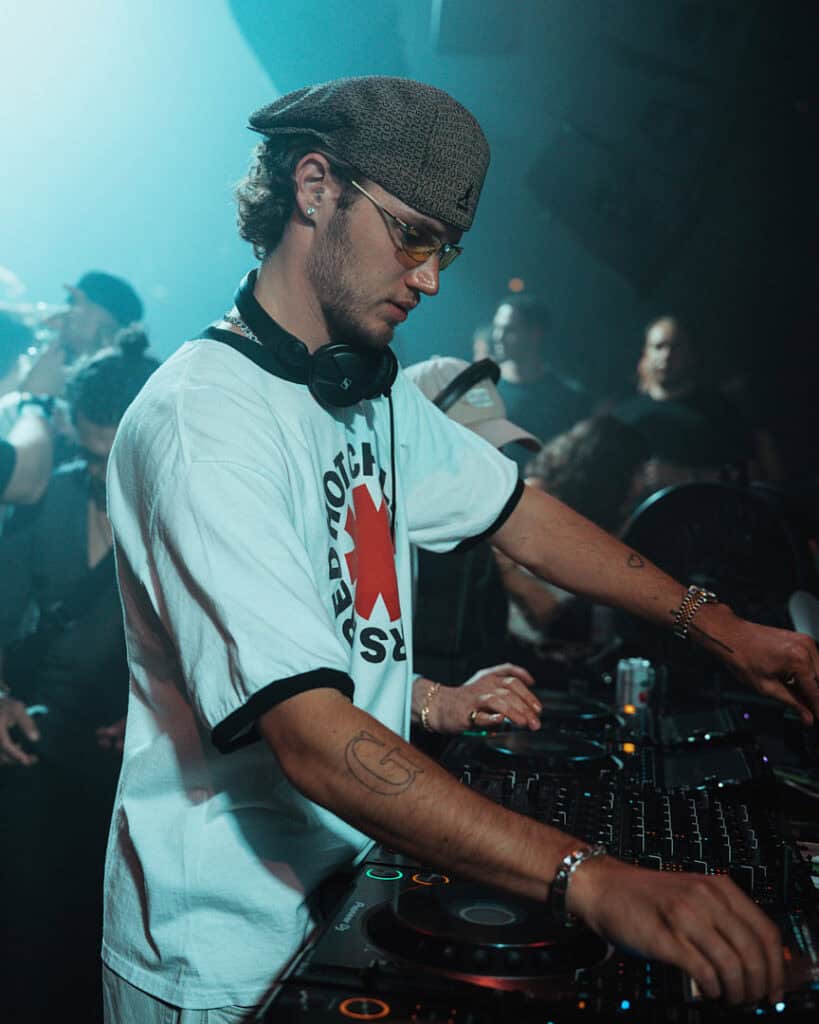
When Mau P skyrocketed to stardom following the release of his debut track, he was caught a little off guard. After a childhood dotted with various musical endeavours and a half-realized career under his own name, the Amsterdam-based DJ was taking a moment to reset and rebrand. “I was just some random guy with a song that had a hundred million streams,” he tells me. “I didn’t even have my new name yet.”
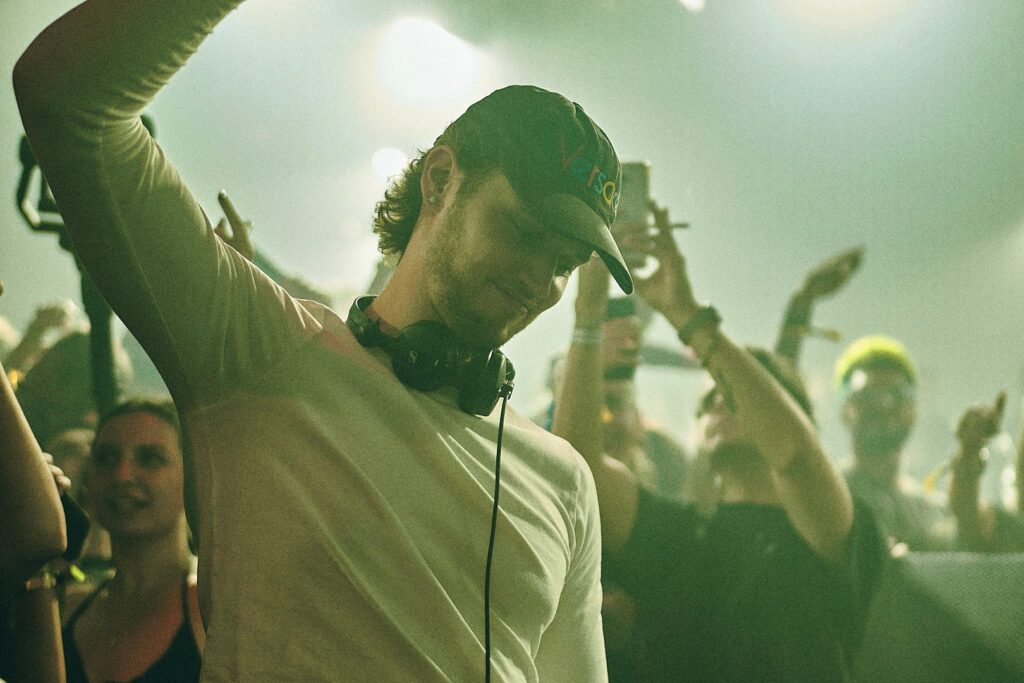
But far from shrinking in the shadow of the house-inflected ‘Drugs from Amsterdam’, the 28-year-old developed a cult following of loyal fans and an equally large legion of love-struck rave groupies hoping for a private moment backstage. What followed this debut was a massively successful remix of Tame Impala’s ‘The Less I Know the Better’, which climbed the number one spot on Billboard’s Dance Chart. Combine Lollapalooza, a Coachella moment, along with a residency at Ibiza’s Pacha nightclub, and it’s easy to see why the DJ has amassed almost half a million followers on Instagram and over six million listeners on Spotify.
Behind this meteoric rise lies a mastery of celebrity culture. At a moment when artists more openly resist the pressures of public life, Mau P is leaning in. On TikTok, he dances in the kitchen, teases receipts from Diplo, and quips, ‘Mau P does wanna smooch, who got next?’ Fan interactions also form a loop between the music and the man. Take ‘Mau P Never Dances’ — the TikTok commentary that spawned yet another viral remix. In fact, even his Coachella set featured those words emblazoned in LED across the Sahara Tent.
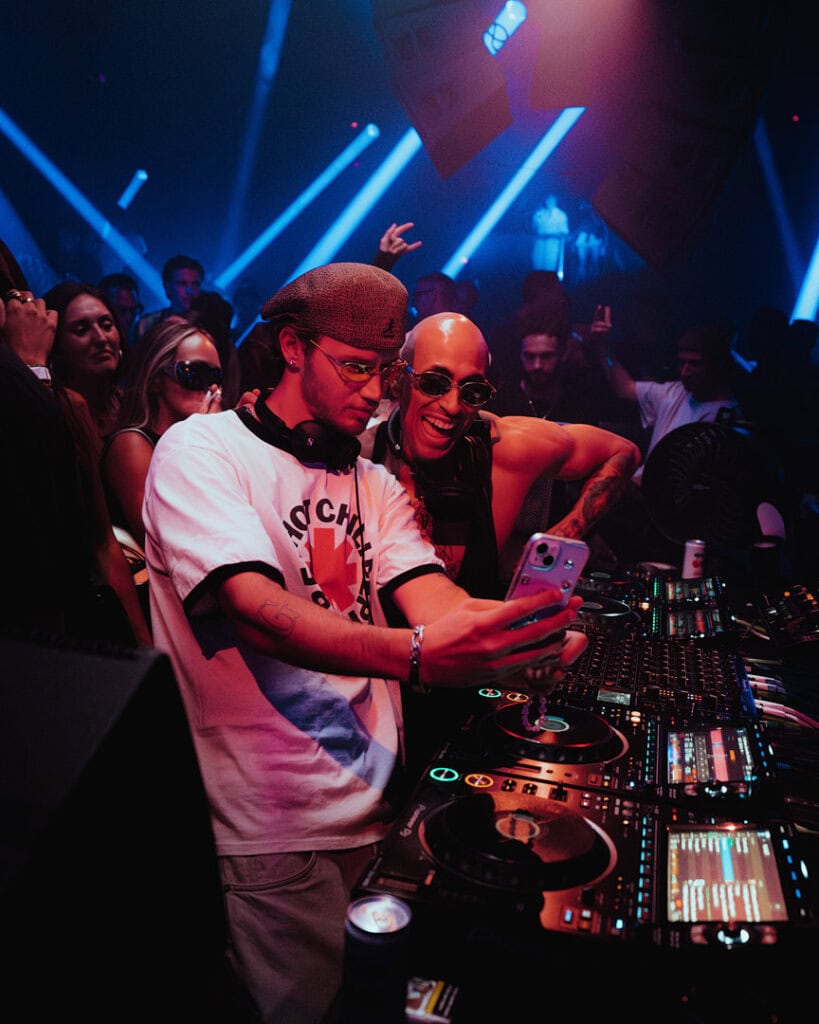
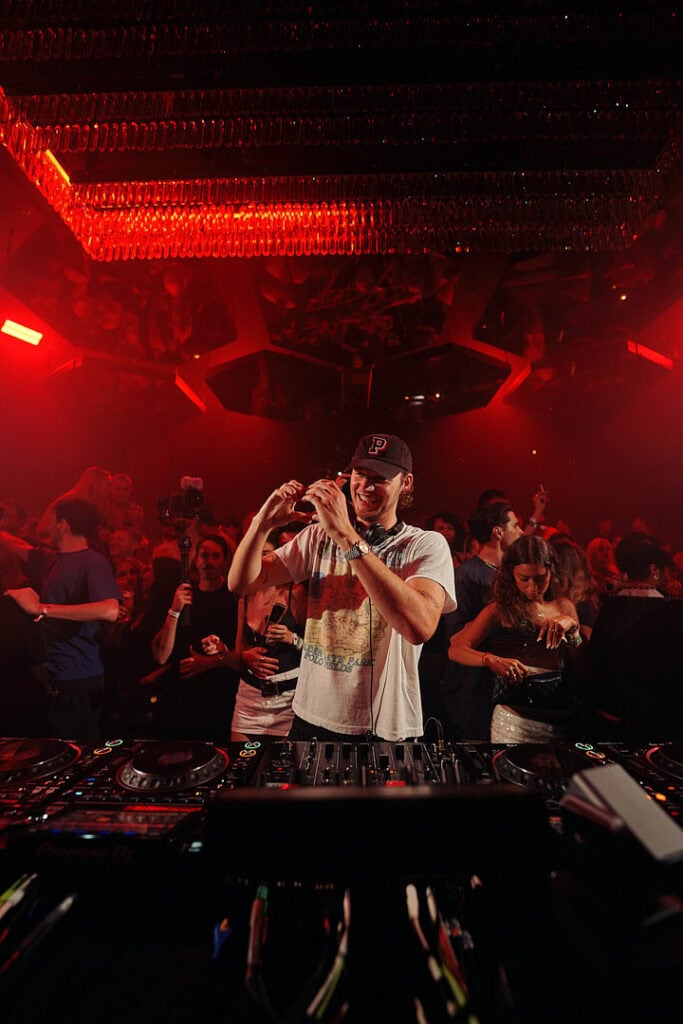
Following the release of ‘Tesla’ and midway through his summer-long stint at Pacha, I caught up with Maurits Westveen, the real man behind the Mau P persona. Speaking on Zoom from his room in Ibiza, we spoke about stardom, Beyonce, and the sparks igniting his process.
In August this year, Mau P raced forward on this momentum with the hotly anticipated ‘Tesla’ — a nod to the electric car and to chemical highs beating through the heart of some festival nights. Over a high-voltage, techno beat, a vocal rings out: “I just popped a Tesla, ain’t no need to charge”. Naturally, it’s already garnered over 200,000 streams.
The COLD Magazine (CM): Tell me where the name Mau P came from. How is Maurits Westveen (the person) different from Mau P (the artist)?
Mau P (MP): There’s not much difference. Whatever I’m working on reflects who I am. The fans don’t just follow a brand and some music. They follow the real me.
CM: I wonder then, what’s the point of using a different name?
MP: When I did music under Maurits Westveen, it was a different genre. When I swapped styles, my booking agents said it was impossible to use that in certain line-ups because I was known for something else. So, I changed my name.
CM: I understand you have quite a musical family. How did that shape you?
MP: It was always in my DNA to do something with music. My parents wanted me to play multiple instruments — like guitar. And I was always on the computer. Eventually, I combined the two. But I came from a more classical upbringing.
CM: What did your parents say when you moved from more classical music to DJing?
MP: They were hyped as long as one of their kids did something in music. My sister didn’t want to do music. She’s the smarter sibling. She’s a lawyer.
CM: Let’s shift to your process. What goes through your mind when you’re working on a track?
MP: Sometimes, I’ll find a cool sample in an old song that hasn’t been used before. Or something will pop into my head — a melody or a vocal. Most of the time, I just need a spark to ignite the whole process. And from there, it’s like chasing magic, a feeling. You’re doing it as fast as possible because you don’t want to lose steam.
CM: And what was the ‘spark’ behind your new song, ‘Tesla’?
MP: I had the melody for the bassline. At first, it had a hip-hop beat, but I wanted it to sound more like house. So, I slowed it down, gave it a tempo, added my own vocal recording. Then I left it for a few months before revisiting it. I do this thing where I save drafts under ridiculous names and then rediscover them a while later.
CM: Do you often work on tracks and then pick them up later?
MP: Sometimes I leave them for a year or more.
CM: Let’s touch a little on your time in Ibiza. How did you find developing the Pacha residency versus a set for a one-time performance at a festival?
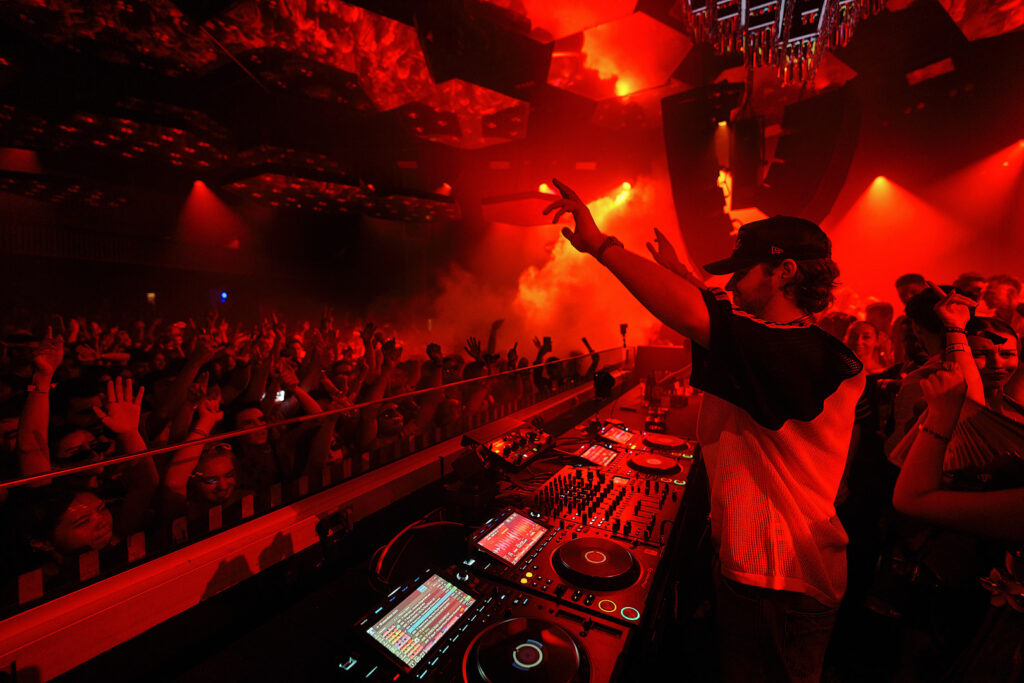
MP: It’s more of a passion project. I’m responsible for the crowd and if everyone’s having a good time. A whole residency carries a lot more weight than doing one show, tweeting, and leaving. We also have a very diverse combination of artists. Every week is special, every week is something new. Even I don’t know what to expect musically.
CM: How did it feel to go viral with ‘Drugs from Amsterdam’?
MP: I’d been making music for so long and I wanted to hit a home run. When I finally did, it felt like solving a Rubik’s Cube. Someone uploaded ‘Drugs from Amsterdam’ to TikTok and the world grabbed it. I had no control over it — I didn’t even have my new name yet.
CM: Did you feel like you were playing catch-up with how quickly you grew?
MP: For around a year I did. When the song blew up, nobody knew who I was or what I was about. I was just some random guy with one song that had a hundred million streams online. When it exploded, we had to reverse engineer a whole brand.
CM: I imagine there is a lot of pressure to keep reaching that massive audience.
MP: People definitely have expectations. When I’m making music, I try to avoid thinking about hitting a certain number of streams. That’s not how I made ‘Drugs from Amsterdam’. I had no expectations when I made that track and it became my most successful song.
CM: It’s interesting that social media has been so important for you. When did you first see the ‘Mau P Can’t Dance’ meme? How did you feel about it?
MP: Someone from my team sent me that girl’s TikTok. I didn’t watch it for a couple of days, and then more people sent it to me. When I heard her talk about my shows, I liked the monologue so much that I instantly downloaded it. I put it through Ableton [music software] and made a beat. Then I looped it. It worked perfectly as a song.
CM: And then it became bigger. Do you ever find it surreal to be recognised?
MP: Sometimes. But it’s usually where you would least expect it — like when an older lady at the dentist told me her son was a massive fan. But it’s nice. I must be doing something right if there are so many people recognising me for my work. And music is such a creative output, so it’s nice to feel seen and appreciated.
CM: So, you’re in Ibiza for the summer. Then what are you doing?
MP: A lot of shows. Then next year, I want to start a music label. So many people send me music, and all I can do is play it on stage. They’re all so talented. I remember how much I valued help from bigger producers when I was starting out, so I want to do that for others. And clothing — not merch, but an actual brand.
CM: Okay, I have one more question. Kind of a silly one. You’re in a Tesla driving through Ibiza on your way to Pacha. What song is on the radio?
MP: ‘Déjà Vu’ by Beyoncé and Jay-Z. I rediscovered it recently.