
Six years ago, Roxy Travers saw something unusual jutting out of a skip. It was a large bag of what appeared to be clean, folded clothes, piled atop a mountain of other bags just like it.
Travers hauled the bags of clothes to her dorm and got to calling charities for collection. But instead of a pick-up plan, she made a discovery: between 70 and 90 per cent of clothes donated to UK charity shops are forcibly exported to the global South.

“That’s when I thought, ‘We have a problem.’” Travers says, leaning over the recycled pallet counter at her swap shop in North London.
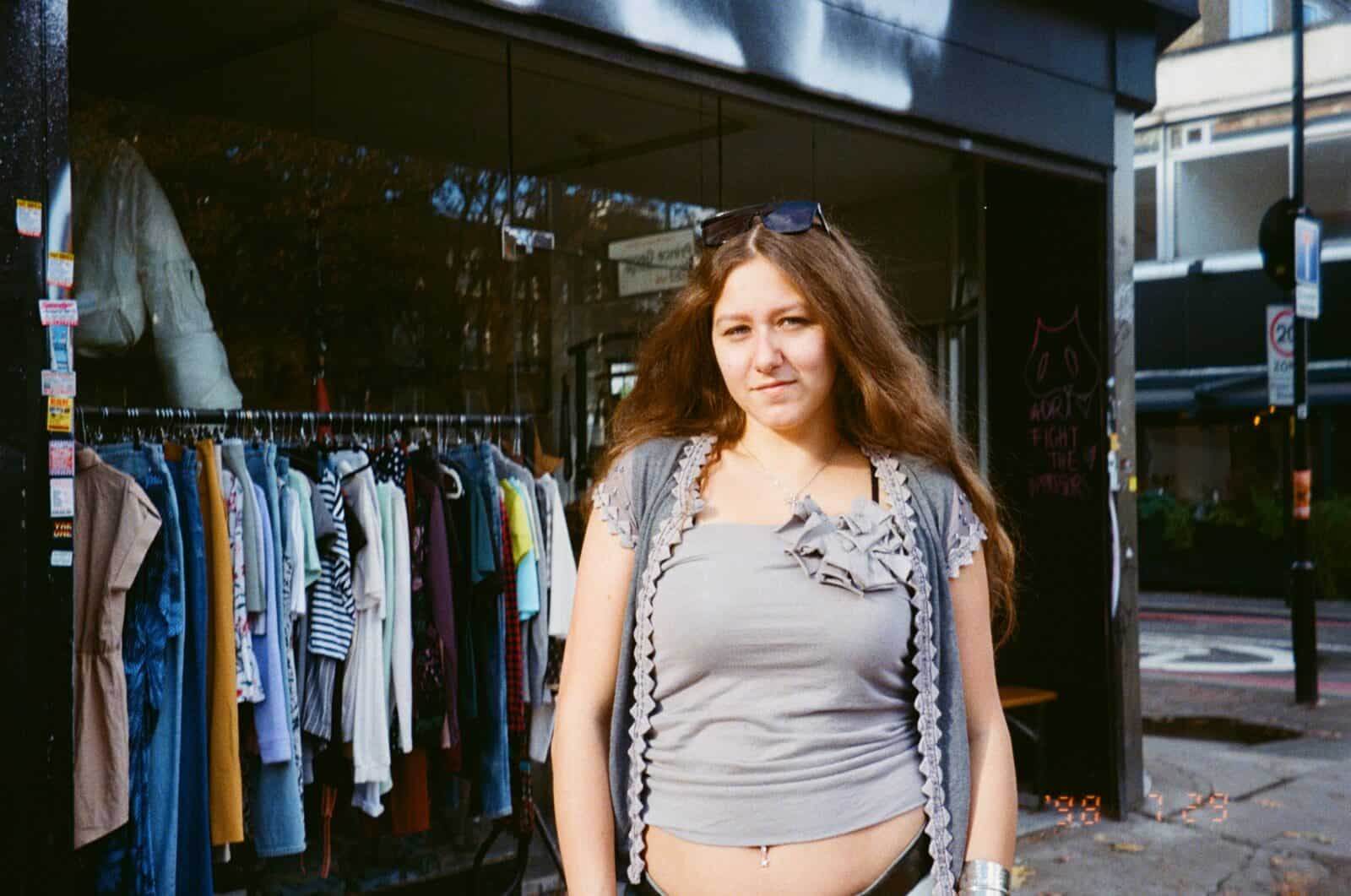
The 27-year-old ‘Queen of Thrift’ is speaking to me between customers at Fuck Fast Fashion – an eclectic, if slightly overstimulating, retail space full of mannequin heads, recycled shoe rubber decals and mounds upon mounds of clothes.

The store is Travers’ “baby” – and the first community clothing swap shop in the world. It was once grant-funded and self-sustaining. But following legislative changes, tomorrow is no longer promised for the second-hand haven.
As someone who wants to shop sustainably, she explains, swinging her waist-length hair over her shoulder, there are limited options. Online second-hand retailers whose products you can’t try on, and pricey curated vintage stores were off the table. So were “those fancy recycled plastic water bottle hoodies that cost like £75,” she says. “So I was like, where do I get my clothes?”
Enter: the swap. The idea was born of a neighbourhood tradition from Travers’ penny-pinching childhood in a small town outside of Montreal. Every few months, the community would gather for “trash bag days.”
“Our neighbours who were older than us would drop off all the clothes they wanted to donate, and we would pick out what we wanted and pass them onto our friends,” she says.

Growing up, it was embarrassing to wear thrifted clothes, Travers explains. But in the 2010s, somewhere between Tumblr grunge and the cost-of-living crisis, second-hand shopping became cool.
Travers started Fuck Fast Fashion, a Hackney pop-up clothing swap, in 2019. She would set up for a day in a rented or borrowed space, and locals – or Londoners who found the swap through social media – would gather, usually on a Saturday, to trade clothes.
It was the energy of swapping that people were drawn to, Travers explains. “I kept telling people, ‘Don’t gatekeep this from your friends!’” she laughs. “You want to tell your most stylish friend about this, because then you can get their clothes.”

In spring of 2022, she opened her first storefront. In its first two years of grant-funded operations, the shop diverted 51 tonnes of textile waste in a storefront the size of a taxicab, says Travers. It needed new digs. But no sooner had Fuck Fast Fashion expanded into a larger space than the Labour government slashed funding for some cultural and community groups funding by 48 per cent.
“We were running the swap for free for the last four years, but now the grant landscape is completely decimated,” says Travers.
To survive, the shop introduced a tiered membership model in addition to outright pricing.

Although it’s garnered over 300 memberships since last summer, the shop still struggles to break even. “Our staff at the moment is working voluntarily. Nobody’s being paid, because we all believe in it,” says Travers. “But that’s really hard.”
In these uncertain times, Travers remembers a day, two years ago, when a homeless man came into the shop, dripping wet, and she “kitted him out”, as she puts it, with rainproof, heat-tech gear, warm mittens and socks. “That was one of the moments where I realised how transformative clothes can actually be,” she says.
Since then, Fuck Fast Fashion has partnered with numerous local charities that support migrants, domestic violence survivors and low-income families.

Beyond her passion for textile waste management, it’s the sense of community that keeps Travers going. In the hour I spent with her, she greeted half a dozen shoppers by name.
“Did you try on that burgundy jacket we had the other day?” she asks one woman who’s leafing through the coat rack.
“Too small,” the woman replies.
“I’ll keep an eye out for you,” Travers says with a wink.
For the shop owner, interactions like these are another benefit of Fuck Fast Fashion’s brick and mortar approach to swapping. “People are craving community,” she says. “London doesn’t have enough places where you can walk in and someone will remember you.”
In the future, Travers hopes to open branches of Fuck Fast Fashion on high streets across the UK. But for now, her focus is on keeping up the good fight: facilitating as many swaps as possible.


