
Open the camera roll of anyone working in fashion and a pattern emerges: not just catwalk close-ups or backstage polaroids, but plates. No ordinary meals, either, but sculptural piles of citrus, colour-matched petits fours, and glossy pastries arranged with the methodical precision of a lookbook.
Over the past decade, food has shifted from a perfunctory afterthought at events (a measly, no-carb selection of crudités inherited from the early-2000s diet landscape) into one of the industry’s most expressive mediums – a way to build atmosphere and invite audiences into a brand’s inner world. As luxury houses open restaurants and designers host dinners instead of shows, hospitality has become one of fashion’s most persuasive, albeit slightly controversial, storytelling tools. I remember queueing for nearly an hour in Covent Garden for a Miu Miu–branded book of feminist literature and an ice lolly, wondering what I was doing – but later realising that it made perfect sense. This is where fashion lives now: we gorge ourselves on cheap, edible ephemera for the illusion of substance.
Across recent cultural analysis, the rationale behind this shift is consistent. Consumers increasingly prioritise experiences over products; food has become fashion’s most accessible entry point, creating emotional resonance without the four-figure price tag. While brands once used food to imitate luxury, now the dynamic has flipped. Today, it’s the food that wears the brand. And while the industry’s culinary turn often leans maximalist, designer Mira Maktabi took a markedly different, more tender approach during London Fashion Week this past September.
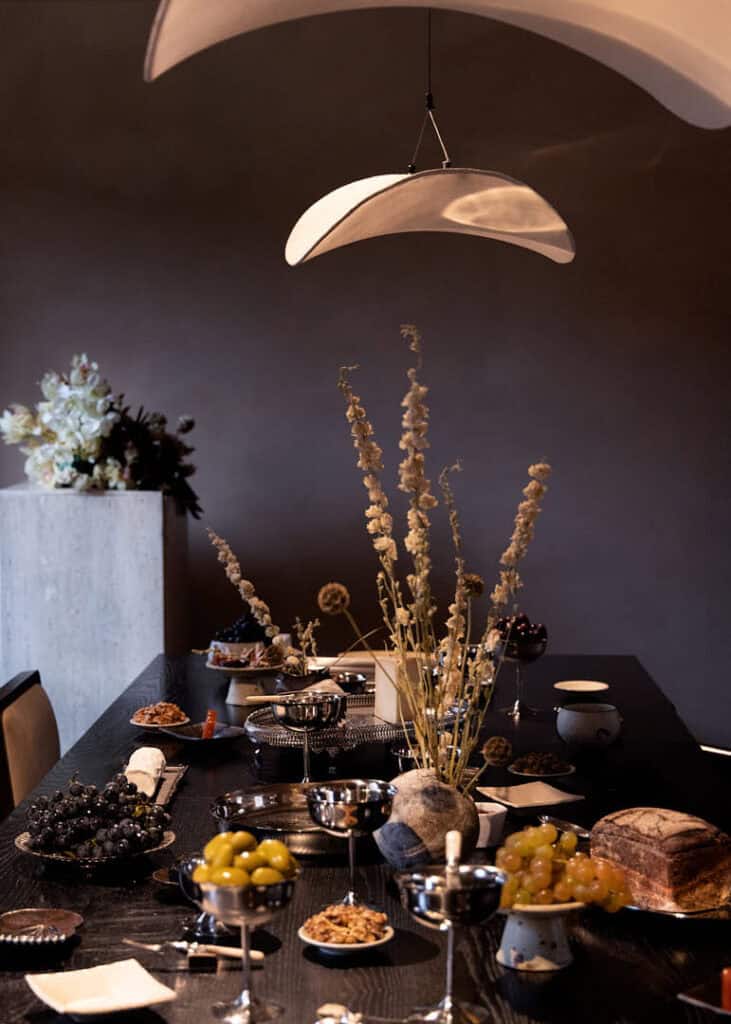
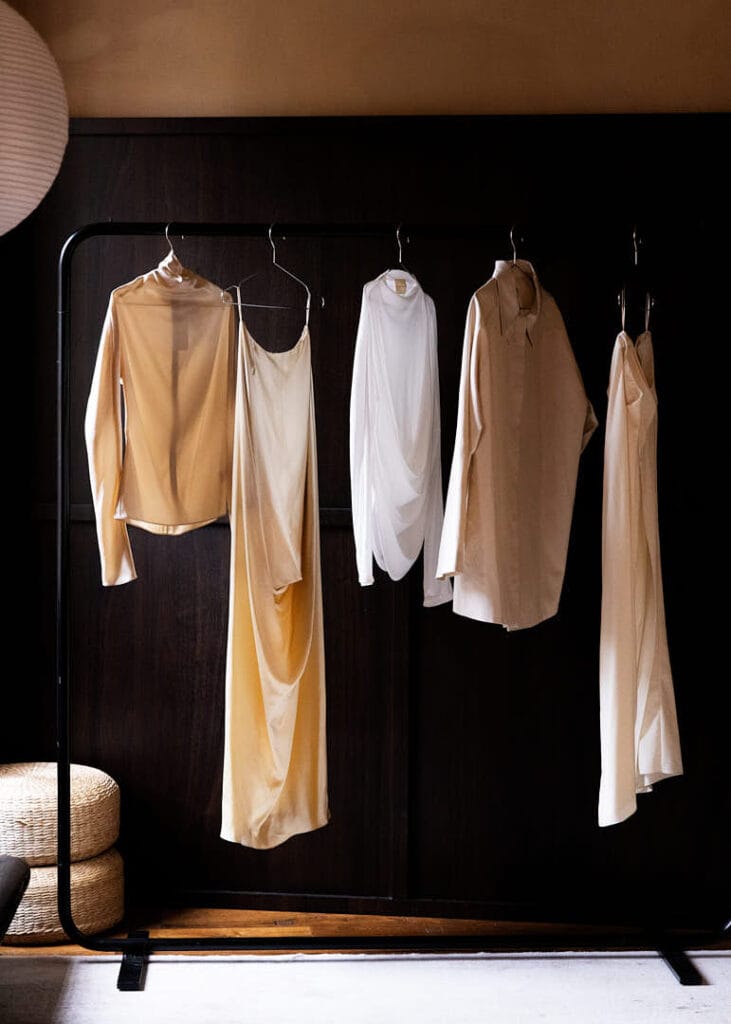
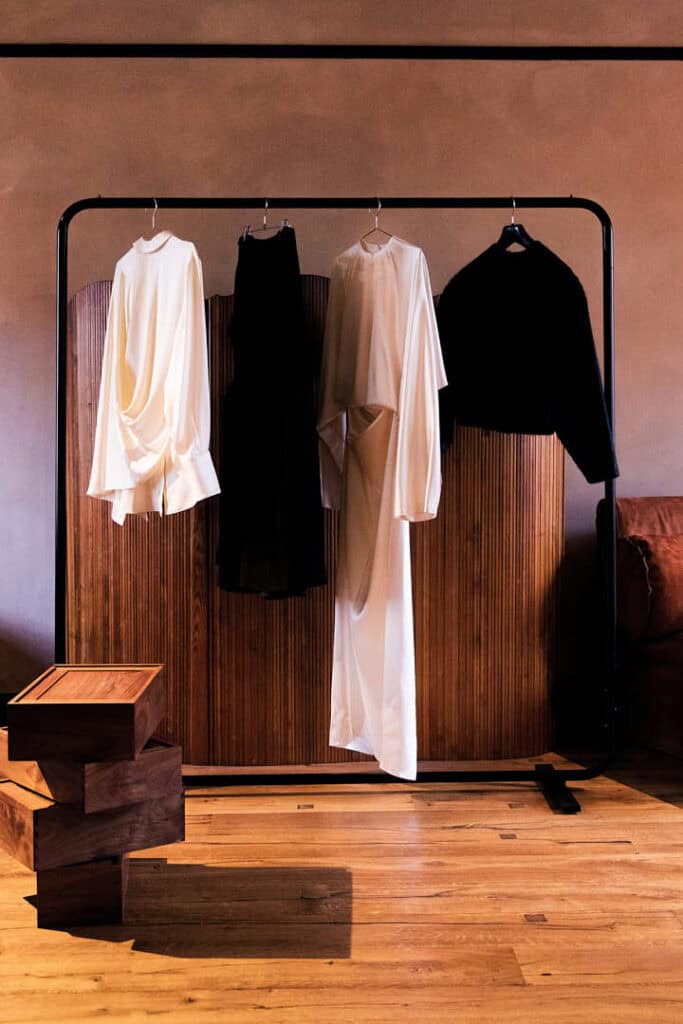
For her new collection Wardrobe 26, she hosted a striking event at Fangcun Gégend, a gallery rooted in hosting and tea culture. It proved an unexpectedly perfect backdrop for her work, which consists of draped silks and tailoring softened by secret linings that only the wearer feels – small details Mira showed me during the event. In collaboration with Studio Deïmé – a creative practice specialising in sensory storytelling – Maktabi presented a brunch rooted in the shared language of Arab hosting.
Rather than replicating the industry’s increasingly theatrical relationship with food, Maktabi used the brunch to bring the themes of Wardrobe 26 into lived experience. The collection is an ode to the private rituals that shape a woman’s life, what she later describes as “that in-between time when the garments are laid on the bed, and it’s just you and yourself… that private preparation that feels almost more exciting than going out.”
Her garments are built for this interior world she references, with their soft silk that gently slips onto the skin and thick, comforting wool. Arabic hospitality is built on karam, the belief that caring for your guest is a form of devotion, and Mira stepped into this role with natural ease. Guests moved through the space as one moves through routine, touching and trying both the food and the clothes.
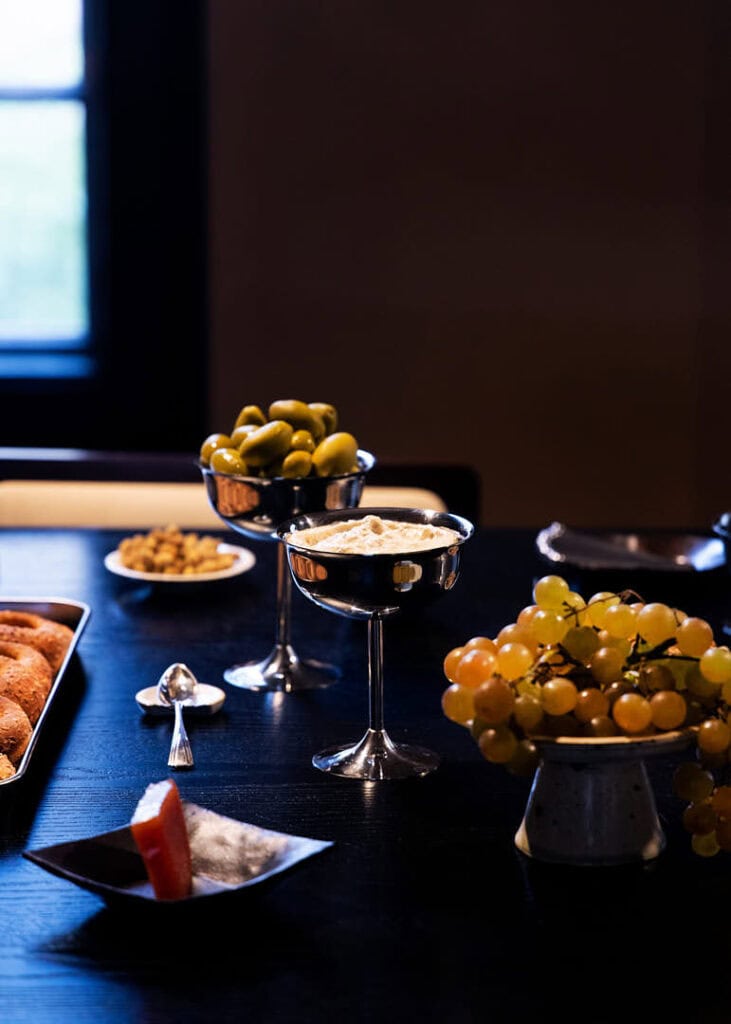
The Syrian-Lebanese flavours, an amalgamation of Mira’s and Zina’s worlds, added a warmth that mirrored the emotional palette of the garments, which felt familiar even in their novelty. It became a setting where the collection’s central idea, that fashion’s truest power lies in the private sensations it creates, unfolded in real time.
In our conversation, Mira reflects on these intimate, private rituals, and on why the most meaningful fashion experiences today might not actually happen on runways at all, but in private, at the table.
The Cold Magazine (CM): Wardrobe 26 reflects on women’s private rituals and intimate moments. What guided you toward exploring that sense of intimacy? What kind of ‘moments’ were you referencing about when you were putting the collection together?
Mira Maktabi (MM): Inspiration for me is always a mix of references. There are echoes of Madame Grès from the 1930s, vintage details I’ve collected, and silhouettes that stay with you and grow with you. But in terms of “moments,” I’ve always loved the ritual of getting ready – that in-between time when the garments are laid on the bed, and it’s just you and yourself before anything becomes public. That private preparation feels almost more exciting than going out. It’s intimate, introspective, and it has the energy of hosting, which is how I wanted the event to feel as well.
CM: At the trunk show you collaborated with Studio Deïmé to create the food and tablescape. How did that partnership shape the storytelling of the event?
MM: Zina Jamil is behind Studio Deïmé, and Deïmé {دايمة { دائمة in Arabic translates to May it always be so; an expression of gratitude and benediction addressed to one’s host after concluding a meal, used in Levantine culture. She has a background in architecture, so she’s incredibly strong at creating spatial worlds. Her approach started with the fabrics – we met, and I showed her the textures and colours, which shaped the visual and textural narrative of the table. Then came the flavours. I’m Lebanese and she’s Syrian, so she brought in those notes in a more contemporary way. That collaboration made the experience feel less like a showroom and more like world-building: hosting someone, welcoming them in, creating warmth.
CM: There’s been a lot of conversation recently around how fashion and food are becoming intertwined – from restaurant collaborations to designer-branded snacks (like Miu Miu ice creams and fashion cafès). How do you see those worlds overlapping?
MM: I think for me it’s less about specific food products and more about the feeling around them: again, hosting, warmth, generosity. Fashion can often become a spectacle; food brings us back into connection. With the event, it felt closer to the intimacy of a private fitting–being cared for, being welcomed–rather than a branding moment. That’s where I see the overlap: creating an emotional environment rather than a visual gimmick.
CM: You chose to move away from a traditional runway and instead create this living-room-like setting (in a really special venue, might I add). What possibilities do you see in these formats?
MM: It allows people to actually experience the pieces – trying them on, moving in them, understanding them in a personal way. Press, stylists, journalists… I want them to feel invited to engage with the clothes the way a client would. It’s a totally different experience from looking or touching from afar; it becomes embodied.
CM: Sustainability is a huge conversation now. How do you approach it in your own practice and how do you choose your materials?
MM: The word “sustainability” gets thrown around a lot. It can become a box to tick. For me, the materials I’m using now are quite traditional: Savile Row wool, 100% silk, all sourced in London. I see the brand as rooted in natural fibres, and later I’d love to explore alternatives like peace silk, which doesn’t harm silkworms. But at this early stage, I want the foundations to be really raw and simple. Also, synthetics, like acrylics and polyesters, are incredibly harmful, both environmentally and for our own bodies, which is rarely discussed. When I look at pieces I’ve inherited from my grandmother or great-grandmother, they’re all pure wool or silk, and they last. That’s a non-negotiable for me.
CM: In the showroom you were showing me all these little hidden details in your clothes, like undercollars and linings – things only the wearer really knows about. Why are those intimate gestures so important to you?
MM: They feel like quiet statements, almost a counter to conspicuous consumption. They’re personal, known only to the wearer. A silk lining or a soft undercollar becomes something only your body feels. It’s almost an act of self-respect, a private pleasure rather than a visible logo. To me it functions almost like a hidden brand code.
CM: Outside of fashion, what other art forms or references do you find yourself drawn to?
MM: Sculpture, especially. Constantin Brâncuși is one of my biggest inspirations, from the materiality to the intuitiveness of his shapes. I’m also drawn to Meret Oppenheim’s surreal elements and Isamu Noguchi’s elegant shapes, stunning materials, simplicity, pureness and rawness. Sculpture is so intuitive – it doesn’t have to “solve” something the way fashion does. It can be abstract, soft, elegant, or feel like nothing at all. Translating that into a wearable form is really exciting. I’m less drawn to prints or colour, though I’m experimenting more with it, and much more invested in shape and pattern-cutting. Sculpture opens up endless possibilities there.
CM: Speaking of your world… How did you first enter this world of fashion?
MM: Honestly, there was an element of delusion (in a good way). I was so young and just thought, “I want to do this.” When you’re five, you’re intuitive; you don’t think about pressure. I studied realistic drawing early on, very precise and technical, and later learned sewing and craft from my grandmother. I came to London to study at London College of Fashion, but the turning point was my Masters at Central Saint Martins, which I finished last year. That was when everything felt real: the woman I was designing for, the brand’s identity, the purpose behind the clothes. It stopped feeling like just adding more garments to the industry and started feeling meaningful.
CM: And coming from Lebanon, a place with such a layered cultural and political history, how does that filter into your work and the stories you tell?
MM: A lot. My references are quite abstract, so I always try to reflect on what part of my culture is informing the work. It’s less about traditional garments and more about the women I grew up around. My great-grandmother’s style had a strong impact – elegant, commanding, a woman who completely overpowered the men around her. I also grew up around Persian rugs as that’s our family business. The core values were always wool, silk, handmade. Without realising it, those became the pillars of my brand too. And then there’s the nuance of Arab womanhood. The West often sees the Arab world in one light, but the reality is multifaceted. The feminist issues we deal with exist everywhere, just expressed differently. There’s no single “Arab woman.” You have modest, you have sensual, and “sensual” means something different to every woman. That complexity is so important to me.
CM: Fashion moves at such a fast, disposable pace. How do you imagine making wardrobes that feel lasting?
MM: We’ve been conditioned to think that “timeless” equals basic. But timelessness is emotional, not minimal. A vintage jacket that you’ve loved for ten years might be unusual, not trend-driven, but it matters to you. When I design, I try not to create filler pieces. Even if something is sculptural or draped, I think about how it can grow with the wearer: Can you still wear a bra? Does it pinch if you gain a bit of weight? Will it still feel flattering later in life? Not every piece can be endlessly versatile, but the intention matters – not designing for a single body type or age.
CM: Beyond clothing, are there other objects or disciplines you imagine yourself designing? It feels like your artistic language could translate into so many forms.
MM: I’d love to collaborate with artist–furniture designers. I’ve always dreamed of creating the perfect, most beautiful chair: bringing my world of sculpture, draping, and materiality into a piece of furniture. A true collectible. The home is such an intimate space, and the idea of designing something for those private, personal moments feels incredibly special to me.
CM: If you could dress any woman who would it be?
MM: I’ve never thought about this before, but Sade! She’s not really in fashion now, but she’s such a muse to me. Her music, her elegance, the strength in how she carries herself… everything would look incredible on her.
CM: Looking ahead, what ideas or directions are you curious to explore?
MM: I’m thinking about drawing more from my culture, but through a non-orientalist lens. That can mean many things; it’s still early, but that’s the direction.
CM: And finally – the big conversation: “Is London Fashion Week dead?” What’s your take as an emerging designer?
MM: I think there’s hope, especially with the new British Fashion Council initiatives. This season felt more active. I’m optimistic and curious to see how things evolve.