
A mix of blue and green Formica tables lined a pink runway. The entire space was tinged with yellow. An initially confusing setting transformed into one we know all too well: “an abstraction of everyday domestication”.
We were transported to the workplace, a factory in this case. Miuccia Prada acknowledged the world of working women at Miu Miu’s SS26 show at the Palais d’Iena, Paris. She took inspiration from American and German photographers Dorothea Lange and Helga Paris, whose work spanned from The Great Depression to everyday life in 1960s Germany.
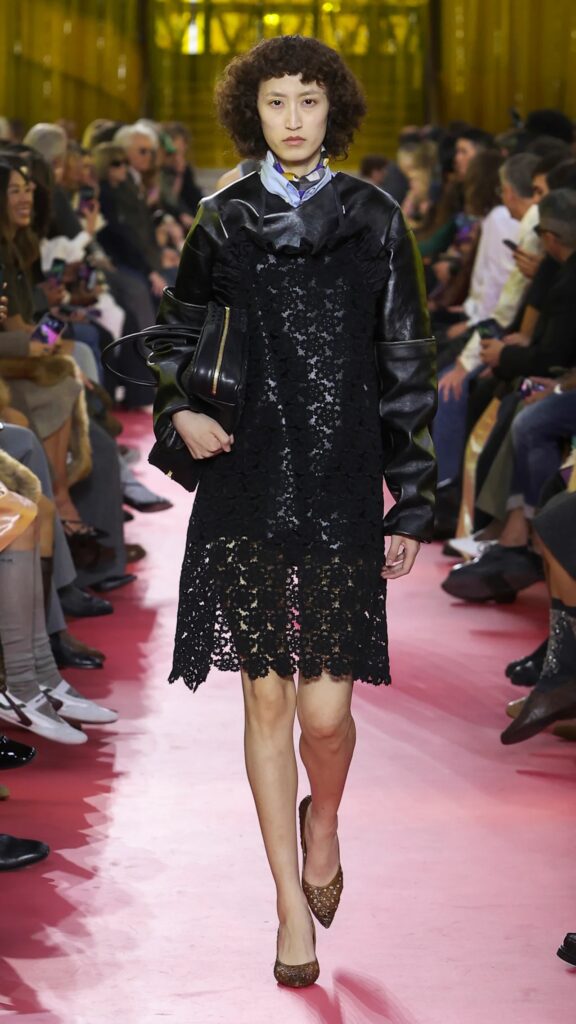
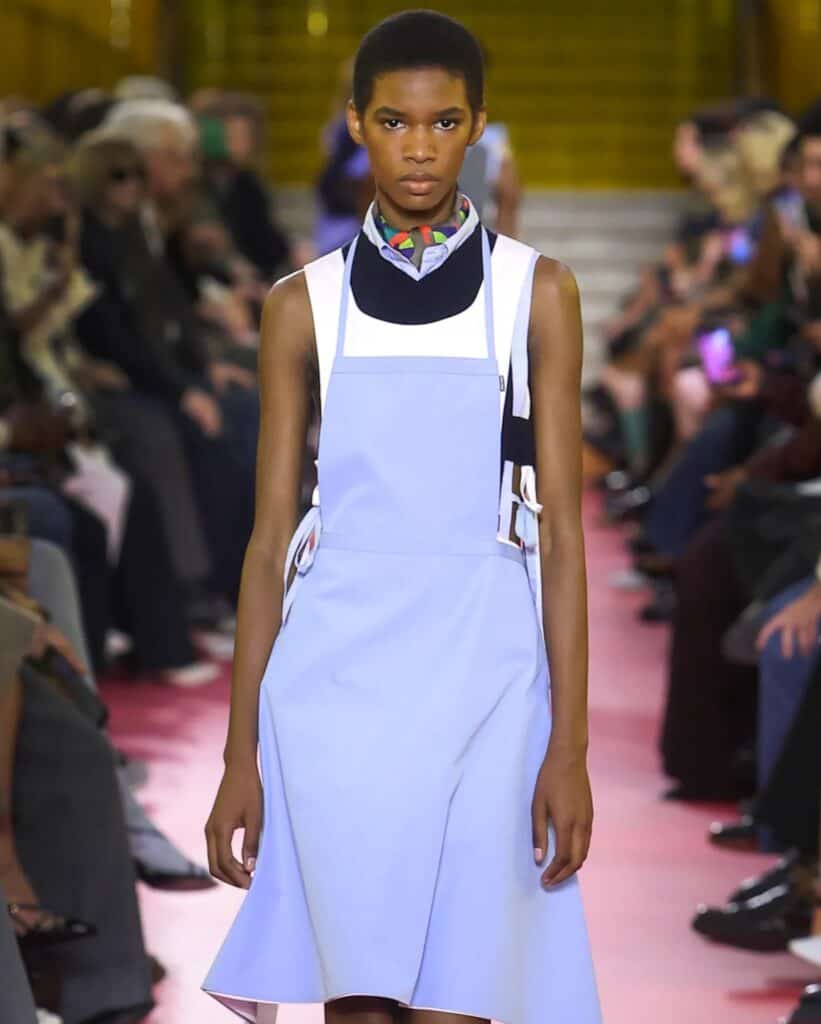
Like most of the photographers’ work, models bore solemn expressions as they hurriedly made their way through the aisles of tables, looking slightly bedraggled. Hair was frizzy. Colour palettes were an incohesive canvas of blue, green, yellow, and orange. Everything was messy, out of place and chaotic, as is life for many working women on the go. It was still high fashion, yet more relatable. It felt like rushing out of the house while not being able to pay too close attention to how well put together your outfit was.
Silhouettes were boxy, A-line, tubular and cinched; distinct yet overshadowed by a garment usually ignored: The humble apron. A particularly loaded garment whose connotations are often of domestication, they were not only recognised by the creative director, but celebrated. Some were obvious in what they were while others could have been simply mistaken for dresses. They were given the luxury treatment through cinched waistlines with white, frilled hems and cutouts at the sides.
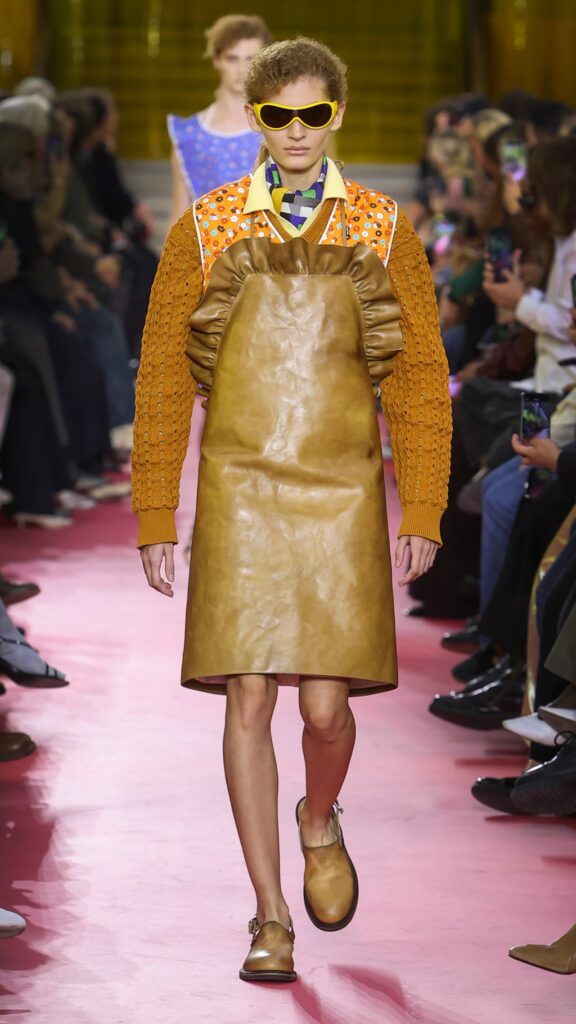
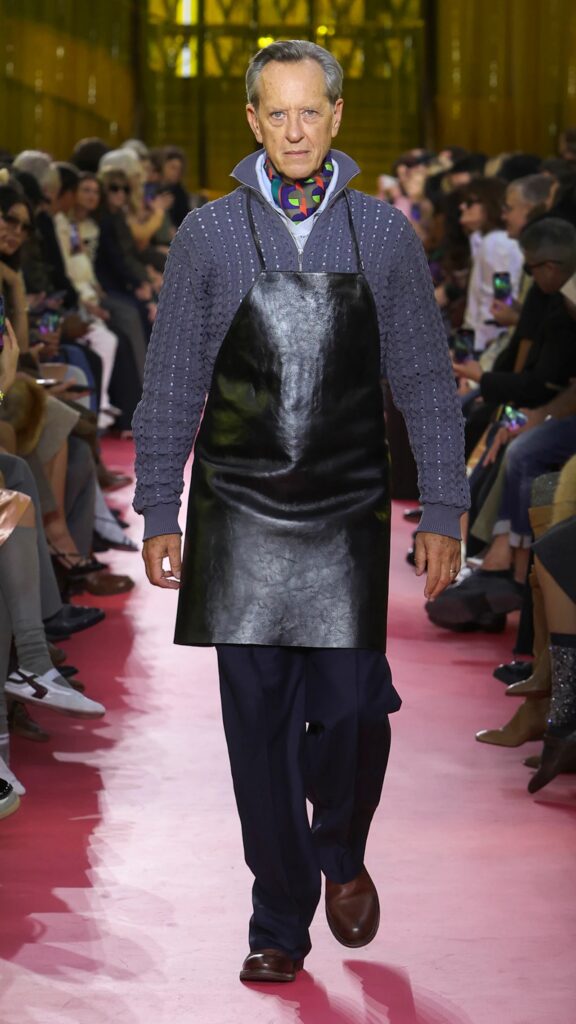
Each apron represented a different woman, a different profession, and a different lifestyle. A harsh and tough reality made lighter through contrasting textures, bright colours and quality fabrics, casting aside the bleak images of challenges in domestic work, and reframing it as a luxury garment. White lace with pink floral print for the homebodies. Loosely knit crochet for the fashion-forward. All-black sheer lace for the edgy.
No outfit was polished in any sense. Aprons were layered over bralettes, jumpers and jackets – often in colours and prints that clashed. It looked thoughtless, but there was, in fact, thought behind every silhouette, fabric, and layered garment. It was purposefully imperfect. It was still high fashion, yet it was more relatable.
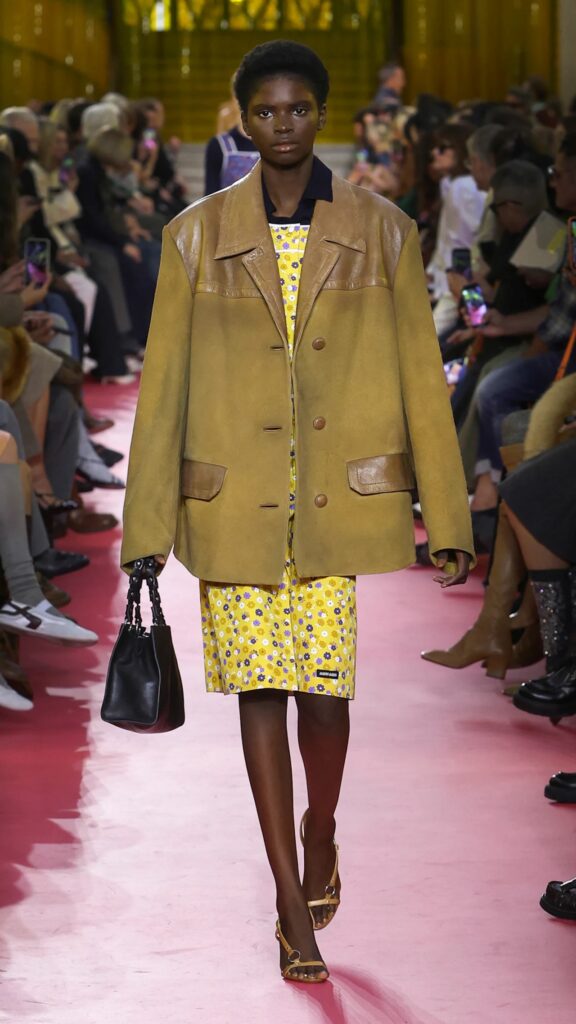
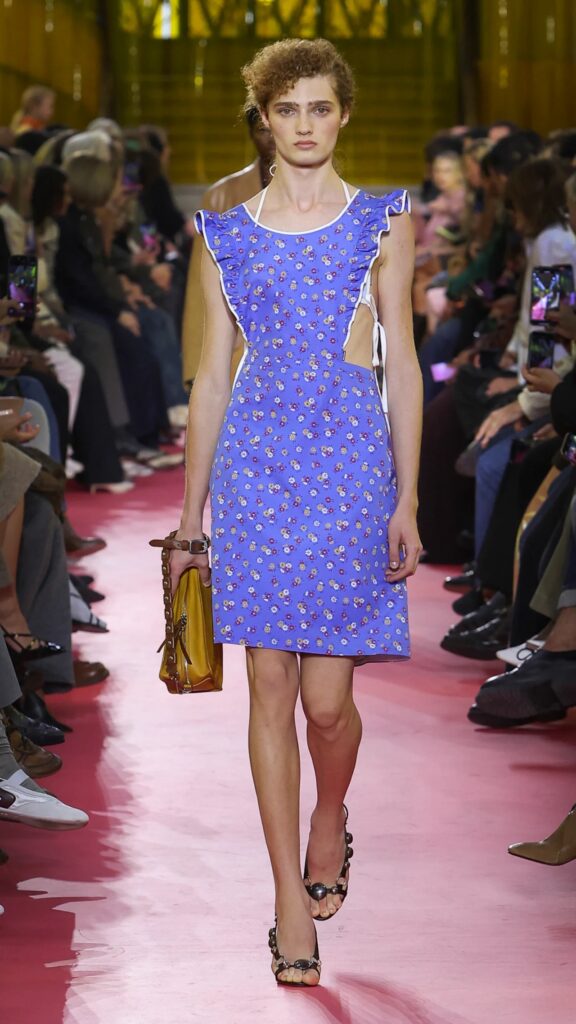
This extended to the styling, which saw kitten heels, slides and heavy boots paired with outfits that juxtaposed in aesthetic and colour. Belts were often braided and served as a modern take on the utility belt – slimmer with a silver belt buckle and accents. Ascots were worn in almost all of the looks, reflecting 1930s style during the Great Depression.
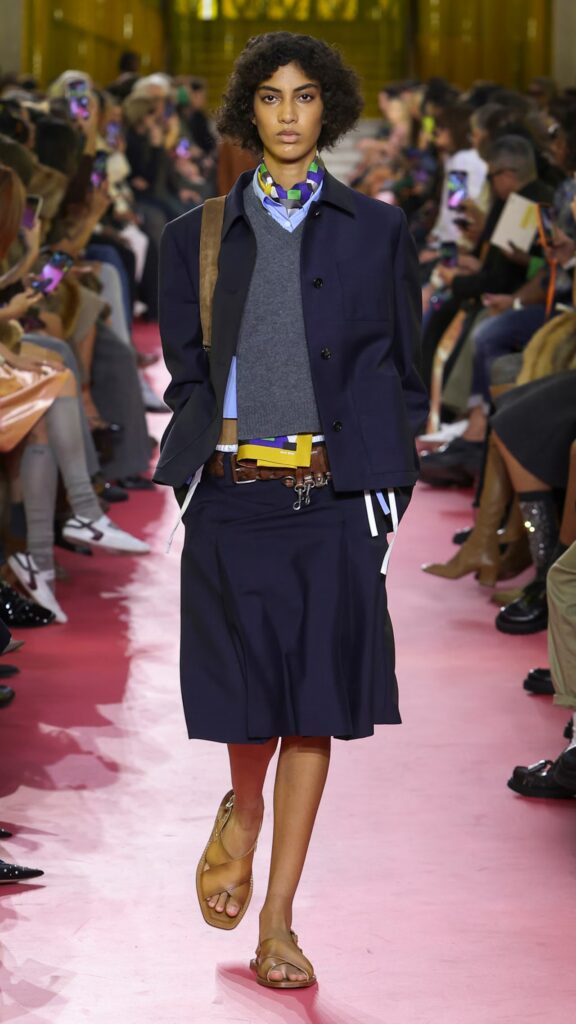
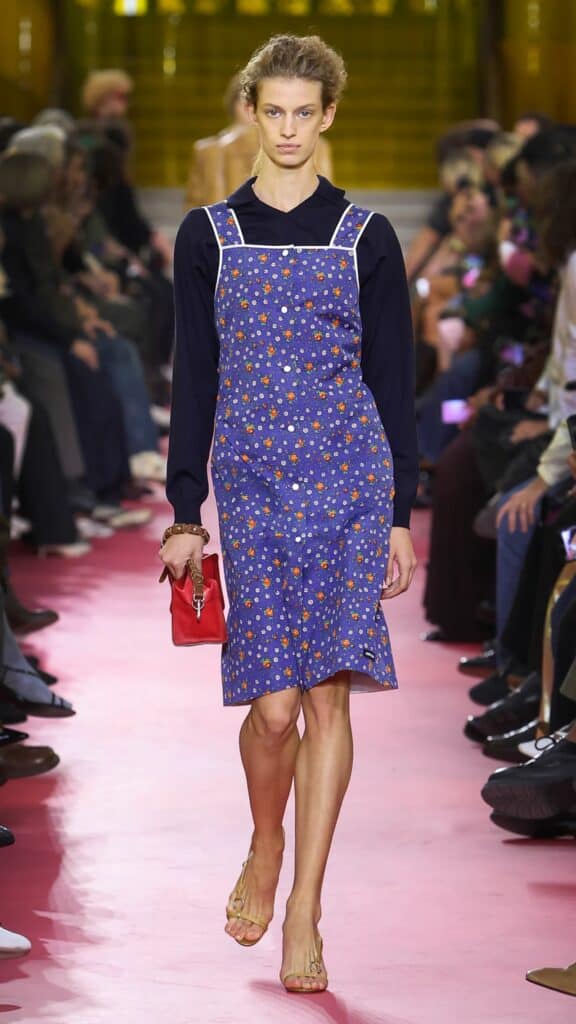
Miuccia Prada achieved two things with her SS26 collection. She made sure that women working in domestic industries were shown respect and attention, and she brought something different to fashion month. After sitting through fifteen debuts and begging for innovation, we finally received it from Miu Miu.
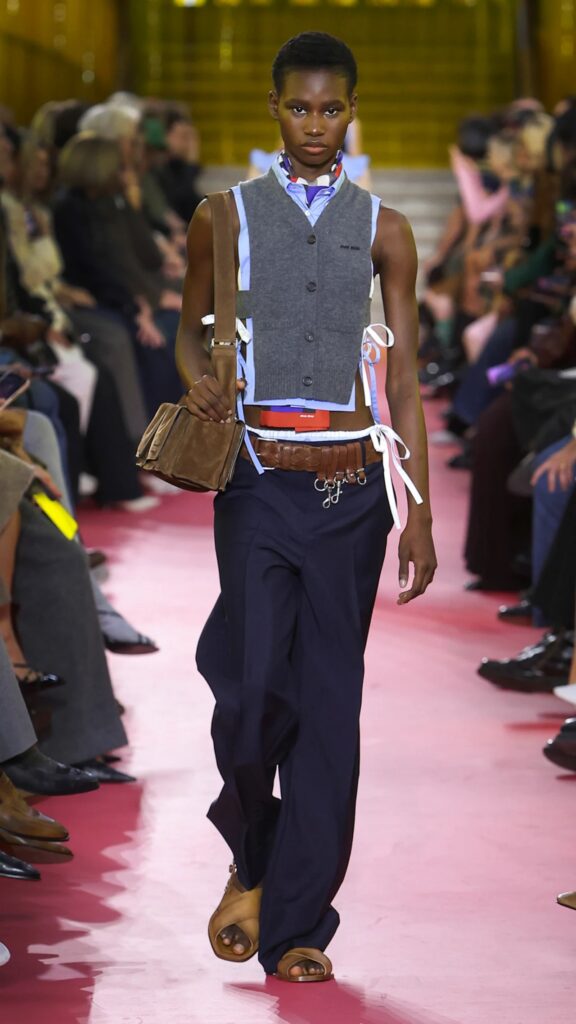
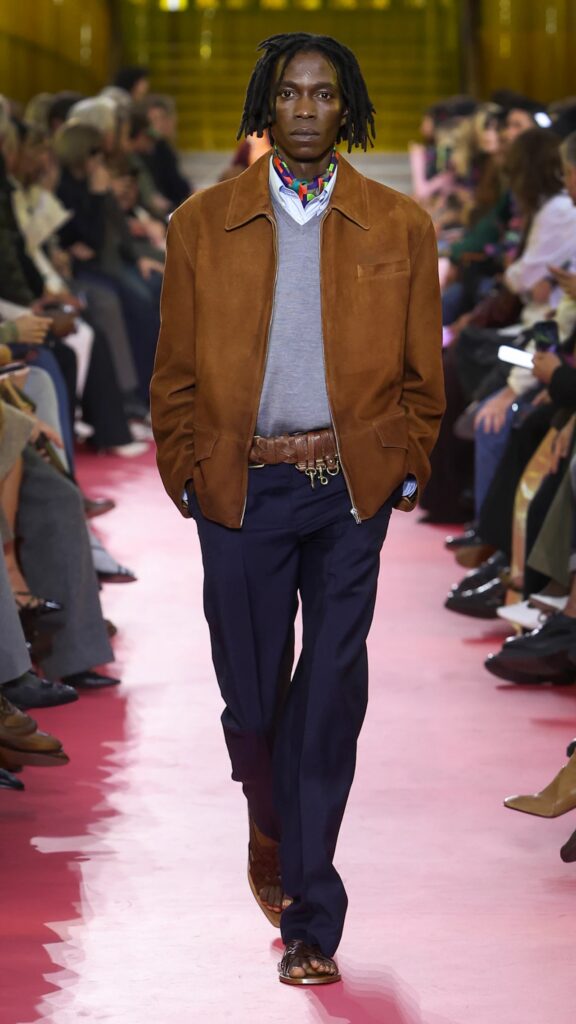
Showing a collection that communicated narratives of underrepresented groups keeps the house fresh and unique, while other brands have leaned too heavily on the past. Miu Miu has evolved since last season and continues to push the boundaries of fashion further. It was one of the better shows during fashion month and we can only hope that Miuccia Prada continues to redefine luxury and the people who wear it.