
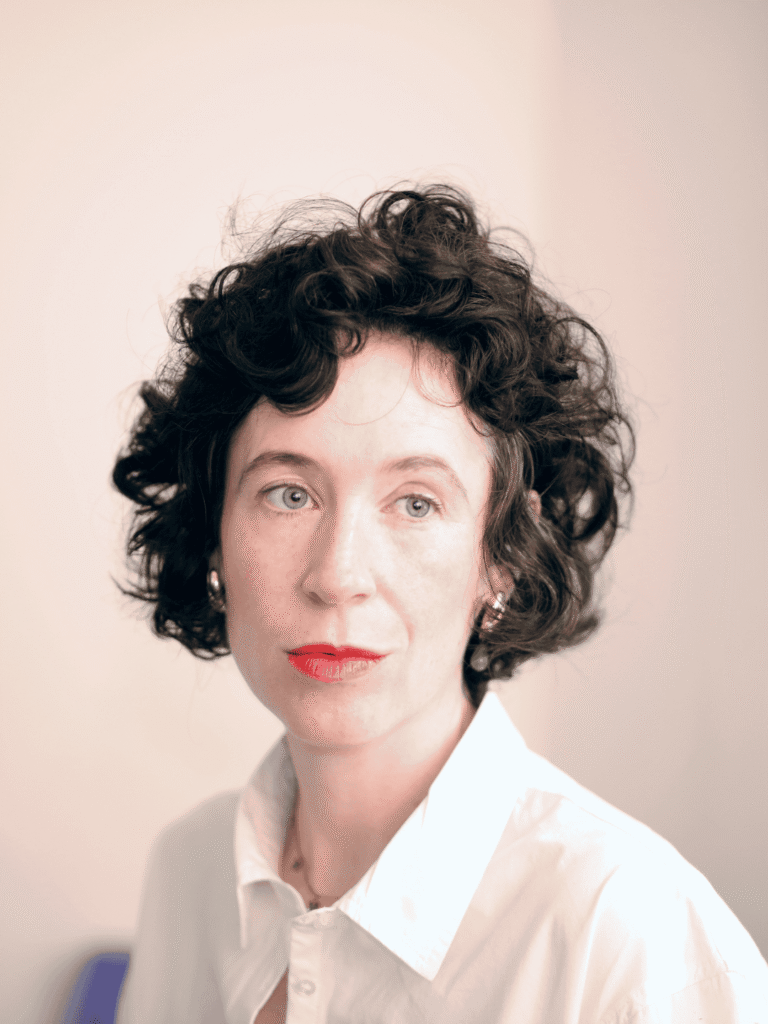
About twenty minutes into my conversation with Niamh Campbell, a baby cries out into the dark room. “Sorry,” she says, “I’m going to have to jump up for one moment and grab my baby, she’s just woken up.”
“No worries!” I say. Luckily, the baby girl goes back down quietly.
“I went into her and she just let out a big fart. She just needed to let that go and let me know.”
This is the reality of a working mother – one who’s an author and who’s also on the brink of launching a new book into the world. Make Strange, her third novel, is the eerie, milky-scented tale of a little girl named Sunny, who, one October afternoon, looks up at her mother and says, “Mama, do you remember when I died?”
The revelation rocks the family. Stories of drownings, skeletons and a “Before Mother” are soon to follow. Has someone been feeding Sunny these disturbing tales? Is she having hallucinations? Or, maybe, she really is a reincarnated soul?
As she hunts for the truth, Sunny’s mother, Lena, is forced to confront her own past lives – the ones she abandoned when she became a wife and mother. Make Strange is a fresh, ultra-contemporary look at the mother-daughter bond and an intense, sometimes painful, look into what women lose when they become mothers.
Through the course of our conversation, Niamh and I spoke about her message for expectant mothers, reincarnation, ghosts, graves and why she will only ever write about Ireland.
The Cold Magazine (CM): To start, Make Strange is such an evocative and unsettling title. What drew you to it, and how did you know it was the right fit for the book?
Niamh Campbell (NC): In Ireland, a baby is “making strange” when they turn against a parent, like crying when daddy comes home, or reacting badly to extended family members – crying or shying away. People will say, “oh don’t mind her, she’s just making strange.”
I don’t know what this developmental phase is described as anywhere else, but I thought early on that the phrase was perfect for the title, suggesting that Sunny is “making [things] strange” or making life seem stranger whilst also having that specific cultural meaning for some readers.
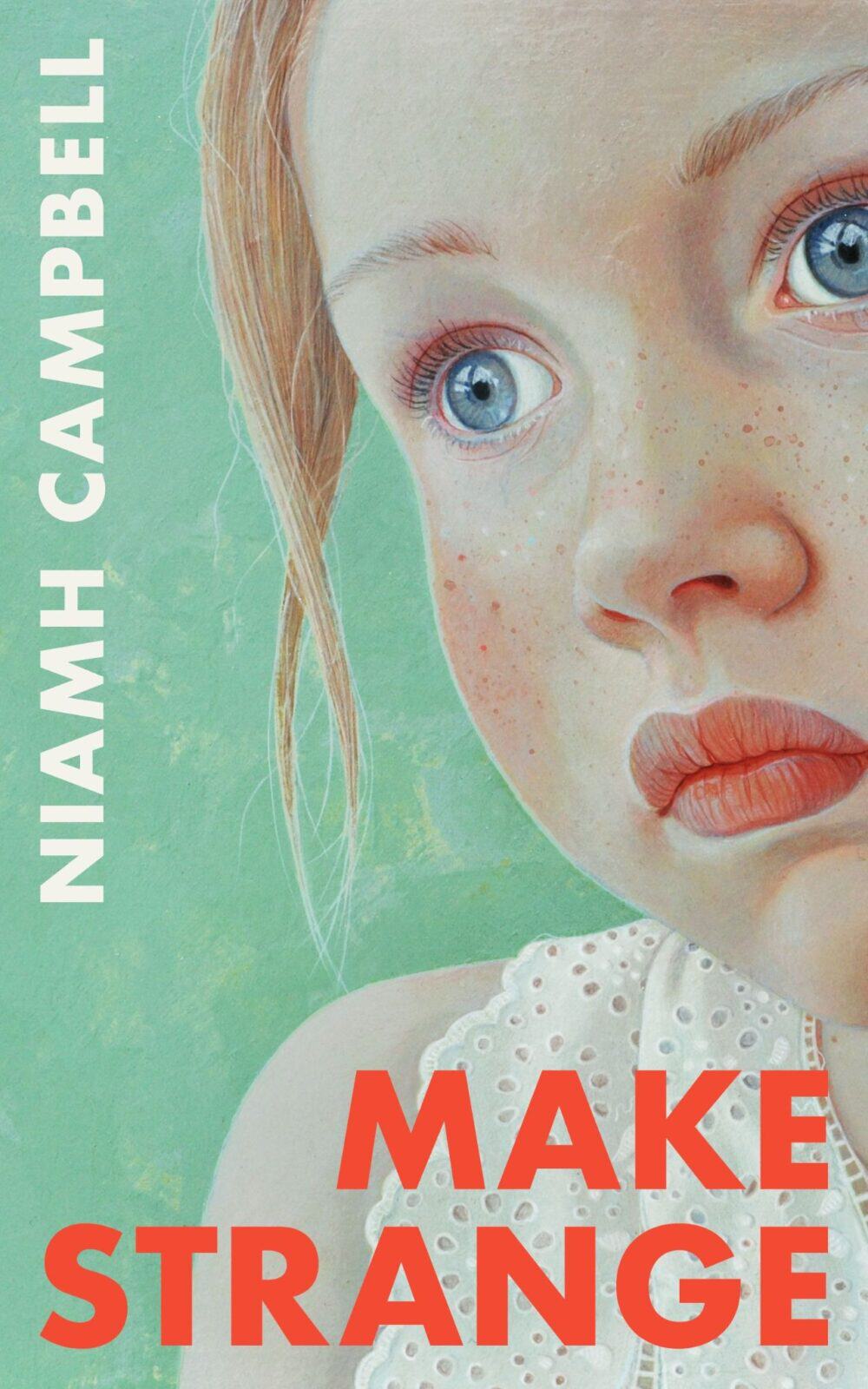
CM: Tell me about the gorgeous cover of the book. Who is the artist?
NC: It’s fabulous isn’t it?! It’s a detail from a work by the contemporary Dutch painter Jantina Peperkamp and the design is by Ola Galewicz at Orion.
CM: The book feels deeply concerned with “coolness,” or perhaps the loss of it. Lena moves from being part of Dublin’s indie music scene to motherhood and domestic life. What drew you to that tension?
NC: I knew I was going to write about someone who’d had a failed creative career, but it was very important that she wasn’t going to rediscover her spark. I like my characters to not get their release. I like them to have to live with themselves.
It was also important that Lena was no longer actively engaged in this Dublin music scene, and was just living on the periphery, aware that she is separate from it.
My second novel was very about cool hip kids in Dublin hanging around and having sex with each other. And it was like, I can’t do that again. I’m 38. I’m on the other side of this, and I have to make it a part of my brand to be uncool.
CM: Although Lena’s life as a mother is decidedly “uncool,” it’s not uninteresting. In her journey to understand Sunny, she toys with ideas around past lives, reincarnation, Tarot reading, folk magic.
The book seems to ask the reader, “what do you believe?” Did you intentionally frame the narrative as a kind of provocation?
NC: Yes – I decided early that there would be no clear paranormal explanation, but many possible explanations, and that the protagonists would grasp at different, partial belief systems and phenomena in a basically lacklustre way.
I also used some Irish uncanniness and history, specifically the belief that an empty landscape is still filled with ghosts or with simultaneous realities existing at the same time, which is the gist of the myth of the Tuatha De Danan (long story but, in short, weirdly similar to quantum reality), as well as the story of the heads of Inisbofin.
This is an island off Galway from which, in the 1800s, anthropologists removed 13 skulls and brought them to Trinity College Dublin to study (something to do with phrenology). In 2023 they were ceremonially returned, and it’s recognised now as a colonial crime.
I wanted to invoke this to point to the theme of absent ancestry, to bring the more traumatic history of the country into focus. I want there to be a sense that the “past life” is Lena’s past life but also the undigested or unprocessed past that is historical violence. Years ago I happened to read a field survey of an excavation that took place in a cilín in rural Mayo.
I think it was to make way for a road. Among the skeletons found, which were mostly infants, there was a grown woman who had been in an advanced state of pregnancy and killed, probably, by a blow to the back of the head. The survey mentioned that no story of a death or killing like this had survived locally and so nobody knew who she was. The detail stayed with me, and she eventually went into the book.
CM: Did you do any research into these subjects while writing?
NC: When I was first developing the story I came across this article, which was an inspiration, but otherwise I didn’t research the subject of reincarnation at all.
I wanted, in a way, to maintain Lena’s level of ignorance and avoid writing a book that would make a claim for past lives and become heavily thematic in that way.
Personally, I’ve had experiences in meditation and psychedelics that tell me there’s definitely some kind of wheel-of-reincarnation going on, and I was raised with the Catholic idea of heaven as a present and pedestrian thing, so the eternal soul, as it were, is not a new idea to me.
That said, this January I was at the Jaipur Literary Festival trying to explain the book to some Indian schoolgirls, and all anyone wanted to ask me was if I had used Hindu ideas and, when I said no, why on earth I had not used Hindu ideas. It was kind of hilarious to me. Like, I refused to culturally appropriate. Surely that was the right call.
CM: That’s amazing! Ideas about reincarnation resonate far and wide, and yet, this feels like a distinctly Irish novel. Could it exist anywhere else?
NC: No. It’s very important to me as a political point that I set all my novels in a very, very distinctive place.
And because I’m Irish and this is where I live, that’s where I set them. I’m well aware that this makes it difficult to sell me in America. It makes it difficult for me to translate because people are used to reading a certain kind of Ireland, or they’re used to reading a more recent version of Ireland where things could kind of be set anywhere or feel a little bit rootless.
Ireland has undergone rapid social change in recent decades, and I’ve lived through that. I want to reflect that texture, rather than smooth it out for a broader audience.
I also think readers can meet a book halfway. The specificity is part of the experience.
CM: You write openly about the pandemic and how it affected Lena. There’s references to the MeToo movement and Twitter. How did you decide to weave these topics into the fabric of the story?
NC: At first, I thought, “I don’t want to write about this. I’m not writing this kind of book.” But I found a way to make these topics serve the plot rather than the plot being about them. The pandemic was important because it was, in part, the cause of Lena’s postnatal depression. It isolated her and Sunny.
Likewise, there was a moment in Ireland during the pandemic when there was this explosion on Twitter where people were posting accusations of sexual misconduct against Irish musicians.
And then the posts would be gone. The libel laws are really powerful in Ireland, so they were quickly deleted and it was like, did I really see that?
And I found that so interesting – this subterranean knowledge that won’t even be mentioned. For Lena, she refuses to mention it. She’s very, very damaged, but in a really compressed way. So I just thought these contemporary topics would be great vehicles to express that.
CM: Lena anchors the novel, but we move through multiple perspectives throughout the story. We step into the consciousness of her husband, Odhran, her mother-in-law Sonia, and even toddler Sunny at one point. What made you want to leave Lena’s mind and inhabit these other lives?
NC: I think sticking with one character, especially one so resistant to personal growth as Lena, can be oppressive, so I let the other ones speak.
Sonia was enjoyable to write, Odhran too, and when it came to Sunny I was not sure if I should do that or not. I dislike writing which uses children as ciphers for innocence, or to show them revealing adult conceits, so I ultimately decided to make Sunny’s piece a surreal mashup of childhood impressions I can remember having.
Sunny’s dream, for instance, was my dream: I dreamt that at three or four years old and have never forgotten it. It was such a bizarre sequence and seems to suggest all kinds of things when you look at it, which is something I like to do – make the reader project something onto an unexplained or partial image. I think the effect of moving between characters is to give relief and maybe different perspectives, but it’s risky: you can’t have every character sound the same.
CM: Lena often feels detached, almost like she’s moving along the surface of her own life. Was that intentional?
NC: Yes. I wanted her to be someone who doesn’t take responsibility, and that stems from her upbringing. She’s a passenger. She doesn’t know how to be present. That’s another element of her personality I decided she would not be cured of, that it was going to remain that way.
CM: I won’t spoil what happens, but you’ve said that you haven’t reread that final scene since writing it. Why is that?
NC: The ending was written in one draft and I will never read it again. It exists as this little psychic event that I had myself.
I was coming to the end of my second pregnancy and I hadn’t finished the book and I got really annoyed that I couldn’t get away from my family. And so I went for four days to a hotel quite near my house so that I could leave if anything went wrong.
And I was like, I gotta finish the book. So I was drilling it out of me in a very strange, horrible experience of just doing nothing but pulling it up, eating very little, going to sleep, and then getting up and doing it again.
So when I wrote that bit, it was day three and I was sort of deranged. I think with the book, on one level, it’s a story. On another level, it’s always an exorcism for me.
CM: So when you finish writing a book, does it become something of its own past life for you?
NC: I have a big, difficult relationship with my own work once I’ve finished it. I never know what I’m going to get when I open the book. Sometimes I think, “God, I’m great.” Sometimes I think, “I can’t believe this got published. I’m such a fraud.”
Other times I just think, “oh, this is mortifyingly private.” So I have a very volatile relationship with it once it’s done.
CM: Odhran is an interesting figure. Other characters in the book often dote on him as being a good man and such a sweet dad, but, to me, as a reader, he felt so vacant and a bit soulless. How did you think about his role in the narrative?
NC: That’s a great response. I wanted to write about a marriage that was functional and believable, good, but not fabulous. Marriage to Odhran is strategic for Lena. She’s gotten married and put a blank over the rest of her life beforehand.
And Odhran also represents the traditional power within Irish culture that Lena has no access to. It was important, as someone with an Irish studies background, that Lena has no ancestors. She’s from the urban working class. She’s from nowhere, but he’s from somewhere and it goes really deep. So Lena is attracted to that. She wants to hide in it.
But they are good collaborators on the project of their life and I think maybe that’s what’s bonding them.
CM: Marriage to Odhran helps Lena feel rooted and serious.
NC: I think this happens for many women. I think being a woman – and this is speaking to an Irish experience as well – to be born a woman is to spend your whole life in some way apologising for being a woman.
It’s a really weird burden, and you’re always trying to undo some kind of sense of inner shame. And Lena’s very ashamed. So, Odhran is the cover story. When she’s giving birth in hospital and she’s having this fantastic idea that she might be able to back out of it, she says, “Mrs Marley Flynn has changed her mind.” She’s using the authority of her marriage to try and argue that she’s worth anyone caring about.
CM: The space Sunny occupies as a daughter, with her blue eyes and blonde hair and overall cherubic sweetness, feels significant. Why not give Lena a son?
What interested you about the mother–daughter dynamic?
NC: You know, it never occurred to me to give Lena anything other than a daughter. I have two daughters. I had one daughter when I wrote the novel, and I based Sunny quite a bit on my niece because she was older.
The mother-daughter dynamic is interesting. Mothers often want to repair things that were done to them, but also maybe they overstep and don’t give their daughter enough space to be an individual.
Lena’s mother was so indifferent to her, so maybe she can be too overbearing with Sunny. Odhran would have a different relationship with a boy. He would like a boy better. I think because their child is a girl, he’s allowed himself to be more absent.
CM: Motherhood in the novel feels both intimate and unsettling. Is this something you see yourself continuing to write about?
NC: Yes, though perhaps from different angles. I’m interested in the fear that you are not actually the mother you want to be, and that you’re not actually going to be able to parent away the problems you bring.
An important element of Make Strange is the idea that you are going to inadvertently contaminate your child with some of your flaws or weaknesses or deficiencies in ways that you have no control over.
And there’s a belief that if the child does manifest a problem, it has come from the mother. This thinking obviously has a long, long legacy. But I want to explore the idea that perhaps having a child makes you realise that you are deficient as a person.
CM: Finally, for women in the pre-motherhood stage of life – whether they are planning to have children one day, on the fence about having children, or soon-to-be mothers – what do you hope they take away from this book?
NC: That motherhood, which is such a charged cultural idea, is, in the experience, infinitely nuanced and textured and revelatory and strange. It doesn’t provide a haven in which a woman might hide or have a “happy ending.”
You are still your flawed and limited self, your political self, your haunted self, only now with endless obligations and paranoid love and about two decades of sacrifice ahead of you. I won’t say it’s always, or even mostly, fun; I will say it is kind of psychedelic.Niamh Campbell’s Make Strange, published by Orion Publishing, will be released in the UK on 4 June 2026.


