
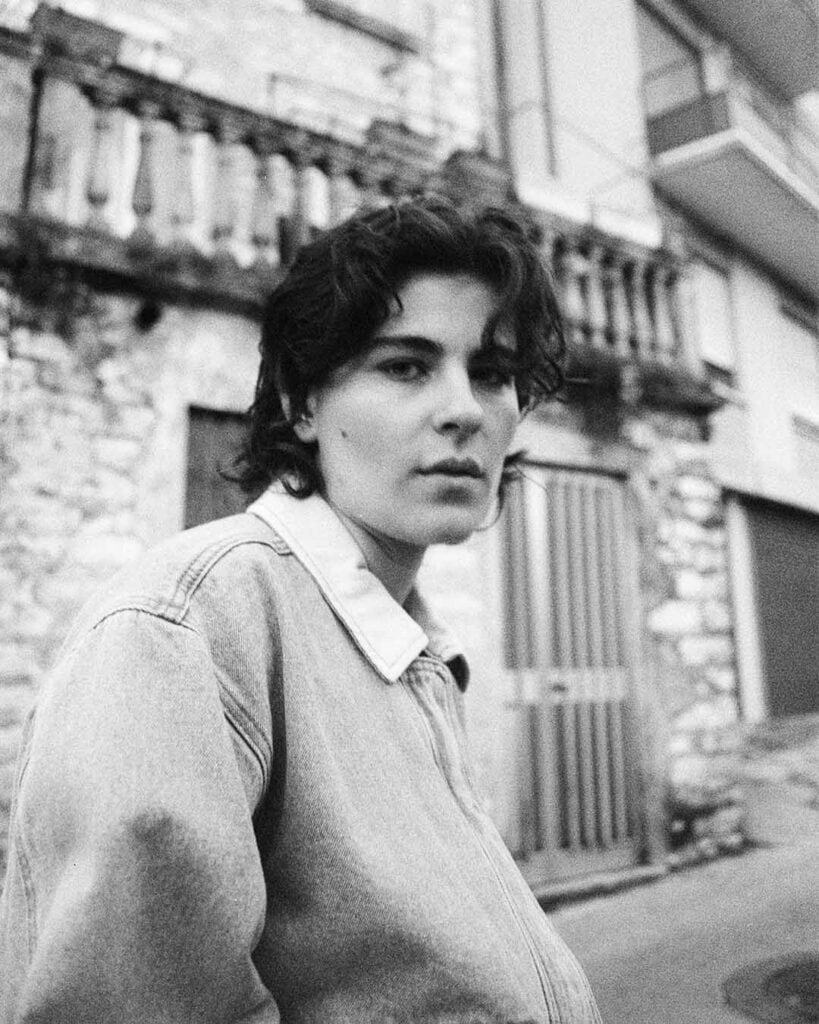
“Cos’è l’amore” is Nicol’s new single, first written in the studio with Celo as a classic, stripped-back demo and later transformed with Estremo into an electronic-driven track for her set at Billboard Italia Women in Music. The song turns a lifelong question into something sharper and more essential: fewer words, more space for sound, and a structure that pushes her out of her comfort zone into a more adult chapter of her work. Protecting the intimacy of songwriting from industry noise, Nicol still writes out of necessity rather than strategy and for now, her answer to the title’s question is simple: for her, love is family.
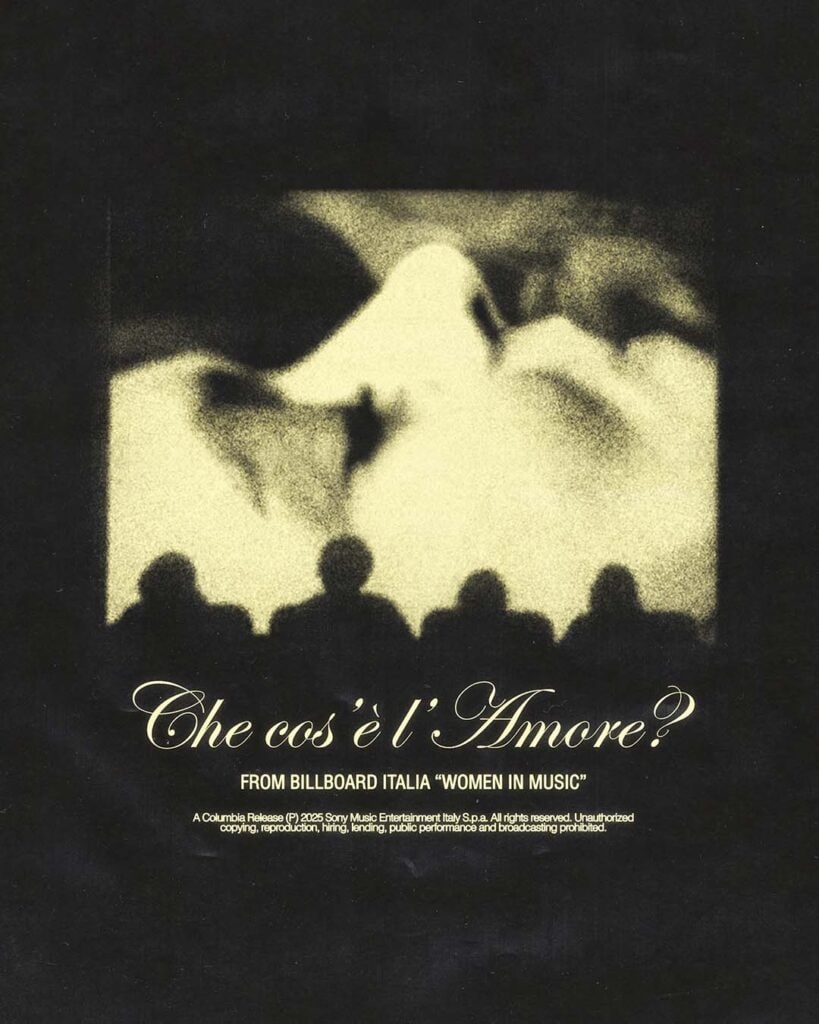
Let’s start from the title: “Cos’è l’amore” (“What is love”) is an enormous question, almost impossible to fit inside a song. When did this question really enter your life? And at what point did you understand it had to become a track, rather than staying just a thought?
I think all of us have been asking ourselves that question forever; as we grow, only the answer changes, because we find love in different things. I talk about it often in my songs in this one the question is more direct, because I felt the urgency to ask myself and find my own answer for today.
In terms of structure and production, “Cos’è l’amore” seems to search for a balance between pop immediacy and a certain emotional complexity. How did the sonic choices, dynamics, arrangement, use of voice, help shift the track from a simple “love song” to something that carries a different weight for you in your journey?
Actually, they were two very separate processes. The song was written in the studio with Celo, in a very different form from the one it has now. It remained a demo with a more classic arrangement, a prechorus, a chorus, and even a verse that I later cut. When the idea came up with Tommaso (my manager) to create this more electronic set with Estremo, in conjunction with my participation in Billboard Italia Women in Music, we thought that demo was perfect because it was simple and direct, which allowed Estremo to have space to step in with a production that was more in the foreground than just accompaniment.

Compared to your previous work, “Cos’è l’amore” seems to mark a clear shift, both in writing and in production: it’s more essential, but also more mature. When you look at yourself from the outside, what do you recognize as “growth” in this track? Was there a moment, an encounter, a mistake or a crisis that led you toward this more adult form of your sound?
I think it’s simply time passing. When I started writing I was 16, now I’m 26, it’s a reflection of my growth as a person, and that definitely includes difficulties, unexpected events, and defeats as well as the victories I’ve experienced over this period of time.
Looking at the road that brought you here, it seems like each release adds a piece to the way you tell your story. How does “Cos’è l’amore” shift the image you have of yourself as an artist: did it force you to show a new side of yourself, take a different position, or renegotiate something with yourself?
This single definitely pushed me out of my comfort zone: using fewer words, being more concise, and leaving more space to a sonic world different from the one I usually inhabit when I write.
If you had to answer the question in the title, today, in your present moment: what is love for Nicol?
Right now in my life, it’s my family.
The music world moves fast and demands constant adaptation. What is the creative principle you’re not willing to sacrifice, regardless of industry pressure?
For me, the most intimate and delicate moment is when a song is born. I always try to forget that it’s a job and remind myself that it’s a need in the moment I’m writing. Even though sometimes it’s not that easy.
Interviews usually only talk about successes, almost never mistakes. But I’m fascinated by mistakes, they often reveal much more than the rest. What is one mistake you’ve made that you now claim as your own, because it led you to a turning point or something deeply positive?
Taking life for granted is something that opened my eyes and it’s also one of the reasons why I started writing, to find a solution to that pain. Writing helps me every day to look around and feel fortunate, by analyzing not only what I don’t have but especially what I do have compared to others.