

“Playing with dress-up is queer,” says Patty Mañá, founder and creative director of NIMPH. Mañá was inspired to begin the ethereal, upcycling-led fashion label through nights spent alongside MARICAS, a Barcelona-based queer party community whose name reclaims the Spanish slur “marica” (“f*ggot”). Emerging in the late 2010s, MARICAS became one of the city’s first femme and non-binary-led nightlife collectives. “It was for this community I started doing this,” Mañá reflects. “I wanted to create things that could be worn by everyone.”
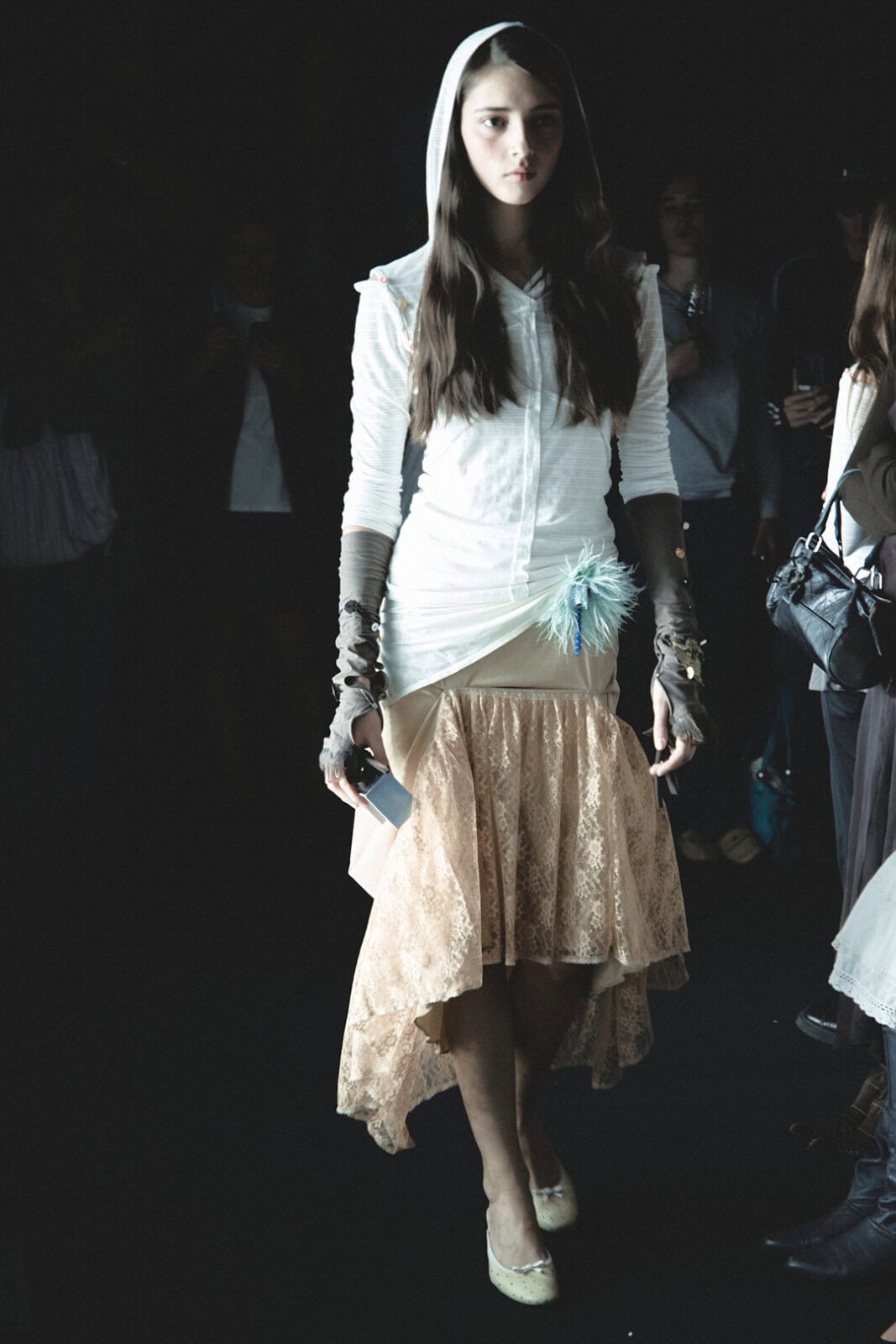
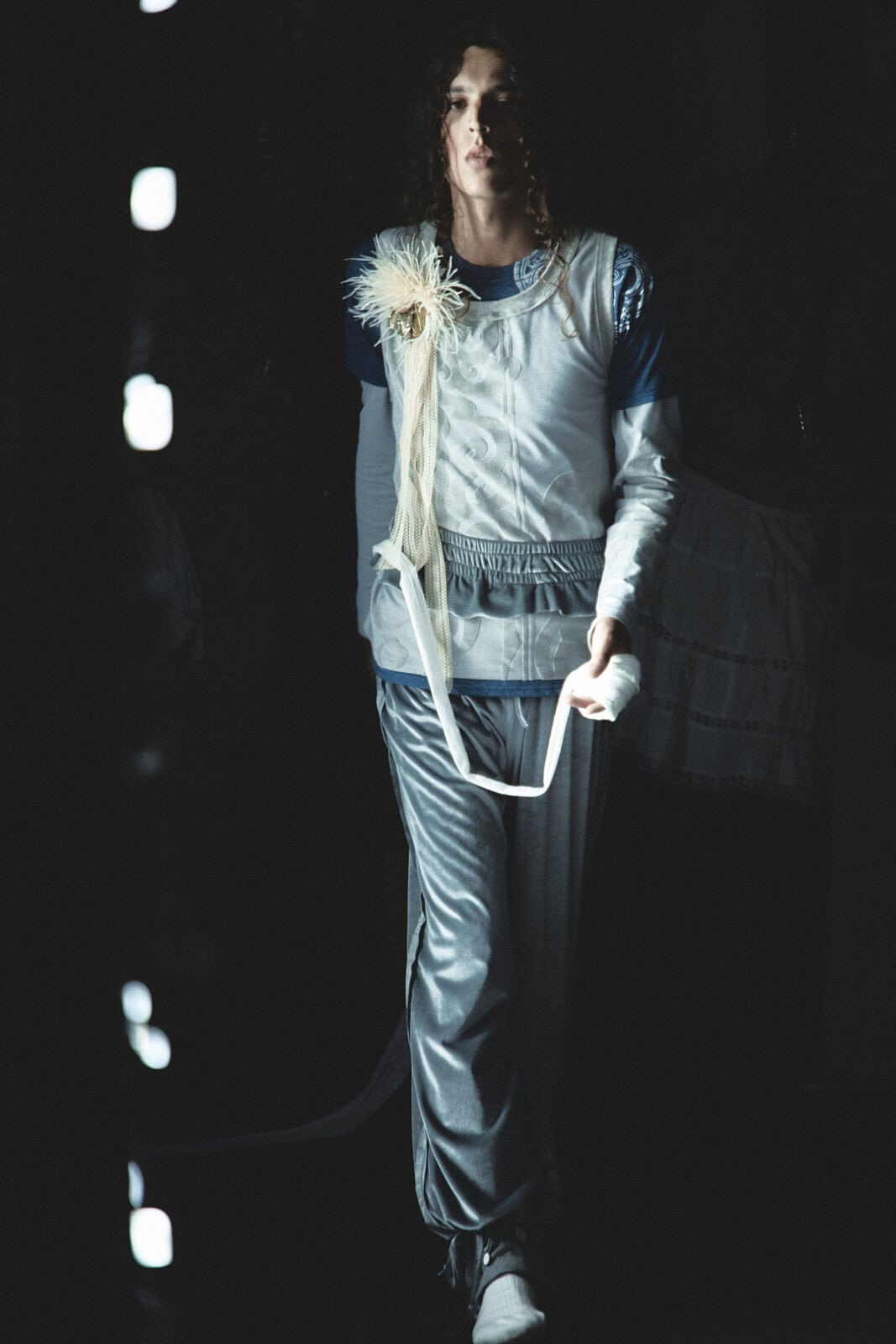
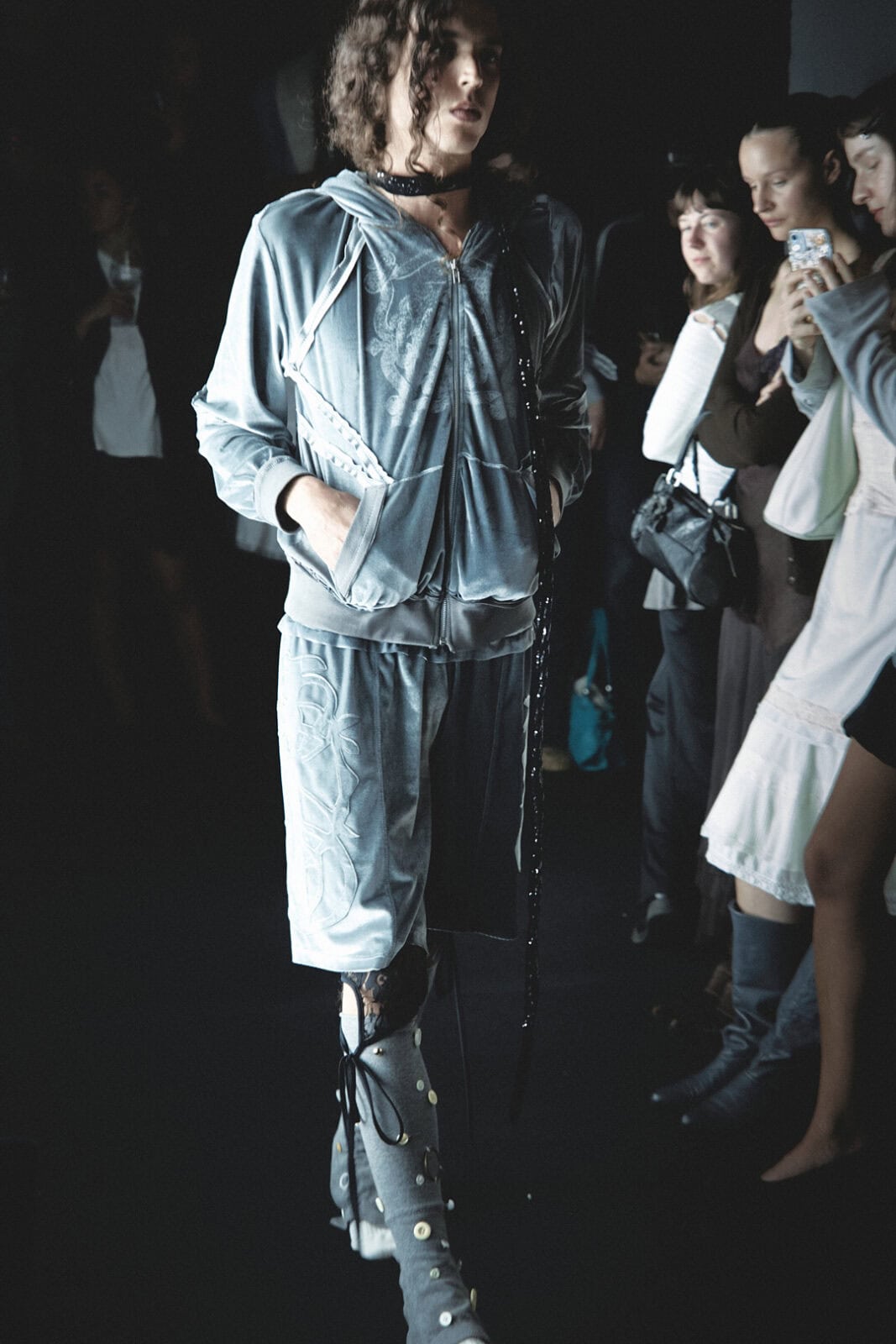
NIMPH blends innovation with sentiment; each piece is handcrafted within the heart of the city. Material remnants are reimagined into romantically distressed silhouettes of delicate rebellion, androgynous and experimental. Collections are reclaimed as “chapters.” Mañá’s conscious practice is driven by nostalgic narratives and nature. From swimming in the ocean each week of the year to gathering lace from her grandmother’s closet, NIMPH’s garments reflect the visionary’s mind like a mirror.
“What drew me to fashion was the freedom that happens with clothes: the game of identity, the power of how clothing can make you feel.”
At Barcelona Fashion Week FW26, NIMPH’s Drop 01 presentation, A Room to Dream In, was an intimate display of space and motion, unfolding across three rooms, or phases. By bringing studio life to the runway through a variety of immersive elements, the audience was given a glimpse into what happens behind the scenes. Models whispered to one another, locking eyes as if met with memories from long ago.
“NIMPH is how I have realised what I like and what I’m attracted to,” shares Mañá. “I like to allow time for things to tell me what they are, or for time to tell me the things I am interested in.”
The Cold Magazine (CM): How has the Barcelona queer community shaped the evolution of NIMPH?
Patty Mañá: That’s where the initial world of NIMPH was born really. I was part of and around a party community called MARICAS, which means f*ggot in Spanish. It happened before Covid when I was around 20, and I had grown up with them. It was the first femme and non-binary-led party platform in Barcelona in our time. It was becoming very popular, bringing in great DJs. I was around it a lot, and my first ever collection was shot with friends from the community.
CM: NIMPH thrives on upcycling materials into reimagined silhouettes. What materials do you return to most, and which ones bring A Room to Dream In to life?
PM: I am drawn to antique materials. My grandmother’s closet has always been a huge playground for me. The final, bridal-looking piece in the presentation is made with remnants of lace she gave to me, mixed with another undergarment that belonged to her mother. I love working with lace because it brings you back to romantic moments and feelings. The feathery brooches are inspired by my grandmother’s sister, because they’re the queens, you know?
I like to think of pieces of material as magnets – things that pop out of nowhere: buttons, feathers I have gathered, fabrics gifted to me from my grandmother. Our accessories are based on this process, the discovery of them.
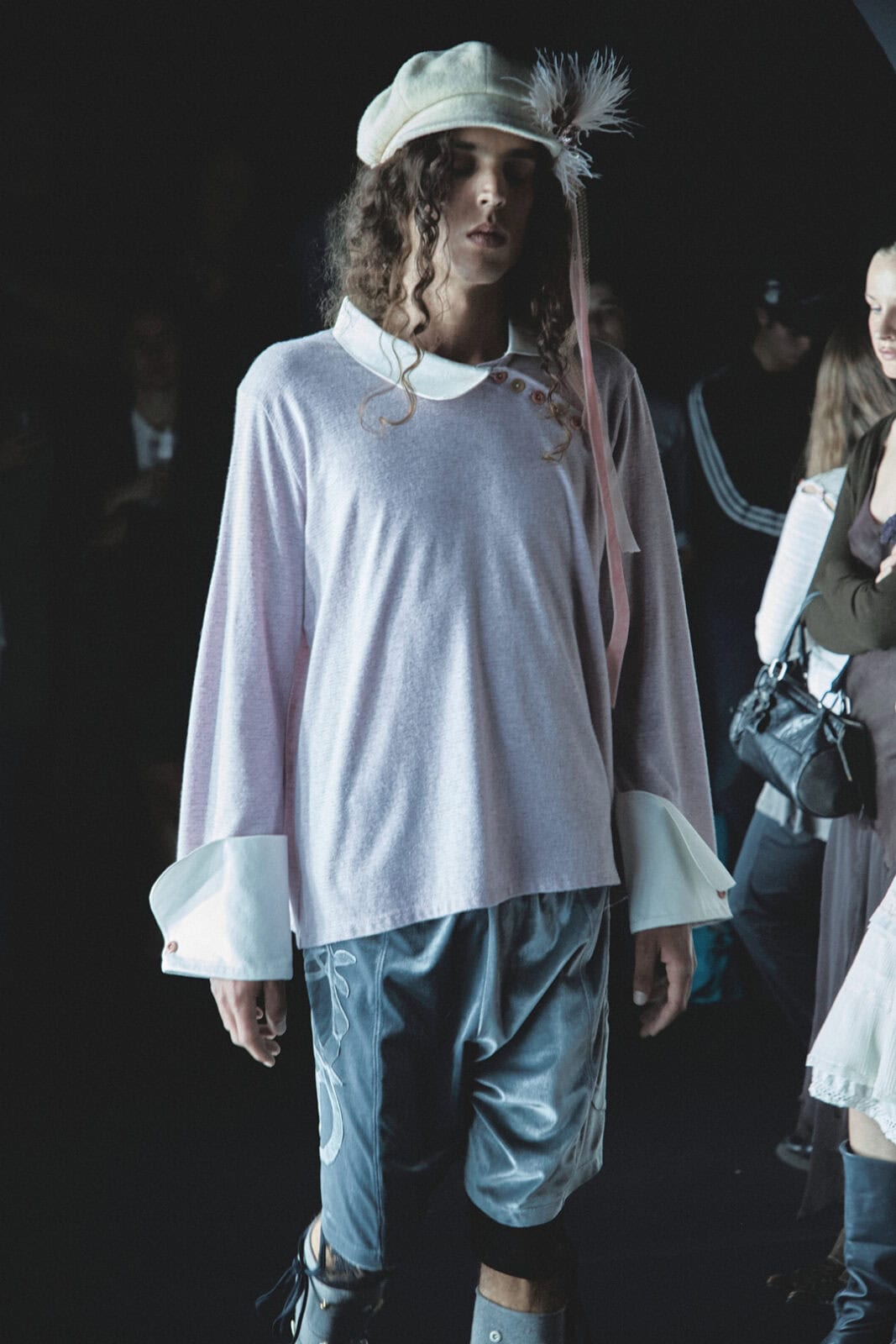
Velvet is a big one. I like the idea of luxury being in the shine, while the pieces themselves feel very cosy. I found myself mixing velvet joggers and hoodies, with lacy accessories to elevate them and create a night-time feel. Then there’s brushed jersey, stripes, opaque layers combined with cotton and poplin. The large circular fabric necklaces are a new take on pearls. I’m really excited for these – I want to make them in many different colours.
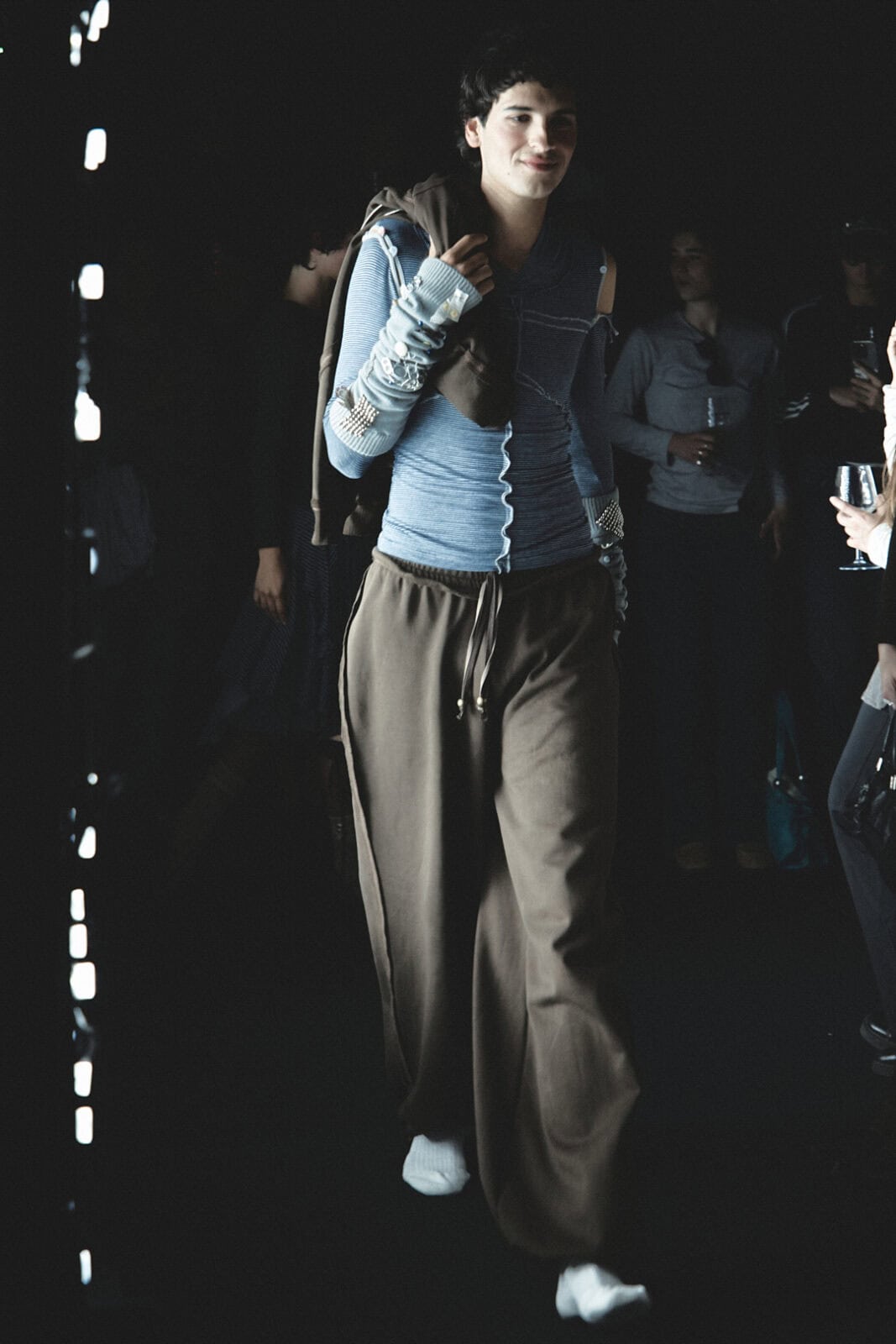
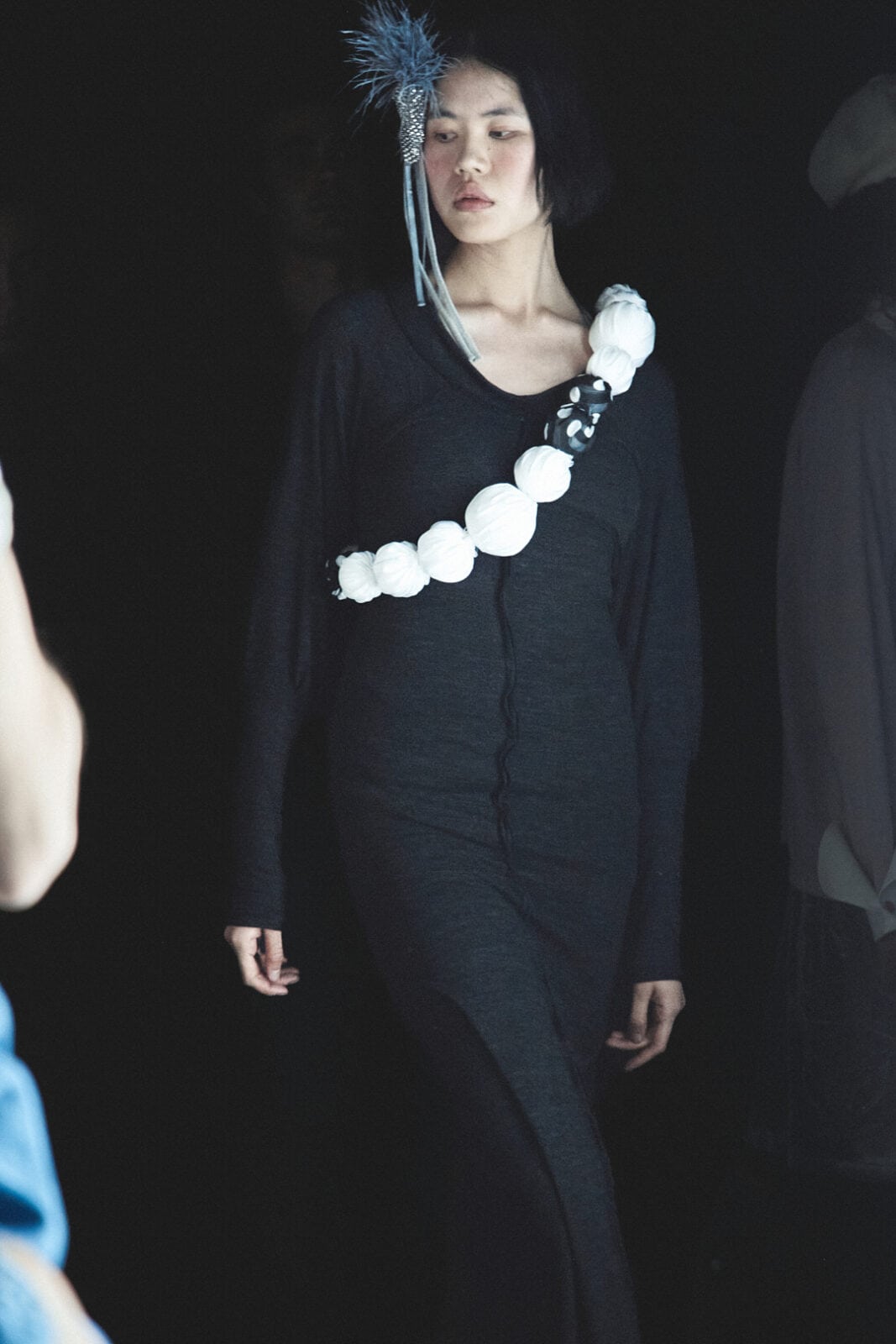
CM: A Room to Dream In was very immersive–inviting the audience to become a part of it. How does the presentation steer away from the style of traditional runway?
PM: I really wanted the presentation to bring that idea of surrounding yourself with everything – not just the clothes, or a show that passes you by, but allowing people to be a part of it, to take a little peek into what goes on behind the show. I find our studio space so charming, so I was like: “Ok, how can I take this experience with the studio that has helped me a lot with the creation of the collection and bring it here?” That’s how the little 3D atelier came to be. We invited people to look into where we design using a little 3D model of the space.
Our recent film, NIMPH, a Manifesto, by Omar Daher, played on a big screen. We showed an open backstage with me dressing the models. There was intimacy happening the whole time that brought the show together.
CM: Your models interact with each other rather than walk alone. How do their movements shape the meaning of the collection?
PM: The world is the models. We had them turning around and recognising each other amid the runway, and from there we built a story. The models were crawling, fixing their clothes in a mirror, and passing around a book, Portraits to Dream In, from room to room. The book presents an exhibition of works by two female photographers, Julia Margaret Cameron and Francesca Woodman, both 100 years apart.
We wanted to bring the intimacy of lying around and being in your own bedroom, playing dress-up, or trying to change into a look before going out for dinner. The room becomes messy, things are on the floor, and that happens in everyone’s room. It’s a more accurate idea of how you get dressed and undressed, rather than just walking down a runway.
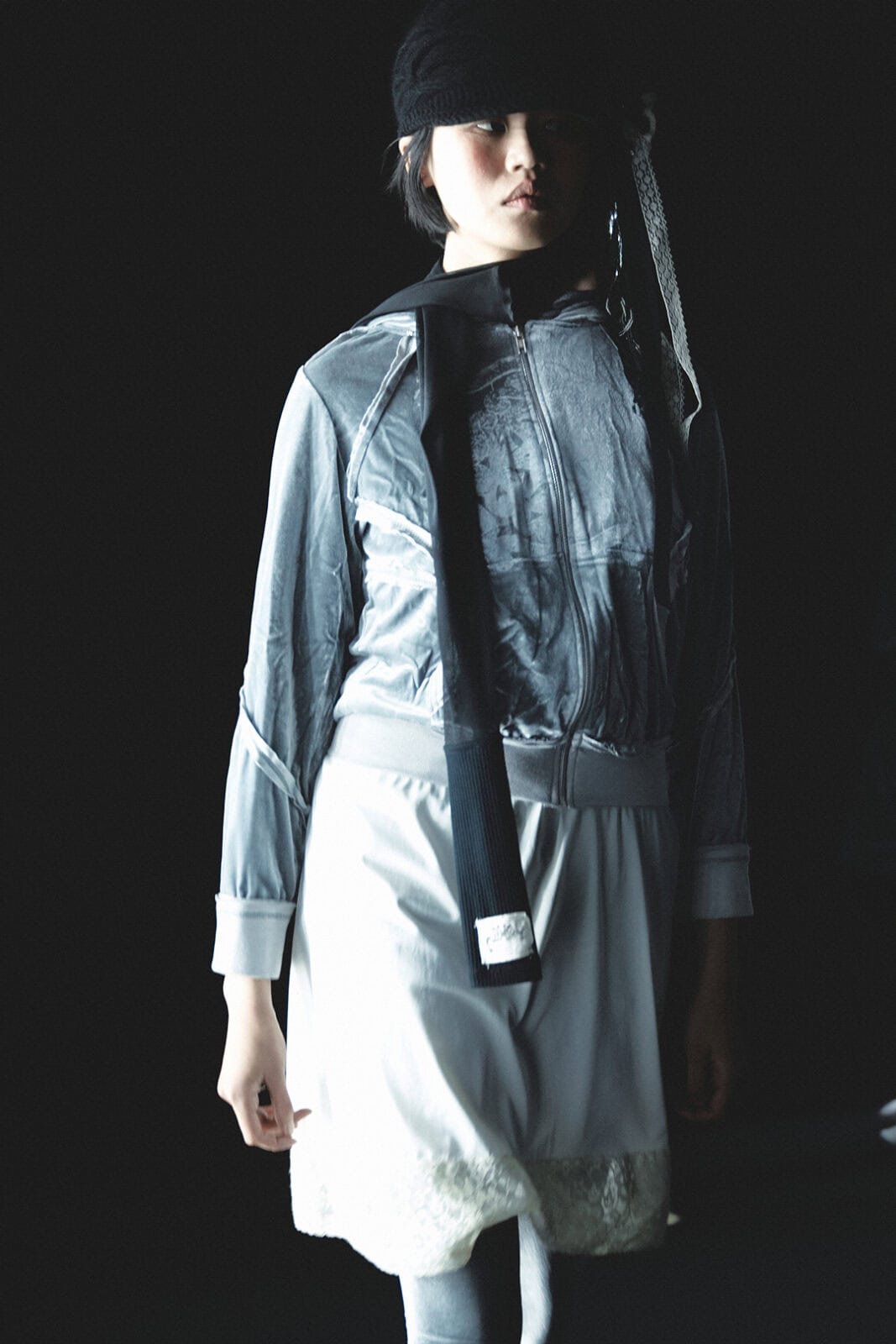
CM: Tell us more about the film, NIMPH, a Manifesto, by Omar Daher, which played as a central piece within the show. How does it reflect the brand?
PM: It’s between a dream and a documentation. The film talks about brand values, what I’m interested in, and intimacy and transparency, like an open book. I find value and connection in those things. For me, what’s most important nowadays and what brings me the most joy is talking to people, allowing people in and out. I think being mysterious is really interesting and catching, but sometimes you find yourself trying to work around a person, rather than actually being with the person. I thrive in exchange and in experience.
There’s a thin veil between reality and imagination, and fantasy. In the film you see me working and creating in the middle of a field, or in the middle of a blank space. It’s an abstraction of what happens in the studio. You see the things that inspire me, and how all of that turns into a collection. There are models being dressed, interacting, and lots of nature.
CM: What role does nature play in your daily life?
What is really important to me is what is happening around me. I am someone who lives with my creativity daily. Nature is an inspiration to me. As much as I love human exchange, I am also very drawn to reserved, intimate moments. I am very lucky that I get to escape to the mountains nearby, an hour drive outside of Barcelona, where my grandparents have a little flat. I go down to the seaside a lot, in the morning. I swim once a week, all year round, even in winter.
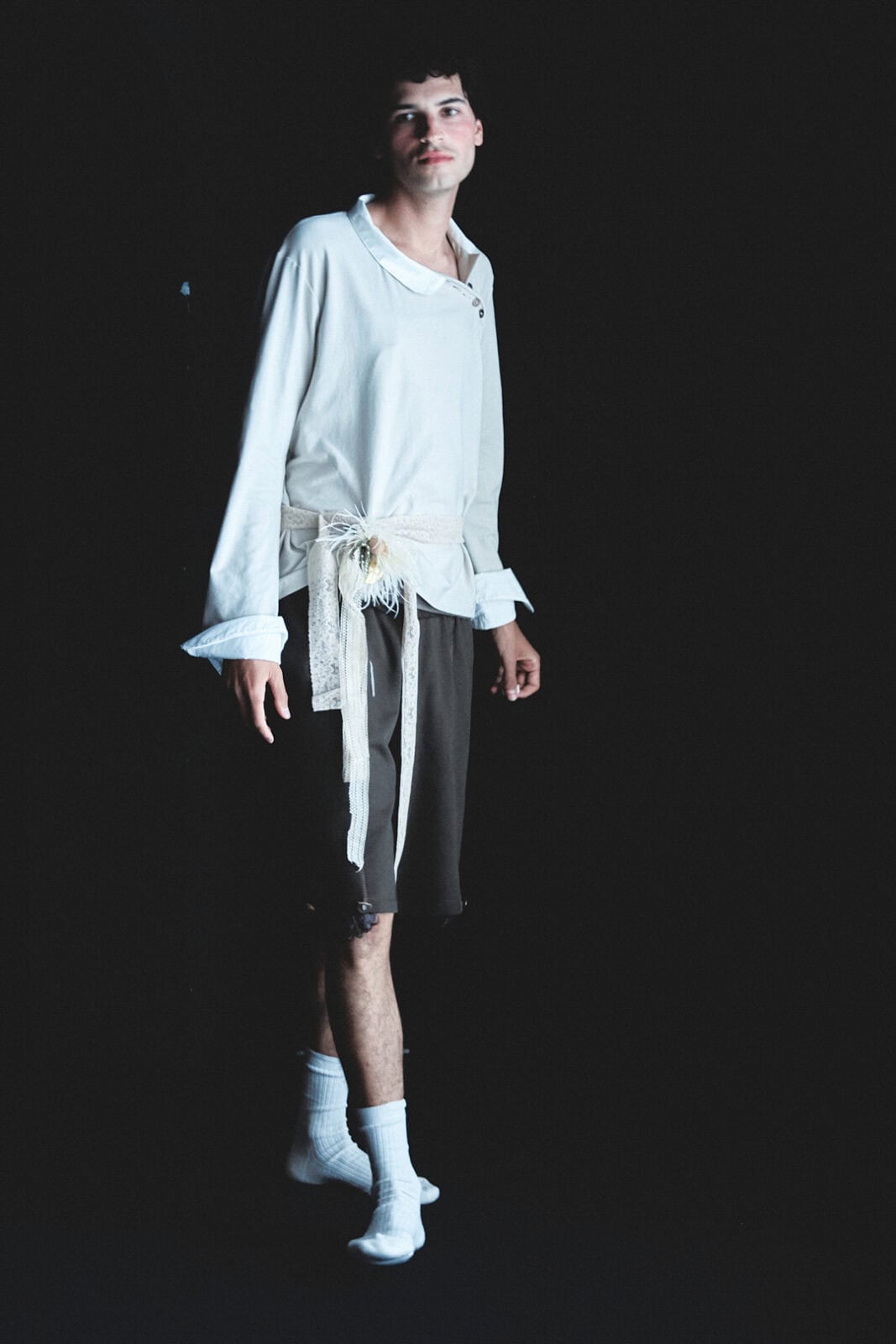
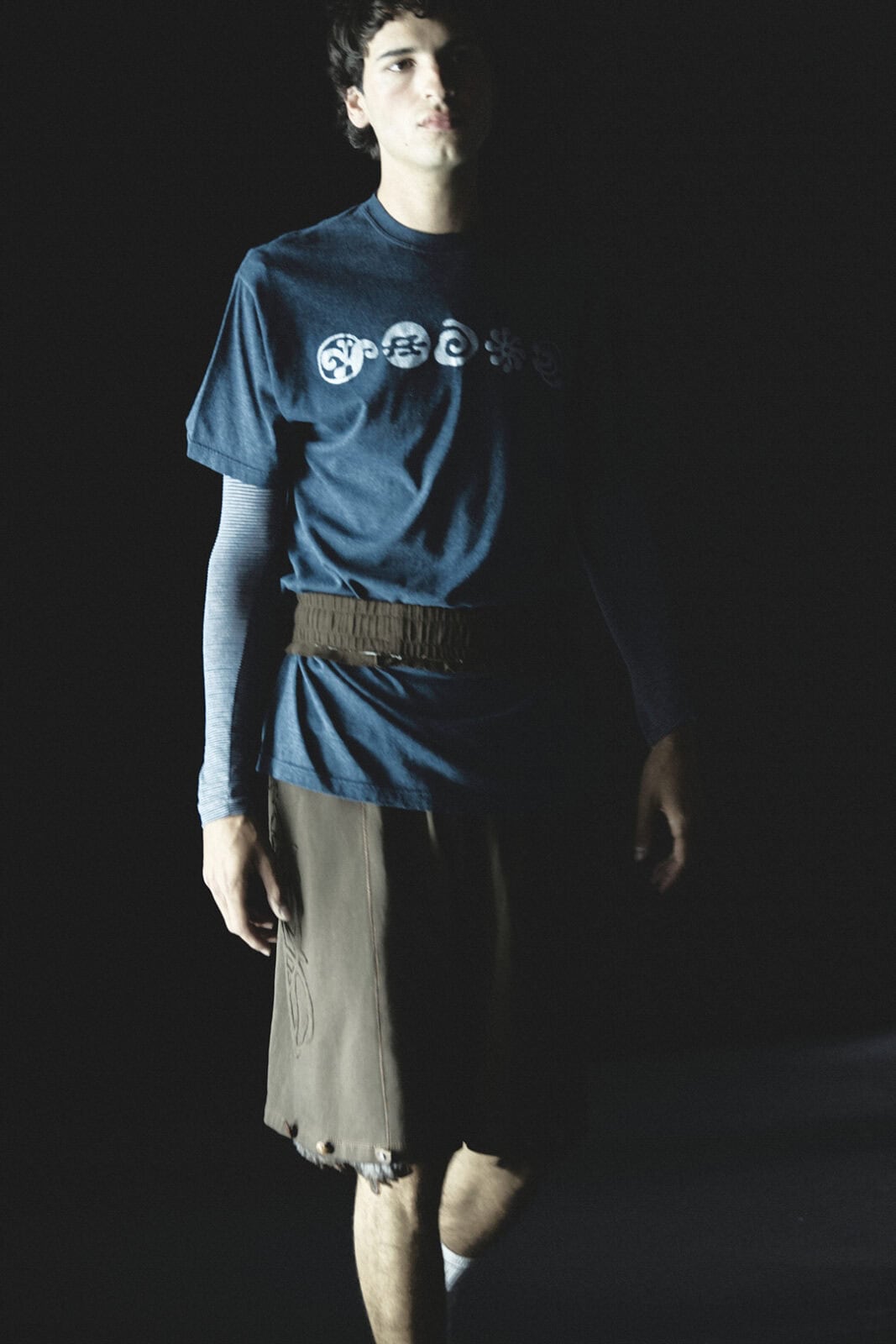
CM: What approach do you take when it comes to choosing a colour palette? How do the colours featured in the show signal inspiration behind the collection?
PM: That happens in my camera roll. My eye seems to catch things in a thread, things repeat, and I take these elements from my camera roll, group them together, and infuse them into a collection.
I had a cold vision for the blues. There was this little half-wing of a butterfly that I came across on the street that had greyish blue colours, and I knew it would be part of the collection. The greens come from the forest. The pinks come from an autumn sunset.
CM: NIMPH often refers to collections as “drops” or “chapters.” Can you elaborate on this?
PM: The industry has strict calendars, and it makes sense, but that can be unattainable for young designers. All of these rules might make sense, but not to me, and I’m not going to stop creating just because I can’t provide in that specific way. The aim for NIMPH was and still is to create a limitless world.
The way I live creatively, it’s like a storytelling that will have endless chapters, hopefully, until I die one day. I like the idea that I can do whatever I want. Anything is possible.


