

Despite being fresh off the plane from London, Ameli Lindgreen, the founder of Nordic Poetry, had no time to worry about jetlag. There were boxes of clothes to be steamed, private clients to be consulted with and many pictures to be taken. Rita Melssen and Jordan Beckett, owners of SAAD (Studio of Art Archive and Design), the Dumbo studio where the week-long Nordic Poetry pop-up took place, led us into the warehouse. Rita’s own vintage archive spans influential designers including Comme des Garçons, Yoshiki Hishinuma, Junya Watanabe, Jean-Paul Gautier and Alexander McQueen alongside traditional garments from Africa and the Middle East. Rita’s work as Madonna’s stylist has placed her firmly on the map as an artist and creator to watch.
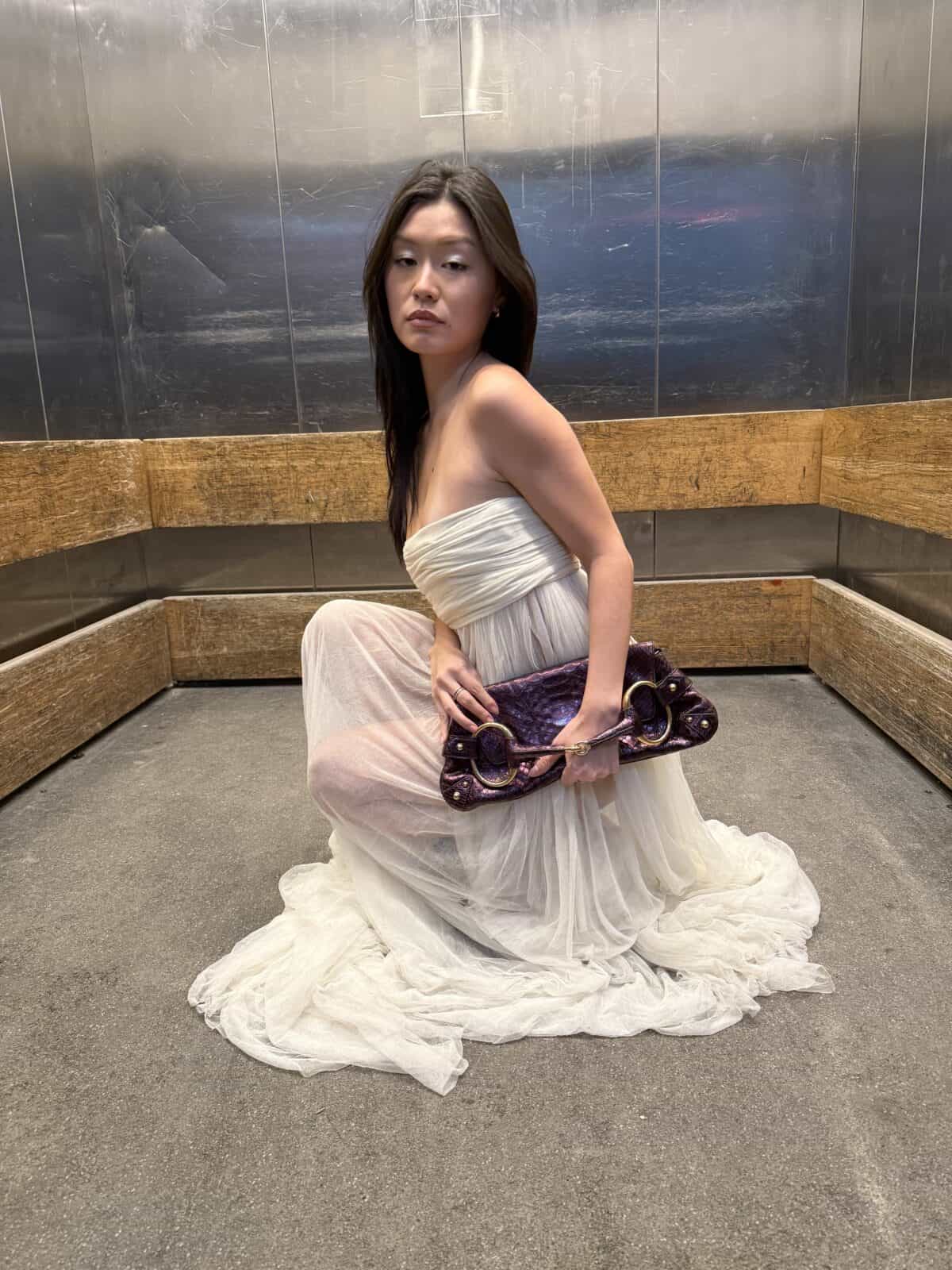
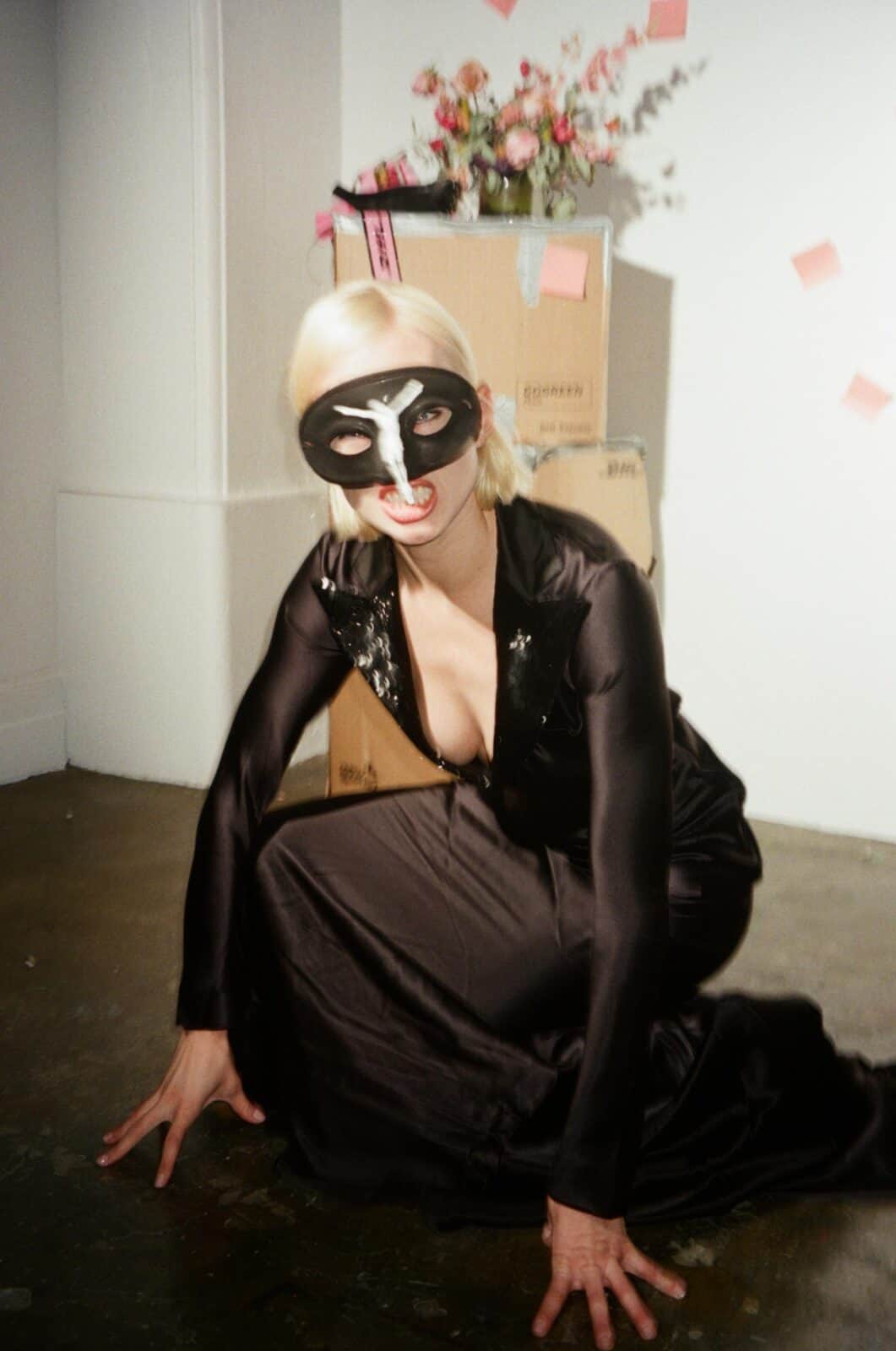
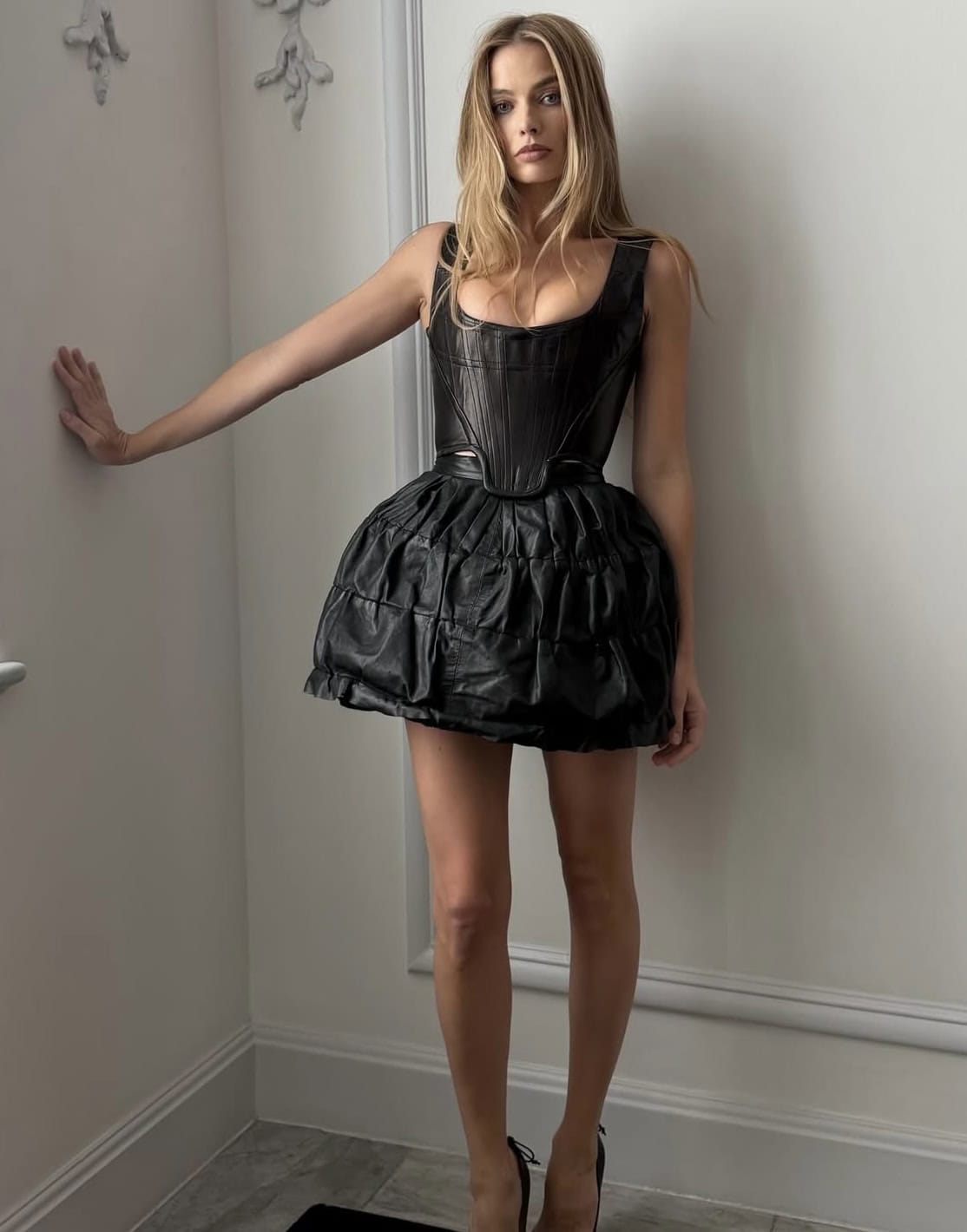
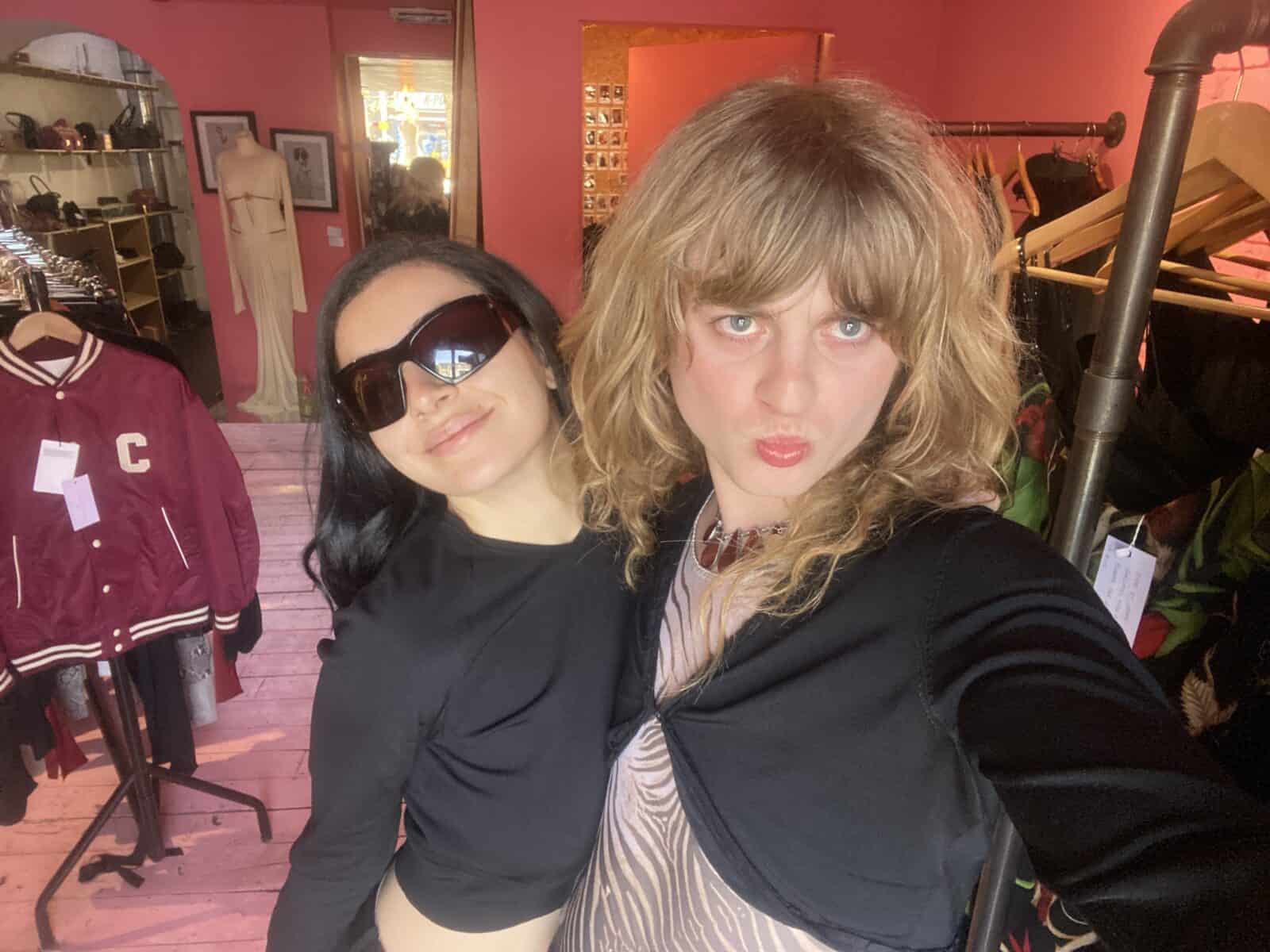
Coming off the back of dressing Margot Robbie in archival Vivienne Westwood for Emerald Fennell’s Wuthering Heights press tour, the buzz behind Nordic Poetry’s New York event was palpable. Azna May’s casual photographs of Charli XCX, Sombr, Lily Allen and Gabriette have lifted the pink wall of Nordic Poetry’s East London storefront to a near cult-like status. To be in front of the pink wall is to be in proximity to both the moment and to temporal transcendence.
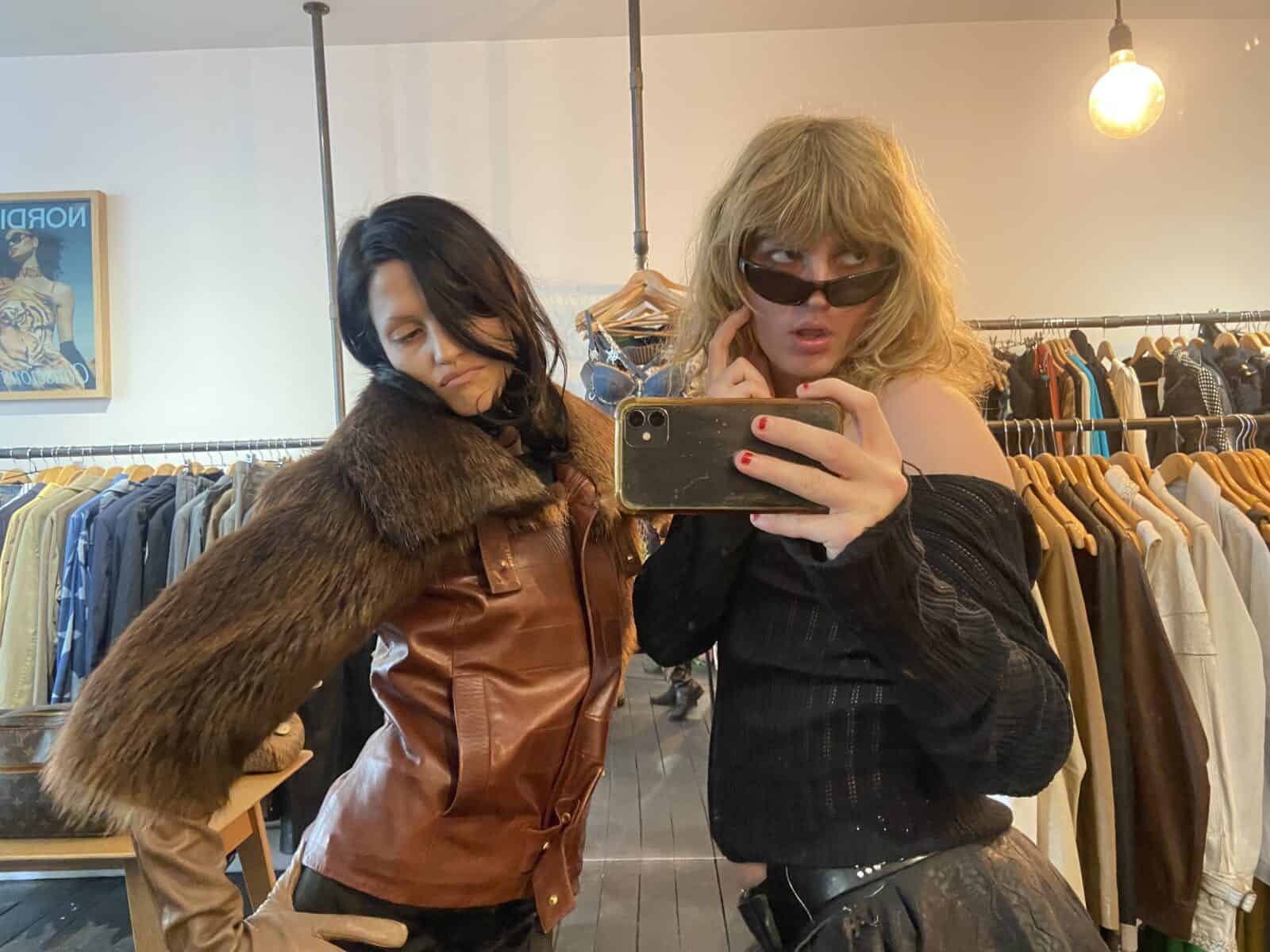
In Brooklyn for one week only with pieces both for sale and others pulled temporarily from the archive for display, every moment was filled with private fittings, photoshoots and lots of encouraging one-liners from Azna as he made each client feel like the person of the hour. The edit they selected to bring across the Atlantic included beloved classics like the 1970s “Seditionaires” by Vivienne Westwood and Malcom McLaren ‘Tits’ Muslin Top, and the 2003 red silk corset gown by Tom Ford for Gucci worn by the likes of Addison Rae and Kourtney Kardashian.
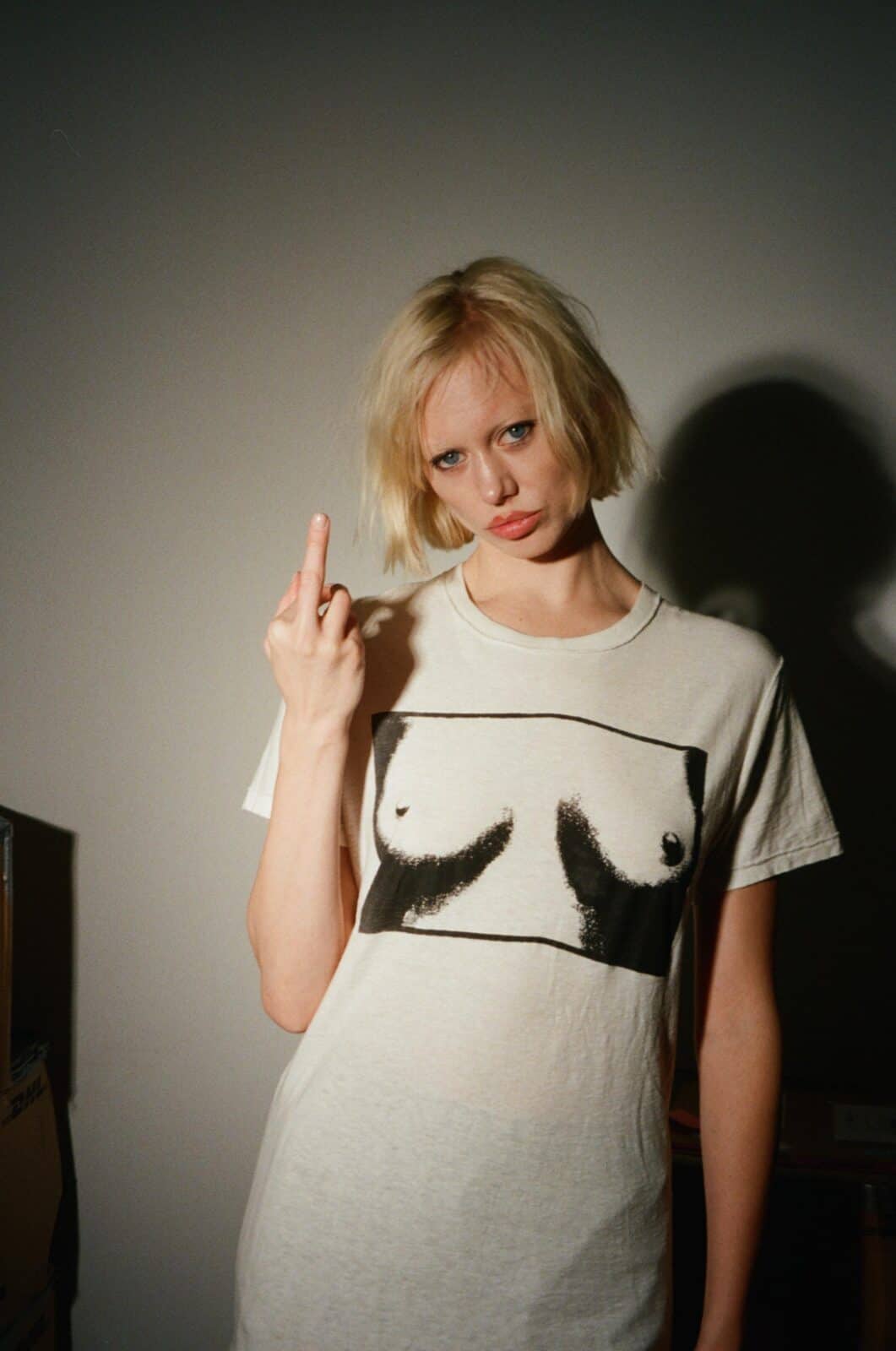
As Ameli showed me the men’s collection, she paused on each item to offer an anecdote. “This is from the 80’s but the tag has been replaced,” she says, referencing the Stone Island boiled wool tags.
She buys strictly from experienced sellers who she has a trustworthy relationship with. But Ameli’s continuous dedication to detail extends beyond the authentication process and into the ethos of her curation style. To her, choosing vintage means extending the life of garments and valuing craftsmanship over fast consumption.
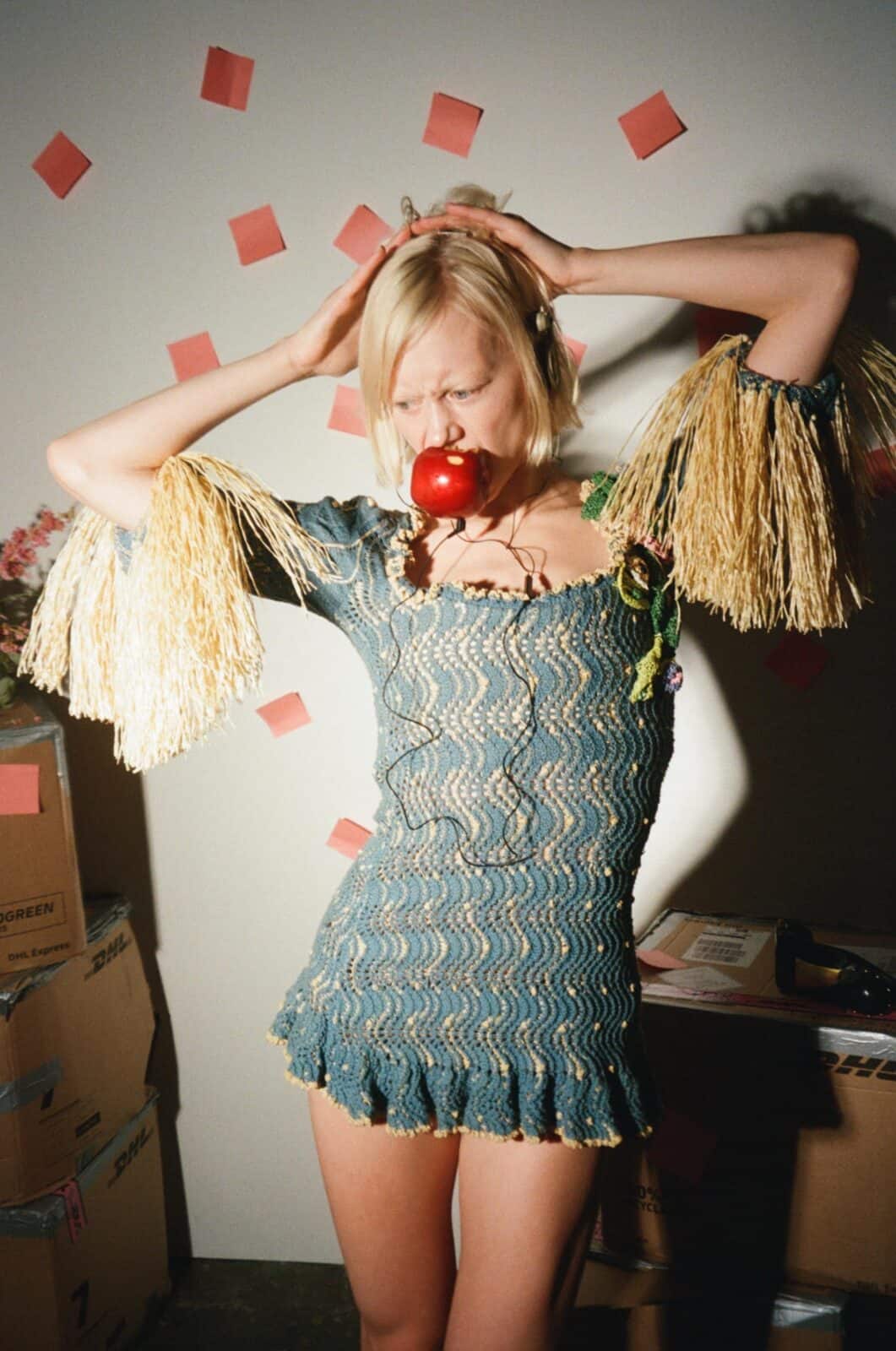
Spending three days behind the scenes during the preparation for the pop-up, I had a chance to witness Ameli and Azna’s careful balance between calculated planning and creative spontaneity. When model and influencer Kitty Lever arrived for a photoshoot, Azna stacked DHL boxes in front of a white wall covered with pink sticky notes. He debated about balancing a vase of dying flowers on top and ultimately decided the drama and romance was necessary. I held red tissue paper over the studio light to provide a pink hue reminiscent of the pink wall. Kitty pulled from her own collection of props: a baby doll, a lollipop, analog headphones plugged into a fresh apple. What better items to pair with Alexander McQueen’s 2007 Tuxedo Gown and Vivienne Westwood’s 1994 ‘On Liberty’ Hand Knitted Runway Dress? Why not add some of Lilly Barros’s sequined or feather hats? How about the McQueen Crucifix Mask from the A/W 1996 ‘Dante’ Collection?
This shoot was the embodiment of Nordic Poetry – rooted in history but never restrained by tradition.
I wanted to get a sense of the energy behind the shop that has stolen the hearts of fashion aficionados across the globe. The appeal is not simply the celebrity engagement, to suggest this would be to diminish the care, knowledge, and time that has gone into the development of this collection. Speaking with Ameli both in moments between sales and via email, she offered up a sense of her inspirations, her musings on NY vs London, and her hopes for the future of fashion.
The Cold Magazine (CM): How do you contend with creating content to highlight vintage archival pieces? When vintage pieces are recontextualised through a modern lens, do they lose their potency or is their magic heightened?
Ameli Lindgreen (AL): The pieces in our collection were never meant to be temporary. That’s why they’ve endured. Truly strong design doesn’t expire. Designers today constantly reference the past, whether consciously or subconsciously, because so much of contemporary fashion is built on foundations laid decades ago.
When we create content around archival pieces, we’re not trying to recreate the original moment. We’re showing how timeless construction, silhouette, and attitude translate now. Recontextualising doesn’t dilute the potency, it heightens it. It reminds people that what feels “current” often already existed, just in a sharper form. Vintage isn’t about nostalgia. It’s about continuity. And when you frame an archival piece through a modern lens, you reveal how cyclical and intelligent fashion really is.
CM: What were you considering when selecting the pieces for this pop-up?
AL: I was thinking about what the New York crowd actually wants to wear, not just what photographs well. New York has a certain directness. People dress with purpose, and they’re confident in strong silhouettes.
When I curate, I always select pieces that feel like they’ll speak to someone. It’s never about one fixed aesthetic. For this pop-up, I brought a variation – sharp tailoring, sensual minimal pieces, bolder statement items – because personal style is individual. Even within the fashion crowd, people express themselves differently. The edit is cohesive, but there’s range. I want someone to walk in and feel seen, whether they lean towards the polished, and understated, or the slightly subversive.
CM: Since you’ve sold in New York before, what differences have you noticed between what is popular in NYC versus London?
AL: I actually think the London and New York crowds dress fairly similarly – both cities have a strong fashion consciousness and aren’t afraid of archival pieces or statement silhouettes. The main difference I’ve noticed is that dresses tend to sell better in the US than in London.
In New York, there’s more of an appetite for overtly feminine, impactful pieces, especially gowns or body-conscious silhouettes. London feels slightly more layered and understated; people lean into tailoring. But ultimately, both cities understand strong design. It’s less about trend and more about confidence.
CM: Are there any pieces you want to highlight?
AL: I’m especially excited about 90s and early 2000s Tom Ford for Gucci and Yves Saint Laurent tailoring – that razor-sharp sexuality that still feels dangerous. There’s a precision to those cuts that still feels unmatched.
I’ve also brought standout gowns and dresses from Roberto Cavalli and John Galliano, pieces that are unapologetically dramatic and command attention. And I’m always drawn to Alexander McQueen and Vivienne Westwood. Both were creative geniuses who pushed fashion into the realm of art. Their work was about narrative, rebellion, and emotion. Those pieces still feel radical today.
CM: What was your start in collecting and selling vintage designer clothing?
AL: I initially started by selling non-branded vintage clothing, but I approached it the same way I do today. It was never about the label, it was about the edit. From the beginning, I focused on curating a space where pieces sit well together, where fabrics, silhouettes, and construction create a cohesive conversation. I’ve always been drawn to interesting textures, strong shapes, and garments that feel intentional in their make.
Moving into designer archive felt like a natural progression. It was always my dream to collect archival fashion not just to sell it, but to celebrate fashion history and preserve the artistry behind it. For me, it’s about honouring the designers and the eras that shaped the industry while allowing those pieces to live again in the present.
CM: How do you envision the future of Nordic Poetry?
AL: I see Nordic Poetry expanding internationally, establishing a presence in New York and Los Angeles where there’s a strong appreciation for archival fashion and bold personal style. I’d also love to work more closely with museums, positioning archival pieces not just as garments to wear, but as cultural artefacts that deserve recognition within fashion history.
There’s an educational element to archive that I’m very passionate about. At the same time, I want to continue collaborating with stylists for red carpet events. Seeing archival pieces step onto contemporary stages: premieres, award shows, major cultural moments, reinforces how timeless and powerful these designs truly are.
For me, the future is about growth, but also elevation. Expanding geographically while deepening Nordic Poetry’s presence in fashion culture.