
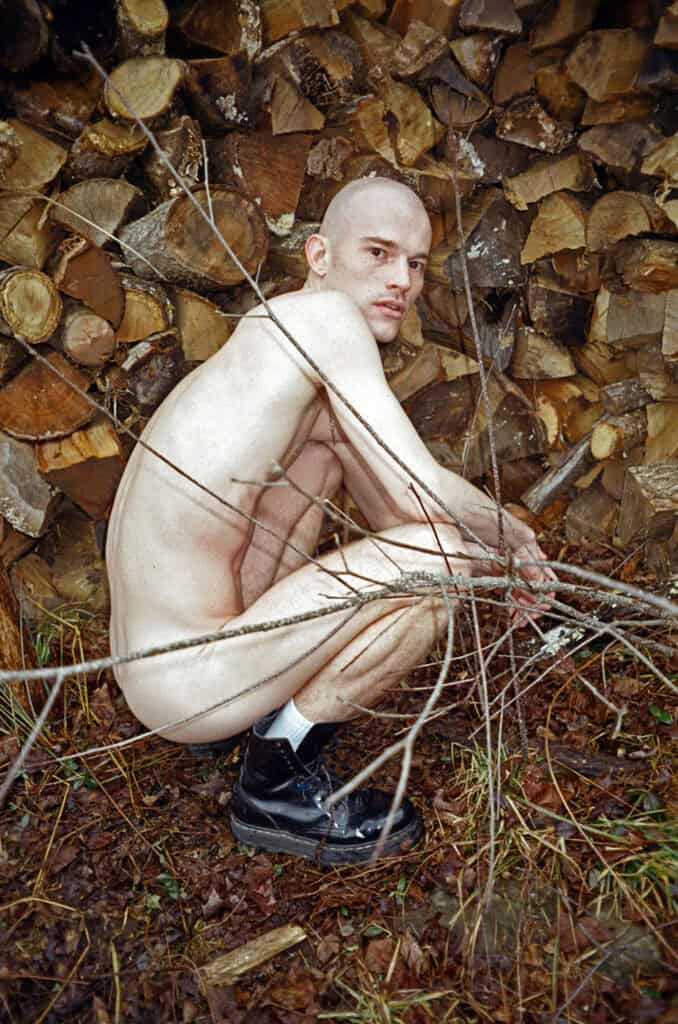
In 1995, Slava Mogutin left his homeland of Russia. “Overnight, I lost everything I had,” he says, “my audience, my family, my circle of friends, my notoriety. I had to rebuild my life and career from scratch.” Born in Siberia in 1974 – a region best known for its atmospheric brutality, a frigid Antipodes for dissenters and deviants – Slava lived through the collapse of the Soviet dream and the fleeting, woozy liberalisation of Russian society under “notorious drunkard” Boris Yeltsin.
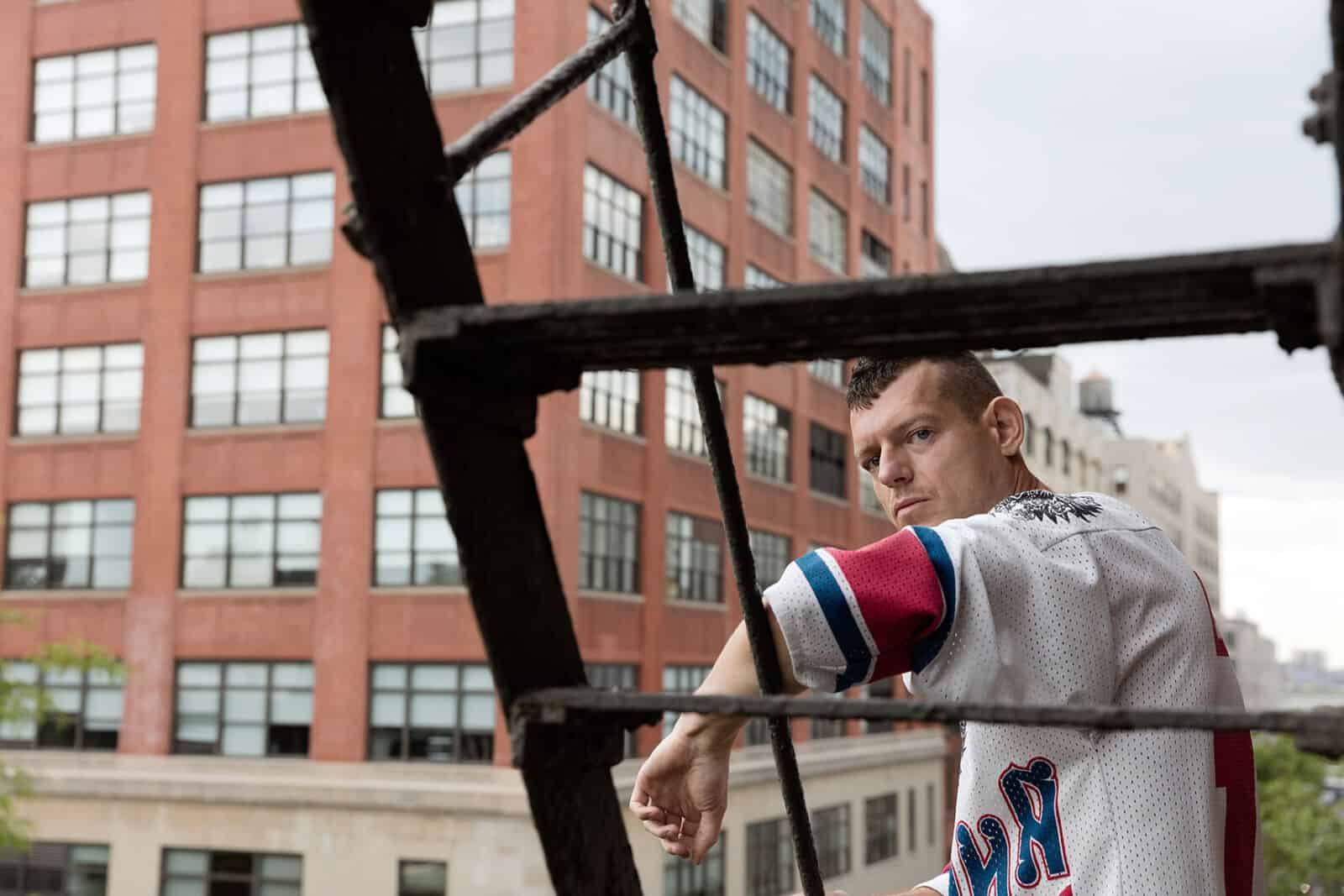
Through that period’s perforated Iron Wall, Slava dined from an once out-of-reach fig tree of queer literature – Rimbaud, Genet, Baldwin, Burroughs, Allen Ginsberg, Dennis Cooper – and revelled in the sybaritic, Weimar-like underground of nineties Moscow. Then, as Vladimir Putin started his scorched-earth campaign through the political ranks and the End of History came to an end, attitudes in Russia once more curdled. A 21-year-old Slava Mogutin was forced to leave.
By then a prolific journalist and notoriously provocative writer, he was charged by the regime with “malicious hooliganism with exceptional cynicism and extreme insolence” – in part, at least, for an ersatz marriage ceremony he staged with his then-boyfriend, Robert Filippini. His subsequent departure to the US made him the first Russian citizen granted asylum in the country on the grounds of homophobic persecution, both a historic landmark and a sorry anticipation of what the 21st century would have in-store.
Already an idol of the gay underground by the time of this exile, Slava embedded himself in New York’s art scene and cannibalised its AIDS-era visual culture – Goldin, Wojnarowicz and Hujar – to blend a heady cocktail that he cheered to the new millennium. Synthesising their vocabularies with those of high-fashion, BDSM subculture and gay porn (locker room scenes were among his favourites), Slava made a new, erotic argot from these motley aesthetics – one that has lingered on his work ever since, much like the musks of the lovers and friends he photographs.
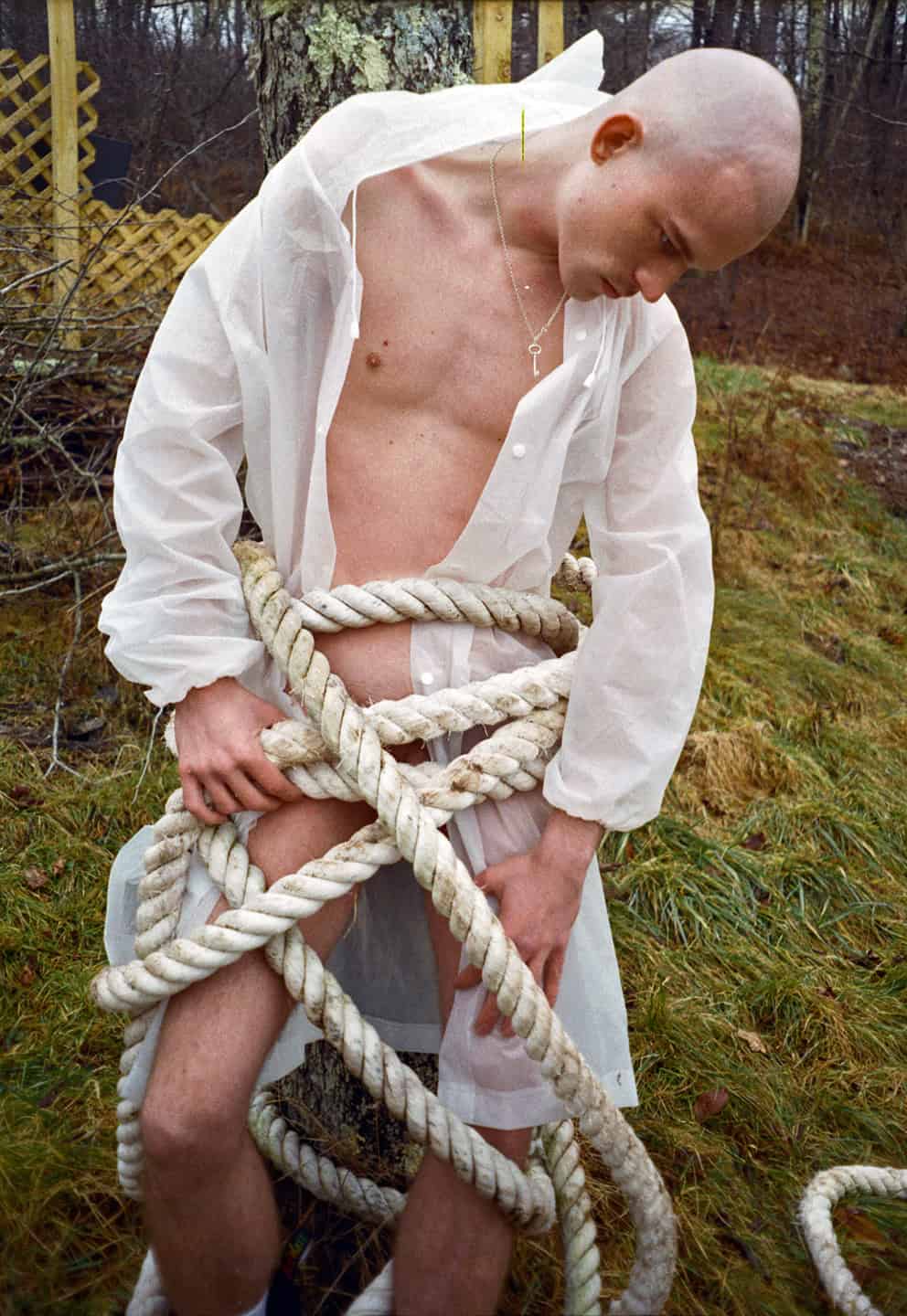
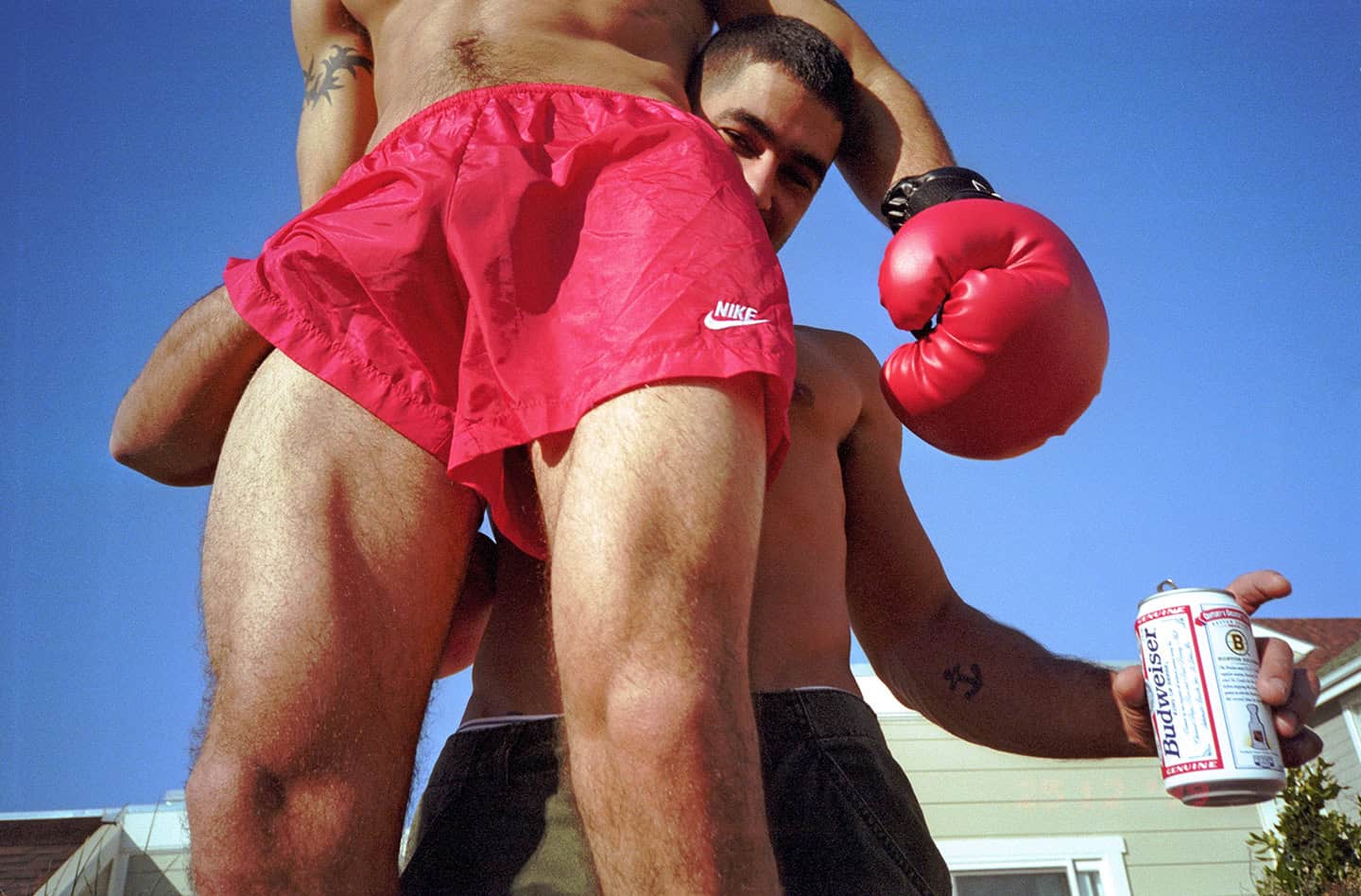
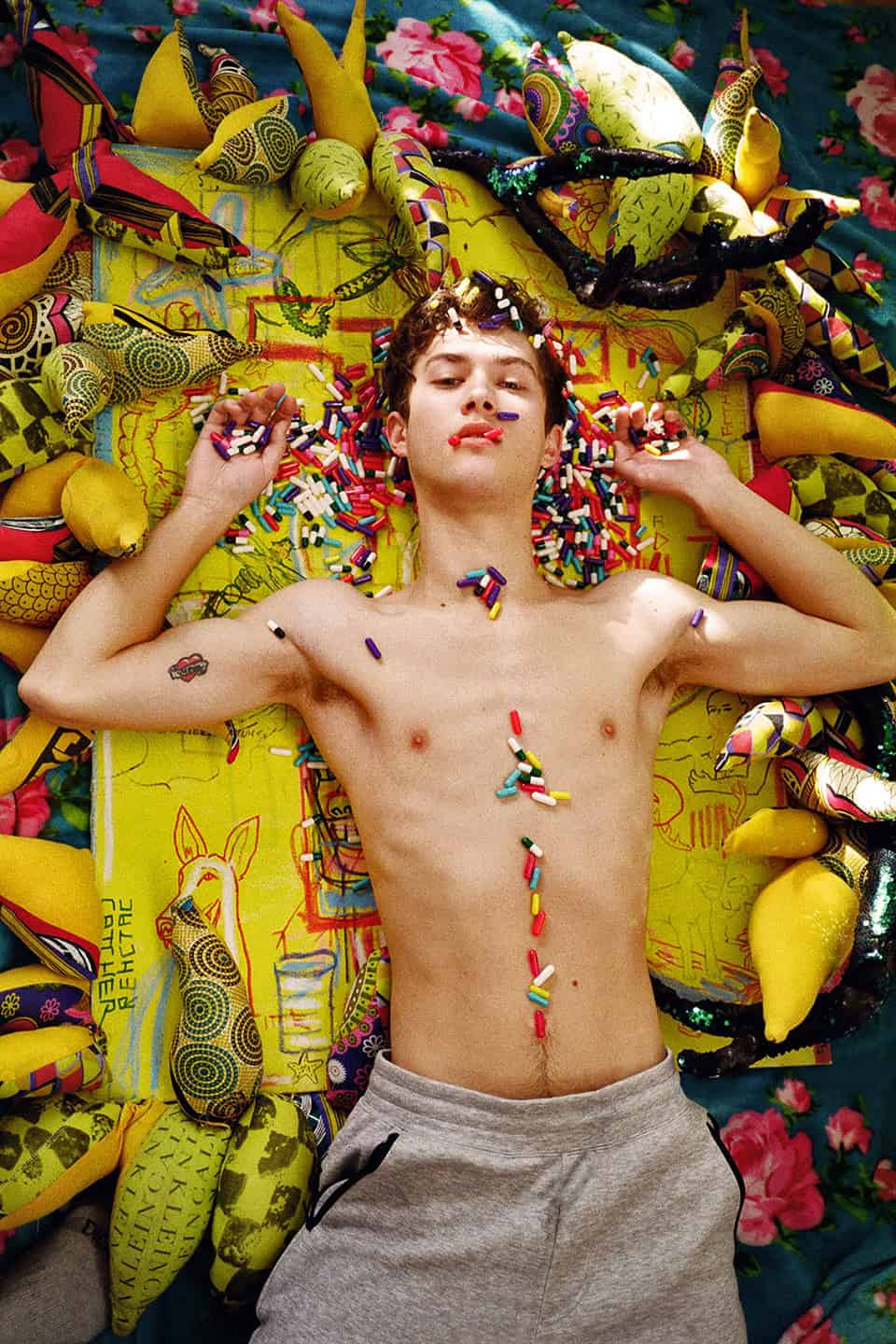
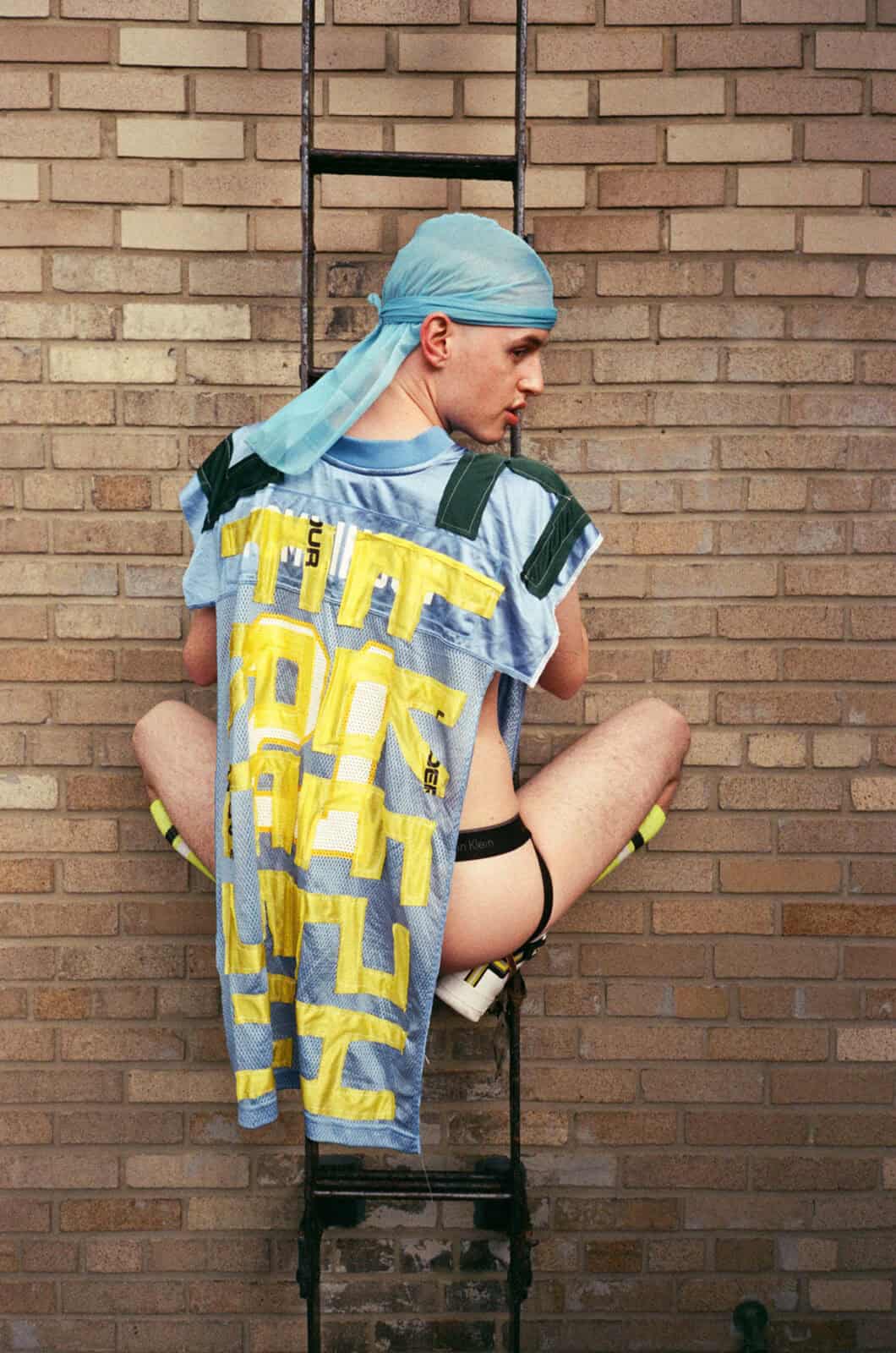
Over three decades later, the writer-photographer-pornstar-activist continues to vivisect the human condition, usually through the slender, naked bodies of the attractive young men he makes his muses. Analog Human Studies, a celebratory retrospective at San Francisco’s Bob Mizer Foundation (an institution that, per its website, “centres on the male form and homoerotic visual history”), documents 25 years of this distinct photographic practice. “I’m not afraid to embrace the dark side of human nature and sexuality,” he tells The Cold Magazine, “After all, that’s what makes us human.”
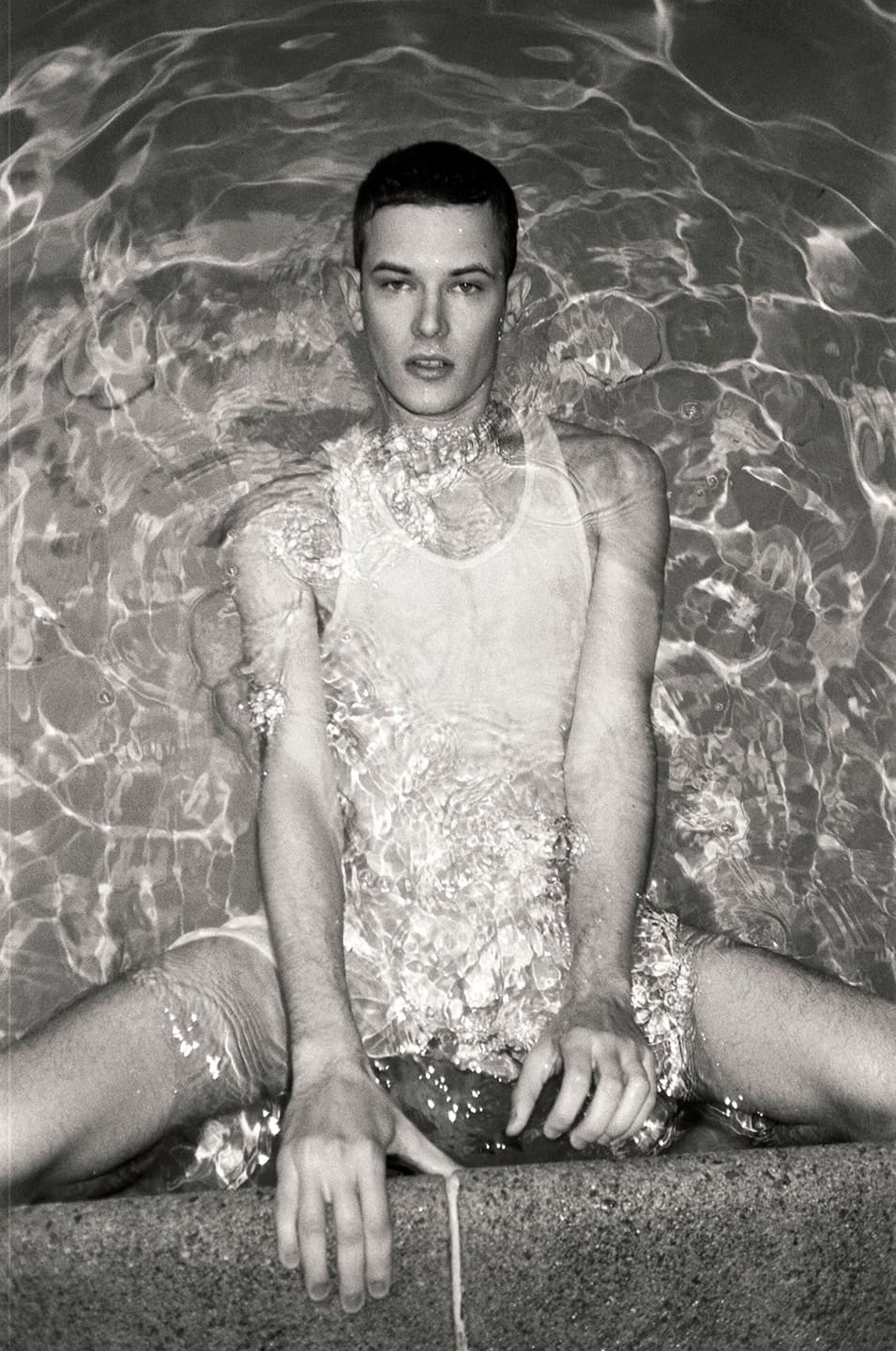
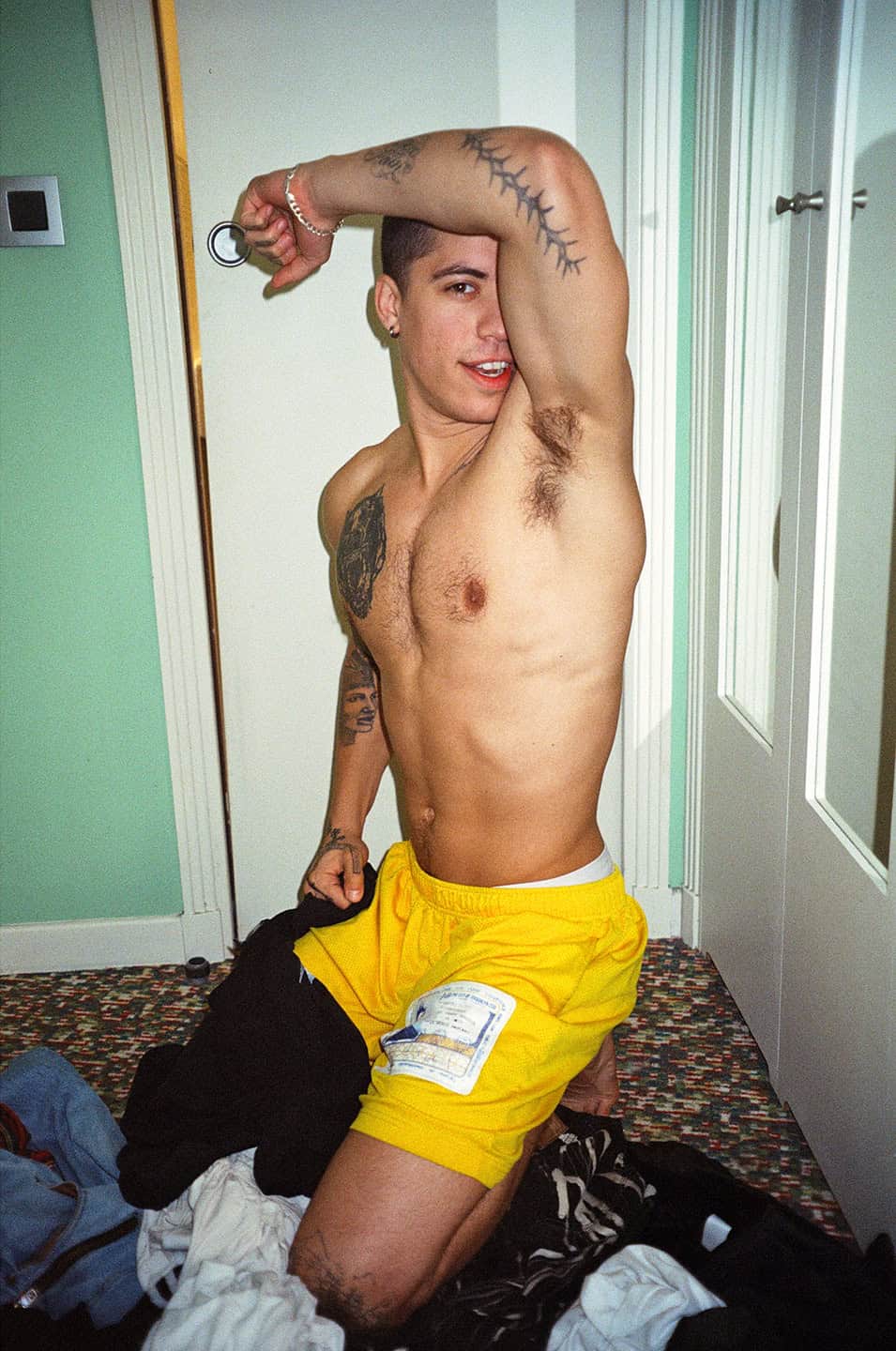
The Cold Magazine (CM): Your retrospective exhibition is called Analog Human Studies. After 25 years of studies on the human form, what have you learnt?
Slava Mogutin (SM): That nothing stays still. The body is never fixed, it’s always in transition, marked by time, desire, memory, trauma. What I’ve learned is that some people change for the better, most change for the worse. I’m not afraid to embrace the dark side of human nature and sexuality. After all, that’s what makes us human. There’s no light without shadows and darkness, that’s what photography is about. I’ve learned that intimacy can’t be staged. You can’t force it. It comes from trust, from proximity, from being inside the moment. The longer I work, the less I’m interested in perfect images. I’m drawn to what feels alive, unstable, unresolved. In a way, the work is less about the body itself and more about time passing through it.
CM: Why are you so interested in the male body as a subject?
SM: It started from desire, obviously. But it quickly became more complex than that. The male body is heavily coded—especially in queer culture. It carries projections of power, masculinity, control. I’m interested in breaking that open. Showing vulnerability, tenderness, contradiction. I photograph men the way I experience them—not as ideals, but as humans. Fragile, performative, exposed. The erotic is there, but it’s never the whole story.
CM: In another interview you said you want to “transform and reshape reality”. Do you think photography has the power to do that?
SM: Photography doesn’t reflect reality, it edits it. Every frame is a decision: what to include, what to exclude, how close to get. That already transforms things. But beyond that, images shape how we remember, how we imagine ourselves, how we relate to others. So yes, it has power, but not in a grand, heroic way. It’s quieter. It shifts perception. It creates new possibilities of seeing.
CM: In your younger years, your primary medium was the written word. Why did you move away from writing? Did you feel that the written word wasn’t enough?
SM: Writing was my first language of resistance. It got me into trouble, and it also saved me. I didn’t move away from it, I expanded. Photography gave me something more immediate, more physical. It allowed me to work with bodies, with presence, with silence. There are things you can’t articulate in words. And there are things images can’t hold either. I move between them, but ultimately I remain a poet and journalist in everything I do.
CM: When you started photography 25 years ago, what inspired that transition?
SM: Actually, I’ve been taking pictures since my teenage years, but it became my main medium and form of expression about 25 years ago, when I felt confident enough to start publishing and exhibiting my work. I’ve been traveling nonstop and was surrounded by people I wanted to document – friends, lovers, collaborators. Photography became a way of documenting, staying close, and holding onto something. It was also a reaction against abstraction. I wanted something direct, something that happens in real time.
CM: What was your first photograph you were proud of?
SM: It wasn’t a single image. It was a moment when I realised I had captured something real – something that couldn’t be repeated. That feeling still drives me. Not perfection, but presence.
CM: Is there a photo you regret taking?
SM: Not really. Even the failures are part of the process. What matters is intention. If the image comes from a place of honesty, I can stand by it. If anything, I regret the images I didn’t take.
CM: What is your relationship to your subjects?
SM: There’s no distance. I photograph people I know – people I’m connected to. Many of them are my fellow queer artists, performers, dancers, porn stars and sex workers. Trust is everything. Without it, the image is empty. These are not subjects in a traditional sense. They’re collaborators, witnesses, sometimes lovers. The work comes out of that exchange.
CM: Your photography openly draws on the aesthetics of gay porn, a field you yourself have worked in. Porn is also a medium currently under a lot of attack for its ubiquity in the digital age and its degrading depictions of women. Should we be afraid of porn?
SM: Fear is always a convenient response to anything that exposes desire too directly. Porn becomes a scapegoat for much larger anxieties – about sex, power, control, the body. I don’t think porn itself is the problem. The issue is how it’s produced, who controls it, and how it circulates. There’s a huge difference between exploitative, algorithm-driven content and work that comes from a place of agency, intimacy, and self-expression. What interests me is reclaiming that space – taking something that’s been flattened into consumption and pushing it back toward experience. Slowing it down. Complicating it. Making it less about performance and more about presence. So no, I don’t think we should be afraid of porn. But we should be critical of the systems around it.
CM: Can porn ever be considered an artform? What separates porn and art?
SM: That line has always been artificial. Porn is defined by function – it’s supposed to arouse. Art is supposed to do what exactly? Move you? Disturb you? Change the way you see? Those things overlap more than people like to admit. For me, the difference isn’t in the explicitness of the image, but in the intention and the relationship to the subject. Porn often reduces the body to a commodity. Art can do that too. But it can also return complexity to the body – its contradictions, its vulnerability, its history. I’ve always been more interested in that unstable space where the image refuses to settle – where desire, discomfort, and recognition exist at the same time. That’s where it becomes something else. Not better, not cleaner – just more alive.
CM: At the end of the last century, you became the first Russian to be granted US asylum for persecution based on sexual orientation. Today, the US is rolling back those protections. How does it feel to witness this? Do you feel threatened?
SM: It’s disturbing, but not surprising. Rights are never permanent. They can always be revoked, reshaped, weaponised. I’ve lived through that before. There’s a sense of déjà vu – watching the same patterns re-emerge in different forms. It reinforces the idea that queer existence is always political, whether we like it or not. Do I feel threatened? I feel aware. And that awareness feeds into the work.
CM: At the same time, Russia has intensified anti-LGBTQ+ repression in recent years by declaring queer groups as “extremist” and incompatible with Russian values. How has it felt to witness that backslide?
SM: It’s painful, but again, not surprising. The system never really changed, just adapted. What we’re seeing now is an escalation, a consolidation of control. For me, it’s also personal. That’s the place I come from. Those are the conditions I escaped. To see them intensify is a reminder of how fragile any sense of progress is.
CM: Do you see your recent work in dialogue with this at all?
SM: Of course. Even when it’s not explicit, it’s there. The act of photographing queer bodies – intimately, unapologetically – is already a form of resistance. It asserts presence where there is pressure to disappear. I’m not interested in illustrating politics directly. But the conditions we live in shape everything: the way we see, the way we relate, the way we remember. The work carries that, whether quietly or not.
Analog Human Studies: 25 Years of Photography by Slava Mogutin is on view at the Bob Mizer Foundation in San Francisco


