
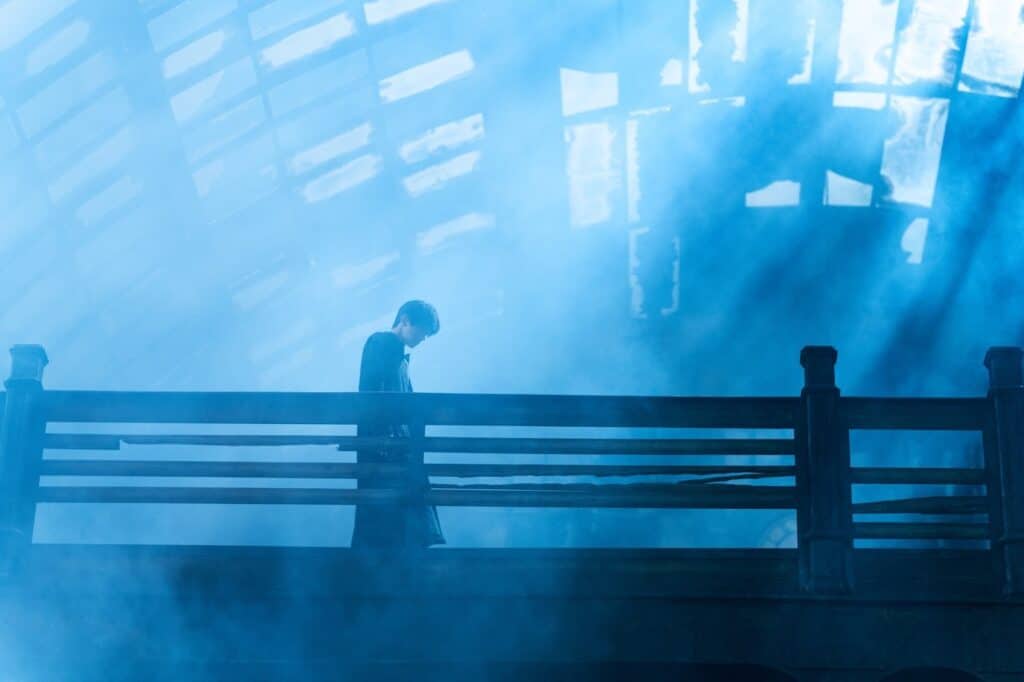
Dreams teach humans to believe in cinema, and cinema prepares humans to die. How else can one explain how easily audiences suspend their disbelief, if not because their brains trick them into believing lies every night? How else to explain the cinema, an art that embalms time itself, if not for anxiety over how brief those moments are? This recently released Chinese sci-fi epic reflects on the relationship between dreams, mortality and cinema.
In Resurrection, humankind has achieved immortality by sacrificing their ability to dream. Those who still dream, known as Deliriants, are hunted down by the immortals. Dreaming is a rebellious answer to the transhumanist debate of their age. Non-dreamers are likened to “candles that do not burn”, and candle wax is routinely summoned into the frame, a material as flexible yet temporary as dreams. The film’s protagonist chooses to be a candle that burns, even if his dreaming is synonymous with dying. Director Bi Gan divides the film into six dream-chapters, each set during a different period of Chinese history. In his dreams, the Deliriant traverses a hundred years, metamorphosing into several iterations of himself, all beautifully played by Jackson Yee.
French film theorist André Bazin argued that all plastic arts stem from a ‘Mummy Complex’ – an innate desire to defy death by aesthetically preserving life. In Bi Gan’s film, cinematography is described as an “ancient and long forgotten language” with which the lead character is obsessed. In the absence of the seventh art, the realm of dreaming becomes a surrogate for cinema. It’s not that the Deliriant is uninterested in immortality as a concept – rather, he’s unwilling to forgo the miracle of dreams and, by extension, movies. If the visual arts are a protest against the finality of all living things, it’s perfectly Bazinian that a society that left behind death would also leave behind cinema.
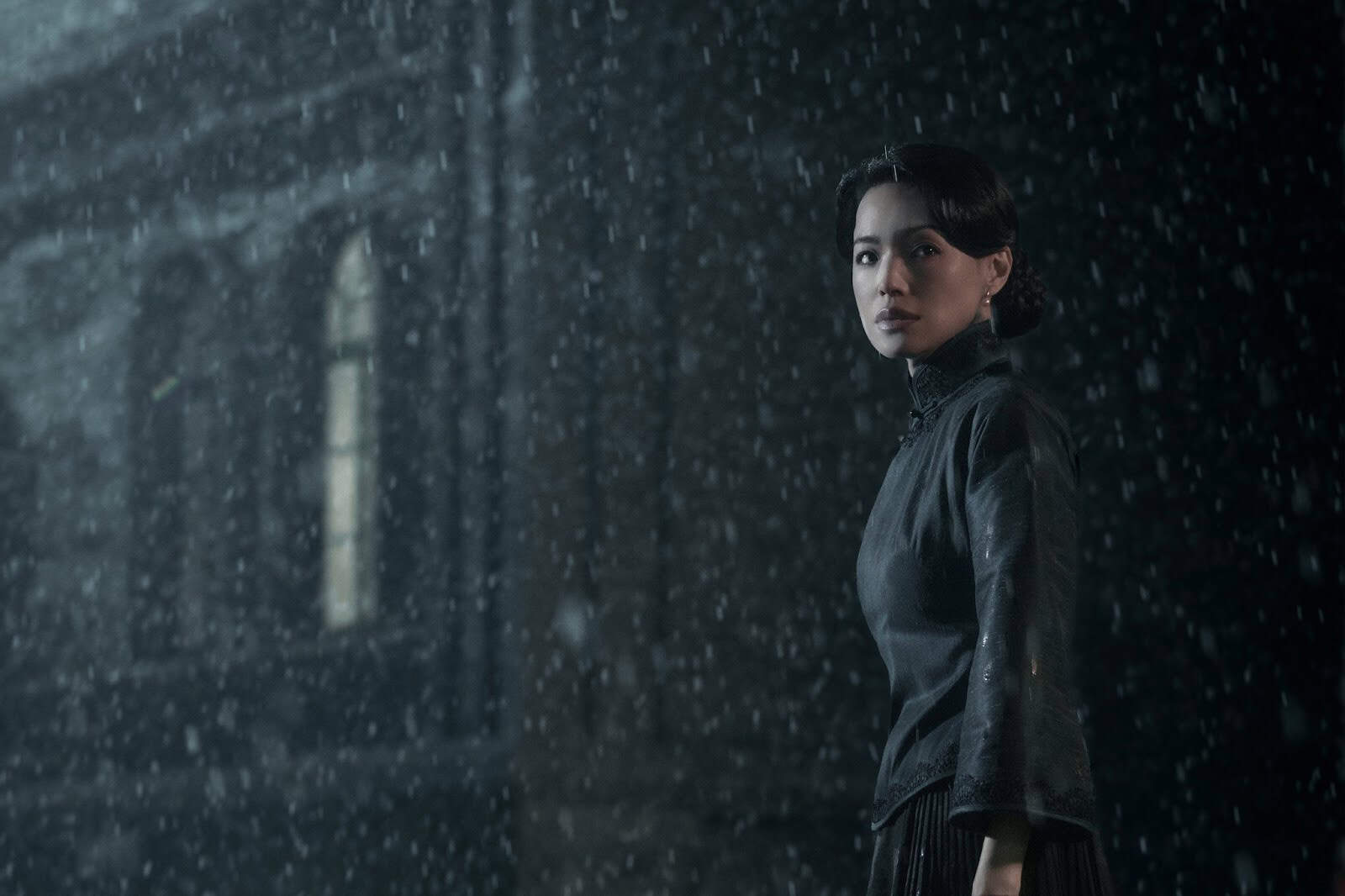
Bazinian theory helps explain the Deliriant’s defiance. For Bazin, the photographic image can be understood as a type of sign that philosopher Charles S. Peirce named the “index”. A footprint is an index of a foot, a sign directly and causally derived from the object – and so, court admissible evidence of someone’s presence. The photographic image captures the essence of reality in the same way: from light to pixels, the subject is “duplicated”. Because of indexicality, a film projector conjures images of unreal worlds with credibility, and the eyes perceive implausible scenarios as “real”. When the credits roll, it feels like waking up from an absurd dream astounded by how genuine it felt.
Resurrection highlights the miracle of cinematic indexicality. Within his biomechanical hunchback, the Deliriant carries a film projector, his true vital organ – a machine that simulates a blend of historiography and myth, recreating zeitgeists through cinematic lies with indexical credibility. A Wong Kar-Wai inspired dream, for example, takes the Deliriant back to the last night of 1999, and captures the feeling of impending doom. His film-like dreams reconstruct the past so vividly that a hundred fictitious years are worth more than innumerable real tomorrows.
One character in Bi Gan’s 2018 film Long Day’s Journey into Night states that “the difference between film and memory is that films are always false. (…) But memories mix truth and lies, they appear and vanish before our eyes.” It’s like he’s describing the Deliriant’s oneiric voyage across Chinese history, where factual truths and the magic of fiction coalesce. Title cards are grabbed and ripped, shots burn into one another, and entire lifetimes emerge and dissipate – still, the “illusions” feel so “real” that the Deliriant describes the waking world as the “fake” one.
Cinema’s association with dreams has an extensive history, dating long before Golden Age Hollywood became known as “the dream factory”. Before the 1910s and narrative-oriented productions, the “cinema of attractions” was the norm: silent shorts focused on circus-like spectacle, evoking dreams as a playground for experimenting with special effects. Around this era, theaters were baptised with names like “Bijou Dream”. The magician and filmmaker Georges Méliès had several films with the word “dream” in their titles, the most notorious being The Astronomer’s Dream. It’s no coincidence that he’s referenced here.
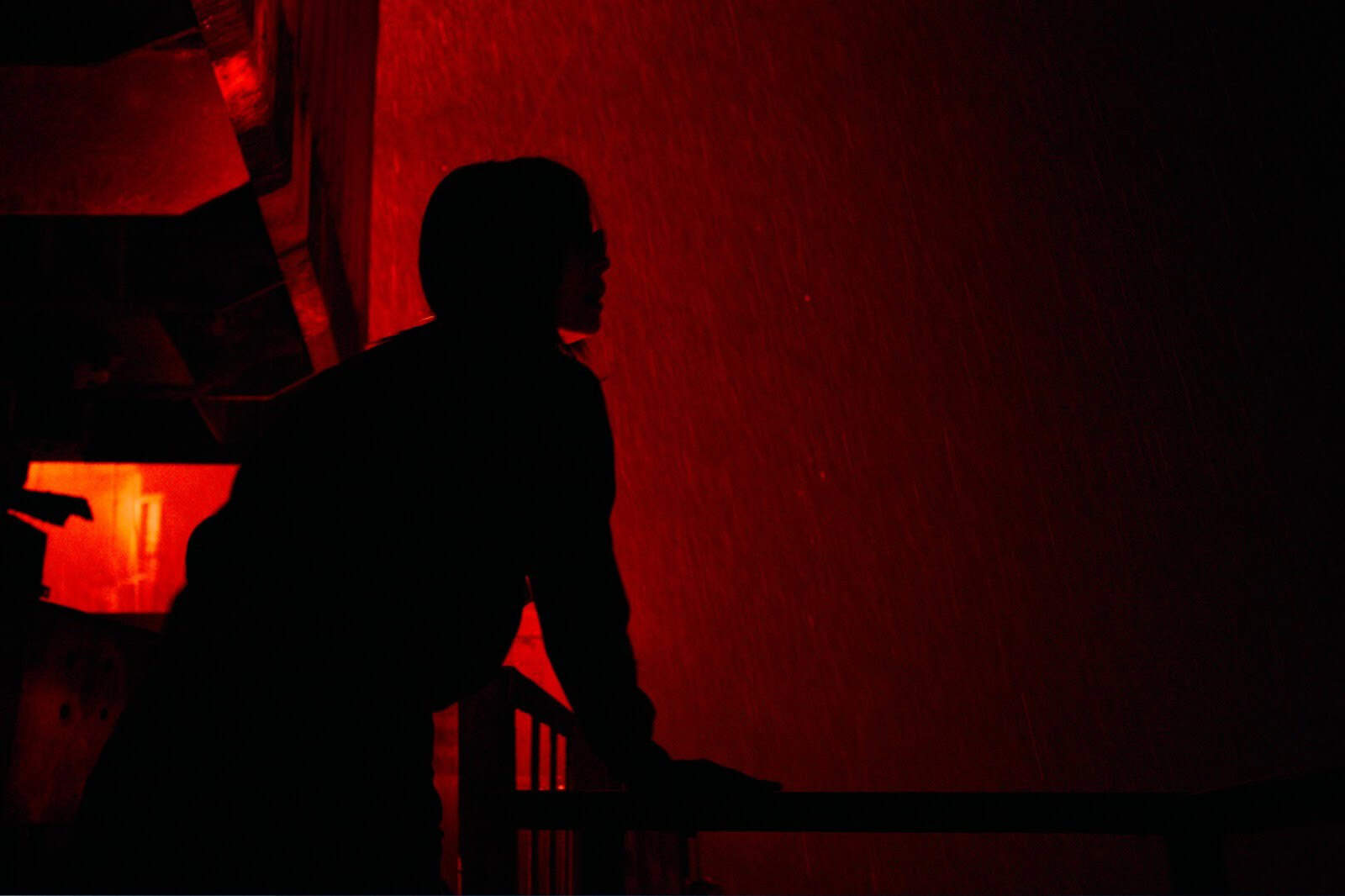
Some may misclassify Resurrection as a Surrealist film, as happens with any film with the word “dream” in its logline. Bi Gan’s epic is colloquially surreal, but does not champion the 20th century movement founded by figures like André Breton. The Surrealists chased a point of synthesis between dreams and reality, a harmony played in unison between the diverging melodies of the subjective and the concrete. Luis Buñuel, the human visage of Surrealism, described his 1929 classic Un Chien Andalou not as a reconstruction of a dream, but a work that benefited from “a mechanism analogous to that of dreams”.
In Bi Gan’s picture, the logic is flipped, and cinema is diegetically given a physical body who dreams of movies, whose organs form a mechanism analogous to that of cinema, gestating dreams that respect the laws of causality, spatial-temporal continuity and even genre conventions. Resurrection is about movie-like dreams, not dream-like movies, and couldn’t be further from Surrealism.
Each dream-chapter is based in one of the six Buddhist sense spheres: eye, ears, nose, tongue, body and mind. Although not indexing factual imagery of Chinese history, these dreams embody its unrecordable essence while stylistically referencing movie history. Each short story serves as a time capsule preserving what never had form, but that if forgotten can decay all the same. Snapshots of feelings that hovered around each age, from the paranoia and lingering trauma of Japanese occupation to the iconoclastic destruction of ancient traditions during the Cultural Revolution. And from film noir to Hong Kong gangster classics, each dream attempts to conform to cinematic conventions of different historical moments. China’s and cinema’s histories intertwine, resurfacing what can’t be unburied and carbon-dated like archeological artefacts.
Resurrection references the legacy of the silver screen, but beneath the ode to cinephilia lies indexical testimony. The introductory dream-chapter’s mise-en-scène echoes German Expressionism, however it is the fluttering sentiments of the time that inspire the form, not a mere homage to 1920s cinema. After the Century of Humiliation, a woeful umbra of shame haunted China, and this motivates the Expressionist rendition. Films like The Cabinet of Dr. Caligari, with their long shadows and geometrically distorted sets, were visual interpretations of inner turmoils. Here, the Nosferatu-like Deliriant first appears in an opium den with distorted Expressionist shapes, epitomising the distress of a nation victim of British Imperialism. A spinning phénakisticope animates illustrated poppy flowers, the source of opium – for Britain a lucrative commodity, but for China a chemical curse that brought national anguish and still propels the country’s anti-drug policies.
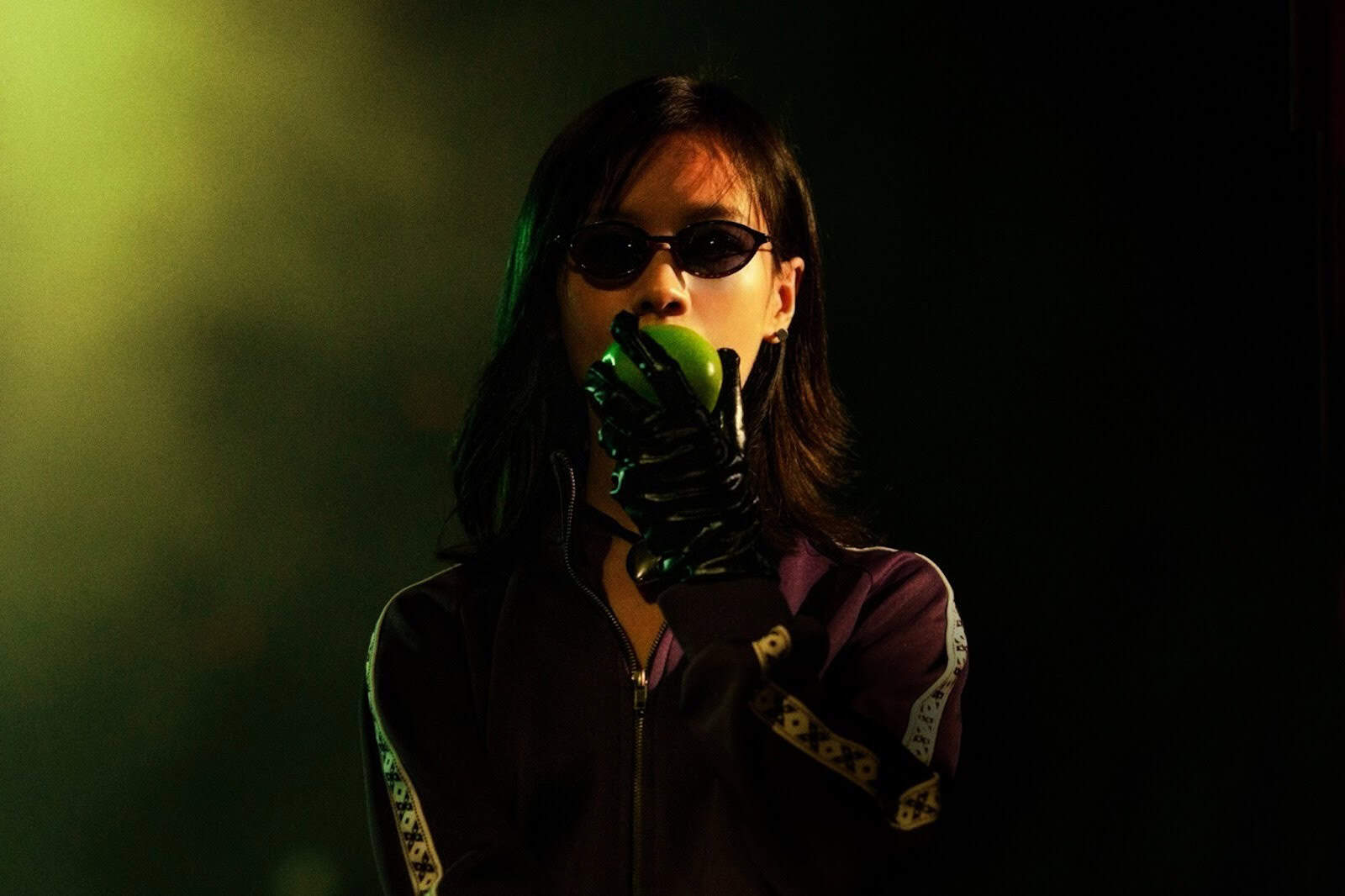
This choreography between imagination and history discloses Resurrection’s elegant sociopolitical insights. Deng Xiaoping guided China through a period of economic reform after Mao Zedong’s death. Private enterprises rejuvenated, stock exchanges popped up like blisters, and liberalisation loomed over the People’s Republic of China. This pivotal moment in Chinese history seems to be depicted in the dream bookmarking the sense of smell. “Everyone wants to get rich”, the Deliriant says. It can’t be by accident that this chapter is a tale of financial survival, talented scammers, transactional relationships and powerful men with plenty of disposable income.
Resurrection is a historical epic about dreams that dream of becoming movies, that in turn dream of becoming history, set in a transhumanist world indifferent to them all. While the English title suggests a single resurrection, several are taking place in the film: history is resurrected through dreams, which resurrect cinema.Through the Deliriant’s filmic dreams, both Chinese and film history are safeguarded from time. Consider a Polaroid taken before a tree is chopped down. Yes, the chemically developed print is bound to meet the touch of decay, the same way all movies have closing credits and all dreams end with waking up. But for a while, however long it may be, the Polaroid will be the only proof that the tree was ever there, much like the Deliriant’s dreams preserve the “ancient and long forgotten language” of cinema. The cinema is dead, long live the cinema.