
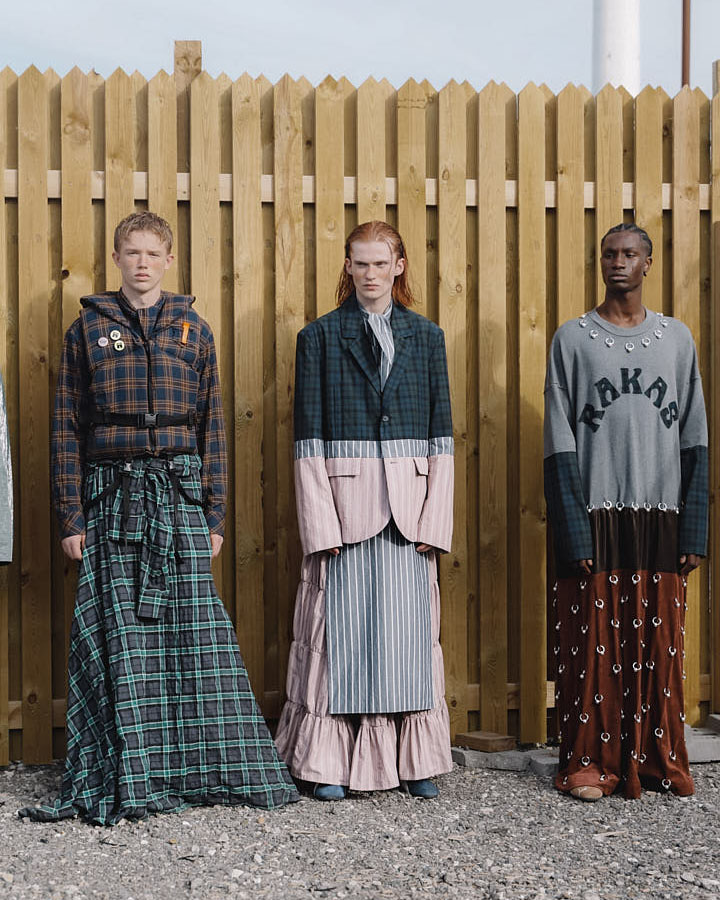
Look at the shopfronts on any British high street, or at the outfits crowding a trendy East London bar, and fingerprints of the north are everywhere. Scandinavian fashion has gone from niche minimalism to mainstream dominance, with Ganni dresses, COS tailoring, and Acne Studios denim now as familiar as IKEA flat-packs.
The same cultural exports that made hygge and lagom cultural buzzwords a decade ago have paved the way for Scandi aesthetics to reshape both high-street and luxury fashion. A reshaping encapsulated, and perhaps driven, by the seemingly unstoppable growth of Copenhagen Fashion Week in recent years.
One of the poster boys of this nordic renaissance is Finnish designer Rolf Ekroth. A man whose collections at CPHFW have – at least from personal experience – been the first, and most captivating, taste of this new wave of Scandinavian fashion for many. In my chat with him for this interview he delves into the pitfalls of the modern perception of this cultural blooming – pitfalls that have been overlooked due to the rosy tint placed on this part of the world as a whole.
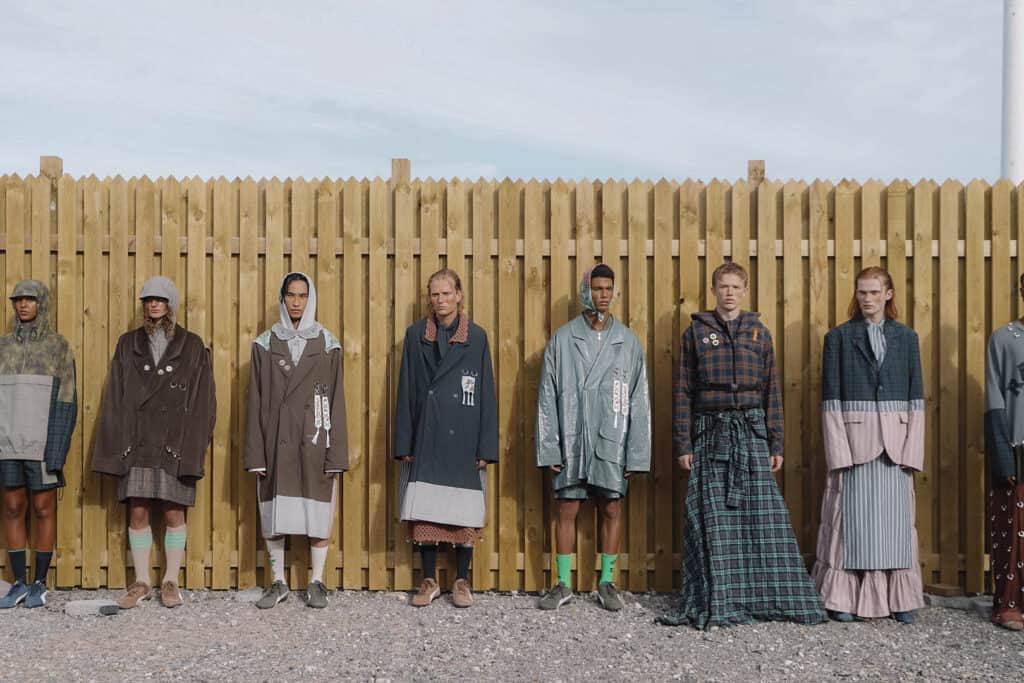
In the mid-2010s, this fashion takeover was preceded by the terms hygge (the Danish concept of cosy togetherness) and lagom (the Swedish ideal of balance and moderation) becoming industry mainstays. The Little Book of Hygge by Meik Wiking topped best seller lists in the UK in 2016 and Lagom: The Swedish Art of Living a Balanced, Happy Life followed it to the top of the charts the next year. These books, and the resulting use of the words in media, acted as a cultural primer, romanticising Scandinavia. It was no longer just a place, but a lifestyle worth emulating.
These concepts resonated during a time of political upheaval. People longed for calm, control and simplicity in a world marred by Brexit anxieties. The Nordic lifestyle was embraced as an antidote to burnout and excess consumerism. This, combined with constant reminders that Scandinavian countries are the happiest in the world, led to the region becoming synonymous with a better way of living. It created a receptive environment for such brands to be welcomed as an extension of that philosophy.
What looks like a cultural takeover from the outside feels less certain to those inside. Ekroth admits: “I actually don’t see any increased excitement… It’s been such a struggle to keep the brand alive so I’m not really satisfied. CPHFW has done a lot for Scandi brands, but getting good press won’t keep the brand alive for many seasons.”
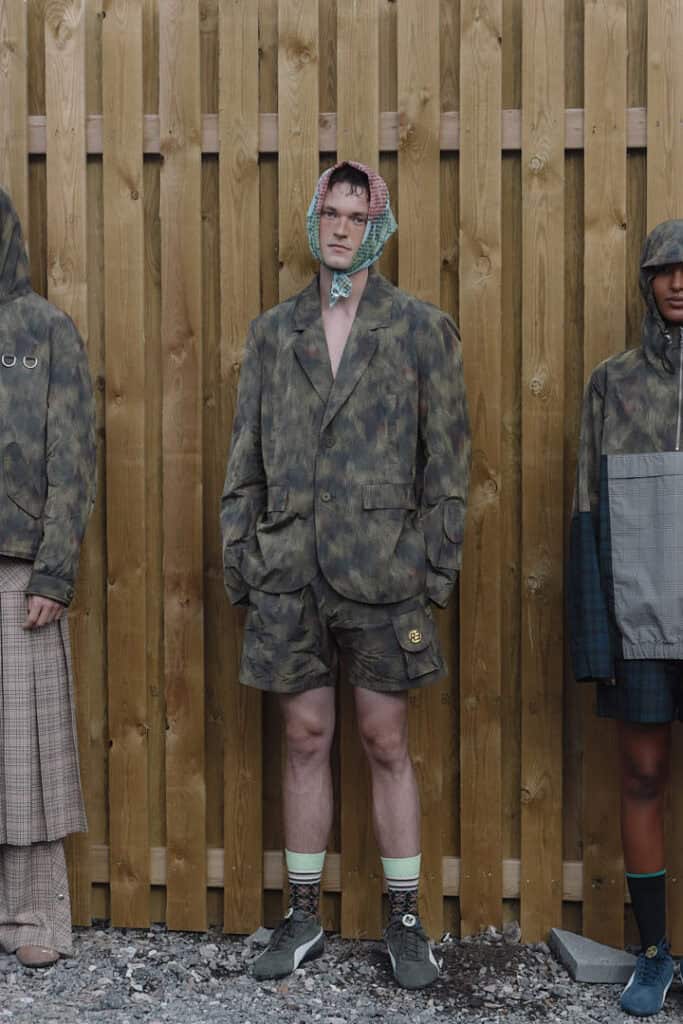
Ekroth’s perspective highlights the tension at the heart of this story: Scandinavian fashion has never been more visible, yet independent designers often feel the struggle more than the success. From the outside, it looks like cultural leadership, from the inside, it feels different. What makes CPHFW stand out for the designers is far more personal. Ekroth captures it simply: “It’s definitely a lot calmer, less competition and less cool (but in a good way).” The intimacy and lack of hierarchy are part of what makes CPHFW so appealing; but it doesn’t erase the day-to-day fight to keep small brands afloat.
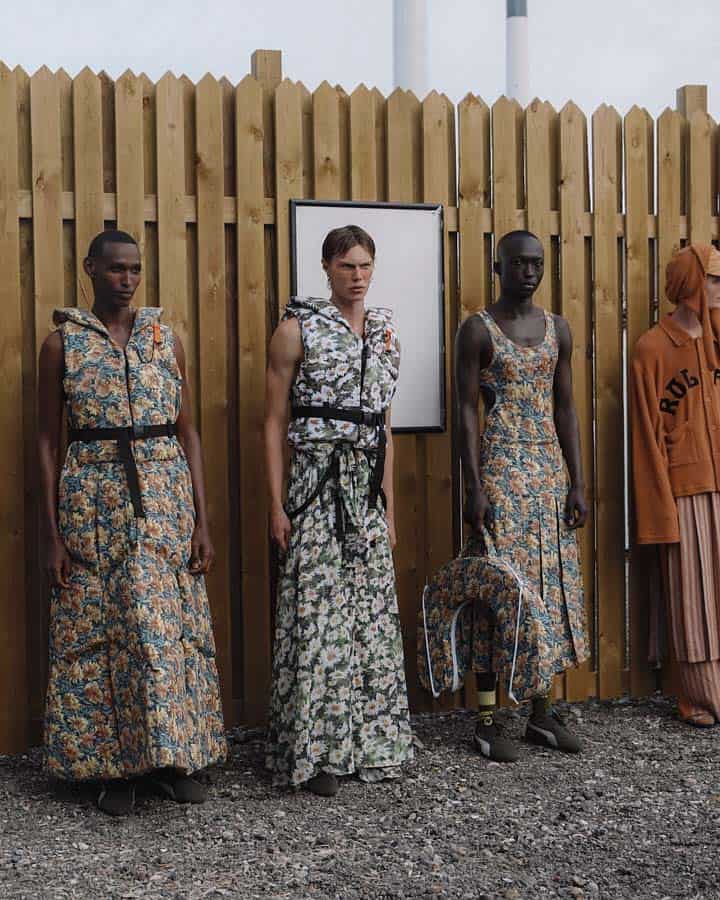
The prevailing perception is that “Scandi style” has evolved. Where once it meant muted minimalism, today it’s playful, colourful, and joyfully maximalist. This is seen in the work of Baum und Pferdgarten, Saks Potts, and Ekroth himself. But he resists the label, and perhaps this is the true catalyst for its evolution: “I don’t tend to think too much about Scandi Style and what it represents. I’ve just tried to find things that interest me and turn them into collections… I’m not really trying to fit in or stand out. I still really enjoy making clothes and collections and as long as that part is fun I will continue on.”
That resistance reveals something important: “Scandi style” might be more of a media shorthand than a lived identity. Is it truly as pervasive as some may have been led to believe? For Ekroth, it’s not about slotting into a trend, but carving out space to keep creating, even when the industry’s expectations don’t align with his own reality.
The truth is, “Scandi style” often flattens cultural nuance, reducing a whole region to Danish and Swedish aesthetics. Ekroth is quick to point out the gap: “I don’t think Finland, except for a few brands, has that much to do with the ‘Scandinavian style’. I hope that my Finnish background shows in my collections… SS25 was entirely inspired by a Finnish traditional open-air dance.” That Finnish influence rarely makes headlines in the same way as Copenhagen’s giants. It’s telling that when asked which designers excite him, Ekroth doesn’t name a single Danish or Swedish brand. Instead he shouts out his Finnish peers: Vain, Hedvig, Linda Kokkonen and Sofia Ilmonen.
If H&M Group brands like COS, Arket, and & Other Stories exported Scandinavian design to the world, Copenhagen Fashion Week gave it cultural clout. Its strict sustainability standards – demanding 60% certified sustainable materials by 2023, and this year’s pledge to become climate positive – turned a mid-sized fashion week into a global benchmark. It has reframed what a fashion week should be. This impact was most notably seen in the BFC’s announcement that they would be using Copenhagen’s sustainability framework as a blueprint for future London Fashion Weeks.
This duality defines Scandinavian fashion right now. On the one hand, it’s praised for a cultural mindset: ethical but not preachy, joyful but not excessive, sustainable yet stylish. On the other, it’s an industry where designers like Ekroth still wrestle with the gap between acclaim and survival, narrative and reality.
As fashion grapples with excess, burnout, and ecological urgency, the Nordic approach feels like a refreshing alternative. It is proof that style can be responsible without losing its edge. But Ekroth’s earnestness reminds us: what reads as a movement from the outside is still, for many, a grind on the inside. The hype may be real, but so is the struggle.