
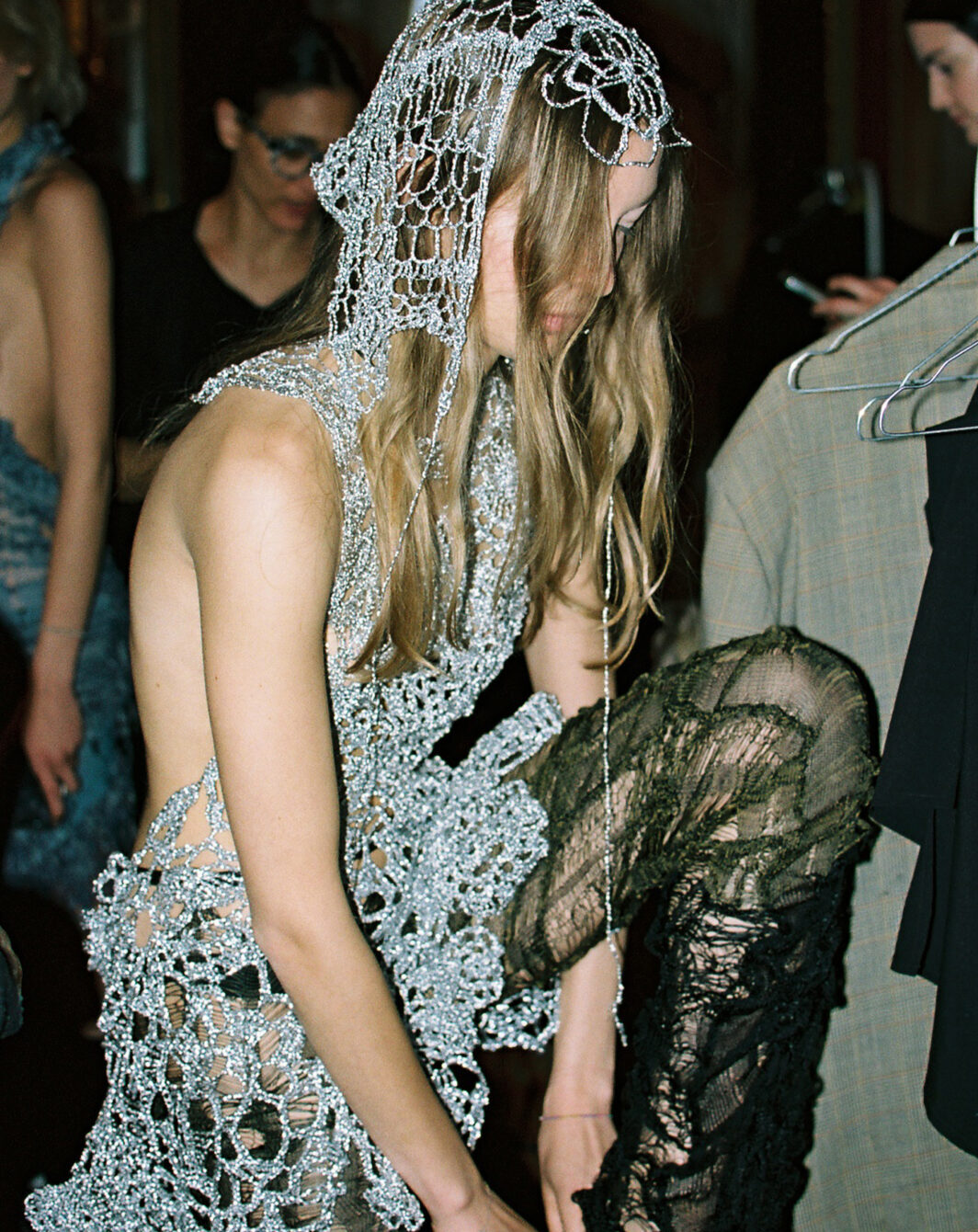
When did you know this was what you were going to do? Was there a specific moment?
I’ve always known I was going to be an artist, and I’ve always known that I wanted to be part of this ongoing conversation about women’s bodies, their perception, and their place in society. I wanted to enter this dialogue through listening, experiencing, feeling, and translating my sensitivity into textures and colours.
I discovered the language of knitwear in 2022 and immediately fell in love with it. At the time, I didn’t have a clear vision of what lay ahead, but I had a strong feeling that this was the right path for me. There was something instinctive about it, as if I had finally found a medium through which I could express what I wanted to say.
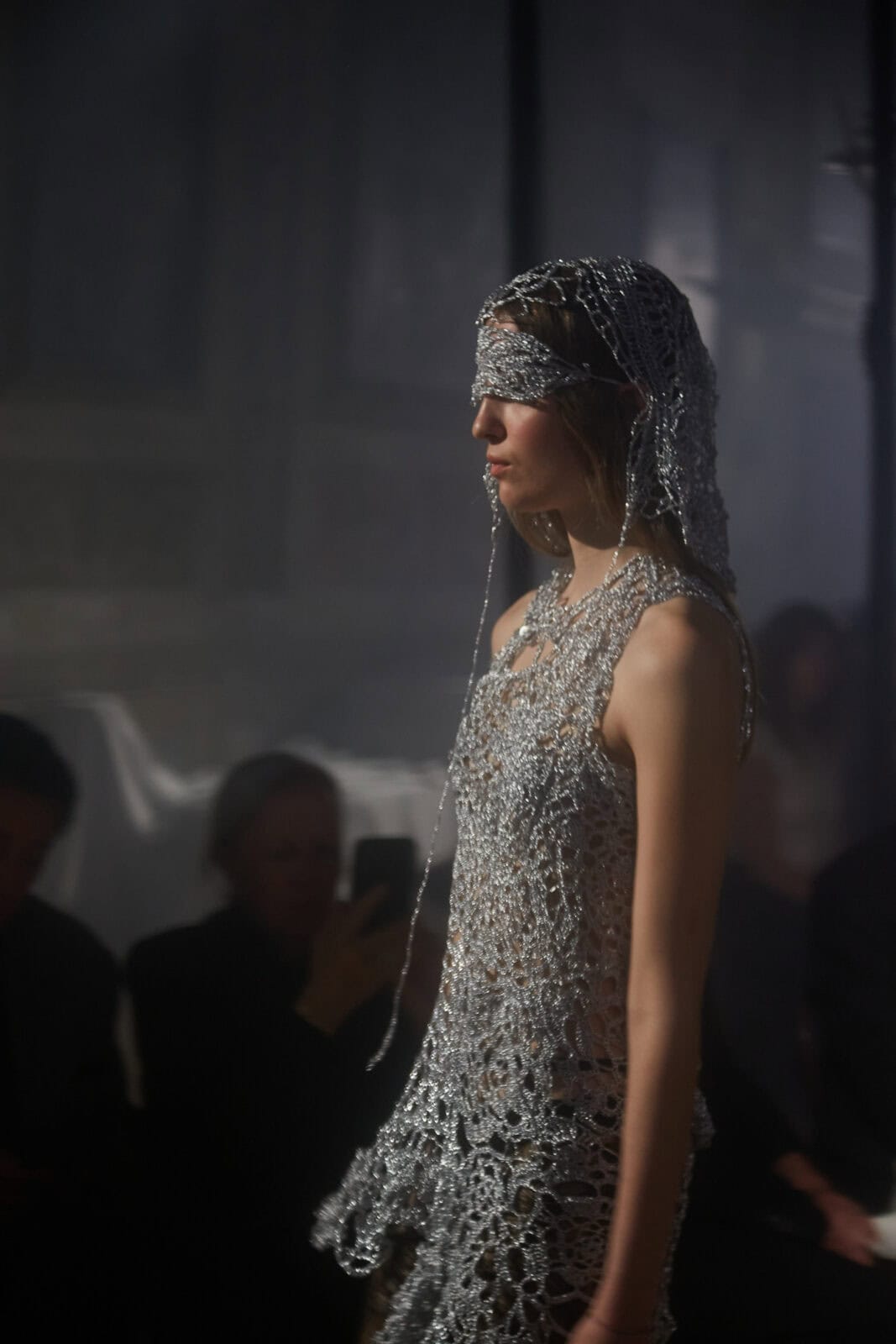
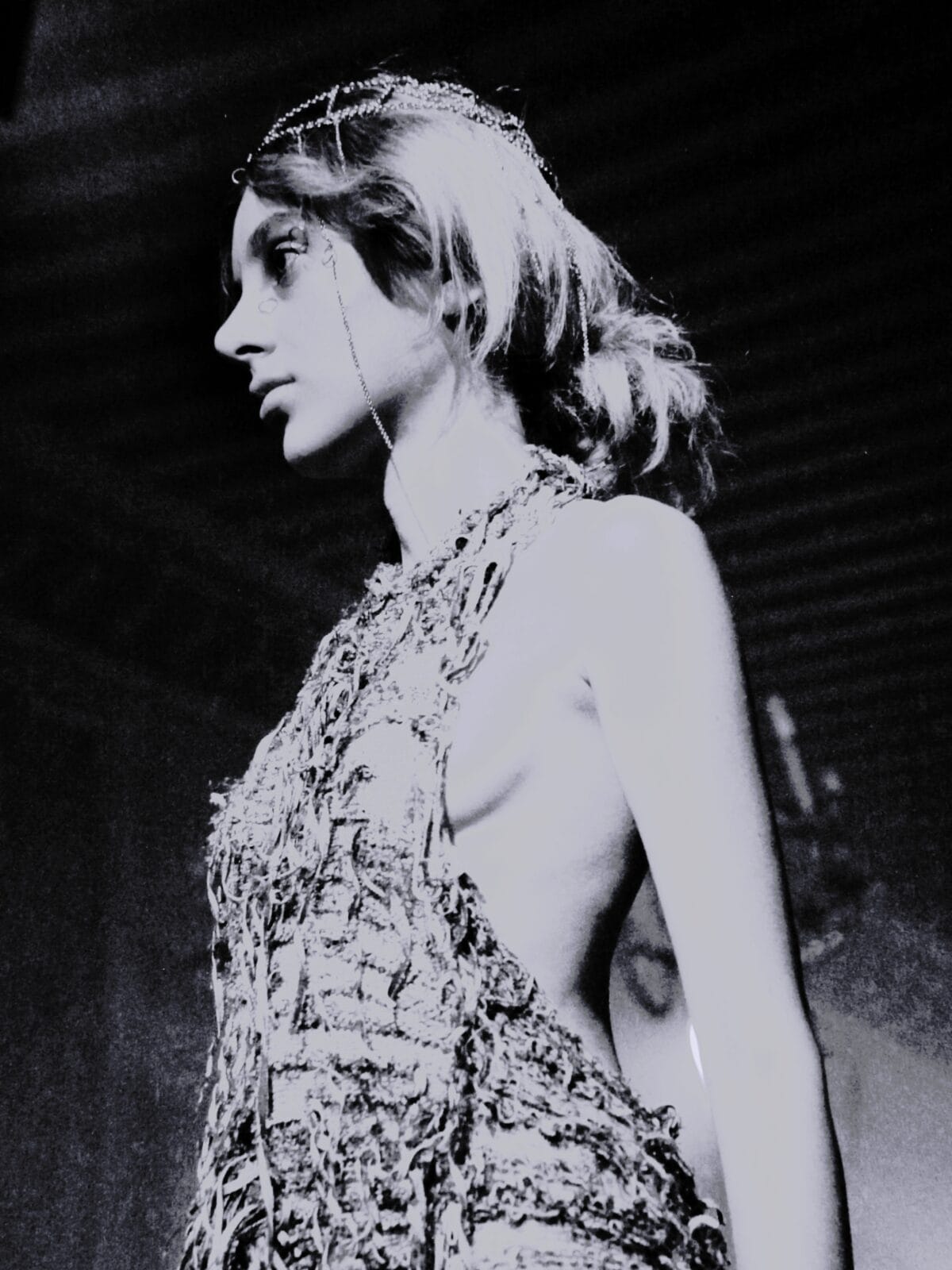
What is the first thing you created that you are still proud of today?
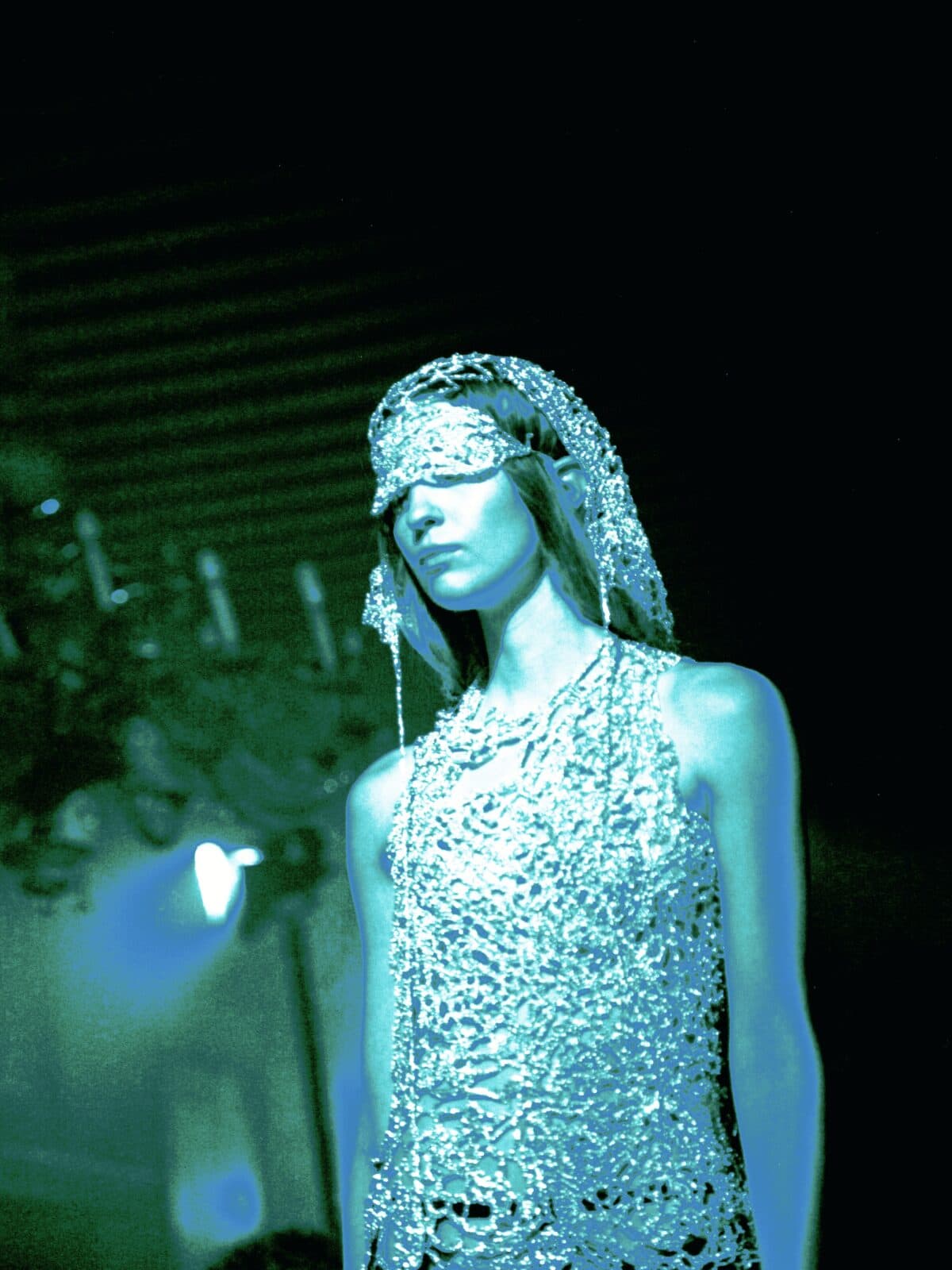
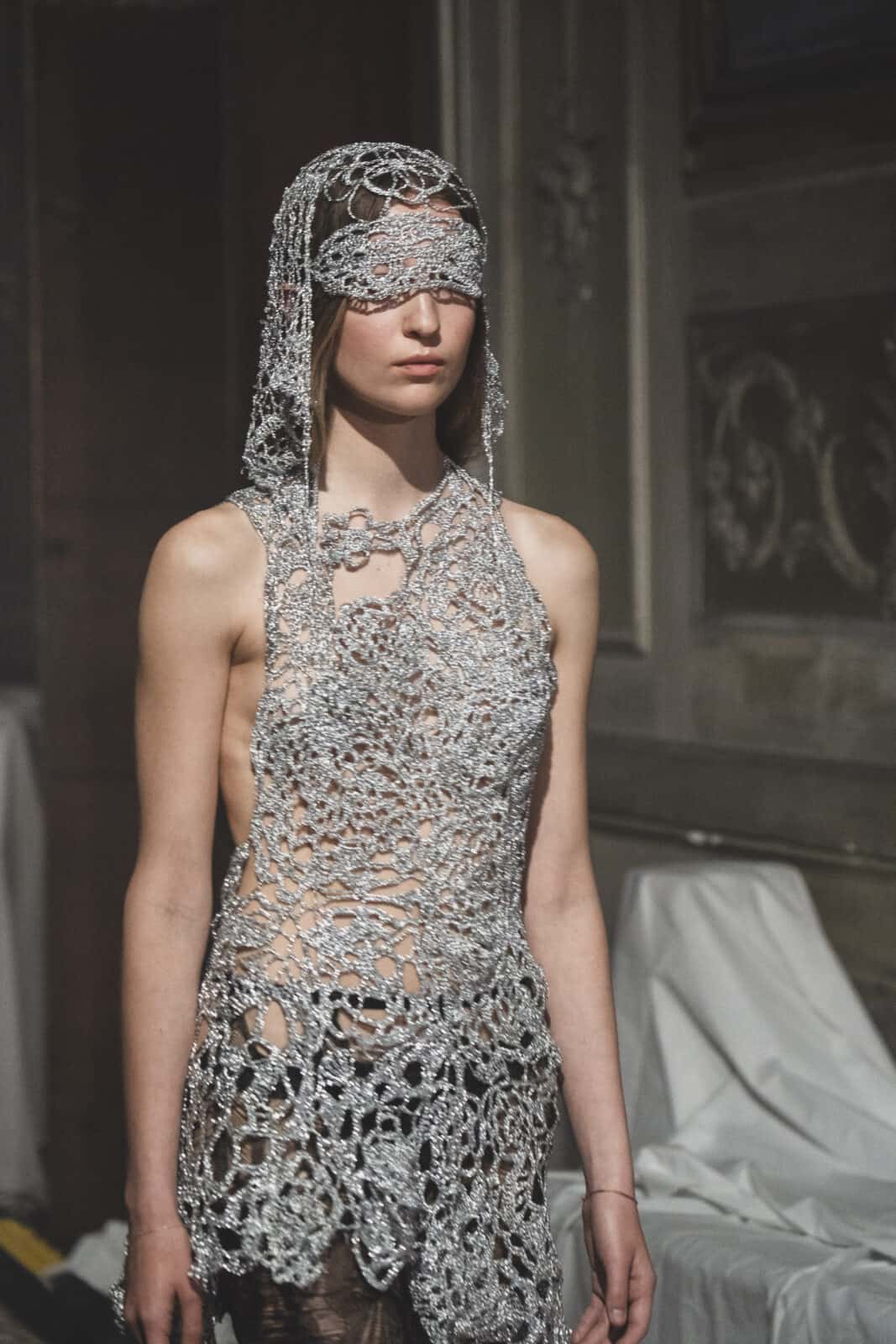
This look from my final collection VIAROMA5. It’s so weird and so unique! Honestly I still find it very beautiful and uncanny.
Was your training formal or self-taught, and which shaped your practice more?
I’d say it was 50/50. I never learned knitwear apart from a few classes during my erasmus in berlin. I studied fashion design in Barcelona, and did my erasmus during my third year. In Barcelona I didn’t learn to knit, just some technical information about it. I learned by myself through experimentation, but I do have a fashion design degree, so I have a solid knowledge of references and proportions I think.
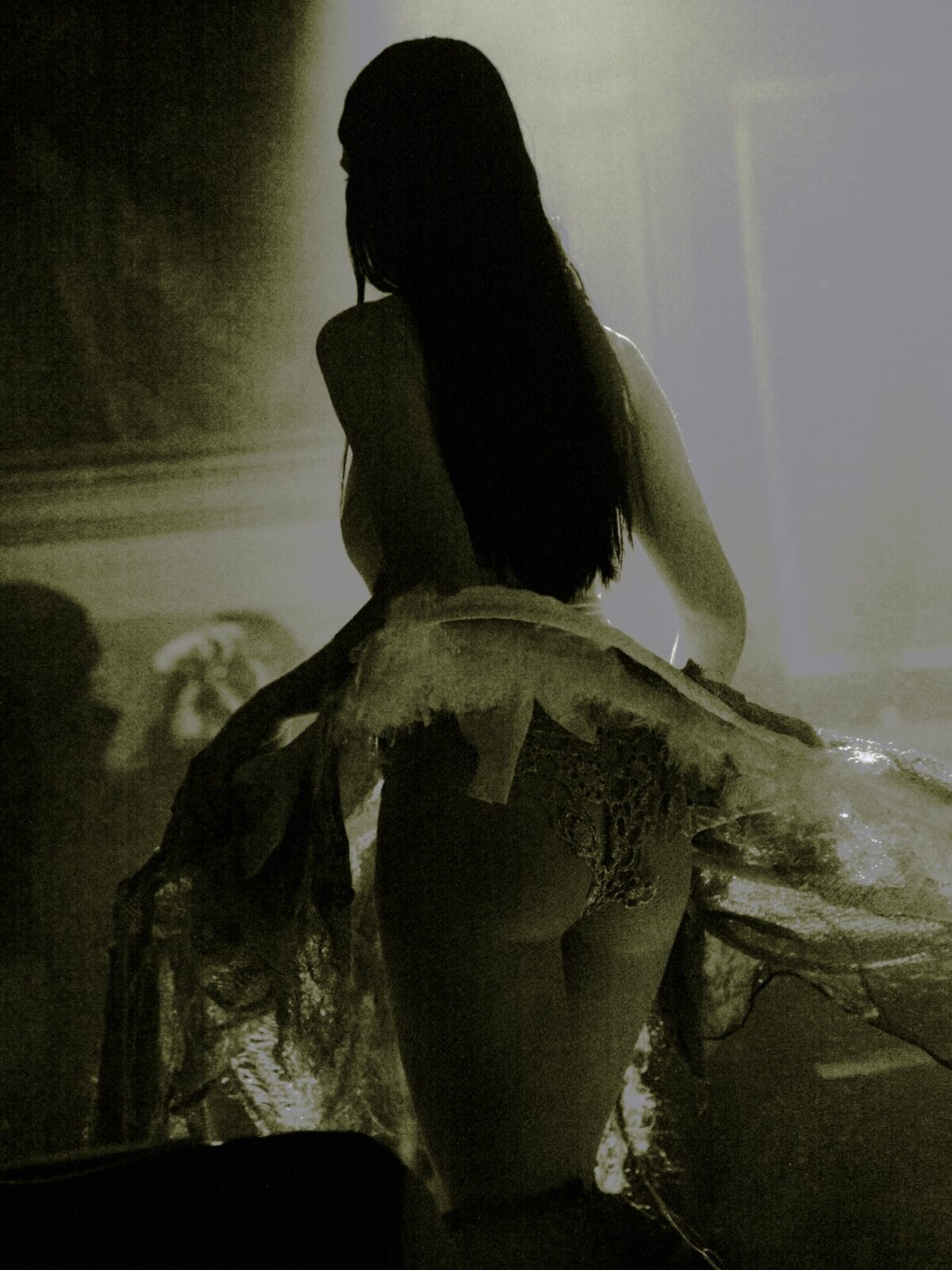
Where are you from, and how much does that place live in what you make?
My heritage means everything to me. I come from Cambiago, a small town on the outskirts of Milan, a place suspended between green fields and busy roads. Growing up there has deeply shaped the way I see and approach my work.
There is a strong tradition of knitting and crochet in the area, and it continues to be a constant source of inspiration for my research. It motivates me to connect with the women who came before me, to learn from their knowledge, and to bring greater attention to their stories and contributions.
Knitting requires time, focus, patience, energy, and a certain sense of calm. These qualities are often expected of women and therefore taken for granted, but they should not be. Through my work, I want to make them visible and celebrate their value.
Is there a project you have been sitting on for a while that you are finally ready to make real?
I have a million tabs open in my head, and every day I move back and forth between them, trying to turn ideas into something tangible. There are always new projects, new directions, and new possibilities competing for my attention.
Right now, though, my priority is to strengthen the logistical side of the brand and focus on the business aspects of the project. For a long time, I approached that side of things with fear and frustration, but I’ve come to understand that it is just as important as the creative process itself.
I need to focus and make sure that this brand can become a sustainable, long-term project. That means building solid foundations, creating efficient systems, and developing the merchandise side of the business so that the creative work has the support it needs to keep growing.
Who would you want to collaborate with – another designer, a brand, an artist, someone completely outside fashion?
I would love to collaborate with the Catalan artist Meritxell De Soto. She is an incredible performer and DJ who, through her high-energy sets, explores the tensions between body and machine, channeling a femme perspective through grimewave and techno.
She embodies exactly what I want to transmit with my brand. Her authenticity, her engagement with social questions, and the way she puts the body at the center of her work deeply resonate with my own research and practice. There is a shared language in how we both approach intensity, presence, and vulnerability.
What did you not expect to have to deal with when you started out?
There’s something deeply spiritual about pushing through challenges and confronting your own limits. What surprised me most was that the journey became less about the work itself and more about an internal process of growth, self-discovery, and letting go of old baggage.
Over time, you stop worrying about the small things and start focusing on a larger purpose. You gain a clearer understanding of why you’re doing it, and you develop the discipline to keep moving forward even when it’s difficult. In many ways, the greatest challenge is overcoming yourself.
Have you ever considered stopping? If yes, what made you continue?
I think about stopping once a month, but in reality, I never would. It’s a bit like standing on the edge of a cliff and having your brain briefly whisper, “What if you jumped?” I’ve heard that this is a healthy coping mechanism, a reminder that you have the option to walk away. Of course, it’s just an intrusive and irrational thought.


