
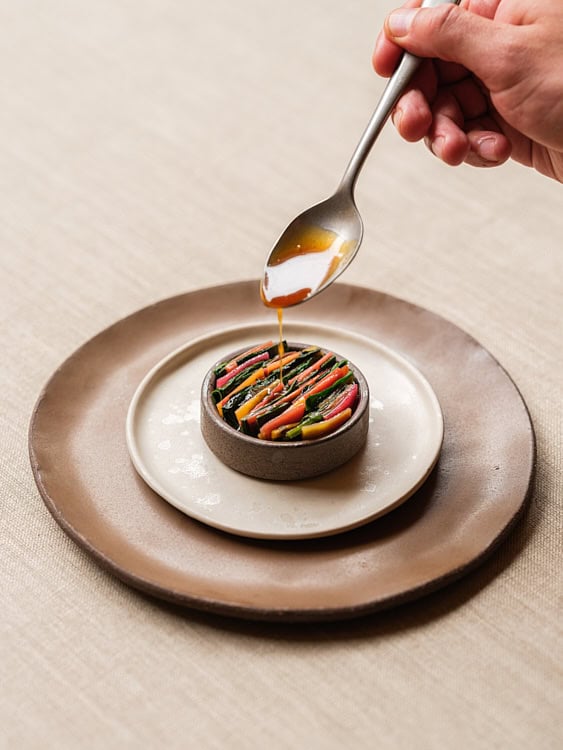
Some chefs design dishes. Santiago Lastra sketches them like garments.
At KOL, Chef Santiago’s Michelin-starred restaurant in Marylebone, food isn’t just plated, it’s composed. Ingredients layer like fabrics. The dishware is cast like models. And the menu is less a meal, more a living collection: seasonal, intentional, deeply expressive.
After dining at KOL, an experience that moves between summer mole and cobnut-strewn cuttlefish, rounded off with Tunworth ice cream and ancho chilli – I sat down with Lastra to talk about the invisible thread connecting his food to fashion. And why he sees his work less as a chef, and more as a
designer of memory, texture, and space.
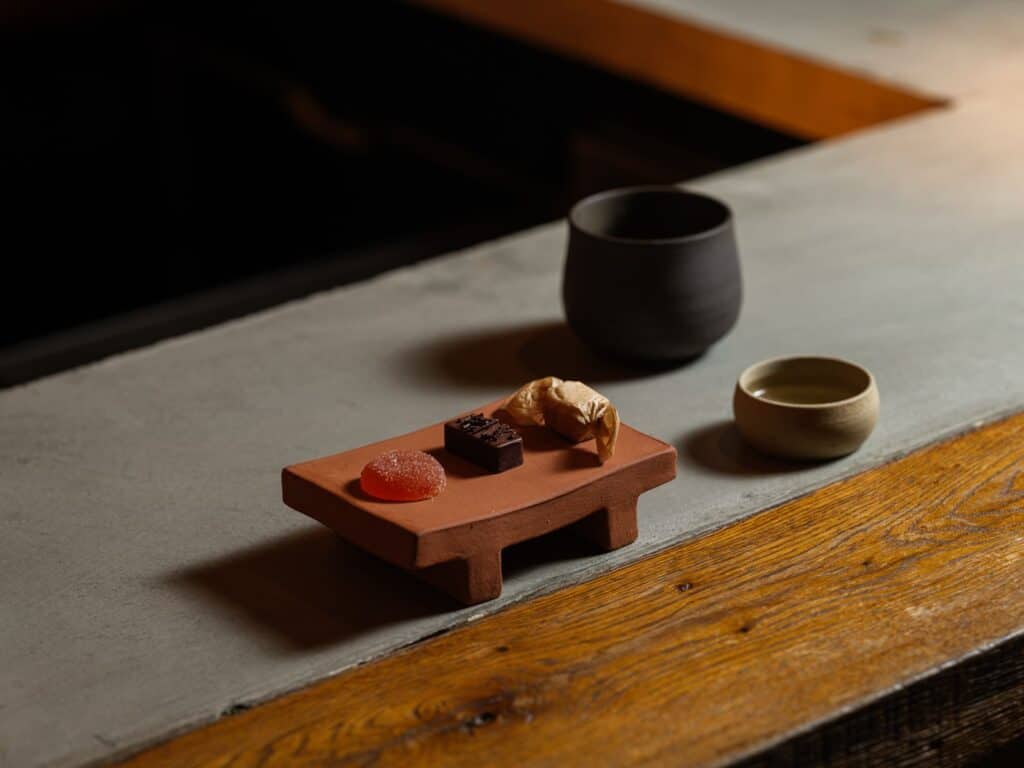
“You start with a vision and then bring it to life with your team,” he tells me. “It’s about designing something functional but expressive. That’s where the overlap is strongest.”
Lastra intercepts food with fashion, studying the way garments fall. The weight of a Rick Owens coat.
The palette of an Issey Miyake gown. The lines of a Missoni knit, reimagined as a skewer of layered stems, grilled carrots and leaves sliced into colour-blocked cross-sections.
His plates do the same. Some evoke structure. Others suggest motion. But all tell stories of home, of migration, of the beauty found in what’s often discarded. Stems. Weeds. Forgotten cuts. There’s a kind of elegance in how he places them. The way a good designer lets fabric speak for itself.
“Patterns, textures, movement – those are what draw me in,” he says. “I imagine a dish as if it’s a person wearing a dress.”
There’s seasonality too. Not just in the produce, but in the tone; a shift in what people crave. Spring is soft and green. Autumn leans burnt orange. Nothing is forced. Colours are observed, not invented.
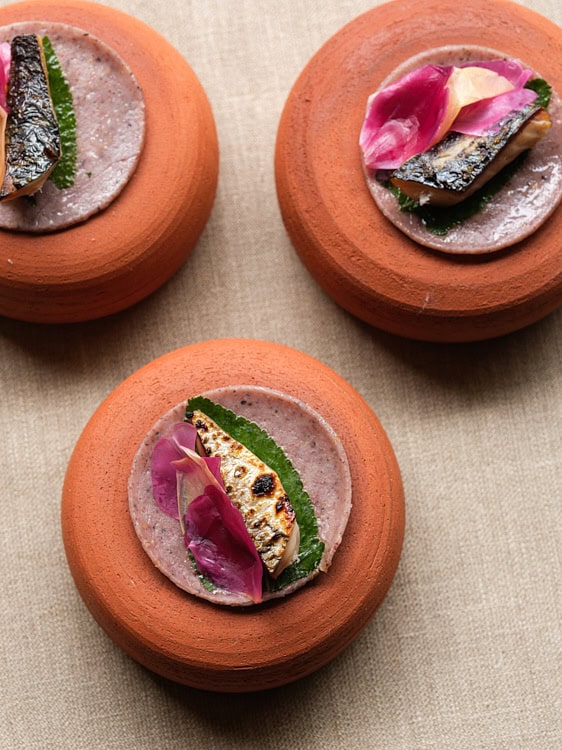
The food arrives dressed for the season, without saying so.
Every detail at KOL is part of the composition. The ceramic dishes are often handmade by a network of 25 craftspeople. I compared it to “casting the right model.” The plates are chosen not to stand out, but to carry the food, quietly framing the idea.
Even the natural wines and house-made kombuchas play a role in how the meal builds. His palate is layered, like his process: nicolatole, mackerel, spruce pine shoots and strawberry kombucha move through the menu with rhythm, not repetition.
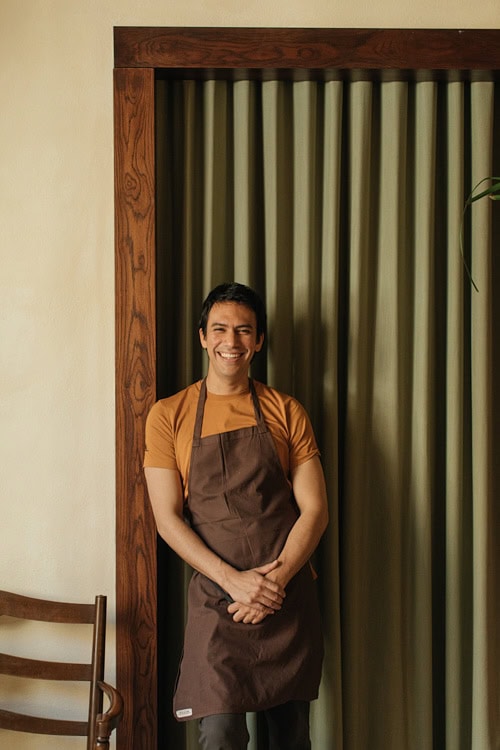
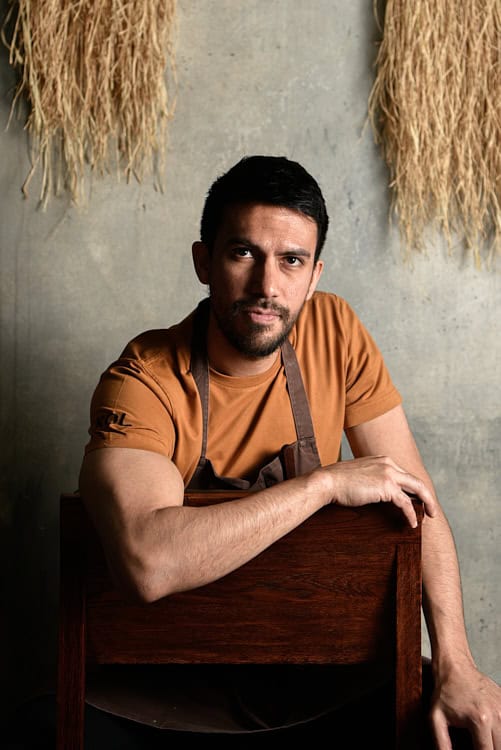
Lastra’s sketchbook is where it all begins. “If I don’t draw it, it doesn’t happen,” he says. Ideas come from dreams, memories, moods. The same impulse you might find in a studio: designers making moodboards out of emotion. Only here, the canvas is the table.
But this isn’t a chef tucked away in a basement kitchen. At KOL, the kitchen sits at the centre of the restaurant – calm, open, quietly choreographed. “When I started out, being a chef was seen as shameful,” Santiago tells me. “You’d be downstairs, sweaty, dirty, invisible.” He wanted to rewrite that.
Now, his chefs are part of the room. Seen. Celebrated. The kitchen moves in a quiet rhythm, every hand visible. It’s a subtle rejection of the single-genius narrative, the way some fashion houses centre one name and forget the rest. “It’s never just one person,” Lastra says. “The people are the brand.”
But KOL isn’t about spectacle. It’s about attention. You feel it in the way dishes arrive: slow, steady, thoughtful. You taste it in the way Santiago balances complexity with clarity. A smoked chilli cuts through the langoustine taco. A jalapeño, yoghurt and raspberry paleta carries the echo of wood ants.
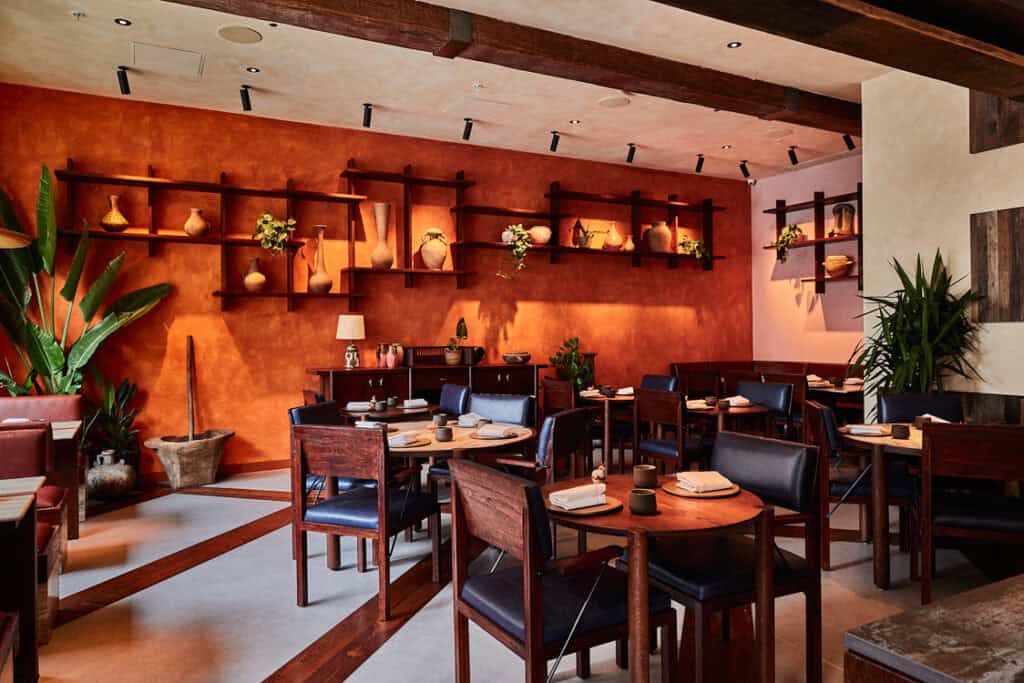
A reminder of Mexico refracted through the British landscape. Familiar, but not expected.
“Each dish is like a photograph,” Lastra says. “Even without the full backstory, you feelsomething.”
For a chef who reads Loewe like some cookbooks, it’s no surprise that his approach invites connection. KOL isn’t trying to explain Mexican food but expressing something more personal. A longing. A memory. A vision of what it means to belong across two places.
“It would be natural, layered, textural,” he says, when I ask what kind of fashion collection KOL would be. “Something that looks simple but is deeply considered.”
The result is a dining experience that doesn’t feel like dining at all. It’s storytelling through flavour. It’s fashion as plating. And it’s one of the few places in London where the menu moves like a conversation, not about what food is, but about what it can say.