
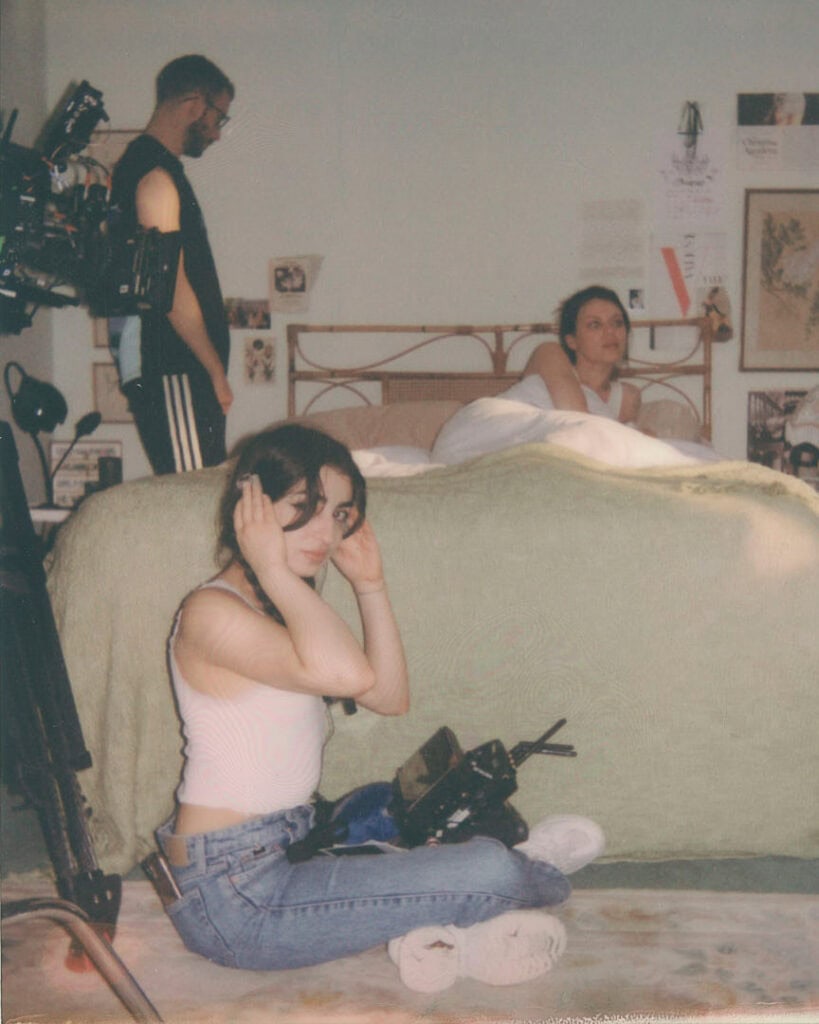
Sayna Fardaraghi’s work has been circulating online for years now, her soft cinematography and pensive short films regularly finding virality in Twitter (before its X-days) film circles. I first came across her in 2019 when she posted L’Observateur, a Wes Anderson–inspired student short about a girl and her beloved binoculars. Sitting down with her all these years later – crammed into the delightful Moko Made Café, her own recommendation – to discuss her latest project, Glint, felt like a true full-circle moment.
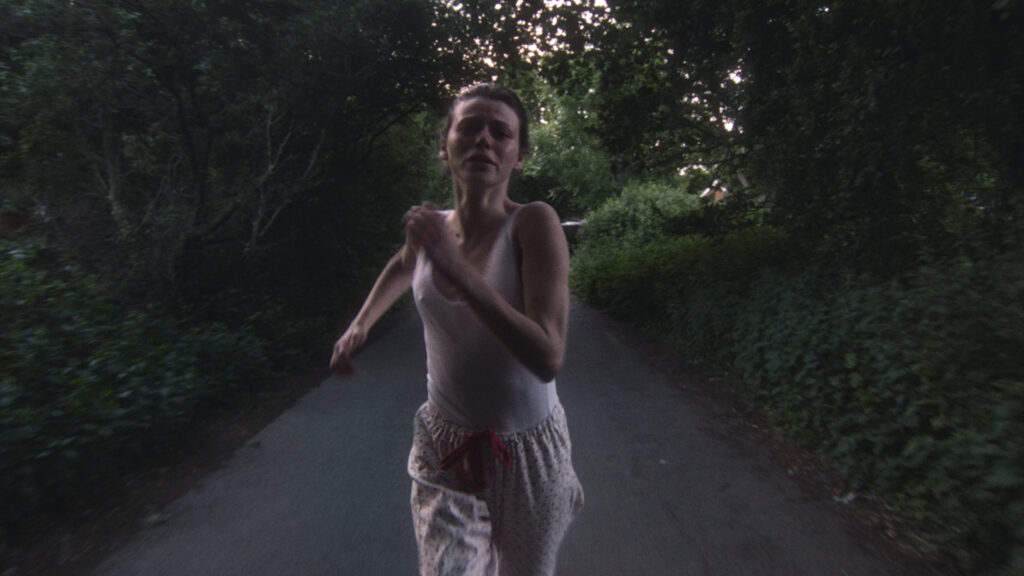
In our conversation, Fardaraghi reflects on those early student days, recalling the terror she felt as graduation loomed and a career in film seemed impossibly out of reach. Several projects and much commercial success later, she revisits that same teenage fear in Glint, a horror short following 17-year-old Helena as she grapples with isolation and toys with the prospect of finally leaving her home for a party. Evoking the traditions of body horror and supernatural hauntings, Glint captures the fear and fragility of growing into womanhood – and represents a new cornerstone for Fardaraghi’s evolving career.
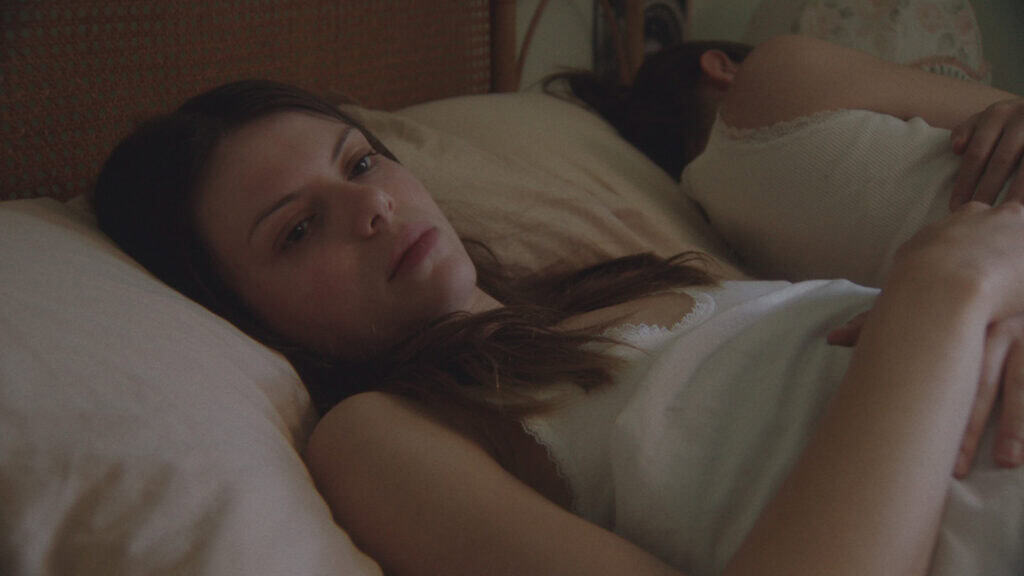
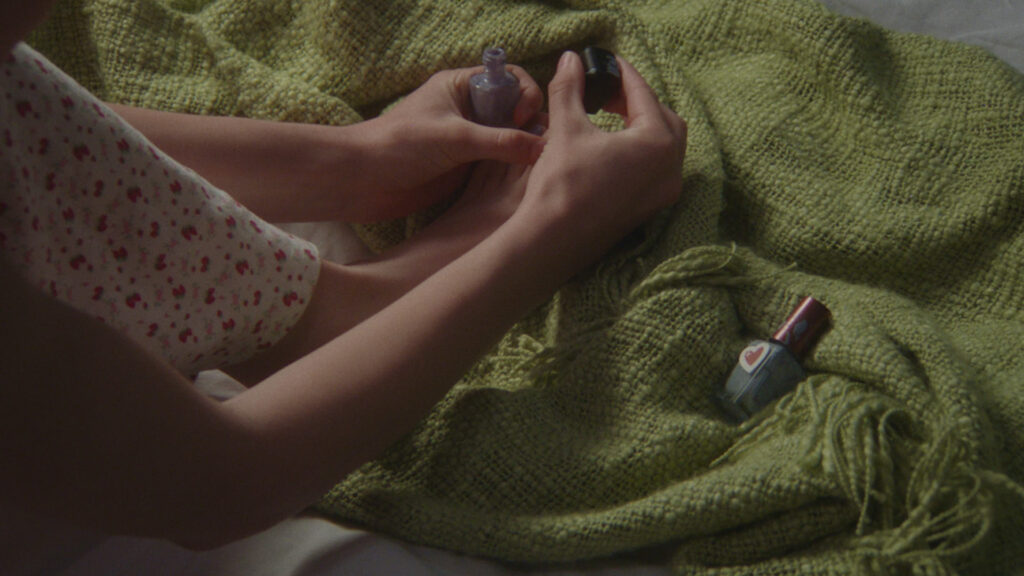
Glint is available for streaming on Nowness Asia, as part of their Young Ones: Dreams and Realities of Childhood and Adolescence series.
The Cold Magazine (CM): Tell me about the inspiration behind Glint.
Sayna Fardaraghi (SF): Just before graduating university, I was petrified. I remember trying to do a project based on growing up, but initially I thought it was very frivolous. The reality of what I was experiencing was so different to all of the ideas I had for the film. I remember sitting in this car a couple days before my graduation, and I was just so scared. I was crying to my mom on the phone, telling her I didn’t know what to do with my life. I’m not going to get into film, it’s just too tough. I realised at that moment, that growing up is not frivolous, it’s not fun, it’s terrifying. I think it was just my own experience growing up that made me think: Yeah, I want to make something about the different versions of myself growing up. But also, I started off as a ballerina when I was younger, and then I moved to sports, and then I did fine art. I never expected to be in film. So sometimes, I don’t know if you do this as well, but you think about the different pathways you could have taken and where you could have ended up…
CM: It always goes back to Sylvia Plath’s fig tree metaphor…
SF: Exactly, it’s so true. I hate it, it’s always on my mind.
CM: So how did you end up in film?
SF: I kind of fell into it. My uncle was a big fan of movies, so he would always bring films to the house, and we’d watch them together. I would never take them seriously, and I never took the arts seriously, even though I was a ballerina. It’s kind of cringe, but when my uncle showed me The Secret Life of Walter Mitty, I think I was 10 or 11, and I remember thinking: Hey, film is kind of cool. Then I fell into arts, and I was doing sculptures and paintings, until I wanted to find other ways to portray my ideas. That’s when I found this artistic side of filmmaking, which has really inspired me since.
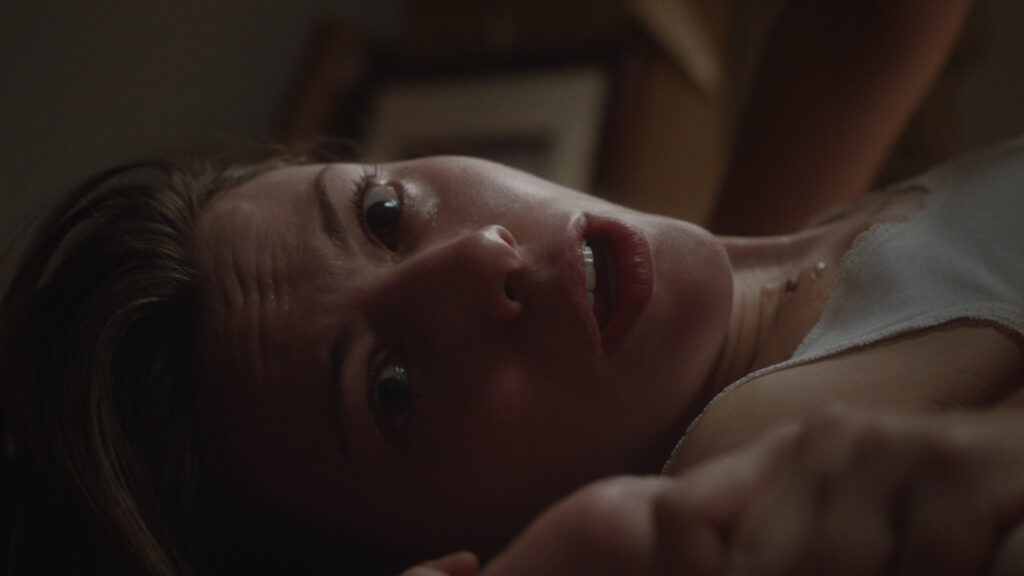
CM: Glint is your first narrative short. Since you’ve described growing up as terrifying, what made horror the right way to explore that experience?
SF: I think everything that I’ve done is quite soft, feminine, and very light. One thing about me is I don’t like falling into boxes; it irritates me, and I feel too stagnant. I wanted to keep developing my voice and show a darker side to my work, so it just made sense to go into horror. And then, honestly, also the stuff I was watching really influenced me – a lot of Yargos Lanthimos, for example. His work is very eerie, a bit uncanny, and I was just so excited by that. I think, going forward, I want to keep doing something that’s a little bit weird. I love when things are beautiful but also messed up.
CM: To expand on the influences behind Glint, were there specific films or songs that inspired you in the filmmaking process?
SF: A week after I had that conversation with my mom, I watched Yargos Lanthimos’ Nimic, and after I watched it, I thought: Oh, this is incredible. I just absolutely fell in love with it, so that was something that really inspired me. Then there’s a film called Freckle Face, Strawberry by a photographer called Zoe Ghertner which is about three kids in a field. There’s no narrative whatsoever, but it’s so beautiful. For other media I would say Trees etc by Naran Ratan. It’s a very eerie album with a lot of bird sounds; they actually use the last recorded call of an extinct bird, which is haunting. It’s creepy, but also sad and beautiful at the same time.
CM: With the character of Helena in the film, we’ve touched on the fear of growing up, and that seems to really come across in how she performs femininity: wearing make-up, putting on a slip dress. Tell me more about those symbols?
SF: With Helena, it was about being stuck in comfort. Nowadays, growing up and looking at the world around you, you’re constantly seeing everything you’re not. She’s trapped in this inner world. Approaching that aspect of womanhood was also scary for me, and I drew from my own experiences, like trying on makeup for the first time and discovering your ‘girly’ side. Some people might naturally fall into it, while others might think, No, I don’t want to do this. Take the scene in her mom’s bedroom, when Helena takes her mother’s make-up and dress. That’s a routine you might sometimes fall into, a moment where you begin to explore yourself. It’s an intimacy with yourself, a realization of who you might become in the future. The slip dress itself was also really important – I was thinking of 13 Going On 30, and the slip felt like the obvious choice.
CM: When I was watching Glint, I was thinking of this summer’s bed-rotting trend, which made me think about how isolation and depression is often glamorised in online spaces as a performance of femininity. Was that on your mind when making Glint?
SF: That was not specifically on my mind. The initial thought was more about being entangled in your home and not wanting to leave the nest. I wanted to portray that in a physical sense. Helena’s room is scattered with pieces of ephemera, which is what I did for myself growing up. So, it wasn’t linked to that online trend per se, but I’m glad that it still can translate to how we’re feeling now. But for me it was all about staying in the nest and not wanting to leave until you’re pushed out.
CM: I remember seeing your early work on social media, and you have such a discernible style that really translates across genres and even commercial work. Can you tell me more about your career overall, after that graduating terror until now?
SF: Early on, I just wanted to get into filmmaking and have fun with it. And you could tell – I mean, I’ll give her her flowers – young Saina just wanted to make something. The first thing I gravitated toward was Wes Anderson, thinking: Oh, he really inspires me, I want this to be an homage. My early work was very much, in a way, contributing to him. But over time, I’ve tried to step away from that and build my own world. I think now, even though Glint has been years in the making so it’s now an older film of mine, it still feels very connected to who I am today.
In terms of narratives and commercial work – narratives are hard. They take time, and you often have to fund them yourself. But I still want to keep making them, especially in short form. Right now, I’m really interested in intimacy, the kind we share with friends or even strangers. For example, with Helena, it’s an intimacy with herself, and I think that’s such a beautiful thing we rarely talk about. Commercially, I’ve been very lucky. Once you get signed as a director, you get thrown into all sorts of projects, which is exciting, but it can make you lose your voice. I’ve been directing fashion films, and over time I’ve really been able to find my voice.
CM: What are you watching or listening to now for inspiration as we move into the new season?SF: I’ve been watching a lot of Lucrecia Martel lately. She honestly deserves far more recognition and flowers than she already has. Her work is incredibly intimate, and it’s just so beautiful, so I’d definitely recommend watching it. As I mentioned before, I’ve been very inspired by intimacy, and her films embody that so deeply. For my next work, I’m thinking of creating a triptych exploring different forms of intimacy we share with others. One specific form I’m especially drawn to right now is the intimacy between girls. I feel like we have this unspoken language: certain glances, subtle exchanges, or even when you’re with your best friends, you’re always quietly reading each other, sensing things without words. I really want to explore that for my next project.