

sim0ne is a through-and-through party girl, a profession she threw herself into when she was just 15 years old. Now the founding mother of her own club night, club zer0, and a world-renowned DJ and rave fanatic, sim0ne spoke to The Cold Magazine just ahead of New Year’s Eve 2025-6 to talk about her upcoming EP zer0, catharsis and Kylie Minogue.
Before I interview Simone Murphy, better known as sim0ne, I know it’s going to be fun. Because, dear reader, not all interviews are fun. Some are like pulling a thorn out a finger. But I know this one will be.
The reason I know this is that, in the week before interviewing her, everybody I told had some story of bumping into Murphy at some London club and repeated the same glowing words: oh, she’s so lovely; she’s so down-to-earth; she’s so not how you’d expect a child model turned DJ (there’s more of them than you’d think) to be. And so, when she rings me from the back of an Uber, signal sketchy, half-way between wherever sim0ne starts her Friday night and wherever she ends it, the interview is fun: less of an interview and more of a powwow, both of us gushing about the underappreciated (outside of Scotland, at least) greatness of happy hardcore, how Salford’s White Hotel is England’s finest club and about the timeless brilliance of Kylie Minogue.
Murphy hails from Edinburgh and first forayed into stardom when she finished fifth place on Britain’s Next Top Model’s eleventh cycle. Modelling is a profession she had been exploring since the age of two, when she appeared in the Scottish Herald’s fashion supplement. A Scottish Sun article, reflecting on her elimination from BNTM a decade later, rages about how the ousting of the “Edinburgh beauty” had sparked a national “outrage”. At least things have turned out alright for her since.
It was Murphy’s mother, a stylist, and father, a photographer, who initially clued her into the twin worlds of clothing and club music, helping to raise her on a diet of minor modelling gigs and northern soul. By 15, Murphy was running roughshod through Edinburgh’s nightlife: “My long-suffering parents can attest,” she tells me, “We’d get the 18-year-old boys we knew to come out with the wristbands, and we’d snog them to get them to give them to us.”

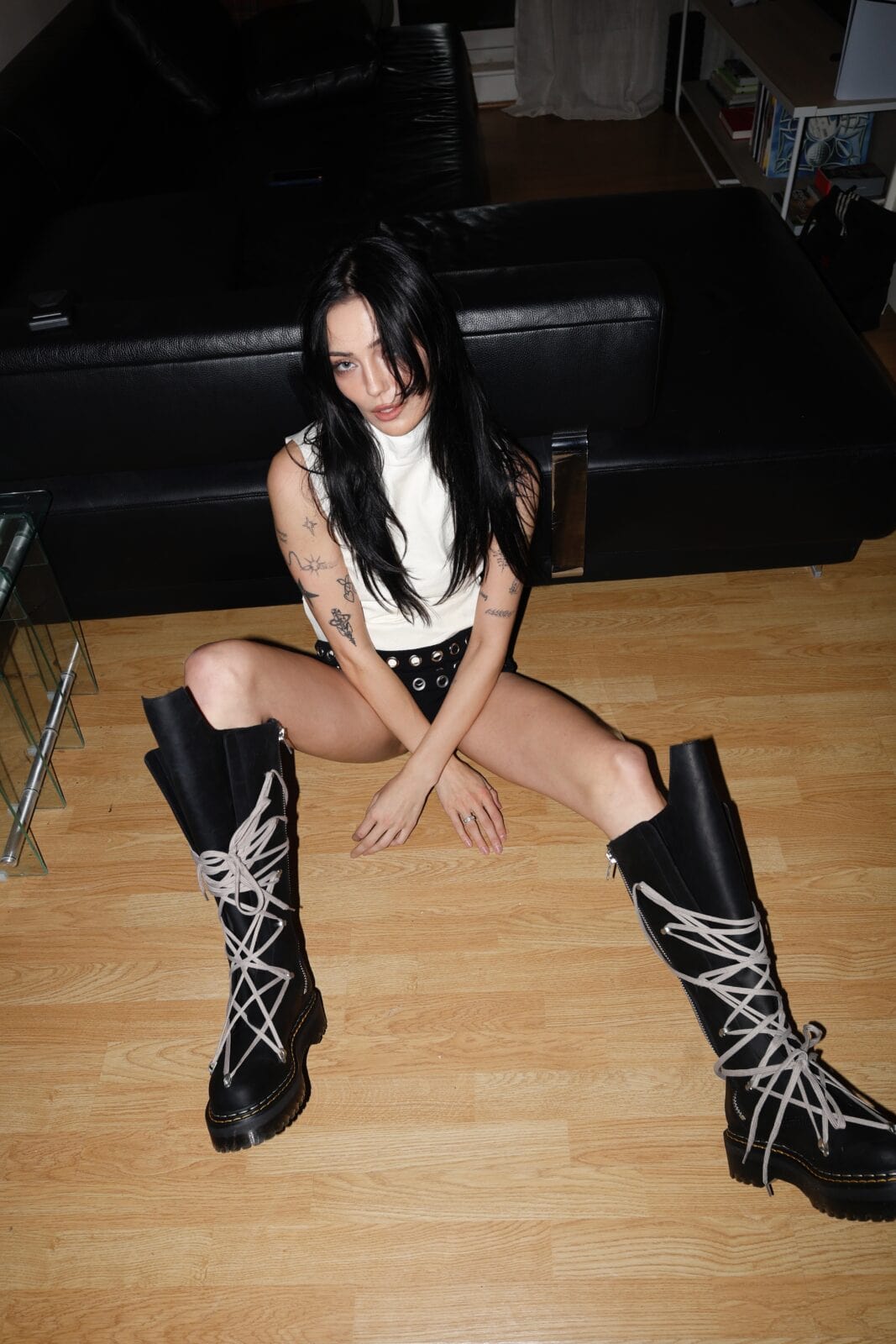
Over a decade later, neither the sense of pure thrill of being in a club, however shitty, nor the mischievous streak have faded. Murphy’s upcoming EP, zer0, is her homage to the ageless pulsing and pounding of clubland, to that sweaty synaesthesia of dancing the world away with your friends. “That’s what’s so magical about a dancefloor,” she says, “it’s pure catharsis. You can get out any emotion you have.”
Last July, Murphy dropped the project’s lead single, ‘space cadet’, to coincide with her birthday – as sim0ne puts it, “like a true Leo”. A bouncy happy-hardcore banger, Murphy says it was inspired by old Excel records and Prodigy anthems, icons of a nineties rave culture she wishes she could experience. “I recently watched a documentary about Tony De Vit [Don’t Ever Stop],” she says, “and it’s one of the best documentaries I’ve ever seen. I wish I could teleport myself into those videos of people dancing, because they’re just letting themselves loose.”
Murphy calls De Vit her “number one DJ”. A pioneer of the high-BPM British hard house and filth that cannibalised the euphoric sounds of European clubs, De Vit revolutionised this rainy little island’s clubbing scene before tragically passing away in 1998, aged just 40, due to complications arising from HIV. A mainstay of Heaven, London’s throbbing queer heart, De Vit’s untethered anthems defined the sound of the gay 1990s. As Don’t Ever Stop director Stuart Pollitt said, “De Vit kept the 90s generation dancing despite the AIDS epidemic.”
There is today a tendency to see the club as a cloistered, detached and non-political space, especially with so much else happening in the world. Yet these nocturnal hearths have long homed political overtures and undertones, from the working-class liberationism of northern soul’s dancehalls (and the Black American Mo-town clubs that inspired them) to the queer nightclub wonder-worlds of HIV-crisis Britain.
“When you’re out, you’re faced with something happening in front of you,” Murphy says, “there are people around you and you’re confronting the world around you. I think it’s important for young people to have third spaces like that.” She says she herself learnt a lot about the world this way – though, when I ask for specific memories, she validly concedes, “a lot of it is quite blurry”.
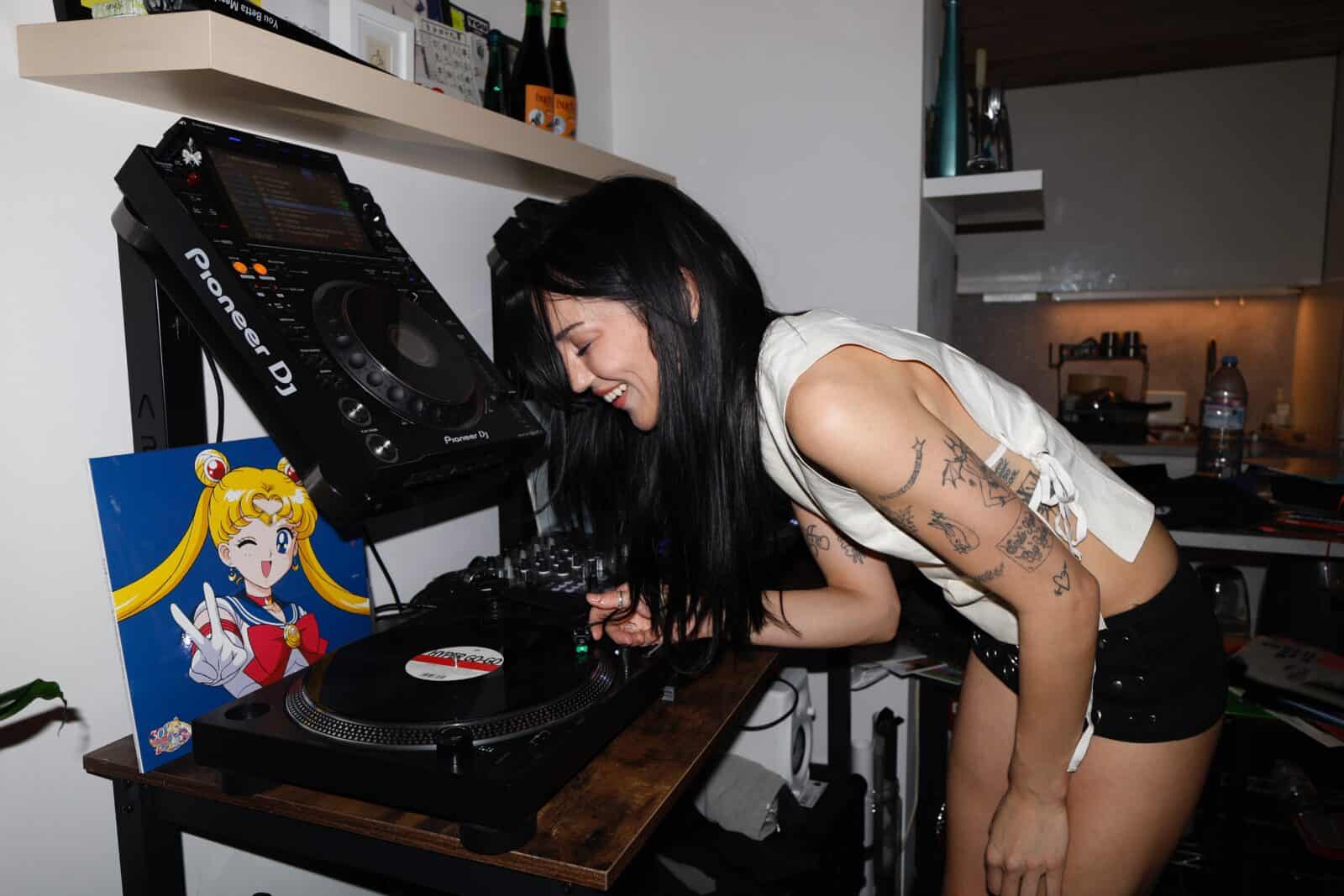
But sim0ne, a humanities graduate and perennial activist, understands the club’s latent radicalism well. She also understands the pertinent importance – both personal and political – of just being around other people, having started DJing in the mandated isolationism of lockdown. This is why she founded club zer0, her touring club night, a couple of years back. “It’s such a nice community,” she says, “I get to lock in with these smaller crowds who are all here for the same reason, hands in the air and dancing. I love seeing it because when I go out, I want it to be like that, dancing and having fun with my friends.”
Murphy knows that today is an anxious age: clubs are shutting; algorithms and AI are changing the way we exist in the world. But her existence is almost that of the cyborg, in nostalgic sympoiesis with the technology that raised her in a post-Y2K age when the world was still optimistic about the Web’s democratisation of cognition and connection. “I love that early 2000s style,” she says, discussing the metallic visual aesthetic of the EP, “when everybody was really excited about technology: the muted, glowy tones; the old PlayStation adverts.”
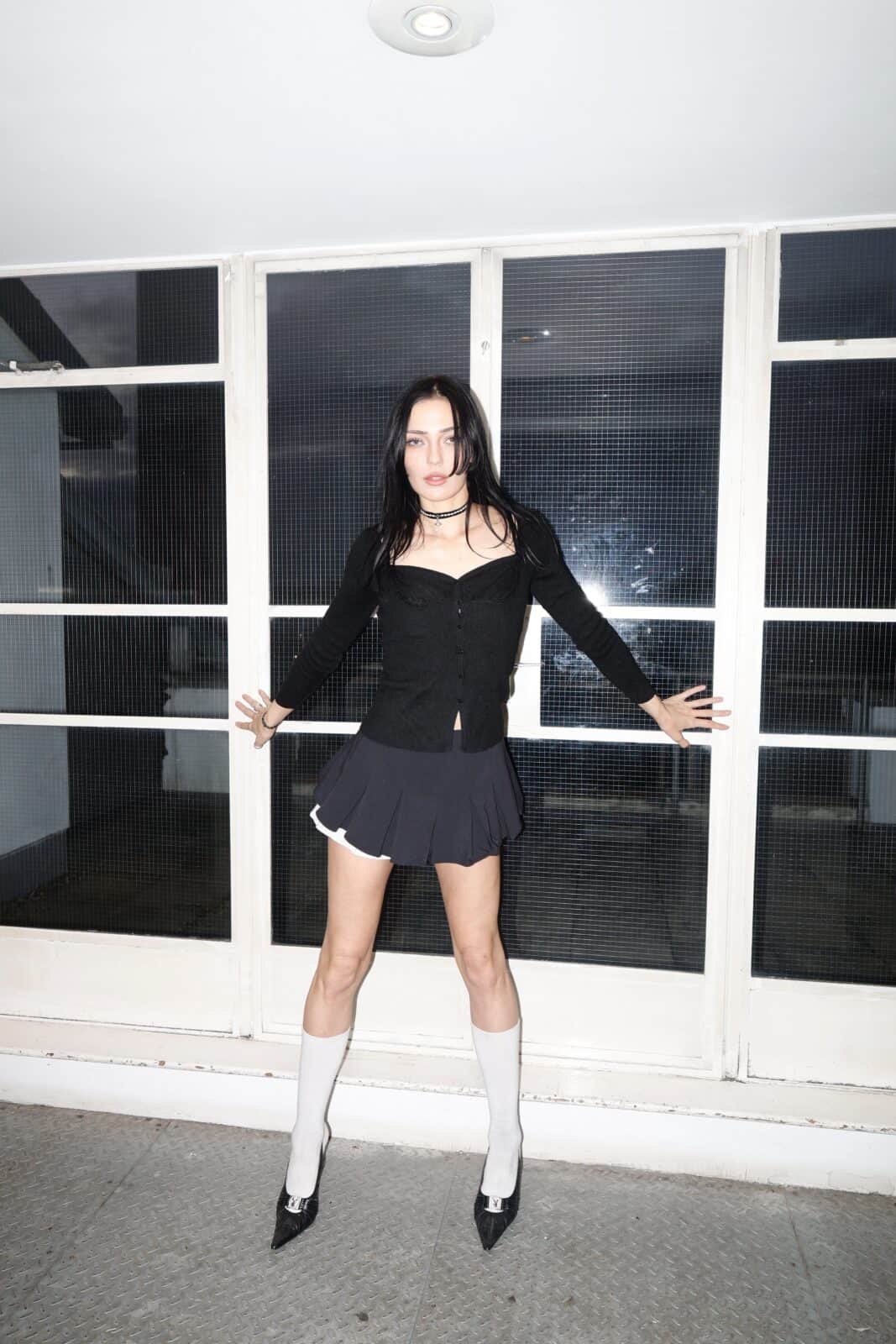
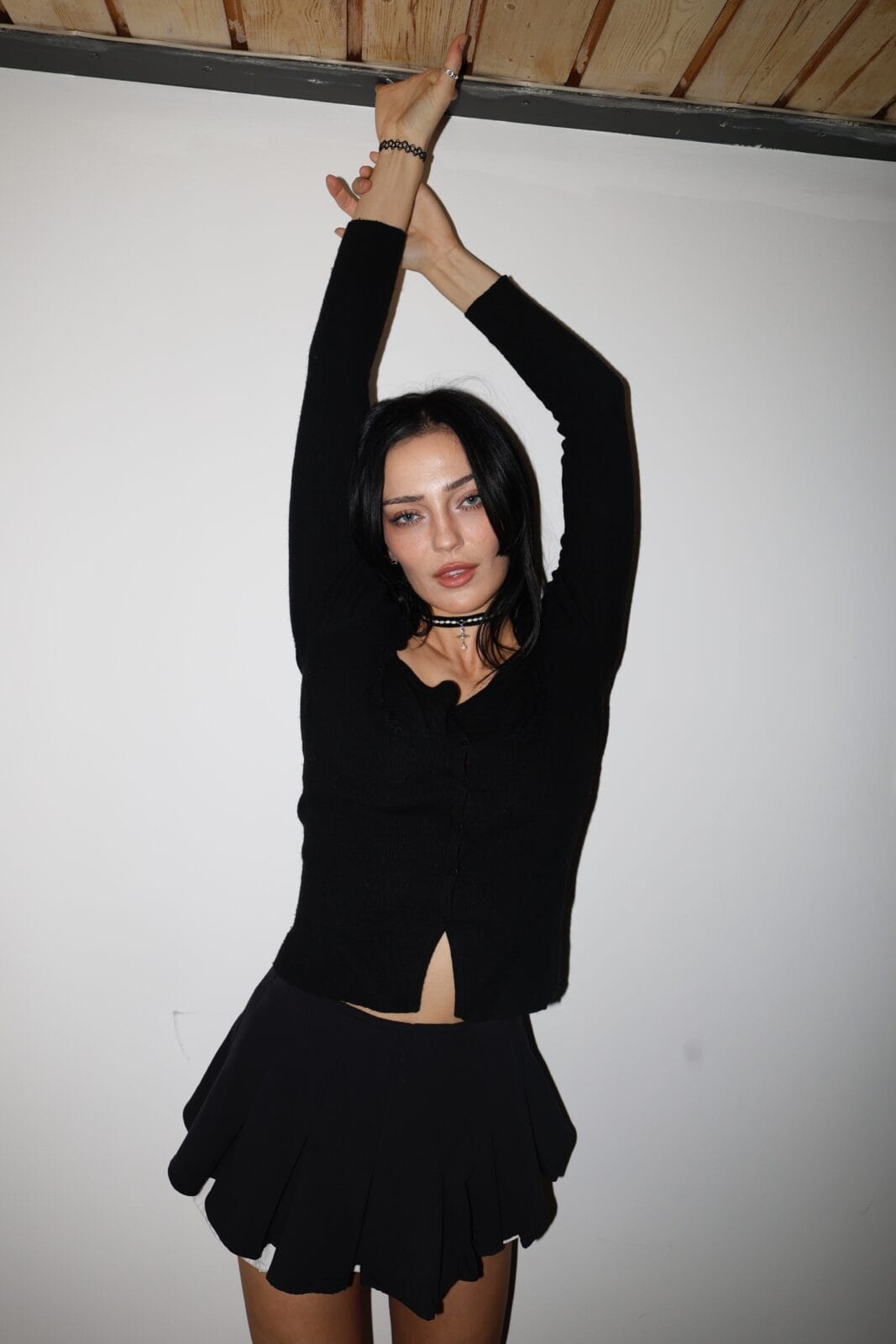
Even today, she says, “I don’t find technology that scary.” She firmly believes that art and music will always be a human domain, that artificial systems, no matter how advanced, will never replace the experiential work we do. “If you’re listening to a Radiohead album, you can feel they’re in pain and depressed. There’s a human element that computers can’t generate.” And yet fatigue at the omnipresence of technology and the dissociative effects of the digital are precisely what is pulling young people back to the clubs, where you’re “forced into your body.” The dancefloor is deeply visceral, the club corrosively somatic. Musical moments that mainstreamed clubland epicureanism, including brat summer and Eusexua, were reactions against the online as much as they were children of it.
Murphy and I call at the end of 2025, as one year wraps itself into another. I ask sim0ne if she has any New Year’s Resolutions and she says no, that she just wants to keep travelling and playing music. In January, the following month, she’ll be taking club zer0 to Australia. As the clocks strike midnight and announce a new start, she’ll be playing to hundreds of shit-faced Melbournians who will be among the world’s first to enter 2026 due to their advanced time zone. She says she’s excited to play them Kylie.
But how to usher in the New Year? I ask if sim0ne yet has any clues on what song she’ll play as the first of 2026. But like with most answers she gives about the future, she prefers to be non-prescriptive. “Well,” she starts, “I am Scottish and it is New Year so I think I’m going to play a verse of Auld Lang Syne, it feels correct.” A cutesy laugh – it’s a surprisingly rustic pick. “And then,” she continues, “I’m going to drop it into heavy techno.” More on brand. “Or maybe,” she giggles, “I’ll treat them to one of my new tracks.”