
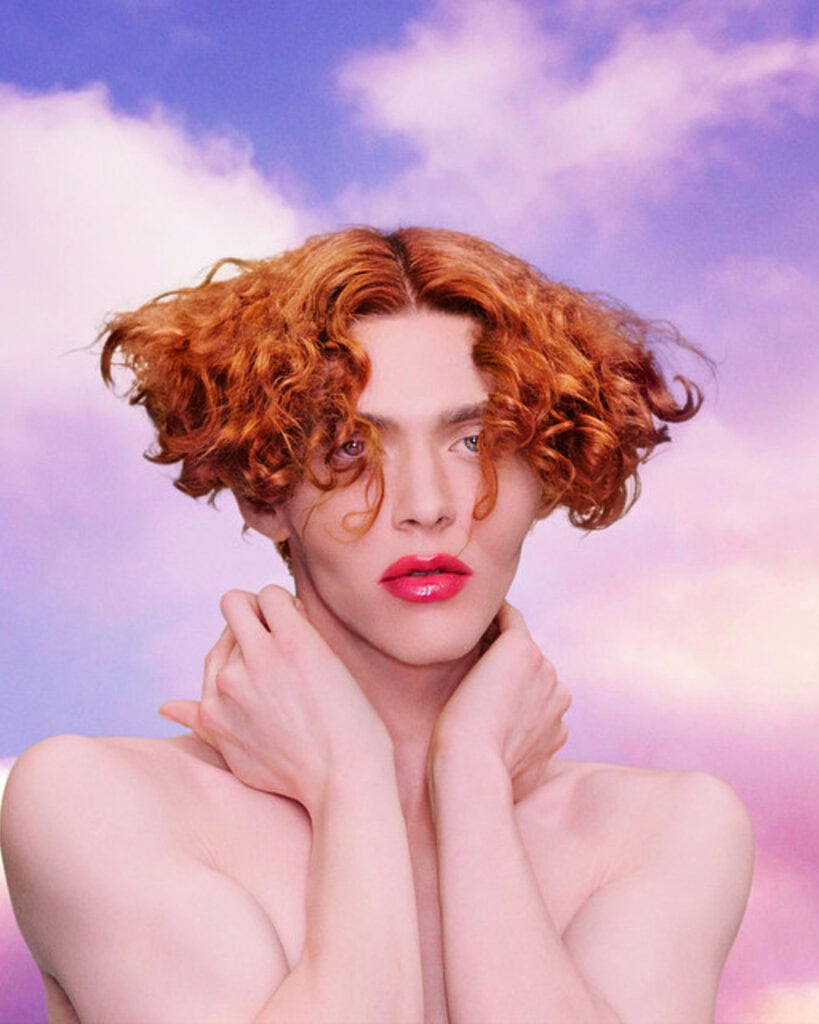
I still remember exactly where I was when I found out SOPHIE had died. It’s one of the few events between 2020 and 2021 – those nauseating pandemic years – that my mind has not yet dulled to a shrinking, abstract blur. There I was, hermit-like in my bedroom, sat on a university Zoom call with coursemates I’d not yet met and violently disassociating as they, ironically, debated queer identity and theology.
It was like this, half-listening and half-doomscrolling on my phone, that the headline blipped inconspicuously on-screen: musician SOPHIE dies falling from a roof in Athens, trying to watch the moon.
SOPHIE’s departure from this world has left a musical chasm that has yet to be filled, and which likely won’t be filled for another couple lifetimes. I scarcely have to elaborate the ways she terraformed music’s, by the 2010s, homogenising landscape with an anarchic Swiss knife of sounds that can only be expressed in onomatopoeia – zips, squelches, bangs and pops – and ear-scratching, helium-high vocals. So advanced was her auditory realm that it is most often described with the kind of hyphenate buzzwords normally reserved for PDF-format, theory-girl tomes: she was a trans-humanist, a xeno-feminist, a post-post-modernist, and so on.
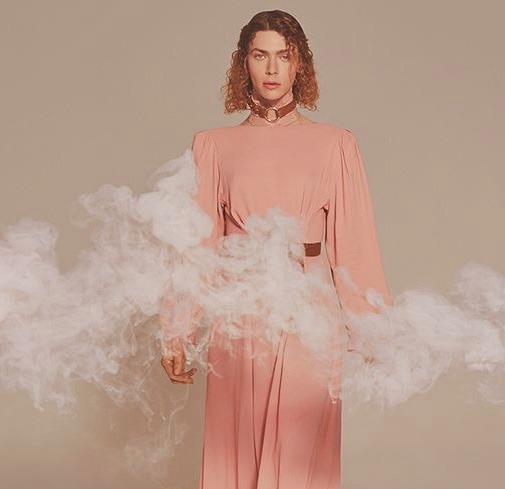
“One of the first times I remember hearing SOPHIE’s music,” reflects the founder of @thegalleryofxeonism, an Instagram fan page founded after her passing to archive her memory, “I was in a clothing store abroad and some songs were blasting through the speakers.” They remember many shoppers looking startled, disturbed even, by the “exaggeratingly elastic and hyperkinetic presence” that is SOPHIE’s sound, but they were instantly hypnotised.
Primrose Ohling, a Stanford-based musician who was the first recipient of a scholarship founded in SOPHIE’s honour last year, had similar memories: “The first time I heard SOPHIE’s music, I thought it was annoying. It took me a while to realise what I was missing. Music has a way of finding us when we’re not ready.”
“SOPHIE presented us with such a euphoric vision of the future,” @thegalleryofxeonism added, “in a time where nostalgia is so romanticised. She created music that conveyed so much futurism, but also authenticity and optimism.”
SOPHIE’s music has always been somewhat divisive – and, as a result, it has always been inherently countercultural. Comment sections on her early releases are littered with comments proclaiming “music is dead” and that this is “some of the worst music ever made”. One person shared under a video of her 2014 Boiler Room set: “this was the weirdest performance I ever experienced… I was as confused as everyone else in the room. Cool ass shit”. A contemporaneous Vice article wondered whether SOPHIE and her PC Music adjacents would be “just another Tumblr fad, or if they’ll go on to be remembered as the next Cabaret Voltaire”. Time, it seems, has ruled for the latter.
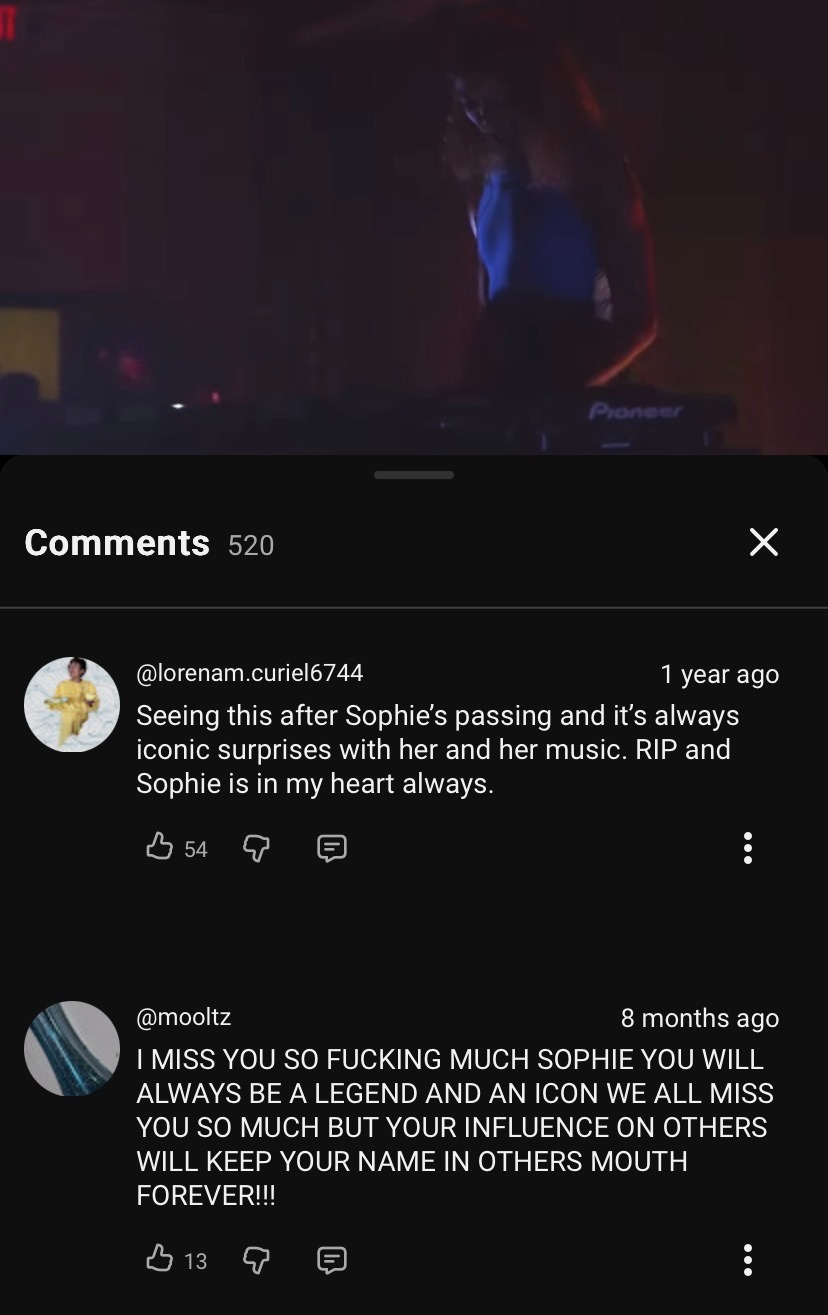
Caption: Screenshot of comments under YouTube video of SOPHIE’s Boiler Room set in 2015.
The gut-feeling created by her music is an abrasive sort of euphoria, meant to be felt in those most inner recesses of the body and soul (according to one apocryphal legend, the reason her debut album was titled OIL OF EVERY PEARL’S UNINSIDES was that, when spoke in her native Glaswegian drawl, the phrase sounded something like “I love every person’s insides”). One of my most vivid clubbing memories is going to a sweaty donk rave at Corsica Studios and ‘Immaterial’ blaring out, the entire crowd – 99.9 per cent queer – immediately erupting into writhing transcendence as SOPHIE squeaked about immaterial boys and immaterial girls.
“I hear her music in the club and the speakers seem to respond to her,” says Chloe Munzer, a care worker for trans and non-binary people. “She is timeless and magical, a reminder of what art can do. She is our forever.”
SOPHIE’s queerness – her transness, especially – permeated her music. “It was like it had been written in, surreptitiously, for us,” reflected Shon Faye, author of The Transgender Issue, in a eulogy to the artist for Frieze. “How wondrous to hear parts of ourselves at the heart of the mainstream slipping by unnoticed with only our fellow sisters in on the secret.” Songs like ‘Faceshopping’ create a trans polari with its paean of surgical rebirth; others like “It’s Okay to Cry”, the artist’s famous coming out, speak to experience directly.
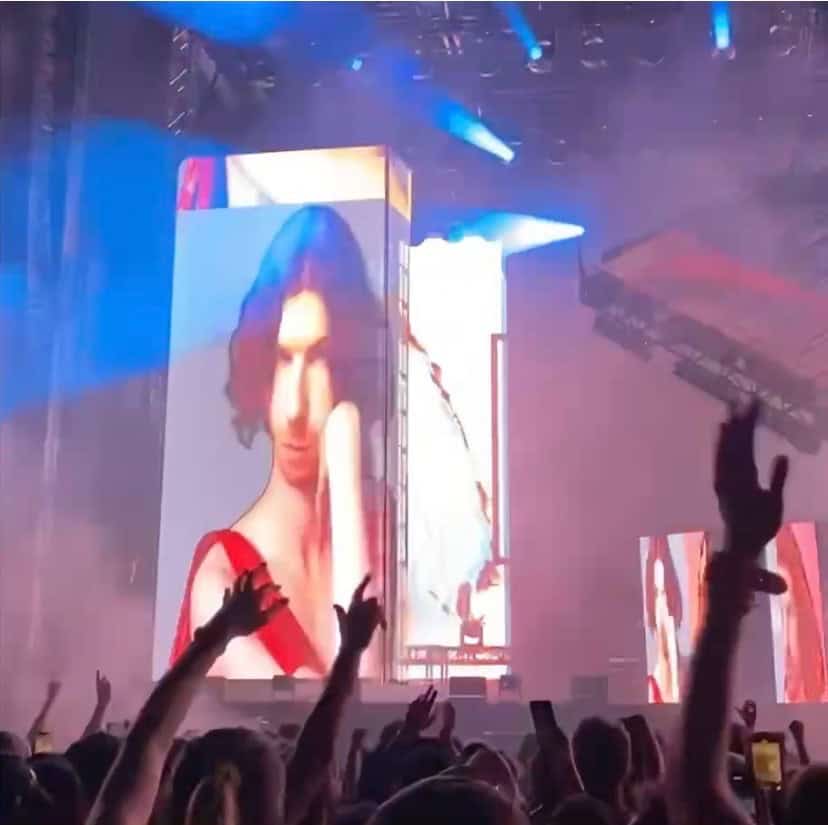
SOPHIE was the first openly trans person to be nominated for a Grammy for OIL OF EVERY PERSON’S UNINSIDES in 2018. When Kim Petras, a longtime collaborator, became the first to win one for ‘Unholy’ two years after her death, she thanked SOPHIE, teary-eyed: “your inspiration will forever be in my music”.
The task of mourning SOPHIE is, then, to mourn more than a pioneering artist, to mourn more than a beautiful person (as much as she is both). It is, in a way, to mourn a lost future: one where an openly trans woman remained at pop music’s helm and bent its dogma with a celestial might; one where so much more joy and happiness and expression was musically injected in our grey little world. One where, instead of always looking back, music would be pushed directly into the future.
But, in many ways, SOPHIE does live on. An entire cottage industry has sprung up around the grieving of her legacy, from Kim Petras to Aphex Twin, all the way to Charli XCX’s brat summer. SOPHIE survives in the dancefloor, in the memories of those she touched and in a music industry that, in many ways, is still playing catch up with her mind. And maybe she lives on somewhere up near the moon too, looking over our sub-lunary world and smiling from the immaterial cosmos she had always yearned to join.