

As Copenhagen Fashion Week’s 20th anniversary approaches, 26 brands prepare to showcase their latest collections. Among them is Stockholm-based brand Sson, making its debut at CPHFW under the direction of co-founder and creative director Yulia Kjellsson. Through her visionary eye, second-hand garments are transformed into sartorial phantasmagorias.
This concept is realised in her Spring/Summer 2025 collection through reconstructed shirts made from multiple cotton panels, along with black bows ensembles and minidresses with gargantuan proportions. The same approach is given an edgier twist in her Autumn/Winter 2025 collection, with oversized coats assembled from patchwork outerwear, lolita-like skirts paired with wide-brimmed boots and crisp white shirts with elongated sleeves.
Founded in 2024, Sson was born from a total commitment to upcycling, attributing new value to pre-owned clothing. As Kjellsson confirmed in our correspondence, “Fashion is one of the most polluting industries in the world,” and she would have never created her brand if it meant contributing further to the ecological impact.

A study published by the European Parliament found that between 4% and 9% of all textile products produced in Europe are destroyed without ever being worn, while only 1% of used clothing is recycled. With figures like this, it felt logical for Yulia Kjellsson to make circular fashion the foundation of her brand, especially given that she had already adopted this approach in her own choices of furnishings and clothing.
Although second-hand materials come with limitations, they also present a plethora of possibilities to explore, sparking the designer’s creativity and leading to unexpected creations. This time-consuming process which involves sourcing and reworking pre-existing garments, not only reflects her commitment to a more conscious fashion environment, but also highlights Sson’s belief that slow craftsmanship is a powerful tool rather than an obstacle.
Materials can often dictate a garment’s final outcome. Yet through Kjellson’s designs and expert hands, the finished pieces become the epitome of contemporary chic. Across both season, Sson’s collections look lived-in and unmistakably urban rather than polished or aspirational, reinforcing the idea that these garments are not mere costumes but the extension of everyday life. They don’t require much explanation: they reflect the way people dress now, seen down busy boulevards or in the corner of a hip café, hands in pockets, shoulders slightly hunched under heavy coats—perhaps from Sson’s Autumn/Winter 2025 collection.
And if people aren’t wearing them now, they likely will be soon, as Kjellson describes the themes of her collections as “dystopian and absurd,” born from a world immersed in the erratic shambles of modern life and facing an uncertain destiny.
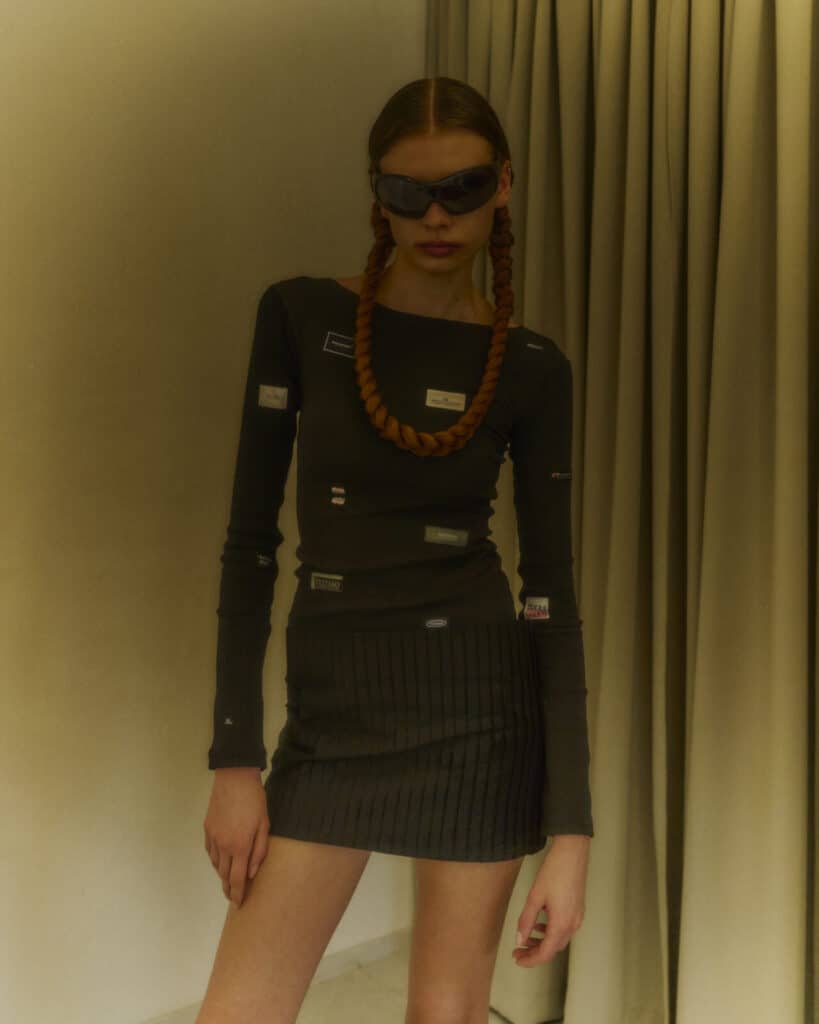
In recent years, with the cultural resurgence of The Hunger Games saga, social media platforms have been flooded with recreations of—or at least attempts at—the so-called “Capitol Couture,” in which the upper crust of society is dressed in outrageous outfits, flashy colours and exaggerated volumes. However, it is worth considering how ensembles, which in 2012 —when the film was first released—once felt like a theatrical satire, are now considered à la mode. The return of dystopian fashion resonates strongly with Sson’s visual identity. Through upcycling, Sson weaves the social matter into emotionally charged garments, suggesting that dystopia is not fiction, but a condition already embedded in everyday life.
As fashion adapts to the zeitgeist, acting as arbiter of morals and culture, it has become natural in the creative hemisphere to escape to a different time or place, as a way of coping with the difficulties of our own dystopian world.
In his book The Glass of Fashion, the renowned costume designer and fashion photographer Cecil Beaton describes fashion as a magnifying glass of sociopolitical circumstance. This idea feels central to Sson: a brand that reflects the designer’s inner thoughts in relation to external events. Highlighting the tension between endless production and waste, as well as the value that society assigns to material objects.
Sson’s forward-looking designs blur the line between what has traditionally been considered feminine and masculine, embracing the two opposing energies while keeping comfort at the centre. Feeling comfortable in one’s own skin is the brand’s ultimate goal.
After two seasons and one runway show, Sson is unveiling its Autumn/Winter 2026 collection, “The Fortunate Ones”, at Copenhagen Fashion Week, highlighting themes of greed and overconsumption.
While much of the industry continues to produce, buy and discard without pause, expanding the landfills season after season, Sson keeps on searching for those same materials others would just toss away. And in a world where there’s a famine of beauty, the ability to recognise it even when it is dimmed and forgotten is a power to be reckoned with.
I spoke with Yulia Kjellsson about her creative process and her approach to circular fashion, as well as her fears and hopes for the future.
The Cold Magazine (CM): Where do your narratives usually begin—with a material, a personal reflection, or a cultural observation? Or is it a mix of all three?
Yulia Kjellsson (YK): Usually, from a cultural observation, something happening in society that’s been on my mind lately. It could definitely also be a personal reflection, as long as it’s something others could relate to or find interesting. As much as the world is uncertain and scary in many ways, I tend to experience life as quite bizarre and made-up. Therefore, the themes are often both dystopian and absurd.
CM: And if that is the case, how do you decide which stories are really meant to be told?
YK: Well, I guess that’s hard to know, it’s just a strong interest and gut feeling for me. When I started formulating and trying that idea, I tell myself to stay open, but it’s never happened that I’ve changed from that first instinct. I suppose any story can be interesting to listen to if it’s told right.
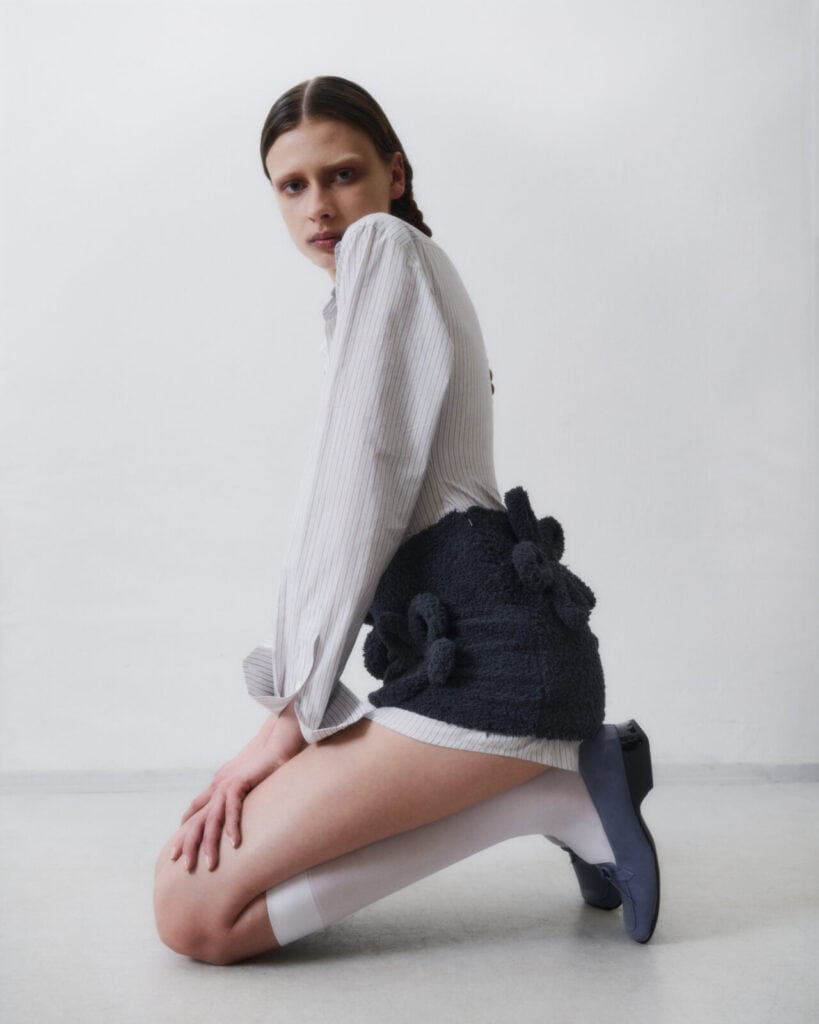
CM: Are there specific pieces in AW26 that hold personal meaning, or that you feel particularly encapsulate the spirit of the collection? And did working on this collection differ from your previous seasons in terms of concept or materials?
YK: Dealing with the question of what to do with all the clothes we’ve produced, I wanted to convey the absurdity of the situation. Like one solution would be: we could wear it all at once. With that in mind I created a puffer jacket consisting of just hoods from a bunch of discarded jackets. We’re still early on in developing Sson and each season we explore new ways of working with upcycling. I like to drape and work with whole garments intact, but I also did some more conventional garments from flat patterns this year. We’re in the process of scaling up and setting some styles in production which is one of our big challenges.
CM: As an emerging brand in the international fashion scene, what are the biggest challenges you face today? And how do you navigate staying true to your creative vision while engaging with an industry that often emphasises only commercial success?
YK: Time and money. We’re still having other jobs on the side of the brand, and it’s extremely hard to sustain for a long period of time. It has a big impact on what we are able to produce as well. We hope that we can reach a point where we can focus full-time on Sson before that time runs out. Also, today, many stores prefer to sell on commission instead of making purchases, which leaves us with all the risk. I guess it’s a balance. I have started to think more about products as we’ve started to sell. I think I still tend to get very conceptual and have a lot of fun in my process. In the end, we do need to make sales to survive, so there has to be a bit of both.

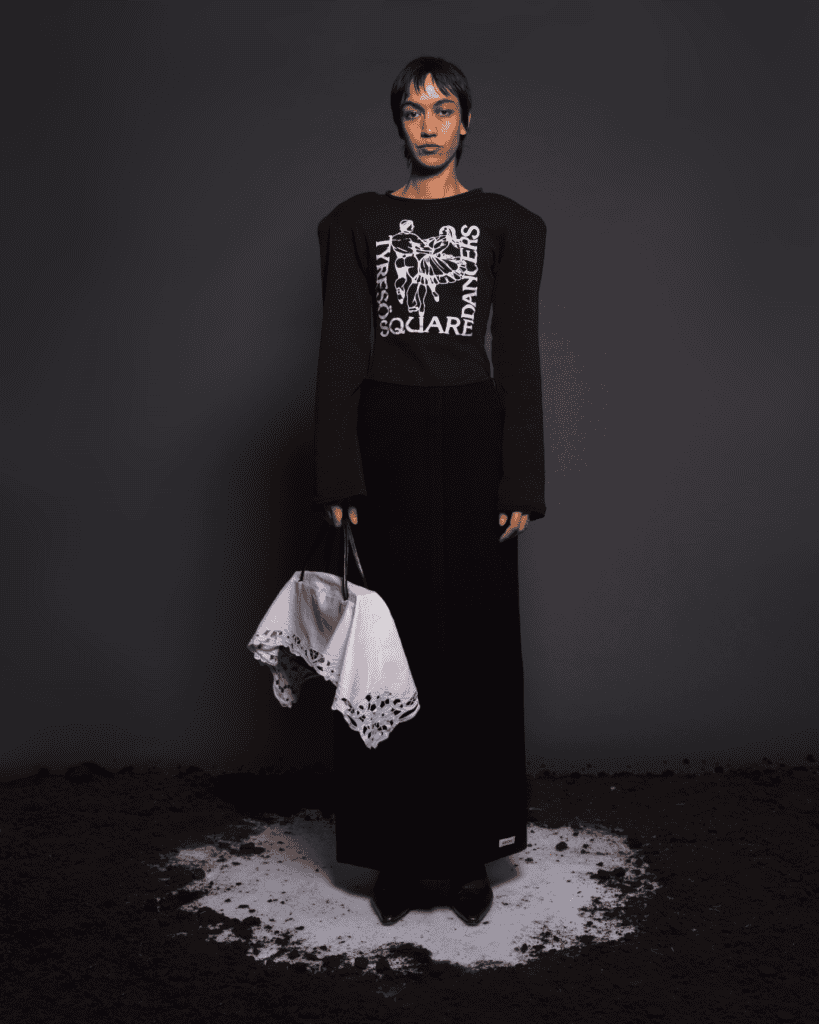
CM: Which moments or experiences so far have made you feel that Sson is starting to make its mark in the fashion world?
YK: We had our first fashion show in Stockholm last spring, which was such a fun experience and got some great media coverage as well. We got picked up by some shops and are now moving on to Copenhagen and our first official fashion week attendance. Also, working with other creatives and seeing them leave their mark on the Sson world is really inspiring. We’re very excited for all of it!
CM: Presenting at Copenhagen Fashion Week offers a wonderful opportunity. What kind of conversation or reflection do you hope Sson sparks among the audiences?
YK: We want to present a different way to approach fashion in the future. You can use resources that already exist but still be relevant or innovative. We all want to be able to create and enjoy fashion in the future, so we have to find a way that won’t damage us more than it contributes.