
Before vampires became a beloved cinematic staple, before science fiction was taken seriously as a lens for societal critique, and before hospital dramas dominated primetime television, they were the stuff of B-movies – cheap, sensational, and unapologetically pulpy. These genre films formed the underbelly of Hollywood’s golden age: first known as B-movies for their secondary status in double-bill screenings, and later dubbed Exploitation Films for their unabashed fixation on nudity, violence, and taboo. Today, they’re sometimes indulged as campy fun or dismissed entirely for their questionable politics, but rarely are they recognised as formative in shaping the language and structure of modern screen storytelling.
Even more rare is the celebration of its iconic filmmakers, particularly when they accomplish the unenviable task of infusing their erotica with genuinely thoughtful feminist insight. Enter Stephanie Rothman, the first woman to be awarded the Director’s Guild of America fellowship during her studies at USC, after which she was employed by the B-movie king, Roger Corman. This summer, London’s Barbican Centre is giving Rothman her long-overdue spotlight, honouring her work as part of the Hidden Figures programme (29 July – 14 August).
Back in the 70s, Rothman’s career picked up steam when – as she recounted on Interview Magazine – she was ordered to deliver a film about, “very pretty student nurses with as much nudity as an R-rated film could have”. That threadbare premise became The Student Nurses (1970), a drive-in feature that grossed over a million dollars and launched a profitable cycle of nurse-themed exploitation films.

As far as the pretty nurses and the nudity went, Rothman delivered. Her film follows four beautiful young women through their final assignments at nursing school. It’s a lot of fun at first – one girl is going steady with a gynaecologist, another meets a “pharmacist, of the not-so-legal variety” and tries LSD for the first time. But very quickly, Rothman’s leftist politics catch up with her audience – most notable is the unwanted pregnancy of Priscilla (Barbara Leigh), who chooses to have an abortion after a lengthy and complex discussion about it with her friends. She prioritises her career, but in order to do so, must request the procedure at her own hospital on the grounds of mental distress. Rothman’s film was released three years before Roe v. Wade In a tragic twist of history, its relevance has now looped back around in the wake of its overturn.
Priscilla’s request for an abortion is denied following a brilliant scene where Rothman confronts the erotic framing of the film with the stark violence of institutional power. Questions which could have otherwise been lascivious – “do you always enjoy sex”, “have you had a lot of sexual contact with him?” – are suddenly invasive and grotesque. An earlier joke about Priscilla never wearing a bra is recontextualised: now she is required to wear one to appear respectable, and her discomfort is visible. “What do you expect from a bunch of men?” says her colleague. “Give ’em the chance to play Inquisitor, and it’s dumped on women every time.”
The film’s other plotlines are equally bold. Rothman covers a remarkable amount of ground in a short runtime, tackling police brutality, the Vietnam War, and a racist healthcare system that discourages immigrants from seeking treatment out of fear of arrest or deportation. Once again, the issues she raises feel depressingly relevant today.

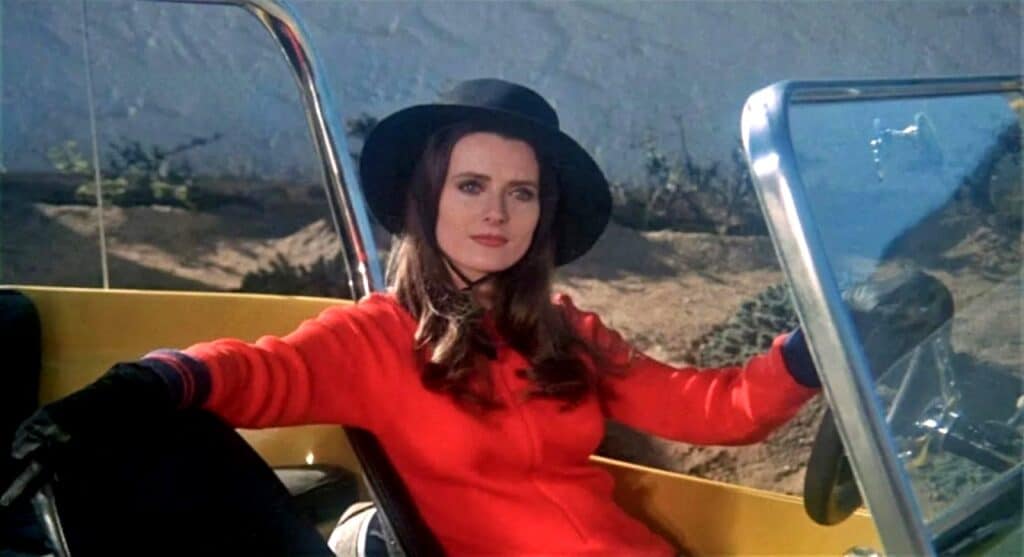
Despite its commercial success, The Student Nurses is not Rothman’s most iconic film. That title belongs instead to The Velvet Vampire (1971), which centres on exploitation cinema’s favourite erotic monster. Less overtly political than her previous work, the film is celebrated for its lush visuals and inventive take on the vampire genre. In a great creative choice, the misty European towns and crumbling castles of Gothic tradition are swapped for the sun-scorched California desert. Celeste Yarnall stars as the seductive vampire Diane Le Fanu – a playful nod to Carmilla author Sheridan Le Fanu, who preceded Dracula with a tale of a female vampire who preys on a woman. Diane lures a blonde, all-American married couple to her secluded estate and hilariously drives them across the dunes in a buggy.
It’s funny, it’s sensual, and it firmly situated itself within the queer tradition of vampire cinema, amidst films like Vampyros Lesbos (1971) and The Lost Boys (1987). The film also features a series of standout dream sequences, with Rothman drawing inspiration from the surrealist cinema of Jean Cocteau – essential moments that highlight the film’s striking visual style. It’s a cult favourite for a reason.
After The Velvet Vampire was released, Rothman exited New World Pictures, Roger Corman’s production company. She set up Dimension Pictures with her husband, and continued making films until her final directing feature, Working Girls (1974). A career which should have only picked-up steam died out instead, on the basis that nobody would even entertain a meeting with her. Rothman explains that on one frustrating occasion, an MGM executive mentioned they were looking to film “something, you know, like The Velvet Vampire that Stephanie Rothman made.”

The disappointing end to Rothman’s many efforts could be better contextualised by mentioning that some of the careers launched by Corman’s production company include Francis Ford Coppola, Martin Scorsese and Ron Howard among others. In the past years, however, her films have begun to be revisited, including at this summer’s Barbican program. Starting on the 29th of July and running until August 14, Rothman’s most iconic films will be re-visited by London audiences and celebrated once again. Particularly notable are the screenings of Working Girls and Terminal Island (1973), where Rothman will join via video-call for discussion.
I would also be remiss not to recommend her 1973 film Group Marriage, wherein Rothman explores the inception and life of a six-person polycule. It has beautiful actors, really funny moments, and an interesting exploration of social prejudice. The secondary plot includes a next-door gay couple whose shock at the group’s living arrangements is played for laughs. Still, they get genuine characterisation, are the only defenders of the main cast, and are also happily (and illegally) wed at the end, a radical footnote for 1973. None of Rothman’s films are ideologically perfect when taken by today’s standards, but they flipped the script on exploitation – and, decades later, they still bite.


