

Emerging from Copenhagen’s independent fashion scene, Taus is steadily shaping a universe of its own – one defined by Nordic practicality and a deeply personal design language. Through their design process, founders Freyja Taus and Juho Lehiö act with intention, ensuring that each piece is carefully crafted to age gracefully.
In lue of readily available material, Taus takes forgotten garments and transforms them into unique upcycled designs. Their commitment to sustainable fashion has earned them the title One to Watch at Copenhagen Fashion Week for the second time, proving that great designs come from creative minds, not the newest fabric.
For Freyja, Taus is an extension of herself. “Taus is a part of me, both in name and in thought. Since starting the brand, it has grown into something bigger – more like a universe of its own that Juho and I shape together.” For both designers, the name is a reminder of where they began and the values that continue to shape their work. Juho adds, “Taus represents high-quality garments crafted to last.”
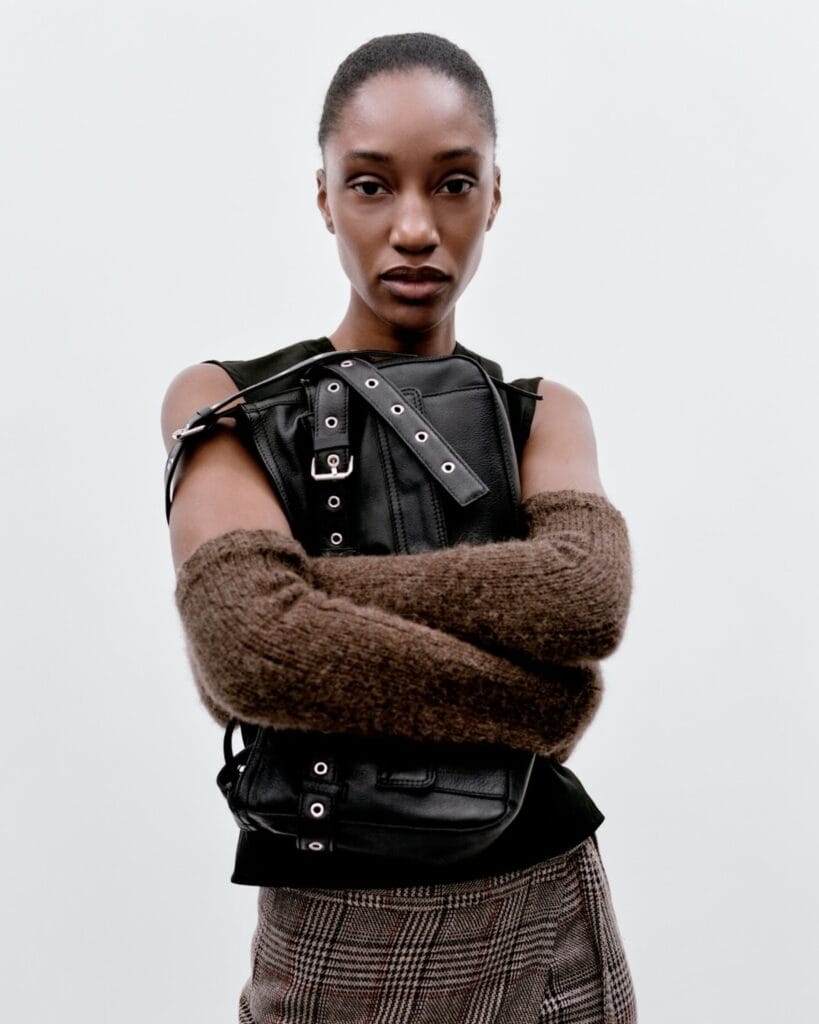
While Taus is based in Copenhagen, both designers feel that the city’s influence appears less in the brand’s visual identity and more in its design approach. “Even though we might not carry a very strong Copenhagen aesthetic,” they explain, “the city has definitely shaped our way of thinking about garments.” Denmark’s commitment to sustainability has influenced Taus’ design ethos from beginning to end, while Juho’s Helsinki roots keep Finland central to their inspiration. By using made-to-order production, upcycled materials, and deadstock fabrics, Taus embodies a resourceful, sustainability-driven approach.
This foundation aligns closely with the direction of Copenhagen Fashion Week, which places sustainability at its core. Brands participating in CPHFW mustensure that a minimum of 60% of their collections are made from recycled, or deadstock materials. But for Taus, these ideas are not a trend to follow; they are the basis of the brand itself. “We work a lot with upcycled textiles and garments sourced either from people close to us or from flea markets and vintage shops in Denmark and Finland,” they explain. Community plays a large role in the brand’s identity, with the designers often crediting inspiration to the culture and community around them. “Our muses – friends, models, and artists – are essential to everything we do,” Juho explains. Even when working with new fabrics, sustainability remains central. “The garments are made to be worn, used, and lived in,” Juho says. “They should be able to be passed on to future generations.” Taus also actively sources deadstock material, allowing customers to buy new pieces without contributing to overproduction.
For Freyja, this approach to responsibility is also deeply personal. Coming out as a trans woman marked a defining moment for her and, in turn, clarified how the brand thinks about design and wearability. The experience, she explains, reshaped her aesthetic approach and deepened her understanding of how clothing can contribute to confidence.“It was very freeing on a personal level and helped me understand myself better. It also affects our commercial range, as I often think of myself and other trans peers when designing products.” While the needs of trans women closely overlap with broader ideas of femininity, Freyja describes how this perspective informs her design process – the goal is always to feel “practical, feminine, and beautiful”.

Juho recalls one of the most influential moments in Taus’ early days as the first time a stranger made a purchase. “Seeing people wear our products is incredibly inspiring and validating,” he says. “As a very small brand, every single order feels like a huge win and a reminder that what we do matters.”
As the designers often say, “Taus would not exist without our community.” Long-term relationships have been central from the beginning, including with stylist Louise Borchers, who continues to help shape the brand’s vision on and off the runway. Freyja and Juho describe an ongoing network of encouragement from friends and family, saying “We receive a lot of support from colleagues and friends across many different tasks, and that support makes it possible for us to exist.” The ability to create such an incredible network of people who support and believe in Taus is a testament to the genuine care put into the brand by its designers.
For Juho, community is also something to be actively built, especially for emerging designers. Coming from Helsinki, he explains that limited access to resources created a particularly close-knit fashion network. “It was built around helping each other survive in a tough industry and an even tougher market,” he says. In contrast, Copenhagen offers a plethora of resources for emerging designers, which can lessen the need for mutual dependence. Through Taus, Juho aims to foster a space where collaboration feels just as essential as competition, drawing inspiration from designers within the community while maintaining a healthy sense of rivalry.