
The Cyclical Nature of Fashion: This Season’s Biggest Runway Trends
Written by Ana Lazai
The recent Autumn/Winter fashion week season was a clear testament to the idea that fashion moves in cycles, bringing back iconic trends from past decades. As we look ahead to Spring/Summer 2025, the upcoming trends showcase an impressive mix of styles, textures, and colours. Judging by the buzz among fashion insiders and enthusiasts, these trends are poised to make a bold impact this year. Here are some of the key highlights that stood out:
Boho Chic is Back
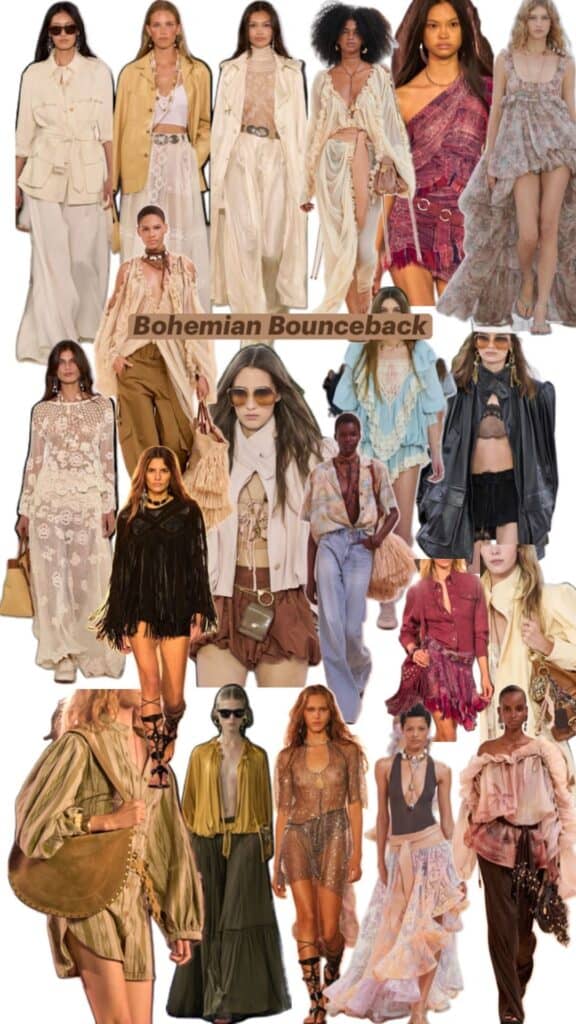
During this fashion month, all eyes were on fashion houses such as Isabel Marant, Chloé, YSL, Ralph Lauren, and Zimmermann, which brought the bohemian style to the forefront with striking impact. Key elements of this aesthetic, such as fringes, romantic lace, floral patterns, and suede fabrics, made a powerful comeback.
Isabel Marant and Chloé, both renowned for their bohemian aesthetic, seamlessly blend the romantic, natural, and laid-back vibes of the 1970s with modern and occasionally edgy touches. Staying true to the core of boho style, their collections prominently featured fringes and suede fabrics, which were seen across most pieces.
Chloé’s Spring/Summer 2025 collection, however, stole the spotlight. Chemena Kamali, who took over as Creative Director in 2023, showcased her vision for the brand in her second collection. High-waisted flared trousers, body-hugging suits that enhanced the female silhouette with a softer, curvaceous effect, and an overall modern, elegant, and tailored sensibility defined her take. Flowing silky dresses, intricate embroidery, lace details, and graphic tees reminiscent of Stella McCartney’s tenure at Chloé (1997–2001) added a touch of youthful freedom and rebellious spirit.
Zimmermann’s collection stayed true to the brand’s bohemian, romantic, and free-spirited ethos while infusing it with a fresh twist. The runway showcased vintage-inspired bohemian pieces modernised with luxurious details. Airy, lightweight fabrics lent a sense of movement and freedom, while soft, warm, earthy tones celebrated simplicity and nature. At the same time, playful and whimsical touches aligned perfectly with the boho culture’s emphasis on individuality, carefree expression, and creativity.
Meanwhile, Saint Laurent, a pioneer in blending haute couture with bohemian aesthetics during the 1970s, reinterpreted the style in a more contemporary and daring way for its Spring/Summer 2025 collection. Traditional rich patterns and earthy tones were notably absent, replaced by clean lines, bold boho references, and a darker color palette featuring modern, mysterious shades like black and purple. This collection presented a fresh, urban twist on the vintage boho aesthetic, perfectly aligned with Anthony Vaccarello’s modern vision of timeless design.
Lastly, Ralph Lauren offered a subtle take on the bohemian style while staying true to his classic American aesthetic. Natural fabrics and earthy tones defined the collection, with flowing, breezy lines dominating the dresses and garments. This added a romantic dimension to the collection, offering a more refined and sophisticated interpretation of boho fashion.
Sports, But Make it Fashion
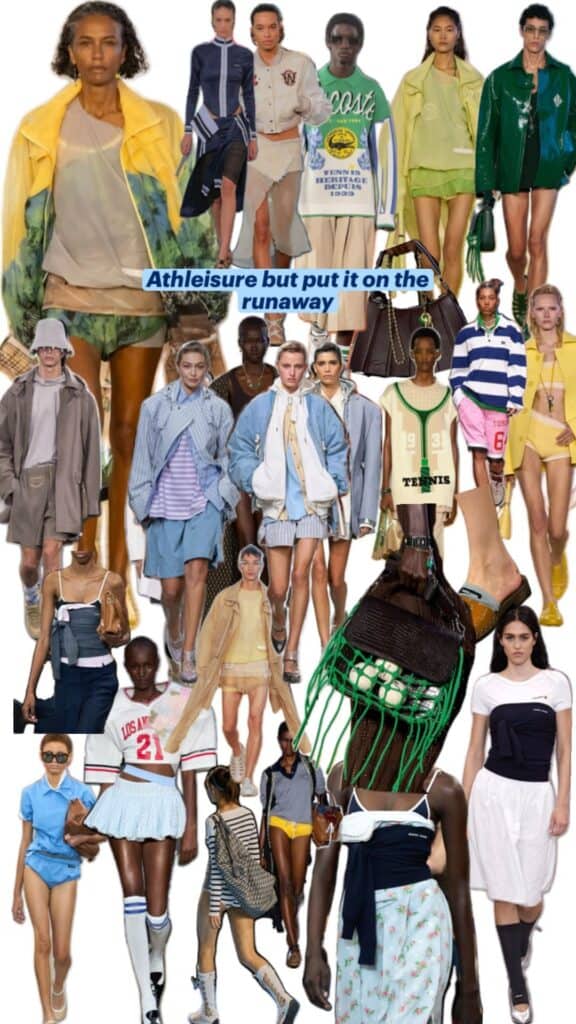
Another major trend we’ll see embraced by the fashion world this coming Spring/Summer season is the modernised athletic style. Numerous fashion houses have presented collections heavily influenced by sporty aesthetics, seamlessly blending the sporty look with a high-fashion sensibility.
The collections of Dior, Miu Miu, Rabanne, and Lacoste have garnered significant attention, breathing new life into athletic wear and transforming it into more than just a casual option. This transformation is evident in the use of luxurious fabrics, daring cuts, bold layering, eye-catching designs, and statement accessories.
Dior, for instance, created a spectacular show that began with an archery performance, emphasising the connection between the new collection and the world of sports. The pieces featured asymmetrical bodysuits, jersey dresses, and black trousers with white stripes, giving a cool edge to traditionally athletic clothing. Accessories were equally impressive, showcasing strong urban influences. The footwear included knee-high gladiator sandals and lace-up sneakers, adding a modern and unconventional twist.
Miuccia Prada, in her collection for Miu Miu, appears poised to make a significant impact on the fashion industry. Her designs merged two worlds: the brand’s original aesthetic and the new, dominant trends that emerged with the SS22 collection, which continue to influence today. Think micromini skirts, brand logos everywhere, and office-look styling.
The Spring/Summer 2024 collection brought to life a character who loves bold, quirky, and eccentric styling, along with maximalist accessorising. Mini skirts and sporty tops that clearly conveyed an urban and youthful vibe, while striking, modern patterns completed the athletic aesthetic.
The sabot-style slides with wooden soles stood out as a major shift from the Yeezy-inspired slides that have dominated in recent seasons. Layering with belts and other accessories contributed to a clear sporty-chic and urban-lifestyle aesthetic.
Paco Rabanne took a more futuristic approach to athletic culture, incorporating metallic fabrics and geometric cuts into modern designs. The shimmering materials and avant-garde elements gave athletic wear a completely modernised edge. This collection drew strong influences from club culture, blending the comfort of athletic clothing with the glamour of bold designs and statement accessories. The result was a daring,
contemporary look that embodied urban luxury while retaining the simplicity of athletic style.
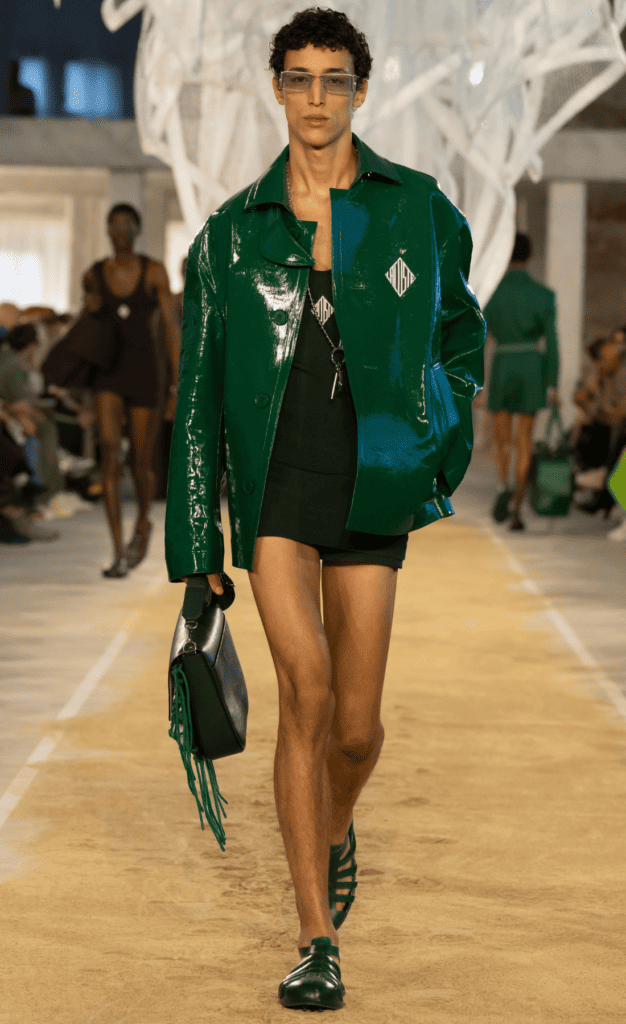
Lastly, Lacoste’s collection could be described as “Tennis with an Urban Redefinition.” The collection featured oversized tennis skirts, even bags designed with the pleated structure of a tennis skirt. Knit polos and bomber jackets also had oversized silhouettes, creating a relaxed, urban feel throughout the ensembles. Layering played a key role here as well, with sporty pieces paired with elegant, loose outerwear and functional accessories that remained true to the athletic aesthetic. Pastel and earthy tones lent a natural touch, reflecting the harmony between sports and nature, while vinyl fabrics and vibrant hues added a glamorous, modern edge.
In essence, Lacoste maintained its traditional identity while incorporating contemporary elements that align seamlessly with today’s urban lifestyle.
Overall, the collections showcased this season have redefined athletic wear, elevating it into a sophisticated and versatile choice that blends effortlessly with modern fashion trends while honouring its sporty roots.
Power Dressing
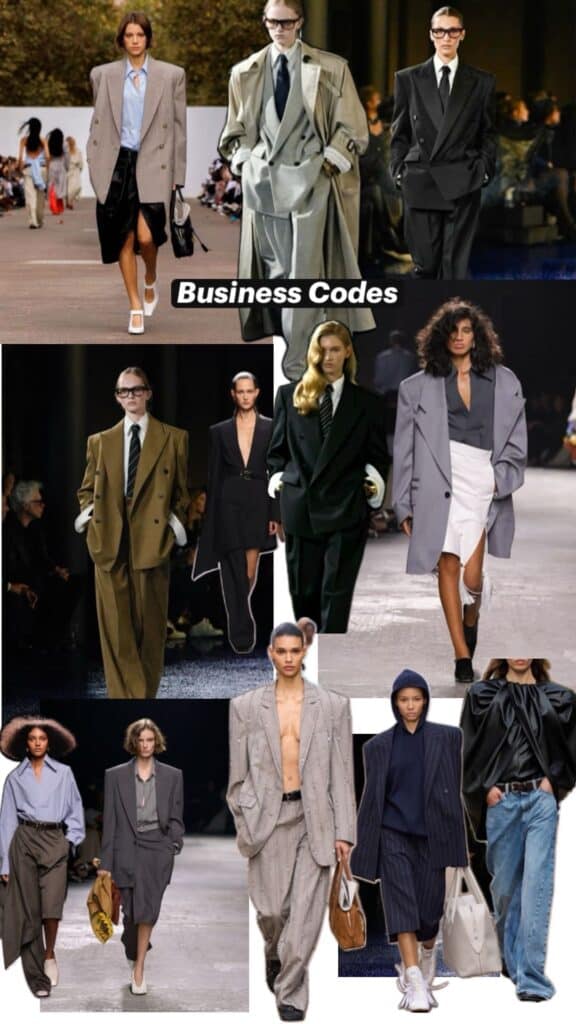
Bold shoulder pads and broad silhouettes, oversized tailored blazers and jackets, layering, and a broader embrace of androgynous styling dominated the runways once again, making these elements key trends for the Spring/Summer 2025 season. These themes were evident in the collections of Saint Laurent, Bottega Veneta, and Stella McCartney, where dramatic silhouettes, exaggerated sleeves and shoulders, oversized suits, ties, and overall volume in both garments and their layered styling conveyed a sense of power and intensity, ensuring that anyone wearing them makes a striking impression.
Saint Laurent, despite its nod to boho trends through wide maxi skirts and loose suede jackets, did not stray from incorporating androgynous elements, as it has consistently done. This collection focused heavily on suits that emphasized layering and tailoring. However, this season’s looks featured a more fluid and relaxed drape, allowing the fabrics and garments to “flow” with effortless grace. The sharp shoulders and prominent shoulder pads in blazers, alongside equally bold bomber jackets with traditional masculine characteristics such as structured lines and sleek stitching, seamlessly integrated masculine traits into women’s fashion, delivering a strikingly modern androgynous look.
Vaccarello showcased these suits in dark palettes, including black, deep navy, and dark purple, punctuated by subtle accents of white and red. This restrained color scheme exuded the sense of severity that matched the collection’s aesthetic, reflecting the elegance and formality synonymous with the Saint Laurent brand.
A similar focus on androgynous styling and oversized tailoring was evident in Bottega Veneta’s collection. Creative Director Matthieu Blazy centered the designs around wide suits with strong lines, merging functionality with high visual appeal. Beyond the refined designs, the luxurious materials—such as soft leather, cotton, silk, and wool—not only elevated the garments’ opulence but also ensured breathability. The silhouettes, marked by sharp shoulder pads, broad shoulders, and straight, loose trousers, were distinctly androgynous. Blazy’s minimalist philosophy shone through in the absence of excessive decorative elements or intricate detailing, lending a quiet power to the garments. Combined with earthy and dark tones, this approach showcased a contemporary, dynamic version of luxury that is at once classic and innovative.
Stella McCartney’s collection, while not entirely dedicated to androgynous trends, incorporated numerous such elements. Her relaxed, oversized pieces reflected the lines of menswear while offering a modern, refined interpretation of the style. The collection featured loose tailoring, bold blazers, and trousers with sharp, geometric lines—elements that tied into the androgynous theme by merging comfort with dynamic aesthetics. The oversized pieces and their structured forms emphasized fluidity and freedom of movement, delivering a minimalist sense of luxury. Furthermore, McCartney’s emphasis on sustainability added a forward-thinking dimension to the collection. Crafted from natural and organic materials, her designs offered a fresh, eco-conscious take on the notion of luxury, redefining modern fashion through a lens of environmental responsibility.
Ultimately, these collections not only celebrated the strength and fluidity of androgynous fashion but also highlighted the harmony between bold tailoring, luxury, and sustainability, presenting a vision of contemporary style that is both innovative and timeless.
To Wrap Up
As shown by the trends and collections unveiled by fashion houses this Fall, fashion is a constant cycle of renewal. Designers consistently draw inspiration from past styles, transforming them to align with contemporary sensibilities. Fashion indeed operates as a loop, with each iteration adapting to the cultural and social context of its time.
The resurgence of the bohemian aesthetic reflects the spirit of freedom and nonconformity of the 1970s, reinterpreted to meet modern demands. Bohemian elements have been integrated into modern cuts and minimalist lines, and in 2025, this style reinvents itself through sustainability and a return to “slow fashion,” emphasizing natural materials and timeless pieces.
Similarly, sporty culture finds its roots in the 1990s and 2000s, periods known for blending athletic elements into mainstream fashion. This nostalgic interest in vintage trends, coupled with today’s lifestyle demands for practicality and versatility, inspires designers to reimagine this aesthetic.
The same cyclical nature applies to the androgynous style, which has remained a prominent trend for several seasons. This approach combines the simplicity and comfort of unisex design with a touch of aesthetic luxury. One of its defining characteristics as a recurring trend is its historical connection to the liberation of gender norms. Today, androgynous fashion serves as a platform for designers to advocate for inclusivity and gender fluidity, emphasizing individual expression beyond societal constraints.
In every iteration, fashion not only evolves but also becomes a reflection of its time, bridging the past with the present and paving the way for the future.