

Kris Jenner, Chris Pratt and Chris Hemsworth walk into a TikTok ad space. They’re advertising Ray-Ban’s new Meta-enhanced glasses as part of the newest push to convince us to fund Mark Zuckerberg’s dystopia-disguised-as-innovation: THE METAVERSE (TM). But at risk of exciting the incels and crypto-trading finance bros (I’m working on a Venn Diagram), I’m not interested in talking about this metaverse. In fact, the metaverse has a whole other side—and it’s not a space where legless avatars can meet in boardrooms, nor where brands can hold concerts on Fortnite.

I present to you: The Folk Metaverse—an environment where we don’t escape into fantasy, but delve further into the worlds we already know. It’s not a metaverse in the ‘Ready Player One’, Zuckerberg-meets-Apple-Vision-meets-Gucci-Garden-on-Roblox sense. There are no VR goggles or blockchain-based economies and inter-operable avatars travelling seamlessly between servers. Instead, it’s the infamous PRYZM nightclub in a hyper-detailed Minecraft Kingston, and a Birmingham chicken shop lit up like a breathing Caravaggio rendered in early-noughties video game graphics. What The Folk Metaverse is building is not a world in the traditional sense—it’s a feeling.
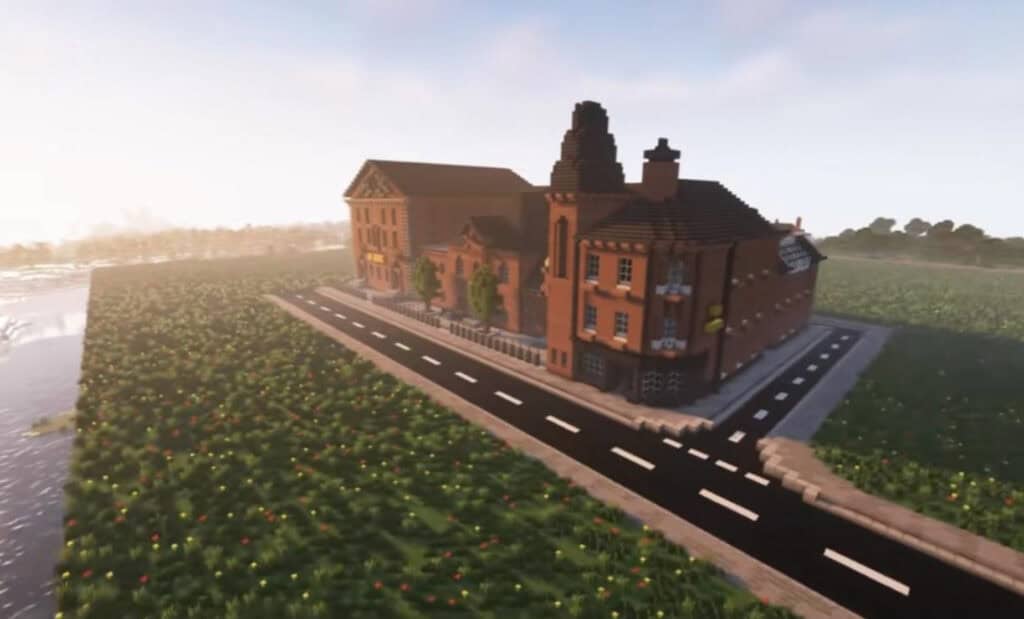
Scrolling through TikTok, artists like @orex806 and @_kyjhi are creating 3D maps that glorify the places our algorithms ignore. Through a process of worlding, they confront the mundanity and ugliness of everyday life. It’s not just about building the nightclub, but about imagining how it felt to cry in the bathroom when you saw that boy kiss someone else, or how it felt to hold your bestie’s hair as they vommed in the loo. The worlds these artists create are not a distraction from our material lives, instead, @orex806 and @_kyjhi are immortalising what makes our lives lived.
In @_kyjhi’s low-poly-dream-core dioramas, square raindrops tap on the pixelated pavements below Birmingham’s BT Tower as boxy cars drive past, glowing under the artificial hue of yellow streetlights. Unlike traditional art, there is an unmistakably immersive element to these dioramas. They feel liminal, like a dream world that exists between the present and the future, but with no visible life. That said, there are vibrational shadows of humanity floating around in the form of skateboards and chicken wings. It’s like you’re in a video game, ready to equip each object into your inventory.
In @orex806’s monuments to mundanity, buildings like Leeds’ Disco Spoons gain new reverence on disconnected roads in a flat Minecraft world. When flying overhead, you can also see the town centres of mid-tier British cities, blanketed by a layer of fog. Again, there’s a liminality—the buildings just exist, sometimes on their own, sometimes situated in larger projects to rebuild entire cities.
These worlds are uninhabited, but, under the surprisingly beautiful Minecraft sun, they’re alive. In the comment sections, users ask for their hometowns to be built, or if the floor inside the Minecraft version of Guildford’s Labyrinth nightclub can be made to feel sticky like the real thing. Gazing at PRYZM Nightclub in Minecraft Kingston, I recall a friend who claims she caught COVID on the dancefloor. In one slideshow, @orex806 documents the process of building the now-demolished Green Man Pub in Burpham from real photographs. The pub had a bad reputation, the caption reads, but it was a beautiful building, and one now immortalised for as long as Mojang’s servers exist.
These accounts are not platforms, they are destinations. In both cases, the artists’ mysterious online personae—or lack thereof—only heighten this feeling. Neither have names on their profiles, nor any human pictures. Although we do see some semblance of agency in captions and replies to comments, these immersive dioramas feel almost ‘placed,’ rather than built. They feel like they have always existed, which adds to a sense of comfort and homeliness. They transport us to one of those good dreams, where everything is warm and comforting, but not too nice. They are hyper-real.
And it’s precisely this imperfection—this sense of not trying too hard—that makes them so full of feeling. It’s a stark contrast to the hyper-commercialised metaverse spaces currently on offer, replete with Hyundai-branded worlds on Roblox, Fortnite rap concerts and meta-AI-enabled Ray-Ban Sunglasses whispering the song of your own highly personalised algorithm directly into your skull. These corporate hellscapes are overdesigned, overstimulating and ultimately mirrors of the same unequal systems of extraction and exploitation that they pretend to transcend.
The beauty of Folk Metaverses is that they care less about infrastructure, and more about how these spaces are occupied. We occupy them with our emotions, without needing to build polished digital avatars to perform our new, digital identities. The act of remembering is transformed into a radical form of presence. They aren’t simulations of otherworldly experiences that we seek to escape the reality of our insignificance, but containers for it. They hold space for the parts of ourselves that no longer have a physical home, in a world where swallowed by commodification. In this sense, Folk Metaverses become sacred not because they are immersive, but because they are inhabited. When so much of the internet is designed for extraction, this is a rare act of radical reclamation.
Perhaps this is why we don’t have THE METAVERSE (TM) yet. We presume online intimacy requires infrastructure and that connections are transactional. Count on corporations to think materially and people to—well, I guess the whole point of this article is that we think much less than we feel. And we’ve been emotionally occupying digital places and platforms rather creatively for some time now.
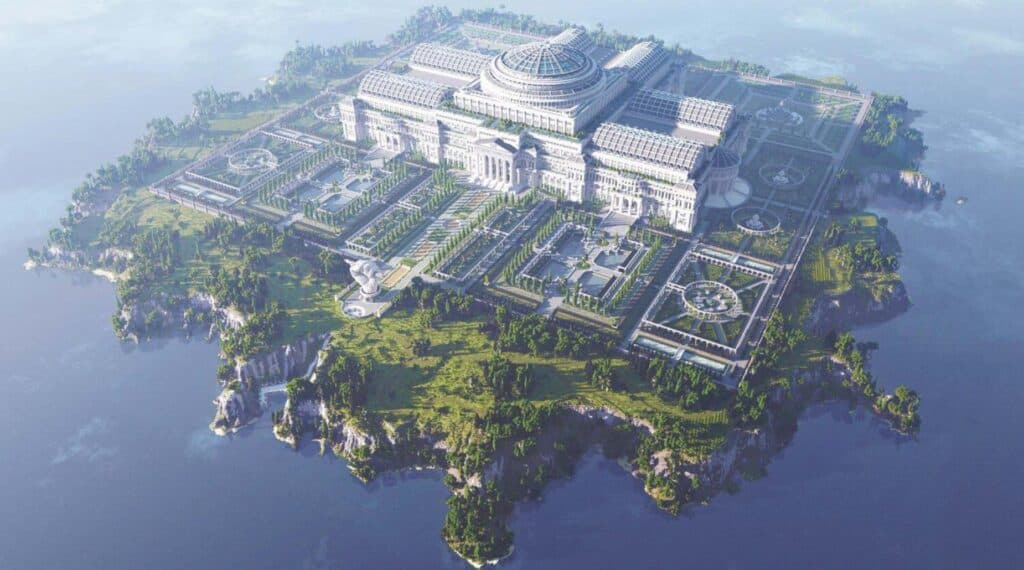
In 2020, activists from the NGO Reporters Without Borders (RSF) set up The Uncensored Library on Minecraft. With the goal of bypassing censorship laws in countries where freedom of press is restricted, they built an internet-age Library of Alexandria. With rooms for some of the world’s most censored nations, and grand neo-classical architecture echoing the design of real-world institutions, the library evokes a feeling of exploration, wonder and reverence. Its physicality invites users to inhabit stories, which is crucial. Turning journalism into an interactive, spatial experience, the Library transforms the act of reading into a gesture of engagement and resistance. Beyond its role of circulating censored content that resists political oppression, The Uncensored Library slows you down as you walk through shelves of books—you can pick up and read, making truth feel tangible.
Here, the infrastructure (i.e., Mojang’s servers) already existed—we just needed to reframe how we use it. The Library proves that when we use existing digital platforms as places, we allow space for something more than just delivery of content. We create memory, meaning and space for presence.
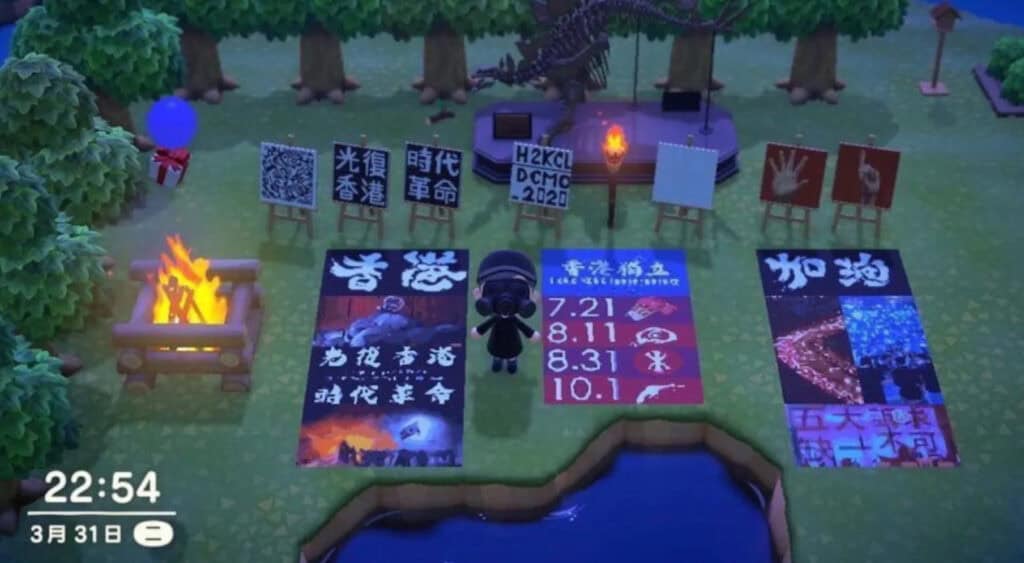
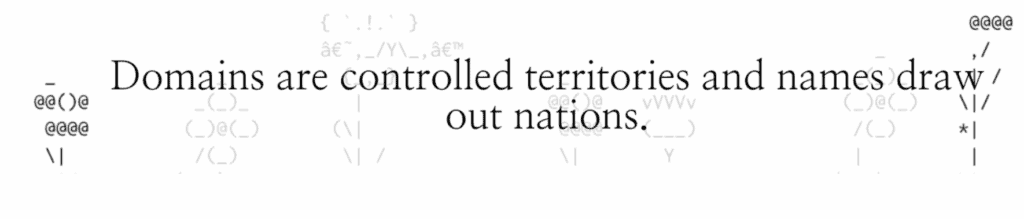
And this is one example amongst a plethora: dissidents in Hong Kong famously used Animal Crossing to protest China’s increasingly authoritarian rule, kids on Roblox protested for Palestine, and artists like Chia Amisola claim internet space through domain names. We are already reframing and reclaiming digital spaces to feel, to remember, to protest. We are using the mundane as our political stage, reclaiming what is ignored through hegemonic violence. Creating vibrant Folk Metaverses on digital platforms, reframing how we use pre-existing infrastructure, and (re)claiming domain spaces to be free from being flattened by our feeds, we insist that everyday life, overlooked spaces, and emotional residues matter. It is radical precisely because of its unassuming nature.
The Metaverse is a feeling, not an infrastructure.
Folk Metaverses aren’t just digital reconstructions; they are acts of emotional archaeology. Without any caves left to paint in, homes left to grow old in, or club bathrooms left to shag in, we’re quite literally being priced out of our own memories. In their place, we have pixels, unclaimed domains, and servers that are being quietly placed by those who care enough to remember.
What we’re seeking out from THE METAVERSE (TM) is a new sense of connection. But connection has never been about how well we can hear each other, see each other, or like, comment and subscribe to each other. Connection is about the mutual recognition of emotion—seeing parts of ourselves in others, and knowing that they see them too. Folk Metaverses offer this connection by honouring the worlds we have already lived through—the quiet landmarks of everyday life.
We don’t inhabit Folk Metaverses through servers or code. We inhabit them through infrastructure that already exists inside us—memory, feeling, imagination. These immersive emotional landscapes show that our pursuit for THE METAVERSE (TM) is about feeling, not infrastructure. And if that’s true, then I commend you for taking the first big leap into unchartered territories. You have officially entered a Folk Metaverse that exists in my mind, and now it holds space in yours as well. Katy Perry is quaking in her astronaut suit, because you are a pioneer mapping a new kind of space, one much scarier than the emptiness of our interstellar neighbourhood: collective memory.