
“People write to us saying things like, ‘Can I hang out with you guys?’” says the figure behind the magazine the1989 and shitposting profile thevodkadiaryyy, bearing the victorious, if Italian, name of Nicolo Michielin. “And honestly, if I saw us from the outside, I would probably think the same thing. Other people undoubtedly think, ‘My God, what a bunch of cunts.’”
the1989 is not just a magazine but a cultural universe for what Nicolo calls the international neo-romantic scene. “We could call it a contemporary and romantic variation on Goethean elective affinities in the sociological sense Max Weber gave them. If you know the1989, if you like the1989, you are probably like us in some way. Otherwise, you are like the others. After all, as Bourdieu said, taste classifies above all the person doing the judging.”
Nicolo continues: “And I understand why people like it, because basically we are nobodies, we are losers. But I sincerely think our group of friends is the coolest in the world. Above all, we are not saints, and nobody likes saints. We are sinners, but cute ones with sweet hearts.”
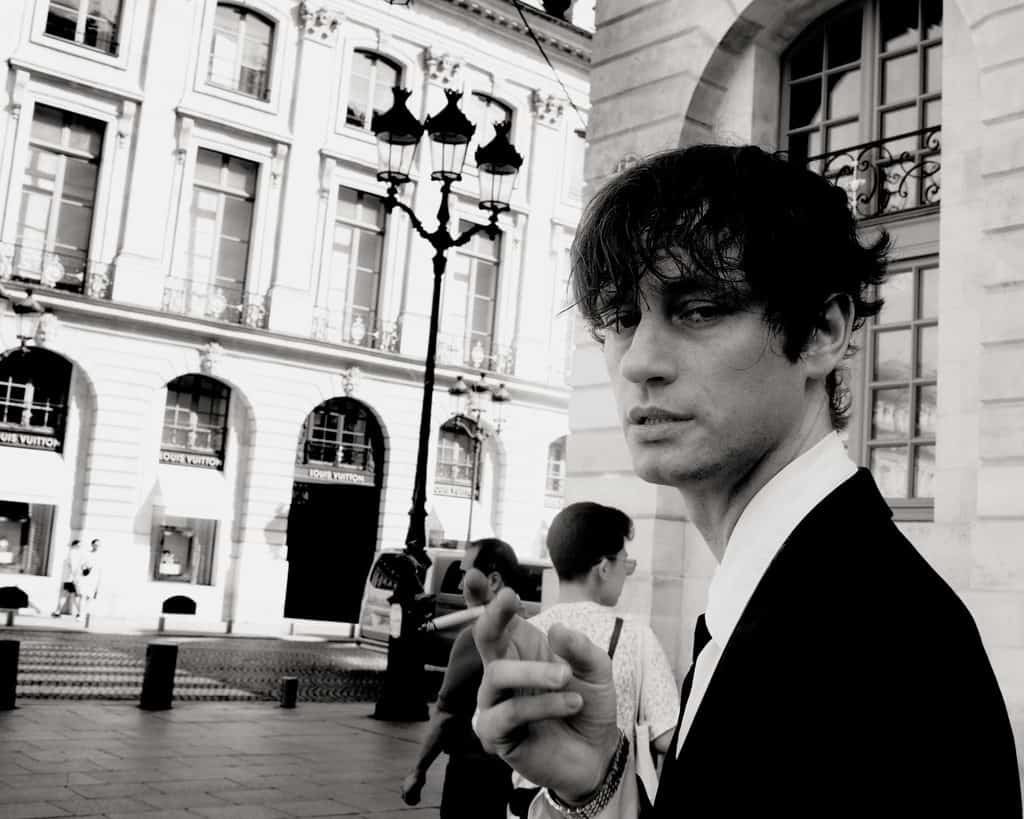
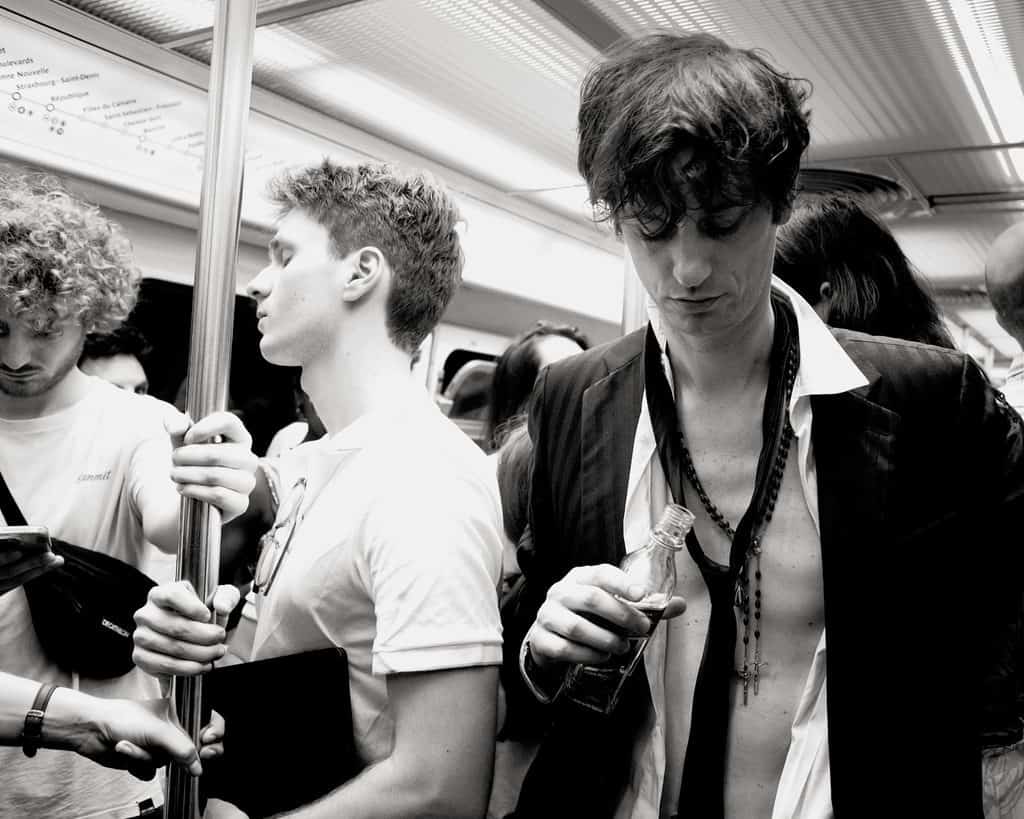
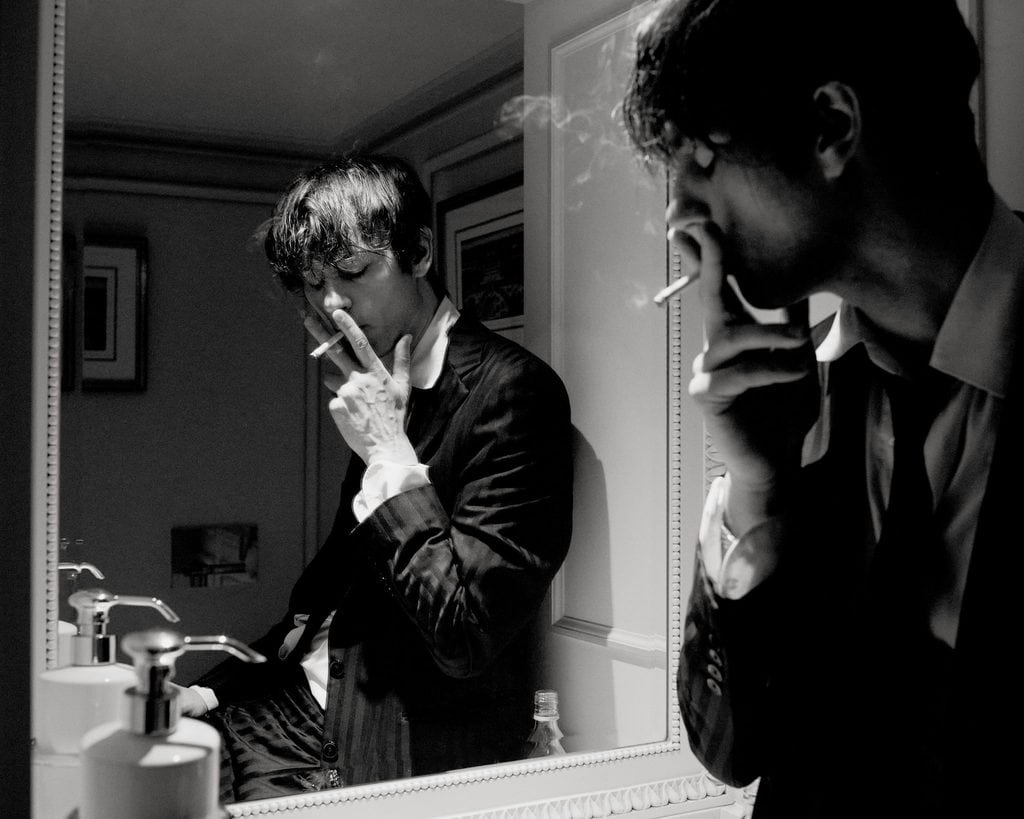
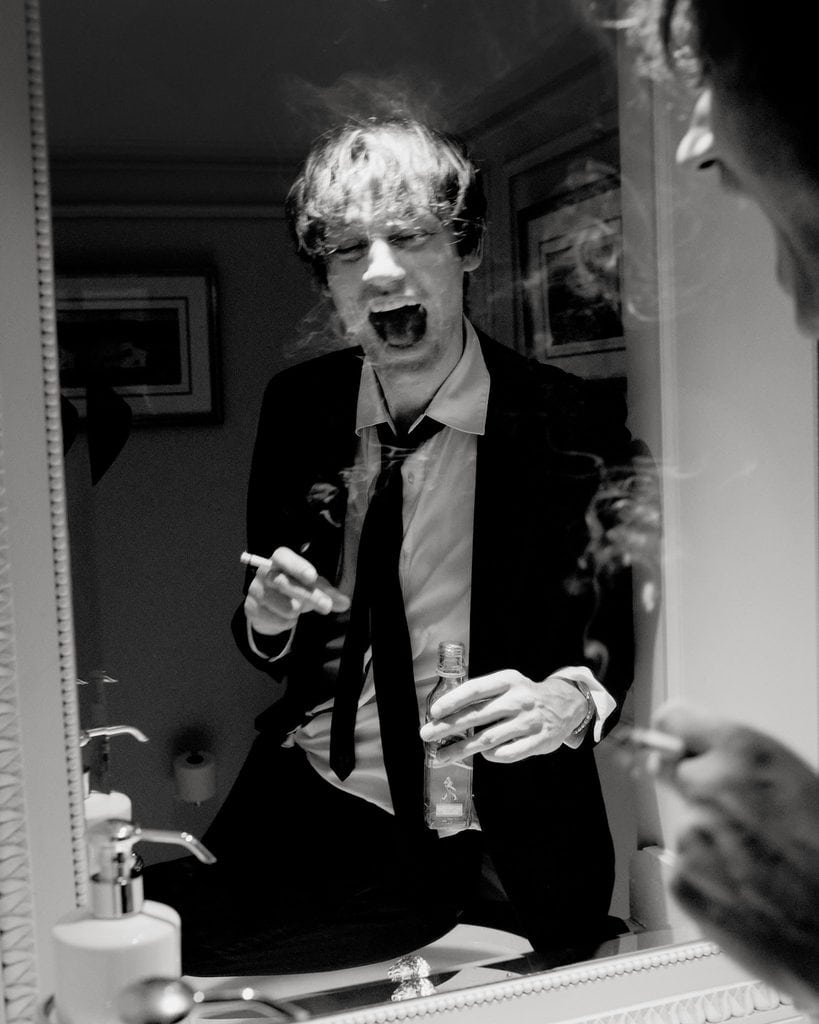
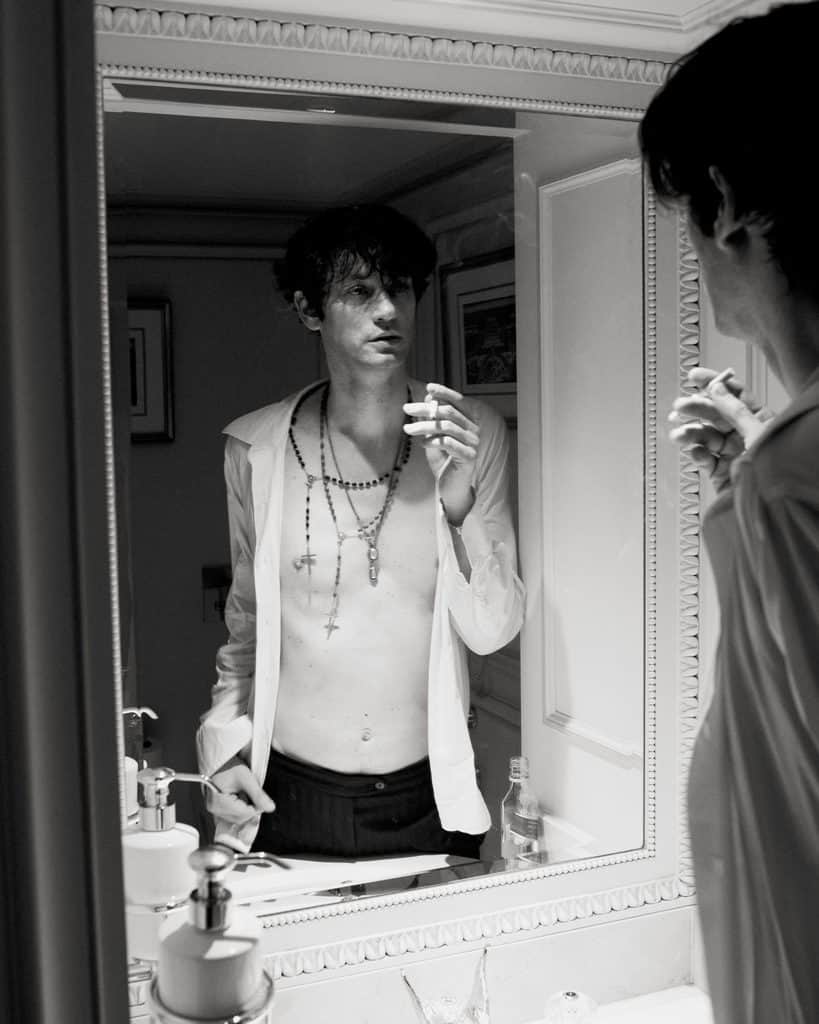
Deep inside The Ritz, Paris, we find the two boys at long last: the photographer Francis Delacroix and the gregarious but somewhat disquieting Nicolo. It’s that unbearable heatwave that struck France during Men’s FW, and they’ve been staying hydrated swigging a bottle of Scotch on the street, Nicolo in an unbuttoned shirt.
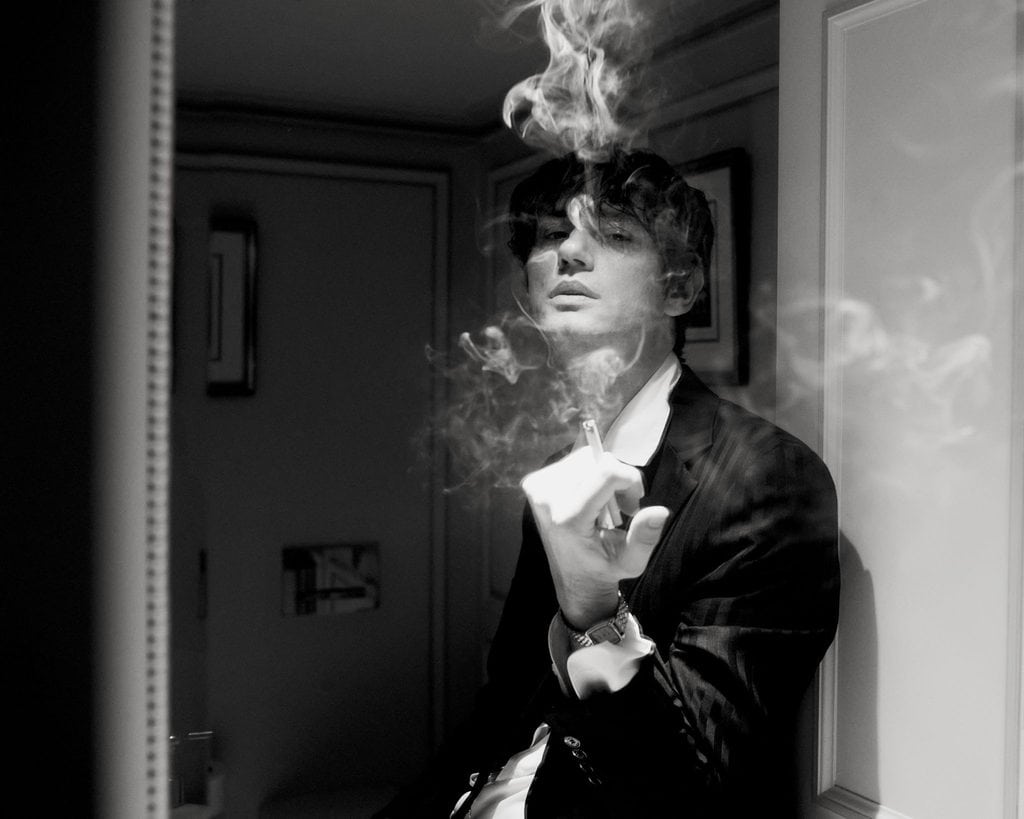
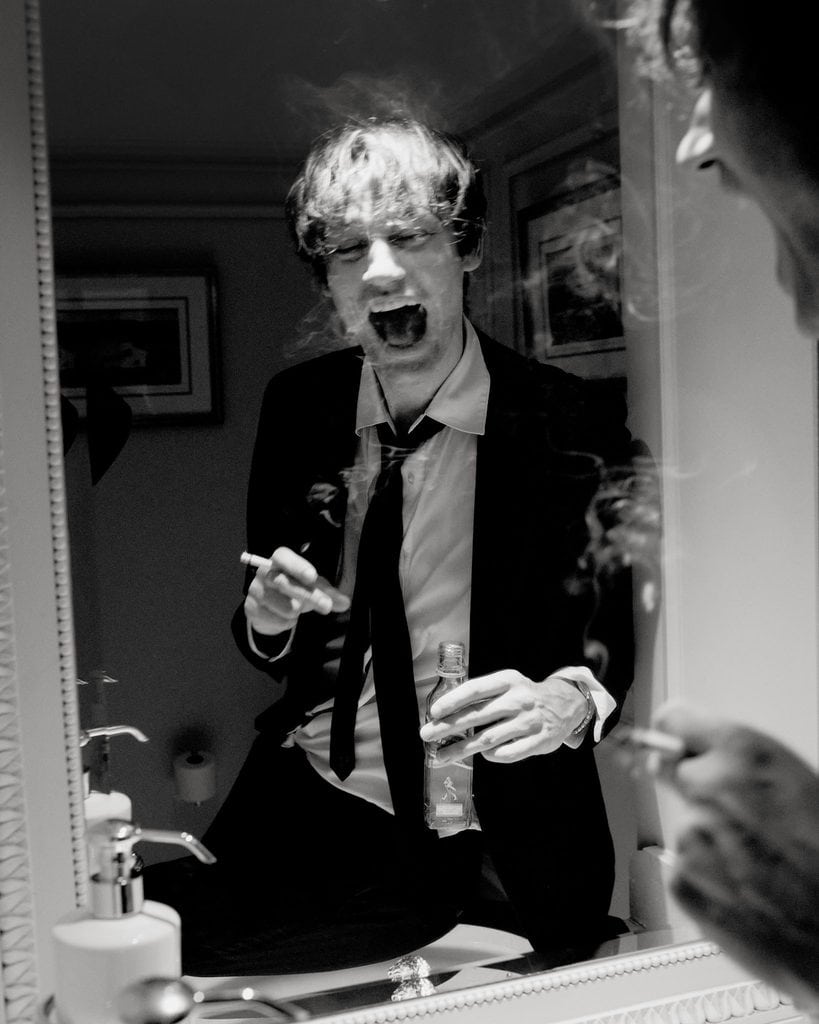
the1989 has several recurring references: the Beat Generation, Hunter S. Thompson, Lou Reed, Mark Fisher, the Italian Marxist Toni Negri, and so on. “the1989 is a sort of label you can place on anything that belongs to our world, our narrative, our imagination. A romantic and literary way of looking at things.” One motif is its parties consistently being announced as “for all the fucked-up children of this world”: the title of a Spacemen 3 album.
But he has icons who aren’t famous too: “Francis, for example, is an icon to me.” The last thing that made Nicolo laugh was the aftershow the1989 organised for Fakemink in Milan, and Francis was supposed to photograph him. “The next day we had to deliver the photographs to Gucci, and Francis sent me a complete shoot of this guy wearing a Gucci scarf who had been at the party but was not Fakemink. We had photos of this guy in every possible situation, smoking, posing and so on. With friends like that, it is like living in the metaverse. I told him, ‘Baby, you’re an idiot,’ but I also told him that the story was much more iconic than having a few photographs of Fakemink.
“Maybe one day I’ll publish that shoot and literally call it ‘Fake Mink’, especially because, obviously, the photographs Francis took of that guy were so beautiful.”
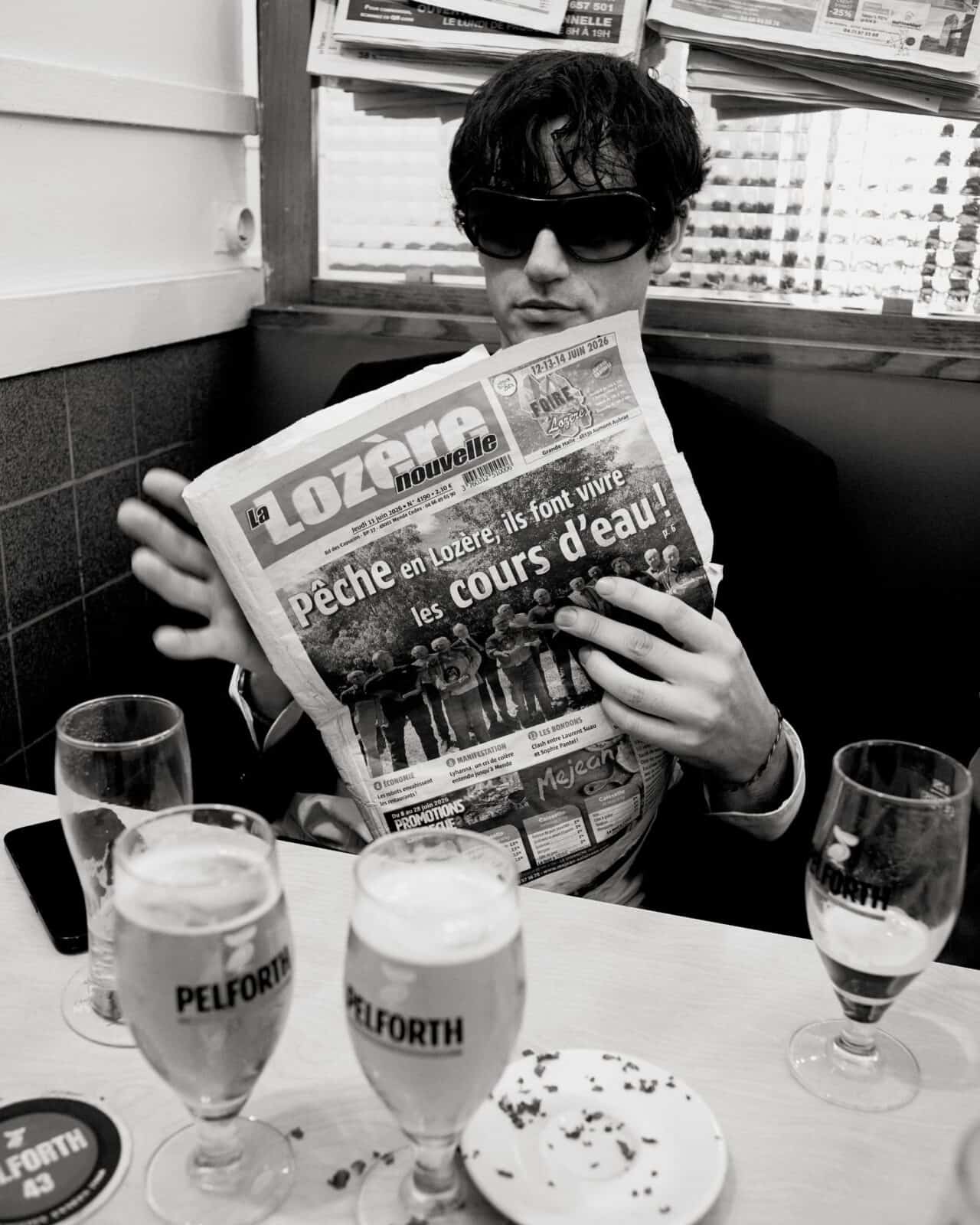
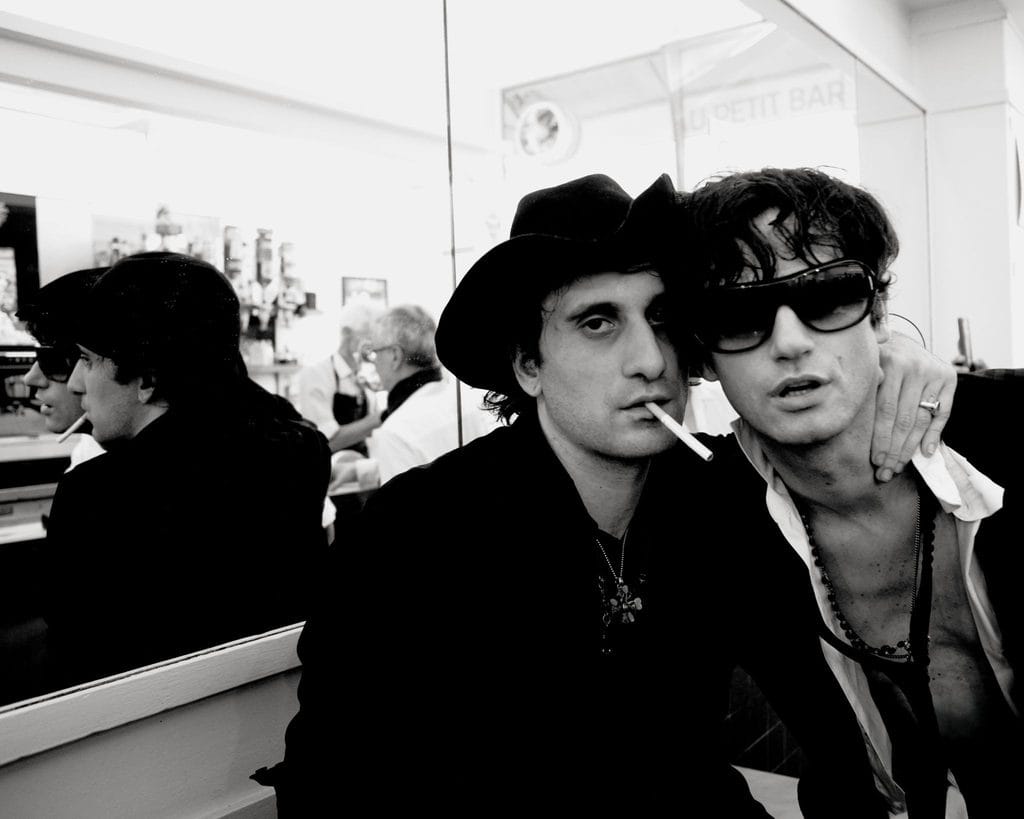
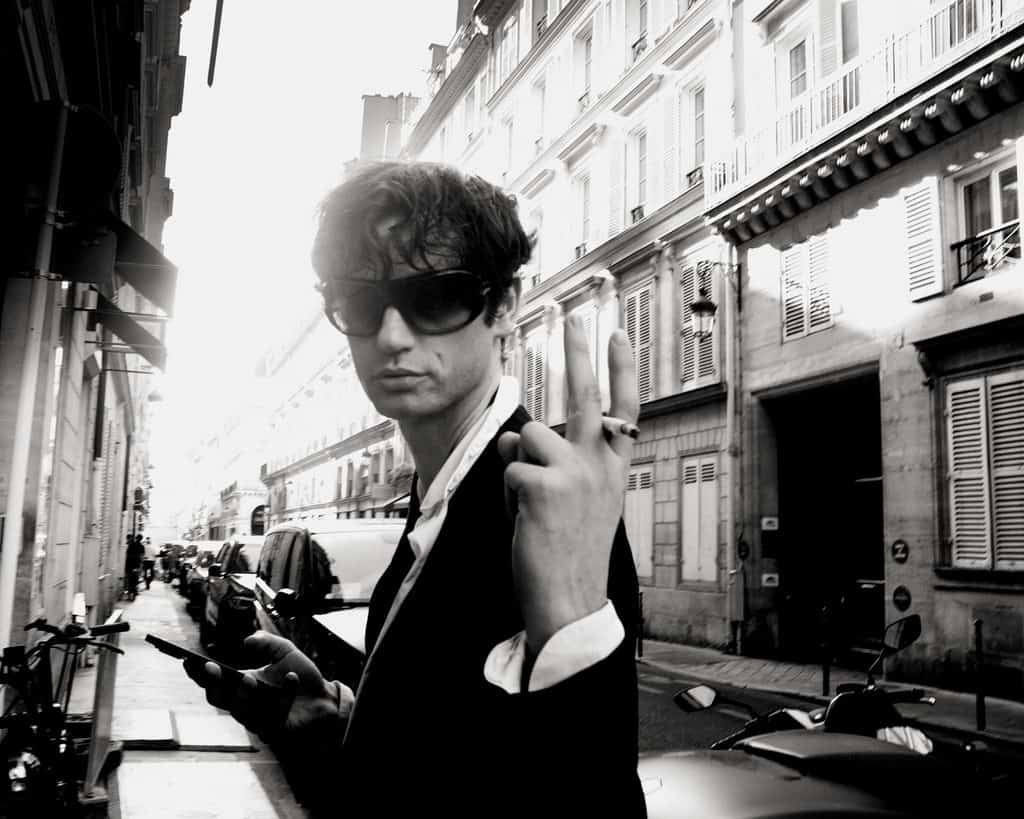
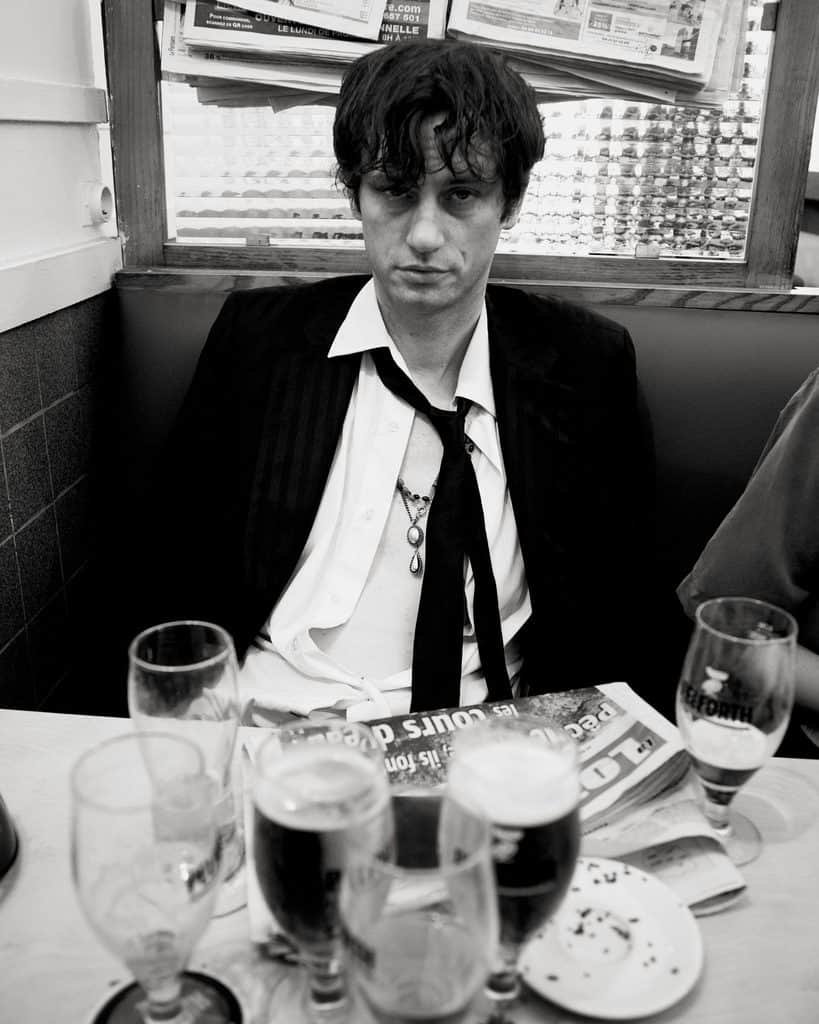
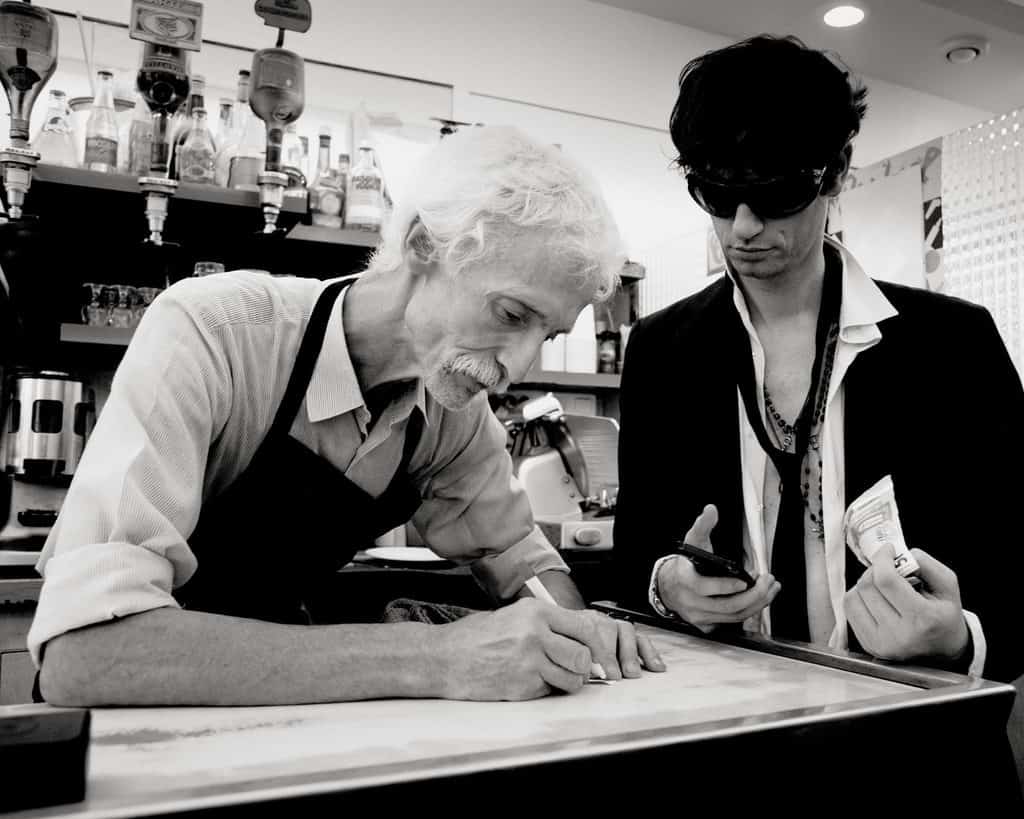
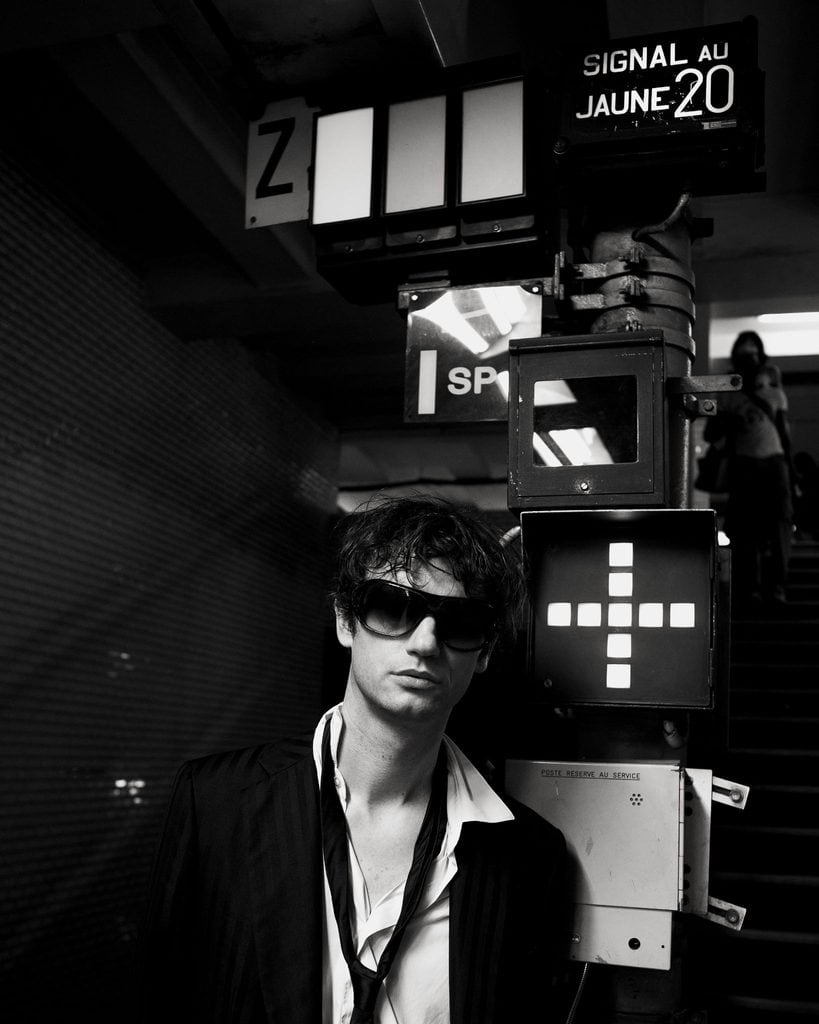
The following is what I gathered from the little that the power suit in the Prada sunglasses in the Petit Bar booth in the climactic heat allowed me to see. Nicolo is a novelist, academic, aesthete of the highest order and dandy par excellence. First of all, that is all you need to know, and second of all, you’ll see what I mean. The two boys led me and Noemie, my sidekick who’s far sharper than me, into Hemingway, a cocktail bar frequented by the literary prodigy in a time bearing little resemblance to ours. My good friend Phoebe had sent me to find the two boys on her behalf. The boys walked in with a mid-century macho swagger and pomp, and certainly no reservation.
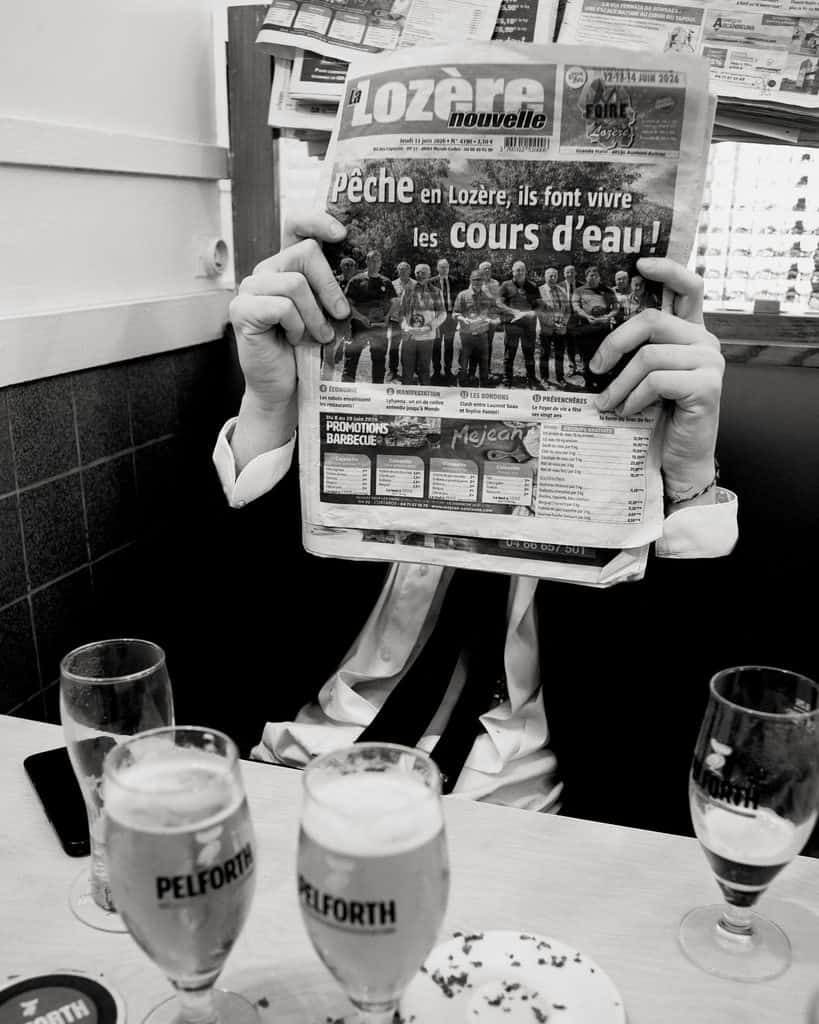
Two months have now passed since our motley crew ended up at Au Petit Bar. In principle, I rarely know anything exactly. I should still try and call back the senses, for your consideration. So: the beer was perspiring through its glass container, the heat was oppressive over, under, and behind me, the ceiling fan beat its universal beat, the faces were tired and ready to leave. Yet this was one of those blind dates with fate and for varied and conflicting reasons, each of us just had to attend. Nicolo Michielin, the unlikely centre of the story so far, was to take over the last of the attention to detail and depth of field I had to spare.
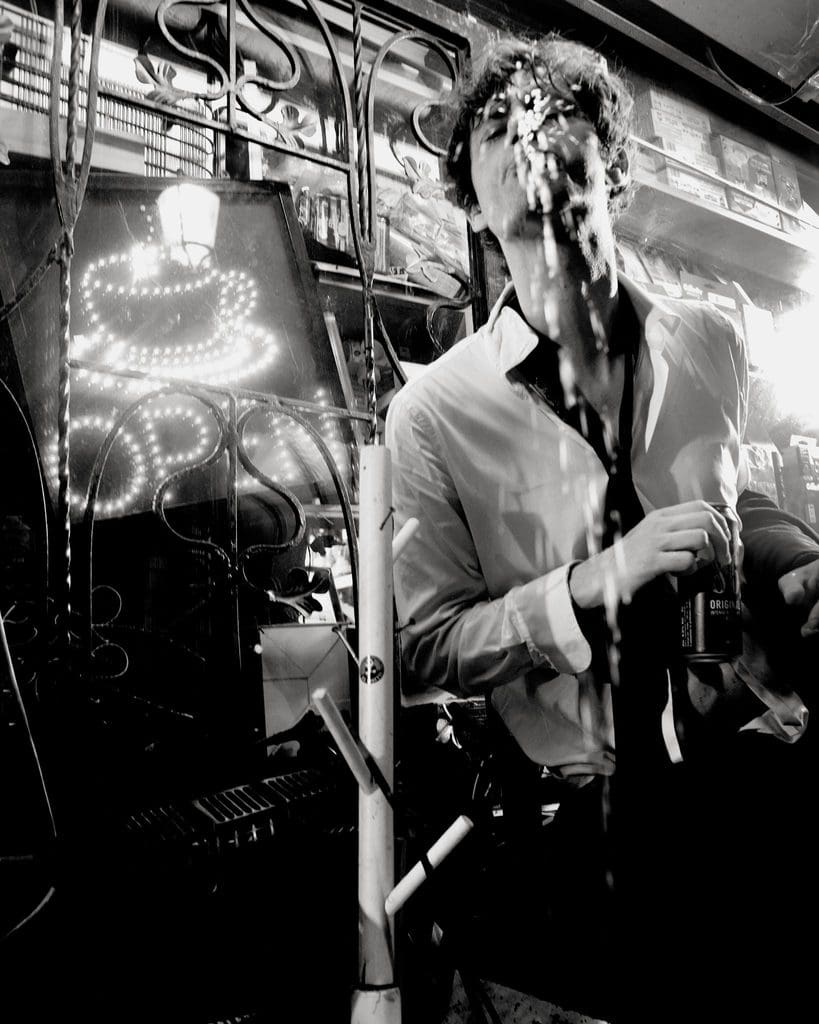
Nicolo provoked in me an uncanny sense of recognition. The providential quality of this subsided as my acquired social dexterity kicked in with a reminder that we simply had to have been introduced before – under circumstances that somehow and always leave all involved under a spell of casual dementia, only to be repeated ad infinitum until one party dies or the other commits a remarkable act of sexual or PR misconduct. Quixote and Sancho Panza, these two, whose day had only just begun.
Nicolo is an ideologue of form in the empire of content. I came to this assessment at face value, against my nature. This is a good antidote to many an acquired pain. The tide, don’t ask me which one, seems to be turning and Nicolo feels like one of those frontrunners who just end up swept forward by it, coasting, victorious, untouched.
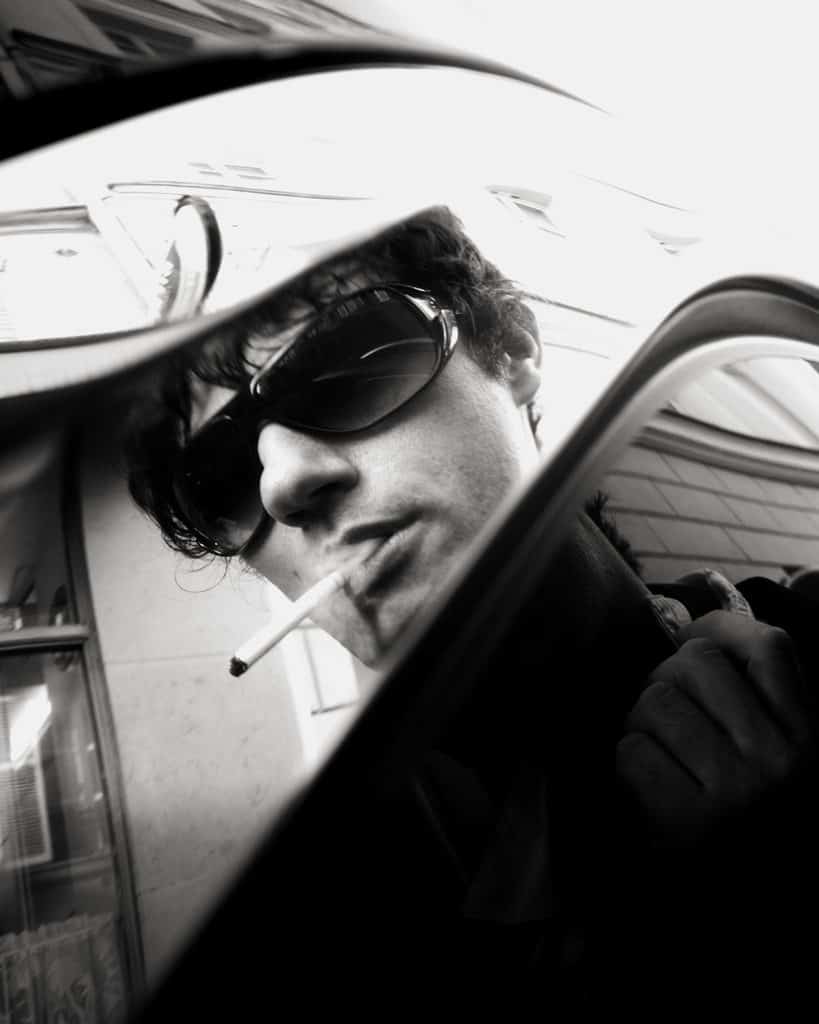
After all was said and done, later on the train, I thought I registered a moment. Noemie had left as soon as she knew I could take on the day myself. What happened was Francis was taking a picture of me observing myself in Nicolo’s humongous sunglasses. That was the majority of the moment.
DORA: Okay, let’s start again from the beginning. Can you introduce yourself?
NICOLO: Hi, my name is Nicolò. So, if you mean what I do for a living, I would have liked to make a living as a writer, but I think I was born in the wrong era or the wrong social class to be able to do that. On the other hand, I fulfilled the only “professional” dream I ever had, which was publishing a novel with my dream publisher, the same one who published Eduard Limonov. Then I work at a university, I created the1989, and I do other bullshit in the “creative” field. Basically, I’m not saving the world at the moment, but one day I will, or at least I’ll try, you can be sure of that. I think that’s my only real goal.
If, instead, you mean introducing myself as a person, I’m extremely simple, or extremely human. I like sunny days, girls, eating, sleeping, and love, I’d say. The only thing I would add to that group even though it doesn’t really belong there is television. I could mention a billion things, like some minor work by some Marxist philosopher, just to look cool, but I’d be lying. Compared with the things I’ve just mentioned, I don’t give a fuck about any of that. Maybe I would add physics and its laws, toward which I feel some kind of fairly powerful attraction, but I think that’s another extremely human thing.
PHOEBE: Could you explain in a few sentences what the1989 is to someone who has never heard of it? When was it born, how, and why?
NICOLO: I would say that the1989 is a sort of label you can place on anything that belongs to our world, our narrative, our imaginary. A romantic and literary way of looking at things. But if you want a definition that will be easier for whoever reads this article to digest, it is a magazine whose different forms are a consequence of the age in which we live.
It was born out of the idea of interviewing people, because I have always been more interested in people themselves than in what they did, regardless of what they do. Obviously, I can recognise when something is beautiful or remarkable, but the person has always mattered more to me than their work. In short, I believe, perhaps in a sense close to Bataille, that the value of a life does not necessarily coincide with what that life produces.
There are people who, for a myriad of reasons often beyond their control, will never do anything considered relevant according to certain standards, but who are nevertheless extraordinary human beings. People whose greatness does not settle into a work, but disperses itself through others, through the stories they set in motion and the imaginary they leave behind.
For example, returning to literature, I have always been fascinated by Neal Cassady. Practically the whole Beat Generation built part of its imaginary around him. Yet he never produced a body of work comparable to those of the others. He was above all a presence, someone around whom other people wrote, a human being interesting enough to be mythologised by others through their craft.
That’s it. The1989 is for Neal Cassady.
PHOEBE: Could you situate the1989 and your work within a scene or a cultural zeitgeist?
NICOLO: I don’t know. I think the1989 represents a scene in itself, the scene formed by our group of people. In a way, it is first and foremost the reification of our extended group of friends and, more broadly, of people who are somehow drawn to one another. At the same time, the1989 gathers together everything that interests these people, everything that shaped them and continues to inspire them. We could call it a contemporary and romantic variation on Goethean elective affinities in the sociological sense Max Weber gave them. If you know the1989, if you like the1989, you are probably like us in some way. Otherwise, you are like the others. After all, as Bourdieu said, taste classifies above all the person doing the judging.
PHOEBE: How did the two of you meet?
NICOLO: We met during Francis’s honeymoon in Venice. We drank a bottle of gin with tap water from teacups because all the other glasses were dirty. Francis literally passed out on the roof with a lit cigarette between his fingers, the same roof at Angelica’s house that you may have seen a thousand times on Vodka (@thevodkadiaryyy, ed.), overlooking the Gallerie and the Accademia Bridge, one of the most beautiful views a human mind could dream of.
The first shoot Francis did for the1989 was with the Libertines. It was twenty-four hours of madness and, for me, unquestionably a special day because my book, Middle Class Heroes, came out that same day. The Libertines were teenage idols for both Francis and me, and it still feels strange to play chess with Carl on Chess.com or wake up in the morning to missed calls from Pete in Belgium, asking where I am in the middle of the night. They say you should never meet your childhood idols, perhaps because what Benjamin called aura needs a certain distance in order to survive, but Carl and Pete are the exceptions that prove the rule. Besides being, obviously, the coolest people in the world, they are extremely intelligent and, above all, kind and sweet to everyone. That kind of selfless kindness is what I value most in people. In that sense, I see them as very similar to us in terms of mood. the1989 has allowed us to meet many other people we were fans of, but no one even comes close to them in terms of mood. Perhaps the only one is Anton Newcombe, and when we were with him in Milan all kinds of things happened as well (laughs, ed.).
Regardless of the thousand completely absurd stories and experiences we have lived through together, and of the fact that he is one of my best friends, I think Francis is one of the most talented and relevant artists of our generation. I deliberately say “artist” rather than simply “photographer”, because that would be limiting. I’m sure history will eventually give him the place reserved for great artists like him.
DORA: What is the last thing that made you really laugh?
NICOLO: We organised the aftershow for Fakemink’s Milan concert, and Francis was supposed to photograph him. The next day we had to deliver the photographs to Gucci, and Francis sent me a complete shoot of this guy wearing a Gucci scarf who had been at the party but was not Fakemink. We had photos of this guy in every possible situation, smoking, posing and so on. With friends like that, it is like living in the metaverse. I told him, “Baby, you’re an idiot,” but I also told him that the story was much more iconic than having a few photographs of Fakemink. Maybe one day I’ll publish that shoot and literally call it “Fake Mink”, especially because, obviously, the photographs Francis took of that guy were beautiful.
PHOEBE: Can you explain what The Vodka Diary is to someone who doesn’t know it?
NICOLO: It is an Instagram account that I created, in primis, because I like memories. As I always say, they are all we have left. In secundis, I like my friends’ mood just as much as I like my own. The ratio underlying its creation is therefore pure vanity, egocentrism. Yet, in the most classical example of Wilhelm Wundt’s heterogony of ends, I believe Vodka Diary has become the most truthful documentary record of a certain scene over the last few years. I would say that it is a kind of tertiary retention, an interface for the international neo-romantic scene, by which I mean musical, literary, post-intellectual, artistic, aesthetic and underground.
Now that ten million people view it every month, someone might think twice about finding themselves thrown onto it in attitudes that are, let’s say, compromising in whatever sense you want to give the word, especially those who work in more academic environments.
Lots of people write to us saying things like, “I wish I were your friend,” or, “Can I hang out with you?” And honestly, if I saw us from the outside, I would probably think the same thing and feel that I was missing out by not being there. Other people undoubtedly think, “My God, what a bunch of idiots,” and in some cases they are probably right. But I sincerely think our group of friends is the coolest in the world. And I understand why people like it, because basically we are nobodies, we are losers, but we are the coolest. Above all, we are not saints, and nobody likes saints. We are sinners, but cute ones with sweet hearts.
DORA: What are you focusing on most at the moment? The events? Publishing the magazine?
NICOLO: We are trying to publish the first issue. But events are an essential part of it for me, and the reason is twofold. The first is purely economic, in the sense that they are a functional way to keep the magazine financially alive without submitting to dynamics that I find deplorable, namely paid content about products, fashion shows, artists, events and so on.
Events therefore serve to preserve what Bourdieu would have called the autonomy of the cultural field. If the entity financing the magazine is the same entity the magazine is supposed to write about, capital no longer merely supports information. It determines in advance what deserves to become information. Let me be clear, I am not axiomatically opposed to advertising, which I consider a magnificent art form, but this particular arrangement completely falsifies the ethics of information. Magazines speak well of the people who pay them. They cover subjects and entities that otherwise would not find space because they do not deserve it. In short, they serve capital.
I don’t want the magazine to obey the market’s chronos, the serial time of collections, printing deadlines and compulsory releases. I would rather it followed kairos, coming out when there is something that truly deserves to be said, exactly as Paolo Portoghesi did with Controspazio. He published an issue when it was relevant. Some years he published only one, other years six. In short, economic independence is not an administrative detail for me. It is the material condition of parrhesia. You can afford to say what you believe to be true only when your survival does not depend on the goodwill of the person or entity you are judging.
Ten years from now, I would like someone to pick up an issue and say, “Okay, there’s a Nobel Prize winner in here, but there’s also this fucking guy nobody knows, whom they met in a bar, and he was incredible.” Maybe that person will never become famous. But he had something.
And I think having something is already enough to make it worth sharing with the world.
There is also a very romantic dimension to it. I feel surrounded by a group of extremely talented friends, and I would like the1989 to be a space for all of them. If tomorrow you have something to say and you are part of this world, I want you to feel that there is a place where you can say it.
Secondly, it is certainly important to give a voice to the international underground creative scene, to be the physical place where artists, musicians, writers, designers, lovers and academics meet, giving rise to new synergies and exchanges of ideals. I believe that today, when we are more than ever servants of our digital selves, which we try to sell to others in a not-so-hidden variation of homo oeconomicus, it is simply important to rediscover the dimension of the real, or rather, of that physical world in which the definition of the human had not yet been altered by its symbiosis with the device.
It is important to see concepts, ideas and ideals, aesthetics and symbolic dynamics become reified, to give them precise spatial and temporal coordinates. And so it is important to witness the reification of communitas, of those who share something and speak the same language even though they come from different cities and different nations.
Beyond the event itself, then, the slightly more romantic purpose we have is to put these people in contact with one another, because it is exchange that makes subcultures evolve and gives birth to new ones.
DORA: Will the first issue focus more on photography or writing?
NICOLO: It will not focus on anything in particular. I simply want it to be culturally relevant, something that is rarely found in magazines today. First and foremost because they have become slaves to influencers. I recently wrote an article about the transition from what Bourdieu called symbolic capital to what I have called numerical capital. Symbolic capital depended on the recognition acquired within a particular cultural field. Numerical capital, by contrast, translates a person’s value into the public quantification of the attention they can capture through followers and interactions, making that attention immediately convertible into visibility and economic opportunities.
The problem is that, at a certain point, measurement stops recording value and begins to produce it. Magazines no longer choose someone because they consider that person culturally relevant. They consider them culturally relevant because the numbers have already chosen on their behalf. In doing so, they abandon their critical function and become nothing more than the press offices of whatever is already visible.
At that point, a form of automation of perception also takes place, with algorithms progressively educating our gaze until we spontaneously perceive as interesting whatever has been shown to us most often. In the end, we no longer know whether someone interests us because they genuinely possess something relevant or because we have encountered their image enough times to mistake familiarity for value. Numerical capital therefore governs both sides of the gaze. It decides who deserves to be seen while simultaneously teaching the viewer what they should desire.
I would like the1989 to do exactly the opposite, to give people space before an algorithm certifies that they deserve to exist and to restore to the editorial team a function that magazines seem to have forgotten, which is the ability to see something before it becomes visible to everyone. Obviously, I am not talking about interviews, because although I regard influencers as rather miserable figures, I do think they are interesting subjects.
Then there is the problem of texts. An enormous amount of what we read is now literally written with ChatGPT. You can recognise it in the syntax, in the sensibility or, more precisely, in the absence of any particular sensibility. The same voice and the same ideas are everywhere. That does not necessarily mean the texts are bad. In fact, they are often formally perfect.
It even happens with emails. One person writes an email with ChatGPT, the other replies with ChatGPT and, in the end, you have two machines communicating with each other while using human beings as biological interfaces. What Bakhtin called dialogism presupposed that every word was traversed by a concrete voice and addressed to another voice, remaining open to the possibility of a response. Here a kind of reversal takes place. People believe they are communicating through machines, while increasingly it is the machines that communicate with one another through people.
It is a form of cognitive proletarianisation, in the sense that the author retains their signature on the text while alienating the process through which thought becomes writing. First we externalise the formulation of our words, then the way we order thought and, finally, even our introspection. The machine begins to suggest what we are capable of thinking.
It is a kind of death of literature. Not because books or articles will cease to be published. There will probably be far more of them than before. What risks disappearing, however, is precisely what makes a text literature, namely the irreducible presence of a voice, the possibility that someone has seen the world in a way no one else could have seen it. We will have an infinity of texts and less and less writing.
DORA: But do you think this is mainly a European problem? Because when I look at American magazines, they are much more verbal, much more text-based than European ones. Here there seems to be an incredibly strong movement toward fashion and the visual arts, with the written word always relegated to the background. In the United States you have Harper’s, The New Yorker…
NICOLO: Of course, but The New Yorker is a rare exception.
DORA: Yes, but there are also younger magazines working in that direction. The Drift, The Point, The Paris Review… they publish a great deal of cultural criticism. They are not simply closed off within the world of high literature.
NICOLO: Of course, and I am generalising. You have just cited magnificent examples of people who are still making culture without worrying about followers, although The Paris Review is anything but young. The problem is that today, in a huge number of magazines, if you have enough followers almost nobody cares how you write anymore, because nobody reads a fucking thing anyway. They simply put you there to write something because you already have an audience. And that is exactly what I do not want to do.
DORA: So do you think there is a kind of spirit of the age, in Paris, Italy and London, in which the visual arts have acquired a dominant position and everything else comes afterwards?
NICOLO: I don’t even think the real problem is the predominance of the visual. The visual predominates because it is more immediate, and because we have all become dumbed down and accustomed to digesting nothing but social-media micro-content.
The problem is that I have the feeling that a huge number of things are produced simply to gain some kind of notoriety, to get likes on Instagram.
DORA: Okay. Imagine we were in medieval Europe. What job would you do? What would be the medieval equivalent of what you do today?
NICOLO: The king?
DORA: The king?
NICOLO: No, I’m joking. I would definitely be a thief. Scamming the rich, stealing from royalty, things like that. I would live by my wits in a world where committing crimes was easier. Obviously, I would only target people who deserved it, or people who would not suffer in the slightest.
I don’t know. But it’s a good question. What about you?
DORA: I would definitely be the court jester. No doubt about it. I would have been a female jester. The first in history.
NICOLO: Do you know something I often think about? Today actors and singers, or more broadly figures from the entertainment world, are the people everyone goes crazy over, the idols. And yet, historically, they were simply people paid to entertain you. For a very long time, actors and jesters occupied an ambiguous, often marginal social position. Today an extraordinary reversal has taken place. The person who was once paid to perform before the sovereign has become the sovereign.
Weber’s concept of charisma returns here as well, although in an industrially produced form. I think the way a society distributes its admiration says a great deal about the values that govern it. Every age constructs its own saints. Ours canonises whoever succeeds in capturing attention, translating that attention into a form of authority that tends to expand far beyond the talent for which that person originally became famous.
I absolutely do not want to belittle entertainment. Quite the opposite. I think that having ten minutes in which someone manages to free you from your fucking thoughts by singing a song or playing a role is incredibly important. Pascal called divertissement everything that distracts us from the awareness of our fragility and the fear of death. He regarded it as a way in which human beings flee from themselves, which makes sense. Sometimes being taken away from yourself for ten minutes is exactly what you need.
There remains, however, a difference between the value of the experience someone gives us and the social worship of the person who produces it. I have always been more fascinated, I don’t know, by a scientist than by an actor. The fact that the latter is treated like a god while the former often remains anonymous is simply ridiculous.
Actors are super cool, obviously. But deep inside me there is probably still a medieval conception of social hierarchies. So when I see one surrounded by people worshipping them, I always think something like, “Okay, beautiful. You sang, you acted, you entertained us. Now clean my shoes, because I am (probably) more intelligent than you.” I think I generally suffer from some kind of superiority complex toward the entertainment world. Obviously, I am talking about figures here, not individual people. There are certainly singers who are geniuses on the level of Nikola Tesla but whom life simply led to do that particular job, if you see what I mean.
PHOEBE: Who are your icons?
NICOLO: I would say Hunter S. Thompson, Nikola Tesla, maybe Marx, and of course Carl Barât and Pete Doherty. But I also have friends who are icons to me even if they are not famous. Francis, for example, is an icon to me.
PHOEBE: Tell me why you continually reference Mark Fisher and K-Punk.
NICOLO: I studied Fisher at university for my doctoral thesis, which is about neoliberalism. My boss introduced me to his work, and I even wrote an article about him. I adore the imaginary he created around himself and the CCRU. To be honest, let’s say I appreciate the aesthetics of the Fisherian universe far more than his work itself, in which I see nothing exceptional, although it has the merit of being accessible to a broad public.
PHOEBE: What are your vices and virtues?
NICOLO: I have all the vices an ordinary human being can have, I would say, but nothing that governs my existence. As for virtues, I would say curiosity (when I was a boy scout, before they kicked me out, the hunt name they gave me was curious suricate), kindness and justice, although obviously it is all relative. In terms of flaws, I would say impatience, laziness and my inability ever to keep my mouth shut when I perceive something that, in my opinion, is unjust.
DORA: A few days ago, I gave you some words to reflect on. You didn’t look at them, did you?
NICOLO: No. Sorry.
DORA: Okay, then let’s improvise. I’ll give you a word and you tell me what comes to mind. Class.
NICOLO: Injustice.
DORA: Injustice?
NICOLO: Yes.
Because if you are born into a particular social class, you are automatically more or less fortunate than someone else.
It is something that precedes any choice you can make.
In that sense, class immediately makes me think of injustice.
DORA: Notoriety.
NICOLO: Problematic.
But also something that can make you feel good. I think it is nice to be known by cool people.
What I would never want is to be famous in an absolute sense. I would never want everyone to know who I am. But I like it when someone I respect says, “Oh yes, I know who you are.” It’s flattering.
DORA: So would you say you have a certain notoriety within particular circles?
NICOLO: Yes. Probably not always for the best reasons (laughs, ed.), but yes.
CM: There was this reformulation of Warhol’s line. Warhol said that in the future everyone would be famous for 15 minutes. Then someone said that in the future everyone would be famous to 15 people. Do you think we are already there?
NICOLO: Of course. But they are fifteen genuinely cool people. But they are really good people, kids, and that’s the important thing. And that’s what matters.
DORA: Public.
NICOLO: The public is incredibly important.
For example, when we make posters for our events, we always include lots of references that most people may not understand.
And I always hope there is some kid in some fucking village in Croatia who looks at the poster and says, “Who the fuck is Mark Fisher?” Then they look him up. They read something. And maybe that person will go on to change the world, even if only a tiny bit.
That is incredibly important to me.
DORA: That is exactly what I wanted to ask you about the references on your posters. Are they there for the four people who already know who those figures are, or for the people who don’t?
NICOLO: Obviously for the people who don’t. That’s the whole point.
Dissemination.
Even if you have a very small platform, you can use it to introduce other people to the things you consider beautiful and that they may not know.
DORA: If you had to choose one thing people should have read before coming to one of your events, what would it be?
NICOLO: Nothing. Absolutely nothing. What I like is that most people arrive looking like fucking superstars. Maybe they are nobodies, but they walk in thinking, “I am the coolest person in the world.” And that is exactly what I want. I want everyone who comes to one of our events to feel that they are at the centre of the scene.
DORA: Doesn’t that bother you?
NICOLO: No. That is exactly what I hope for.
After all, everyone is at the centre of their own universe.
And why not? You only live once. If something makes you feel good and doesn’t fuck with anyone else, do it.
DORA: Who is your ideal interlocutor? What qualities should they have?
NICOLO: Someone who can disagree with me. Someone intelligent enough that we can tell each other to fuck off and, a minute later, act as if nothing happened.
Someone who leaves me with something to think about.
Maybe we argue. Maybe we even punch each other. But I want to leave the conversation with something I did not have before.
I’m not very interested in talking to someone who simply agrees with me. In fact, with people I usually end up either arguing or talking bullshit. Either way, they will probably think I’m an asshole.
DORA: So you need to be challenged.
NICOLO: I don’t even know whether “challenged” is the right word.
It is simpler than that. If I can choose whom to speak to, I want to speak to someone who can give me something more. In any way. I have spoken to people I considered complete idiots who nevertheless made me think about something.
And that is enough. Not that I have anything against an idiot. Intelligence is, to a large extent, something you are given, like being tall or having blue eyes. It may fascinate me, but I do not respect someone simply because they are intelligent, since being intelligent involved no choice on their part. Aristotle distinguished natural faculties from virtues of character, which acquire value through habit and through the deliberate choice he called prohairesis. Kant likewise observed that intelligence, like any other talent, has no moral value in itself unless it is accompanied by a good will. I respect people who, for example, are kind, because kindness is an act. They could have been cruel or selfish and chose not to be. Ultimately, I do not believe we are morally responsible for the gifts we have received, but for the use we decide to make of them.
DORA: Do you often meet people like that? People who question your convictions, perhaps morally or intellectually?
NICOLO: Not that often. Besides, I do not have such immovable convictions about anything. I am very faithful to the scientific method. Everything is true until proven otherwise.
I do meet many people who inspire me, which is a slightly different thing. And that is beautiful too. It’s super cute.
But if I have to choose, I prefer someone who somehow makes me grow. I live perfectly well without it, though.
DORA: Are the people who inspire you generally very different from you?
NICOLO: Not necessarily. Obviously, there are people completely different from me who fascinate me, but I think there is very often a kind of common element, something you recognise in another person regardless of their ideas. Maybe you disagree about everything, but you sense that you have the same… I don’t know… the same thing. You know that thing.


