
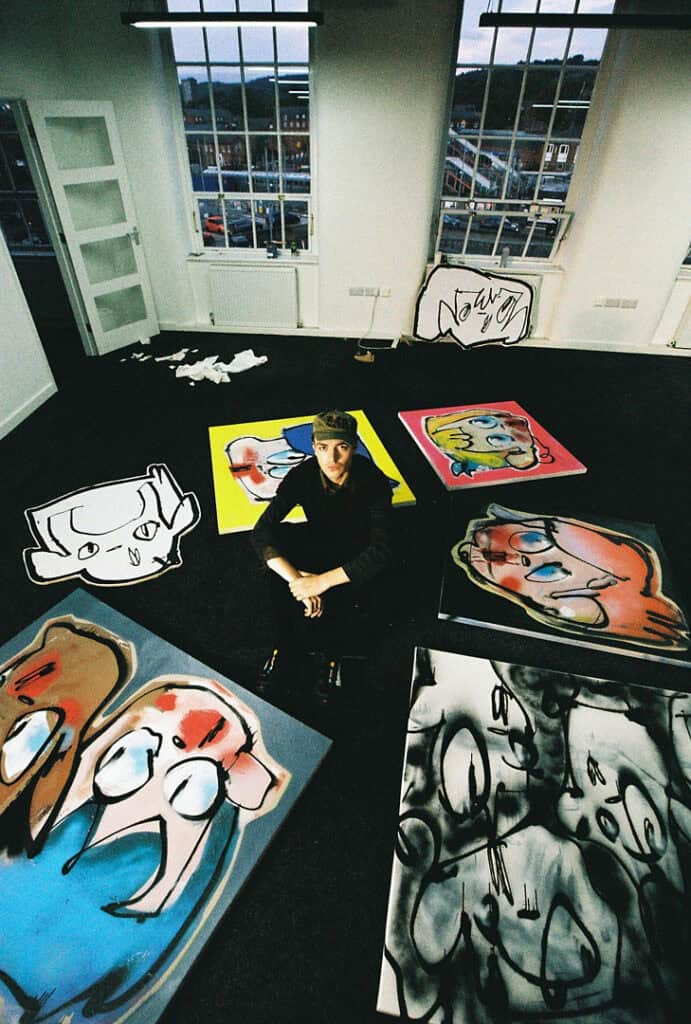
It’s Friday night in Manchester. And while the city calls it a week, 28-year-old Tomas Gittins is in the thick of it. Canvases tower over him, paint canisters scatter the floor, and the half-finished echoes of faces stare out from paintings in the corner. Gittins moves through the scene — hoodie splattered with colour, his mind faster than his hands.
“Street art doesn’t give me the time to create exactly what I want,” he tells me during the grand tour. “It feels a bit like putting a sticker on a wall — it gives you a cool platform, but it depends. I prefer to be isolated in my studio, locked in a battle against my work.”
That word — battle — is a recurring theme. Gittins’s work is all about friction. “I’m just character-building. Each painting goes through its own trials and tribulations. It’s as if they’re developing independently, presenting themselves in their own time,” he explains.
“It’s like chatting to that mate who’s a bit quiet,” Gittins jokes. “You may not get everything out of him on the first night, but get a couple of pints down and he’s telling you his grandma’s mother’s middle name.”
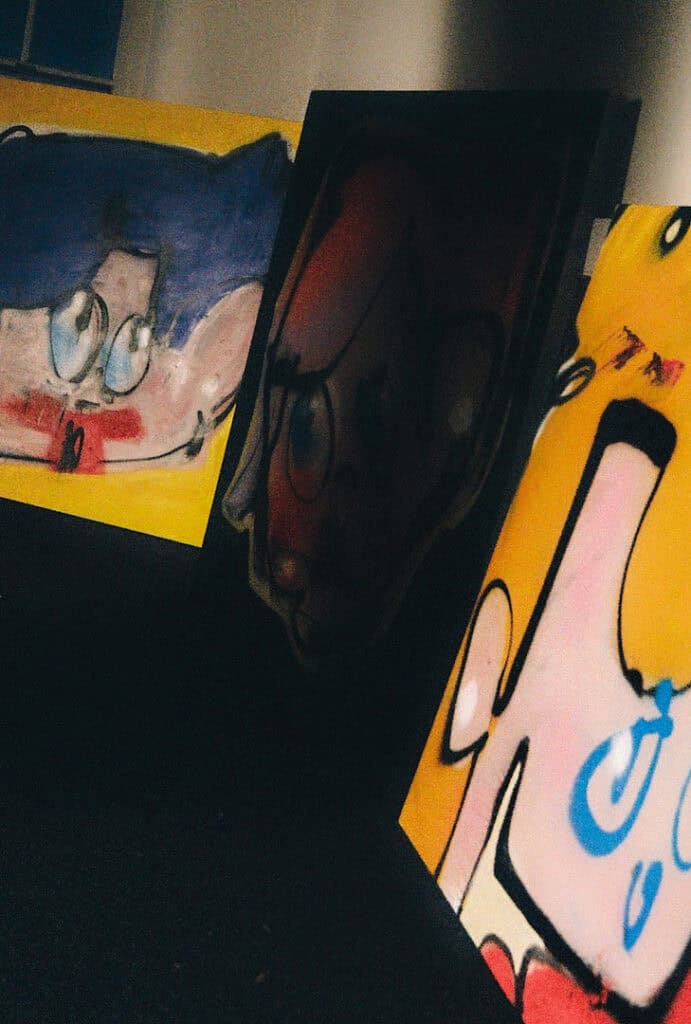
For anyone familiar with Gittins’s work — the expressive, bold-faced characters he calls POORTRAITS — this approach makes total sense. His figures, painted in thick black outlines and punchy colours, are emotional snapshots: part therapy, part confession. Often representative of his moods, the result is a raw, humorous, and instantly recognisable hybrid of graffiti, Saturday morning cartoons, and the emotional mess of growing up.
Gittins’s early work sold through Instagram Reels as thirty pound sketches on paper, which he filmed live. Back then, Gittins was just trying to make ends meet. “In the early days, I worked as a tradie with my family while bartending. The whole lot of them work in construction — so since twelve, I’ve been painting walls, sweeping, gobbing off. Just to get some cash.” When he couldn’t afford canvases, he’d paint over old creations.
Today, he’s collaborating with giants. In 2025, Gittins debuted Pursuit of Joy, his first solo show with Toxic Arts Gallery in Soho. At a sold-out exhibition spanning painting, footwear, and pop culture, he unveiled a collaboration with Salomon Sportstyle: a take on the XT-6 sneaker that looked like it came straight from his sketchbook. These days, his CV includes even more hard-hitters: The North Face and Clarks Originals, to name a few.
Ironically, one of Gittins’s biggest breaks almost didn’t happen — or rather, almost did. In 2023, a Calvin Klein campaign fell through when the confirmation email went straight to his junk folder. “When I asked if I could still do it, they told me they went with someone else because they didn’t hear back. It took me two years to get a similar opportunity.”
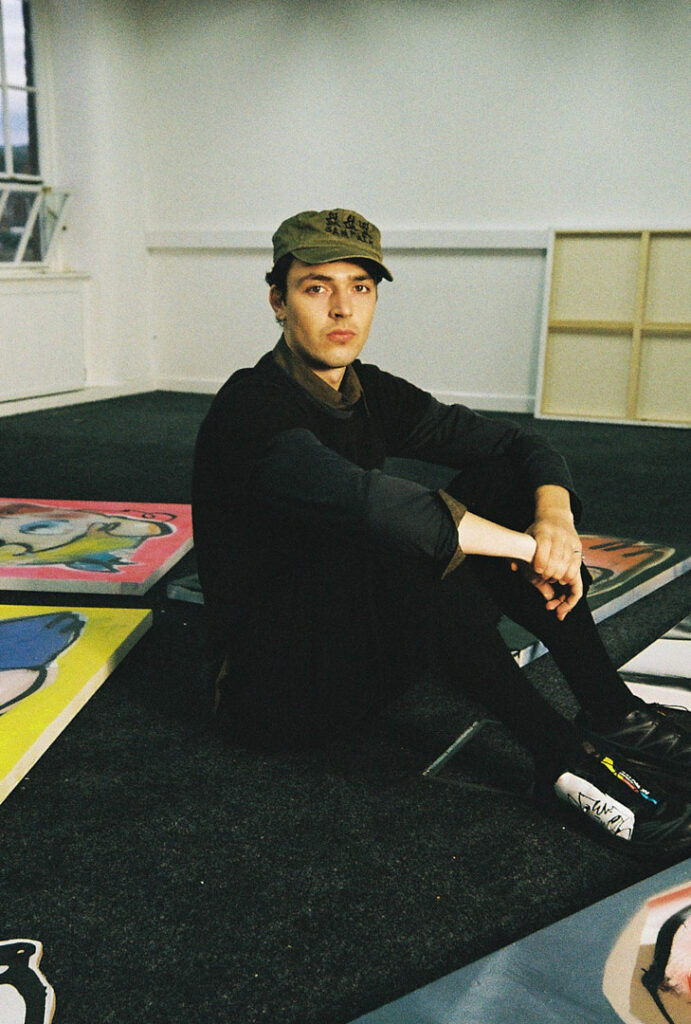
What strikes me in conversation with Gittins is his warmth. As he tells me, his initials — TJMG — double as a mantra: The Joy Must Grow. It’s the title of his philosophy, his process, and in many ways his path from the ground up. “If younger Tomas walked into the studio today and saw what I was doing he’d be gassed,” Gittins admits.
For that, he’s quick to credit Manchester. “Manchester’s a big city. London is more established and traditional, and Manchester isn’t — in the best way possible. It’s so much more community-driven here. It’s mad supportive.”
Gittins grins when I ask if he identifies with Manchester or Macclesfield, his hometown just a stone’s throw away. “Depends who’s asking. If I’m speaking to someone from Manchester, I’d say Macclesfield. For anyone else, I tell them Manchester. I’m a Manc artist. I live here, I make my money here — it’s a real beauty of a city.” He tells me his big Manchester dream: to open a coffee shop where he can display his everyday art.
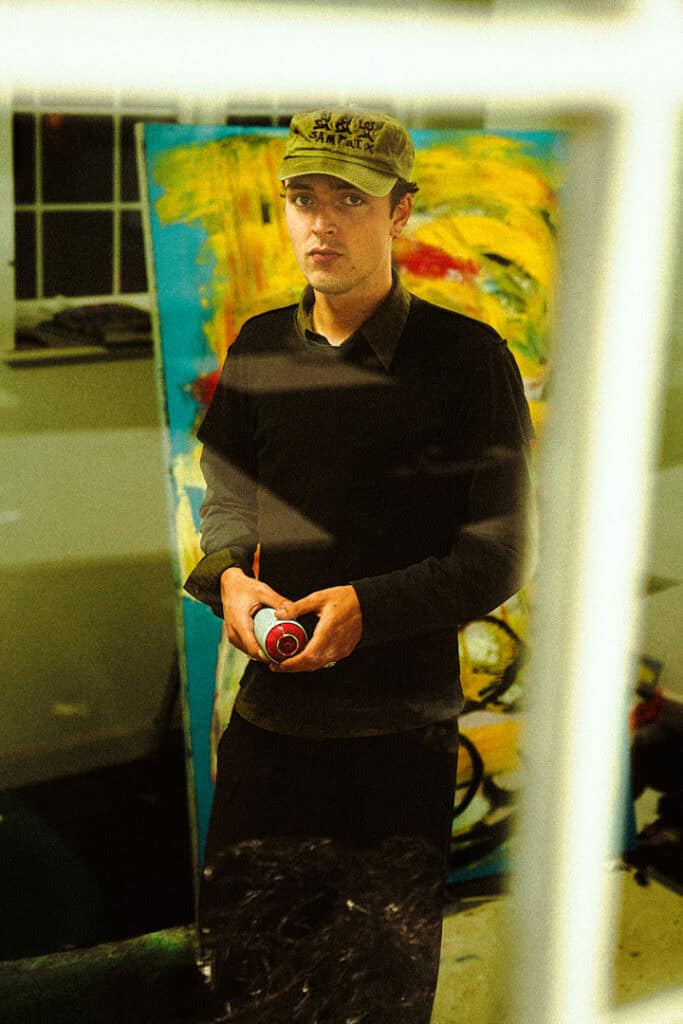
“But the city struggles with its creative scene,” Gittins tells me. In other places, you’ll walk down the street and see rogue art galleries. Over here, there’s barely anything. Manchester’s a music city. It’s not an art city, so there’s always going to be a bit of a lag.”
Paint, canvases, and ideas linger in the studio, evidence of the battles fought and those still ahead. He grins as he surveys the chaos. “Let’s just call me a Manchester-based artist from Macclesfield,” he says. “Emphasis on Macclesfield.”