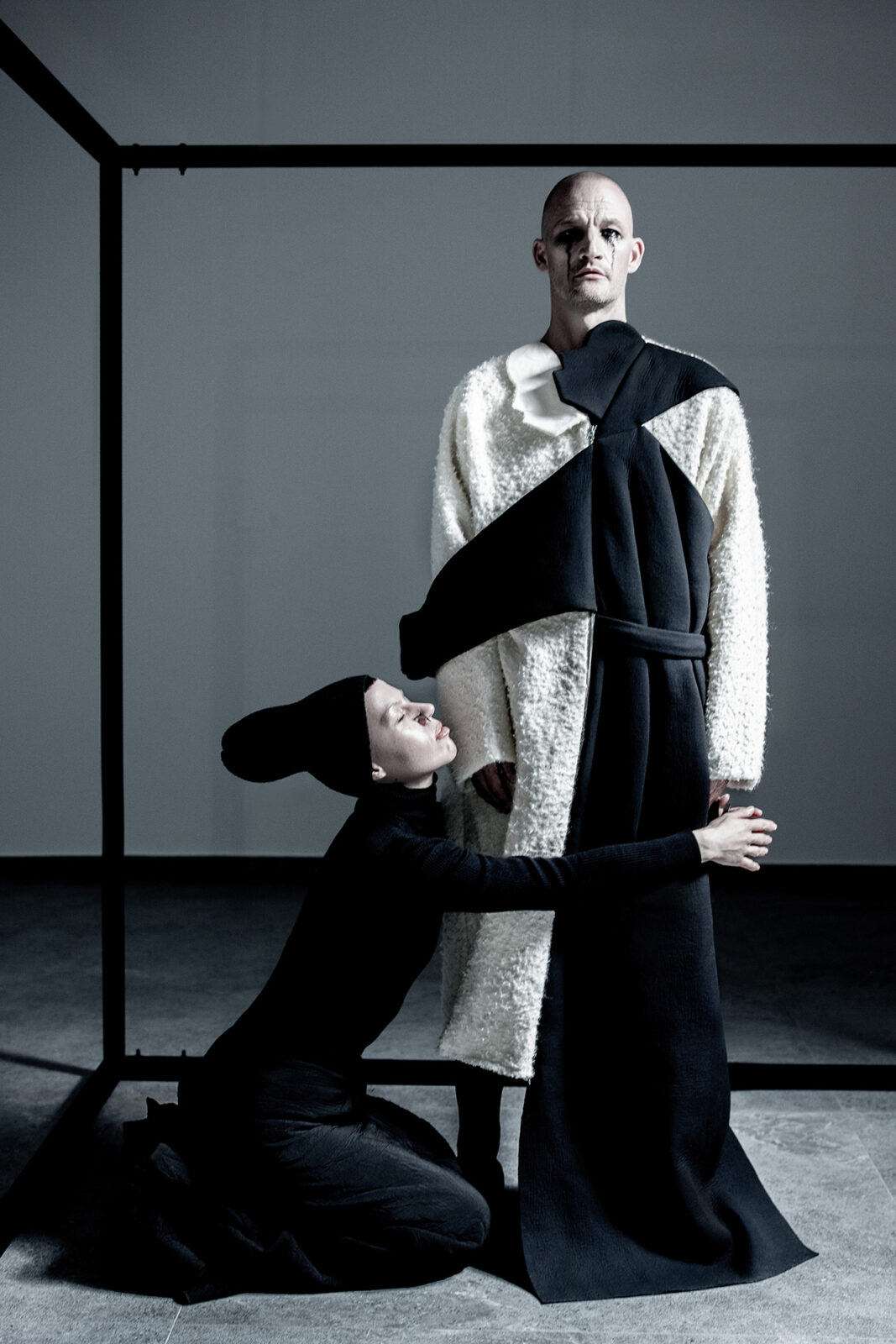
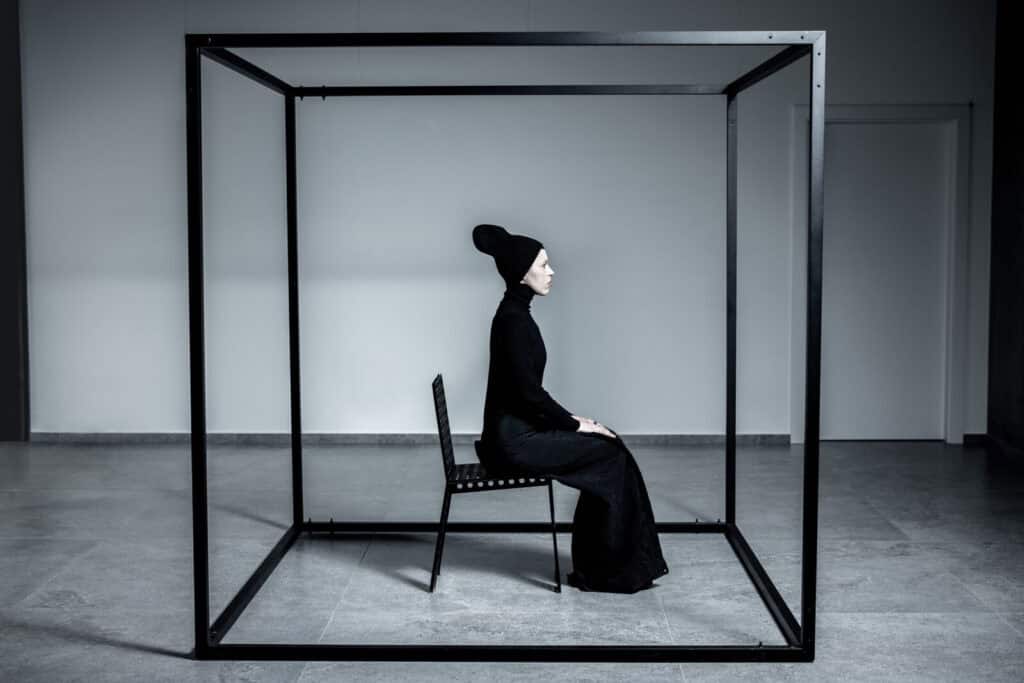
There is very little in DZHUS that feels ornamental or incidental. Founded by Ukrainian designer Irina Dzhus, the label centres garments that respond to the body under pressure. Since its inception, DZHUS has developed a reputation for transformable pieces that alter silhouette and function through folding, fastening, and reconfiguration.
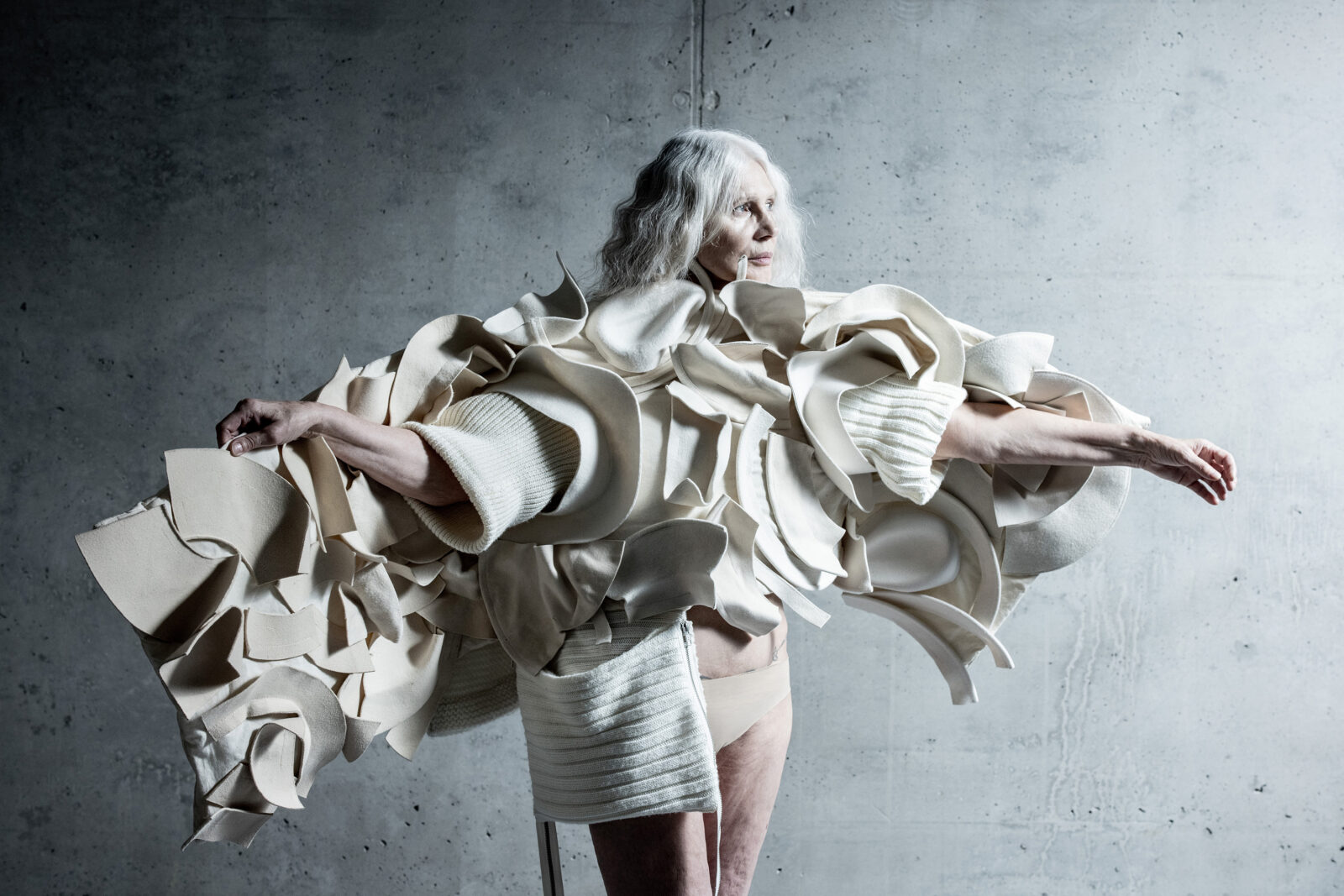
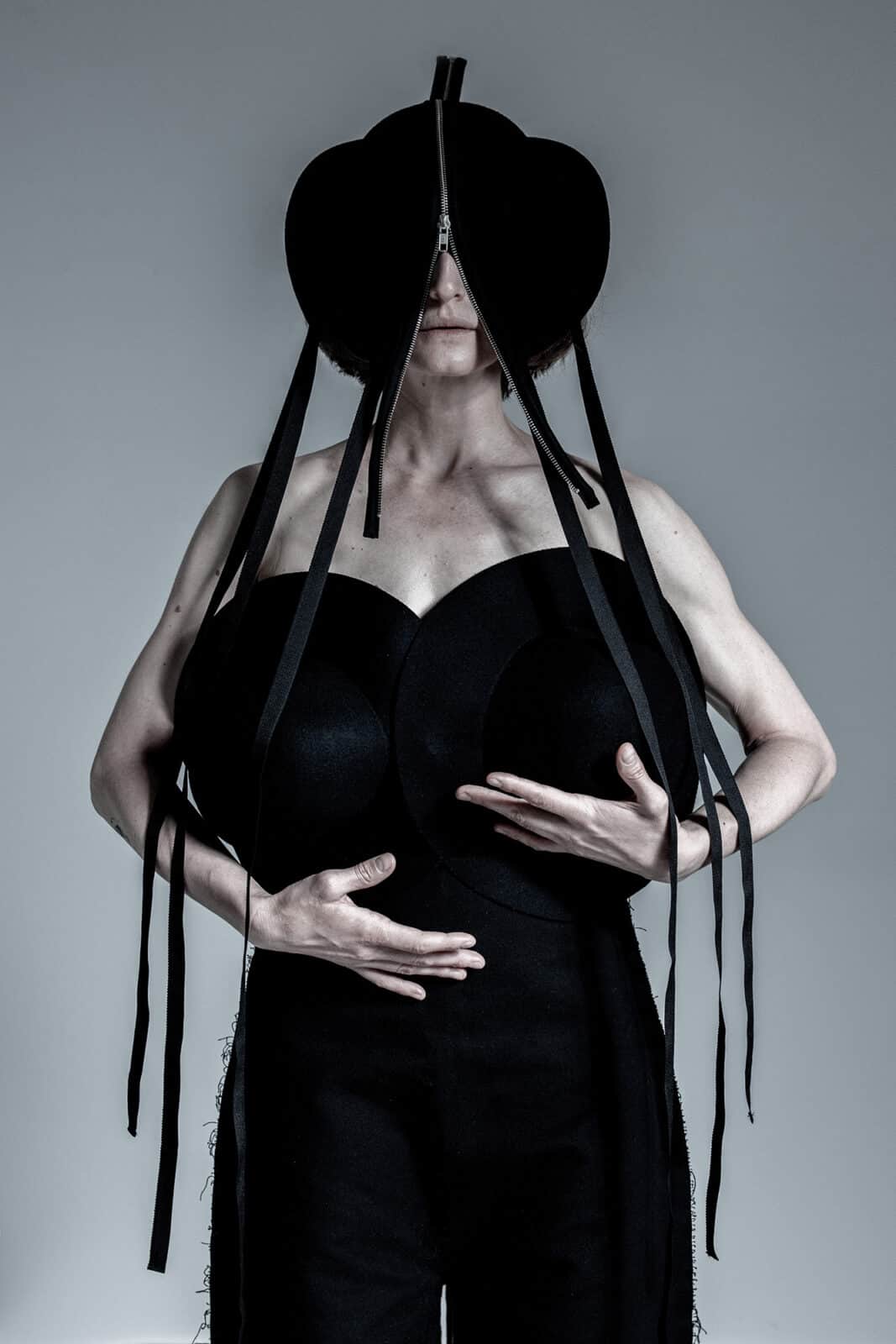
This approach stems from Dzhus’ long-standing interest in anatomy and psychological states. Her garments frequently incorporate hybrid silhouettes, modular elements and accessories that extend or distort the body. Function anchors the work, but emotional charge shapes its direction.
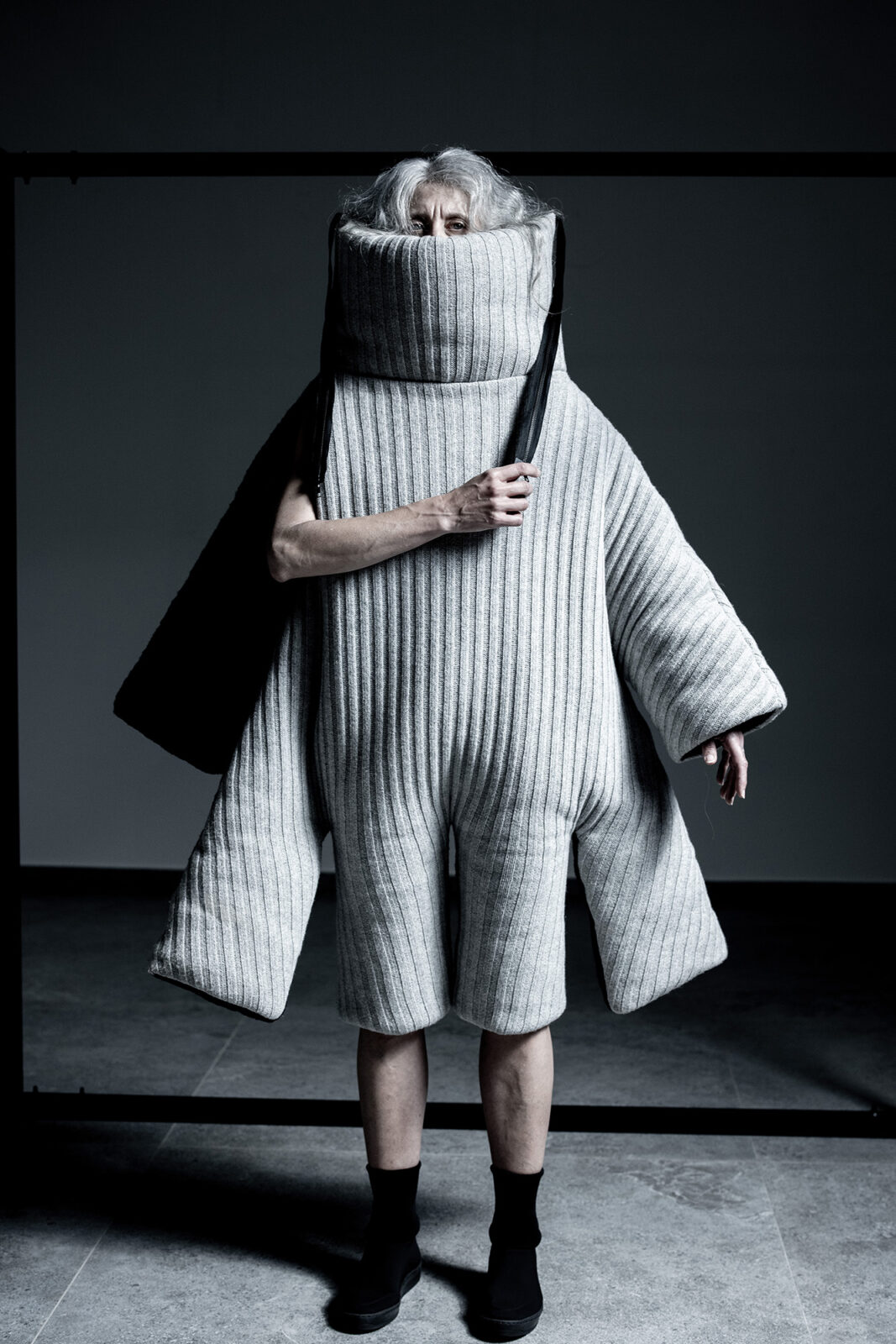
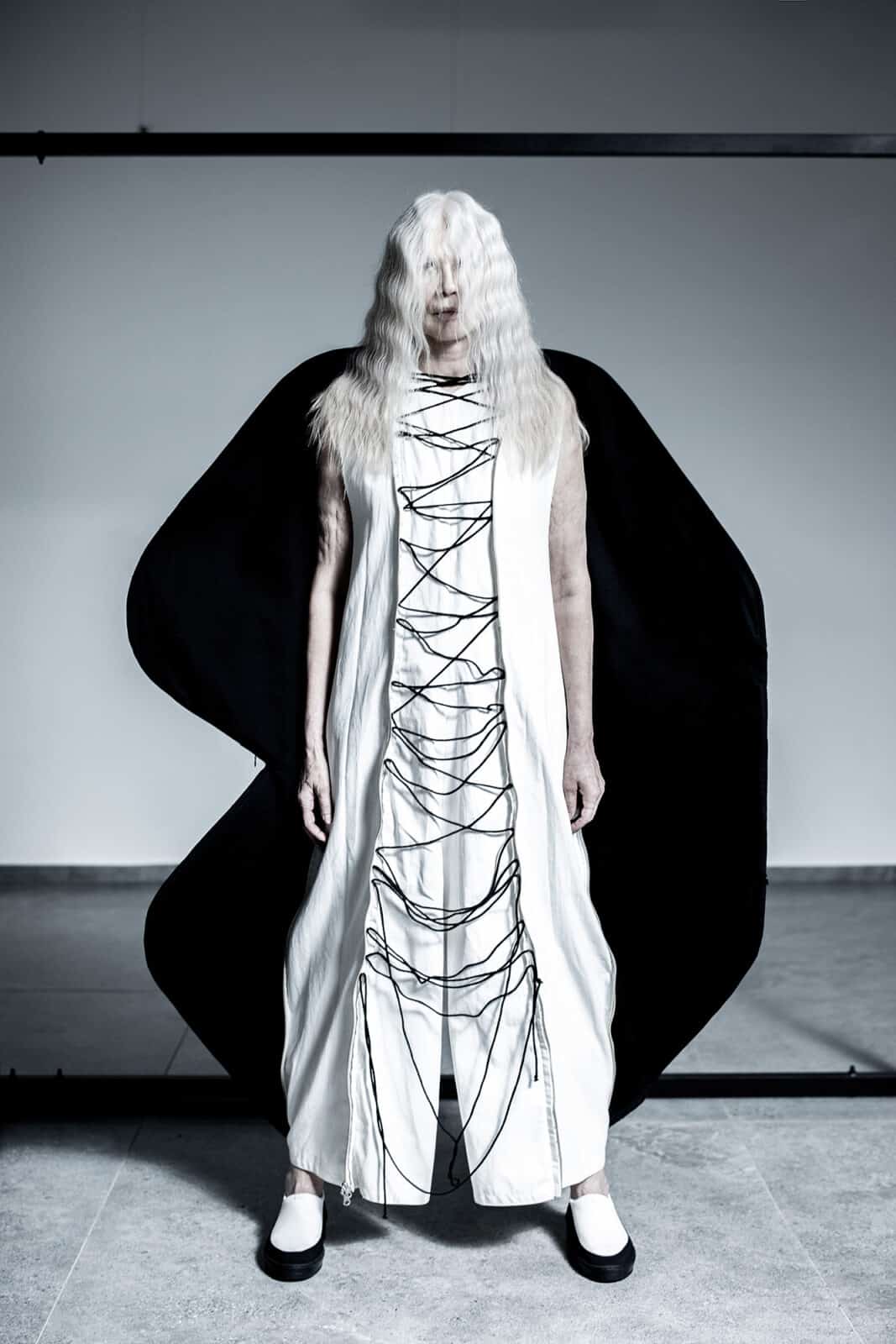
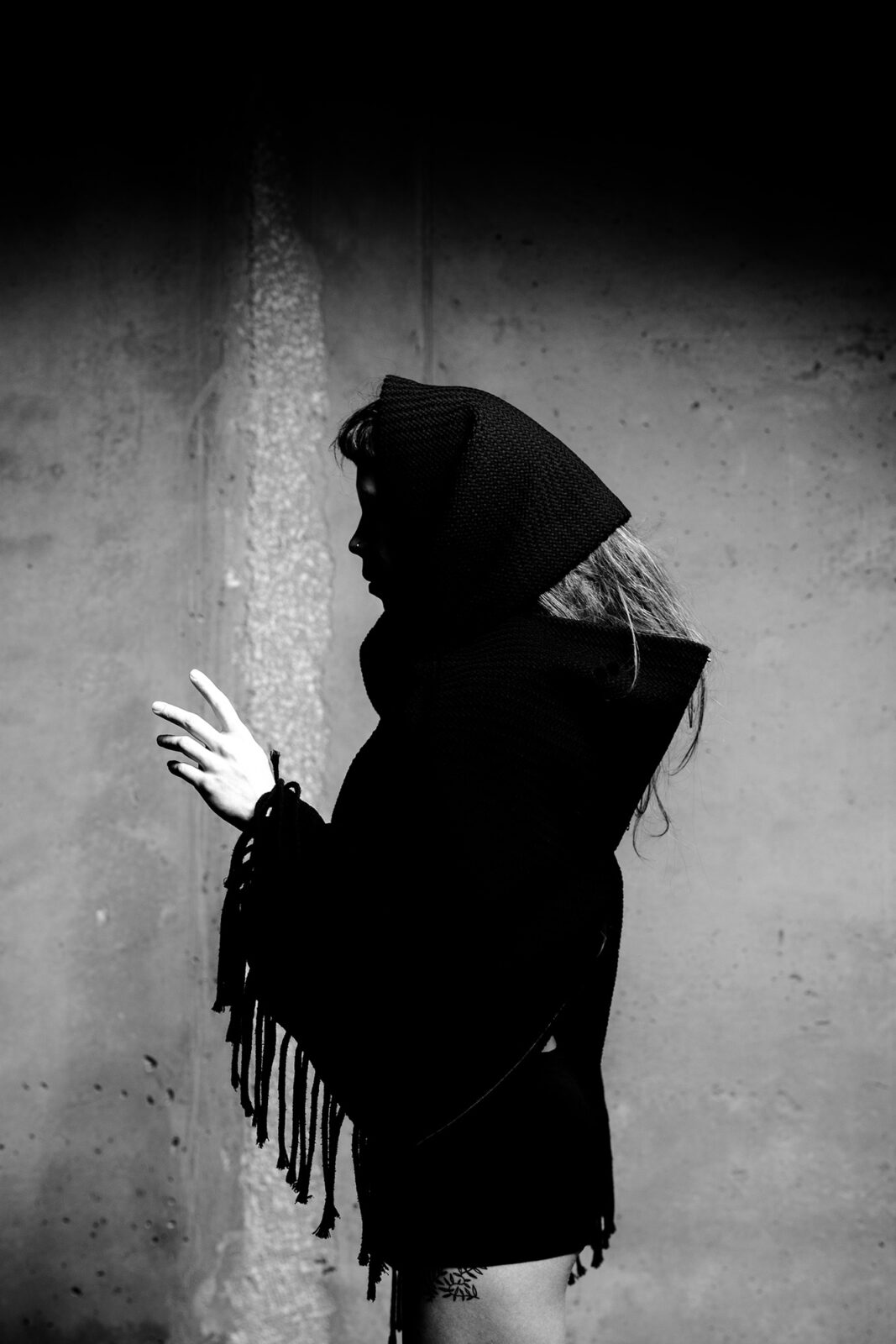
With ABSOLUTE, her most recent project, these concerns intensify into something more confrontational. The project takes form through a series of transformable garments, a photographic body of work, and a short film. Across these elements, ABSOLUTE traces themes of trauma, survival, and exposure, without offering resolution.
“ABSOLUTE came out as a synthetic superorganism upon an agonic mutation of my personal grief,” Dzhus says. “A frozen, multifaceted PTSD delusion.”
She describes the project as assembling itself rather than following a linear design process. “Self-assembled from the debris of my ruined self, it arose as a macabre Golem, to protect me from ultimate decay and suffocating speculations I couldn’t withstand.” The extremity of the language reflects the material reality of the work. ABSOLUTE is dense, uncomfortable, and deliberately unsanitised.
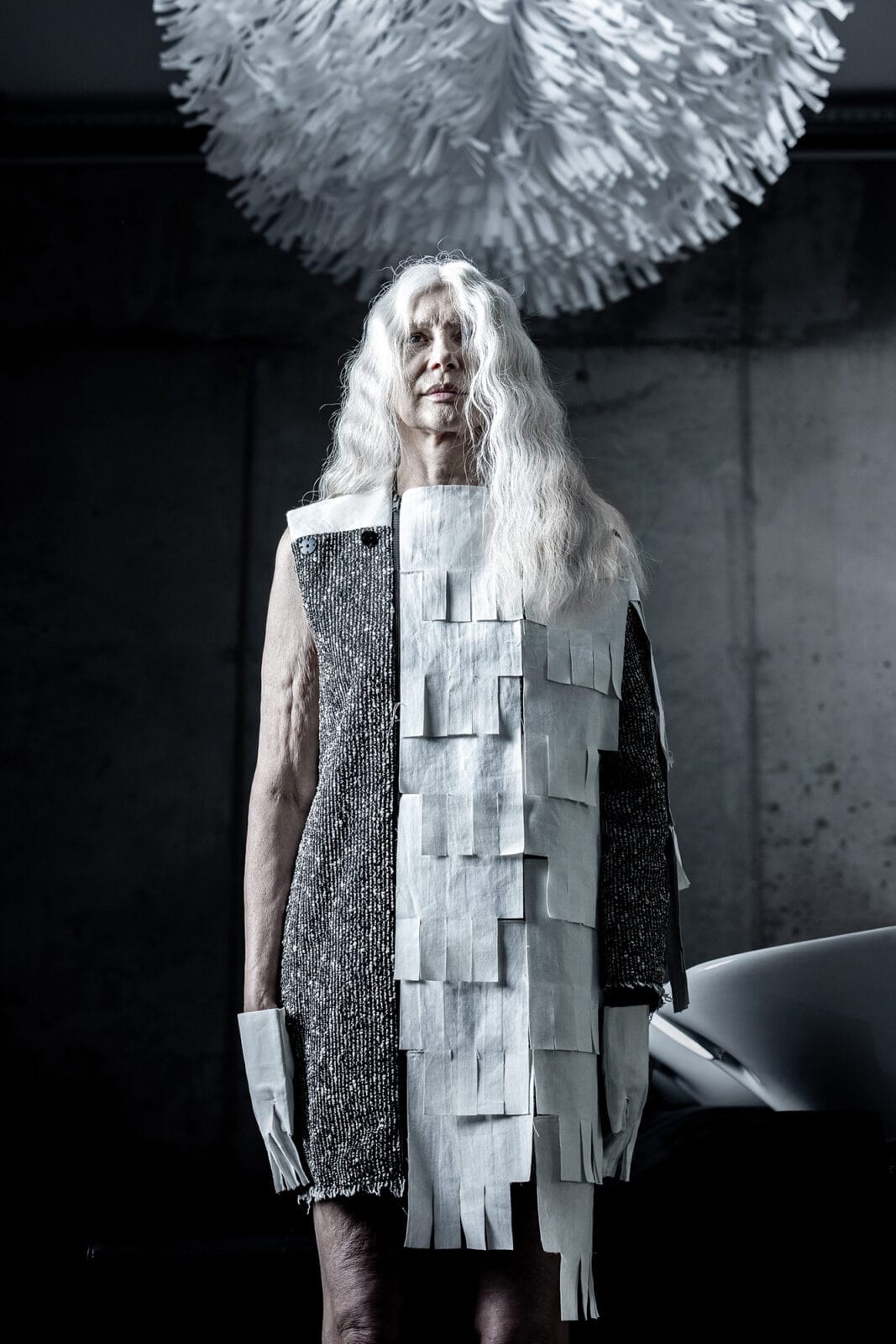
The intensity of the project was not planned from the outset. Catharsis was absent from the initial framework. “Cathartic art hadn’t been an initial concept. Subverted by the whirlpool of circumstances and the following desperation, I wasn’t capable of reflecting on anything else, as the outer reality seemed irrelevant and occasional.” Alongside this internal pressure, professional obligation imposed its own demands. “Obligated to fulfil a major grant project, I was literally forced to materialise the collection whatever the motivations and methods.”
This sense of compulsion is embedded within the garments themselves. Anatomical distortions recur throughout ABSOLUTE, alongside fetishised gloves and headpieces. These elements function as documentation of an internal state. “My introspective flow has generated distorted and hybridised anatomic motifs, turned into wearable sculptures, spiritualistic allusions,” she explains. Fragments from her unreleased comics are embedded directly into the clothing, “conveying the secret story in a modernism-meets-manga manner.”
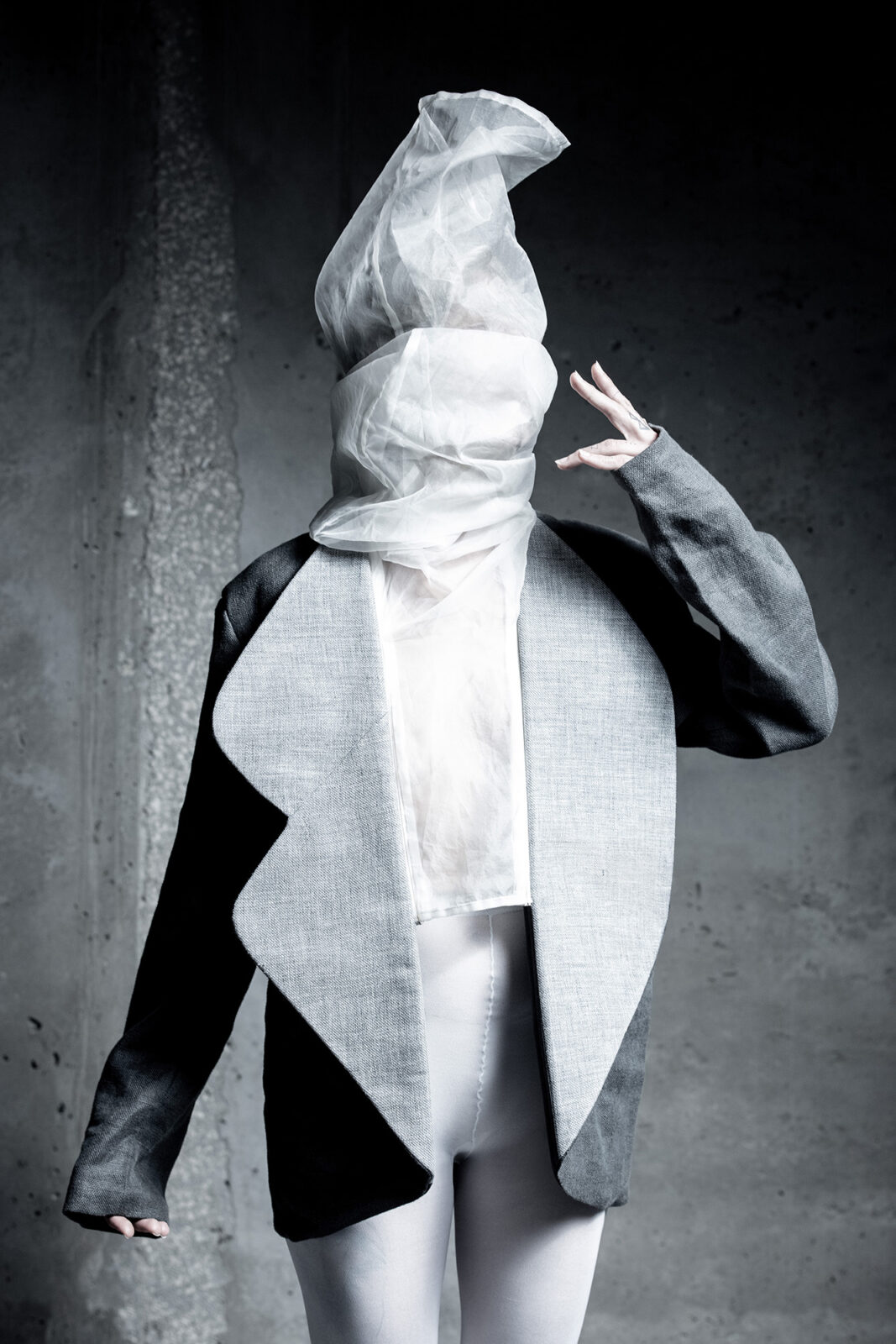
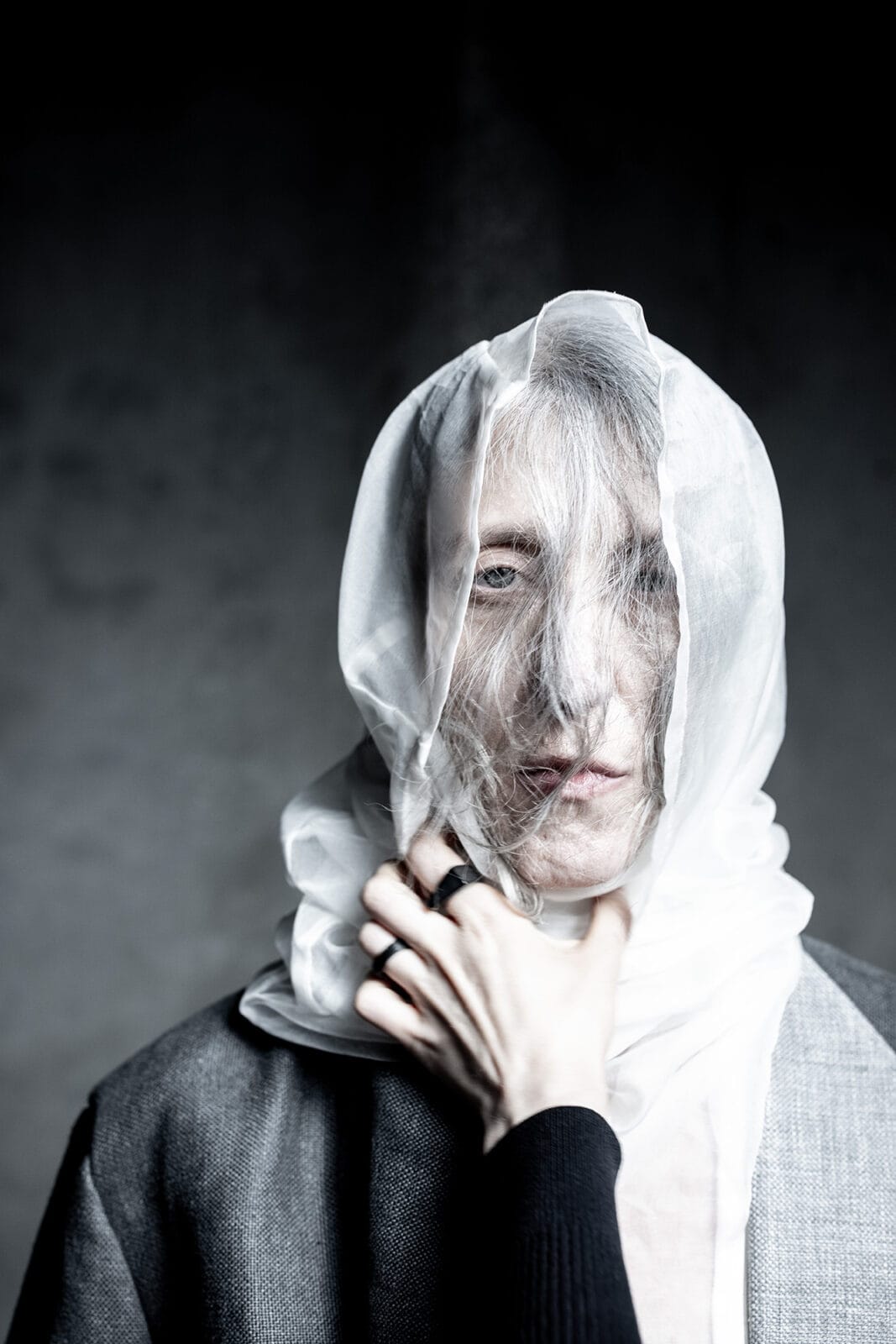
Transformation remains central to how DZHUS garments operate. Pieces are constructed to unfold, collapse, and shift shape, allowing the wearer to repeatedly alter their silhouette. For Dzhus, this adaptability holds practical and psychological significance. “A garment modification allows for its adaptation to the wearer’s changing state of mind, and vice versa,” she says. “A declarative, ritual-like transformation of the silhouette can serve as a healing affirmation, a manifestation of inner evolution.”
This ritual logic extends into the making process itself. Upcycling and repurposing operate as structural decisions. Dzhus works with second-hand materials in ways that invite unpredictability into the design process. “I cherish the unpredictable nature of second-hand sourcing, leaving room for the artifacts’ impact on the configuration and finishes of the eventual garment.” Control loosens, and authorship becomes shared. “I find special charm in the enigma of my designs’ future life, in cooperation with its owner, and excluding my involvement. A pleasure to let go, if you will.”
The war in Ukraine has reshaped how Dzhus understands both her work and her responsibility as a designer. “For many Ukrainians, the war became a major indicator of values and priorities, filtering out the shallow and hypocritical matters as irrelevant,” she says. Fashion becomes a channel for cultural transmission. “In this challenging time, the duty of a Ukrainian talent is to convey our cultural code through the peaceful yet powerful medium of creativity.”
Although she escaped at the beginning of the invasion and now works remotely from the EU, Ukraine remains central to her practice. “With my design voice, I told the striking story of the mass evacuation and speculated on the post-survival existential mode.” Alongside this, DZHUS continues to support Ukrainian animal aid initiatives, which she frames as a baseline responsibility. “In our paradigm, this comes as a default activity, shared by thousands of fellow artists.”
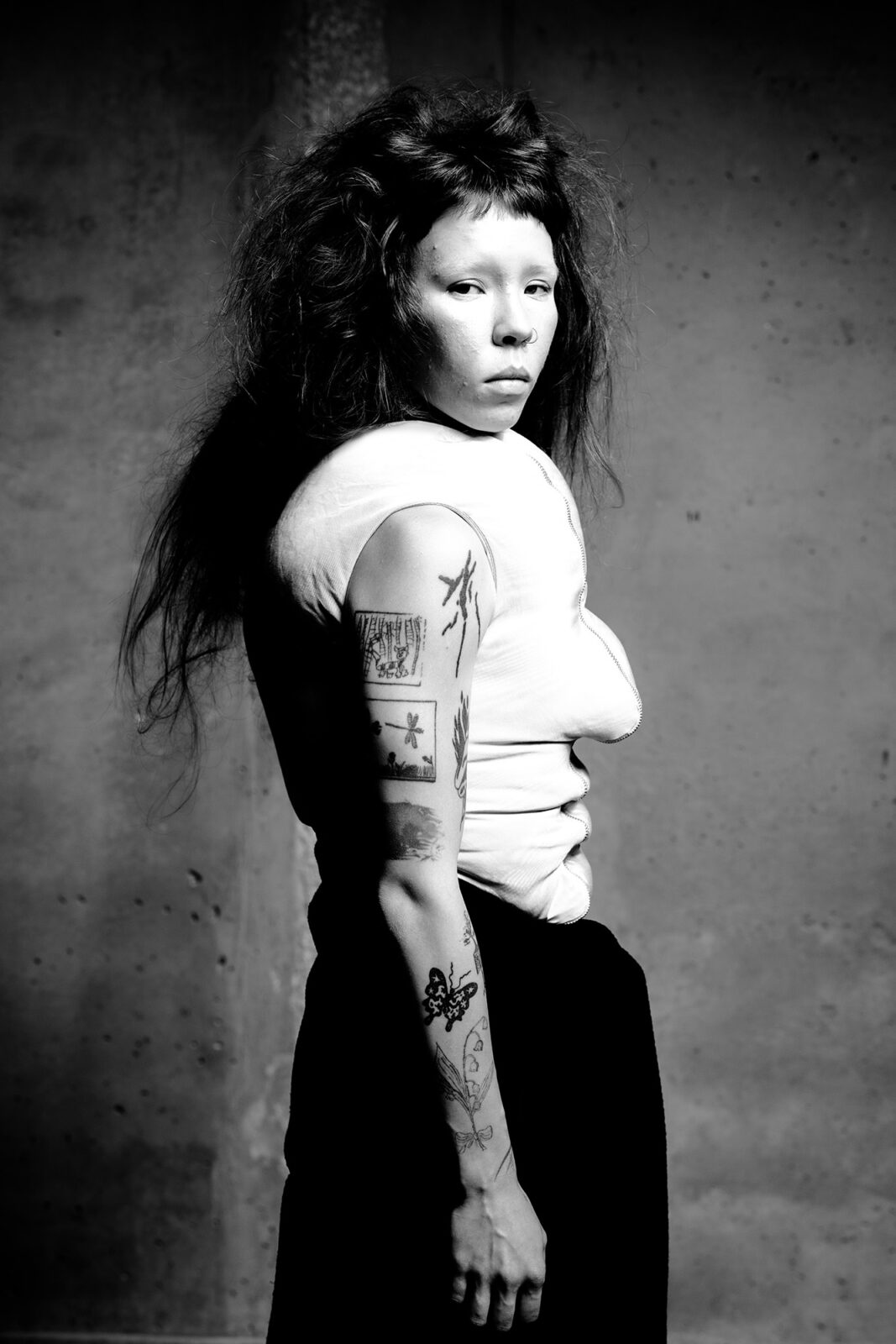
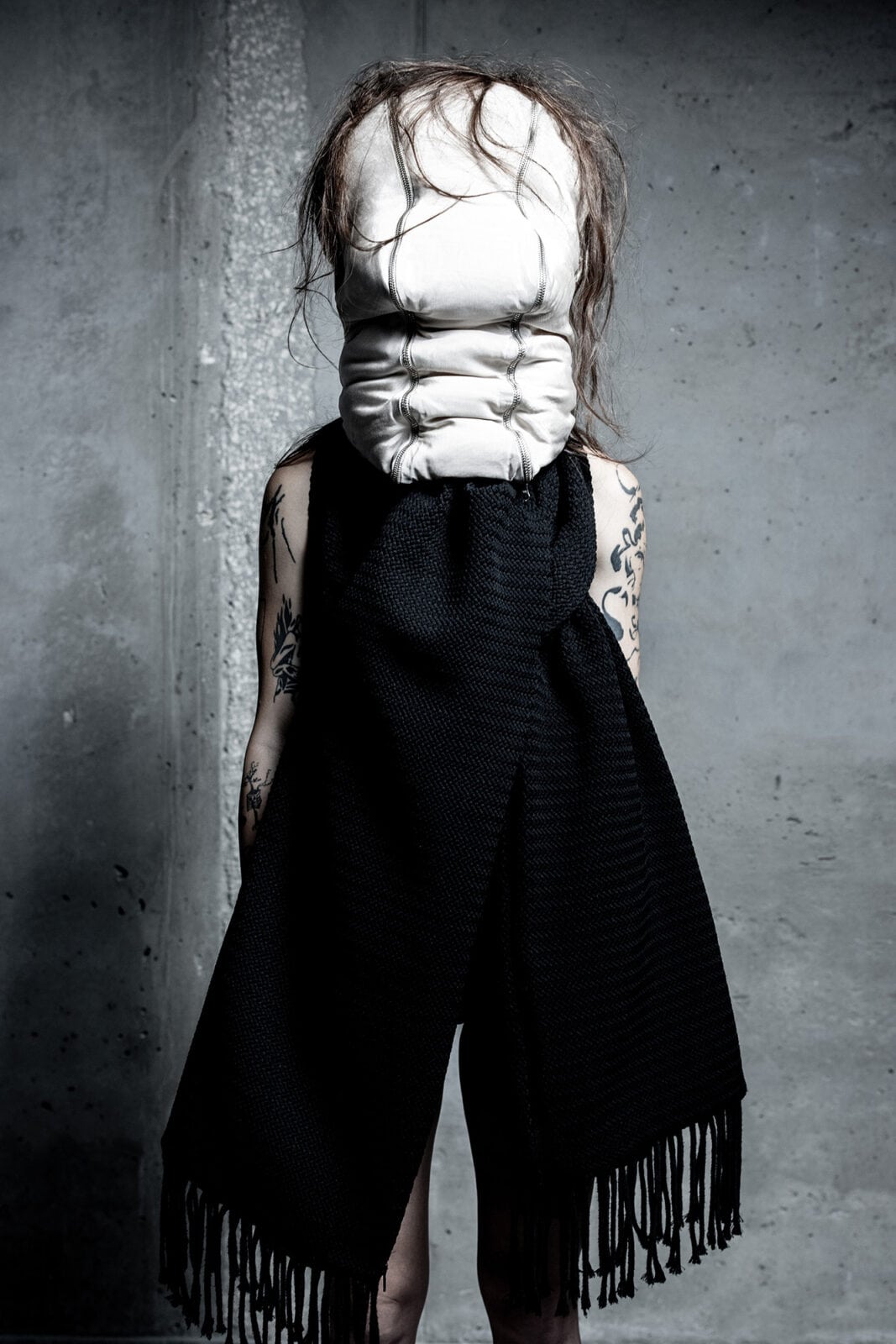
Symbolism within DZHUS collections is dense without becoming prescriptive. Space for interpretation remains essential. “It is important to not oversaturate the creation, respectful of the precious ‘ma’, space in between,” she says. Meaning is not fixed at the point of design. “Room for dialectics with the garment is equally crucial. Its interaction with the possessor, or a beholder, adds the final touches to the image.”
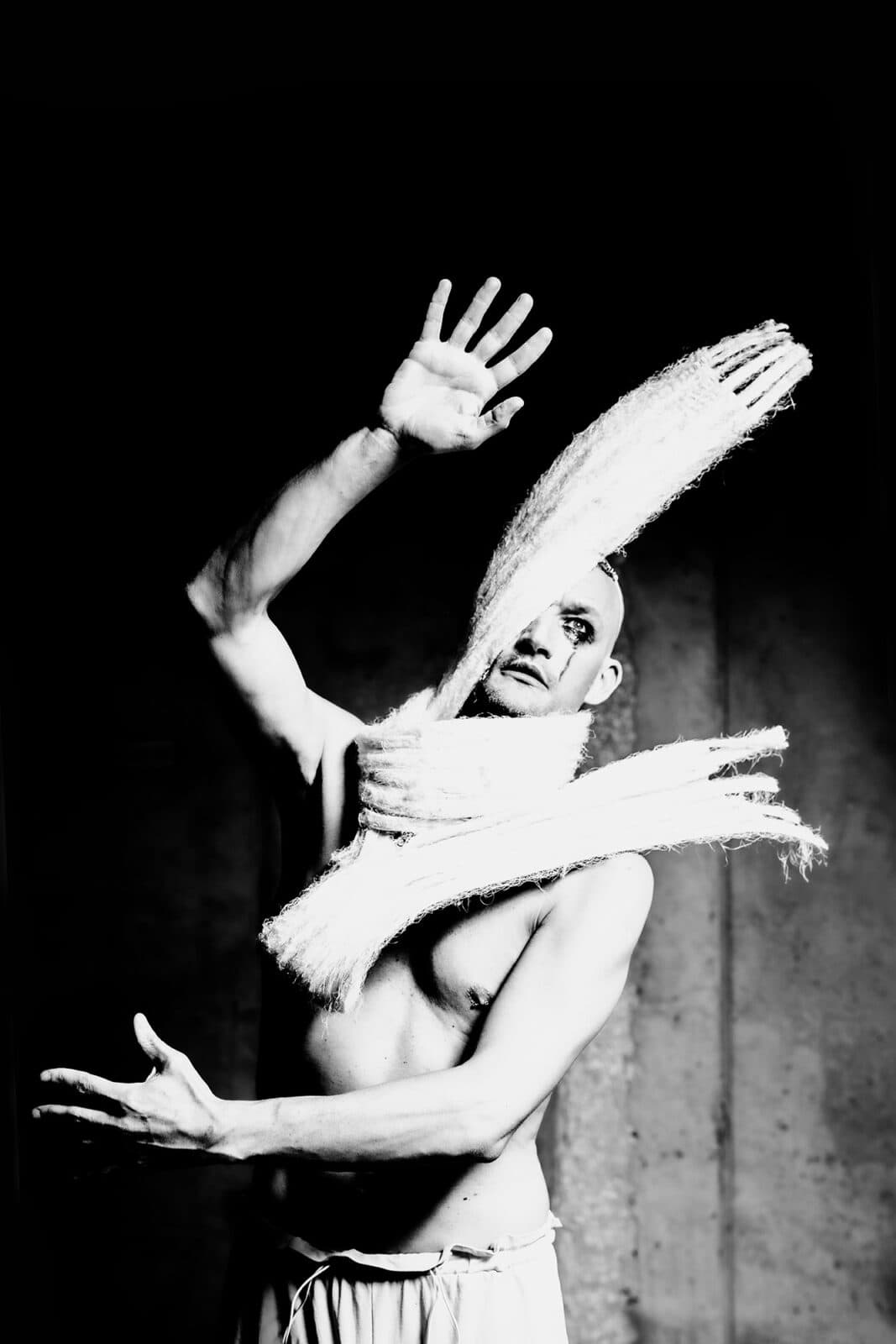
The visual language of ABSOLUTE extends beyond clothing through film and photography, functioning as both documentation and instruction. “The format of the DZHUS campaigns derives from a necessity to communicate the transformability of our products,” she explains. The visuals capture garments in motion, shifting state, offering practical insight into how they are worn. Casting follows the same logic. “I keep away from inclusivity-washing and prioritise the individual charisma of our heroes as the key factor.”
Despite the conceptual density of the project, wearability remains essential. “I am convinced that function is a must, no matter how extraterrestrial the concept,” Dzhus says. At the same time, she resists fashion’s acceleration. “The suffocating quantities and nonstop updates not only harm the environment, but also devalue design and craftsmanship.” Her response is restraint rather than simplification. “I struggle to invent another T-shirt so far, I’m afraid, so please bear with DZHUS’ complex cut for a while more.”
When asked what she hopes people take from ABSOLUTE, Dzhus remains direct. “I’d like to encourage those who have faced emotional traumas to come out, through shame and fears,” she says. “Handling grief in solitude ruins the remaining fragments of our very self.” Her closing statement is deliberately blunt. “Even genial ideas aren’t worth a masochistic massacre or an irrevocable decadence. With my negative example, I call you to action: go get support. Then go resolve your issue. Or vice versa, depending on the case. Don’t give up. Give up fashion, fuck it.”
Within a fashion landscape driven by polish and pace, ABSOLUTE remains deliberately unresolved. Clothing operates here as witness and archive, holding pressure rather than releasing it.