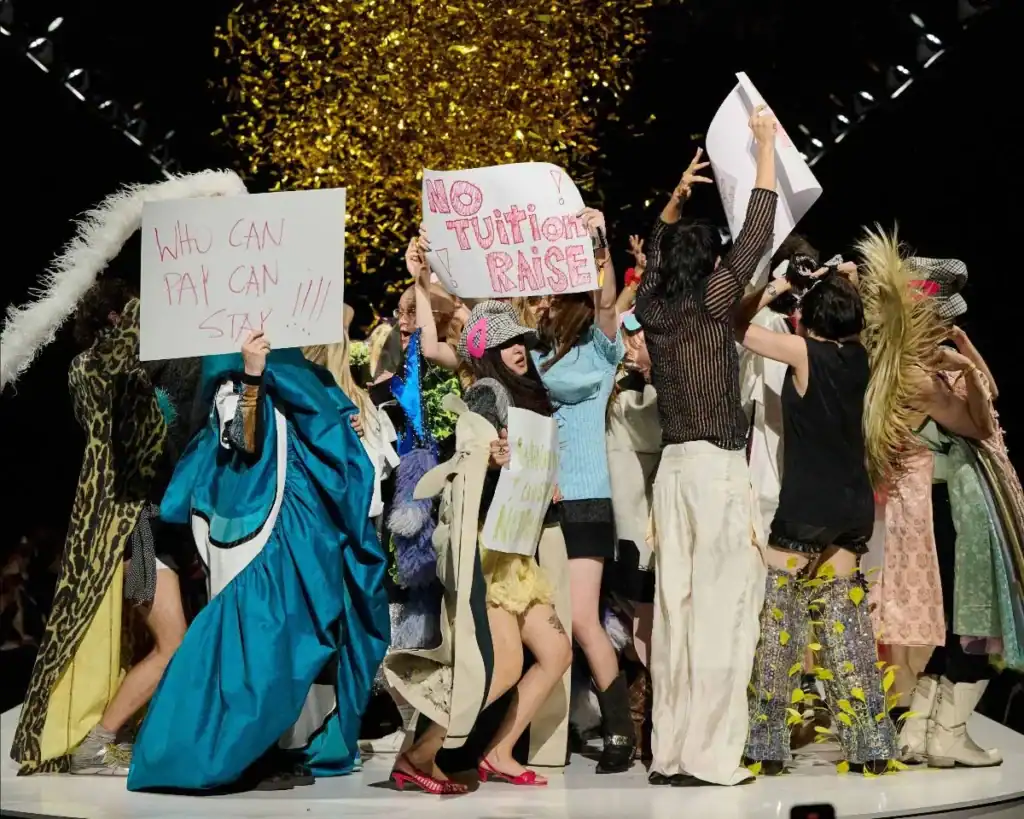
“We are pissed,” the letter by the students and faculty of the Antwerp Fashion Department to the Ministry of Education, who has recently signed an educational decree that cuts funding for non-EEA (international) students. The tuition will soar to €25.000 per year for international students, up from approximately €8.900.
“This decision is not only unfair and xenophobic” the letter continues, “but it also threatens Antwerp’s positioning as an international fashion city that has taken decades to build.”
The fashion program at the Royal Academy of Fine Arts Antwerp was founded in 1963. Since then, it has become an incubator for some of the most influential designers in fashion. Among its most notable graduates are Martin Margiela, Haider Ackermann, Kris Van Assche, Demna Gvasalia, Glenn Martens, Botter, and, of course, Ann Demeulemeester, Dries Van Noten, Walter Van Beirendonck, Dirk Van Saene, Dirk Bikkembergs, and Marina Yee, collectively known as the Antwerp Six, whose works continue to be revisited today (an exhibition at the ModeMuseum Antwerp.Fashion Masters 2026 show is currently on view.
The Academy’s fashion department concludes the year with a runway show, presenting its graduating students. It has become one of the most closely watched showcases. The event brings together more than 120 students from around the world, presenting work across all years, from first-year explorations to final Master’s collections.
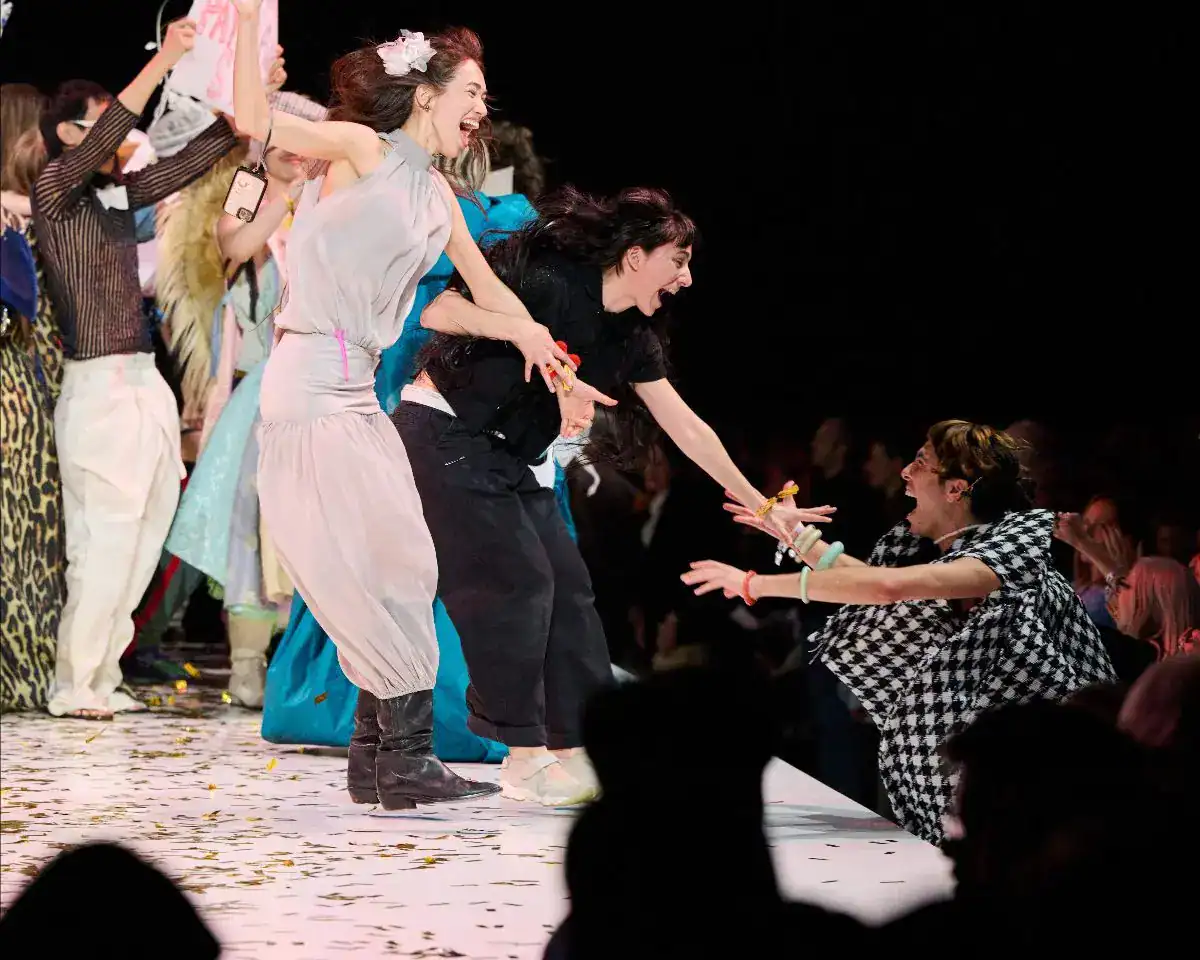
But this year, the show was a bit different. Fashion’s stage became a stage for protest.
“This year has not been an easy one,” says Artistic Director Brandon Wen in a statement. “The Ministry of Education has cut funding for international students, a lifeline of this institution, and the political state of the world has left many in fashion questioning their relevance.”
The message was direct: “I would be lying if I said we didn’t need everyone’s support right now.”
And yet, he also insisted on continuity. “But despite all this, the fashion department pushes forward stronger than ever. There is electricity in the joy of what we do. I’ve never had so much fun teaching, and the creative energy of our students flows through all of us who have the privilege to work with them. Come be a part of this. People need to see why it is so important to defend beauty.”
Alongside the runway presentation, a prize is also awarded each year, anchoring the event within both celebration and evaluation.


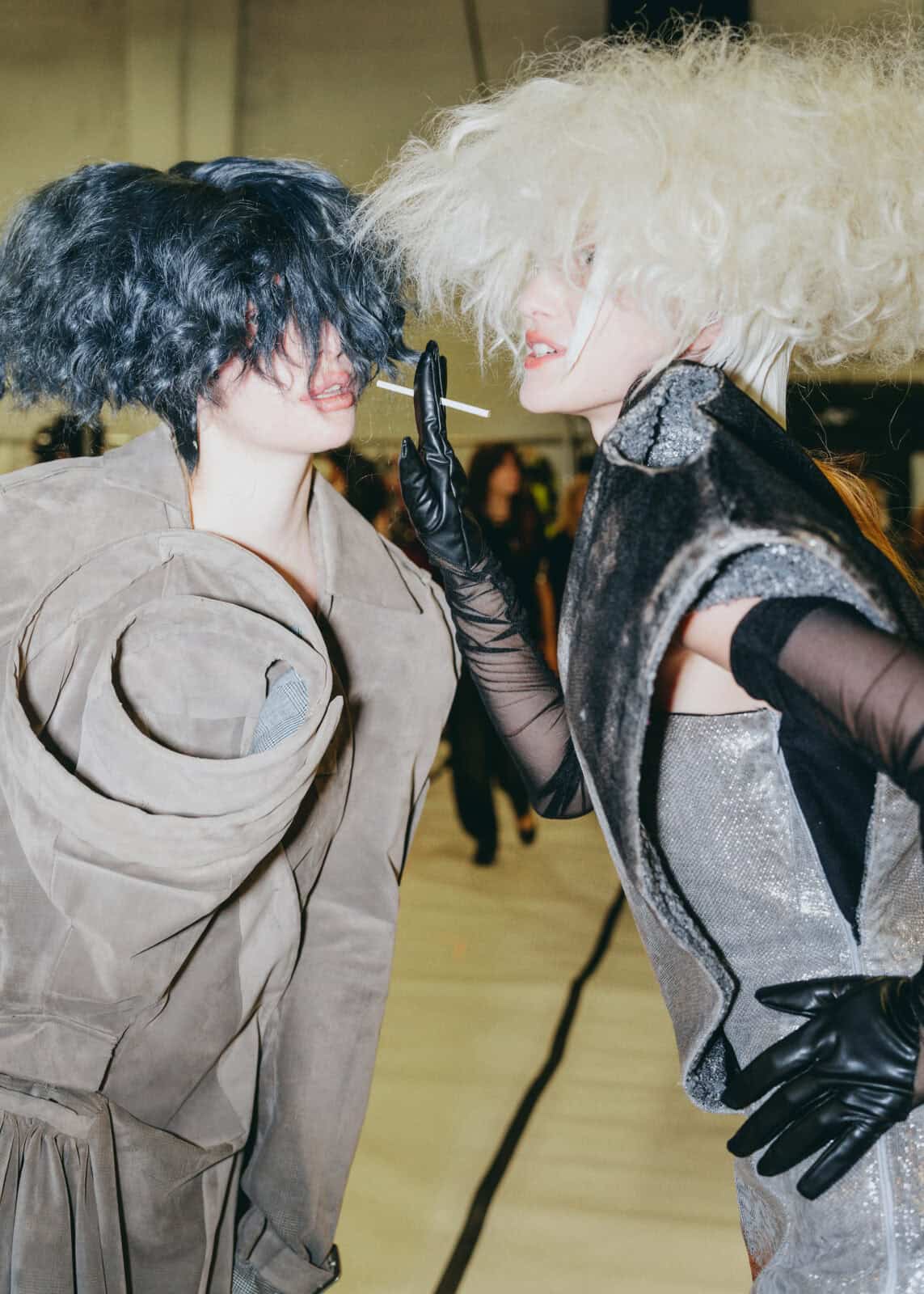
The EXPO format presents the Master’s collections as spatial installations with more immersive environments that allow one to experience the garments up close, and also get to know the designers behind them. This is where a few got to share their thoughts on the future of fashion, and their desire for a more meaningful transformation within the industry.
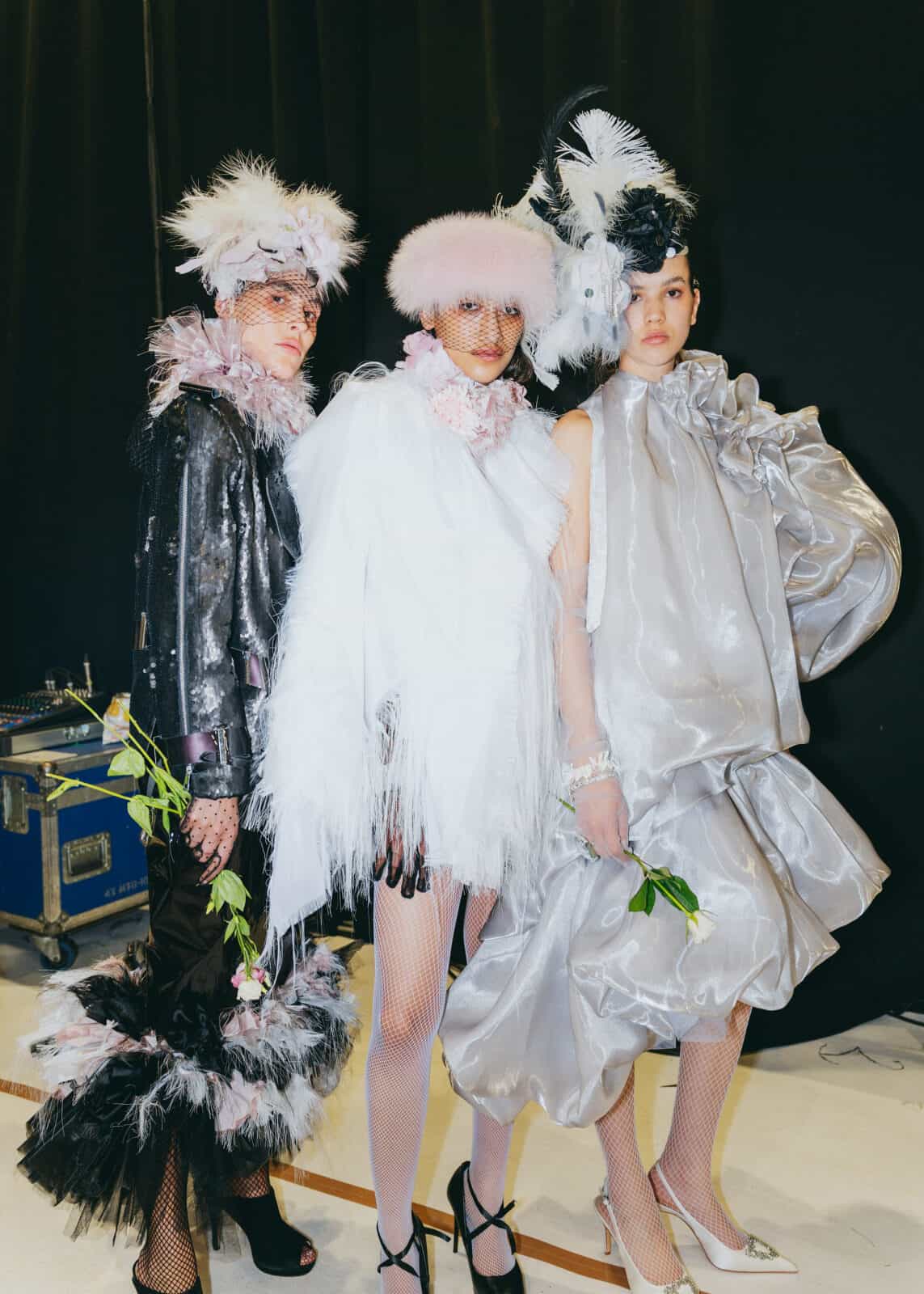

“I believe the dominance of fast fashion will gradually diminish as people become more conscious of what they consume,” shares Suwen Liang from Jiaxing, China,” “In the future, thoughtful design, meaningful storytelling, and creative work with genuine cultural and emotional value will become increasingly precious.”
Stan Peeters from Leuven, Belgium envisions a future driven by creativity, craftsmanship, and conscious design rather than overproduction and fast consumption. “It celebrates individuality, values quality over quantity, and embraces innovative techniques and sustainable practices that create meaningful, long-lasting pieces while respecting both people and the environment,” he says.
For Joren Gruenwald, a designer from Germany, he hopes for the future to be more calm, with fewer seasons, focusing on craftsmanship and details. He says, “[I hope] we find more ways to make the industry more sustainable, and make fashion a bigger part of people’s interest again, opening the mainstream to the idea of having fun with dressing and trying new things.” He adds, “ Where I come from in Germany, I often feel that dressing differently is still looked down on. Bringing boldness onto the streets and having it more celebrated would be beautiful.”
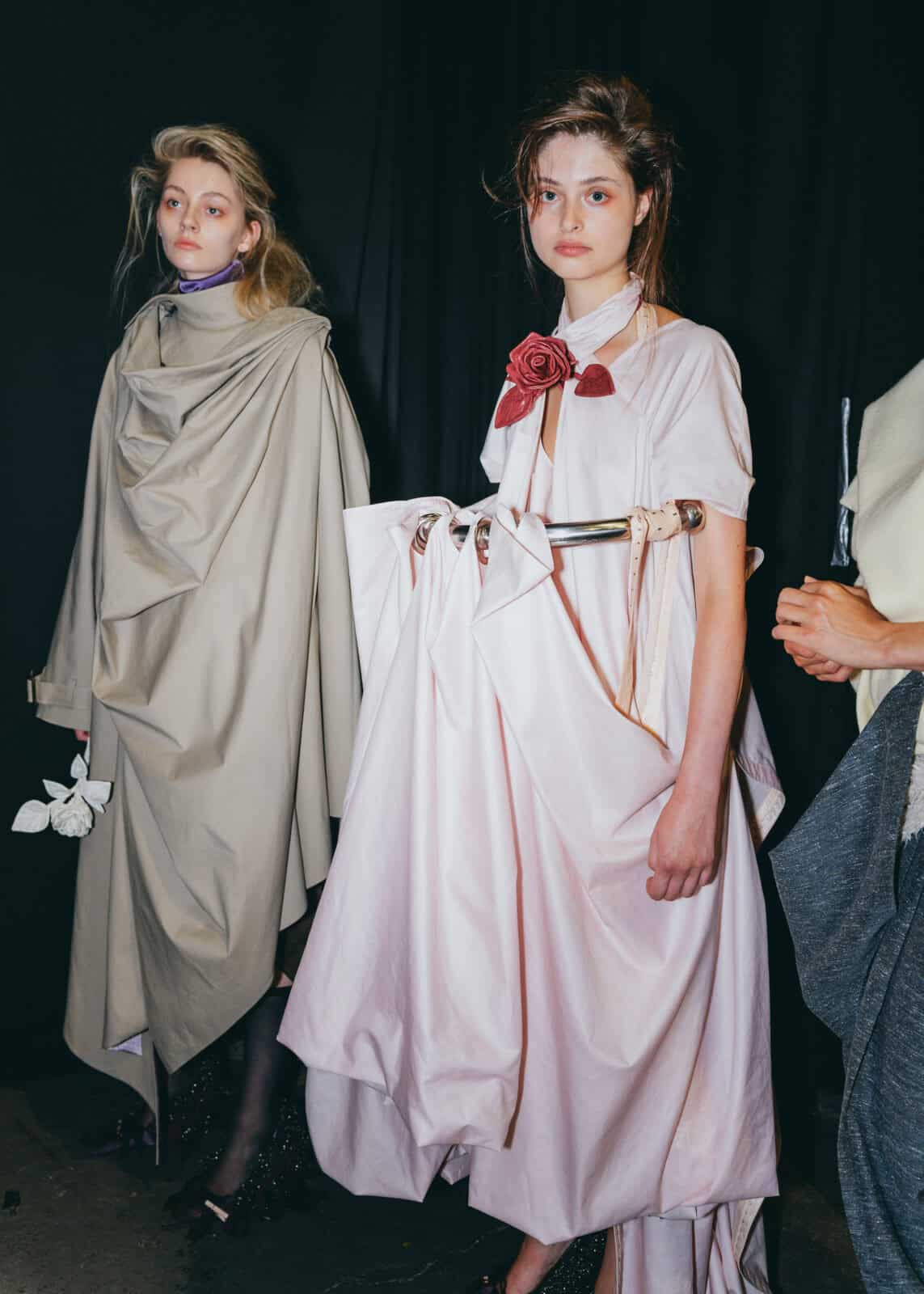
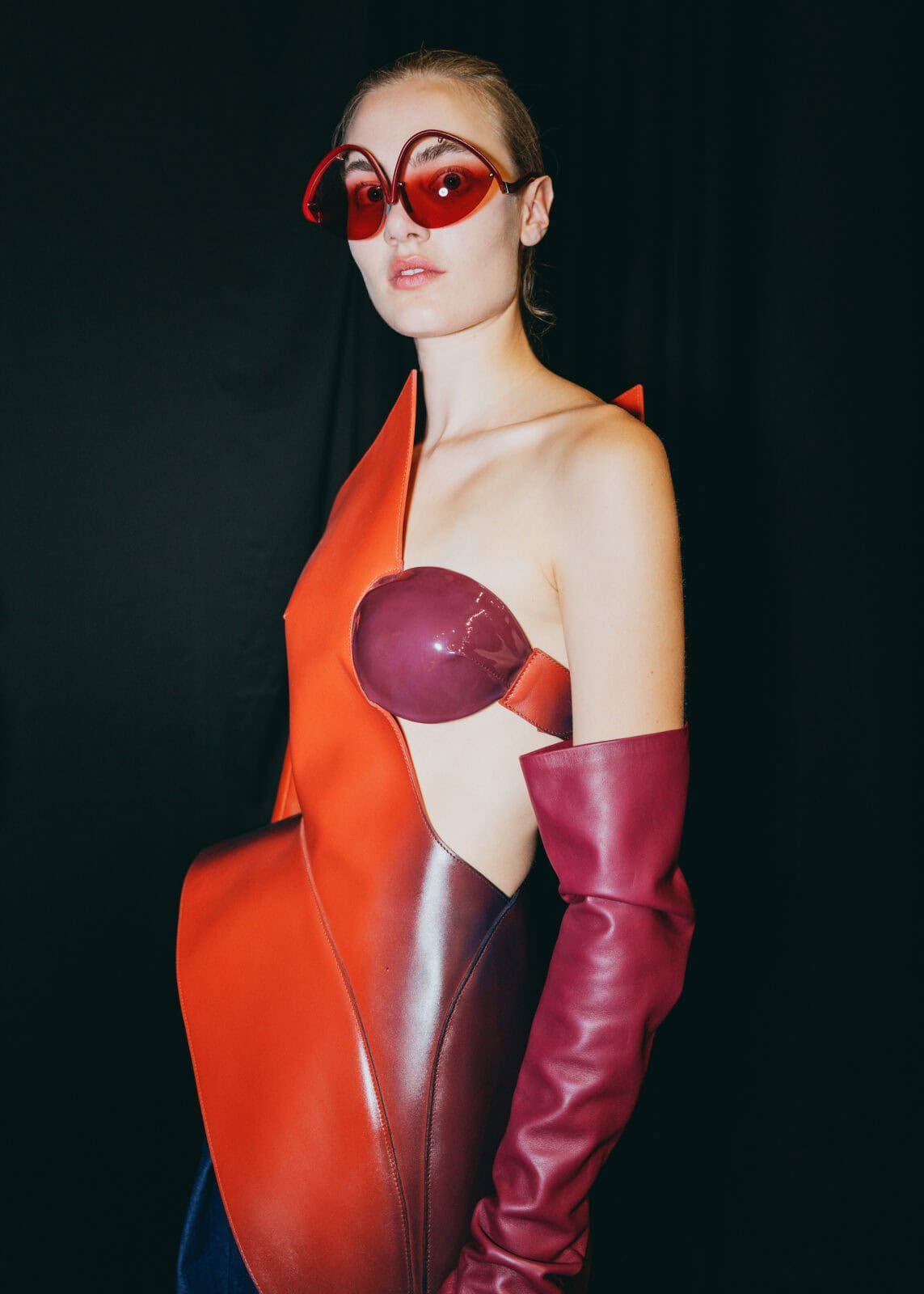
For others, the emphasis is on identity and a release from inherited codes. “For me, the future of fashion is diverse and personal to each individual,” says Tristan Stieners. “I think – and I hope – we are getting past social norms connected with clothing. I see younger generations having more fun with what they wear, using it as part of their identity. Even within big fashion houses, creativity is becoming more important again. So I hope and believe the future of fashion will be lots of fun.”
Polish-born Bartosz Borowski agrees and hopes “fashion evolves and introduces new silhouettes and new types of clothes, which would take over the post-second world war inspired wardrobe we are used to now.” He adds that he would also like to see new materials and ways of construction of garments be introduced.
“Ideally, fashion should downscale and go back to self-founded brands,” shares Mateusz Wyczesany, who grew up in a small city in the northern part of Poland. “The profit incentive driving fashion right now is detrimental to the overall state of the industry. If you need to make more profit every year, you will likely play it safe, which limits creativity and innovation. We don’t need new clothes every season – we already produce too many. It would be healing to slow things down and focus on making things that are unique, and on cherishing every detail in a garment.”
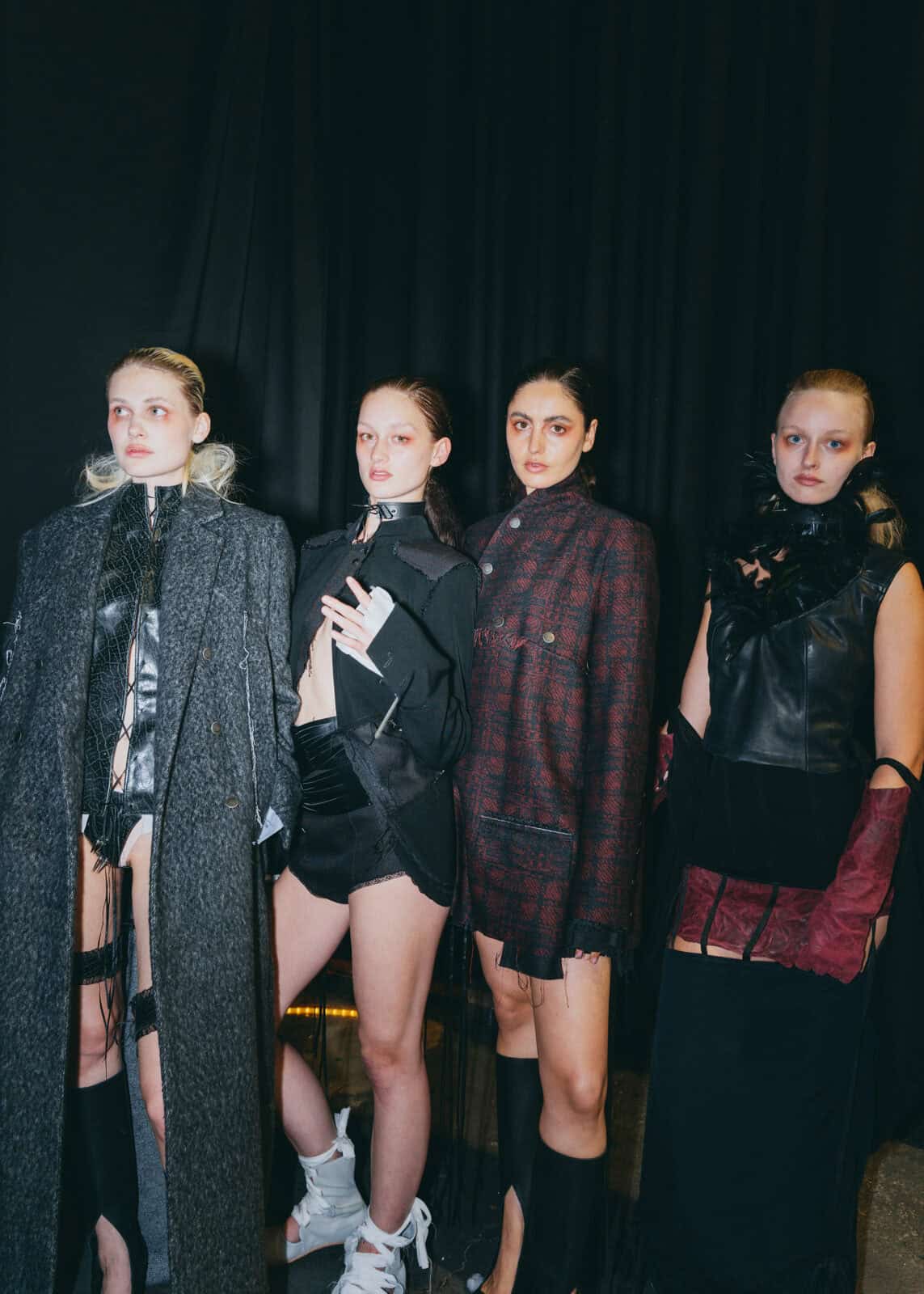
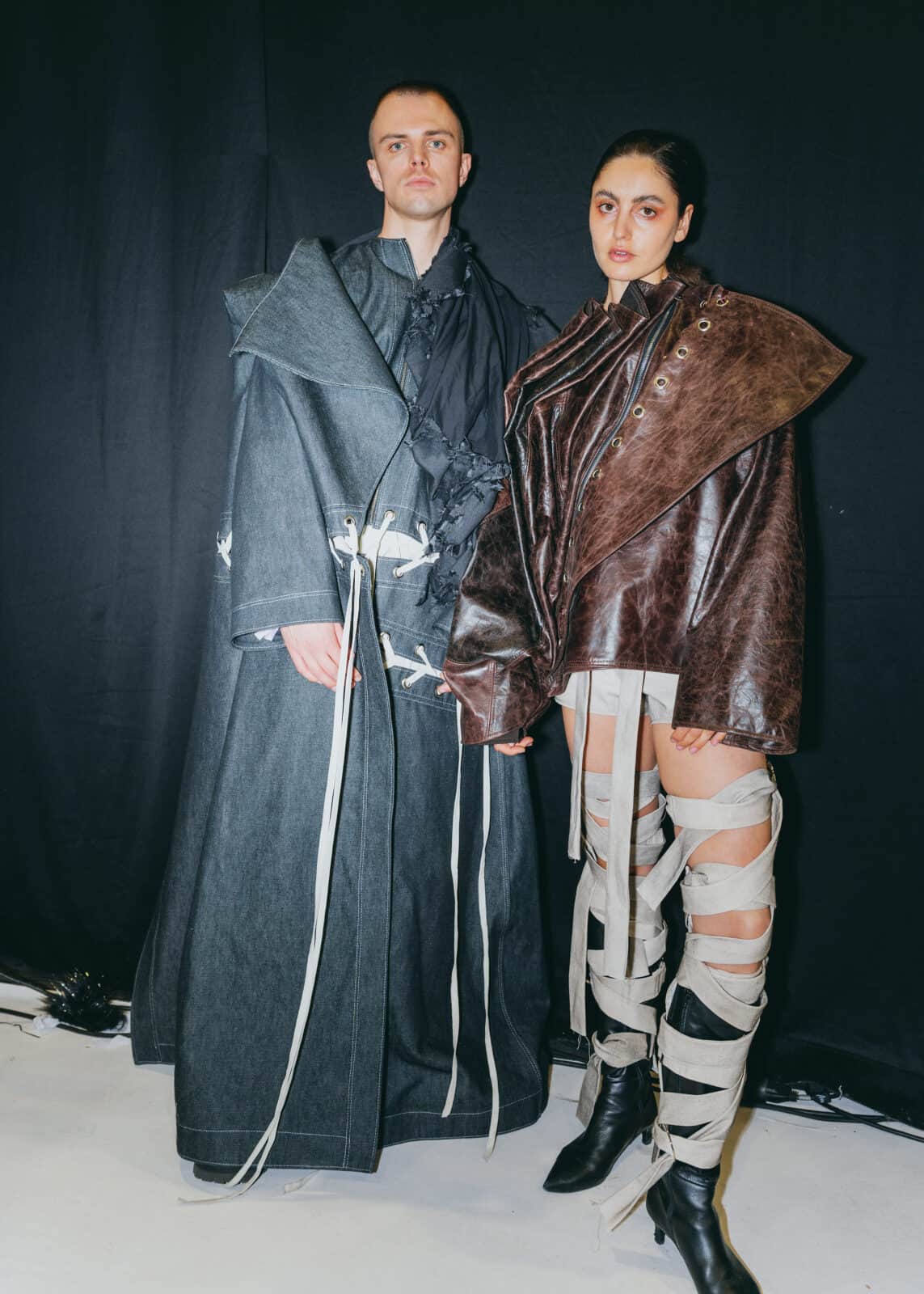
“I want to continue creating and writing about fashion, while also becoming involved in education,” says Feng Zhangchong, who studied menswear design at the Beijing Institute of Fashion Technology and worked at GQ China before joining the Royal Academy of Fine Arts Antwerp.
“The contemporary fashion system has been operating for nearly 60 years. Although there have been standout designers, its fundamental structure has remained largely unchanged and has become outdated. If no changes are made, this mechanical atmosphere will affect those entering the industry in the future. I am very concerned about it. I hope that newcomers constantly entering this industry will keep challenging and reforming this system.”
Fashion should be borderless, notes Yichun Liu, whose MA series is about women’s intentional deviation from social and familial expectations. “These borders include those of gender and of formal systems. I believe many of the new generation of fashion students will also explore this aspect in the future!”
It’s a bright future of fashion we are looking at.