

It’s 2026 and the world is obsessed with a 2,700-year-old story. The Trojan horse is splayed across bus shelters and tube stations, and the names of ancient goddesses are once more on our tongues. But among the thousands of think pieces launched by Christopher Nolan’s The Odyssey, many point out its distinctly modern sensibilities, featuring a morally conflicted Odysseus haunted by trauma and probably suffering PTSD – a far cry from the wily desensitised Greek.
Of course, every new generation brings its own preoccupations to the old story – to all our oldest stories, in fact. Shakespeare’s Measure for Measure, with its plotlines of rape and coercion, was a problematic “comedy”, but it made perfect sense in the aftermath of #MeToo. Mary Shelley’s Frankenstein always raised ethical questions about playing God, but it’s particularly resonant now when tech bros are unleashing their creations on society.
We adapt old stories again and again because they remain relevant, across time, space and culture. But sometimes we come to reject what they have to say about the world, and then we no longer adapt them, we retell them.
When a blast from the past becomes a publishing phenomenon
Literary retellings have been enormously popular in recent years. Barbara Kingsolver’s Demon Copperhead retold David Copperfield in contemporary Appalachia and won the Women’s Prize and the Pulitzer. Percival Everett riffed on Mark Twain’s Huckleberry Finn with James, and swept the board of American prizes. Maggie O’Farrell’s Hamnet is a retelling of both Shakespeare’s play and his life story, and has been a hit as both book and film. Feminist versions of Greek myths are a thriving subgenre. Derek Walcott’s Omeros, recently rereleased, is an Iliad in the Caribbean. But why are there so many reworked classics?
One reason is that it’s a built-in marketing hook. This isn’t a cynical take; from Joseph Campbell’s Hero’s Journey to Christopher Booker’s seven basic plots, the idea that there are only a few recurring ideas in fiction isn’t a new one. Framing your story as a retelling simply makes it explicit, and it is a shorthand to a whole world of readers’ half-forgotten feelings and memories.
Take one recent novel as an example. I could describe it in words like: “a mother fights to secure the survival and stability of her daughters in a rigid patriarchal world”. It sounds intriguing, but it could be many things.
Here’s what the publisher went with: “Everyone said she was wicked. Now Cinderella’s stepmother tells her own story”. The novel is Lady Tremaine by Rachel Hochhauser, and the fairy tale framing gives it a host of new meanings and associations.
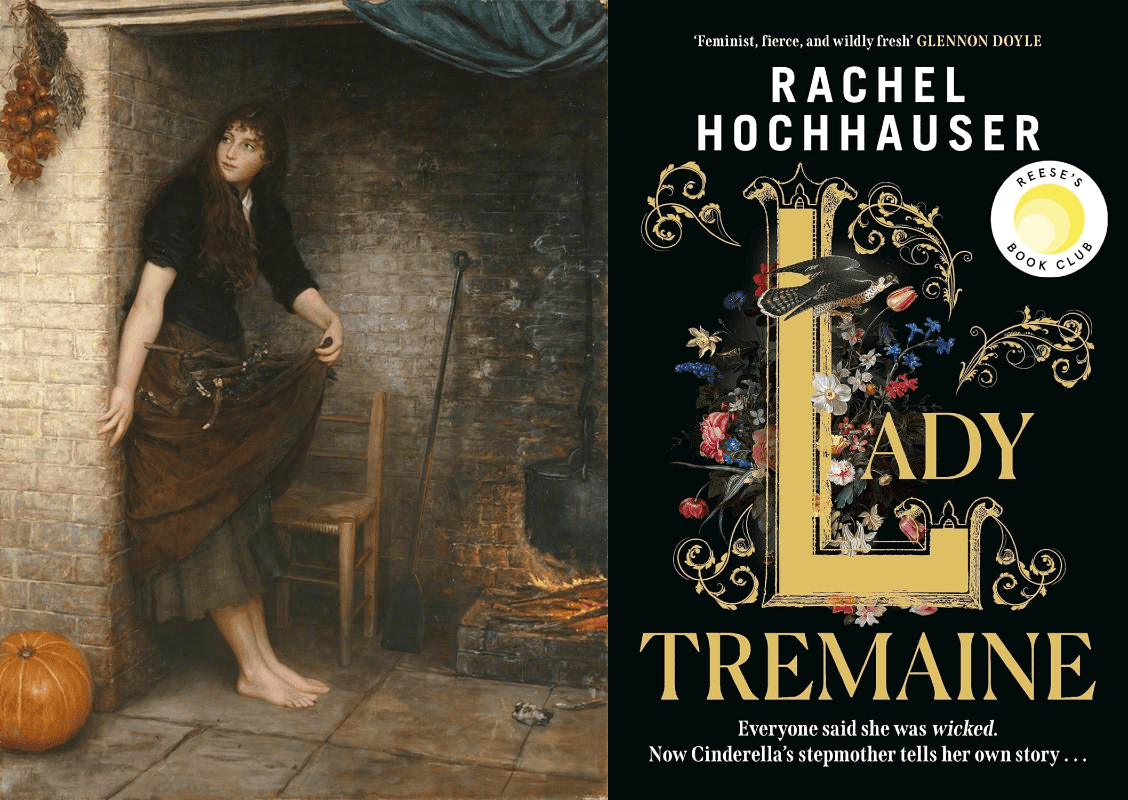
Left: Valentine Cameron Prinsep (1838–1904), Cinderella, 1899, oil on canvas. Manchester Art Gallery
Likewise, there’s an effortless hookiness to Helen Oyeyemi’s Boy, Snow, Bird, which asks, what if Snow White were a passing Black girl in the American south?; Margaret Atwood’s The Penelopiad, which gives Penelope’s view of the events of The Odyssey?; and Xiaolu Guo’s Call Me Ishmaelle, which is a gender-flipped Moby-Dick. All these books have the advantage of causing eyebrows to rise in a tell me more kind of way.
“I was vexed”, and other author rebellions
There are other reasons to retell our foundational stories. We may love them as works of art but be enraged by some of their assumptions – sometimes by the entire concept behind them. We return, again and again, but with gritted teeth. We say things like “they’re a product of their time”, and wonder if that’s a good enough excuse.
The retellings that respond to this impulse are some of the classics of the genre. The writers who created them were caught between two impulses: nostalgia and rejection. Jean Rhys admitted as much in describing her response to reading Jane Eyre. She was swept up in it, but “vexed at her portrait of a ‘paper tiger’ lunatic [and] the all-wrong creole scenes”.
Wide Sargasso Sea is Rhys’s modernist prequel to Brontë’s classic. It aims to give justice to the madwoman in the attic, aka English literature’s most famous Creole character. She is a walk-on part in the original, chaotic and exotic. Dominica-born Rhys’s version is both a takedown and a satire of Victorian ideas of empire, race, and morality. Mr. Rochester goes to the colonies to acquire a fortune by marrying a woman he has never met. But he can’t handle the Caribbean. Even the green is too green, the flowers too red, and his new wife’s eyes – he worries they might be too black.
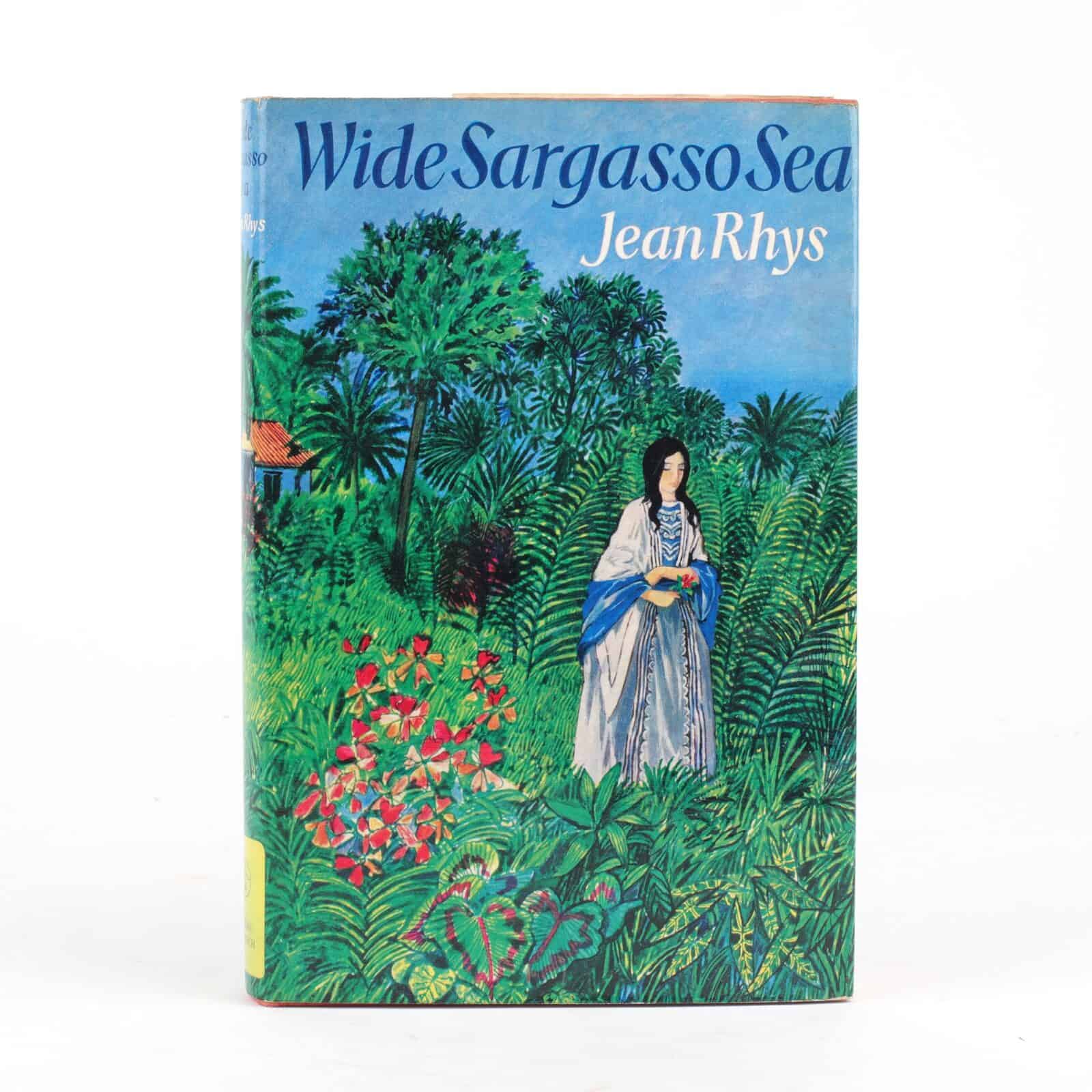
First edition of Jean Rhys’s Wide Sargasso Sea. Introduction by Francis Wyndham. Andre Deutsch, 1966.
Foe by J.M. Coetzee is equally slippery. It retells Robinson Crusoe, but its hero is a proto-capitalist who aggressively builds terraced farming on his deserted island despite having absolutely nothing to grow. Meanwhile, Friday is an African, the only survivor of a slaver shipwreck. Where the original Friday offends modern readers with his pidgin English, Coetzee’s Friday never speaks at all. Someone has cut out his tongue. His voice is absent, and not recoverable. The forced silence in the novel highlights the deafening silence of history.
Sometimes a retelling will break those silences by refusing to let a classic narrative march towards its eternal conclusion. Mr Fox by Helen Oyeyemi is a dizzying meta-retelling of the Bluebeard folktale, which is the ur-text for the powerful man and his collection of dead and disposable wives (see also, Jane Eyre, Rebecca).
But Oyeyemi doesn’t let the husband slaughter his way to the end here; instead, the women of the story break out of their reductive roles, begin speaking over and above the man, and crucially, form their own bonds. The myth, with its pile of female corpses, gives way to a Bluebeard that might actually pass the Bechdel test.
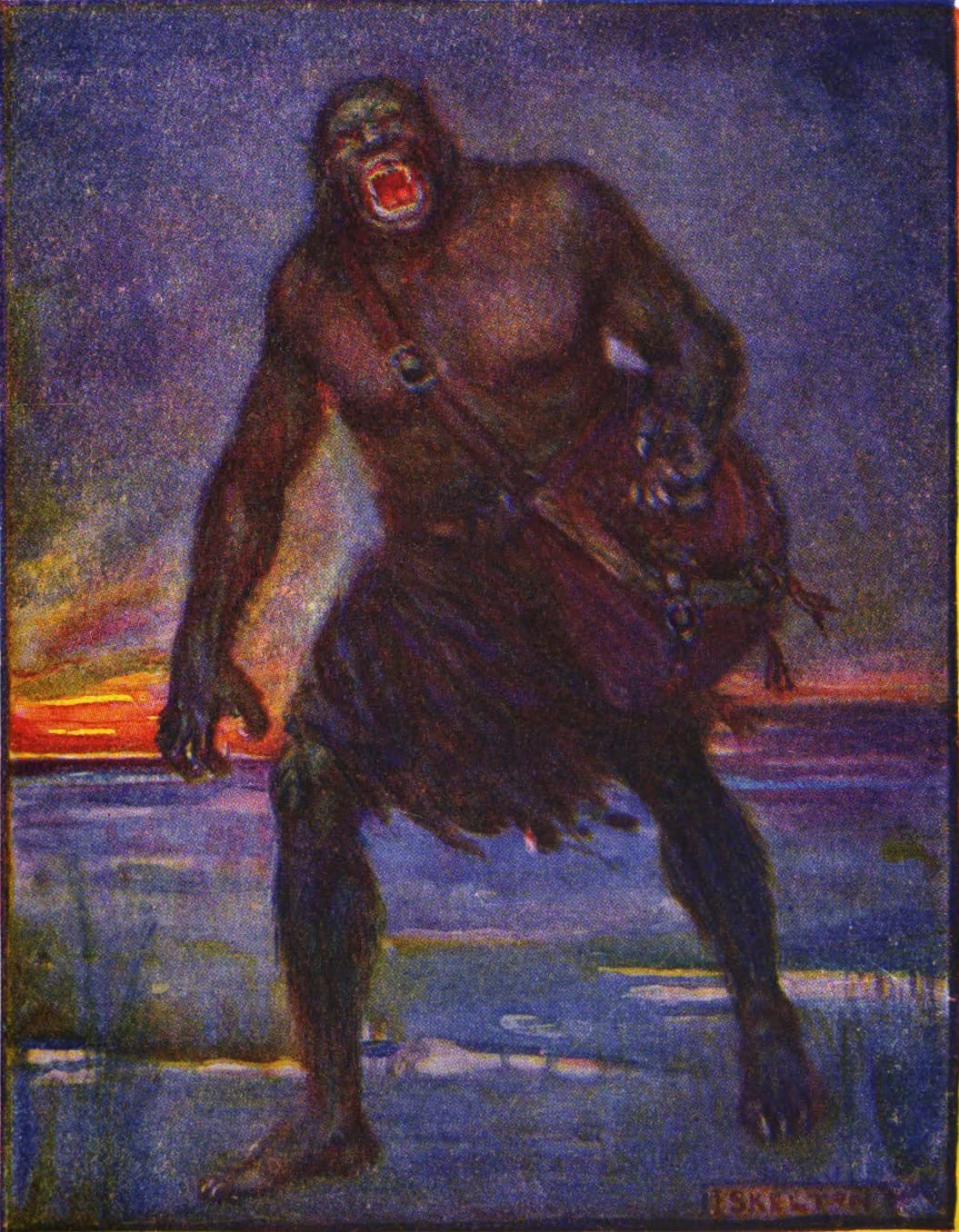
An illustration of Grendel from Beowulf by Joseph Ratcliffe Skelton, c. 1908.
If everyone has a favourite retelling, mine is Grendel by John Gardner. On the surface, it’s a simple proposition – the monster’s take on the heroic warrior from Beowulf. In the original Anglo-Saxon epic, a hyper-masculine society values loyalty, treasure giving, drinking, and pledging troths. The world beyond the mead-hall door is wild and full of the promise of early, violent death. Hope lies in a strong ruler who can kill monsters. But where does this leave the monster? Gardner’s Grendel is not strong. He’s neurotic: all doubt, a wail of existential dread in a senseless world. Gardner writes in gorgeous alliterative prose like Anglo-Saxon poetry (“I hate these brainless budding trees, these brattling birds”) that gradually corrodes under the weight of Grendel’s doubts. “Ah, sad one! Poor old freak! I cry, and hug myself, and laugh…he! He!” wails the monster.
The style is complicated because there is no proper solution to the fact that our most foundational stories are, at times, monstrous. Beowulf is an odious braggart, yes. Human nature more generally is a product of generations of violence. But what are we left with when we undermine all our heroic values? Grendel, the lonely, despised, yet seductive monster, has no answer.
When our oldest stories are truer and darker than we remember
The third reason to retell our oldest stories, and for me, currently, the most compelling, is to uncover something of the power of the original that was lost or diluted along the way.
Angela Carter is the fairy godmother of this form of retelling. Her collection The Bloody Chamber is all based on fairy tales. Her goal was to “extract the latent content from the traditional stories and use it as the beginnings of new stories”.
Carter came to fairy tales via translating, collecting, and curating them, and her rewrites are full of jokes on the originals and unexpected twists that feel modern but are sometimes very old. “In the Company of Wolves” is a version of Little Red Riding Hood, a story so foundational that we all think we know it. It can either end badly, with the wolf eating the child, or well, if the woodcutter comes to rescue the little girl. Anything else, such as the idea that Red Riding Hood might rescue herself, seems to us a modern rewrite (see the red-jacketed vigilante in the film Hard Candy).
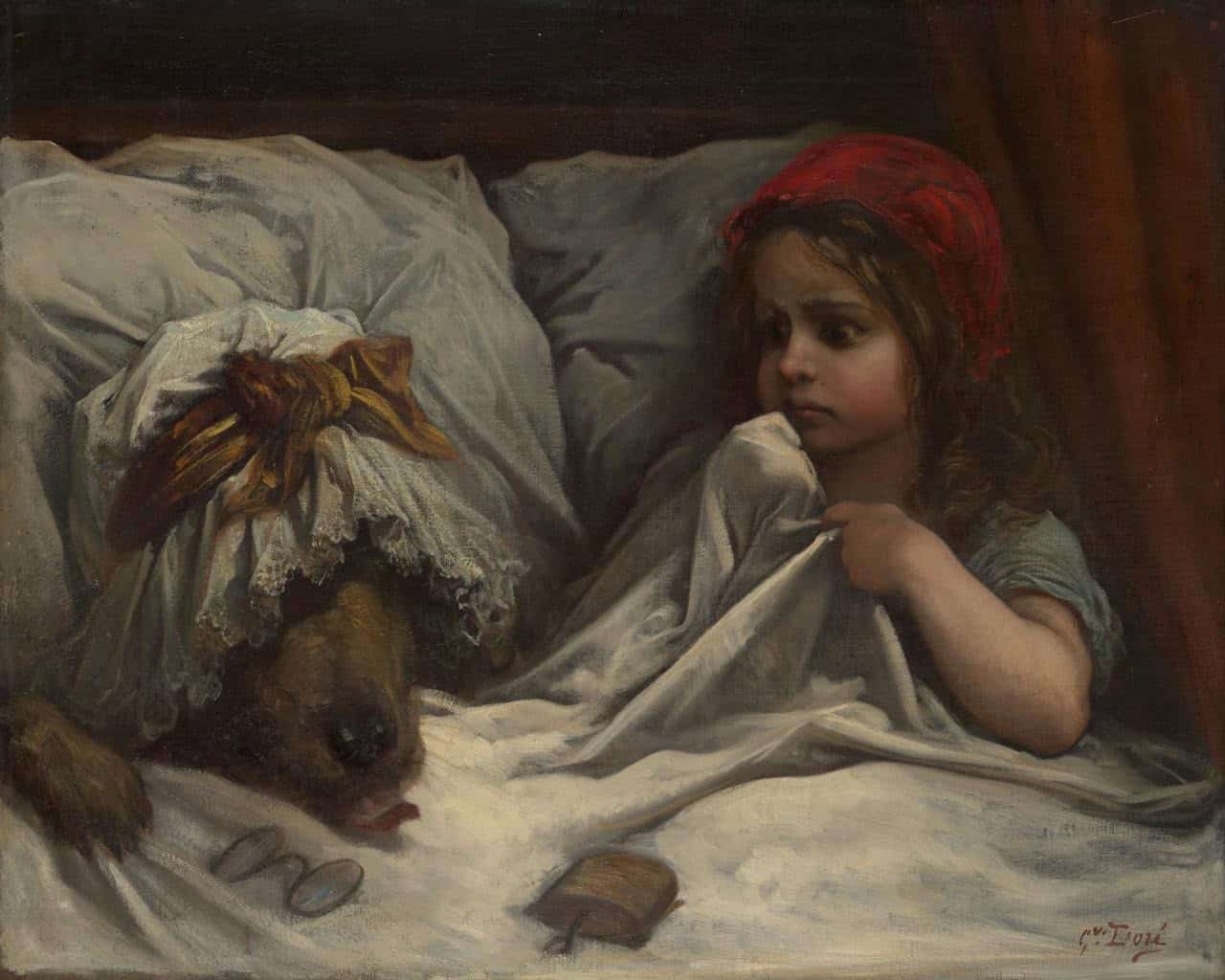
Gustave Doré, Little Red Riding Hood (c. 1862), oil on canvas. 65.3 × 81.7 cm. National Gallery of Victoria, Melbourne. Gift of Mrs S. Horne, 1962. Photo: National Gallery of Victoria, Melbourne
Carter’s story is empowered and erotic; an older Red Riding Hood burns her clothes before climbing into bed with the wolf. It feels very of-its-era, which was the late 1970s. But here’s the thing: the burning of the clothes and the girl rescuing herself both come from older sources – they are in a French folktale collected in 1885. Red Riding Hood’s cunning, and her cheerful pragmatism, haven’t been invented in the modern version, but resurrected. The tools to face a wolf were always in our culture, but they were Victorianised and later Disneyfied out of collective memory.
I was reading Angela Carter and a lot of original fairy tales about a decade ago, when I was looking forward to having my first child. Then the baby was born and the world seemed turned upside down and hard to navigate. I wanted books about this feeling of disconnect and alienation as a new mother, but one-handed research with a baby on my arm didn’t turn up many. It occurred to me that the last time I’d seen babies in literature, it was in folktales. They were changelings, babies stolen by fairies and replaced by fairy babies who are challenging and otherworldly. Challenging and otherworldly, I thought. That rings a bell.
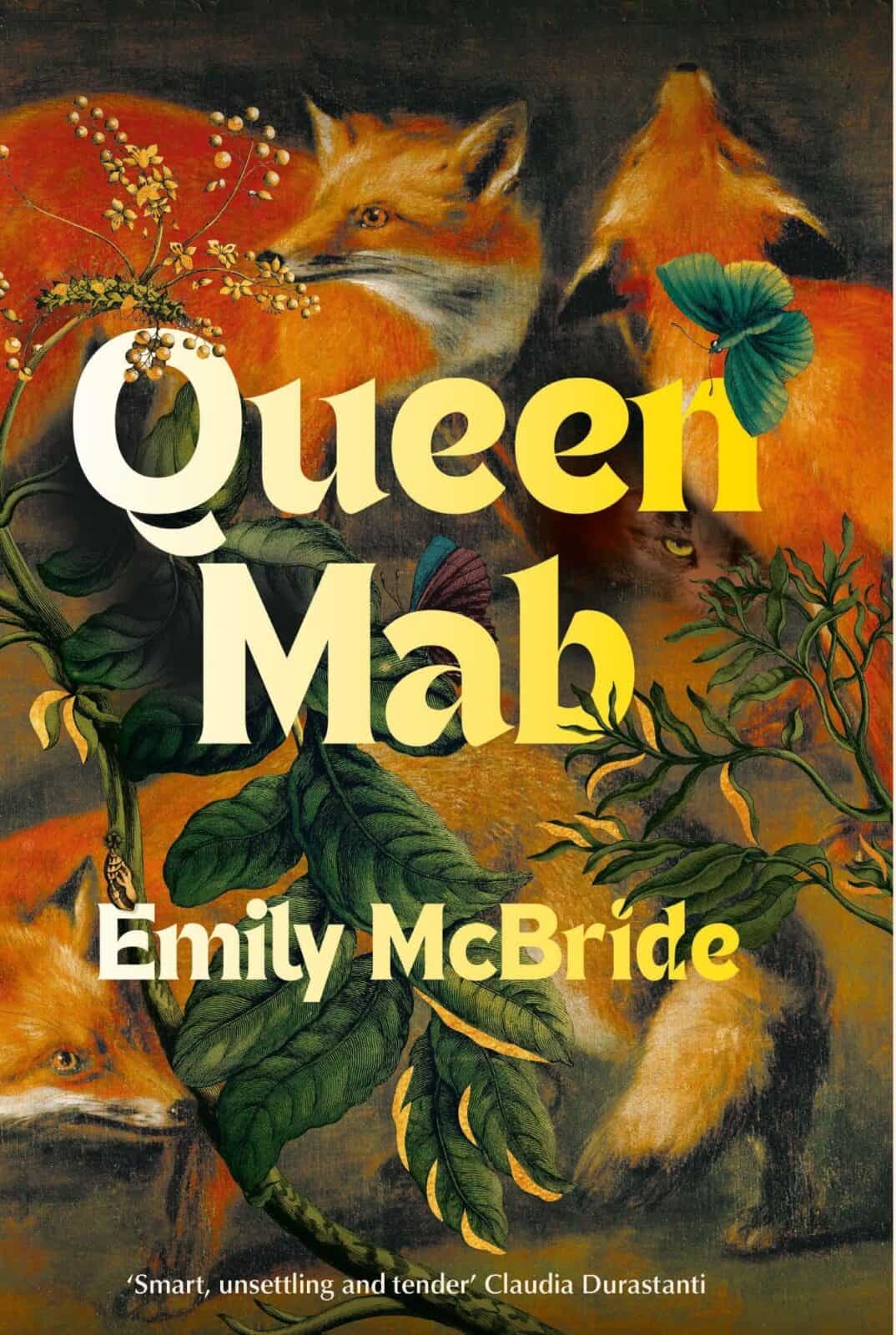
Eventually, I wrote a novel, Queen Mab, in which the protagonist is a young mother who comes to believe this has actually happened to her. That wasn’t my own experience as a new parent, precisely, but I did see that the fairy tale contained a kernel of truth, and one that connected me to women hundreds of years ago, carding wool around a cottage fire, passing down knowledge, and warnings, through a filter of superstition and myth. My own retelling began there.
At their best, literary retellings collapse the boundary between past and present, creating a living conversation. They pull off a brilliant double trick. They force us to see the past as something alive, the troubles of David Copperfield are not so far removed from Demon Copperhead’s depiction of the opioid crisis in the rural U.S. Simultaneously, whether it is a catastrophizing young mother looking for a way into fairyland to recover her lost baby in Queen Mab, or the Caribbean fishermen named for Greek heroes in Omeros, they show that ordinary lives are grand, and epic, and heroic.
Emily McBride’s Queen Mab will be published by Pushkin Press on 27 August 2026.


