
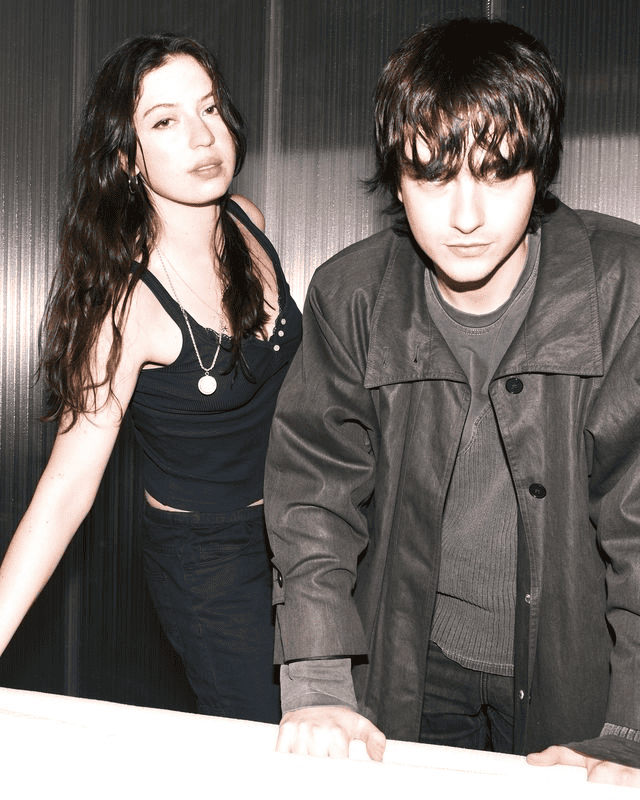
A witch post hangs on the wall of Partisan Records, the label that signed the phantasmagoric grunge rock duo, Witch Post. The lumber is pressed against exposed brick as a sigil, its wood aged and duochromatic. Years earlier, Alaska Reid divinated the name for hers and Dylan Fraser’s band by kissing a witch post in the wild. The symbol at its center was the St Andrew’s Saltire, a crucifix, the same motif found on the Scottish flag. And years before that, Alaska and Dylan didn’t know each other at all, but came from a small town with the same name – on two different sides of the hemisphere.
Today, Witch Post intends to bottle a feeling, one as potent as magic. For the release of their chrysalis EP Butterfly, Partisan Records invited The Cold Magazine to its Brooklyn office.
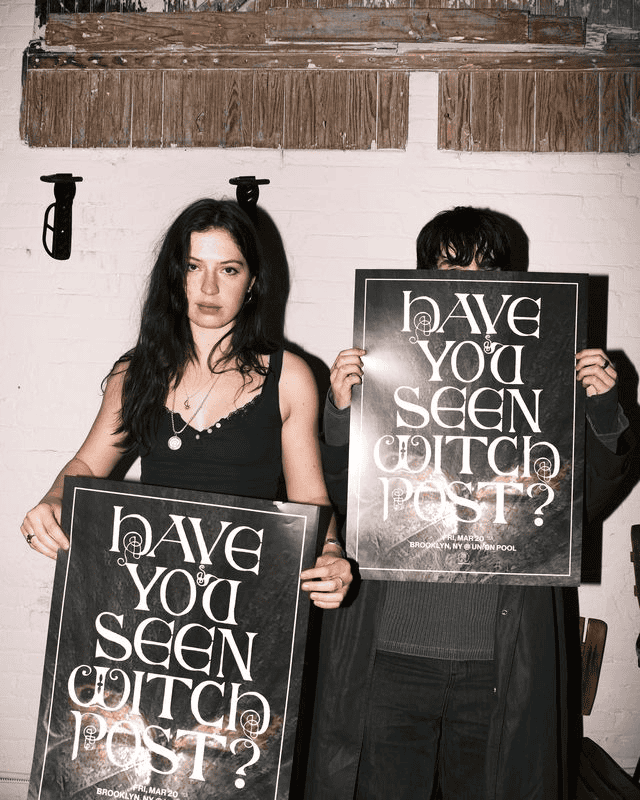
In a city far from coyotes in the mud and the Scarborough Fair, the two rockers were starburned from the whirlwind that was their US show debut. Coming immediately from Los Angeles the night before, there wasn’t much time to play in New York; they had a show that night at Union Pool, a popular bar in Brooklyn, one that’s strung with neon blue fairy lights. Dylan laughed when I asked what he thought of his first time in NYC.
“I actually haven’t seen much of it.”
Alaska chimed in, her voice fixed at a cool, unfazed level. “You were freaked out by the really giant graveyard that we saw by the bridge.”
“I actually really like graveyards. I find them very relaxing. In Scotland, you can find graveyards that are hundreds of years old. But that one felt new, and there was something really eerie about it.” Dylan’s Scottish accent rang strong around the vowels, a draw of ee, accompanied with a crooked smile.
“I actually think everything in New York is pretty old. That’s because I’m from the West.” Alaska smirked slightly.
Moving from Livingston, Montana to LA when she was a teen, Alaska Reid has had her skin in the music game for years. The same for Dylan Fraser, who spent his early childhood in Livingston, Scotland. Both entered the industry as solo projects, and both brought a different set of grunge: one of bunnies and the skull-bone West, the other of vipers and the cold dark woods. Their fated genesis occurred online. Dylan found Alaska’s record Big Bunny and covered her track “Mermaid Tears.” A month later, the two met up in London.
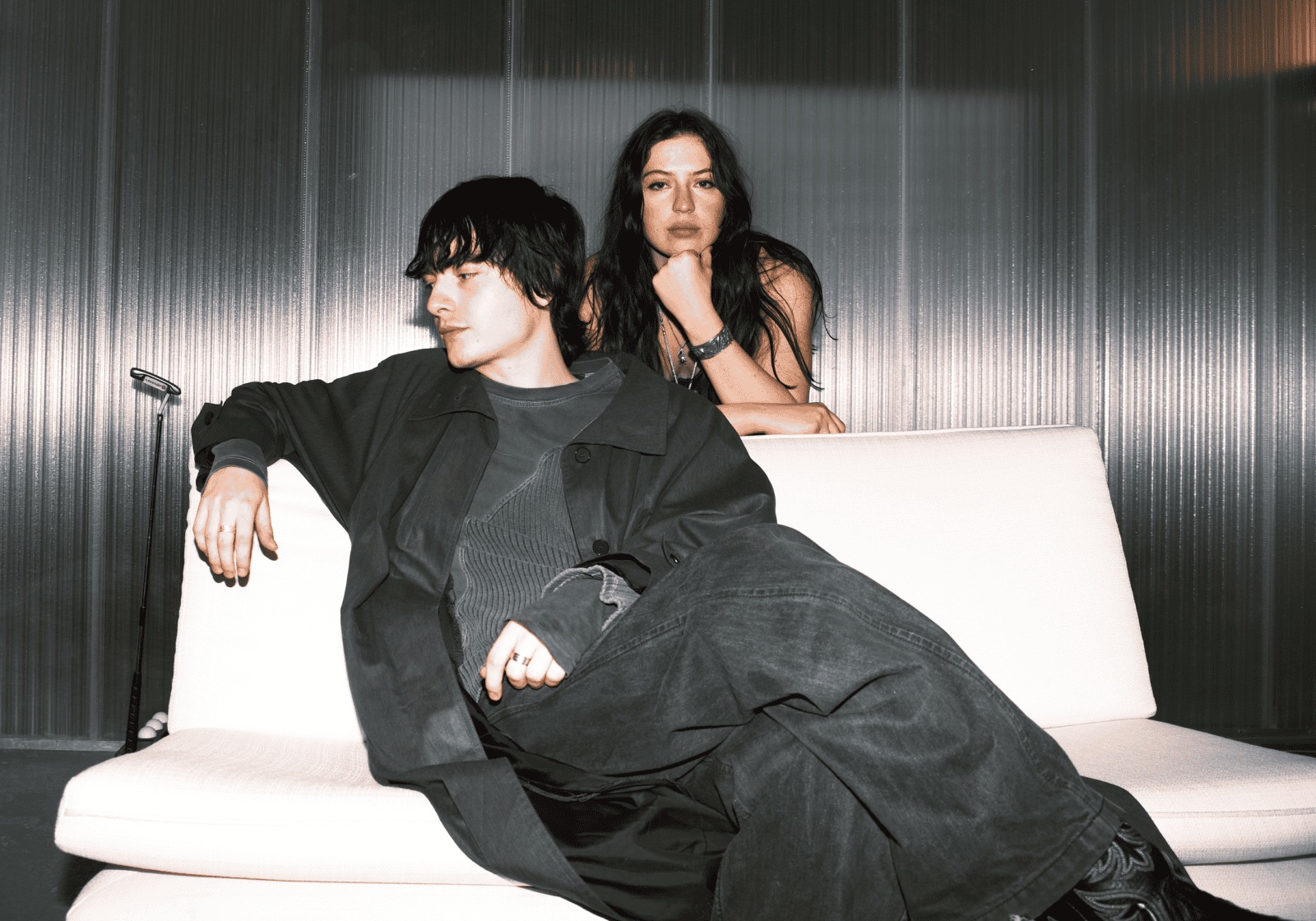
Sitting beside one another on the pitch black sofa, there’s a quiet sense of playfulness between them, like second nature, formed from years of creative partnership. Their legs were crossed in the same direction.
“It happened really organically. We were both kind of embroiled in solo projects, then we were like, for fun, we should write…” Alaska gestured with a ring-clad hand. They released their first co-written track “Vampire” while still signed solo. “And we didn’t even like it at first. But then it all started to flow. That’s what’s been fun to play with this idea of Witch Post. It’s been witchy the way things have aligned.”
“This thing only happens because of the experiences we’ve already had.” Dylan looked at Alaska. “There have been a lot of magical things that have brought us together, and some weird coincidences.” Such as the previously mentioned witch post; shortly after the fateful kiss, a black cat began to follow the songstress.
Omens are wondrous clues toward action, and catchy devices found in Witch Post’s lyricisms. Through these occurrences, though, neither lost their ground in reality. The typical expectation is that, in a duo, one artist may marry themselves to the dream of the other, and vice versa; Alaska shed light on another facet of that artistic relationship: entangling yourself with shadows of the past self, shapeshifting just to stay the same.
“I know people that, if they’re in a collaborative project with someone, they’re still in a relationship with that person they were when they were younger.” She shrugged. “We don’t have that. We met each other after we had a lot of experiences, especially in music. So it’s a different thing. It’s less messy.”
Dylan hummed in agreement. “Obviously, we have such different experiences within music. But I think we both at times felt like we weren’t taken seriously by people. We’re not really about that anymore… It’s a fucking weird industry. Especially when you’re young. People will say things to you and knock your confidence, make you think you have to be this certain way in order to be successful.”
“There are certain things that really piss me off, the accepted ideas of what the industry is. The industry is in shambles.” Alaska shook her head. “But I think the way you succeed is by forging your own path.”
It seemed the lessons integrated from their solo rides is what allowed for the charm and blossom of their tilt-a-whirl partnership, their path half-shrouded by destiny. They admitted that they still fight, don’t always see eye-to-eye. But change, embedded in human nature, is the ever-present catalyst that brought them below the witch post.
“We’re in a world on the precipice of AI for the masses. It gives you a greater appreciation for things that are handmade… This is just stuff that’s coming out of our brains. And we’re cementing that in this really weird in-between space of what a song is.”
Alaska looked to Dylan, who incanted their dichotomy: “It’s very push and pull, and we each bring things to the table.” As for what their duo brought out in each other, Dylan answered confidence, and Alaska answered softness, their dualism alchemizing into harmonious balance.
Their show at Union Pool that night packed the room chock full of listeners, admirers, shadowy figures, strangers yet to be unveiled. Witch Post’s story is certainly still unfurling, its legend continuously emblazoned in the fate of its musicians, as well as those who listen. Clues to what’s next can perhaps be found in dreams, online, in song, or on the wood hanging on the wall.