
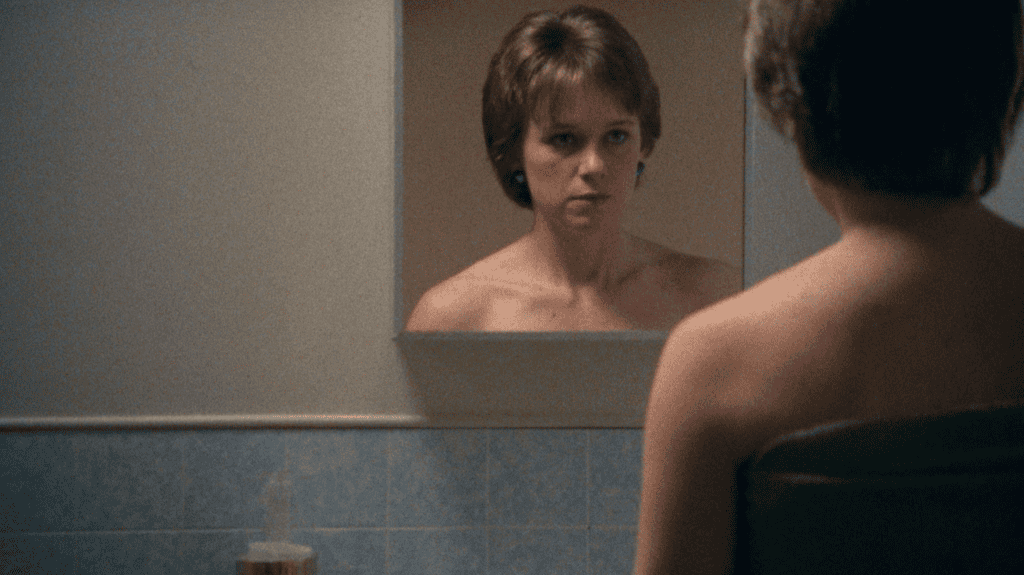
Sex work is work. This is true today, and it was already true 40 years ago, when American director Lizzie Borden gifted us the feminist masterpiece Working Girls. Yet, our society still chases its own tail, compelled by moralistic platitudes, desperate to bite off any material accomplishments sex workers have since achieved. So what at first seems like a tautology – sex work is work – still raises eyebrows.
Working Girls showcases the same intersectional solidarity that motivated other classics in Lizzie Borden’s filmography. This remarkable feature chronicles a day in the life of Molly, a Yale graduate working in a Manhattan brothel. Borden describes it as a “workplace film”, centring into the frame the mundane routines of sex workers with different socioeconomic backgrounds. The sheer verisimilitude of its cast, events and mise-en-scène have led many viewers into mistaking the independent drama for a documentary, which can only attest to Borden’s directorial prowess.
Much has changed since Working Girls was released in 1986. Sex workers advertise their services on Reddit rather than newspaper backpages, over 4.6 million creators are registered on OnlyFans, and the porn industry alone generates almost $100 billion in revenue a year. And much has stayed the same, as sex worker unions fight familiar battles – decriminalisation, police violence, deficient health services, and so on. Both the well-intentioned, adequate criticism from the left and the chauvinistic attacks from the reactionary right can lead to material retrocesses in these workers’ struggles – all in the name of ‘protecting’ them. Some challenges are new, while others have barely bothered with rebranding themselves.
We interviewed Lizzie Borden to discuss what has changed, and what Working Girls’ place is today.
The Cold Magazine (CM): It’s been four decades since Working Girls was released. Today, conversations around sex work are slightly more open, but the industry remains widely stigmatised. Is what the film has to say about sex work still relevant today?
Lizzie Borden (LB): You know, I did not anticipate that Working Girls would even be valid now, because I thought things would change so much. So to me, it’s actually quite amazing that it is still shown. When Criterion made the Blu-ray of it and I spoke to sex workers, they told me that brothels still exist. And all sex workers I’ve been in touch with believe that sex work is work. They advocate for the decriminalisation of prostitution. There’s a lot of argument about whether prostitution be legalised or be the Scandinavian model. Decriminalisation would be best because that’s the only way nobody gets punished, so sex workers still have customers.
I edited a book a few years ago called Whorephobia – there are a lot of women who I met to write essays for it and I edited their work. It was about intersectionality and whorephobia. Meaning that women in brothels, for example, might be seen as a higher form of working than women on the street, which is so wrong. Whorephobia is hinted at in Working Girls in the way the madam talked about who she hires for her brothel. I am happy that working girls still can identify with some aspects of it.
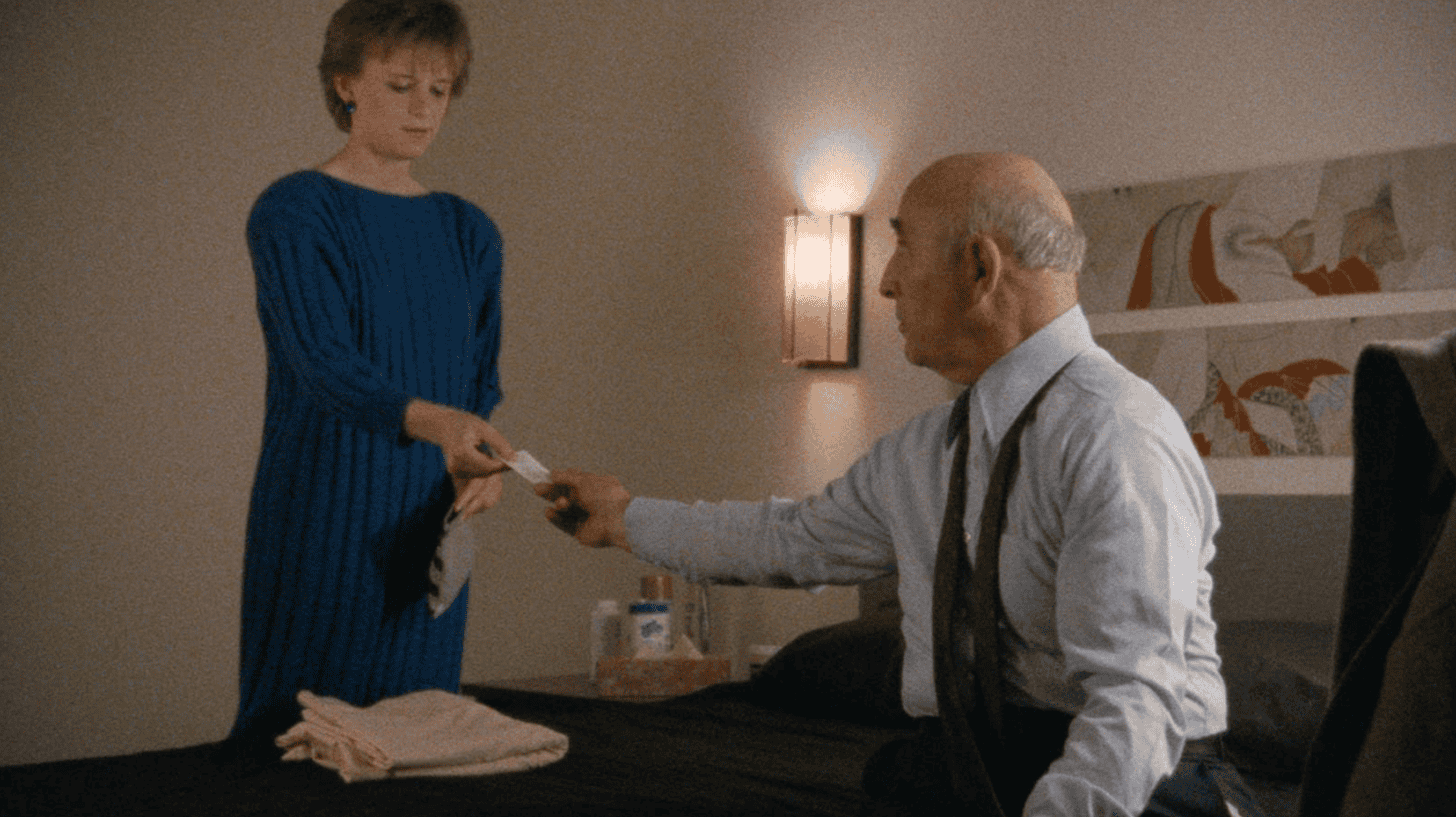
CM: I love how the film acknowledges that, ultimately, it’s all about making a living. In the Criterion commentary, you compare how much money the women in the brothel make in a few days to the 40-hour weeks in jobs like waitressing. What was your motivation for highlighting the financial upsides of sex work in the film?
LB: Well, this is kind of not private anymore – it’s in the preface to Whorephobia. When I made Born in Flames, which took five years to make, the question of “What do you do for work?” came up. I had to do various things to keep it going, because I could only shoot when I had two hundred dollars, and the rest of the time I edited for hours until I could afford to shoot again. So I had various jobs. At one point I discovered that one of my friends worked at a brothel, and she asked me “Why don’t you do it?” I told her I couldn’t, then changed my mind. It would be two afternoons a week, I would be able to make enough money that I could shoot more, and I wouldn’t have to do those other jobs.
So I decided to do it. I also decided to bring a tiny tape recorder in there and I would record everything that I could and hide it when the madam was there. I worked there until I had enough material that I knew I could make a film. Knowing I was going to make a film made it easier for me to do the work there. But for many years, I didn’t tell people. I said the film was based on a friend because I didn’t want that to be all that people talked about. But still, I did it and eventually wanted to write about it.
I wanted to show, especially because of my own experience, that it wasn’t about what people think sex work is about. For example, people think that it’s sexy. And from many of the films that I had seen, there were a lot of cliches – sex workers were always chased or killed, or somehow they were always victimised. I wanted to make a “backstage” film about working girls – of their view of the clients, of women doing it as a job, which hinted at some danger, but controllable.
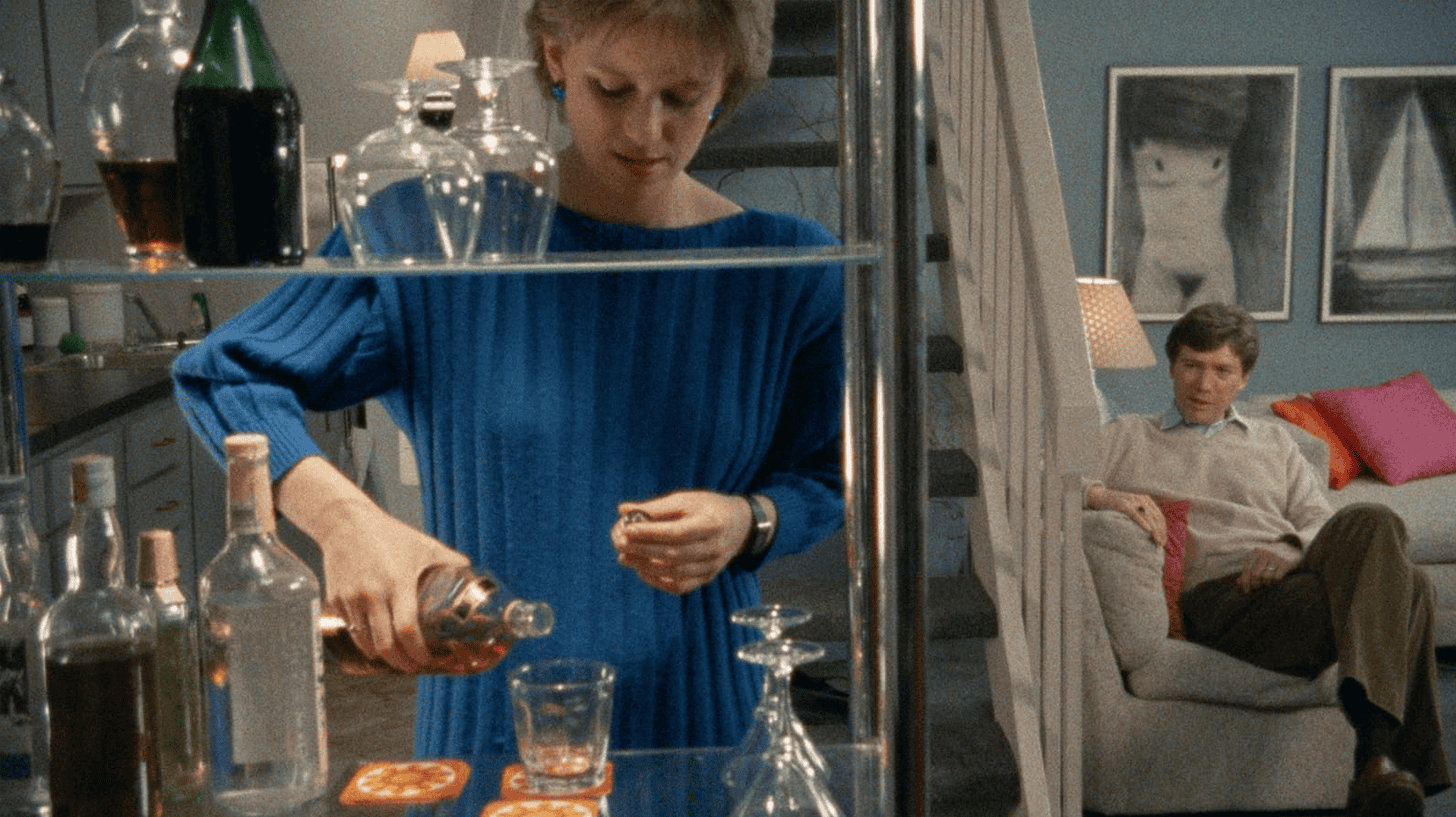
CM: Even though the film’s setting is very specific, it still feels relatable for people with conventional jobs – the workers developing their own sense of humour around work, talking behind the boss’s back, even the awkward coworker birthday cakes. It’s a film specifically about sex workers, but most workers can identify with it. Why do you think it resonates like that?
LB: Well, that is actually funny because the best compliment I ever got was a young man who came to me after a screening and said “I had a job just like that.” And he did not mean sex work. Too many jobs are like that: the boredom, the long hours, the forced politeness, and the boss who makes everything worse by calling it ‘professionalism’. You clock in and clock out. I always ask people after screenings “Does anyone have a job they like?” And so few hands go up. What options do people have – do women have? Women supporting children, women with no credentials, immigrants, women with university degrees worth nothing on the outside. To me, it’s ultimately a question of how we find more meaningful labour in our culture.
More women than you can imagine have worked in brothels and as strippers – Nan Goldin just came out about working in a brothel, in the documentary All The Beauty And The Bloodshed. There are some well-known writers, filmmakers, artists, tenured professors, who worked in the one I did – but would never admit it.
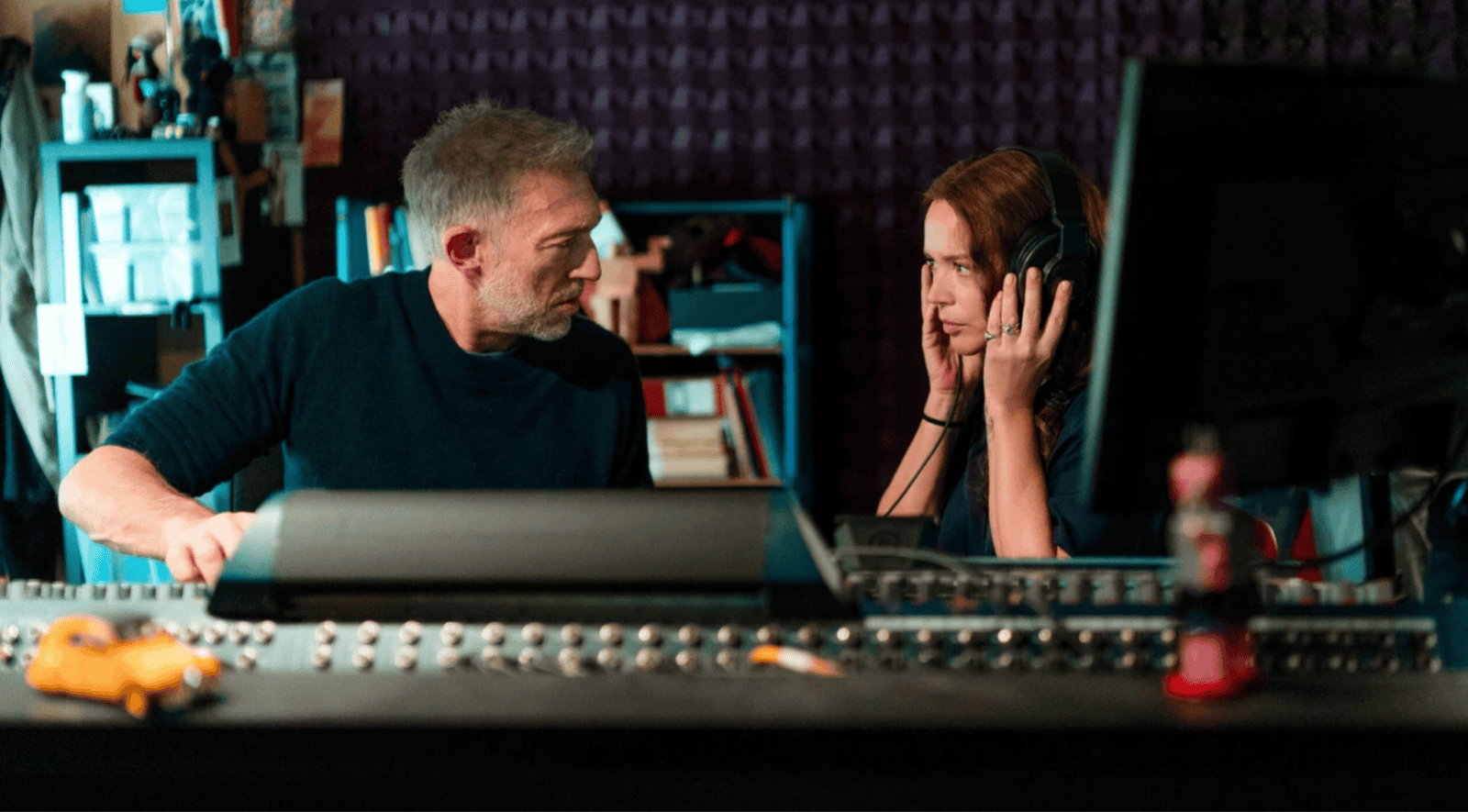
CM: The brothel’s madam, Lucy, is one of the film’s most complex characters. You perfectly capture that petit-bourgeois aspiration – the obsession with work ethic, cleanliness, and efficiency. She capitalises on each worker’s characteristics and adjusts how she speaks to manipulate them accordingly. Could you talk about writing Lucy’s character?
LB: She was totally based on a real person. So much of Lucy’s dialogue, “What’s new and different?”, and the way she acted – the way she manipulated the characters, the way she manipulated Molly to stay, the way she treated Dawn – were drawn from a real person. Lucy didn’t respect Dawn so she was condescending towards her. And she related to Gina and April, because they worked in other places and had seen other brothels. Gina could talk straight to Lucy, and Lucy sought dating advice from April after she had a fight with Michael like, “Did I do the right thing”?
I don’t know that I could have invented Lucy. She was just that particular person. Someone who obsessed with money, obsessed with buying things and so, so obnoxious – the way she would come in with her new clothes and show them off to the women working for her and tell them how much they cost. She had no empathy for the fact that these were working girls, right? But she was one step away from that. She used to be a working girl herself but soon found a way to make more money by becoming a madam.
CM: Working Girls is rooted in a physical workplace, where the power dynamics between madam and worker are very clear. Today, with platforms like OnlyFans, the real bosses are anonymous shareholders who, much like Lucy, likely don’t consider themselves pimps. Do you think the traditional, direct exploitation of figures like Lucy pales in comparison?
LB: On OnlyFans, the platform takes about 20 percent, and the woman has more agency – she can decide what she posts, when she works, what persona she creates, and she is not in a room with a man she has been ordered to service. She is still working inside a market, still performing for demand, still giving a cut to a platform that profits from her body and image.
But in Working Girls, Lucy’s brothel is much more intimate and coercive. Lucy takes 50 percent, controls the house, controls the rhythm of the day, makes the women do chores, and behaves like a tyrant in her own little kingdom. She also assumes the right to manage access to the women’s bodies. That’s why I included the scene where Dawn refuses a client, and Lucy is forced to give him his money back. For me, that scene is crucial because it shows the limit of Lucy’s power. She wants to run the place like any other business, but the “product” is a woman’s body, and Dawn is saying no.
So while OnlyFans may offer more distance and more choice, it doesn’t remove exploitation. It just changes the architecture of it. In the brothel, the exploitation is embodied in Lucy, in the house, in the chores, in the waiting client. Online, it becomes more abstract – a platform, a percentage, an audience, an algorithm. But someone is still profiting. I do think Lucy and brothels like hers pale [in comparison].
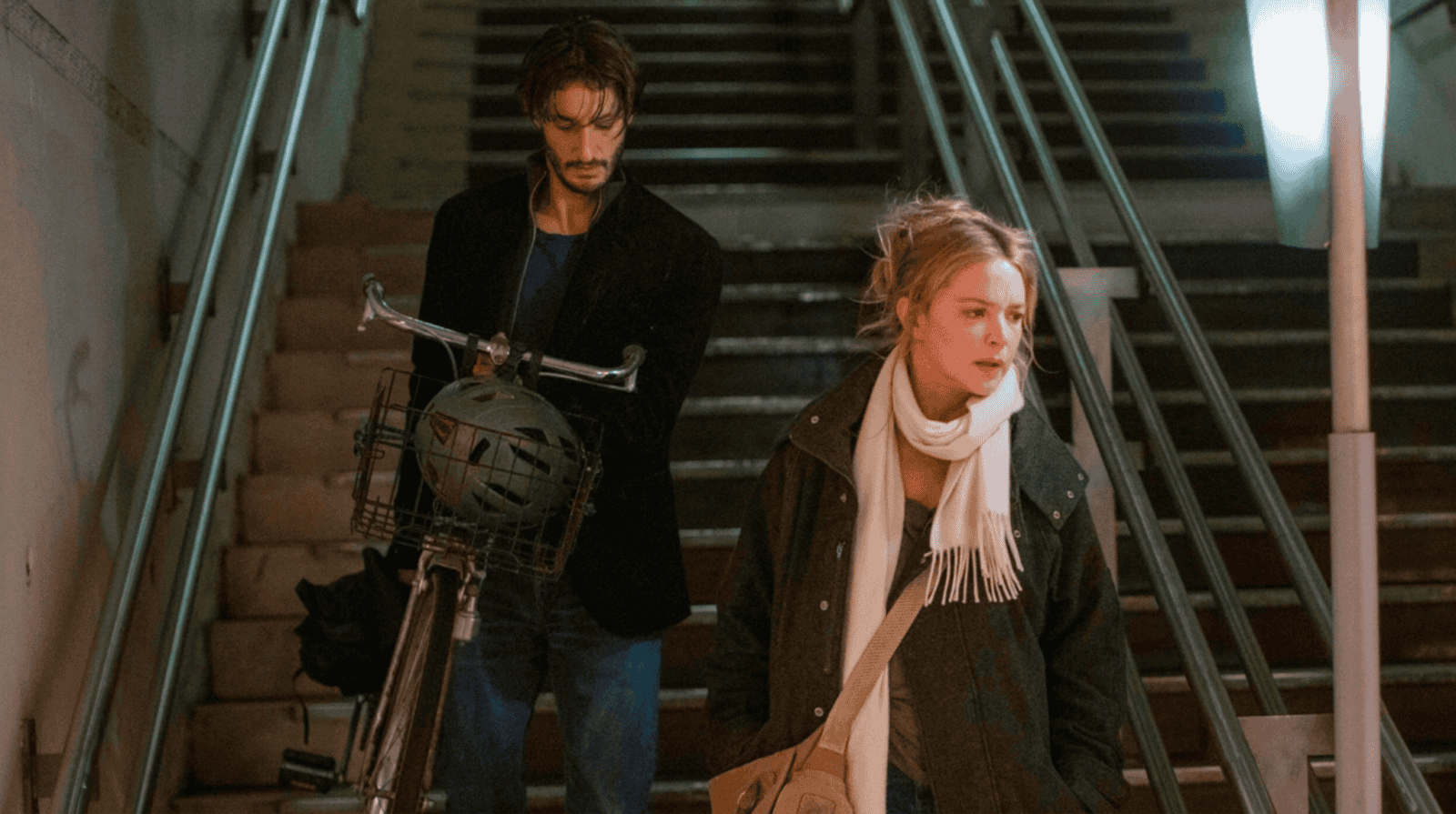
CM: Let’s talk about that fantastic scene where April reprimands Molly for her “university girl” tone. For Molly, this is a temporary sacrifice within the gig economy, but for April, it’s a lifelong career she can’t escape. Was the goal always to highlight how different circumstances and levels of privilege shape each worker’s perspective within the brothel?
LB: Yes. In writing the script, I tried to include characters, based on real people – sometimes composite characters – who manifested every aspect of what you’re saying. Some who choose it and some for whom it is the only choice. The reason the women are there – with or without a goal – shapes their attitudes and experiences.
I was worried whether the scene where they’re all having lunch might be didactic because the women on the day shift are talking about why they’re there. And that’s when Dawn gets into that riff calling Molly a whore. I knew she could carry it off because she’s very funny. I wanted it to be silly and funny as a way to talk about what the word ‘whore’ means, what the word ‘prostitute’ means, what ‘working girl’ means. What are the differences? When can they be used? Sex workers have reclaimed the words proudly, but when used by others, they are demeaning.
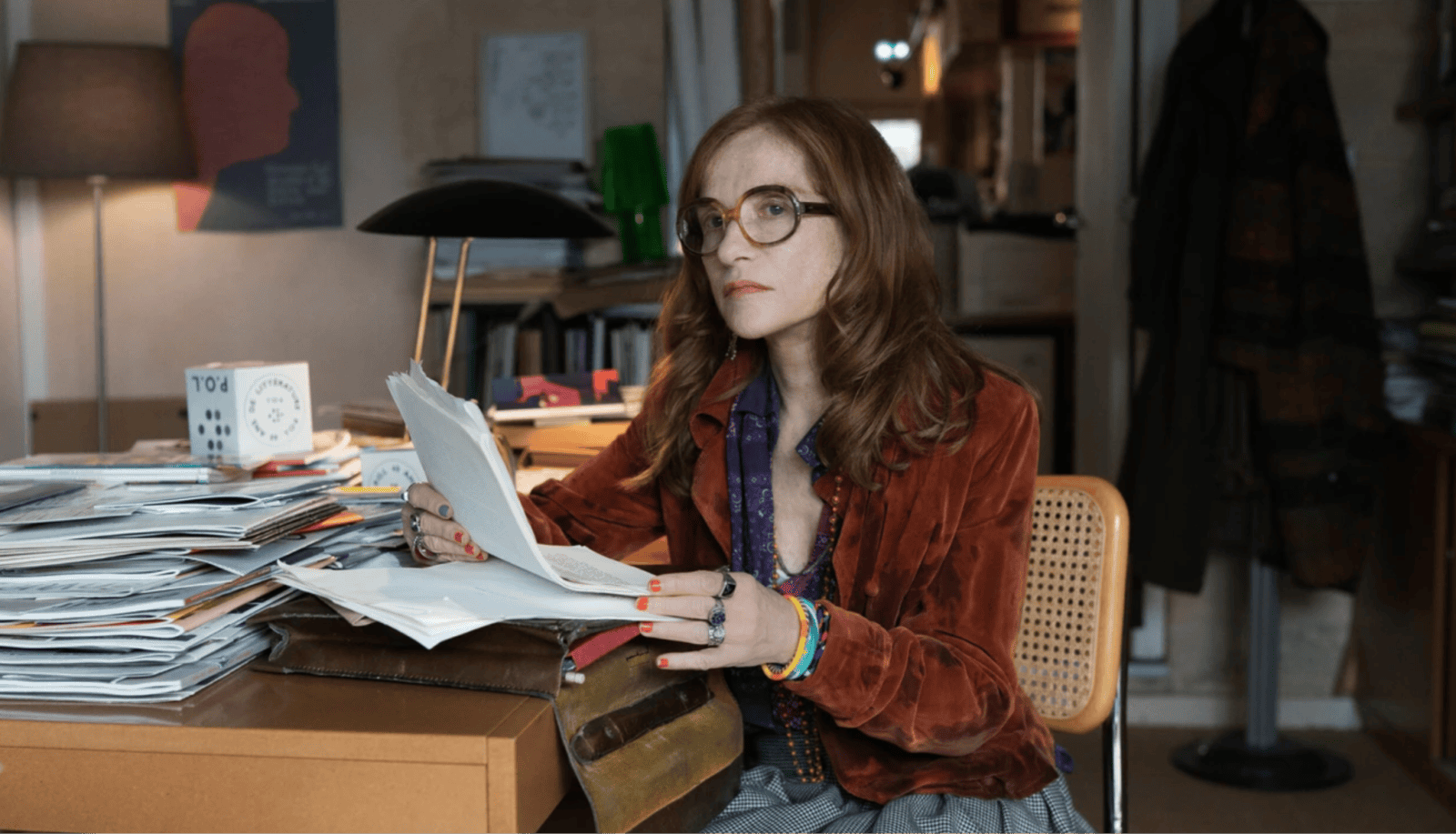
CM: There’s a subtle but incredibly powerful moment that really stayed with me – the look exchanged between Debbie, the only Black sex worker, and a Black client who immediately becomes self-conscious upon seeing her. Lucy, sitting between them, is confused by the silent exchange. Can you tell us a little about that scene?
LB: I’m so happy you picked that scene because that is one of my favorite scenes in the movie because of the small movements in it. Because one of the issues that still goes on, and I wrote about in Whorephobia, is there’s still a lot of colourism. In Atlanta, for example, it’s fine to have really dark skin in strip clubs. But in New York and other cities, there’s often extreme colourism in strip clubs and brothels. What I was trying to show was that Lucy didn’t understand that a Black man would not want to see a Black woman there, that he came in to see anyone but a woman of his own race. And Debbie as well – wondering if they had any friends in common. And, still, the little pang of being rejected. Their exchange of looks was meant to convey all that.
So Lucy didn’t understand Debbie’s confidence when she insulted her and told her not to expect to do as well as the others. It’s true that Lucy – and the brothel it was based on – would only hire Black women with light skin. It’s ugly and racist but true then and now. When Michael play-flirted with Debbie later, Susan had to commandeer the conversation back to something she could understand: shoes. I loved playing the scene in looks and small gestures.

CM: In the Criterion commentary, you said that today you’d cut Molly’s “What you ever heard of surplus value?” line to Lucy. Why would you cut it?
LB: I used to say I should have cut the surplus value line because Spike Lee gave me so much grief about it when we were both at the Director’s Fortnight in Cannes. He said “That’s so didactic, that’s so you, it took me out of the film.” Because he was kind of a friend back then, it stayed with me.
But I’m glad you asked because with time I’m glad I left it in. Working Girls is all about labour. Some men were disappointed when it came out that it wasn’t “sexy,” but I was interested in the work – the sexual labour, the emotional labour, the performance, and the practical labour – the towels, the condoms, the laundry, making drinks, taking out garbage. Even “doing money” as Lucy liked to call it.Molly would have read socialist and feminist texts. My previous film, Born In Flames, came out of those ideas and Working Girls is a continuation of them. Lucy takes 50% and controls the house, the time, the rules and the women’s bodies. That is surplus value in the most intimate form possible. The film is a workplace film and Molly is naming the workplace: look at who profits.


