
Technofascism. Ecology. Dreamscapes from the future. These are the core themes that Chinese-born, London-based artist Xin Liu treads.
Originally trained as an engineer, Liu was featured at this year’s Frieze Festival. Often using natural materials as well as scientific equipment, her pieces facilitate a conversation around permanence, human progress and exploration. Not only this, but her works invite viewers to stop for a moment in order to enjoy the meditative quiet she curates within her art.
On a planet facing climate change and ecosystem collapse, both brought on by relentless human advance, what can we take away from plants like duckweed? Liu’s work invites us to look inward to find a greater meaning in our collective future and our connection to the natural world.
Her piece Insomnia displays a silver metal tank lit up with fluorescent light where dots of duckweed leaves grow on the surface. Surrounding the tank are two metal structures with thin streams of water trickling down. The almost-sterile lighting juxtaposed with the gentle sounds of water seem out of a sci-fi dream. They force the viewer to make sense of the artificiality they’re seeing, with the feelings of peace concurrently created by this other worldly oasis.
Cold Magazine (CM): Many of your pieces combine themes of technology, ecosystems, womanhood, to name a few. Where do you think your fascination with these topics came from?
Xin Liu (XL): Well, I feel like all art-making is kind of like self-portrait, one way or the other. I’m a woman, and I was trained as an engineer. I feel like I really think of engineering, technology, and science as just a different language or structure of knowledge where people understand a world that is going several times parallel. But sometimes they overlap with culture, arts and philosophy. That for me is really fundamental in the way I understand the world.
I also grew up in the desert. It’s kind of funny, there was someone today actually walking near the booth. He grew up in a very green and beautiful area. And he was like, “oh, you’re so interested in this, in these plants. We see those stuff all around where I grew up. I never pay attention to it.”
Now I’m thinking maybe there’s something about the divide. I didn’t grow up with a lot of nature in the desert area, so every green is manufactured by people who are living there, water is irrigated and channeled all the way in from other places. There is something really potent for me to think about – what is nature, and how we’re making it.
CM: Which desert did you grow up near?
XL: My hometown is called Karamay. It’s all the way north west, so it’s really inland.
CM: Your booth for Frieze London features duckweed, previously seen as a nuisance for over growing in ponds. But it is now being studied as a potential future fuel. What was your thought process when considering the nuance and symbolism of this piece? Why duckweed?
XL: I saw a picture of a duck covered with it, in the pond. I think it’s crazy to think about what is a predator and what is not, a lot. Why has it become so elusive?
The reason that the plant is used for all these technological possibilities is because it grows so fast. But then like in nature, in London, for example, near the canal, you would have sections fully covered by it. And because it’s blocking the sunlight, everything beneath would actually die. Essentially, you’re putting the carpet on top of the river. It’s so much about these natural processes becoming morally vital roles, productive or not productive.
I think it’s a very intriguing angle to think about. If one day we are literally eating green food, made out of this duckweed. Is it a good thing? But at the same time, you could go to fancy supermarkets all around the world and you will have something like microgreens, it’s just weird. We are thinking about nature and food production and the way we consume. And then there’s a sterilised process, totally detached from where those plants naturally are coming from.
CM: For viewers coming to see your work, what emotions do you want your art to evoke?
XL: I think the booth is kind of crazy. I wanted to create something quiet, but I was like, oh my God that’s crazy, but we’re going to do it. The booth has this, you know, raindrop that is really meditative. The aura of water slowly flowing. I think there’s something about that, it’s really captivating. I saw so many people just staring at it.
So the main piece is called Insomnia and I’ve been thinking a lot about sleep, or if you couldn’t sleep, like how you think about time, and how you start looking at this tiny, tiny, tiny, tiny movement, and thinking about time stopping. That’s really what I want here.
The inspiration for the work is ultimately about how living organisms, whether it’s plants or people, are never going to sleep, we are constantly under this fluorescent light.
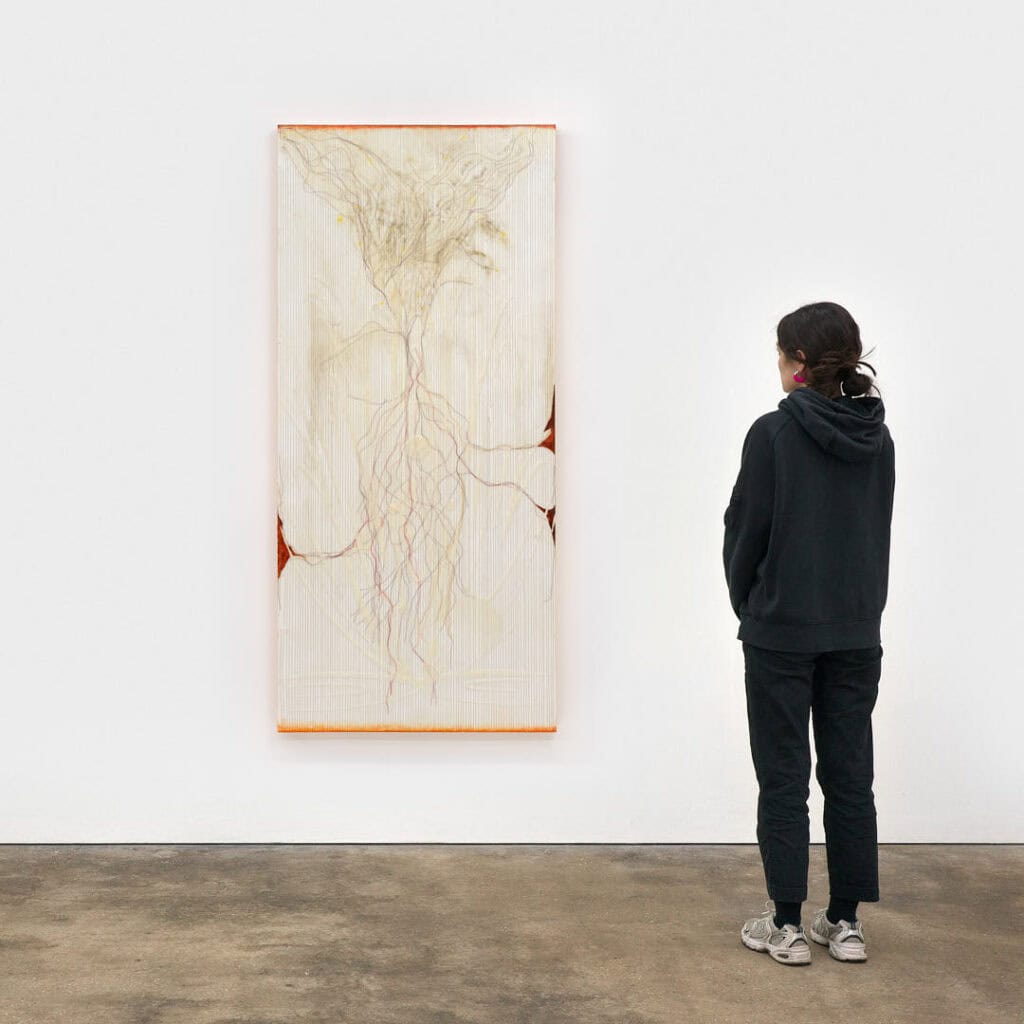
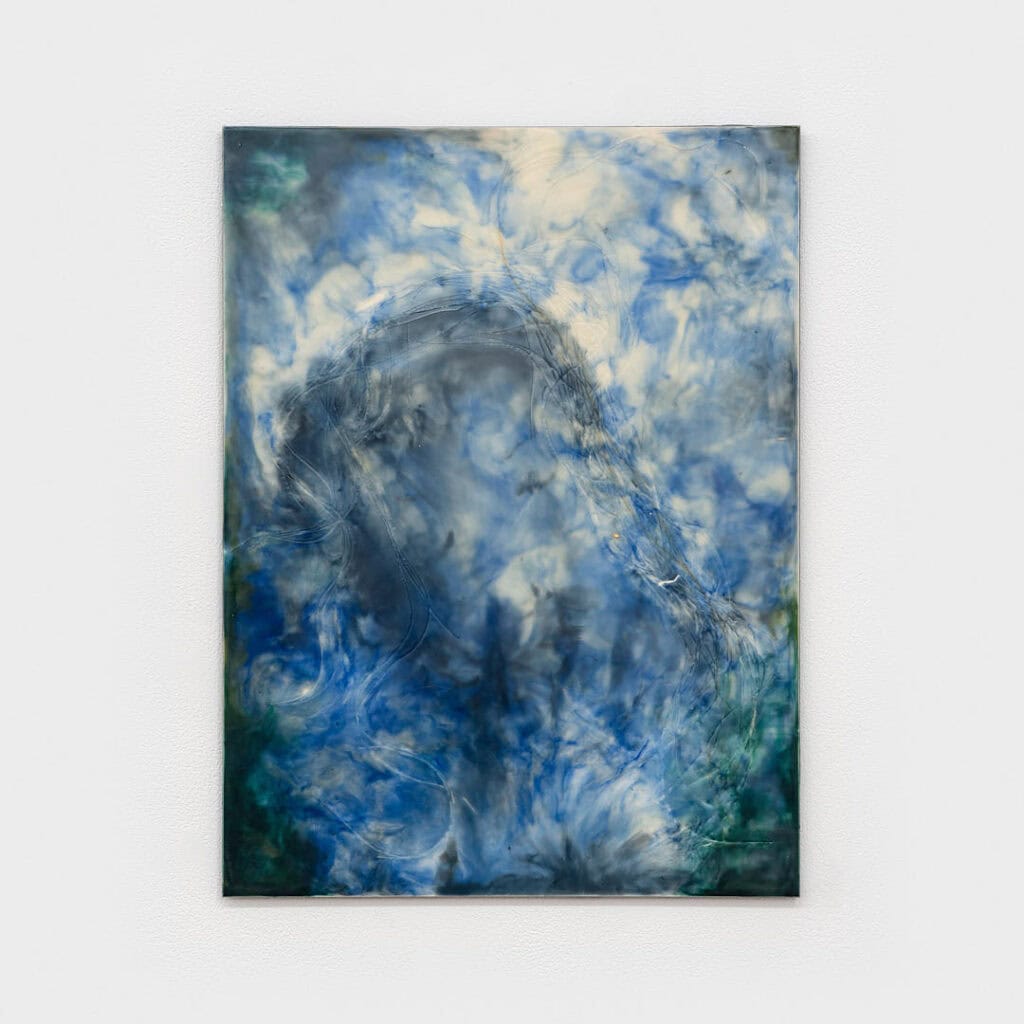
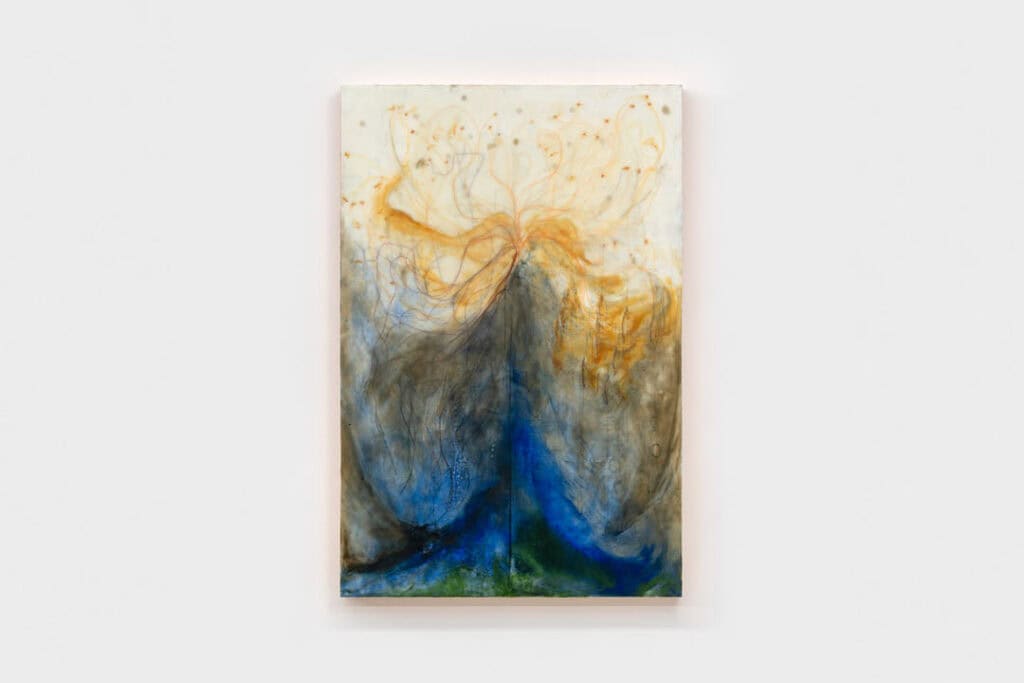
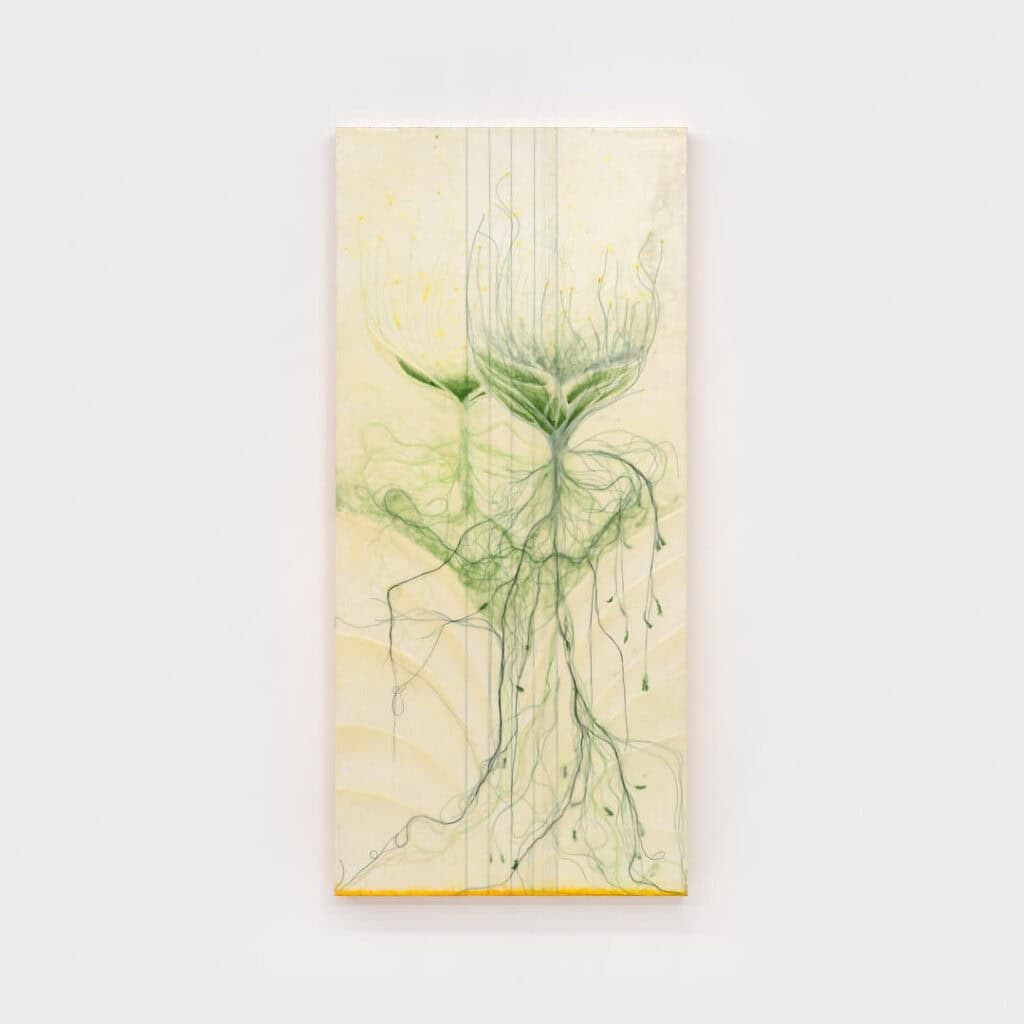
CM: It sounds like having an oasis of quiet in a very busy festival is really nice. I was reading about how you’ve done work with beeswax, resin and other materials like that. What has been your favorite natural material to work with, and what has been the most difficult to work with?
XL: Oh, it’s the same thing. It’s beeswax.
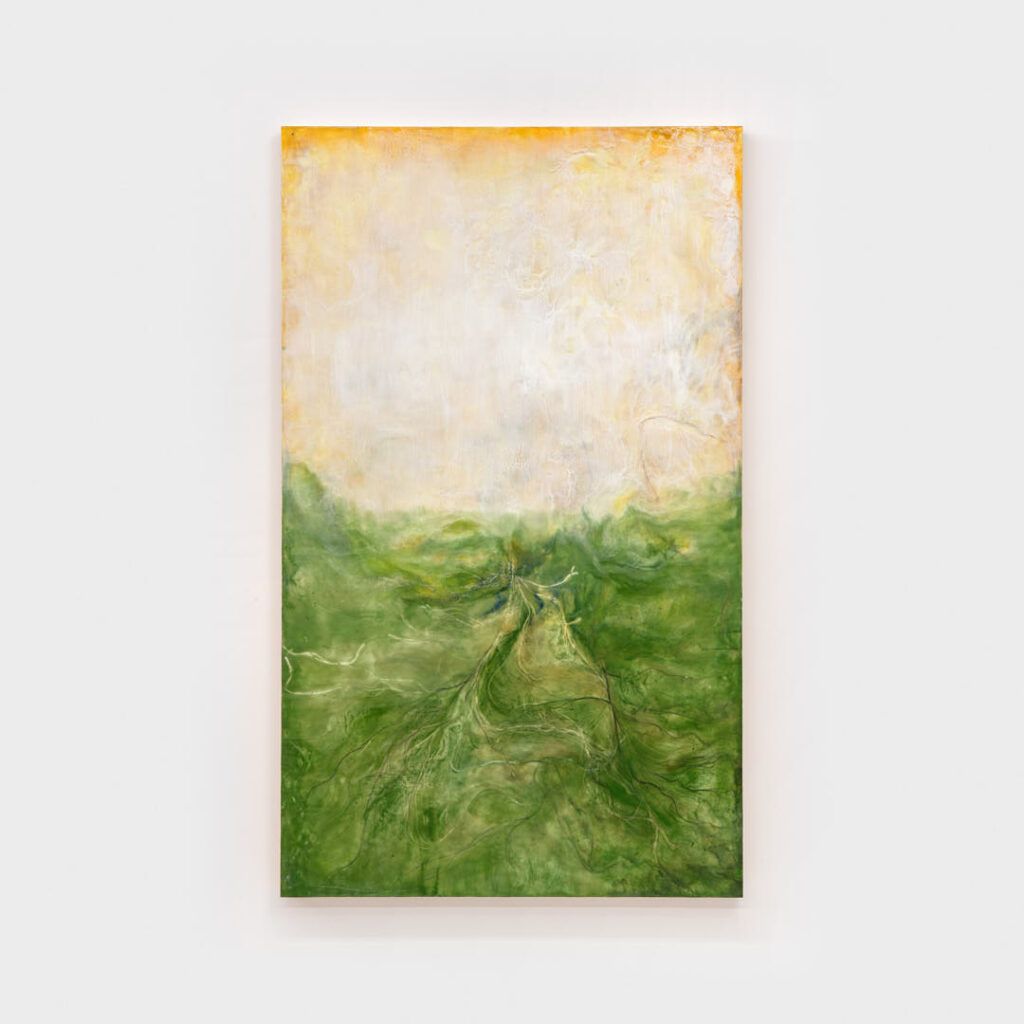
It’s my favorite and it’s the fucking worst. It’s very magical because it’s natural and it has the smell of beeswax, which is very comforting. At the same time, once it melts, it doesn’t hold pigment. Once it’s too hot, the pigment floats away. It says it’s a painting, but it doesn’t stay.
It’s just a mess. You know, the painting of candlewax, but it’s extremely addictive because it’s both painting and sculpture at the same time. It’s just like perfect materials for me. I’m really obsessed with it.
CM:Do ideas for new pieces come to you all at once fully formed? Or do the ideas grow and change while you’re working on a piece?
XL: Oh, definitely change and grow. But sometimes I will have a moment like: Okay, this is where it ends. You know, like, it grows to a point and then: Okay, stop.
I think that is always the hardest decision. This is it, not adding more stuff. I think it’s much harder to know what to cut. To stop adding more things. But I think you know, it’s the sense of trust. To just stop making more.