Seduction, Power, Obsession: Mugler SS26.
Written by: Isabel Seesarun
Edited by: Penelope Bianchi
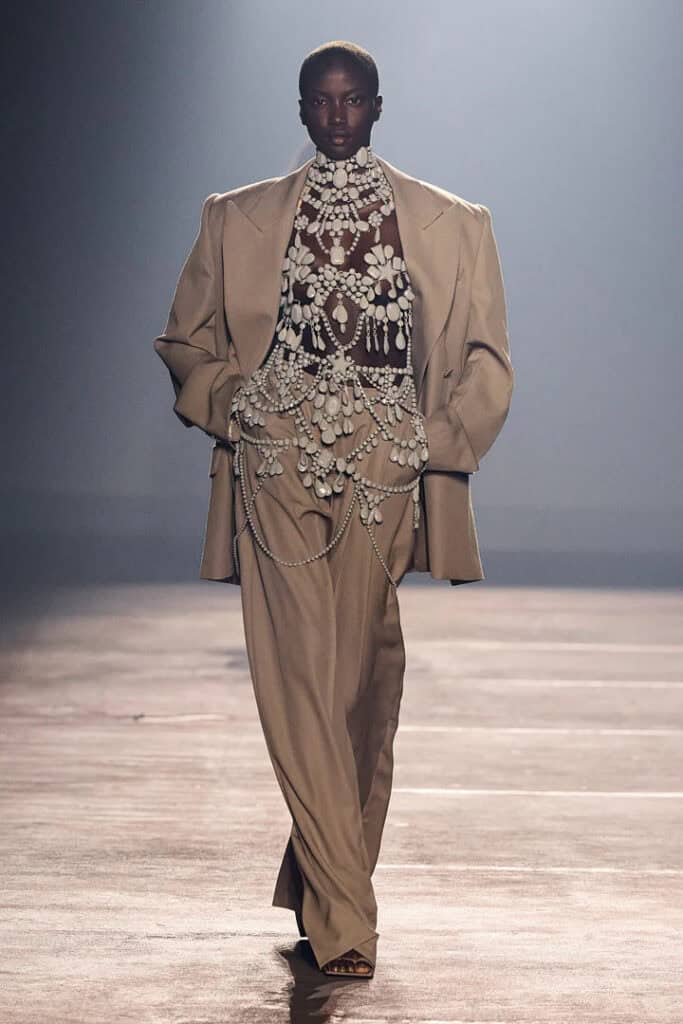
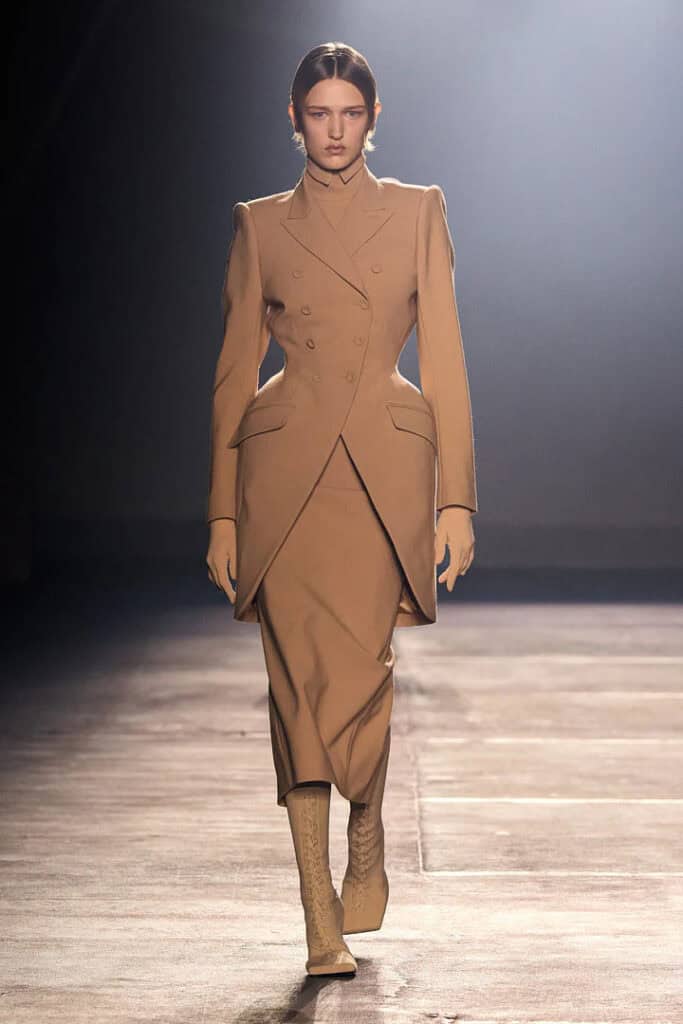
Hidden in the basement of a car park in Paris’s 11th arrondissement was a debut to remember. A concrete backdrop, plain and ominous, meant that there was nothing to distract you from the clothes. An intentional tunnel vision. The harsh contrast between the dark concrete and bright spotlights gave the illusion that we were watching actors float onto a stage; it followed suit with the house’s penchant for theatrics. The start of Miguel Castro Freitas’s reign at Mugler, the SS26 show was the first instalment of ‘A Trilogy of Glorified Clichés’, named Part 1: Stardust Aphrodite.
Every aspect of Castro Freitas’s debut was executed with intention. There was something dark and twisted about the sounds that emerged – a woman’s voice ensued, “I’m not trying to seduce you. Would you like me to seduce you?” The line originates from George Michael’s song ‘Too Funky’, whose music video was co-directed by Thierry Mugler. As it echoed throughout the space, the voice helped to define what we were about to witness – seduction, power, and obsession. All were translated through the collection’s inspiration, the Greek goddess of beauty and desire Aphrodite, “Old Hollywood glamour and the fetishised cliché of the showgirl”.
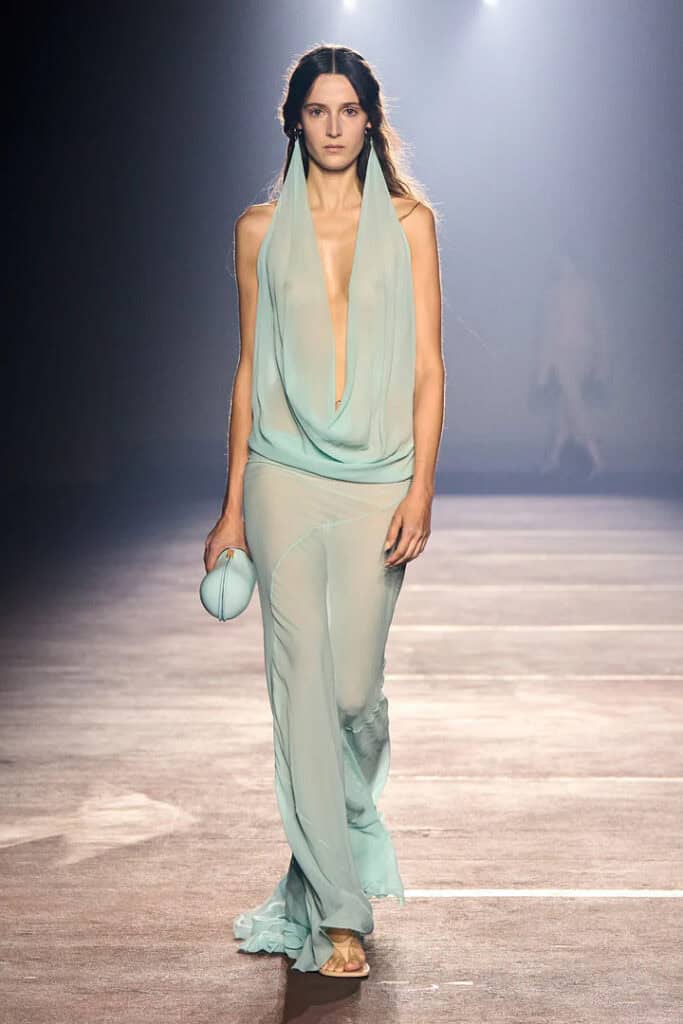
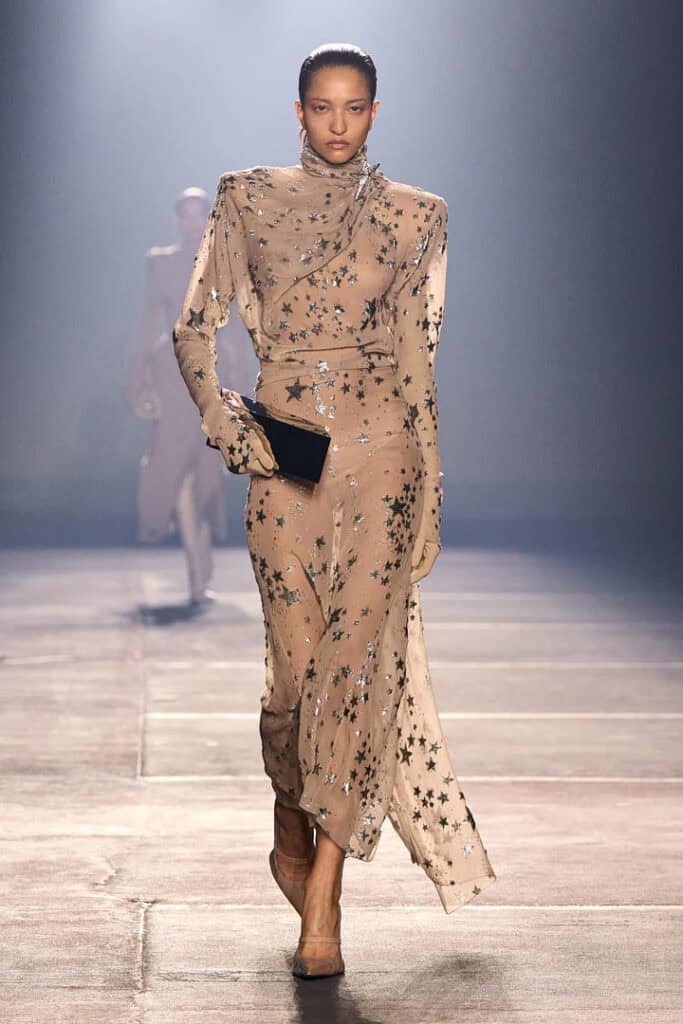
Silhouettes rarely strayed from the Hollywood glamour aesthetic – more feminine, save for a few tailored trousers. Most looks left little to the imagination in an overwhelmingly nude colour palette, sheer fabrics and designs that left models bare-chested. It was a nod to Castro Freitas’s attempt to embody seduction in varying forms.
The new creative director also spun a modern twist on Thierry Mugler favourites like the corseted, wasp waist, one of the house’s ‘clichés’. The exaggerated waistline was seen on fitted blazers and structured trousers with padding at the hips, to accentuate the hourglass shape. While the silhouette first gained popularity in Mugler’s debut designs from the 1970s and continues to be a brand signature, it was featured in over half of the looks of this collection.
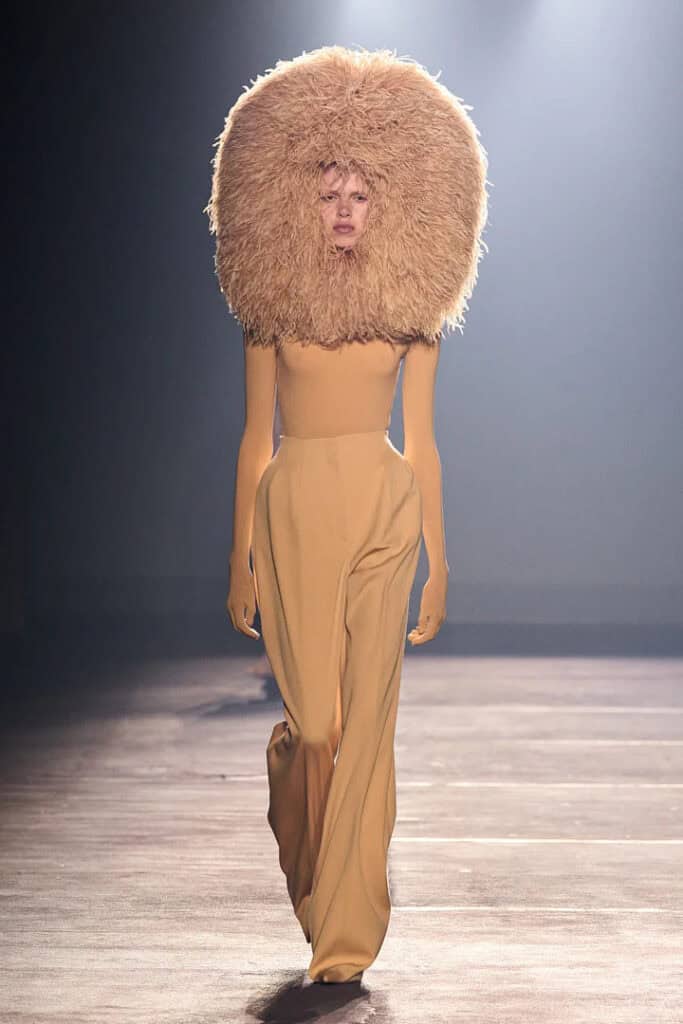
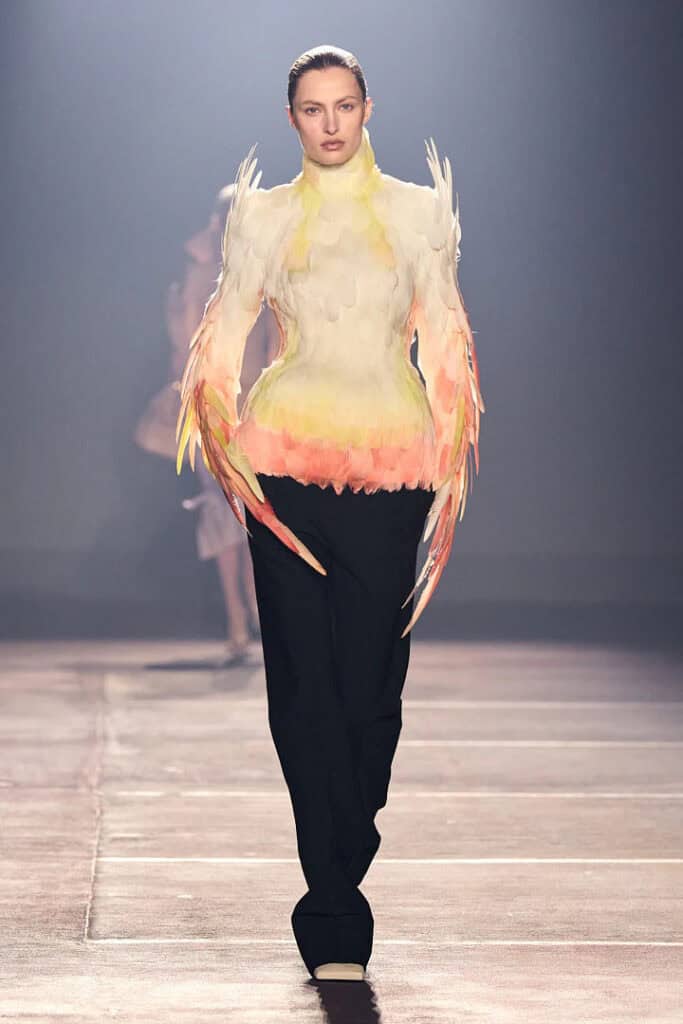
Aphrodite was manifested through symbols of roses and doves. One model flitted between the runway’s spotlights in a backless, feathered corset top by plumassier Maison Février. Others adorned roses situated at the waistline or chest, feminine silhouettes fit for Aphrodite herself – off-the-shoulder midi dresses and ruched skirts, draped with romance and elegance.
Looks were styled in the spirit of Hollywood glamour: silver dangled from statement earrings, stretched across tops and cuffed ears, wrists and necks. Each piece glistened under the spotlight. Short, 1950s evening-style gloves swung on the runway, adding an element of sophistication that would have been seen on iconic film stars of the time such as Audrey Hepburn.
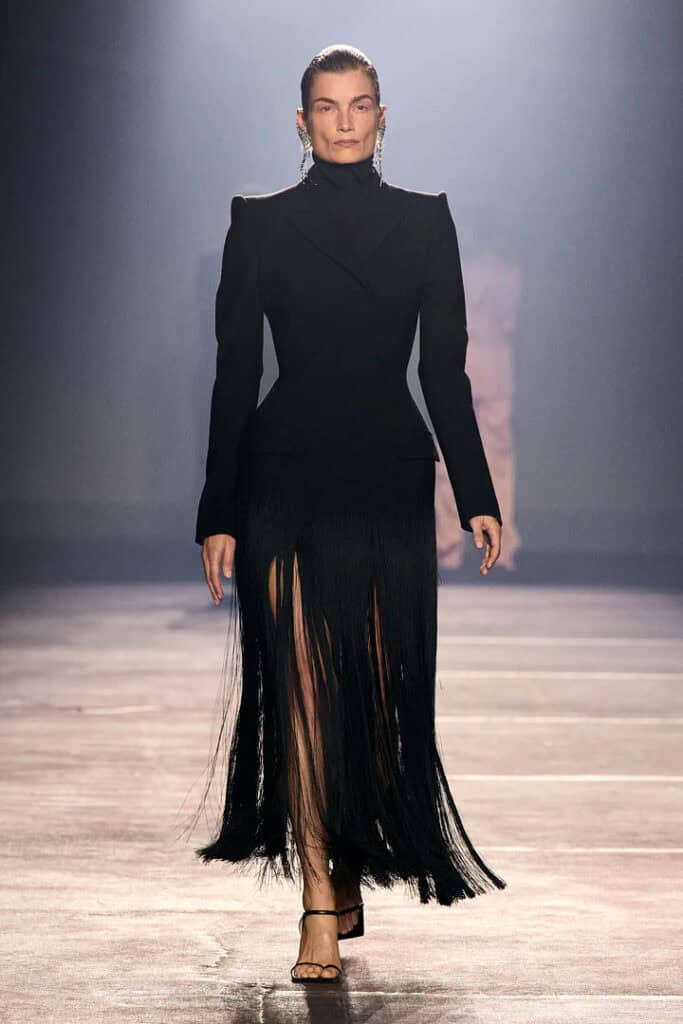
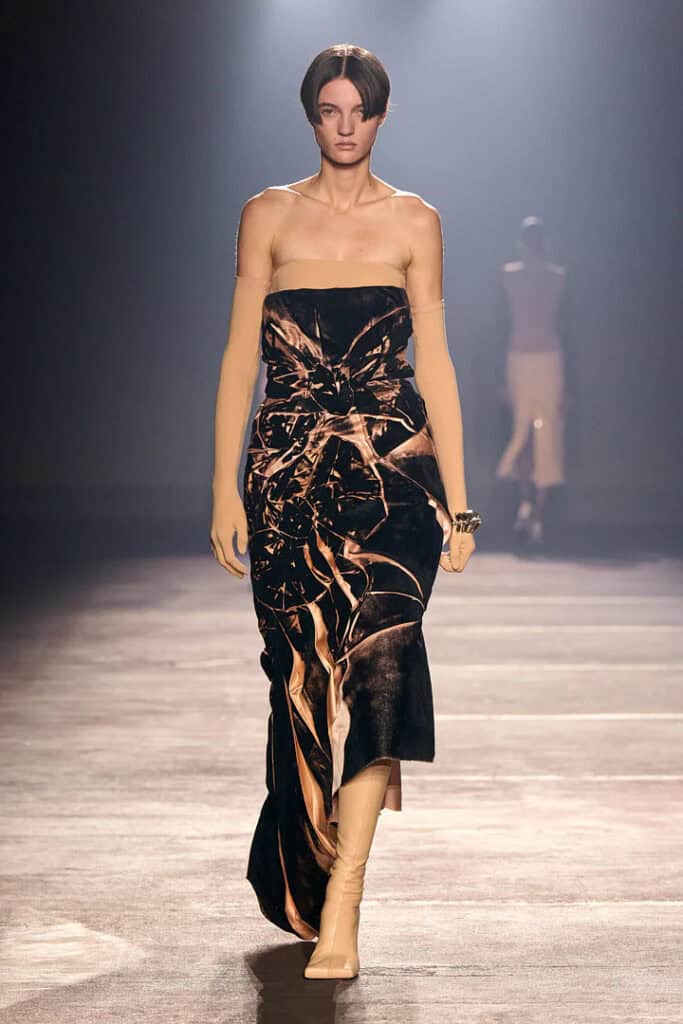
In a spring-summer season filled with debuts, the fashion industry is begging for something that has never been done before, something unique. This debut, however, was less a celebration of a new creative director than a revisit to the previous one. As a tribute to Thierry Mugler, the collection was triumphant. It continued the legacy of the house with runway favourites, but did it bring anything new with Castro Freitas’s vision? Perhaps that is where the obsession lies, in Thierry Mugler’s designs. There were, of course, a few pieces that pushed the boundaries of fashion, yet they were still rather subtle in light of the overall show. Will his future collections continue to play it safe rather than lean into spectacle?