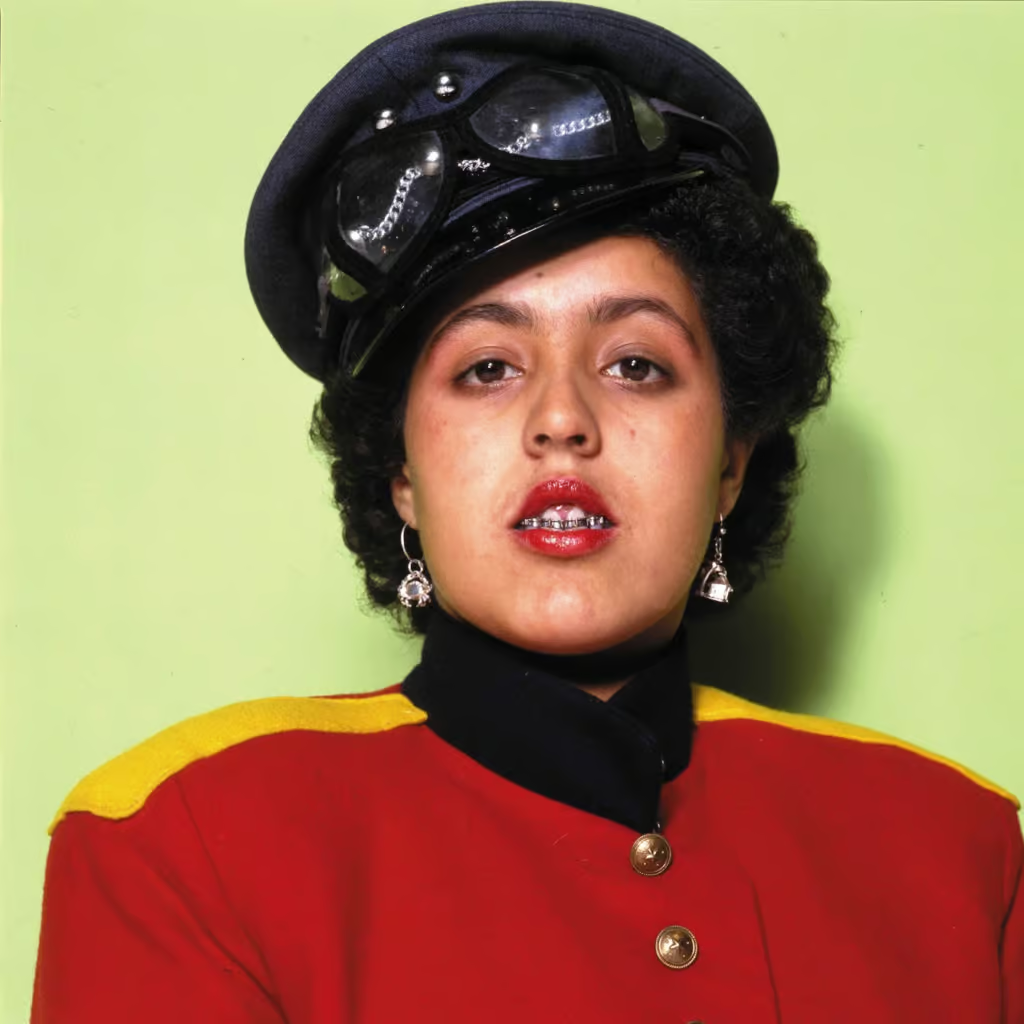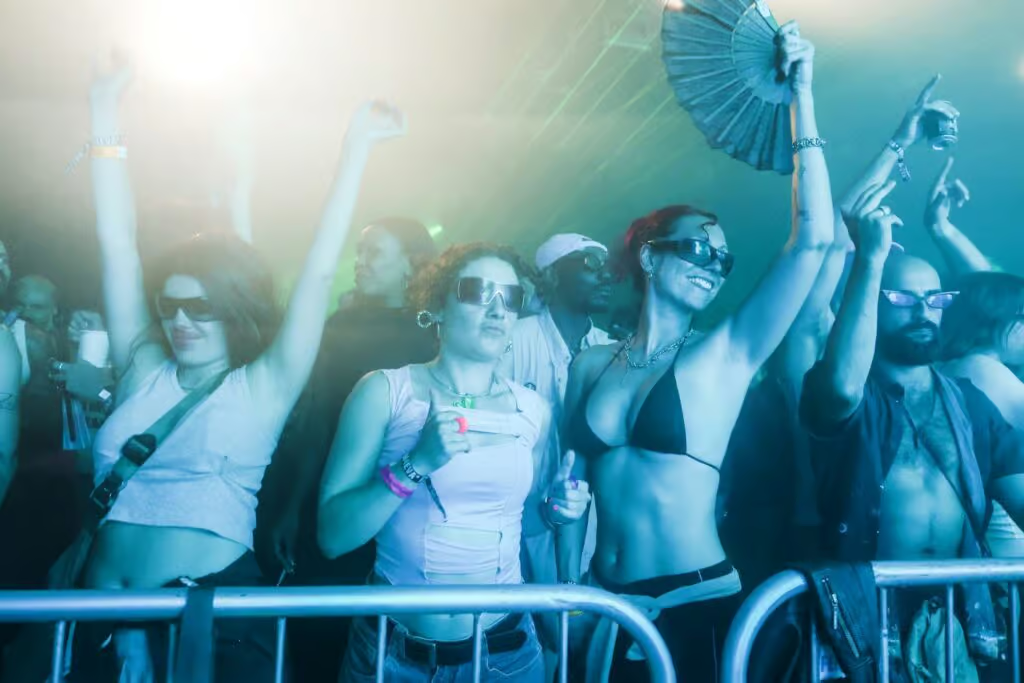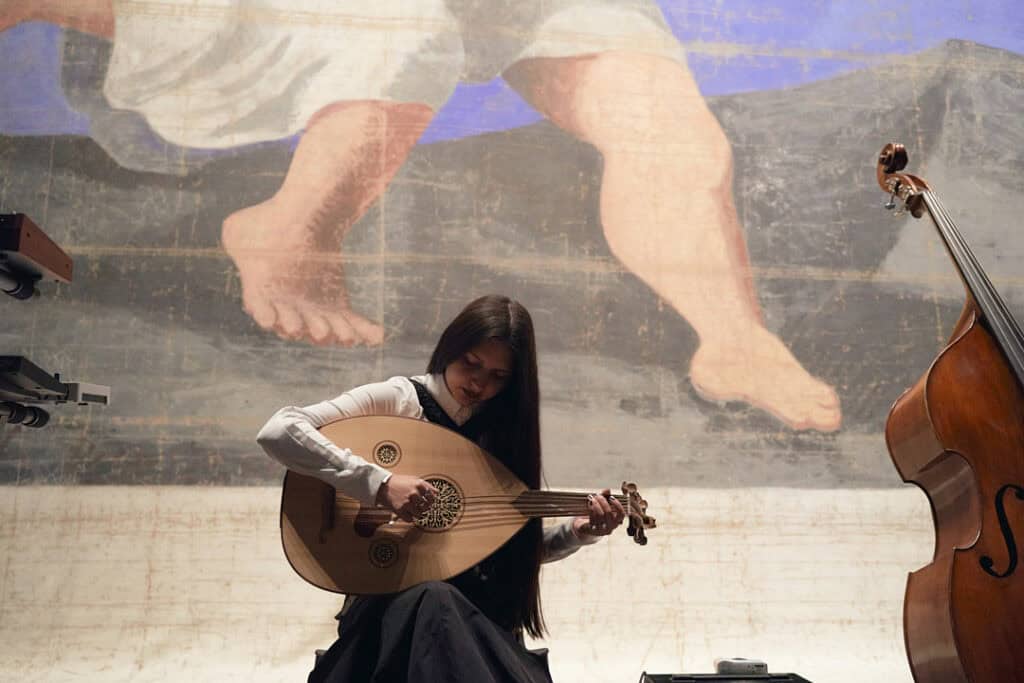
BODUR is a Turkish-Sri Lankan interdisciplinary musician hailing from London. Her various works are emblematic of a unique sonic vernacular, which centres the interplay of her multiple identities and how these associated experiences impact her daily life. Last year, she presented a 28-hour durational performance installation, with which she used to write and record her latest three-track project Second Language.
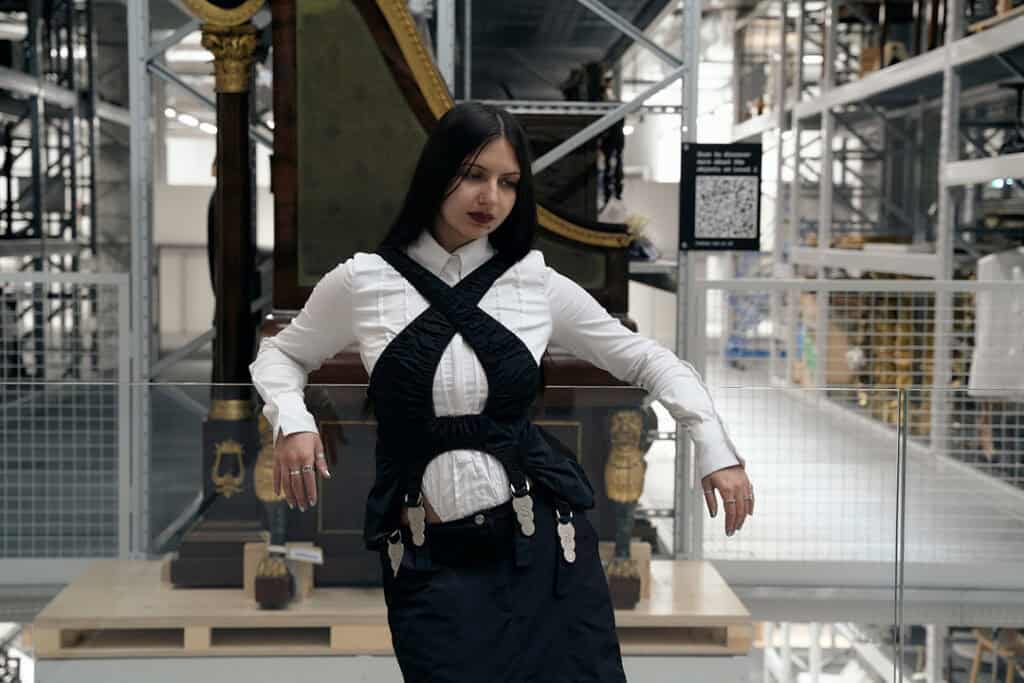
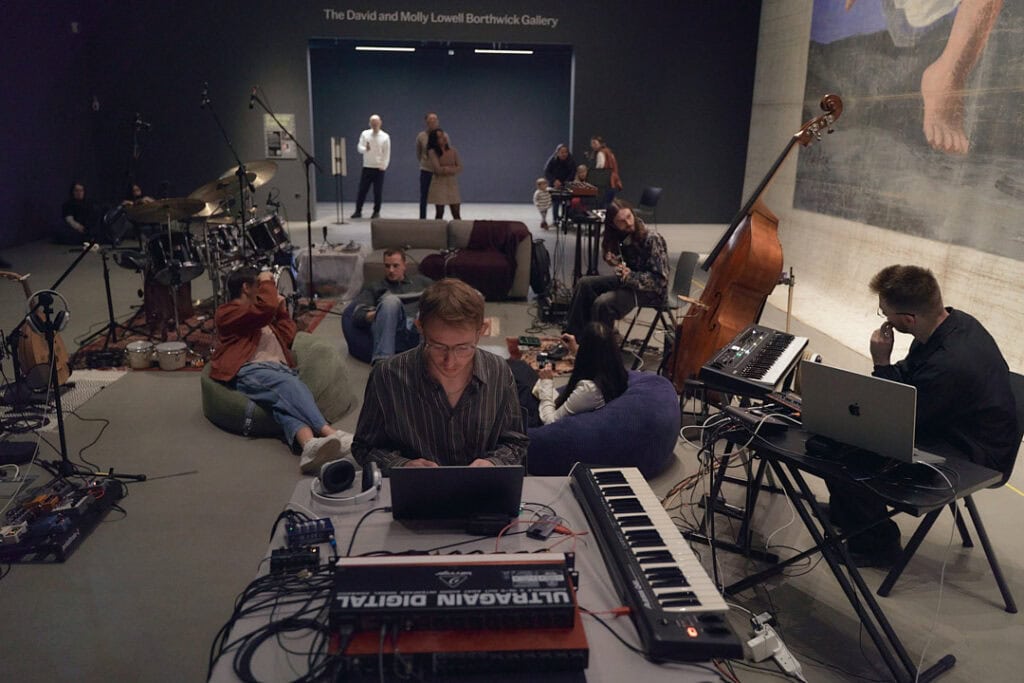
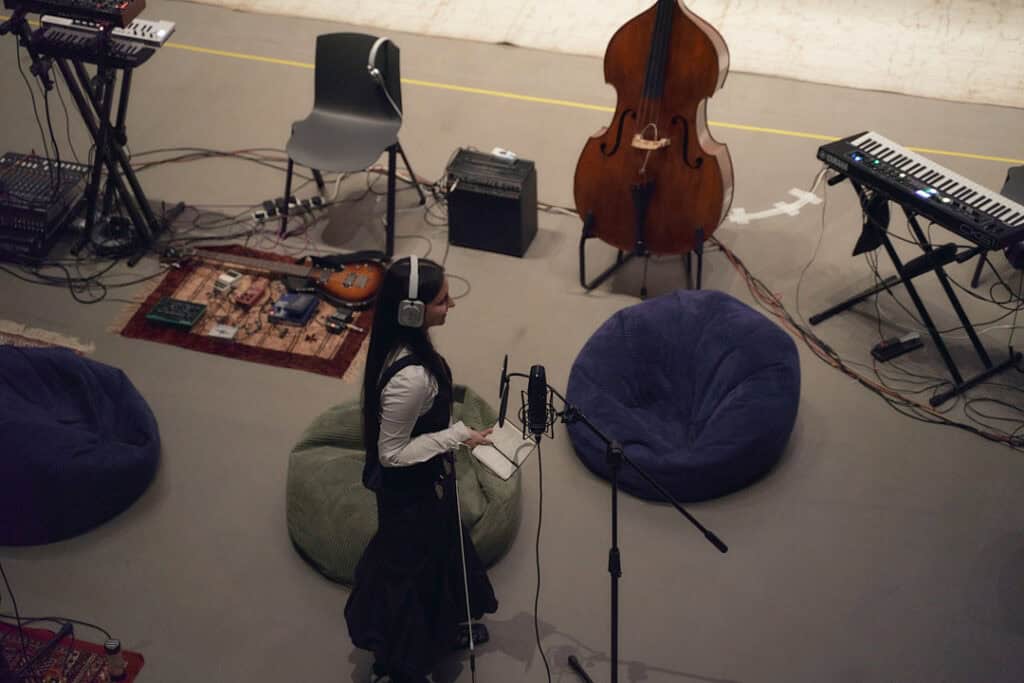
This event allowed listeners a unique first-hand account of the creative process as it developed in real time. Undulating layers of lyrical magic combined and contorted within the limited framework of the environment, which transformed Gallery II in the V&A East Storehouse. Onlookers became witness to BODUR’s complete vulnerability in her pursuit of an emotionally authentic product. The gallery space became a fully-functional recording studio that the musician and her long-time band of collaborators worked in for extended intervals of time, over the course of three days. The longest session took place on Thursday, the 11th, from 10am until 10pm.
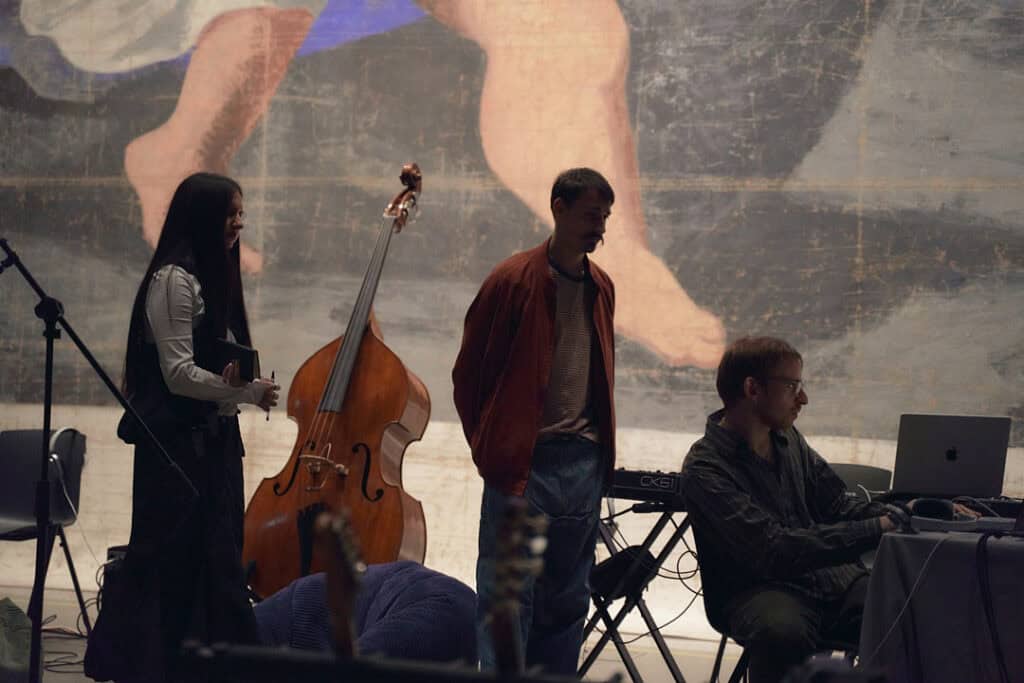
This creative process was as much about writing and recording an EP, as it became a performance art piece. BODUR composed new music in the moment live, with the help of five distinct collaborators. She breathed life into the space alongside Malte Henning, James Hazel, Will Heaton, Jono Pamplin, and producer Gabriel Gifford. Uncharacteristic of what is often a very insular and meditative process, the audience bore witness to notes and melodies combine and clash before their eyes and ears Adjusting as they went, every single note became a test of patience, grit, innovation, and unprecedented relenting to the creative process.
Part I: Pre-installation
COLD Magazine (CM): Your work is interdisciplinary in nature, why do you think it’s important for creatives to build outwardly, as far as they feel stretched to go?
BODUR (B): It takes the pressure off having to perform one particular output that’s expected of you constantly. Creativity comes in and out in waves. If you’re interdisciplinary then you can tap in and out of those different parts of yourself as and when you feel like it and it never feels like you’ve dried up your ideas. I’d become a bit bored of doing my choreography-heavy live set after a string of summer shows, so I did one silhouetted by the album film where I just sat down to sing and couldn’t be seen.
I did another where I sat down and played the oud [a Middle Eastern string instrument], read some poetry and only sang one song. Because of those two different shows I’m excited to do my choreo heavy show on Saturday again. Growing up I was always acting and dancing as much as I was singing, if not more. To me it’s hard to draw the line between where one artform ends and the other begins. I wouldn’t know how to only create in one form. They’re all so intertwined.
CM: How do you think your musical process will benefit from being exposed to the public eye?
B: In my experience a performance in-front of an audience is always better than a rehearsal without one. I predict that having an audience there, with our own egos wanting to impress our spectators, might encourage our best ideas to spill out of us. I predict we’ll be more focused and present than we would be in a normal session. Alternatively, it could go the other way and we might totally crumble under the pressure and regret ever agreeing to doing this. It’s a complete coin toss and nobody can predict how it’ll land.
CM: At what point does performance art influence the process of music production?
B: How I ‘perform’ in my daily life affects the way I’m treated by those around me – which then informs my work and the production choices I make. Some songs feel more connected to performance art than others. ‘Thank you, For Making Me Exhale [BAYAT]’ from my album MAQAM, a six-minute song featuring my parents’ voices for example is much more of an audio art piece than it is a song. Because my live performances are an important part of my artistry, I consider the performance of a song during the writing and production stage, which does in turn influence which choices I make.
I consider where I’d play it in the set and what I’d need from it in that place. ‘DOGTOOTH’ for example – the opening song of my live set, doesn’t have any vocals. This means I can take a few minutes at the beginning of every show to breathe and get into my body before I begin singing. It all feeds into each other in the ways I need it to.
CM: Very uncommonly does one’s listenership have access to the beginning phases of a new project. What does it mean to make yourself available to an audience during such a raw part of the creative process?
B: It’s quite terrifying but I’m glad I’ve decided to do this. I spent almost a year conceptualising MAQAM before we started making it and then it was about another year recording and producing it before it came out. With Second Language, I’ve rejected that method entirely as a test to myself – that’ll teach me a valuable lesson however it unfolds.
I think a song’s moment of conception is one of the most beautiful moments of its life and certainly the time I feel most excited about it, so I’m eager to invite the audience in to experience that buzz with us. You get so much feedback on a song when you perform it live for the first time at a show – I’m intrigued to see how the audience’s reaction to the sounds we’re making as we’re writing them, will inform our creative choices in real time.
CM: Do you already have an idea of the direction you want to take this new body of work?
B: By choosing to have my full band there as well as certain synths and pieces of equipment and not others, I’ve made some choices on what the direction will be already, I suppose. It’ll be a ‘band-sounding’ project with live drums, bass, guitar etc but still heavy on the electronics. Choosing to do the installation in Gallery II takes the music in a certain direction also, rather than other spaces in the V&A. Gallery II has an incredible, quiet energy in it that I think will evoke a sound we’ve not accessed before.
Part II: Post-installation
CM: After you performed the final piece, what was the first thing you thought after walking off stage?
B: Yes. It’s done. It was a success. I can breathe. I can sleep. I’m so relieved. I feel fucked. It was worth it.
CM: Where did you go to celebrate the completion of such a powerful project?
B: I went round the corner for a jerk chicken wrap and a medium glass of rose with my fiancé, brother, manager, and some friends from the band and their partners. I had no physical or mental energy left to do anything more. I need to be in a seated or laying position for the foreseeable.
CM: What was the most challenging part about being on display while you worked?
B: Unconsciously feeling into the energy of many many people. Of strangers. It’s draining on a deeply energetic level and then you must still perform at your best to do yourself and the project justice. It was a true test of mental endurance in every way. To be watched for 28 hours and to stay in a creative flow, where you are vulnerable enough to make mistakes in-front of an audience whose first impression of you may be that one mistake is intense as I’m such a perfectionist.
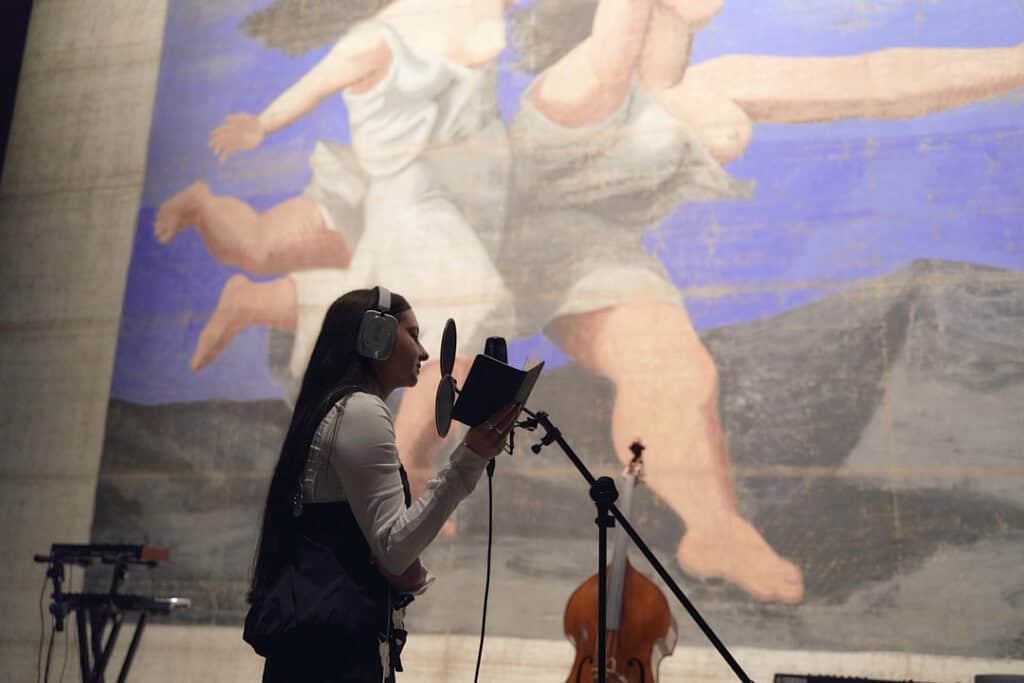
I learned a lot about letting go. About how forgiving people can be of a ‘work in progress’ and that I should be as forgiving to myself. I also didn’t consider beforehand that every time I’d record vocals, because we’d have to do it in headphones, the audience would only hear me singing acapella. With no effects or even the other musical parts to hide behind. It was extremely exposing but made me lock-in and perform at my best vocally because I wanted to get it right quickly so we could move on quickly.
I kept my back to the audience most of the time so I wouldn’t know if the room was full or empty. That helped me not lose focus by who was entering or leaving the space. People we know turning up was actually more challenging than strangers being there.
CM: After witnessing you work, what do you hope the audience walked away thinking, or feeling?
B: I hope they felt impressed by our bravery, vulnerability, professionalism and willingness to somewhat sacrifice our own sanity for the sake of art and pushing boundaries in conceptual music. I hope people that haven’t been inside a studio and seen how music gets made before felt inspired and like they had a unique experience. Being invited into a space they don’t usually have access to. Some people that stumbled across the installation found me and DM’d me afterwards to say it felt like they’d stepped into a dream or another dimension. I think because it almost felt like theatre, the way we had an audience and rarely broke the fourth wall, except it wasn’t theatre because it was real life unravelling in real time for several hours across three days.
CM: In what ways has this expanded your creative practice, do you envision performing similar installations in future?
B: Yes. Once I’ve fully recovered from this first experience of Second Language I’ll certainly be looking for the second installation of it – where it’ll be, who it’ll be with, how those variables will shape the sound that arrives from the experiment. My hope is to recreate this performance art piece in various art institutions all over the world – it can constantly evolve whilst still keeping its essence. For audiences to witness the initial conception of a musical idea and to understand that music is a language with no barrier, something that connects us rather than divides.
CM: Anything else you’d like our readership to know?
B: I understand now why nobody has ever done this before. It’s not for the weak.