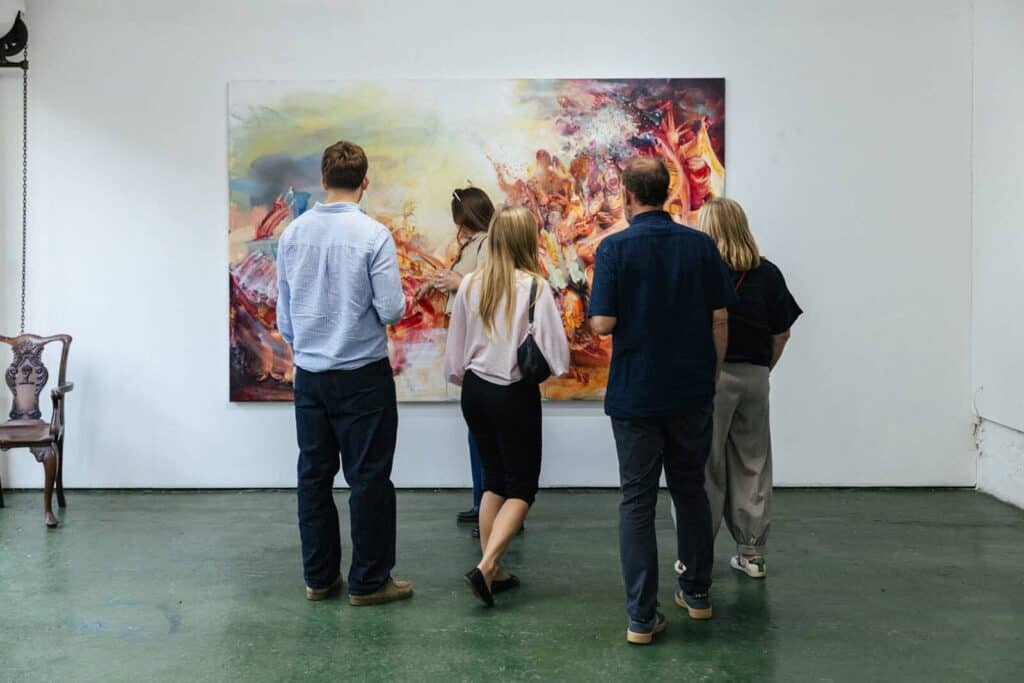
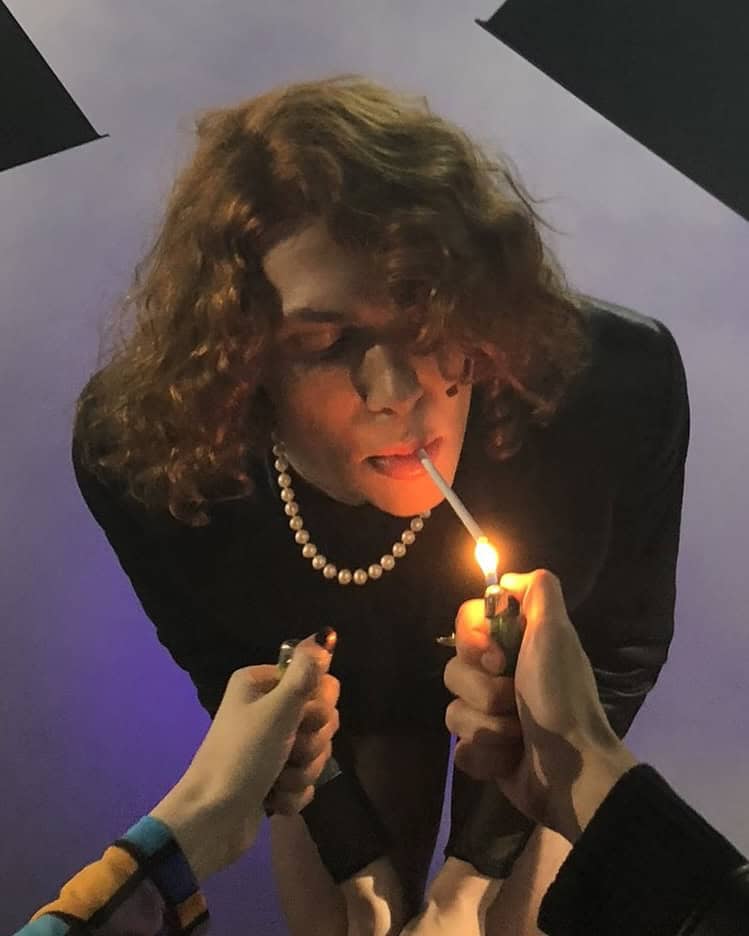
In an era where the digital world shapes our sense of self, London-based multimedia artist Tongktongktongk creates spaces where those invisible forces become tangible. Through real-time audio and visual systems, she builds immersive environments that blur the boundary between the virtual and the physical.
Sitting somewhere between a club VJ booth and an open-world game, her practice is grounded in an obsessive curiosity: about how we grow up online, how memory mutates in virtual space, and how pain and beauty can coexist inside a screen.
That curiosity took a decisive turn when she moved from fine art at Chelsea to Digital Arts Computing at Goldsmiths. She was already drifting toward computational work, but the Goldsmiths course, she recalls, gave her a fundamental understanding of how programming works and helped her work on real-time visuals. Programming stopped being an opaque specialty and became a material – something she could sculpt and improvise with like any other medium. It allowed her to move from making discrete images to building responsive systems: performances and installations that behave differently every time.
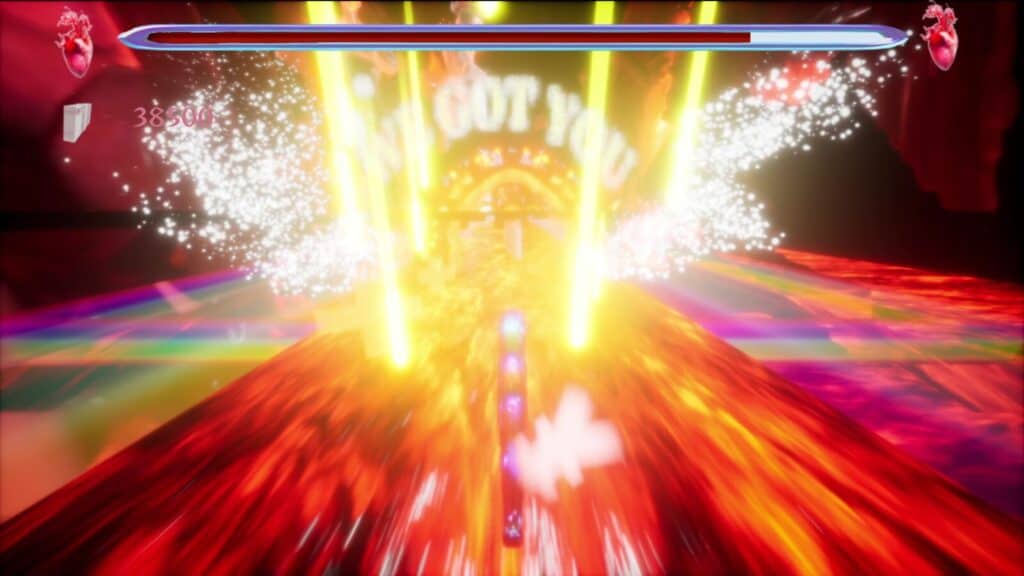
One of the most revealing portals into this world is Tongktongktongk, a project named after her long-running internet handle. She chose it as a teenager, at precisely the moment when emotions and identity feel most volatile. “This is just my internet name,” she explains. “I got it when I was probably around 17 or 18. It is kind of a similar pronunciation of a word in Chinese that basically means ‘painful,’ painful pain. During that age, I felt like the conflict made me feel a lot of pain, and that’s why I gave myself this name.” Tongktongktongk condenses adolescent hurt wrapped in a sense of conflict and an online identity into a single sound that still resonates through her work.
It makes sense, then, that she refuses to sit neatly inside one medium. She describes her attraction to multiplicity very plainly: “I think I’m just really interested in all kinds of art formats, and I’m just not really satisfied with learning one thing only,” she says. “So whenever I see someone maybe around me that’s doing something else, I would have the desire to do them myself also.”
The result is a practice that spans visuals, sound, interactive environments, and games – because no single format can carry everything she wants to express. She is honest about the trade-offs this brings. “When you learn a lot of things at the same time, that means you can’t really be really profound in any of them, I feel like,” she reflects. For her, that is a deliberate choice: to embrace a broad, hybrid literacy rather than narrow specialization.
In the studio, sound and image are equal partners, and she treats each as a possible point of departure. She explains that this duality gives her flexibility rather than constraint. “I think it just makes me have more, how do you say, like a starting point,” she says. “Because then I can choose whether to make the sound for a visual or make the visual for a sound. So it depends on what I want to make initially. I can extend the content of my work from these two aspects.” Sometimes the texture or rhythm of a track suggests a world that visuals then orbit; sometimes a real-time visual system demands a soundscape that can push its emotional tone into focus.
If there is a core emotional engine behind all this complexity, it is nostalgia – specifically, a kind of internet nostalgia that feels more like psychic archaeology. She draws explicitly from a particular era of digital imagery. “I am very inspired by Y2K and Frutiger Aero,” she says. “Those kinds of aesthetics, because I feel like for everyone, especially during your early 20s, you think about them a lot. This is the period when we are just first leaving home and then going into the world and becoming independent, and that brings us a lot of confusion and triggers us to think about our childhood a lot. Those aesthetics were the things that were popular when I was young, so that’s how I got inspired by these.” Her installations use these shiny, atmospheric motifs like emotional shortcuts, drawing viewers back into half-remembered digital spaces that shaped how they learned to see.
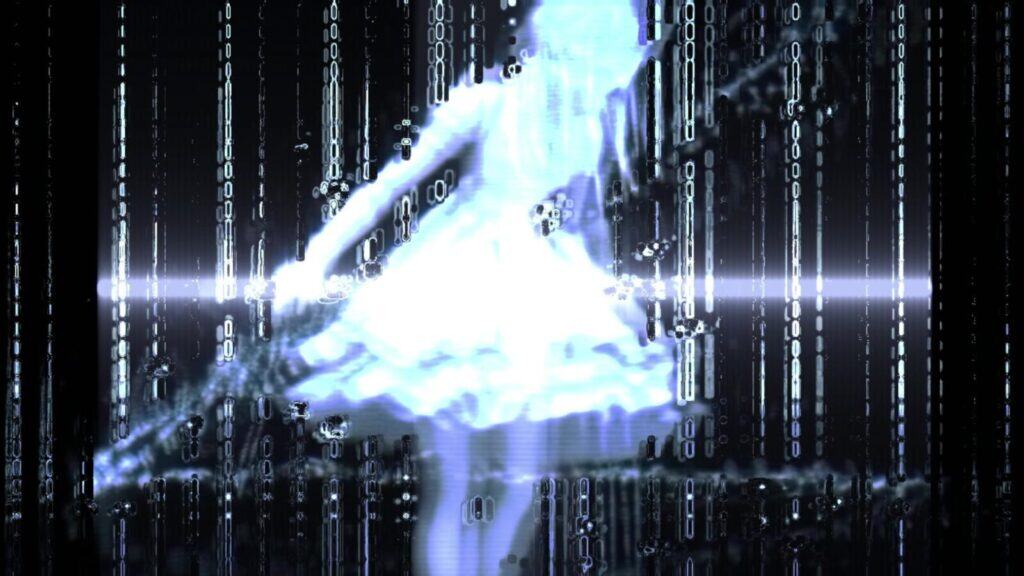
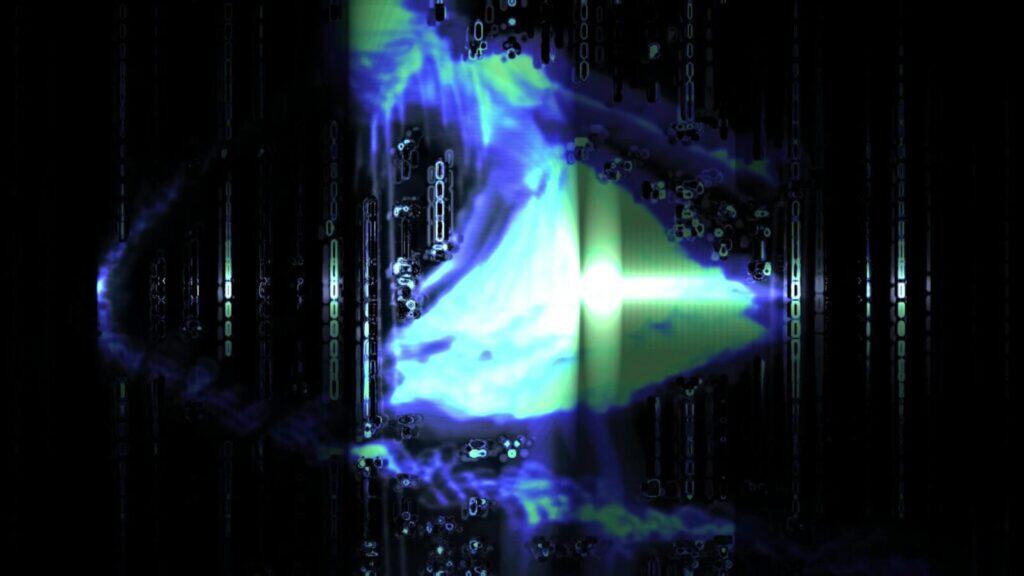
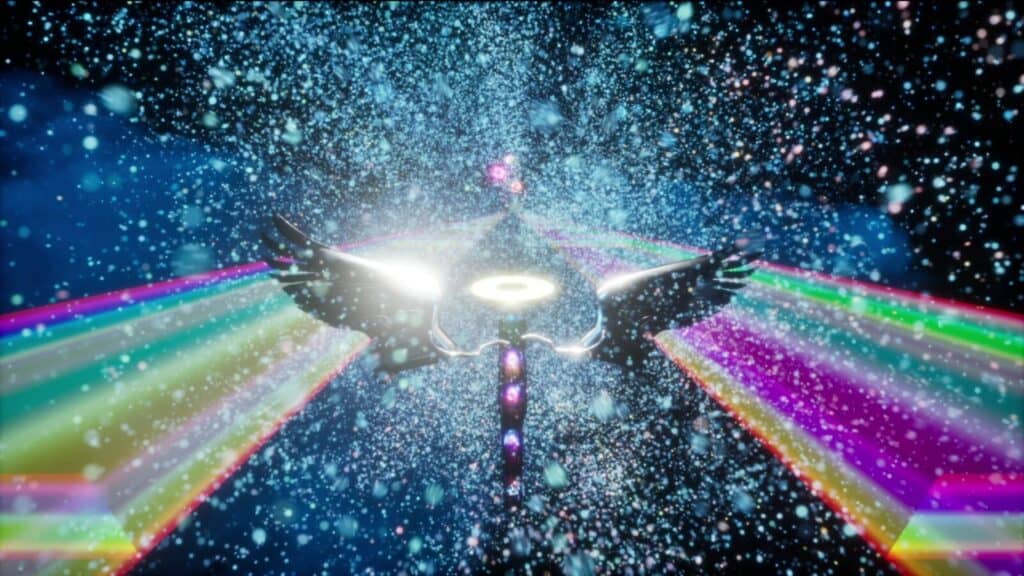
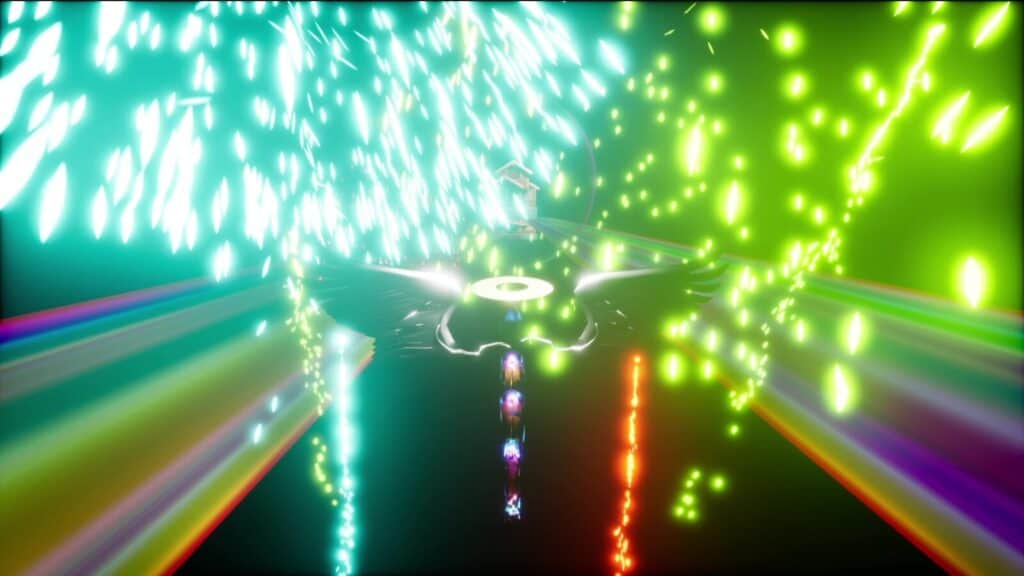
This interest in emotional memory and digital nostalgia becomes visible in works such as Snake Run, a live audiovisual performance created in collaboration with sound artist Yuna 阿尘. In Snake Run, the structure of an endless runner game is reimagined as a symbolic journey that moves from temptation through collapse into a fragile sense of renewal. where familiar gaming tropes are quietly bent toward introspection. Bathed in nostalgic, game-inflected imagery and populated with AI-generated 3D forms that feel both synthetic and strangely intimate, the performance leans on immersive sound to draw the audience inward, away from spectacle and toward a more psychological register.
Emotion is central to how she designs the audience’s experience. She describes the ideal impact of her work as something closer to waking than watching. “I want them to feel surreal, as if it was a dream full of emotions after my performance,” she says. She is wary of over-explaining and prefers suggestion to exposition. “I feel like telling the story straightforward is maybe not the way I want to do it,” she explains. “I wish to make the audience feel like they feel like something is happening, but because it’s very unclear – I just give them an illusion of the things I want to express.” Mystery and uncertainty are not by-products; they are the very texture she is trying to craft.
This focus on emotional immersion becomes particularly visible in Sinsin, a 20-minute audiovisual performance. Structured around moments of separation and emotional release, the work unfolds less as a linear narrative hinting at cycles of organic growth and interdependence. It also alludes to the grief of letting go, through shifting visual metaphors rather than explicit storytelling, reinforcing Tongktongktong’s preference for suggestion over explanation.
Within this, the boundary between observer and participant softens, even when there is no obvious “interactive” device. When asked whether she sees her audience inside the world or outside it, she gives a layered answer. “I would see them as the observer,” she says at first. “But in the context of the whole performance, I feel like they kind of naturally become a part of the work, because I’m not really expressing any straightforward stories. I feel like different people would feel different sensations or have different opinions about my work. So I think the participation for them in the work kind of forms naturally.” For her, the act of looking and feeling is already a form of co-creation.
The future of her practice is, fittingly, about world-building on an even larger scale. Games are not just a parallel interest, she has already experimented in this space, but she is eager to expand the scope. “I would still like to make games, but I would want to make more different kinds of games,” she says. “I’ve been really wanting to make open world RPGs or visual novels to be able to have a bigger world setting, because I want to really build a world of mine.”
Taken together, her work forms a kind of soft architecture for feeling in the digital age: performances that embrace the limits of planning, installations that borrow from the glossy optimism of early-2000s screens, and future game worlds designed not just to be played, but to be remembered. Across all of it, she suggests that technology, far from flattening emotion, can be a way to hold it and a way to invite others to step inside.