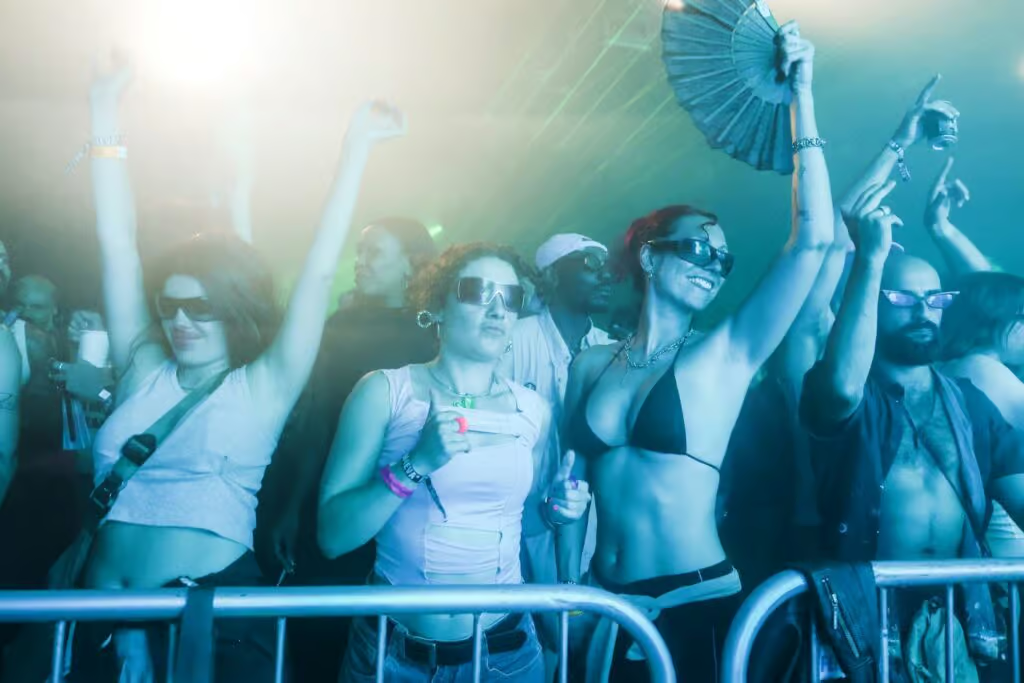
In the cavernous belly of a converted Benedictine church, voices deep and airy collide. They bleed into each other through the dark violet lights, soaring and dipping in loops. A fragment of a drum pattern or the dead march of a single piano note join these voices for a time, then disappear. The still bodies below the voices listen in silence to the figure on stage, the devices in their pockets and hands momentarily stilled as they receive the waves of sound and words, with a clarity and strength that feel etched in marble.
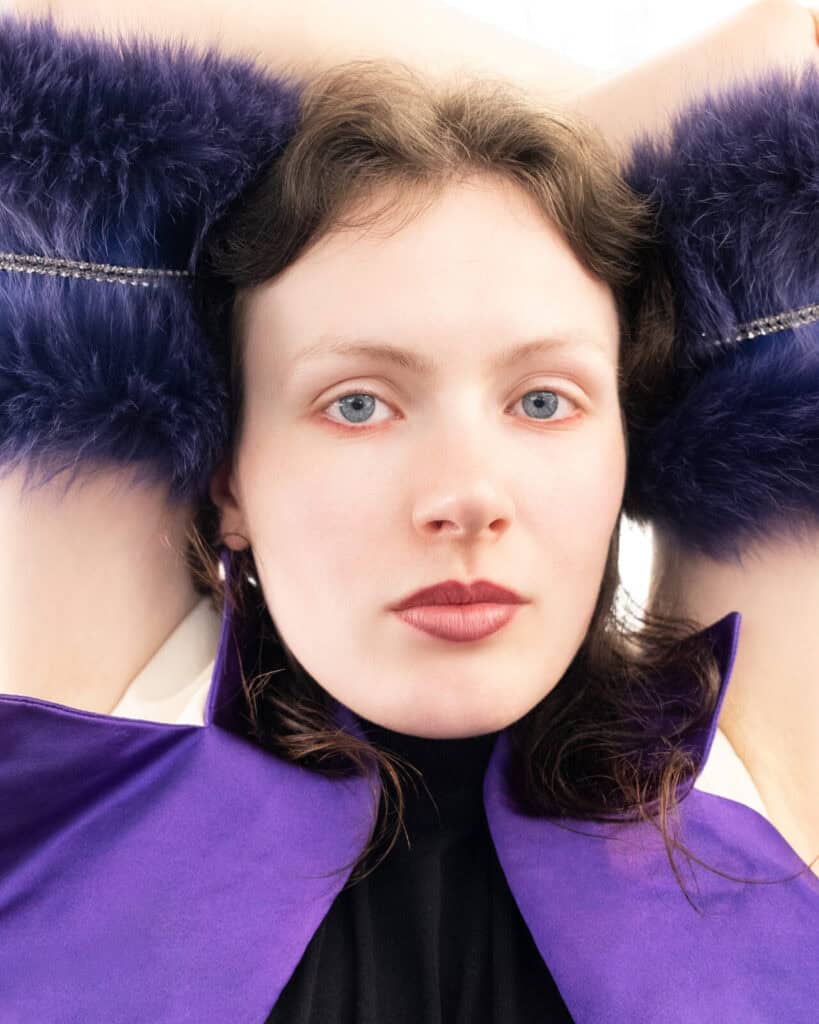
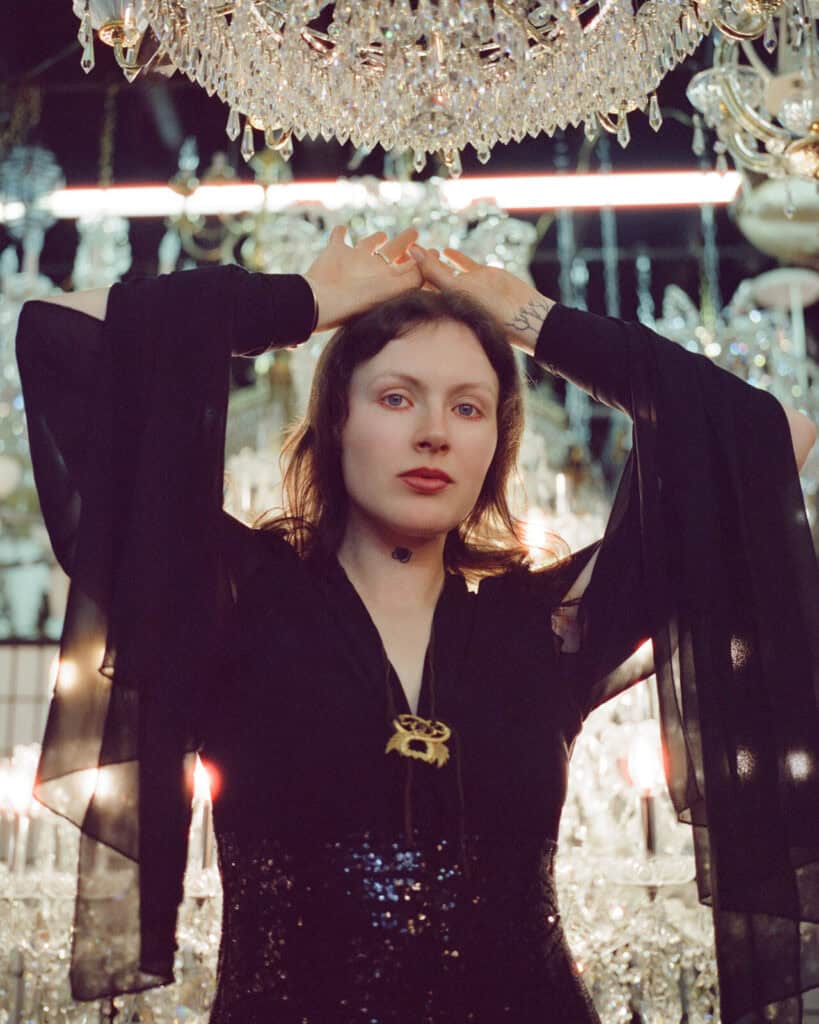
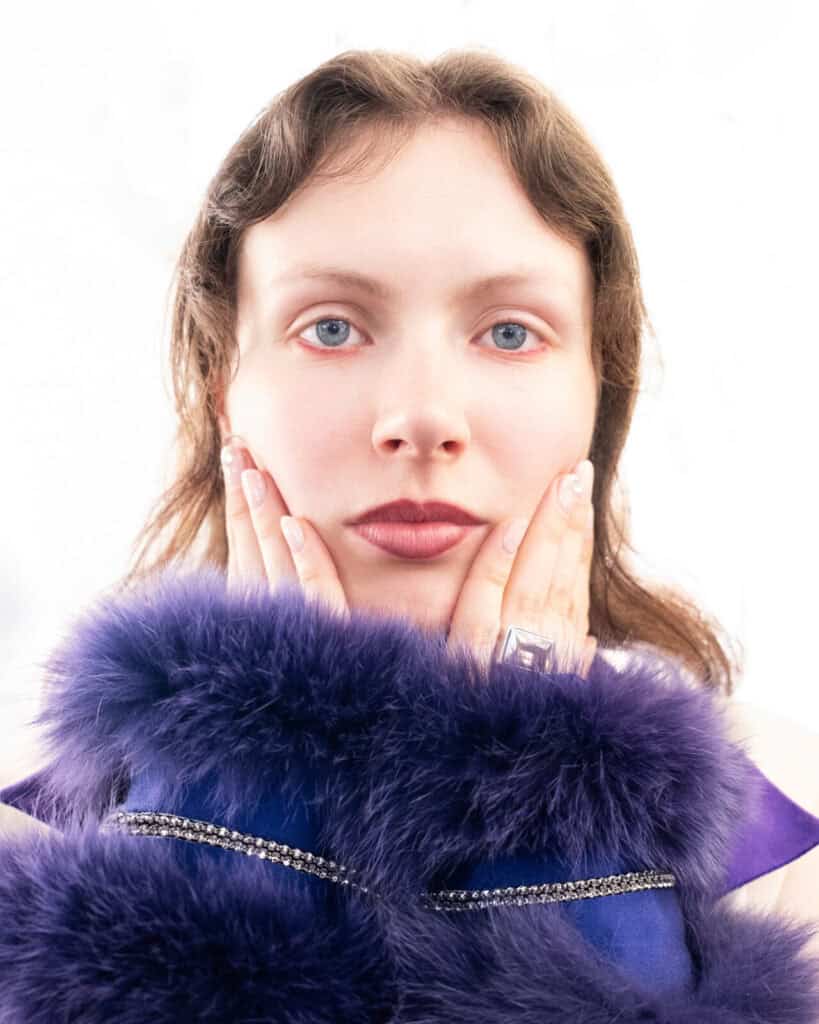
Rosa Anschütz is a Berlin-born musician and artist whose sound synthesises heady, metaphysical meditations on religion and sublimity. Performing in a southwestern US desert, far from her home, supporting darkwave mainstays Cold Cave, The Cold Magazine caught up with the elusive artist to discuss her most recent album, ‘Sabbatical’.
The Cold Magazine (CM): While you’re associated with musical genres like post-punk and darkwave, the songs on Sabbatical don’t follow any rigid formula. Could you talk a little bit about your process of composition? What must a piece have for you to feel that it’s complete?
Rosa Anschütz (RA): I guess this lineage with post-punk or association with post-punk and darkwave comes through where the record was released, where the shows are being put on. But the production, the instruments I use, it’s like a cloth around the lyrics. Something that’s fitting or supporting the message. So I’m not seeing it in terms of genre any more than if you created an image or a movie. Even though the music’s not something visible – which I did actually with Sabbatical, I made all these music videos for it – it’s still something where you have the freedom to express it in a different way.
CM: In the videos for Sabbatical, the visual style is so strong: the sense of minimalism, even the yellow subtitles throughout. It’s detached on the surface, but with emotion underneath…
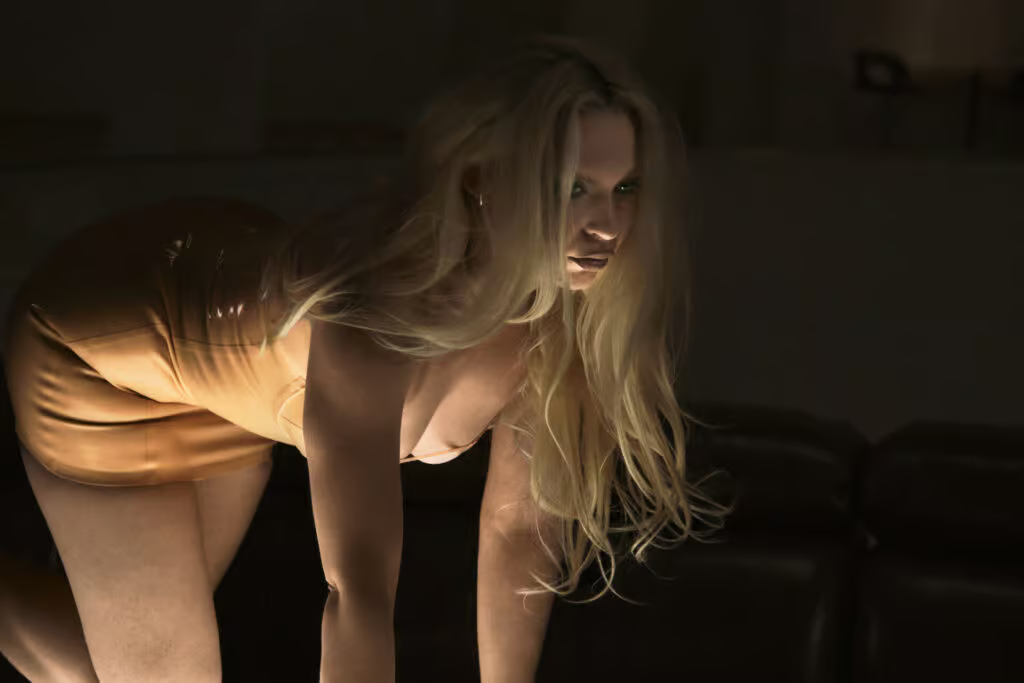
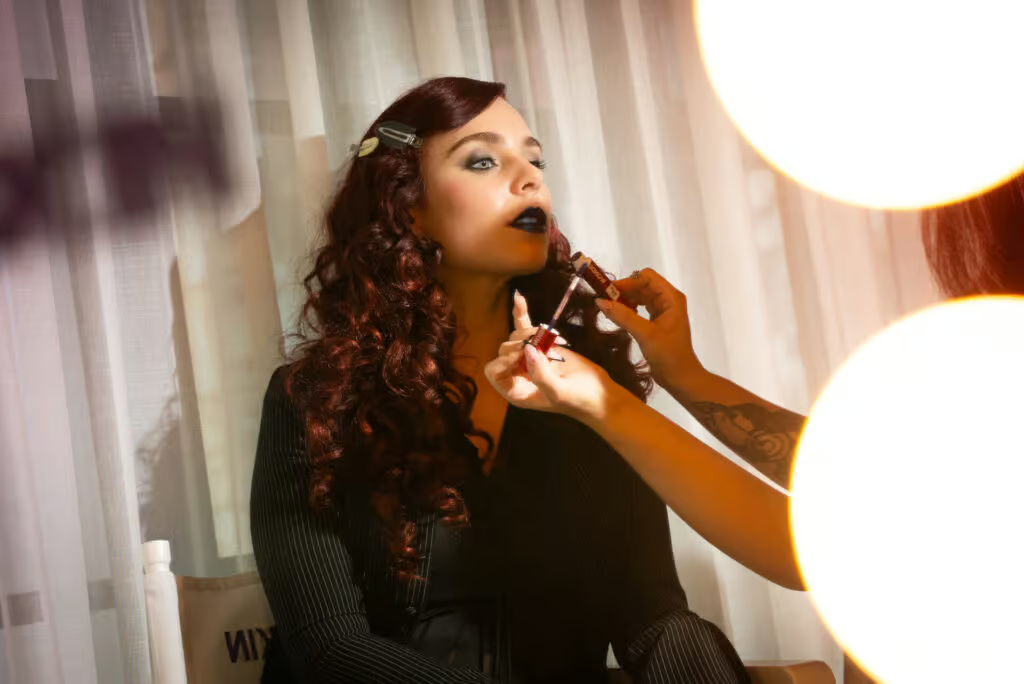
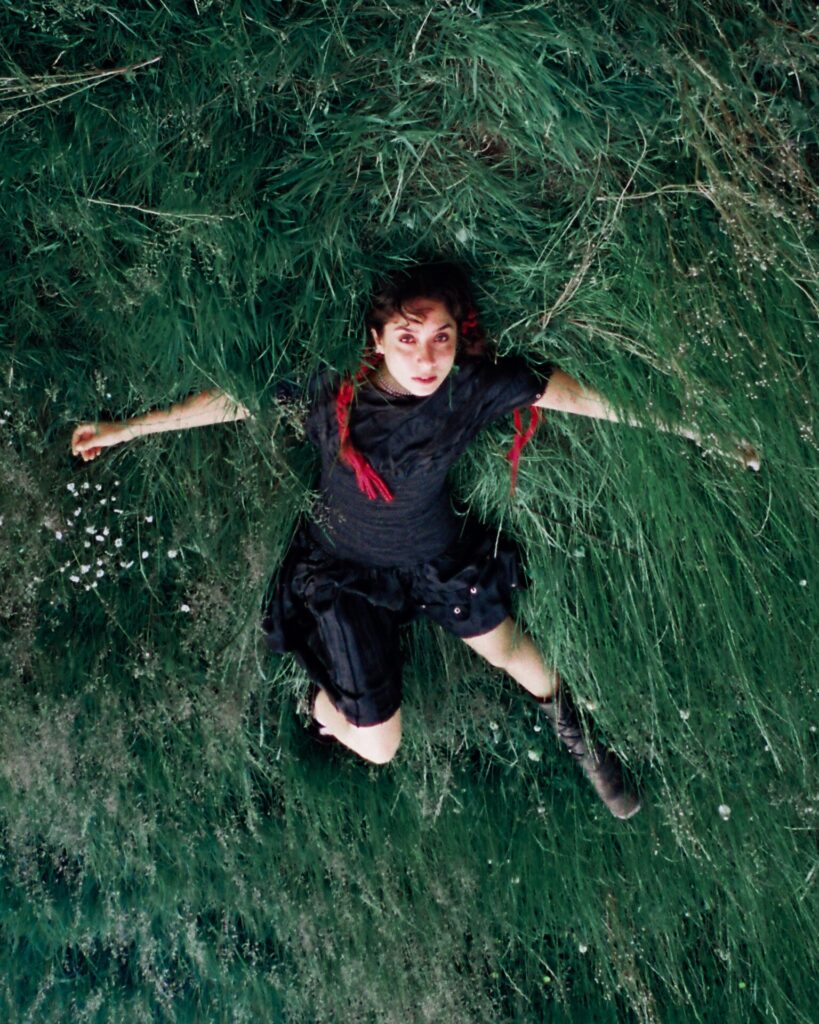
RA: While writing Sabbatical, I had a job as a composer for a film for the first time. That highly impacted how I approached the record. Some tracks are transitions, spoken-word kind of things, with the buildup of instruments around it. The movie was called How to Be Normal and The Oddness of the Other World. We had the premiere last year at the Berlinale, the film festival in Berlin. I love film. I love co-art directing my covers and photoshoots. I really want the full picture to make sense, and film combines it all.
CM: Are there any particular film scores or composers that have influenced you?
RA: The thing with idols is that I never truly had them. There’s a lyric on Sabbatical, from the track “Chase Pioneers”: “Give me a reason to chase pioneers”. Of course there have been film[inspirations, but it can also be musicians that aren’t known for film music. For example, this band from the US called Dallas Acid is quite a mystery to me. They have this crazy studio somewhere in the desert. There’s this mystique around them.
Also I enjoy movies that don’t have much sound. The films of Angela Schanelec, for example, barely use it. I think I have a full PDF on my computer that could answer that question!
CM: Your lyrics are very precise: they feel composed. I wondered if you had any literary inspirations? Or do you feel you write and construct lyrics purely on your own?
RA: While we’re touring, I pick up words. Things I like, things I see, or things I’m wondering about. For example, shortly before coming here, I had a dispute with someone, around 2am. I drove back home, and wrote down a poem on my phone. And that might become lyrics.
I do read a lot of books, but extremely randomly. I found one in downtown Los Angeles: A Soprano in Her Head by Eloise Ristad. It’s the memoir of an opera singer. I’ve been reading a lot about opera recently. I read Patti Smith. I admire the work of all these artists, but everything is impacting me as much as a book. A sentence I hear in the grocery store, for example.
CM: The whole environment.
RA: Yeah, everything. As simple as that.
CM: Related to your Votive album, you talked about a certain spirituality. It felt perhaps that you were gesturing at some sense of mysticism. And perhaps that ties into the choral element of your music.
RA: I went to a Catholic school, only because it was an alternative school. A Montessori concept. I grew up in East Germany, an hour from Berlin. It was still very GDR impacted. I was born in 1997. My family, being from the West, chose to move to the East. We’ve talked about it a lot: to walk through this generational history, passing on these stories. My family was completely different than all the other children around me. My parents are both artists. Everyone was like “What are you doing here?” But I was around religion for all my childhood. Even though none of us believed in God, choir singing was part of it, the Mass. The ritualistic aspect of these things highly impacts you as a child.
By the time I was writing Votive, it’s something I rediscovered for myself, because I was not believing. When I was a teenager in Berlin, I was not interested in church. I was interested, as soon as I could, to get a fake ID and go out. But when I moved to Vienna, being by myself in a new city, I found churches which are open. I was reading a lot about Chaos Magick, tapping into that as I started studying. Coil, Genesis P-Orridge, Psychic TV. So that appeared on Votive, that way of being spiritual.
I kind of lost that, given what’s happening in the world. Now It’s almost like there’s no space for spirituality. Maybe it’s even more important, right now, to make that space for yourself.
I guess what I’m saying is with what’s going on right now, things are so extreme. And that’s not what I’m searching for.
CM: You’re already at work on a new album. Is there something new to you, some kind of thread taking you in a different direction?
RA: For the new album, it started with an image. I make images with sequins and a needle, styrofoam. It takes long hours, and creates a very calm atmosphere. It’s good for when I’m coming back from something like this. And this image is the largest I’ve ever done. It took about four months. It’s a meter long. And from everything around creating it came the music.
After Sabbatical, it’s going a bit more extreme. “Eva”, for example, already has very fast drums and there’s a part of me that really appreciates noise music. There’s a leaning towards spoken word, but in the trap realm. Also very orchestral, way more than the album before. I know exactly what the press images should look like. I have the cover in my head. I know how I want it to look on stage, the visuals. I have a residency in October in France, for filming. The album will be with the same label, end of next year or something. Also they’re releasing an album I did with my friend as Quantum Orange.
CM: That’s incredible, so much to come.
RA: Yeah, it’s all been decided in the van, the last few days. It’s really nice.
This interview has been edited for brevity and clarity.