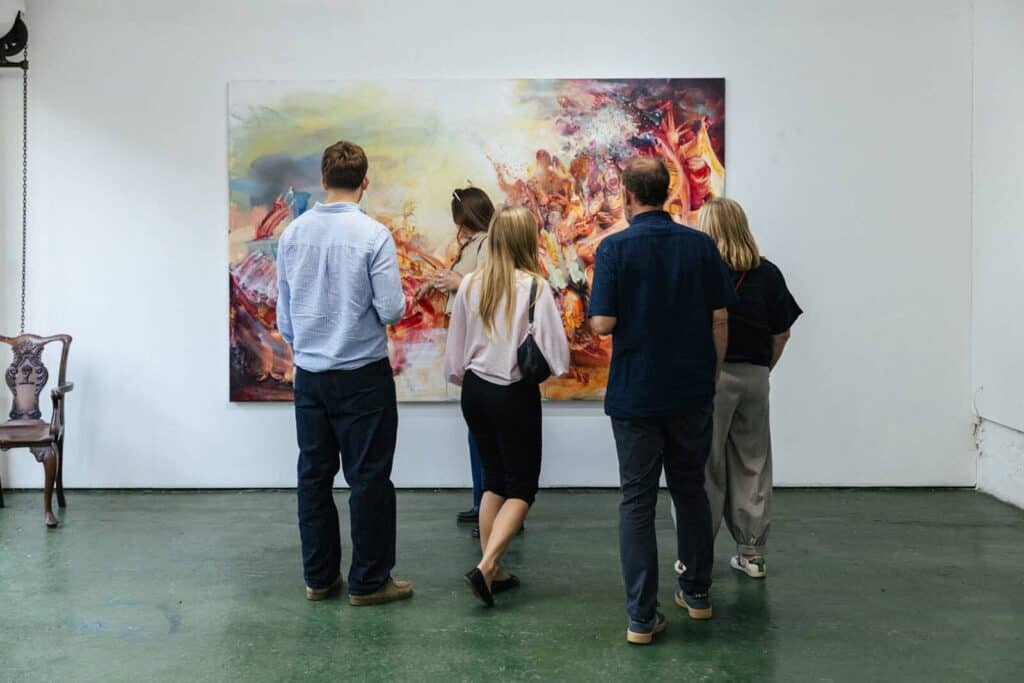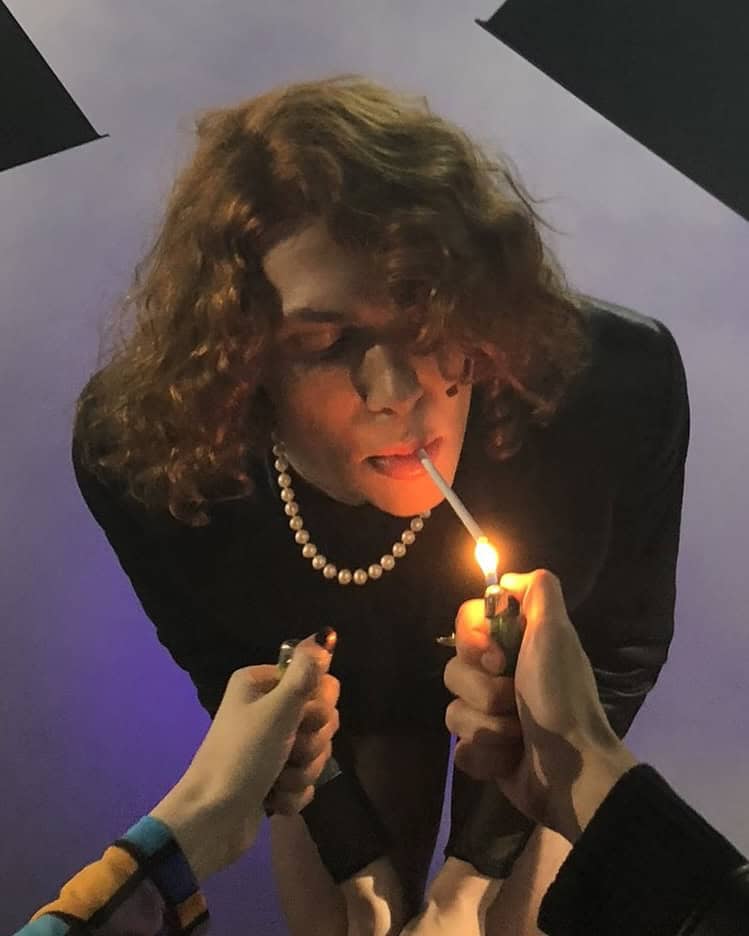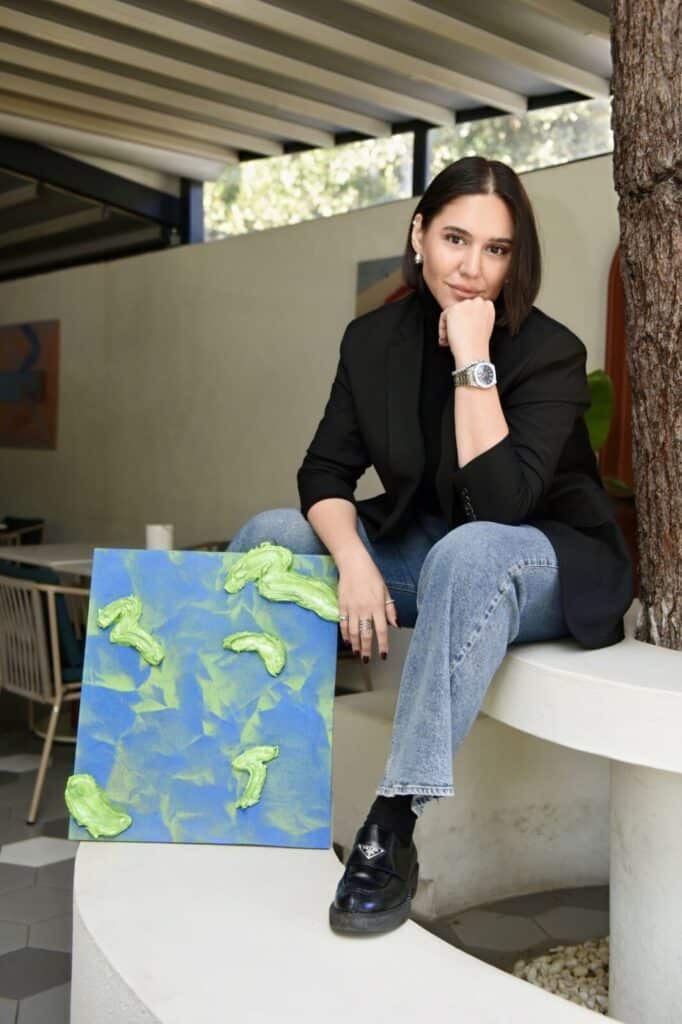
Turkish artist Halise Karakaya is categorically enthused and influenced by the intricacies of human existence. She’s particularly compelled by the varied ways our individual experiences shift our perspectives of the surrounding world. Emotion is inherently imbued throughout each of her works by way of her unique artistic style. Employing cubic, three-dimensional structures and fluid brushwork – her art embodies its own kind of movement in stasis. That which guides the eye and commands powerful emotions to the fore of the viewer’s mind.
Many of her multi-medium artworks are unafraid to play with form and colour which stand to assist in bringing these aforementioned considerations to light. Shifting between sculptural works and painted canvas, Karakaya’s interdisciplinary works make use of acrylic and polymer. Much of her art presents across linen-layered canvases, commonly featuring three-dimensional elements. Karakaya’s distinct visual language helps guide the viewer to new perspectives.
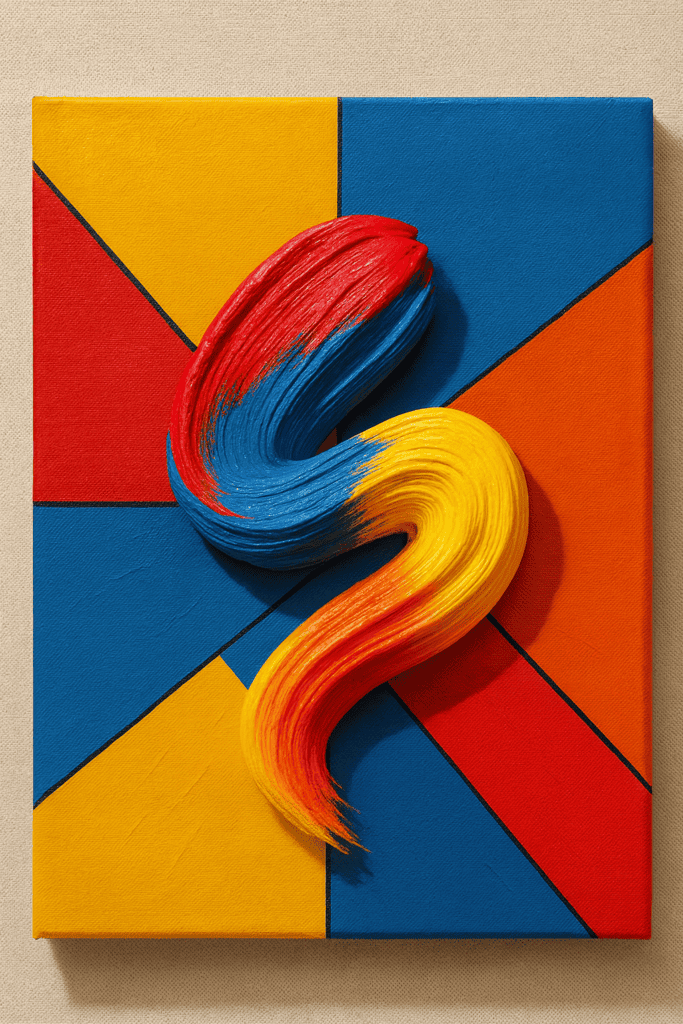
Some of her works are purely sculptural, like the piece Universal Ascension (2024), which was initially crafted in Istanbul. It utilises primary colours and organic shapes to compel the viewer toward it – thus presenting something equally familiar as it is disruptive. This sculpture carefully expresses three different phases of human existence. Firstly, it nods to the ways our passions guide us forward. Simultaneously, it showcases humans’ tendency to land on some form of equilibrium. This is made clear by way of the white through-line that centres itself throughout each of the more organic shapes.
As humans, we are predisposed to seek balance – especially in moments of complete uncertainty. Therefore, even in moments of unrest, the middleground becomes our safety net. The final yellow layer (gold) is the step beyond. Here, it’s made clear that our aspirations for a grander existence, to roads untraversed, will illuminate paths unknown. This section of the sculpture presents the notion that we will find our divine purpose even in the midst of life’s daily mundanity.
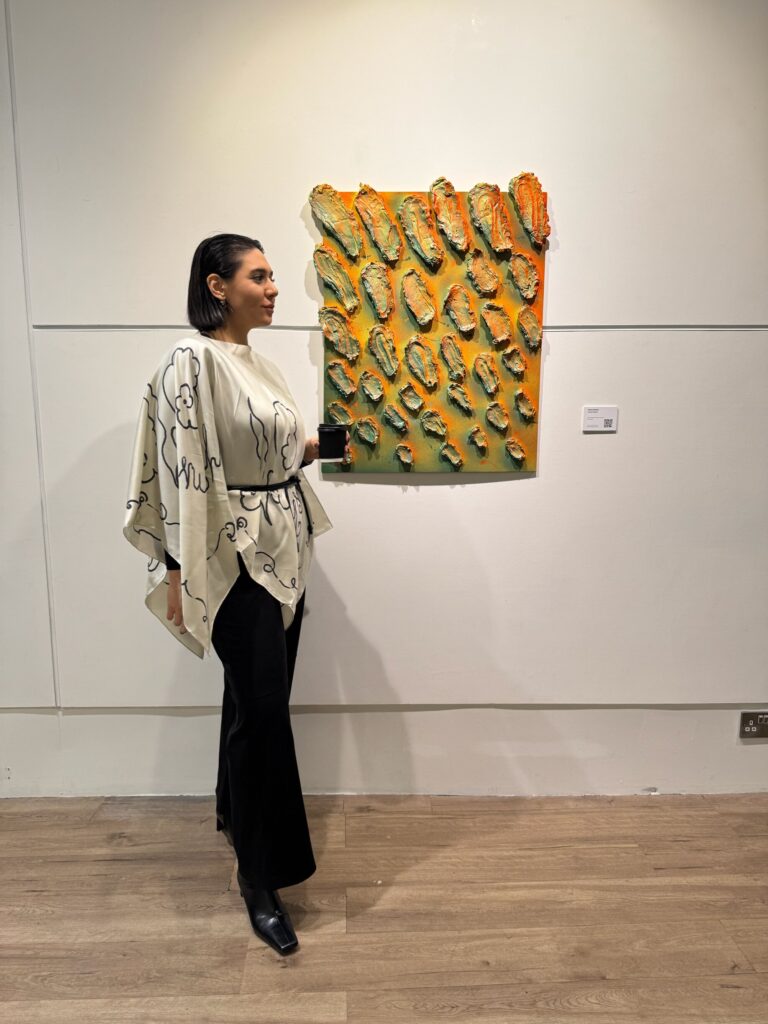
Another standout work is s u n s e t v e r d u re (2024), which is a combination artwork. It presents as a two-dimensional painting which is elevated by physical sculptural elements – emulating short brushstrokes. The painting presents a slow and subtle gradient from green to a golden yellow colour as the sculptural features grow in size across the work. They appear to be inching toward the top, as if seeking to escape the confines of the canvas. This particular work evokes a sense of expansion and emotional intrigue toward existences that are grander than the immediate. The viewer is left wondering where each of these three-dimensional features are headed.
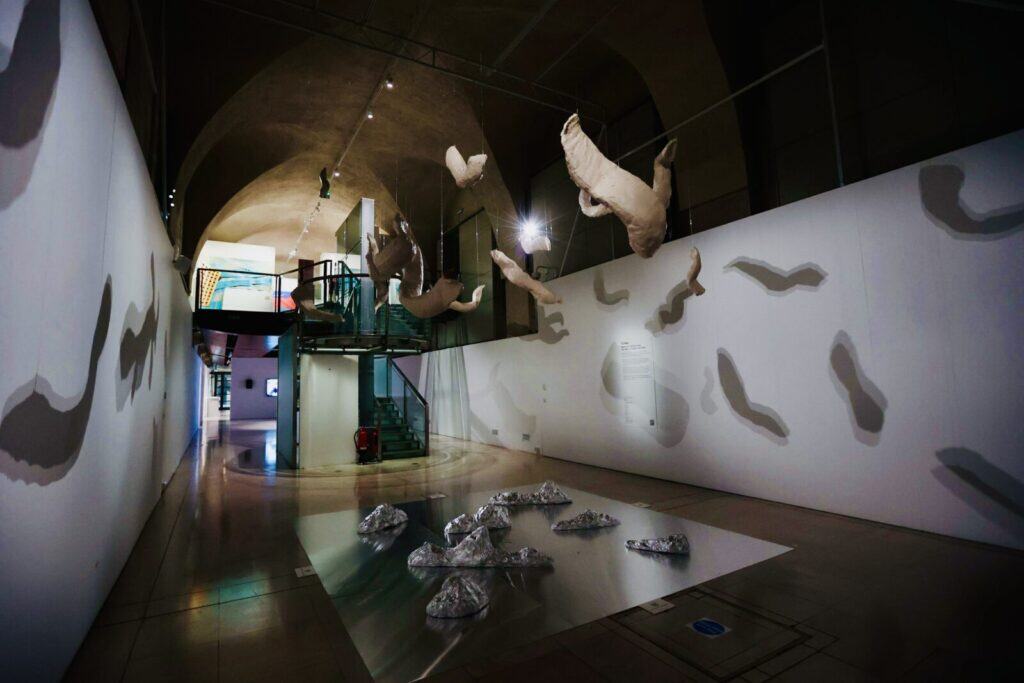
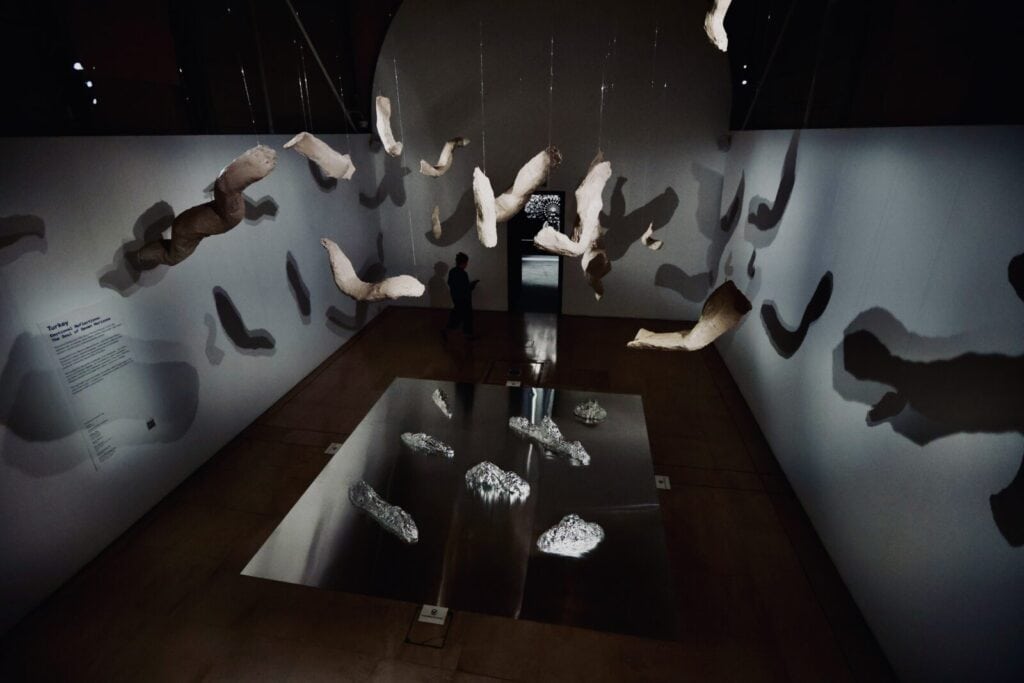
Ż a l (2023) plays with shape and colour, creating new emotional passages by way of geometric forms and an organically shaped sculptural element. The neutral colourways background the canvas. Thus presenting a stark contrast to the yellowed tentacle that seems to reach out – seeking to attain the silver ball suspended above it. This sculpture is a meditation on the often intimate and intense emotions which curve and bend around notions of melancholy and grief. Unable to be contained, this work is an expert example of the ways these emotions are deeply difficult to predict, and can appear or diminish at a moments’ notice.
Artist Halise Karakaya uses her artistic style to inform larger conversations about what it means to be human. Through her abstract vernacular, viewership is tasked with answering questions about their personal experience as it notches in with wider notions of humanity, community, and emotional vulnerability.