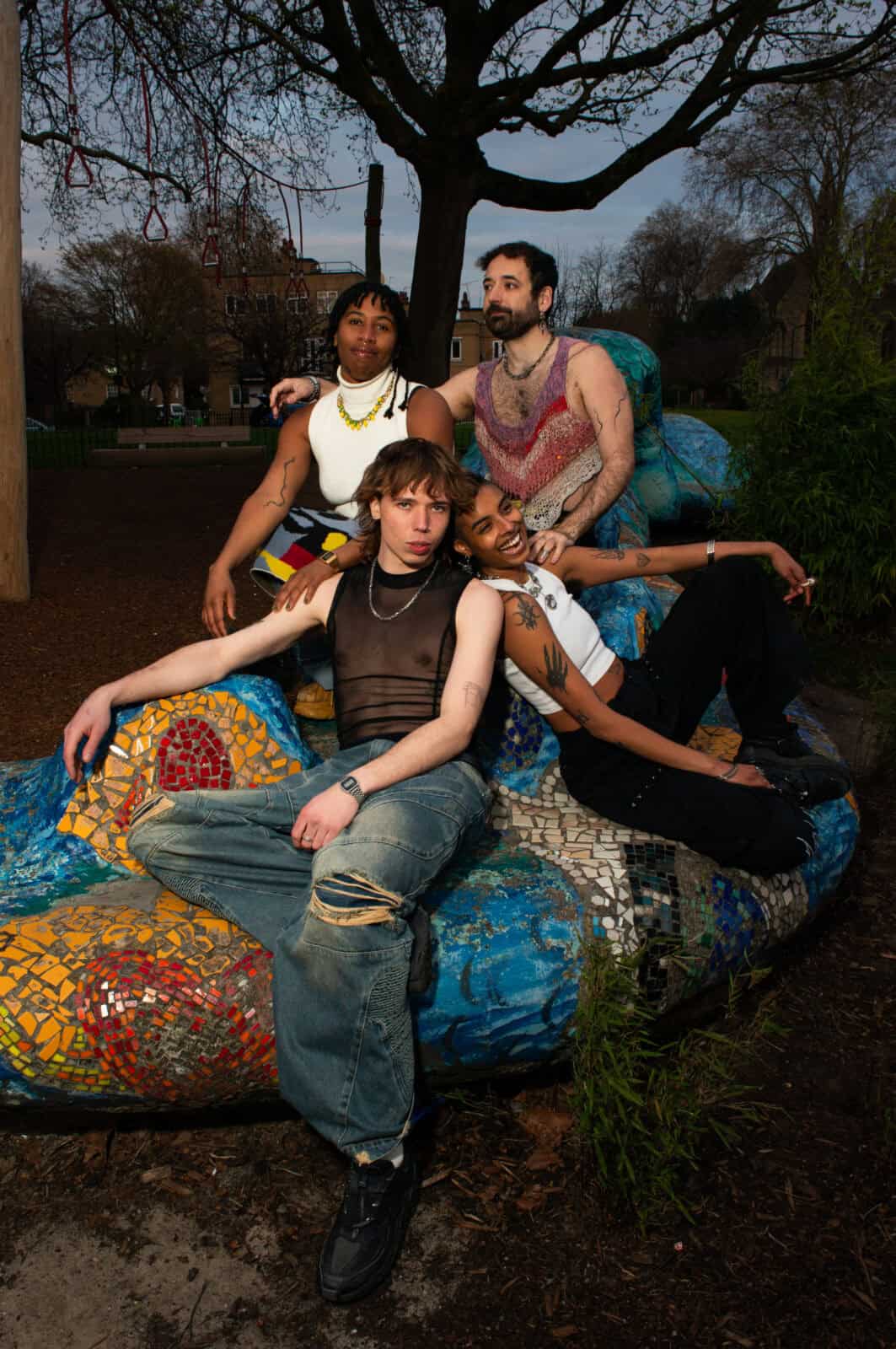
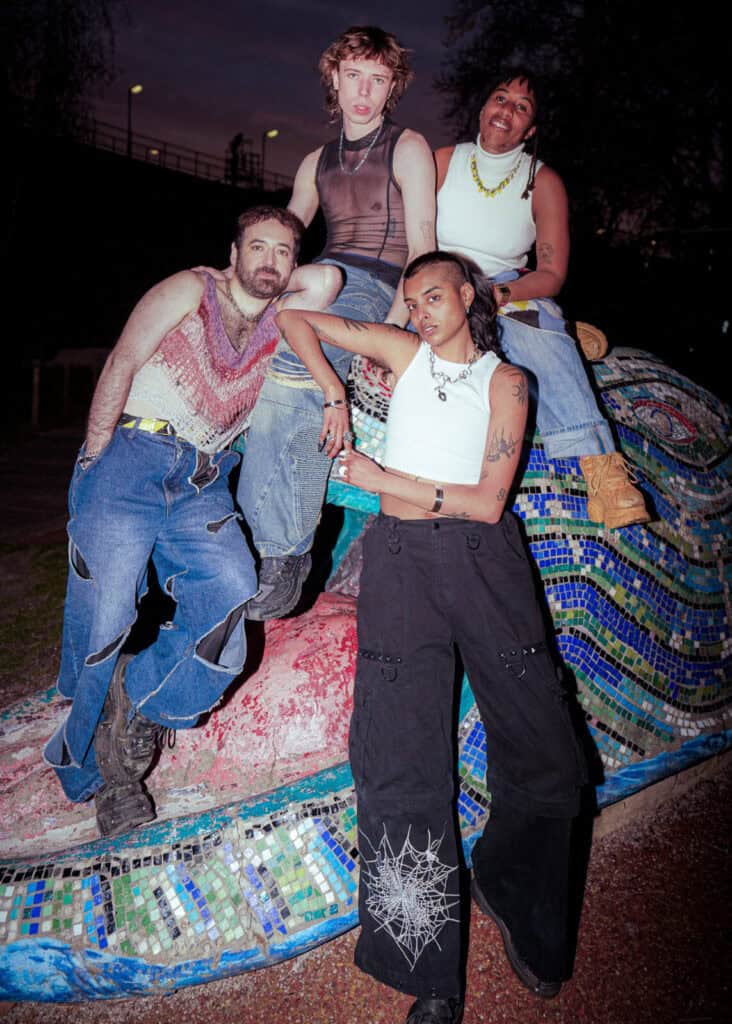
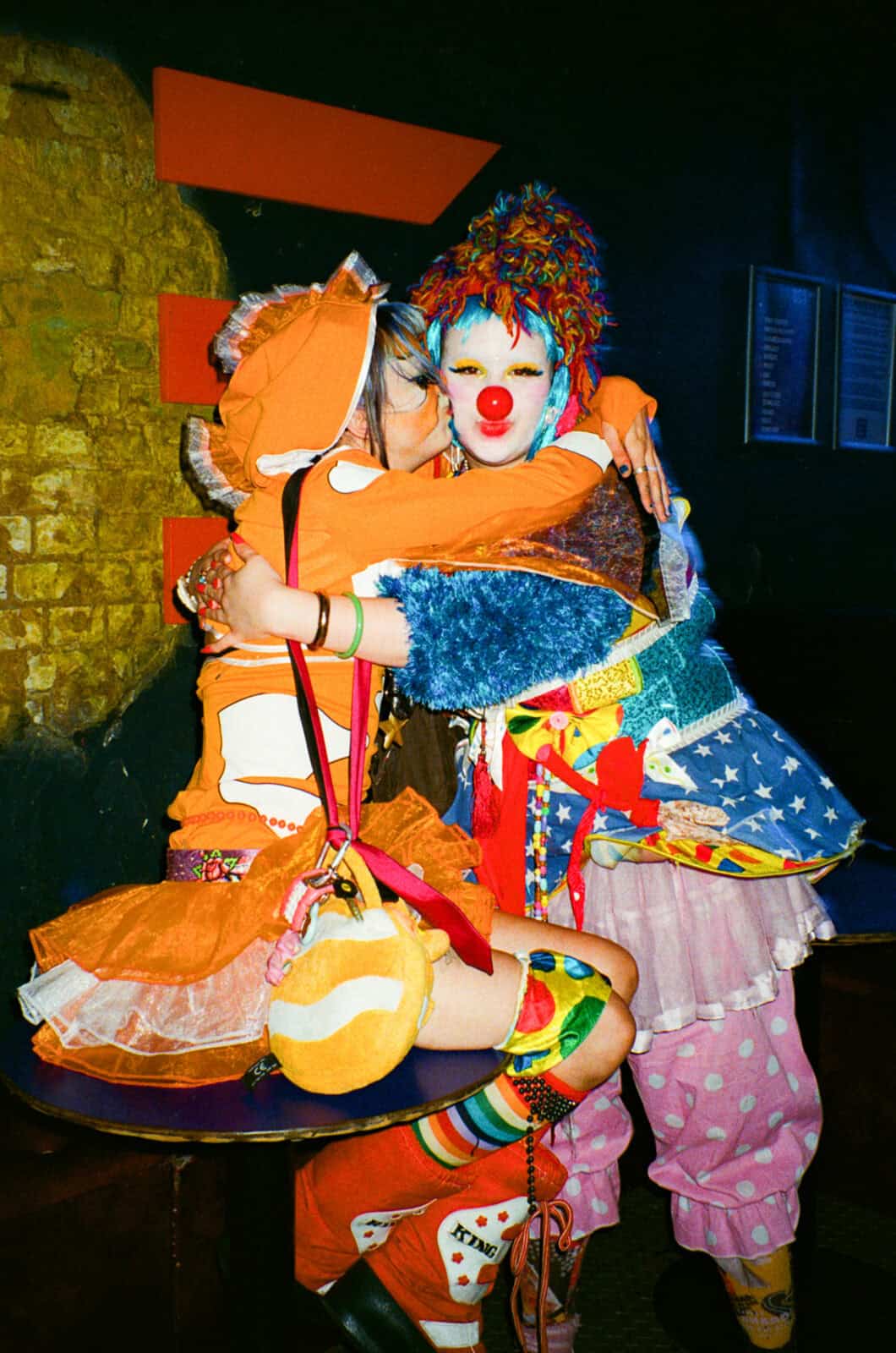
Somewhere in a dark room in the historic steelworks factory-turned-nightclub Electrowerkz, clowns are having clown sex and honking each other’s noses. “No night at Riposte is the same. Where else can you get your dick sucked while reading a brilliantly written queer zine?” Brandon, a Riposte regular and Underworld magazine founder, tells me. Welcome to one of London’s most unpredictable art-raves.
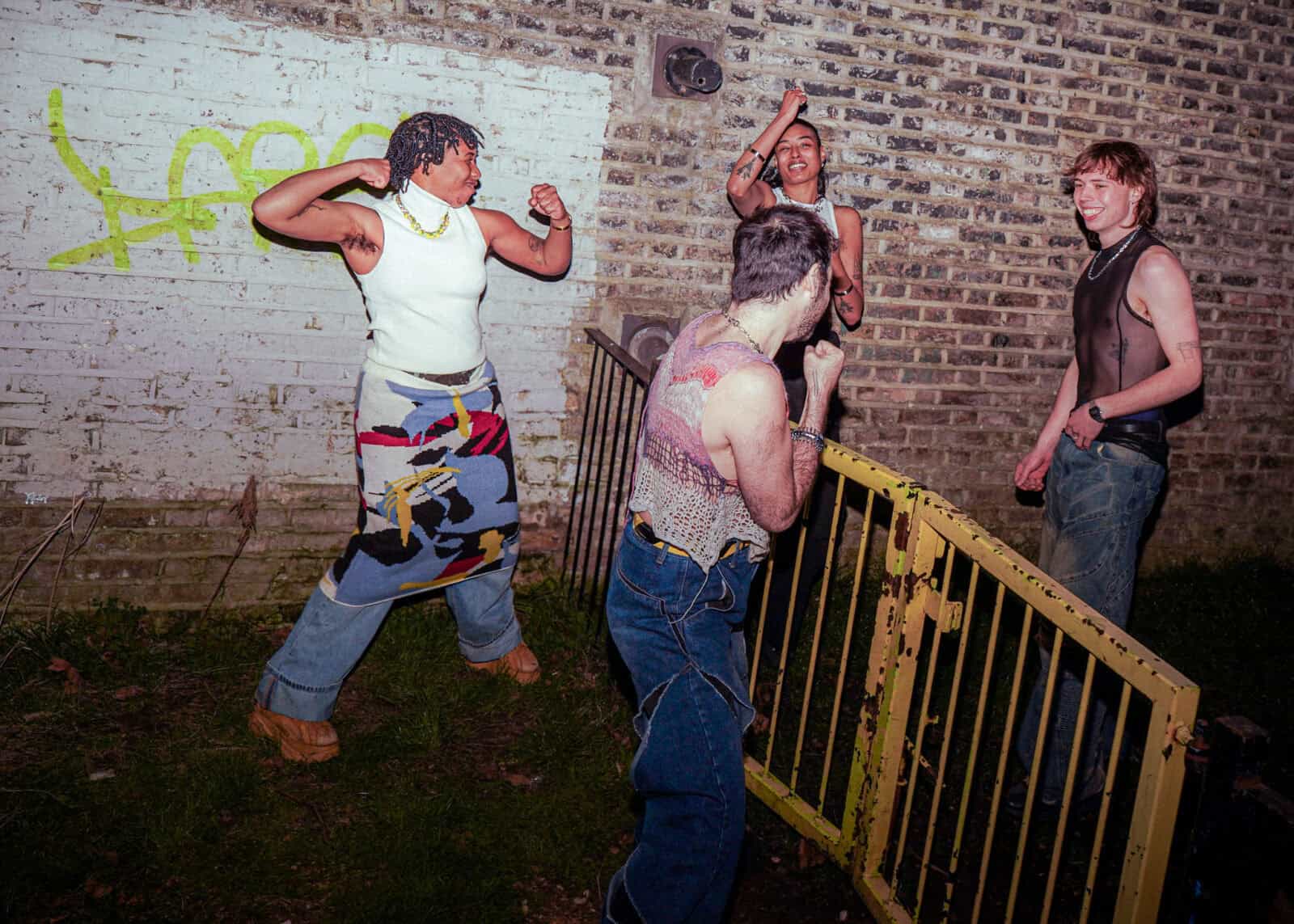
My night at Riposte began, like many good queer things, with a small act of defiance. I was having dinner with the minds behind the night and was wondering if I should bring a bottle of wine or a joint. Both felt appropriate. “So what do you want people to understand about Riposte?” I ask, swirling my wine.
In 2012, a group of art students in France found themselves banned from exhibiting their work on campus. Instead of accepting it, they moved the exhibition into their homes and their living rooms became galleries. Once a month, students would squeeze into cramped flats to see art, drink cheap wine, and stay far longer than anyone planned. The project was called Riposte, a French word that translates as “to fight back”.
More than a decade on from its roots, the original logic remains intact: how do we make connection the point of the night, between people, between artists, and between strangers?
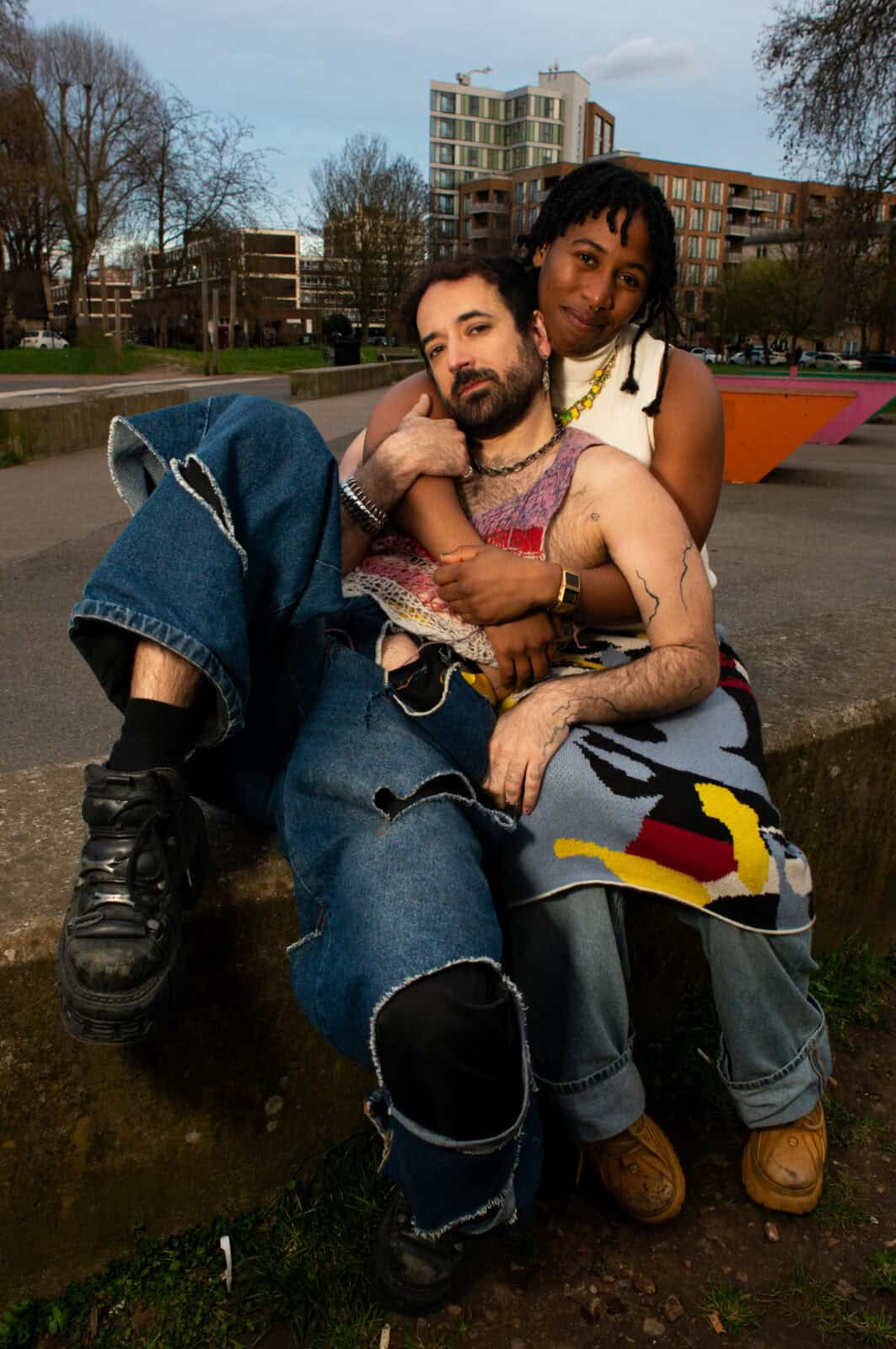
When founder Eden Topall-Rabanes brought Riposte to London in 2018, it restarted in miniature. House gatherings in Stoke Newington with friends and friends of friends arriving with half-finished artworks, experimental performances and USBs of music. But as word spread, the rooms became too small. What had started as a quasi-salon slowly expanded into something closer to a festival compressed into a single night.
Today Riposte fills industrial venues like Electrowerkz in Angel – operational since 1987 and also home to Slimelight, the world’s longest-running goth and alternative club night. Hundreds of people move between rooms, dancing to a wide spectrum of electronic music, watching live performances, sitting on the floor reading zines, flirting awkwardly, disappearing and reappearing. An installation is dangerously wobbling amidst an improvised jelly fight.
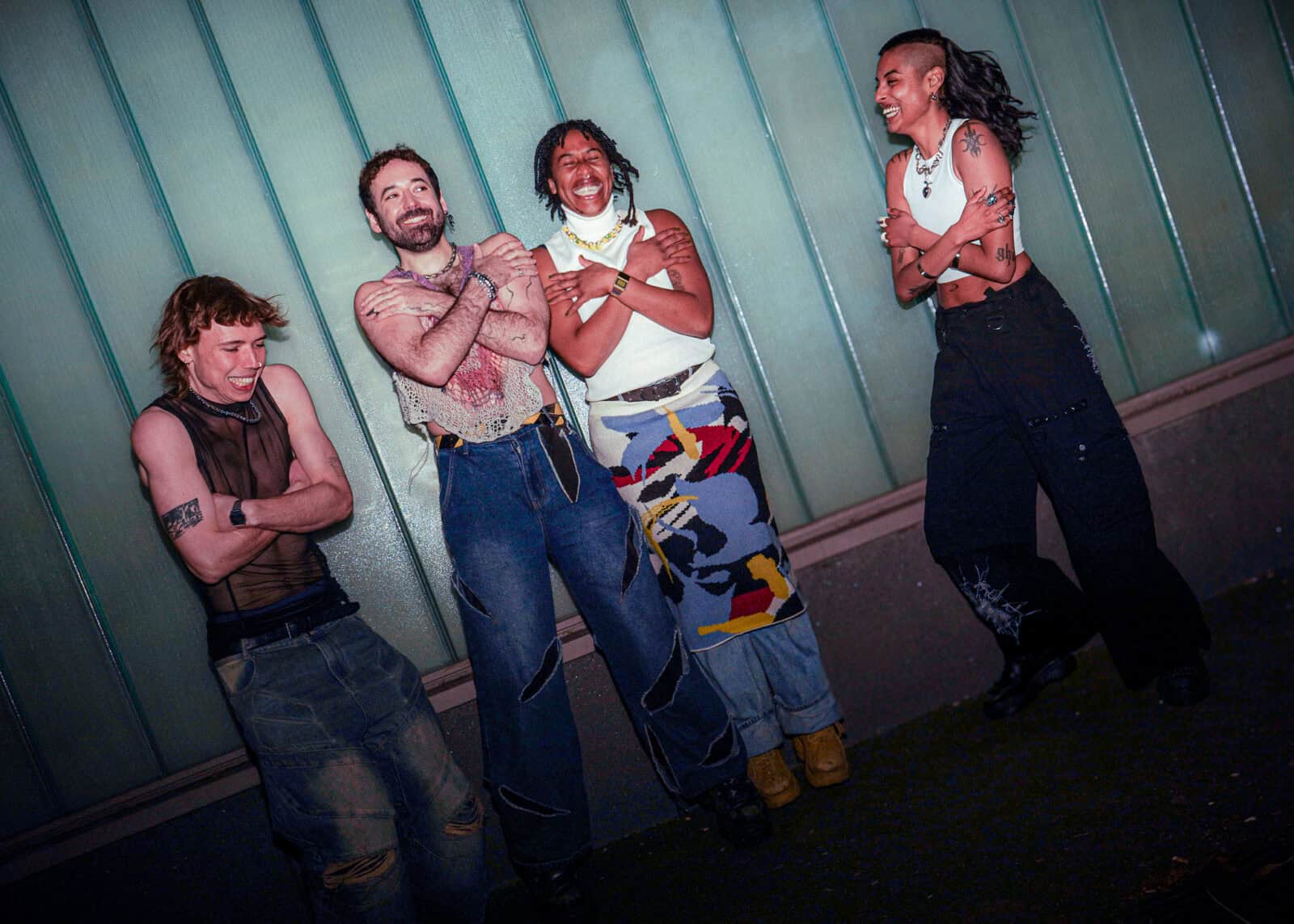
The group had some reservations about going on camera. They are aware of the online perception of Riposte, but the team has always preferred to keep the focus on the artists. The creators roam the night, shaping it as it unfolds. One thing is clear: it is not an ego project. Each event is co-produced by a dedicated small core team.
Porscha handles performance and stage management. George curates visual art and media, installations and market stalls. Knives runs the welfare team, door team, artist liaisons, and training while Eden co-curates the music with guest curators. The structure is deliberately collectivist as no one person is the singular boss. Each person holds their area while working closely with the others.
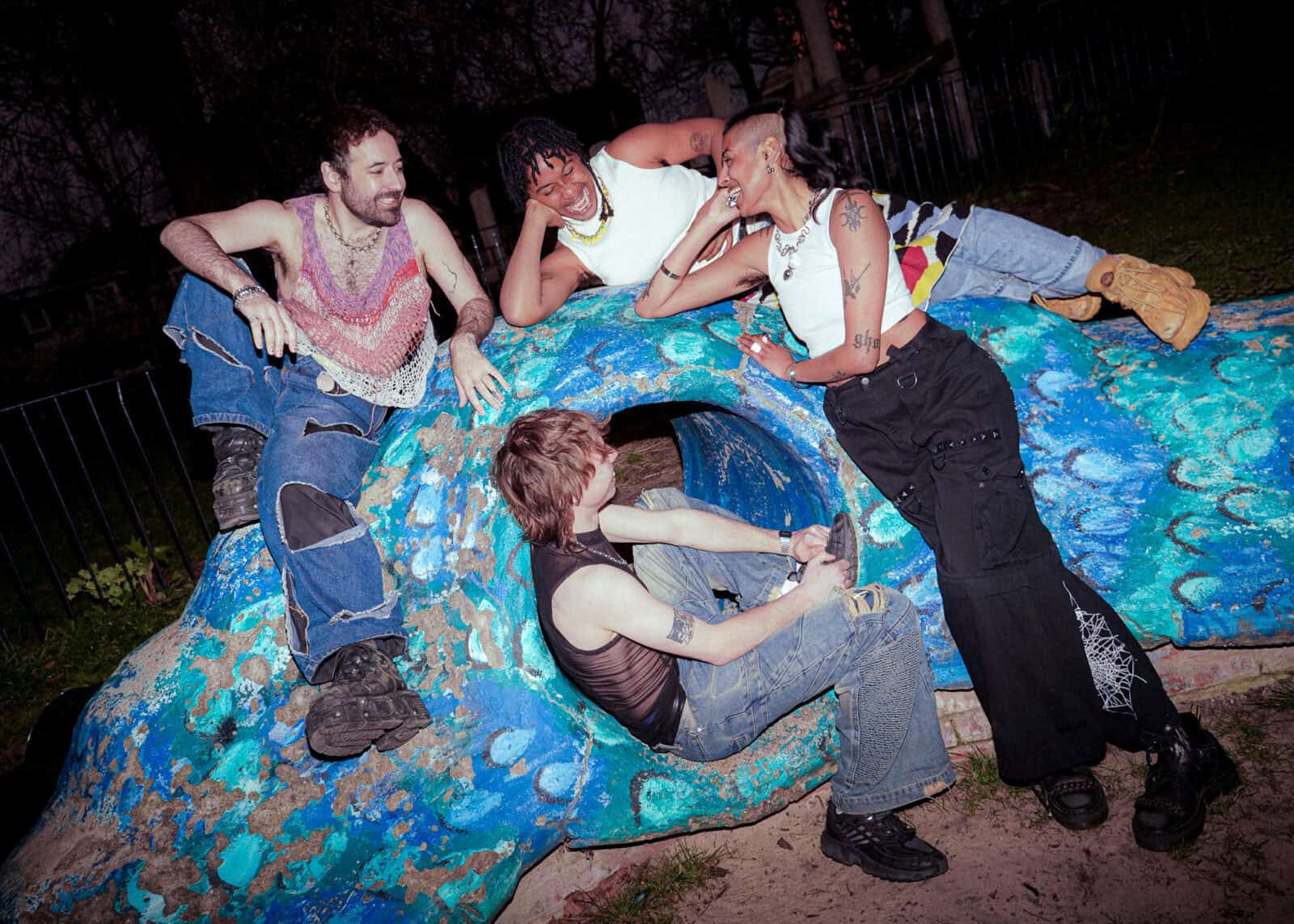
The team thinks carefully about community engagement, and what partying looks like for sober queers. Low-stakes activities, installations, games and performances create ways to participate that do not rely on getting drunk. Breaking sobriety often comes from boredom. Riposte tries to give people something more interesting to do.
Most clubs optimise for smoothness. Riposte, by contrast, embraces a certain kind of chaos. Tables collapse mid-performance. Sound cues fail. Performers improvise their way through disasters. Rather than breaking the illusion, the mess becomes part of it. “The crowd are very forgiving of imperfections, they love the chaos,” George says and they’re right. Their audience knows that performance is best when it’s not trying to be perfect.
What makes Riposte distinctive is not just the art but the infrastructure of care holding it together. You can see this in their infamous themes, which often flirt with big ideas: politics, power, mythology, capitalism, justice, sometimes all at once. Their ticketholders expect to dress up in fantastical ways and the organisers seem to delight in meeting that energy, responding in ways that are sometimes incredibly broad and sometimes almost comically specific.
“The crowd takes the themes seriously enough that it feels worth putting the effort in,” Damiano, a Riposte regular, writes to me on Instagram. “Riposte has always managed to sashay along the sharp edge between 2edgy4u and pure, genuine, unfiltered enjoyment.”
The welfare team is visible throughout the night and there are trained medics on site. Free food circulates backstage and at 6AM breakfast is served so that party goers are not let loose on the streets with empty stomachs. Tickets are kept deliberately cheap, with free entry options wherever possible. The influence of earlier feminist party collectives is clear, particularly the welfare structures developed by spaces like Pxssy Palace.
Rather than booking established names, most performers arrive through open calls. The goal is to create a stage for artists who might otherwise never appear in mainstream venues. As a result, the line-ups tend to look different from the rest of London nightlife. There is a clear emphasis on trans performers and performers of colour. Disabled artists are actively recruited. If the balance slips, Porscha tells me, they go back into the archive and look again. Eden shrugs at the idea that truly diverse line-ups are hard to build.
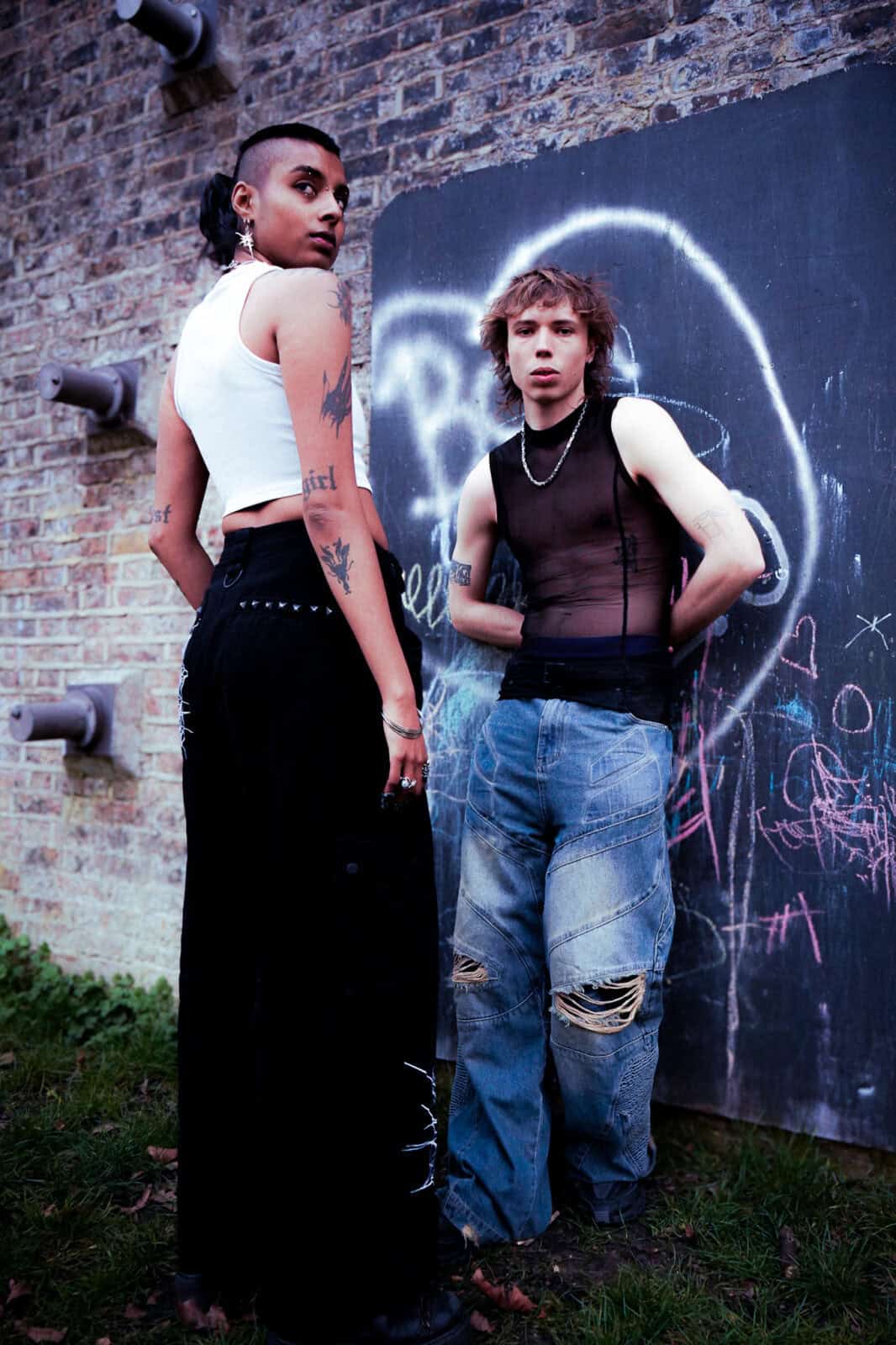
“I never understand what people are talking about when they say it’s so hard to find marginalised DJs and performers,” they say. “Are you even looking?”
Riposte regulars come for different reasons. Some arrive to dance all night. Others wander between installations, chat with strangers, or quietly scribble in notebooks. For many, it is their first queer party, a stepping stone for discovering community and finding the other spaces that will eventually shape their nightlife lives.
There is also a dark side to nightlife that the Riposte welfare staff keep carefully contained. Knives recounts how people will tell them they’ve had the best night ever while, out of the corner of their eye, they watch police usher offenders out of the door.
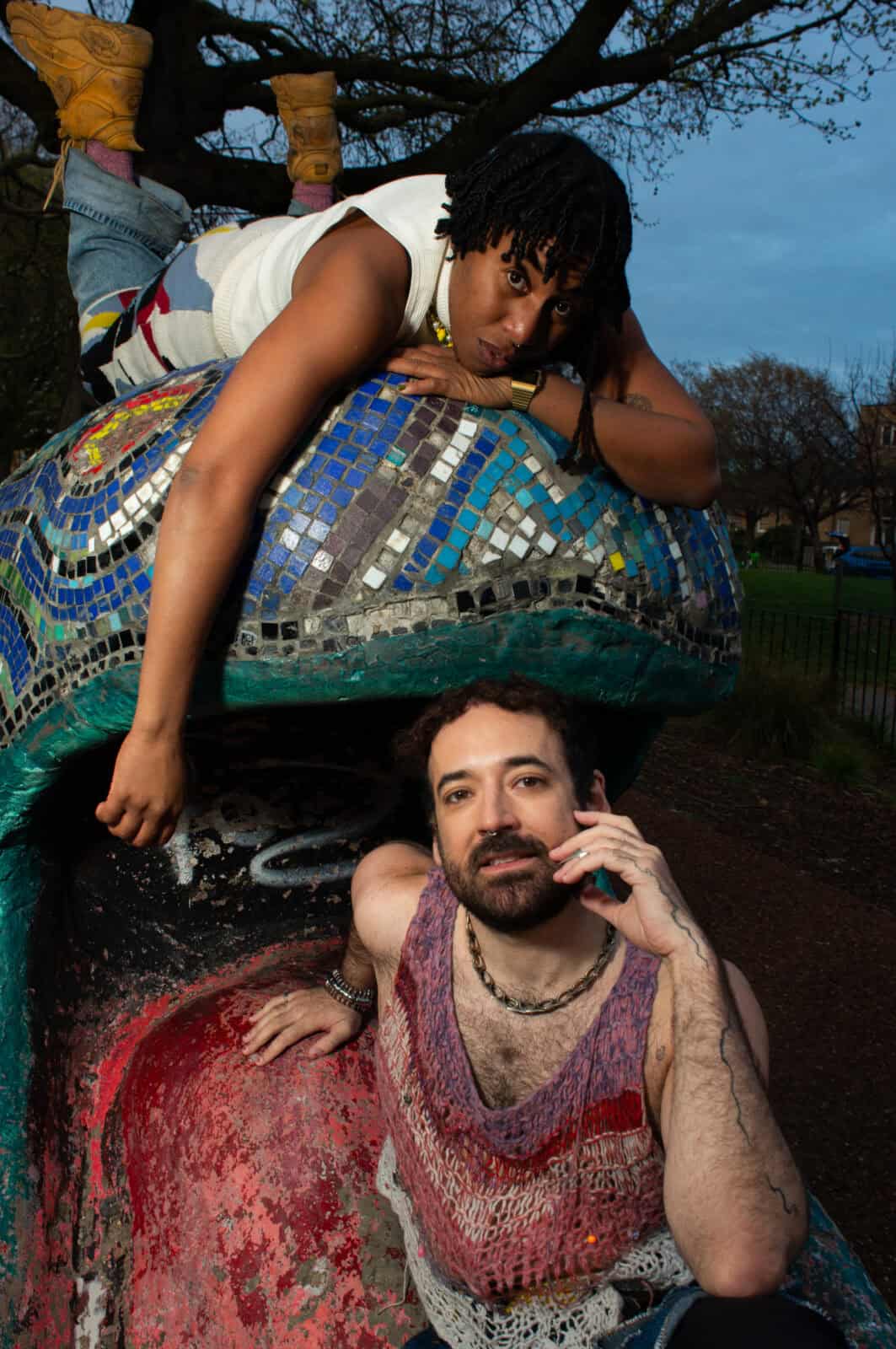
There’s a persistent misconception that Riposte is thriving financially. Online, the parties look exciting, with packed rooms, theatrical sets, and ecstatic crowds. Followers equals clout equals financial security, right? In reality, every event teeters on the edge of viability. They employ an almost ridiculous number of artists and the goal is always simple: give space to as many people as possible.
But that comes with hours and hours of one-to-one meetings, careful curation, paying artists, renting equipment, covering high taxes and somehow keeping tickets as low as possible. One poor turnout can push the organisers into debt and artists have to be paid regardless of revenue. But they keep going because, in their words, if we don’t it dies.
The labour involved is immense. Weeks of meetings, application reviews, technical builds, rehearsals, and welfare training culminate in a single night that disappears almost as soon as it arrives. George described the curation as choosing things to be destroyed, artworks designed not for preservation but for experience. By morning, most of what you see will be gone.
Looking ahead, the organisers dream of something bigger. A permanent space that could function as a studio, training hub, and performance venue. Artist residencies. Bigger workshops. Perhaps even a festival, or a book documenting a decade of strange performances and even stranger partnerships.
Riposte, at heart, is still for the people who walk into a club and feel, immediately, like they might be in the wrong place. The queers who are not sure they are cool enough for the cool kids. “What can I say about Riposte?” Brandon finishes their thought. “Well, it’s like the modern-day equivalent of an old-world bazaar or the Star Wars cantina.”