
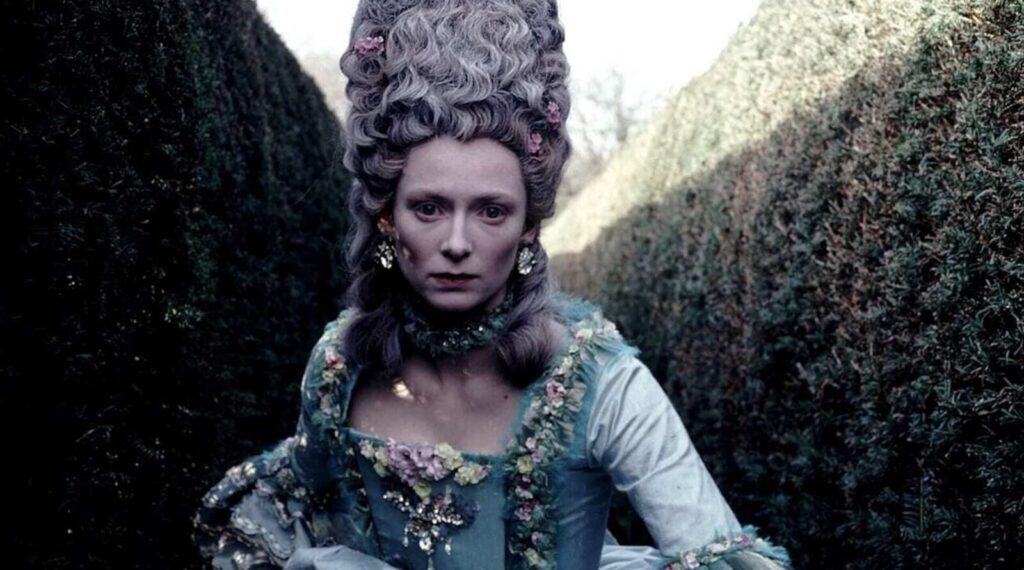
I’m standing in the much-mythologised screening room of the Rio Cinema in Dalston as projectionist Andrew Woodyatt walks me through its history. In the 1970s, the Rio had a stint as an adult film cinema, hosting burlesque shows alongside its screenings. One such performer included a snake in her act, which she’d keep warm on top of the 35mm projector between performances. I try to imagine a live snake replacing what’s now winding through the projector: the original 1992 35mm print of Orlando.
This very special screening of Sally Potter’s iconic adaptation of Virginia Woolf’s 1928 novel is one of the first events kicking off Rio Forever, a six-month programming extravaganza celebrating the cinema’s 50th anniversary. These 50 years bring an impressive accolade: the Rio is now the longest-running cinema in the UK.
How apt, then, to kick off celebrations with a film so deeply concerned with boundless time, both within the story and beyond it. Now more than 30 years old, and with the novel nearing its centenary, both are as relevant and celebrated as ever. Potter is invited to present the film to a thrilled crowd. Before the screening, I come across a girl who has Tilda Swinton’s Orlando stamped on her skirt (woman at the front, man at the back, she shows me, twirling). Clearly, spirits are high.
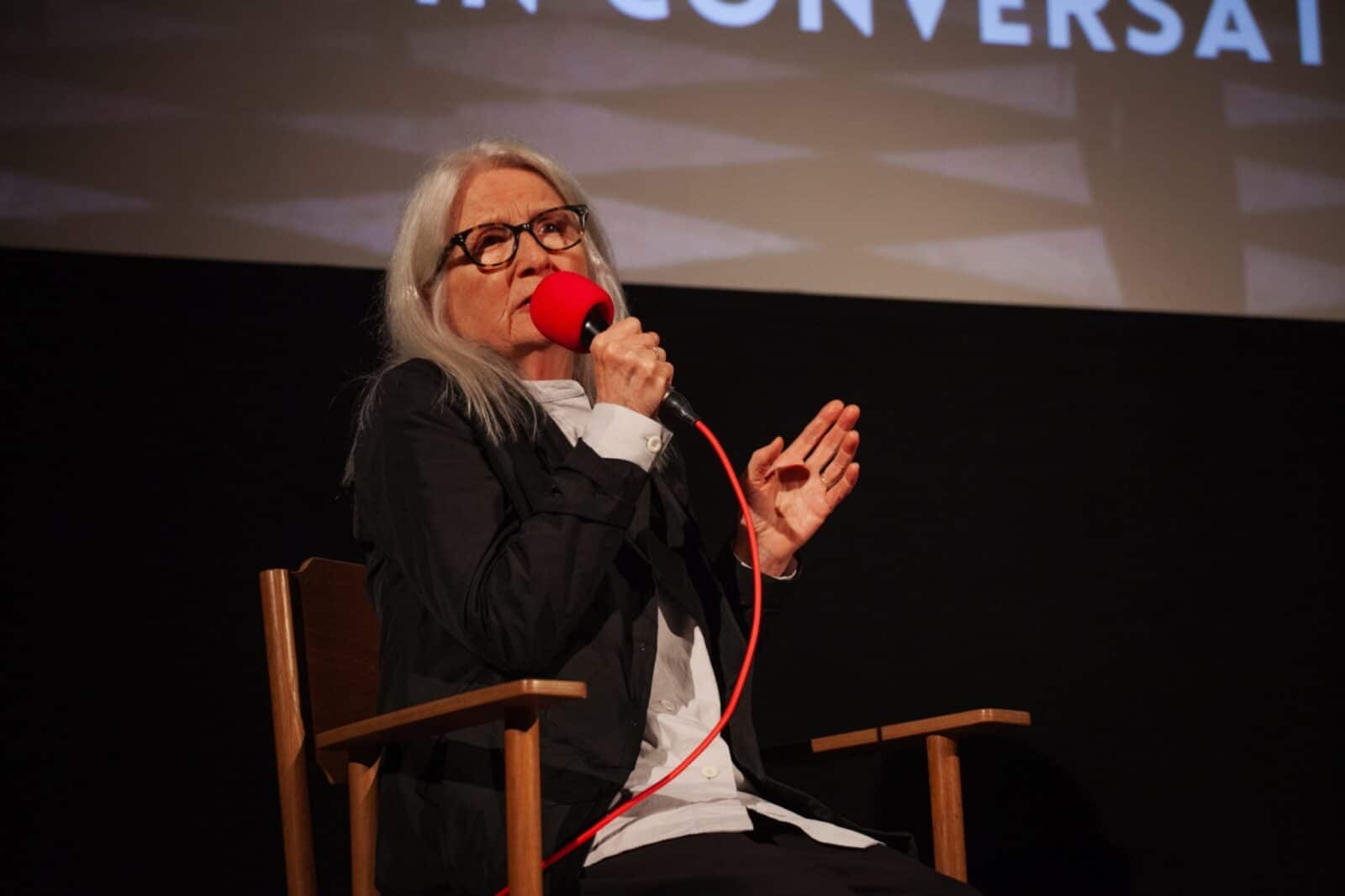
Photography by Bells Kennedy-Compston
“Orlando expresses so much of what the Rio stands for,” says So Mayer, author of The Cinema of Sally Potter: A Politics of Love, amongst other works. They are invited to present alongside Potter, and lead the Q&A. “[It’s] a bold, ambitious, uncompromising, multi-art film made in (queer) community, produced in Hackney but a transnational collaboration, making the most of its budget,” they continue.
The Q&A is an inspiring, hope-filled affair. In it, “Sally Potter said that she and Tilda Swinton met on a March against Section 28,” Mayer recalls. “They made Orlando in the early years of its activation – and we need it again in 2026, as the government try to instate a trans version of S28. No binaries, no borders, no wars: sometimes you just need to see the gold lamé Angel of History hitting the high notes to remind you!”
Before the screening, I get a moment to chat with Potter myself – a conversation about time, reinvention, and sweet, sweet revenge.
In the words of So Mayer: Rio Forever, indeed.
The Cold Magazine (CM): During filming, you’ve said you told production not to think about Orlando as a period piece – or what you call a bonnet picture – but to think of it as a film about now.
That statement really resonates, both with Woolf’s novel and the film, which are very much considered works that speak of the now. What is it like for you to experience Orlando’s constant “nowness”?
Sally Potter (SP): Well, I think it’s the ideal situation, because film only exists in the present moment, because it’s an experience, it’s not an object. So people are indeed always experiencing it for the first time.
And as you rightly say, the book itself is about coming out of history into the “now” of the ending. Her ending, of course, was 1928, when she finished writing it. And so I brought it into the present time 34 years ago – which, if one were making it now, we could go further.
But I think the relationship with what the present is – in the book, and therefore in the film too – and the experience of watching a film itself, which brings you into the present of that film, means that it’s all a sort of a meditation on now.
But I also love the fact that lots of people are finding the film for the first time. So as far as they’re concerned, it is a new film. And I’ve been in lots of audiences with very young people who have experienced it for the first time, who knew nothing about it and didn’t know what to expect. It’s very gratifying.
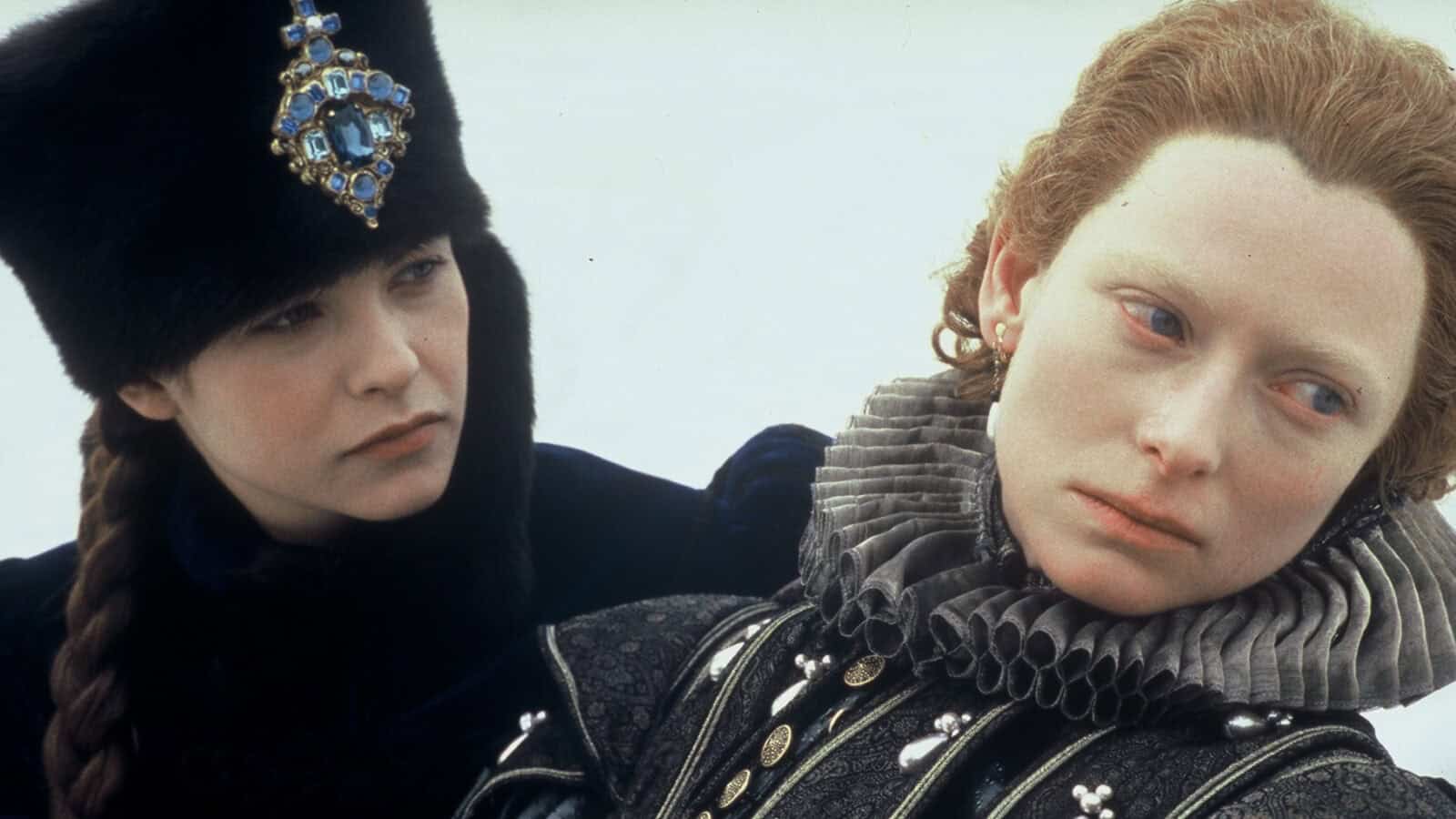
CM: I was also thinking about how Orlando, the story itself, spans across centuries, and how the idea emerges that history itself is kind of a fluid and unidentifiable thing – something that in academic circles you might call a queering of history.
And I’m wondering if you find that this idea is replicated within Orlando, the film – which is often revisited, reinterpreted, and celebrated all over again.
SP: Well, it’s entirely consistent with the film. It’s continuously moving forward all the time.
And it was an editing principle as well, and a shooting principle, that we never go backwards, we never cut back to something we’ve seen before. Constantly rolling forward. So it’s itself, structurally, an image of fluidity and change.
And of course, what changes as well over a 34-year period is the ways in which people talk about that – the different kinds of language that get attached to it, the different discourses around history and gender and identity. All those things are a moving feast of argument that gets generated by the film, exactly as it should.
CM: I’ve heard so many stories of what a tremendous effort it was to get the film made. You could make a parallel with Virginia Woolf’s own efforts in being a writer herself, another case of history in repetition.
SP: Yes, because there was a lot of doubt in the film. One of the things people said was that you can’t make a film of Virginia Woolf’s work. Because there had been no other adaptations at that point.
But the reality is that a great writer like her is also a source of great encouragement for anybody else making work. To know the barriers she crossed, the aesthetic inventions, the tenacity, and the suffering that she had, which people often characterise in the wrong way – it seems to me a validation of all future projects.
And Orlando, the book, was trivialised at the time by critics, called a terribly lightweight piece of froth. It’s not. It’s a very, very serious work about history – about history as fiction – and, of course, about gender. A very particular view about the relationship between the essential human and the learned or performed maleness or femaleness.
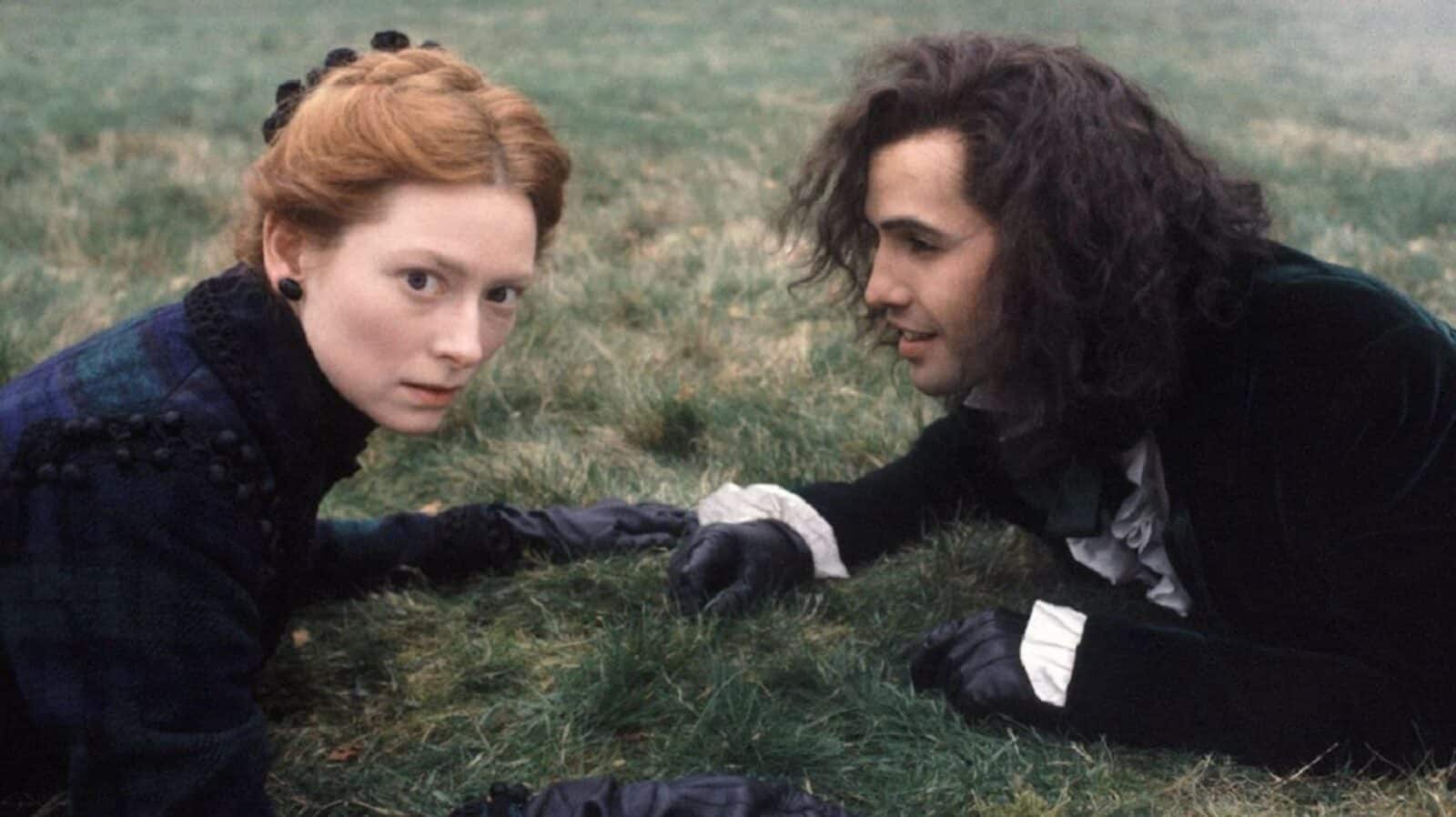
CM: What is it like watching the influence Orlando has had on cinema today, thinking of how hard it was to get it made at the time?
SP: Revenge!
On all the doubters. On all the rejections.
But listen, that is filmmaking – and I’m going through it right now with another film in preparation. It’s the same. I think it’s very hard for people who are not themselves filmmakers, or makers of things, whether it’s films or anything else, to understand the process of belief in an imaginary entity that you have to hold for a very long time before it actualises.
So I think it can be hard for financiers. If they read something, they say, “How are they going to do that? That’s not possible.” And that’s what people did when they saw the script: “How are they going to do that? It’s not possible.”
But your question was, what does it feel like now, then, to see how it’s happened? Well, first of all, one forgets the pain. You really do. I think you forget all the really difficult stuff. When something works and people relate to it, it shifts.
I’m just wondering… am I telling the truth, do I really forget the pain? I mean, when I watch the film, I don’t think about the pain of how difficult it was to make it. I look at it and think maybe I should have moved the camera half an inch to the left. I’m sort of, so to speak, still working on it when I look at it.
I don’t watch it very often, but I probably will watch it tonight. I’m interested to look at the effect of watching it on 35mm projection, which doesn’t happen very often anymore. That was how it began, because it was all there was.
Rio Forever will run until November of 2026 with a variety of Q&As and Special Screenings. Look through their upcoming programming here.


