
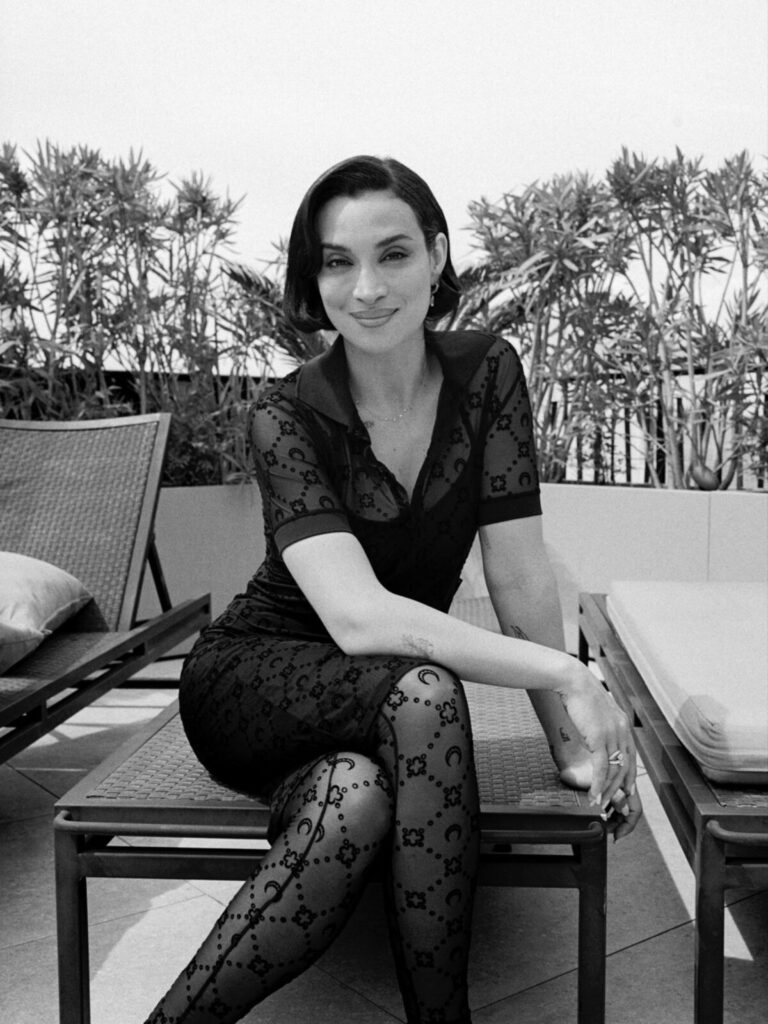
Camélia Jordana, a 30-year-old pop icon from France, has something ferocious about her. It’s in the way she sings, combining a sense of freedom with a little bit of nostalgia.
When we meet at the Cannes Film Festival to talk about her latest film, the lovely animation Viva Carmen!, Jordana smiles gently, as if both proud and also full of disbelief that the film has finally reached the Cannes shore and is ready to be seen by hundreds of cinephiles. Directed by Sébastien Laudenbach, known for critically acclaimed animation, Chicken for Linda! (2023), this charming adventure is a brand-new adaptation of Georges Bizet’s classic opera. With Viva Carmen!, Jordana fulfills her dream of becoming the titular Carmen.
But the entire animation is only a pretext for our conversation. In this intimate interview, Jordana tells us about her personal connection with Carmen. As she says, her mother has also been an actress and starred as Carmen in theatre – this performance has inspired young Jordana’s future artistic choices. Besides, the animation’s star sheds some light on her newest studio album, on which she is working at the very moment.
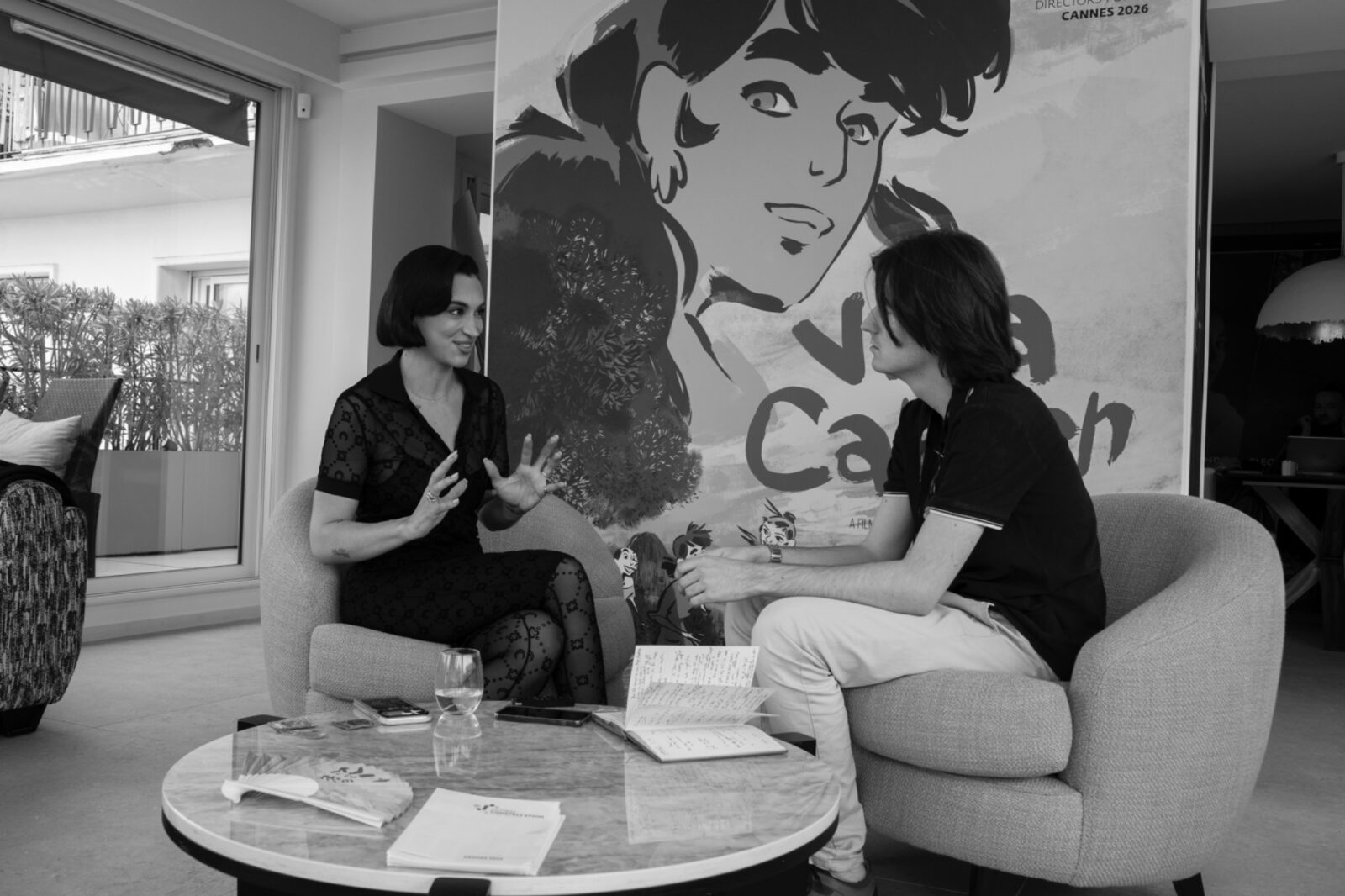
The Cold Magazine (CM): Do you remember going to the opera and seeing Georges Bizet’s Carmen for the very first time?
Camélia Jordana (CJ): It is actually my first music memory ever. My mother used to sing on stage, and there’s even a picture of her doing that when she’s dressed as the eponymous Carmen. And then, another picture of me on the same night. I think I’m four there, and I have this look saying, “I wanna be just like my mom, I want to do this, too.”
CM: How do you recall that evening?
CJ: I think it was crazy! I know some stories other people told me about it, and I guess that my brain has built up some actual pictures out of them. My mother was still having lessons, and she definitely wasn’t professional. Even so, she has decided to sing and act. I also recall that the whole team needed microphones for the entire performance. And my mother didn’t – that’s how stunning her voice was. This is one of the main reasons why I have such a special connection to Carmen and to Maria Callas. My mom used to listen to Callas practically all the time, so I grew up having those three women – my mother, Carmen and Callas – all around me (laughter).
CM: So, what was it like to come back to the character of Carmen after so many years?
CJ: It’s funny, because a month before learning about the project and meeting Sébastien and his wonderful team, we were still going through the COVID-19 quarantine with my brother. We were fantasising about the idea of creating an adaptation of Bizet’s opera. He is a theatre director, and the other day he told me that I should be playing Carmen, which I found rather surprising. Carmen has always been a figure who has pushed me to tell her story. We also kept the promise with my brother, and we are planning to present it in 2027.
At some point, I started learning how femininity was treated back in this era, and I also read a lot about Bizet. He completed the opera and then died some time after showing it for the first time. Bizet didn’t have a chance to learn how important his work really is. Projecting ourselves into a story so intense and modern was a unique experience. I wanted to pay tribute to all the women who have chosen to live free, no matter the odds.
CM: You sound proud when you talk about this project. It’s in your voice.
CJ: I am so proud of it! I couldn’t believe this film had come to me. Carmen desires to live on her own rules, and it will sadly cost her life. I’m not sure if I’m as radical as her, but I’m French-Algerian, and freedom is a thing in our culture; we really treasure it.
CM: It seems like barely anything has changed today. To become free, we need sacrifices.
CJ: In the Tamazight language from North Africa, freedom is called “amazigh,” meaning “free men.” This is literally our identity, so freedom is in our blood, and I am thrilled to be Carmen and show her to modern audiences. It’s a project humbling me as a woman and a musician, allowing me to pay tribute to all courageous women.
CM: Tell me more about the romance that runs in Carmen’s veins.
CJ: Indeed, it is she, and not the story, who is romantic and doesn’t want to become someone’s property. Freedom is romantic: it can lead us to difficult situations, but it remains something beautiful as a belief. It takes us to new places and allows women to fight for themselves. She’s just her own Carmen, a natural rebel, who wants to live by her choices and never bow down to anyone who would like to control her.
CM: As a musician, you also need a certain amount of freedom to blossom and be in control of your songs.
CJ: I am now working on my newest album, and this is the first time that I have total artistic control, as I am fully independent and – right now – I work as my own producer. It is something completely new for me, but at the same time, I learn a lot about myself. I am currently in the moment of presenting new tracks from the record, which we have not released yet.
We played them recently to the audience, and all of it felt like a kind of resistance move to me. There was something organic appearing in those shows, as there was no stage, we were all on the same level, and music became intertwined with just talking and, ultimately, spending time together. I have never experienced anything like this before. It was about vibing instead of calculating; about going away from massive shows to something more intimate and, by this, real for us. I just needed to be linked to people and share music. Waiting to record an album and later release it would only restrict me as an artist.
CM: What did you learn about yourself during those performances? Were you surprised by anything?
CJ: I’ve realised that I was actually able to let go, maybe for the very first time. I’m a crazy control freak, and I started very young, which also had an impact on me. Back then, the way young women artists were treated was not particularly healthy or professional. There was no protection for them, and for me, so my brain had to come up with such a defence mechanism. Through the years, I’ve learned how to do everything by myself, as I didn’t want to rely on anyone else. I had to have everything under control because that wasn’t a privilege I could have had in 2010 when my first album came out, when a lot of things were imposed on me. And, I had to say “yes” most of the time.
CM: What has changed since letting go?
CJ: My sense of trust, for instance. When you find this trust in yourself, you can finally give it to the other people who surround you. I could then pick good partners and work with them without any regrets. Now, I’m in a much better place.


