The dust has settled on Graduate Fashion Week, the event that brings our finest fashion graduates together in East London’s Truman Brewery. It was a mammoth week, featuring over 3,500 graduating students from 70 universities. Fashion design students presented collections that, without the resources of design houses, laid bare their personal expression and craftsmanship. They were joined by those graduating across disciplines, in photography, creative direction, and communications. It’s an expansive presentation, and the ideal vantage point to survey the talented generation that will soon inherit the fashion industry.
We’ve selected ten graduates whose work stuck with us, and lent an ear to their challenges, hopes and dreams. We found a cohort with intimate inspirations, translating the narratives of their family and close communities into their creative work. Design graduate Senuji de Silva’s collection told the story of her defiant Sri Lankan grandmother through rattan and handloom textiles, while Safiya Shakirova honoured historical and mythical Kazakh women with cocoon-like silhouettes and towering, sumptuous pieces imbued with ceremony. And despite panicked AI stances proliferating in our discourse, when we asked our young graduates, we found a hopeful optimism about the endurance of human creativity.
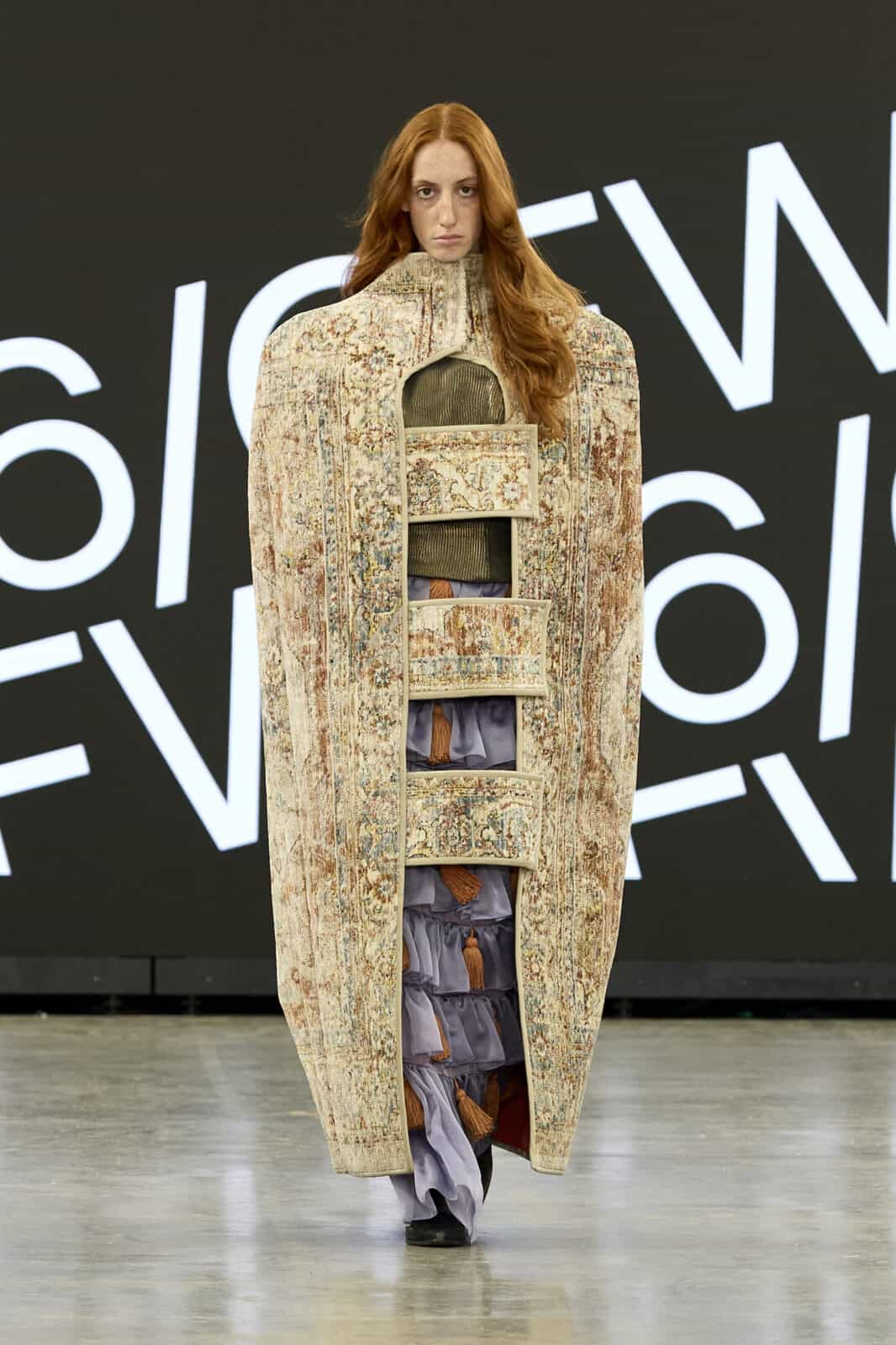
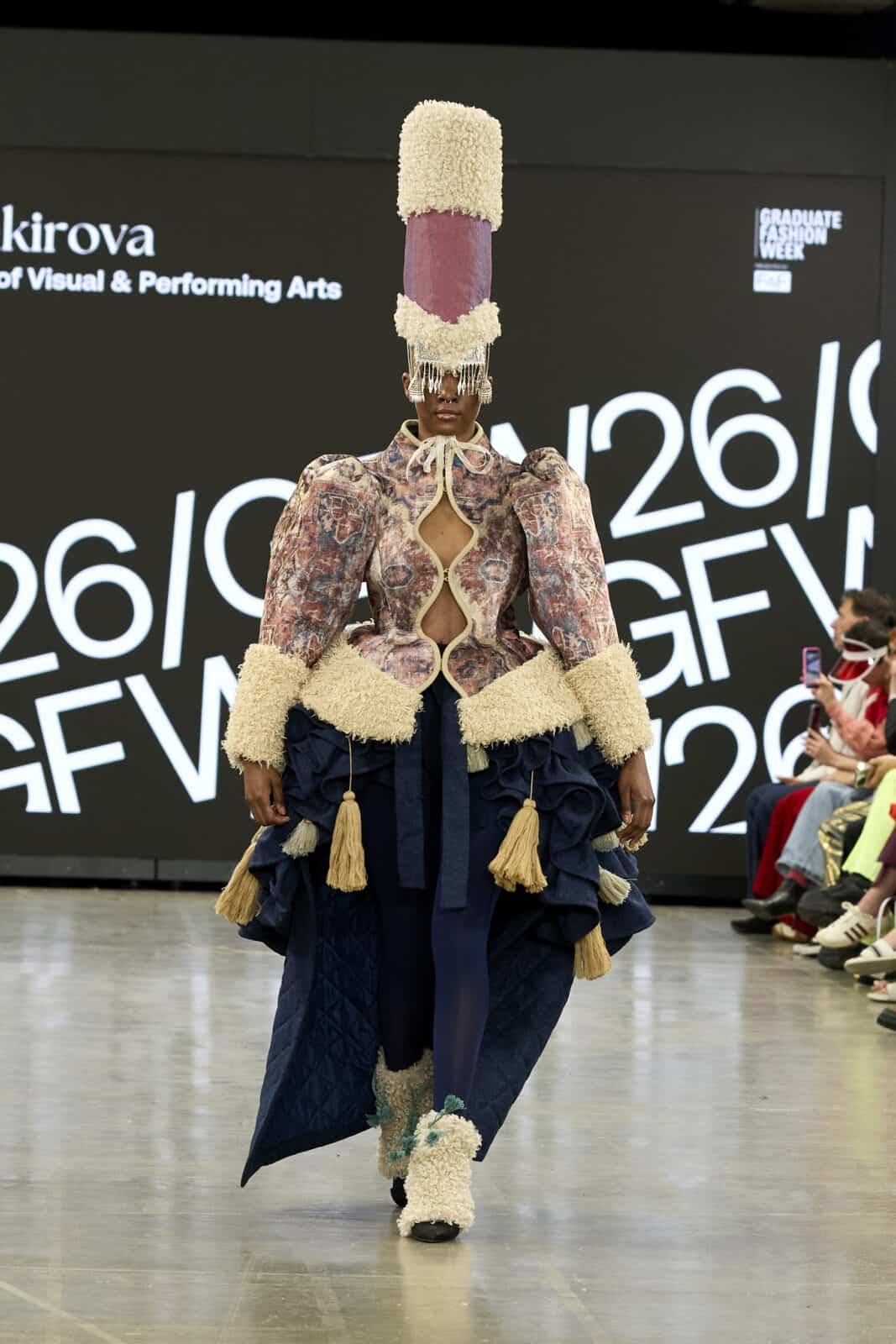
Safiya Shakirova, Cambridge School of Visual & Performing Arts (Designer)
What three words describe your collection?
Dramatic. Strong. Terrifying beauty.
What was the core concept behind your final graduate collection?
For my collection ‘An Ode to Tomyris’, I reject the silhouette of obedience. For too long, the Kazakh woman has been frozen in the Western gaze, but women were not ornaments; they were architects of survival, managers of migration, and, when necessary, warriors. I know that this resilience and strength have been passed down to my generation, and here, through fabric, stitch, and ornamentation, I celebrate it.
I turn my lens to the strength of the women of the Kazakhstan steppe. My muses are two legendary figures known for their fierce independence and military prowess. The mythical Tomyris, Queen of the nomadic Massagetae, who two millennia ago defeated the Persian Army. And Aliya Moldagulova, the eighteen-year-old sniper who gave her life defending her homeland from the Nazi invasion during World War II. They are not exceptions; they are proof. Elements of structure and subtle military references evoke the image of the woman not only as a creator but also as a protector and warrior.
Who were your biggest influences during your final year?
Over the past year, I have come to realise just how important every culture is, and how fascinating and captivating it all is. Kazakh history and culture are incredibly rich in their own right, and I have realised that it is possible to carry the past into the future.
Barnaby Joseph Walls, Bath Spa University (Designer)
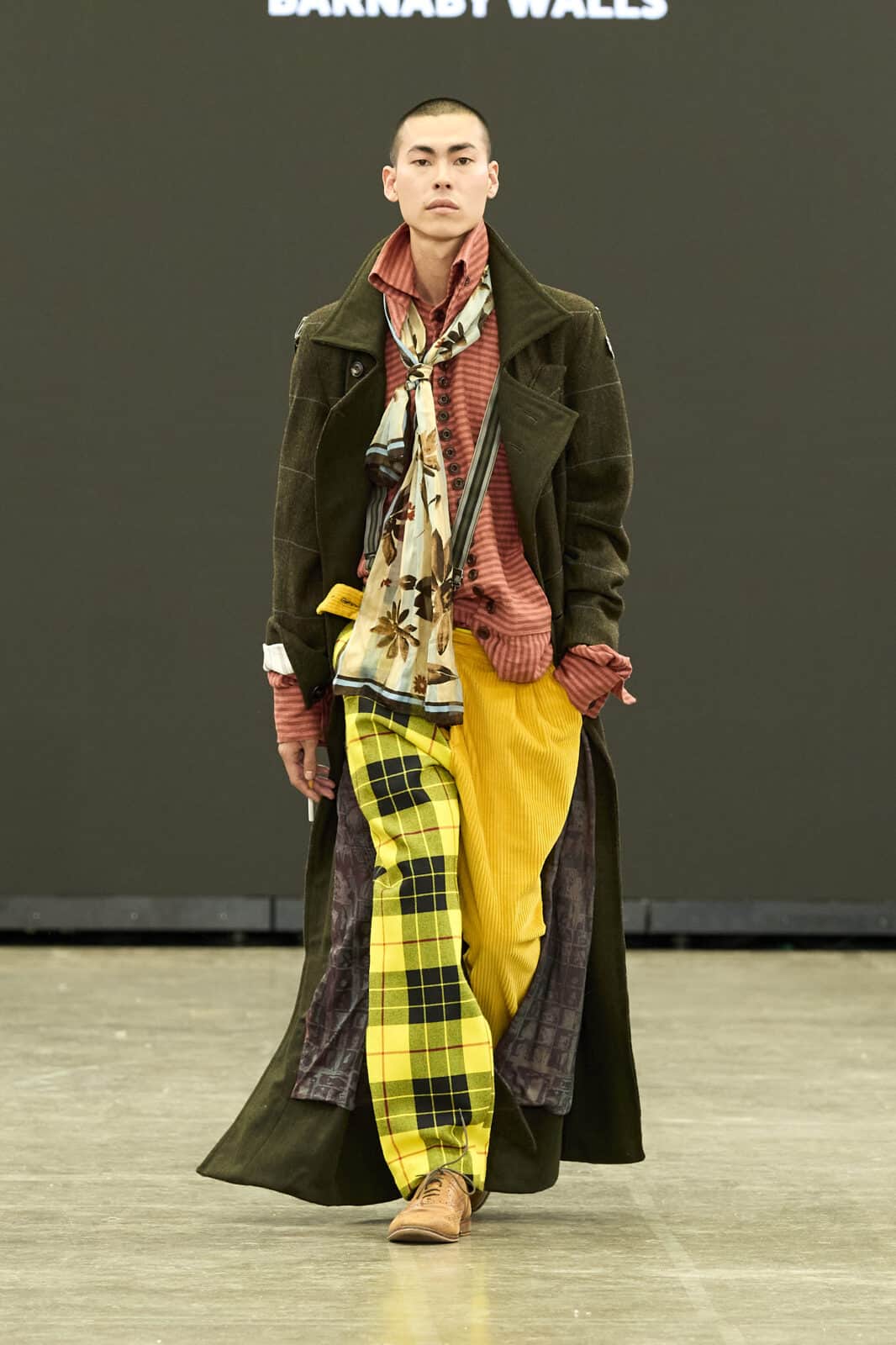
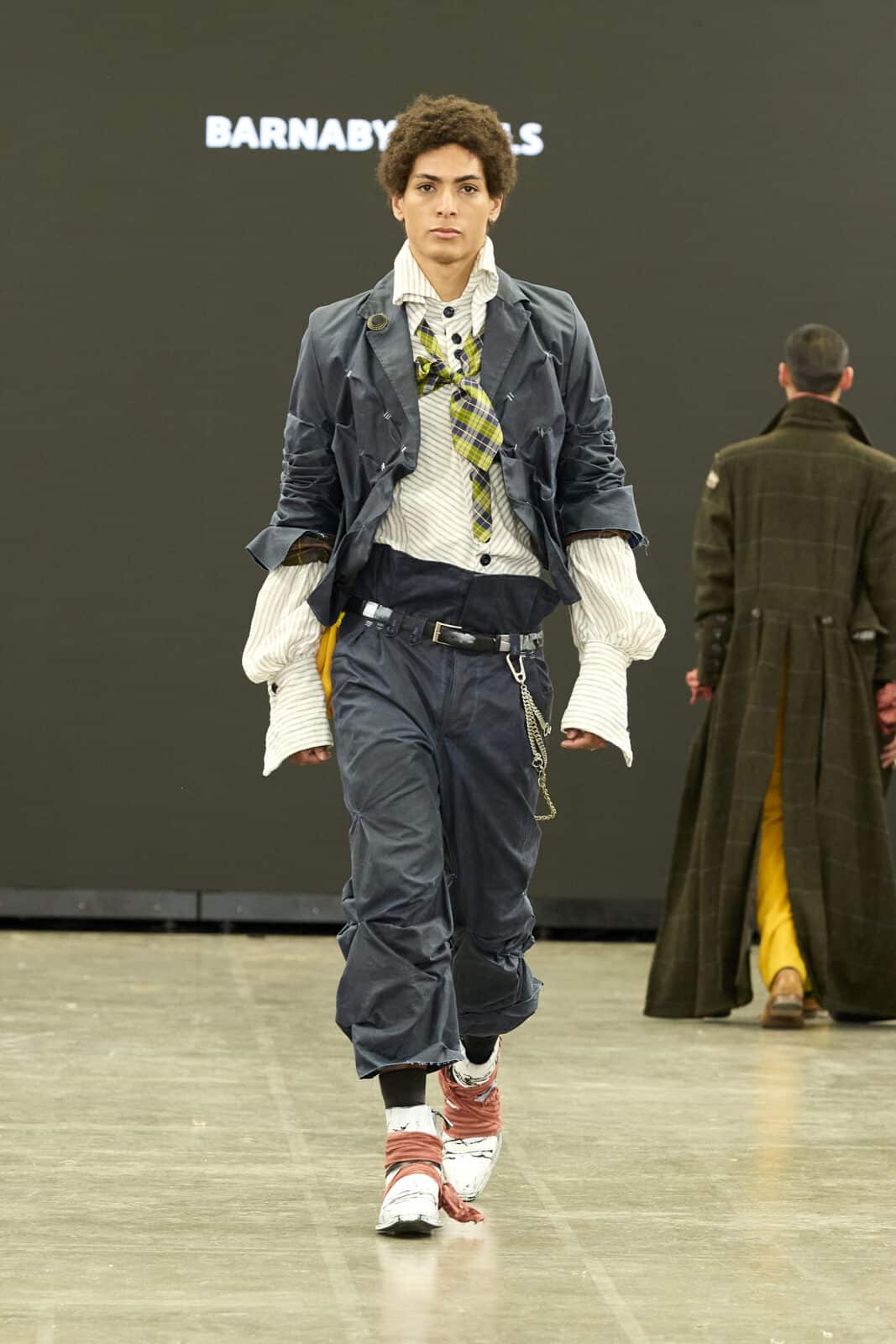
What three words best describe your collection?
Regency, punk, elegance
What was the core concept behind your final graduate collection?
The obsessed artist.
Who were your biggest influences during your final year?
Welsh illustrator Ralph Steadman, designer John Alexander Skelton and poet Sonny Hall.
Ellis T. Carroll, Southampton Solent University (Photographer)
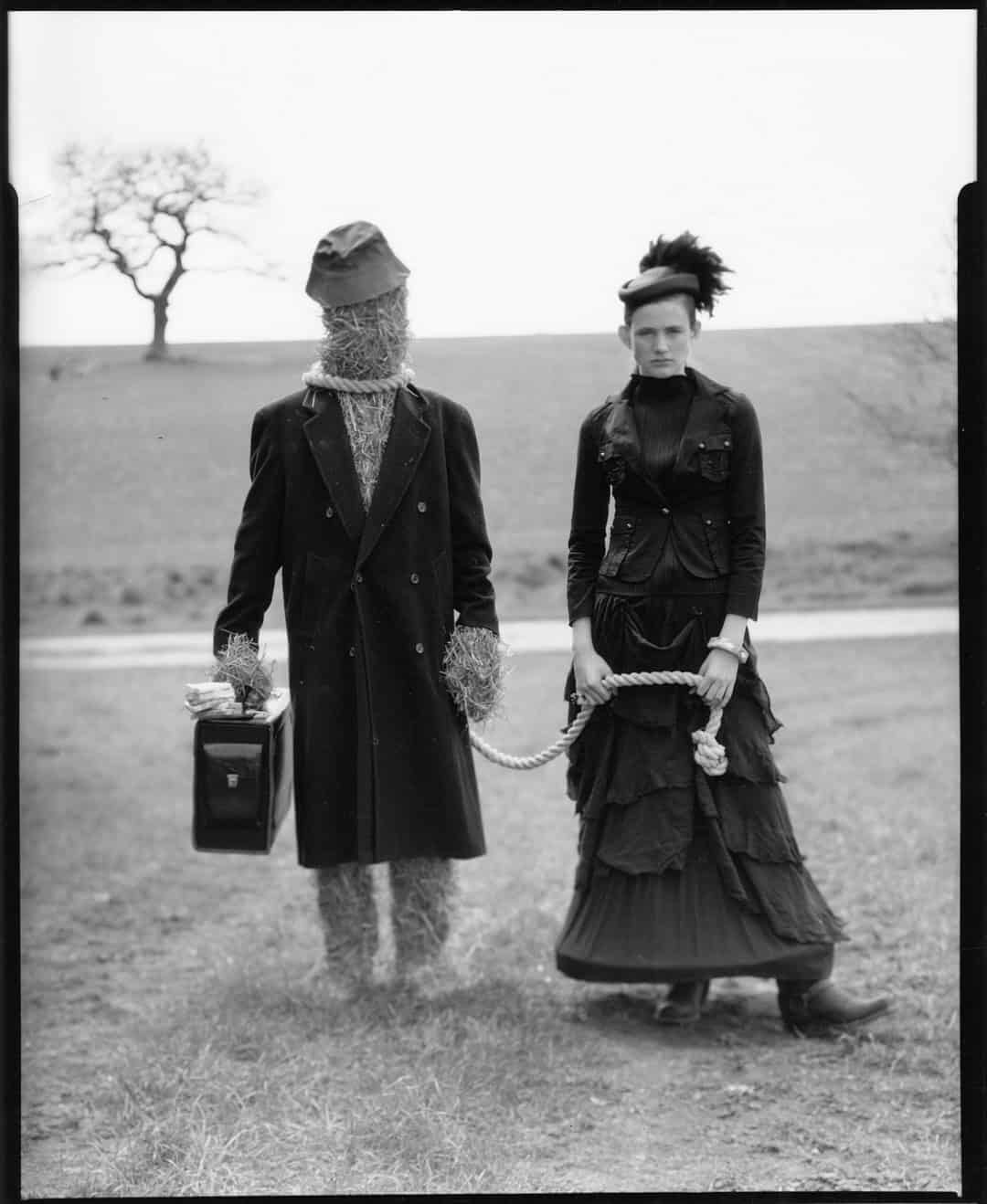
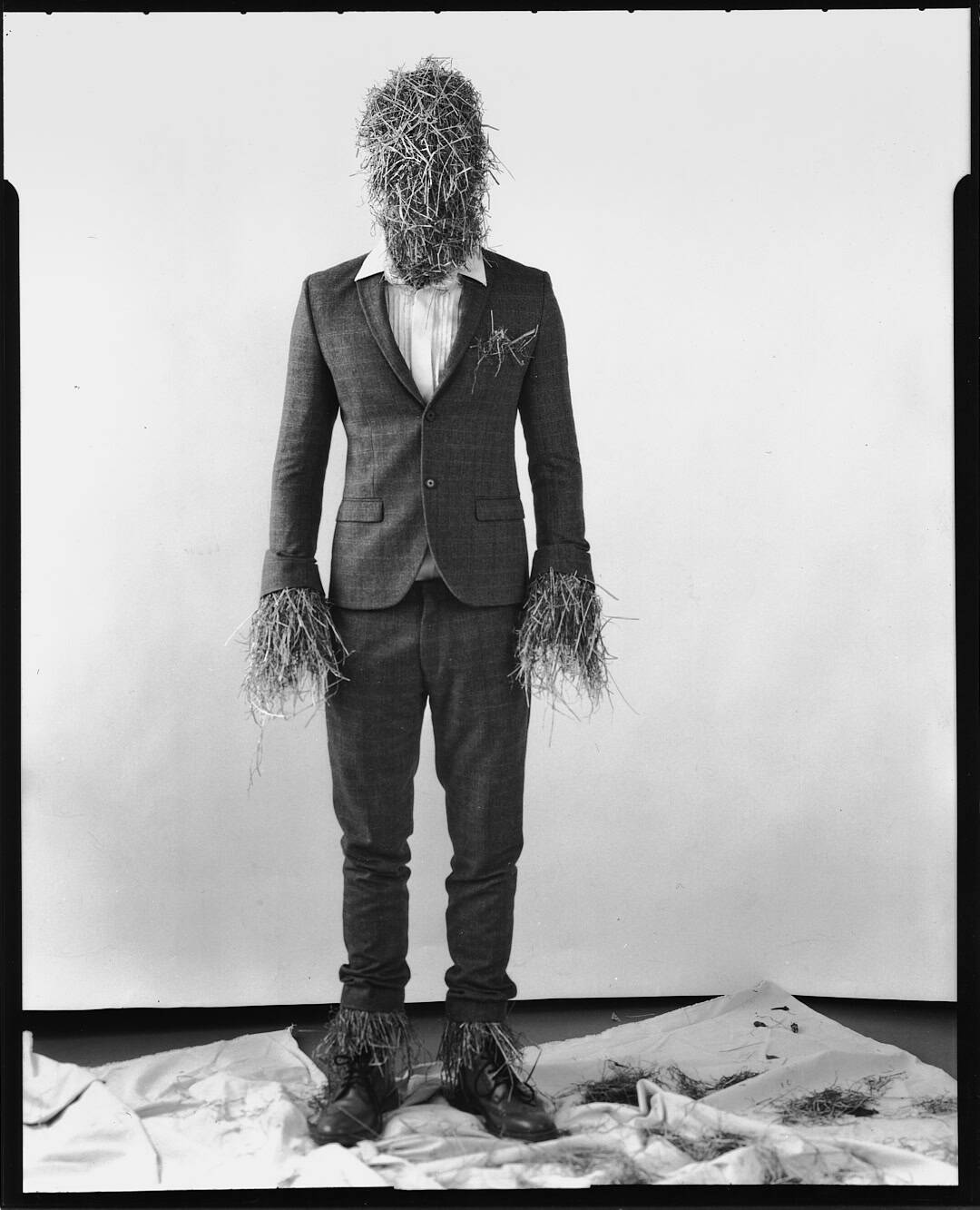
What words best describe your collection?
Imperfect and authentic.
What was the core concept behind your final graduate collection?
My photographic project ‘Common Folk’ was a celebration of folklore across the British Isles and the Emerald Isle, an homage to my British and Irish heritage. Growing up within the English countryside, folklore has always been, and will continue to be, a part of who I am. By using the language of contemporary fashion pictures, this series aims to inform a new audience by reflecting on and exploring British and Irish folklore practices in a form they can relate to and understand throughout, for new generations to truly understand their own heritage.
Who were your biggest influences during your final year?
My biggest influences were within the folklore community. I spent time with folklorists such as the Winchester Morris Men and spoke to Simon Costin, founder of the Museum of British Folklore. Everyone gave me a unique perspective on how to approach this project.
How optimistic are you about the future of the fashion industry?
Very optimistic. I’ve seen some incredible fashion graduates, challenging a lot of ethical issues within this space, which is what the industry needs to progress and better itself.
Tabitha M.Windle-Hartshorn, University of Derby (Designer)
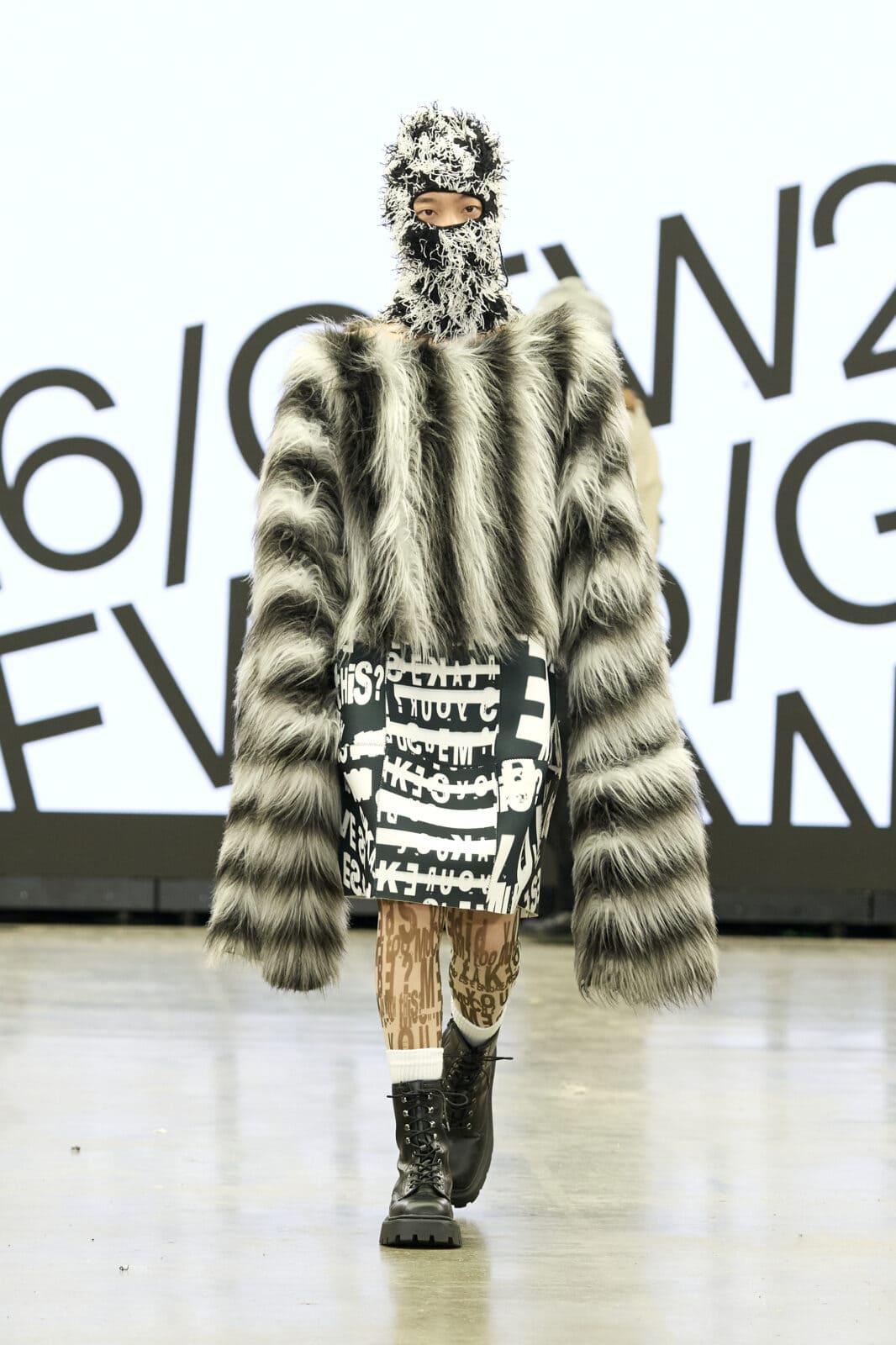
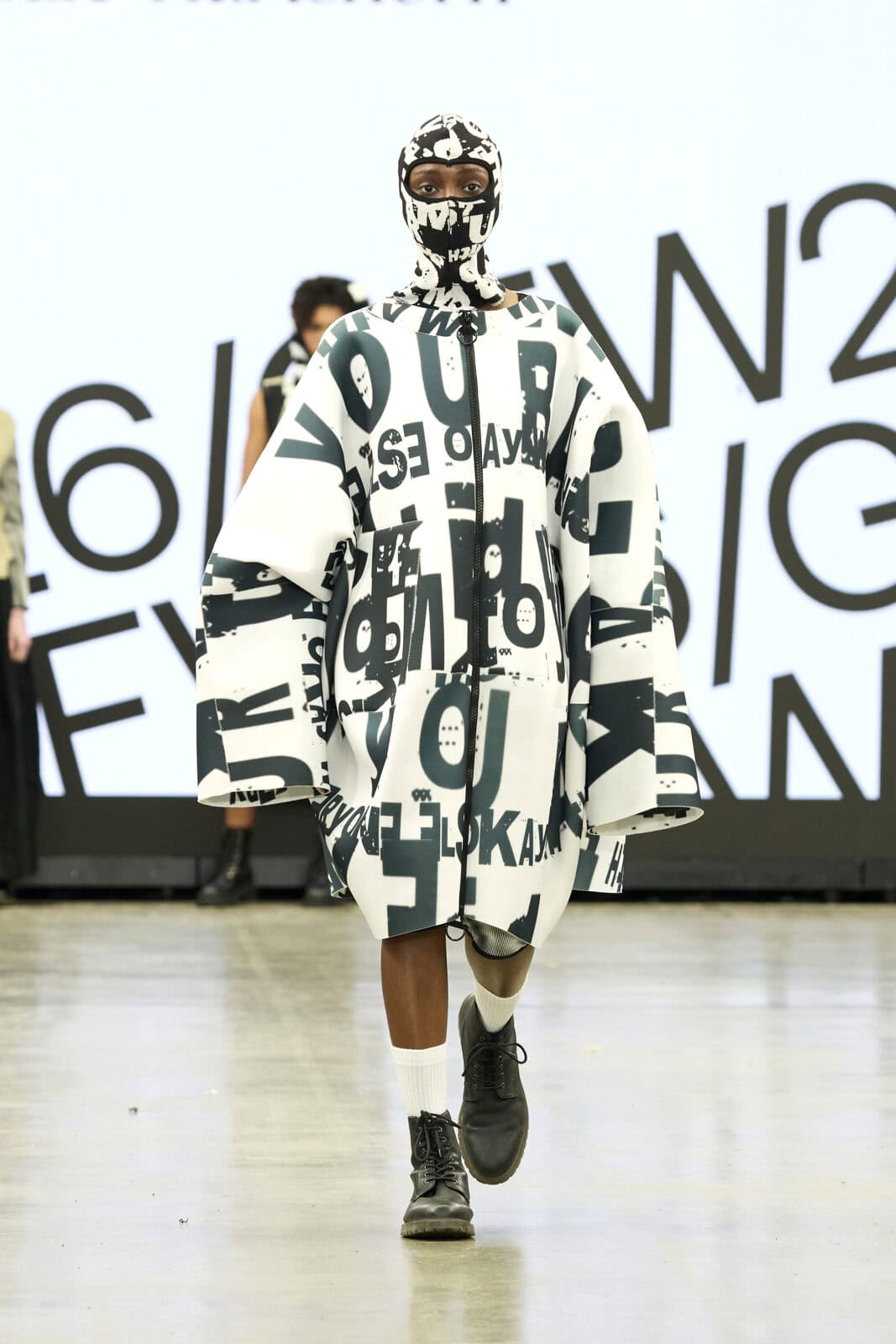
What three words best describe your collection?
Conceptual, individual, memorable.
What was the core concept behind your final graduate collection?
My graduate collection “Did You Take Your Meds, Babe?” is a sensory representation of my AuDHD. An exploration and understanding of my experience within the world, and the overwhelm, chaos and restriction that can come with neurodivergence, through a visual language of textiles, shape and strategic print design.
How did the GFW experience change your perspective on the industry?
That there really is space for everyone, the industry always wants new perspectives, and that’s a really refreshing and exciting environment to go into.
How optimistic are you about the future of the fashion industry?
Incredibly optimistic, the fashion industry can really set the tone and has the power to help shift the world into a better place.
Amina Jeng, Manchester Metropolitan University (Creative Director)
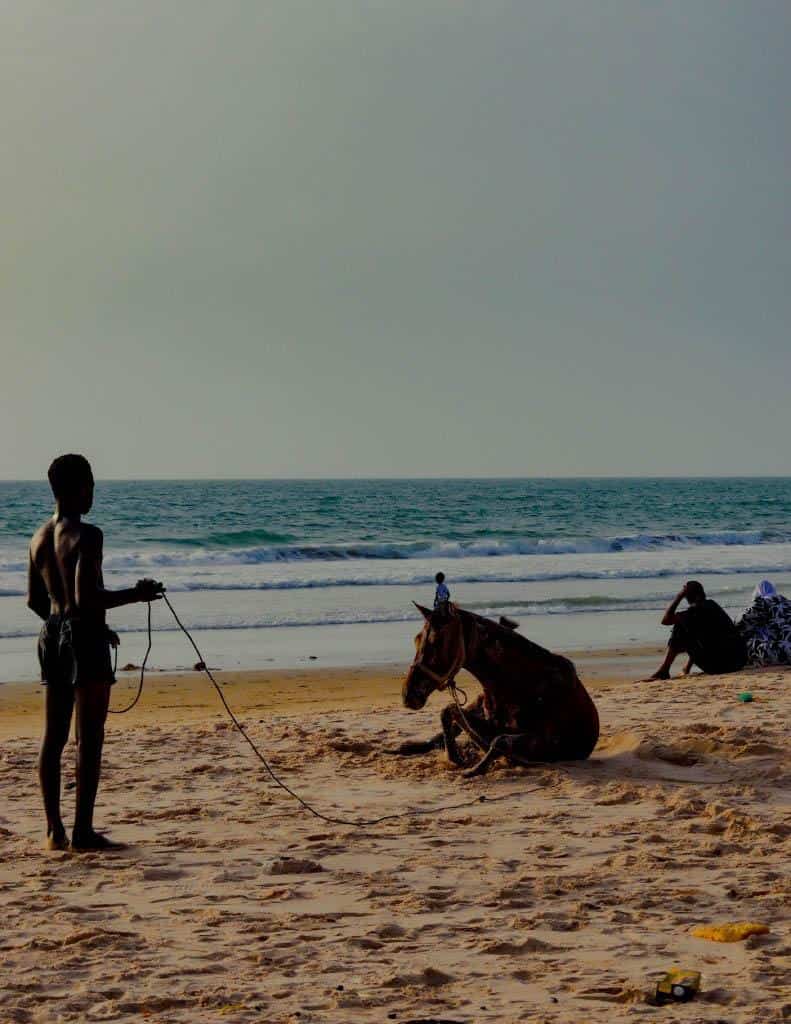
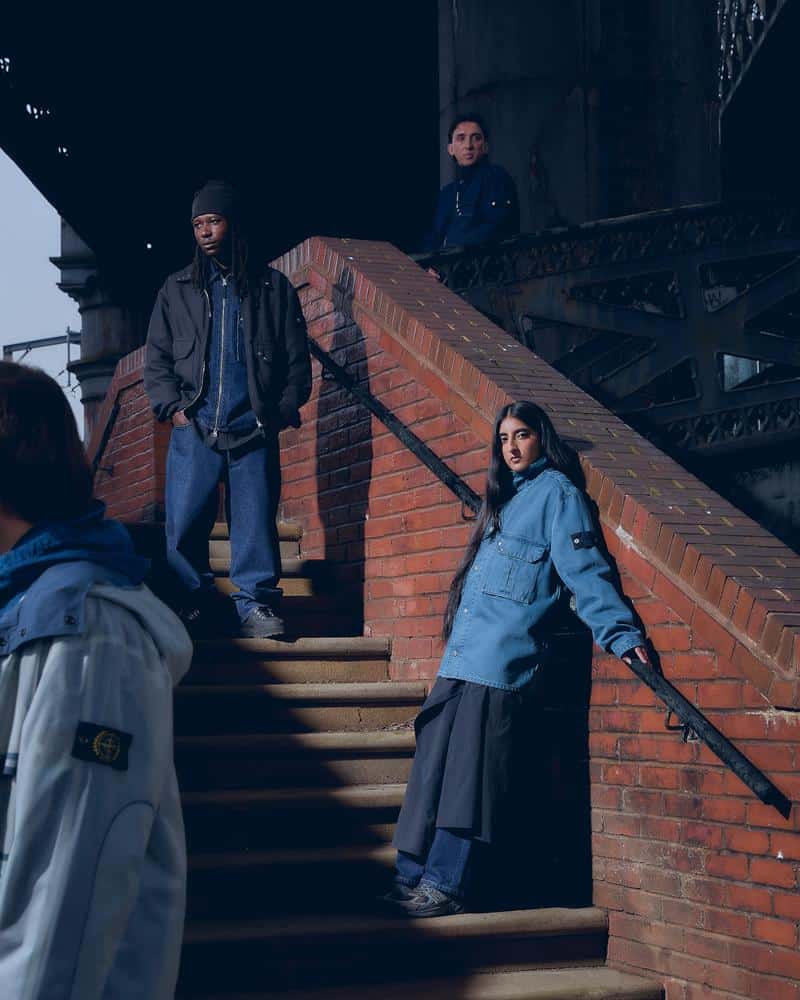
What three words best describe your collection?
Vibrant. Cultural. Community-driven.
What was the core concept behind your final graduate collection?
My final major project, ‘The Untold North’, brought together a series of editorials, films and campaigns telling the stories of the underrepresented communities that I’m a part of. I explored themes of identity, culture, community and belonging, centring Black, Muslim, Northern and female voices.
The project was rooted in my own experiences growing up in Yorkshire and later moving to Manchester. I wanted to present a different perspective of the North and its creative scene, highlighting the talent, creativity and individuality that exists within communities that are often overlooked or misrepresented. At its core, ‘The Untold North’ is about creating visibility, celebrating community and ensuring these stories are seen, heard and remembered.
Who were your biggest influences during your final year?
My biggest influences were the people around me. A lot of my work is community-led, so the stories, experiences and perspectives of the people I collaborate with naturally shape the direction of my projects. Growing up as a Gambian Muslim woman in the North, I’m inspired by my communities, my heritage, Black history, current social and political issues affecting my communities and the conversations happening around me.
My parents were also a huge influence on my work. My dad inspired ‘Roots + Rhythm’, which celebrated the legacy of Black creatives through his experiences as a DJ in the 1990s and 2000s, while my mum narrated my film ‘Muslim Women in Sport’, which won The Fashion Moving Image Award at GFW. Across all of my projects, I wanted the people who inspired the work to be part of it too. Rather than simply telling stories about my communities, I worked closely with them and gave them the space to represent themselves, making their voices the focus of the work.
How optimistic are you about the future of the fashion industry?
I’m cautiously optimistic. While there’s still a long way to go when it comes to representation and access, I think more people are recognising the importance of diverse voices and perspectives within the industry.
As a Black, Gambian Muslim woman from the North, I rarely saw people like me represented growing up, which is a big reason why I create the work I do today. Through projects like ‘The Untold North’, I’m trying to contribute to change by giving underrepresented communities a platform to tell their own stories and be seen in an authentic way.
I believe that if we continue breaking into spaces that haven’t always included us and continue creating work that tells our stories, we can help shape a better industry. I hope my work, alongside the work of so many other creatives from underrepresented backgrounds, contributes to a future where more people feel seen, valued and represented. The more voices we have shaping fashion, the more inclusive, honest and representative the industry will become.
Senuji de Silva, Northumbria University (Designer)
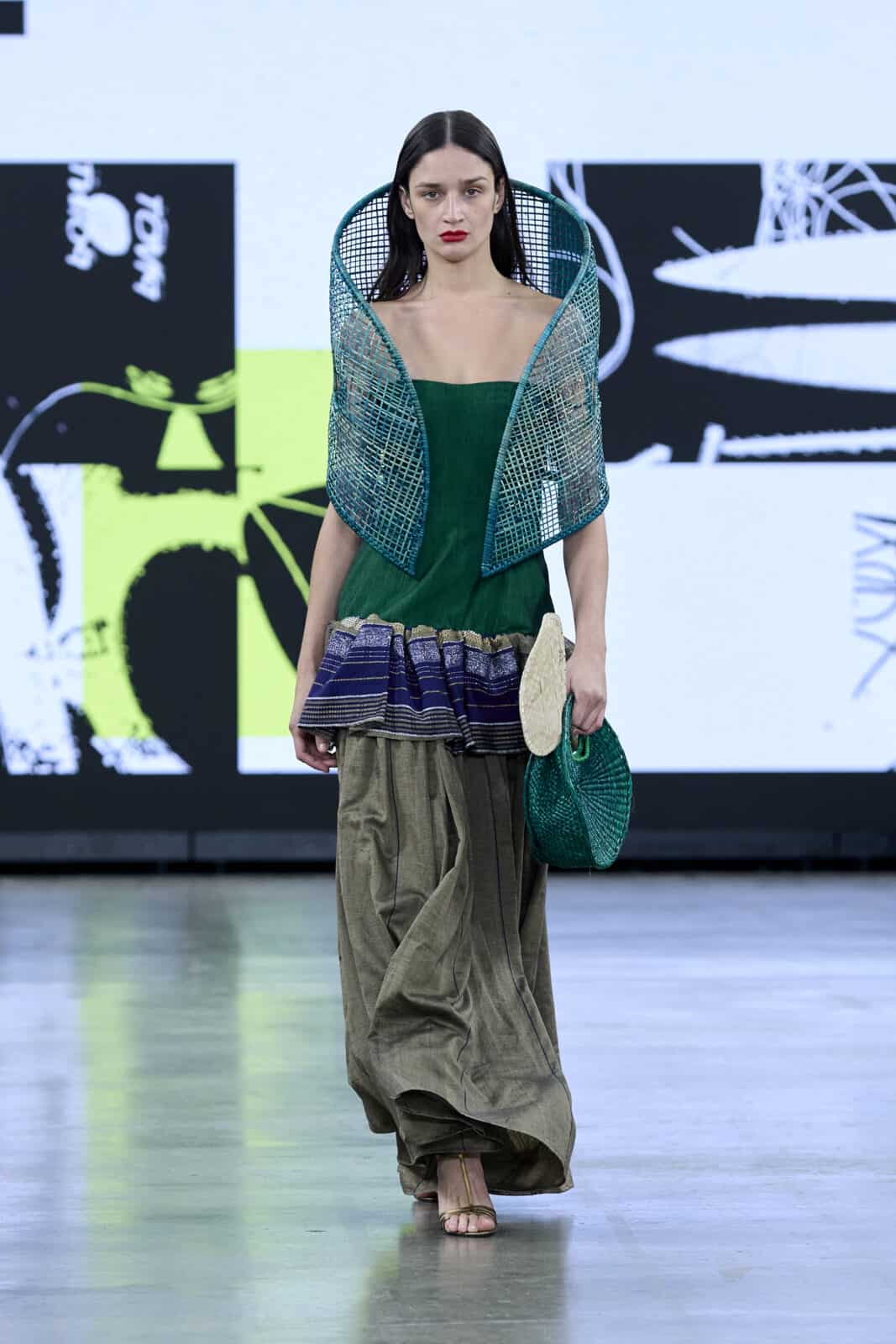
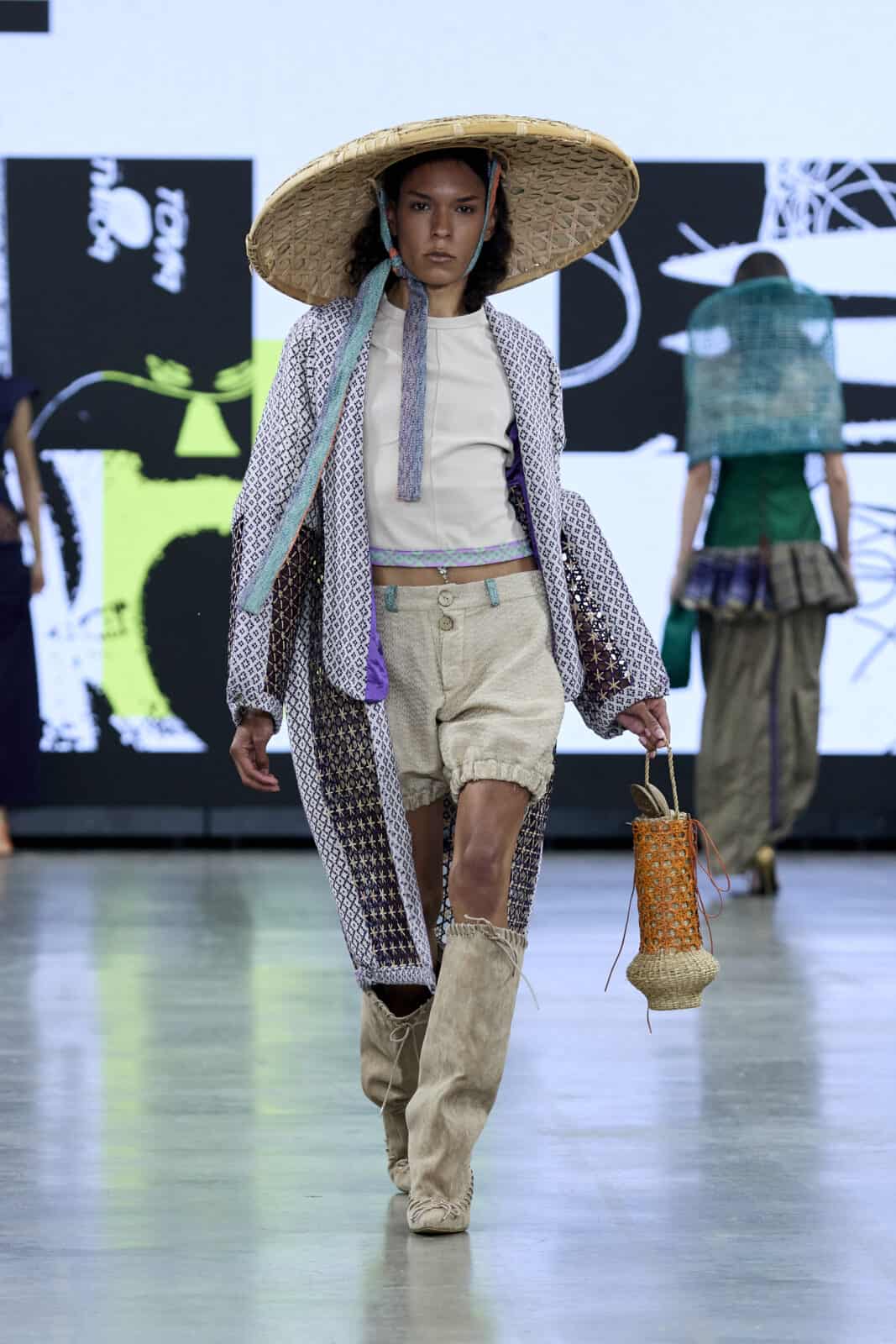
What three words best describe your collection?
Bold, crafted and considered.
What was the core concept behind your final graduate collection?
My collection is rooted in a real family story. My grandmother, raised in Sri Lanka’s rigid caste system, chose love over convention by marrying outside her class, and that rebellious act created an entirely new generation. I explore this “newness” through a fusion of Portuguese and Sri Lankan silhouettes.
What was the most challenging aspect of preparing for the GFW runway?
The biggest challenge was working with rattan itself. It’s a material that was never meant to be worn, so figuring out how to make it move with the body without losing its strength and character took a lot of trial and error. That challenge became even more real when I was in Wewaldeniya doing my research, an industry already struggling, and then Cyclone Ditwah hit while I was there. Seeing the impact on the artisans I was working with made the project feel less like a final major project and more like a responsibility. I wanted the collection to honour their craft, not just borrow from it.
How optimistic are you about the future of the fashion industry?
I’m cautiously optimistic. I’ve seen both ends of the industry, manufacturing in Sri Lanka with exposure to MAS Holdings, Brandix and Crystal Martin, and design-level work in the UK at houses like Ingrid Kraftchenko, palmer//harding and Jenny Packham. They’re genuinely different worlds, and there’s still a real gap between them. Seeing how fragile craft communities can be, especially after Cyclone Ditwah hit places I was working with in Wewaldeniya, keeps me realistic about how much work that gap still needs. But platforms like GFW genuinely help bridge it, bringing students who’ve worked across both manufacturing and design in front of an industry that doesn’t always see both sides at once. That bridge is exactly where I think the industry needs to keep building, and where I want to be.
Millie Watkins, Nottingham Trent University (Designer)
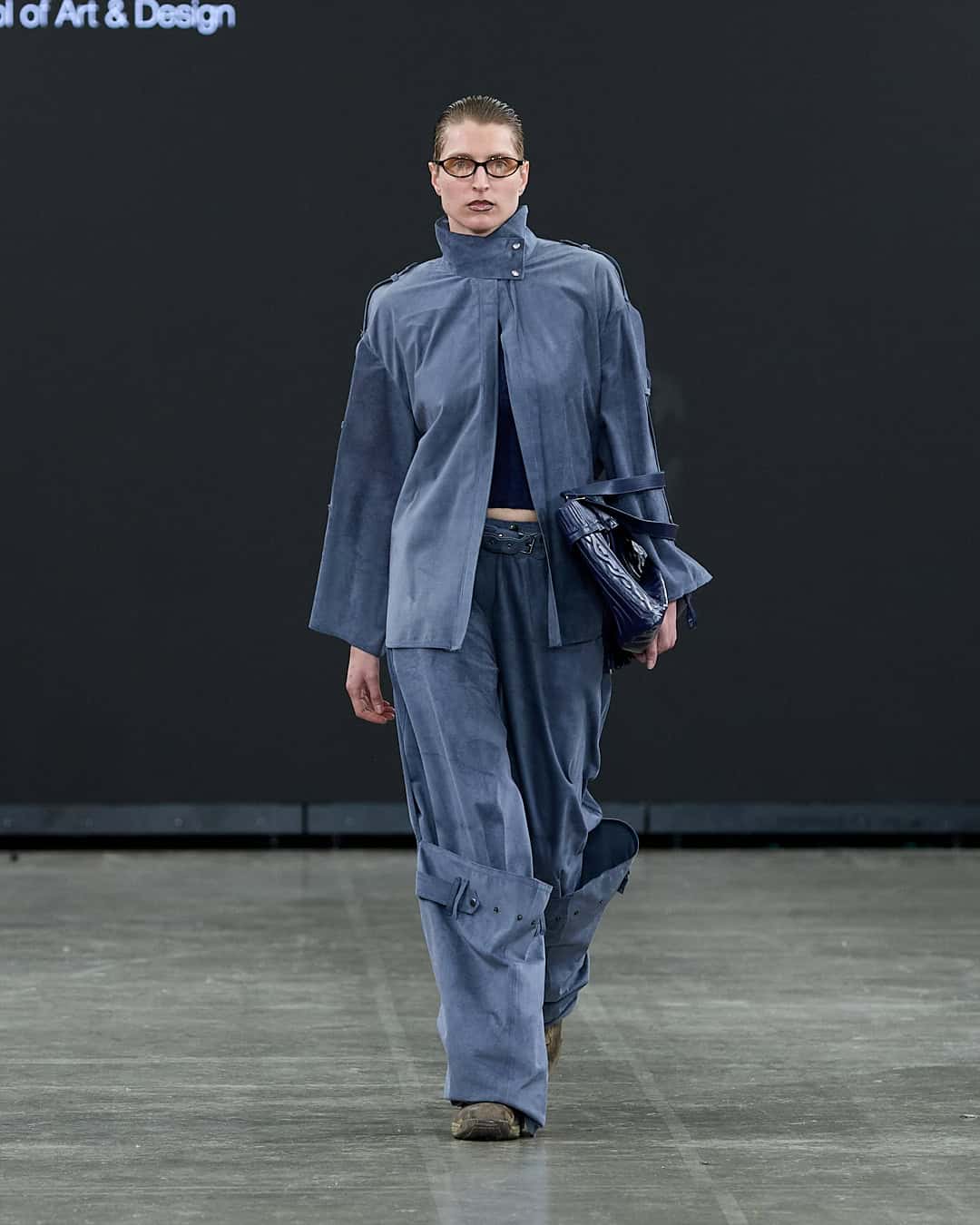
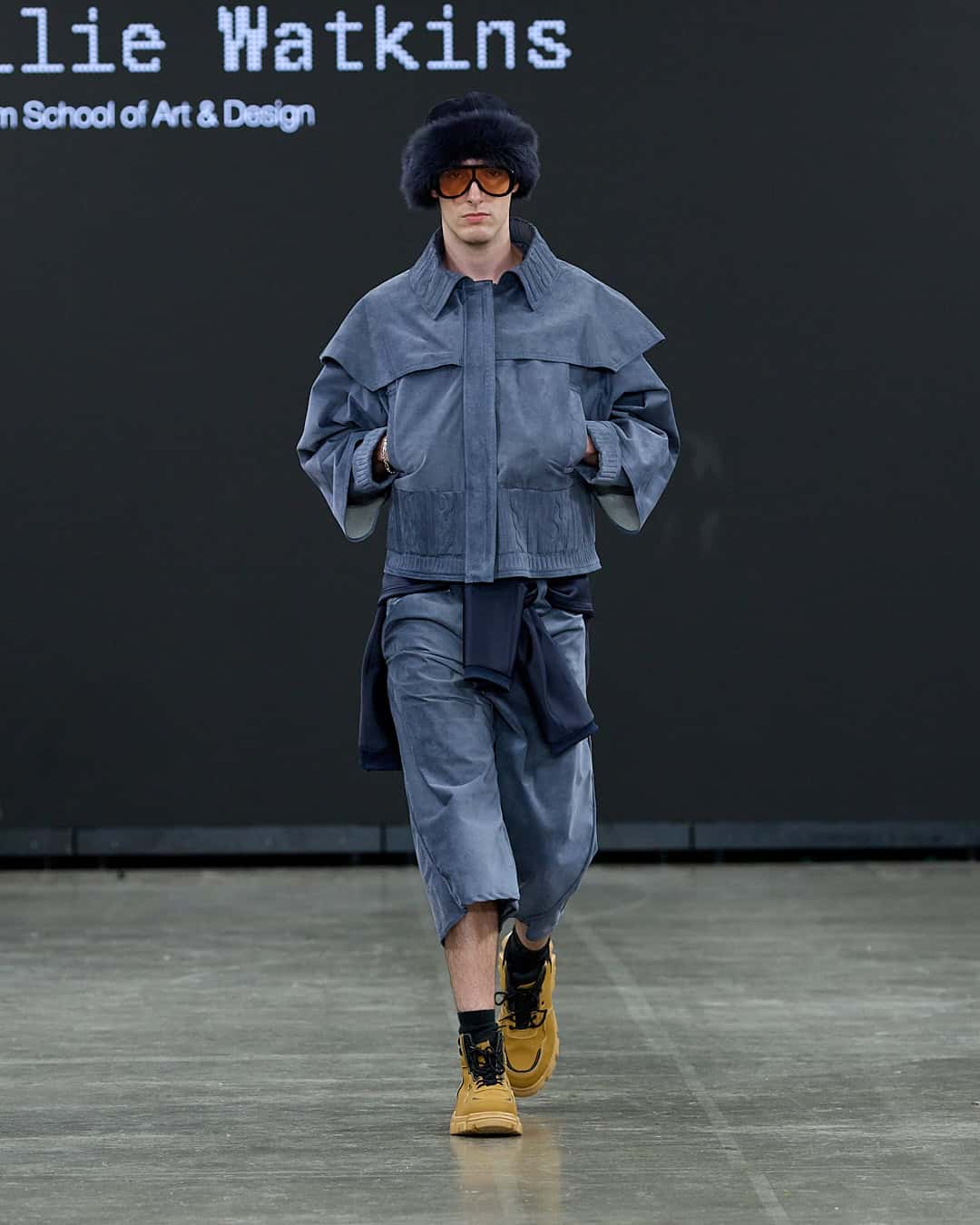
What three words best describe your collection?
Purposeful, tactile, crafted.
What was the core concept behind your final graduate collection?
This project explores how working-class heritage, domestic craft, and emotional memory can be recontextualised within contemporary luxury accessories. Rooted in my family’s connection to the steelworks in Port Talbot, the collection reflects ideas of endurance, labour, and inherited craftsmanship through both concept and construction. It is a celebration of the opportunities their sacrifices have made possible. While previous generations of my family dedicated their lives to physically demanding industrial work, their resilience has afforded me the privilege of pursuing a creative career. Through this project, I honour their legacy by transforming stories of labour, care, and resilience into objects of contemporary luxury.
How did the GFW experience change your perspective on the industry?
The Graduate Fashion Week experience shifted my perspective on the fashion industry, making it feel far more accessible, collaborative, and human than I had imagined. Being surrounded by students from across the country, all presenting work that began from completely different starting points, was incredibly inspiring. It reinforced the idea that every designer begins somewhere, and that there is no single route into the industry.
How optimistic are you about the future of the fashion industry?
I feel increasingly optimistic about the future of the fashion industry. Rather than following a fixed path, the industry feels open and adaptive, rewarding curiosity, experimentation, and a willingness to learn.
One of the most interesting shifts I see within the industry is the growing presence of artificial intelligence and digital tools. While these technologies are transforming the speed and scale of production, I believe this will place even greater value on craft, tactility, and human-led making. As AI becomes more integrated into design processes, traditional craftsmanship and material understanding will become a kind of currency in itself. This makes me especially excited as a designer who is drawn to hands-on processes, construction, and the physicality of making.
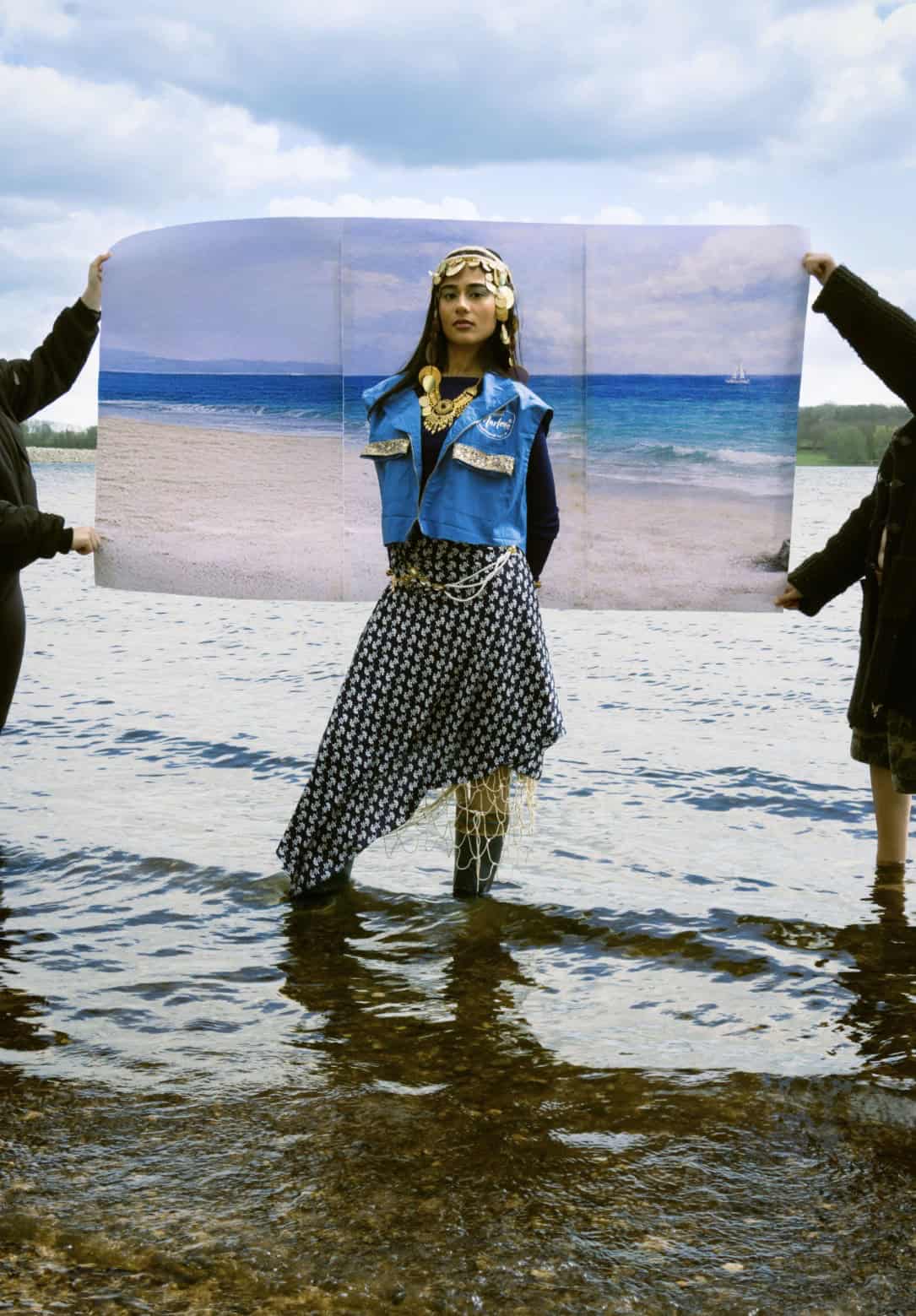
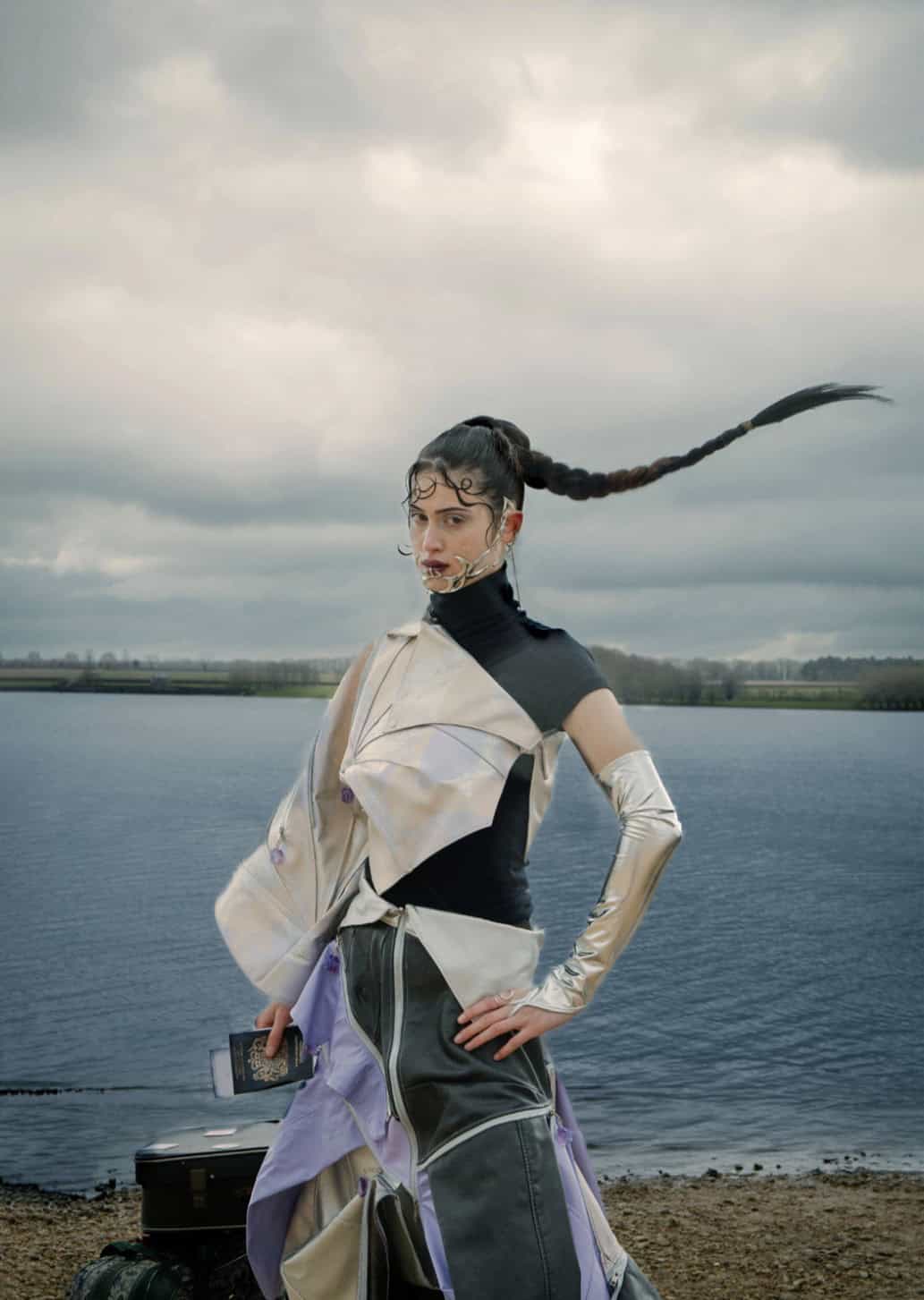
Reyah Shaikh, De Montfort University (Fashion Communication and Styling)
What three words best describe your collection?
Maximal. Expressive. Striking.
What was the core concept behind your final graduate collection?
This project delves into South Asian culture through labour, textile, and adornment, celebrating the craftsmanship and heritage embedded within each. It reflects both the richness of tradition and the current lack of visibility given to artisans within mainstream fashion and media. It is also deeply personal, shaped by my own experience of growing disconnected from cultural representation, where identity often felt overlooked or reduced. Over time, this has shifted into a renewed sense of pride, understanding, and curiosity, which sits at the core of the work.
How did the GFW experience change your perspective on the industry?
The GFW experience shifted my perspective on the industry by showing me how collaborative, supportive, and confident the creative space can be. Everyone was genuinely encouraging, open, and willing to share their work and experiences, which made the environment feel far less intimidating than I expected.
It also made me realise how important it is to be self-assured in your own creative voice. Seeing so many different approaches to fashion and publishing being celebrated gave me more confidence in my own direction and reinforced the value of originality and cultural storytelling.
How optimistic are you about the future of the fashion industry?
I’m quite optimistic about the future of the fashion industry because it is constantly evolving, especially in how it embraces new voices, platforms, and ways of storytelling. There is more space now for independent perspectives, cultural narratives, and experimental formats like publications, which is something I find really exciting.
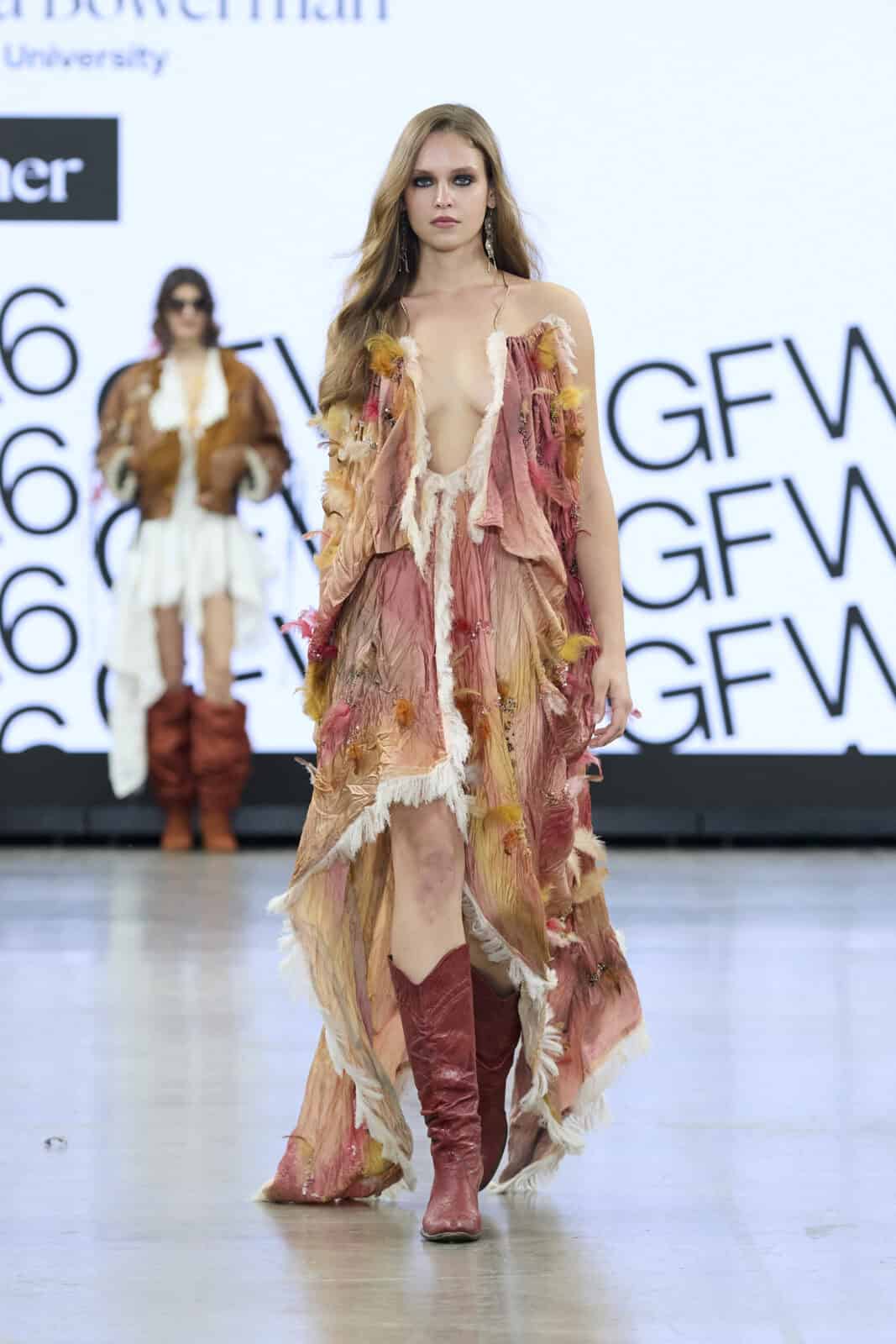
Pippa Bowerman, Bath Spa University (Designer)
What three words best describe your collection?
Scrappy. Authentic. Raw.
What was the core concept behind your final graduate collection?
My mother’s rebellious spirit.
How did the GFW experience change your perspective on the industry?
You truly are your own worst critic, & designers should have more confidence in their own collections. Personally, after the journey I’d been through with it all, gaining industry validation that my concept and vision translates to such a talking point just confirms this.
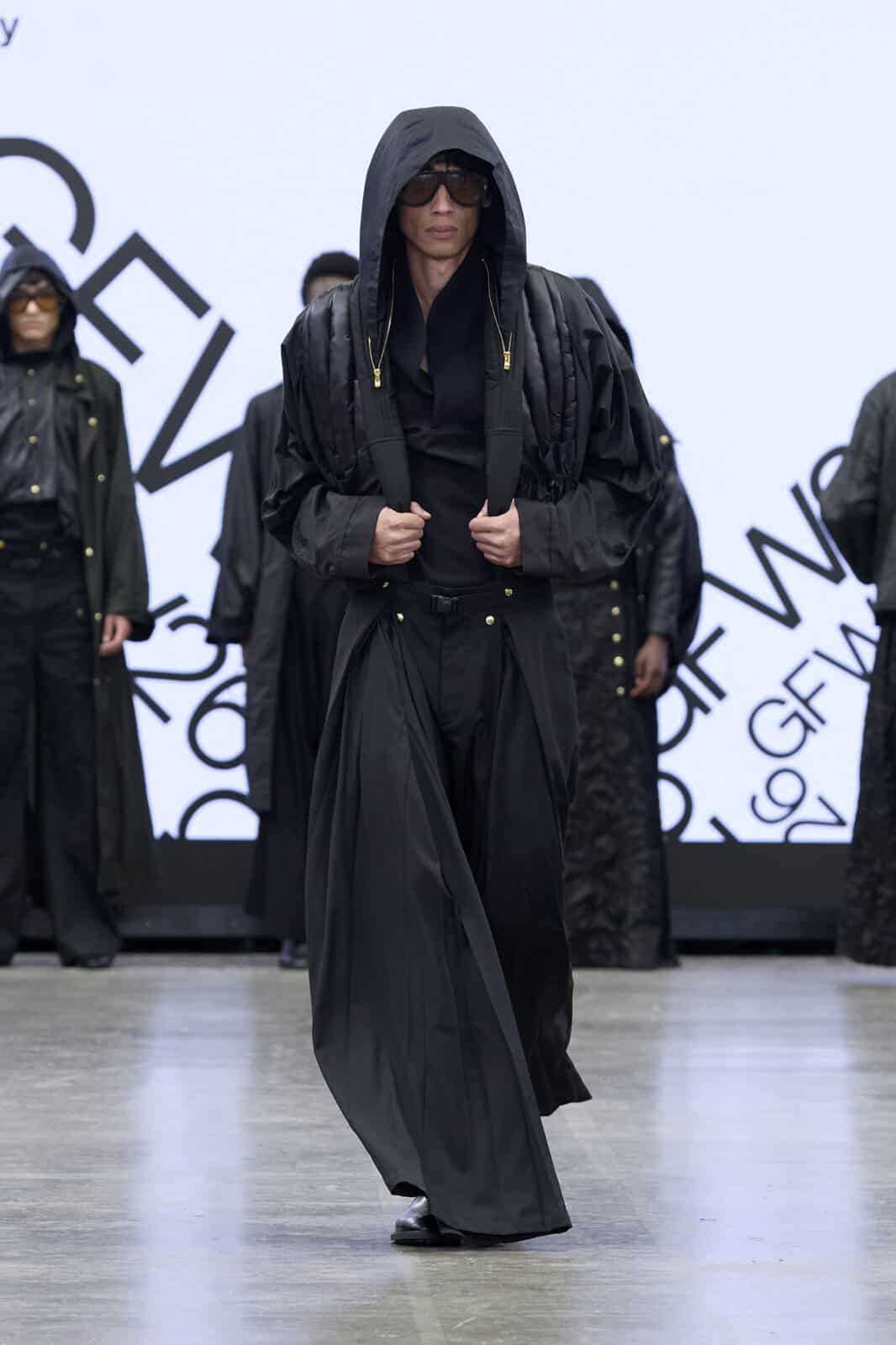
Yanhan Zhou, Kingston University (Designer)
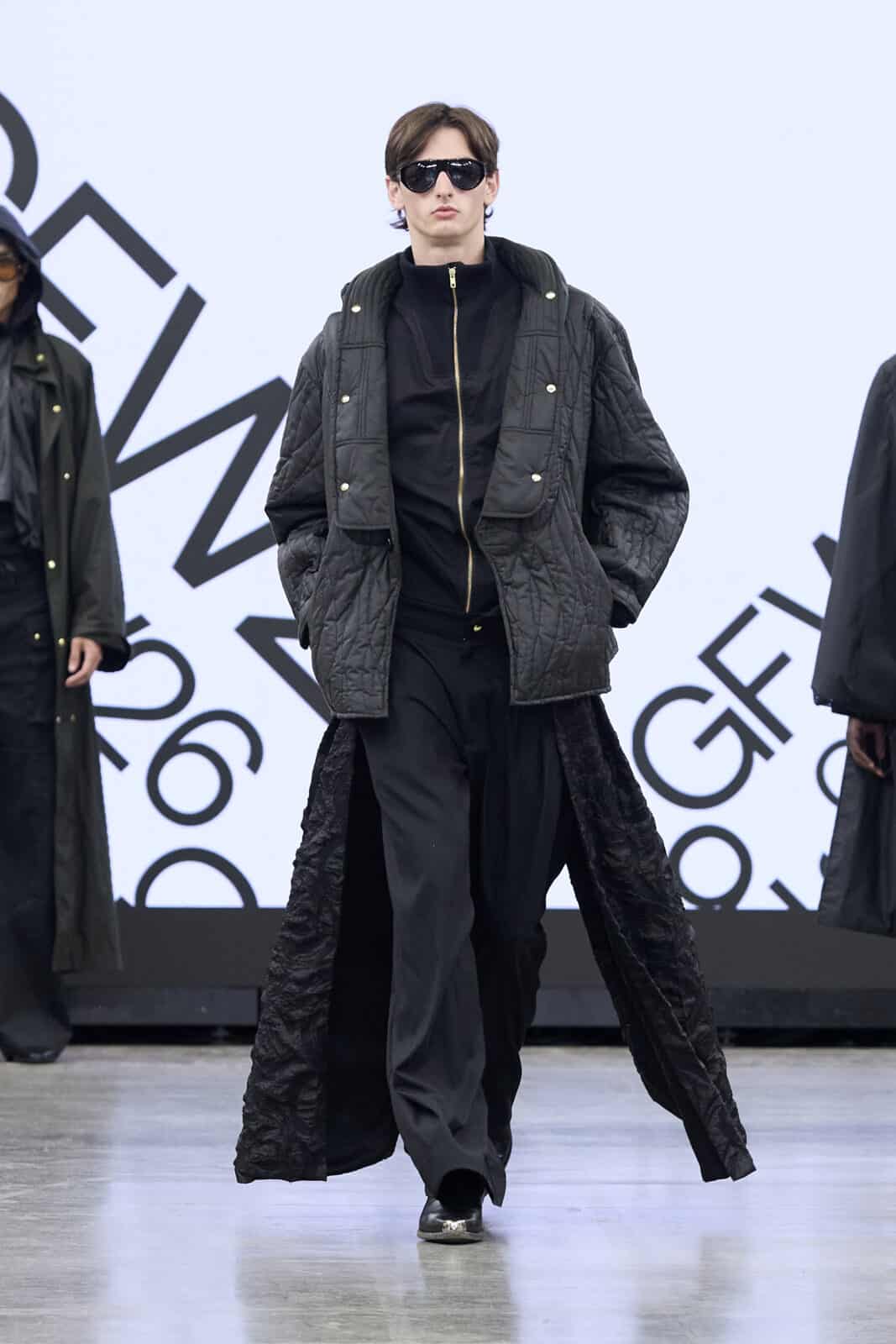
What three words best describe your collection?
Dark, Functional, Edgy.
What was the core concept behind your final graduate collection?
The core concept of this project is fearless forward movement, a tribute to those who have the courage to pursue their inner calling and personal truth. The collection explores a dialogue between Eastern and Western cultures by merging the structural language of traditional ethnic garments from my cultural heritage with contemporary outdoor menswear. Through this fusion, these time-honoured design elements are reimagined for modern lifestyles, allowing them to take on new life in a contemporary context. At the same time, the project proposes a fresh design perspective for menswear outdoor apparel, introducing new possibilities in construction, silhouette, and functionality.
How optimistic are you about the future of the fashion industry?
I’m very optimistic about the future of the fashion industry. I believe that, in this era of rapid technological advancement, fashion is in a strong position to benefit from these innovations. During my final year, we were already working with the latest digital design tools, such as CLO3D, which allowed us to test ideas, experiment with draping and silhouettes, and refine our designs within a virtual environment while significantly reducing material waste. I see this as an incredibly positive step forward.
Looking ahead, I believe AI-powered tools will continue to transform the way designers work, enabling us to develop collections more efficiently and sustainably. Creativity, however, will always remain a uniquely human strength, something that artificial intelligence cannot replace. Instead, I see AI as a powerful and reliable creative assistant, helping designers work faster, more efficiently, and with greater environmental responsibility. Ultimately, I believe this collaboration between human creativity and technology will drive meaningful progress across the fashion industry.