
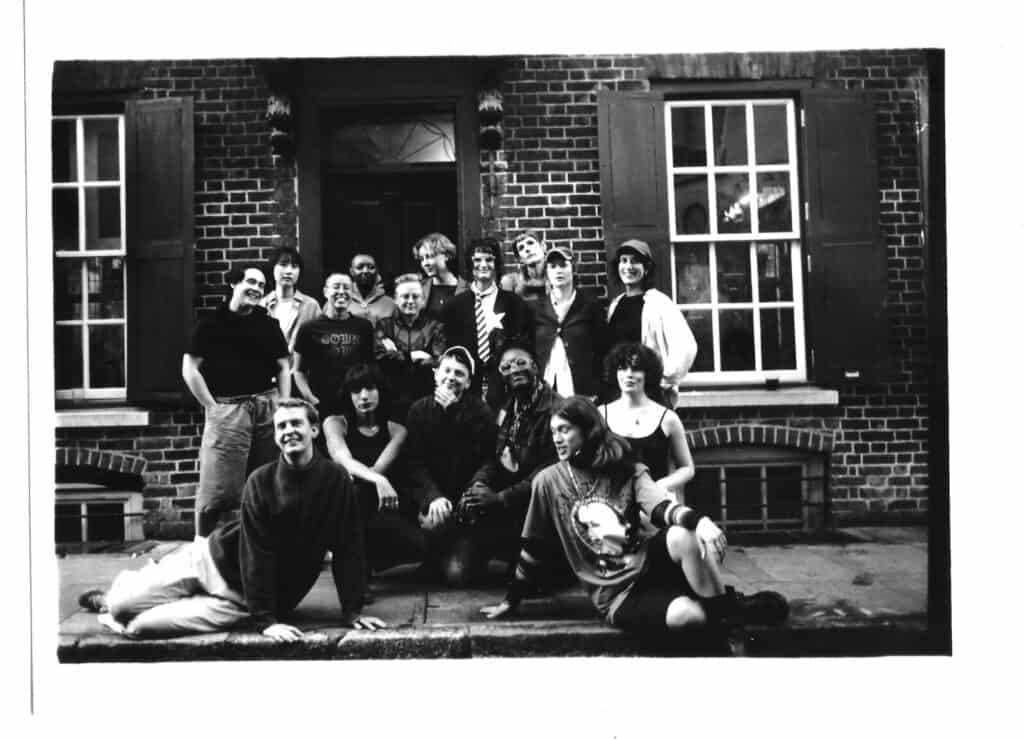
Across sixteen weeks between April and July, a group of trans writers have met in venues as diverse as the Goldsmith’s Centre for Contemporary Art, the House of Anetta, and even each other’s homes. This is the skeleton of the School of Cvntology, a trans creative writing course co-founded by Donna Marcus Duke and Elliot Lind, the masterminds behind TISSUE, an independent arts and publishing group that hosts live literary readings. Alongside Jeng Au, Elliot is also the organiser behind Camp Trans, a transgender-run camping and arts festival
But this isn’t like other courses; eschewing what its founders call the “coldness” of academia, the School of Cvntology is designed to not only foster writing and critical thinking, but to build a community that will continue to exist beyond the summer months when the school takes place. The first meeting of its 2026 intake took place in Elliot’s kitchen.
Both Donna and Elliot have experiences running events that aim to promote trans community, and have also had their own brushes with literary higher education. Emerging from practices of community, and literary risk taking, the School of Cvntology brings together a diverse group of guest facilitators – including Shon Faye, Travis Alabanza, Czech Hunter Schaffer, and D Mortimer – who allow students to challenge the expectations and limitations so often placed on the idea of trans writing during a political moment that treats neither them nor their art with the seriousness that it deserves.
As The School of Cvntology’s 2026 term comes to a close, Sam Moore sat down with Donna and Elliot to talk about loving (and critiquing) the trans community through writing and where they hope to expand the School in the future.
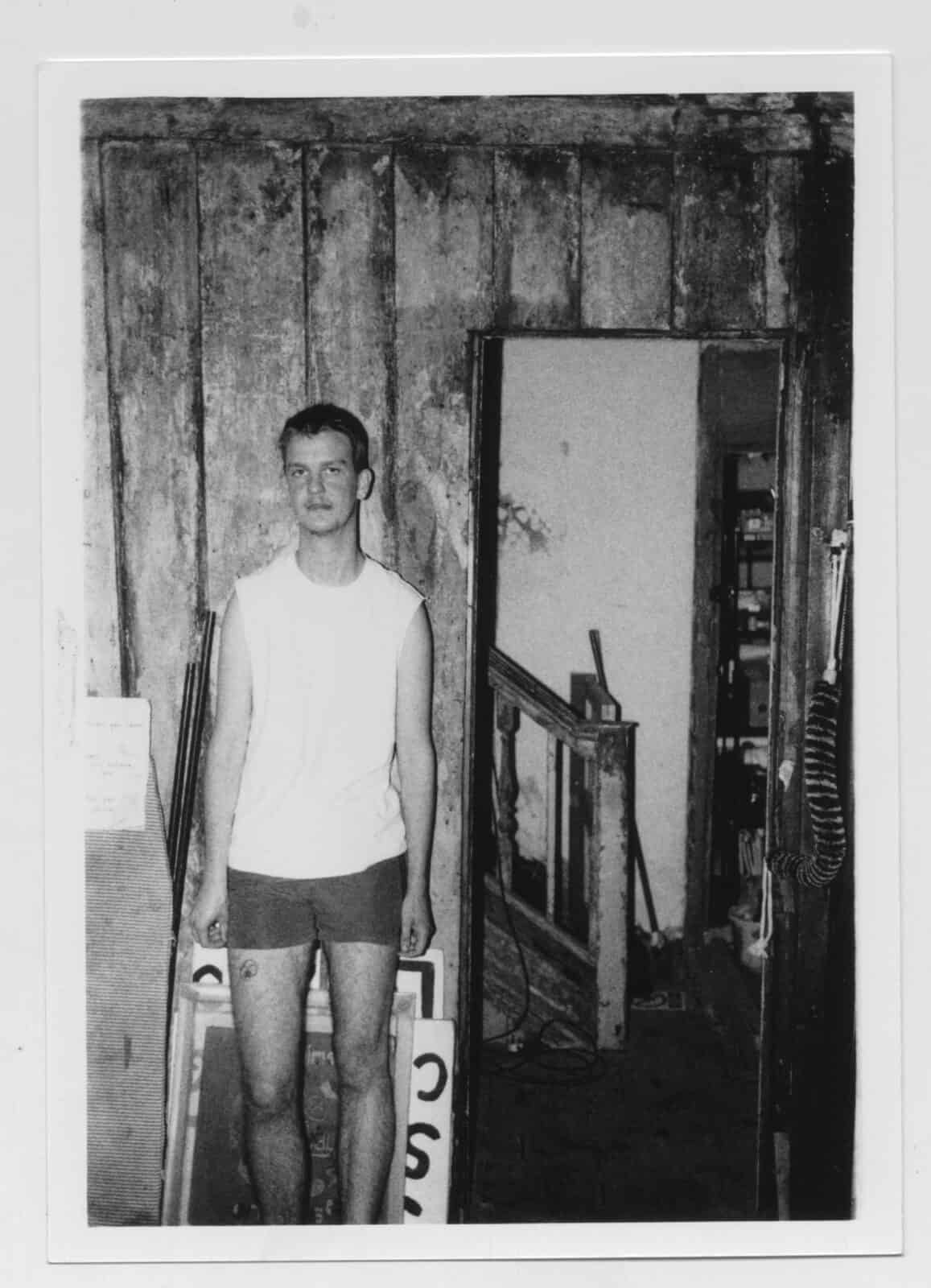
Model: Elliot Lind
Sam Moore (SM): Did the School of Cvntology always feel like a natural continuation of the ground that Camp Trans & TISSUE have been covering?
Elliot Lind (EL): Camp Trans is a big logistical project. It is short and temporary. I longed for a project that would last longer, and be part of my everyday life. Seeing people twice a week for three months is different to meeting 250 people over a weekend.
At the first Camp Trans in the UK we were just 80 people in a field, and the literary program was a big part of it. There are the obvious parallels between it and the School; they are both separatist trans spaces, and spaces for reflection.
There is an element of surprise and unpredictability to Camp Trans and the School. Once I walked into a barn, and five topless women were playing darts. I had to tell them our insurance didn’t cover indoor activities. Or there was an improvised wood chopping workshop with an axe, but we had to stop doing that, because our venue told us a guy recently lost his thumb, so they were more strict.
Recently we did a workshop in copyrights, but the students were more interested in copying and recycling material than protecting their rights. They were more interested in being illegitimate.
This is a roundabout way of saying that through the three months we build a lot of trust to take creative risks. Donna and I are both interested in writing that is critical of the trans community. When we are under a lot of political pressure, there is a tendency to write trans people as heroes, and avoid anything that could be co-opted or misunderstood, but the truth is probably more interesting. For example, currently a student is working on a text about a trans serial killer.
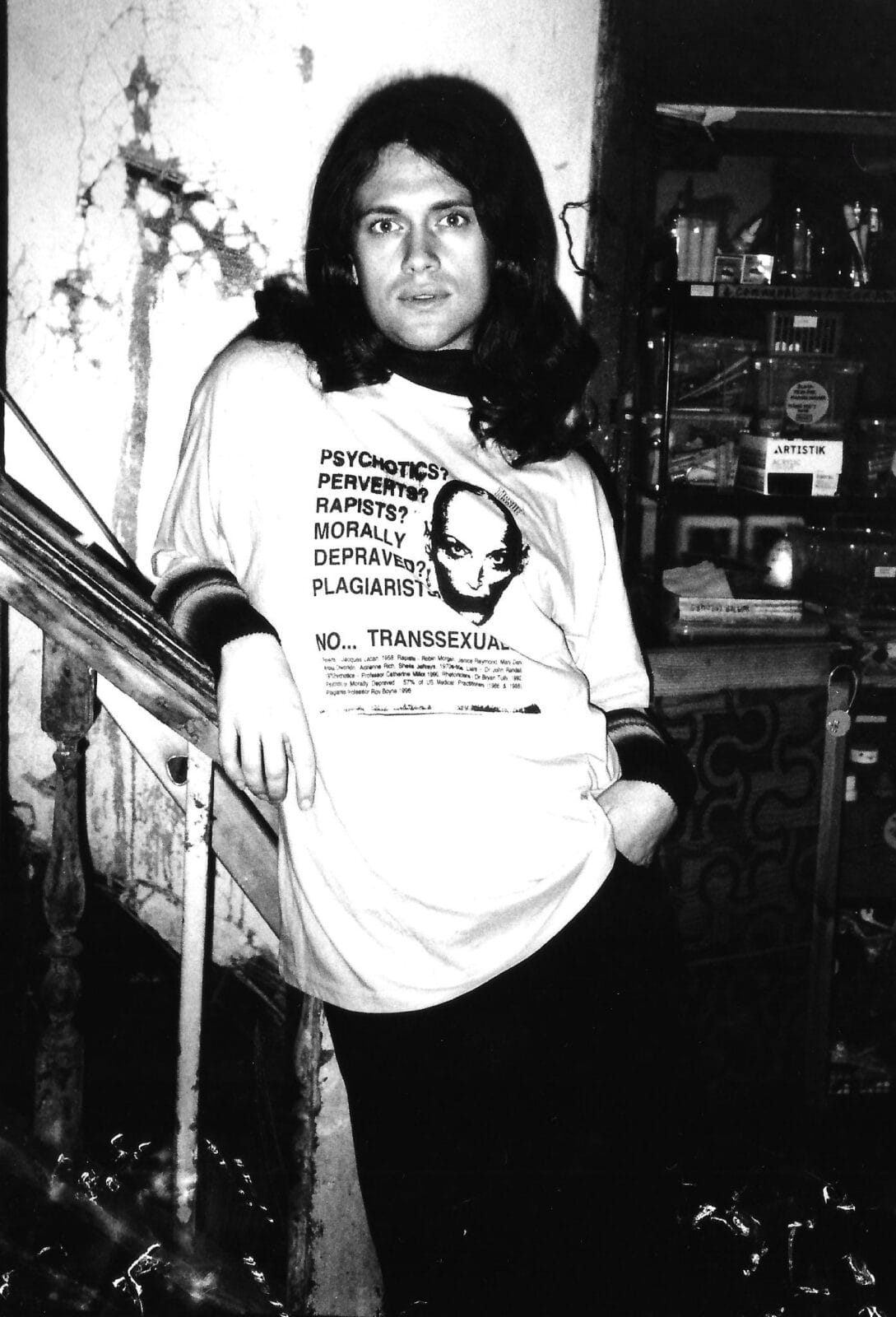
Model: Donna Marcus Duke
Donna Marcus Duke (DMD): I totally agree with Elliot. The most interesting trans writing is unafraid to be playful with the tropes we can all fall into. The riotous Jawfiller (2026) by Maz Murray and Charlie Markbreiter is a great example of writers having fun with stereotypes and critiquing the pitfalls of Trans Community™, while still critiquing what’s happening in the world beyond our scenes.
When designating something categorically as “trans”, there’s a responsibility to not fall into self-righteousness. Like just because it’s trans doesn’t mean it’s good. Or at least I don’t think that’s the most helpful or honest way of describing things.
To me, having a trans literary school, much like a trans reading event through TISSUE, functions out of necessity. Given the political and cultural context we’re making work in, having spaces where transness is a given helps mitigate the need or desire to placate a cis audience, or justify the goodness of our existence. We’re able to avoid the risks that might put the image of the community into disrepute.
Sam, we experienced this together when we started TISSUE: texts that reaffirmed political sentiments we’d already heard as a community often felt flat and safe. It’s easy to reassert the politics you’ve heard at a trans pride speech or from an activist-influencer. If you’re reading a text to a largely trans audience, what risks are you prepared to take when you’re not troubled by the cis gaze?
With TISSUE, School of Cvntology, and other reading nights like Bittersweet Review, Sticky Fingers Publishing, and G-String Theory, we’re seeing an ecosystem of trans literary community emerging in London right now, with each event feeding each other. For example, our TISSUE Summer Party at The Horse Hospital on the 14th August is fundraising healthcare funds for one of last year’s graduates Matti Griso. It’s important that the infrastructure of support exists beyond the school. Consistency and generosity are cornerstones to meaningful community building I think.
In so many ways, the School of Cvntology absolutely moves off from what TISSUE has been doing in directly cultivating trans literary spaces. Collaborating with Elliot has expanded what the school could be and I’m so grateful we get to put our heads together. It comes from a belief we both have: we don’t want trans people to just have spaces to show their work, we want spaces where trans people can come together to improve their skill collectively.
When Morgan M. Page comes in for the first week, she always asserts the importance of reading each other’s work, of swapping manuscripts and asking advice. In the desire to impress each other, you become better writers.
SM: For better and for worse, we’ve all spent time in educational institutions for writing. How did your experiences in academia help shape the direction of the School of Cvntology?
EL: I went to a small, elitist writing school in Copenhagen. It was very patriarchal and affected by the heavy drinking culture there. In response to that, a lot of DIY courses appeared with a feminist ethos. I learned that the education mostly happened outside of the classroom, when we discussed what we were reading. I struggled with being a facilitator because I didn’t see good examples of what that might look like.
The format of our critique sessions comes from the Iowa Writers Workshop where the author stays silent for the duration. The students usually begin each crit by saying how much they liked the text before giving feedback. It was very foreign to me. I have come to think of it as constructive praise. You don’t have to be negative to be critical.
DMD: I was at the Royal College of Art for the MA Writing course during Covid, so my whole experience was predicated on the yearning for a physical community with other writers. Many of the people in my cohort are now my collaborators – Kaiya Waerea and Sophie Paul from Sticky Fingers Publishing, K Morgan from Moot who does the fundraising food at TISSUE, we were all on the course together. So I definitely take this impulse of wanting to be together from the MA.
I think I’d also been influenced by the alternative education programmes I’d done in Europe. Rupert in Vilnius and Fluent in Santander both hold these brilliant programmes that understand critical pedagogies to be more than just the knowledge transferred from teacher to pupil.
We cook for the students once a week and view the social aspects of the class as equally valuable to the time they get with visiting tutors. Elliot also brings these inclinations from his work at Camp Trans. In order to build a robust and enduring intellectual community outside the institution, you’ve got to think about the importance of hospitality, food, and the social atmosphere. Why bother replicating the coldness reproduced by institutions when you’re working outside of them?
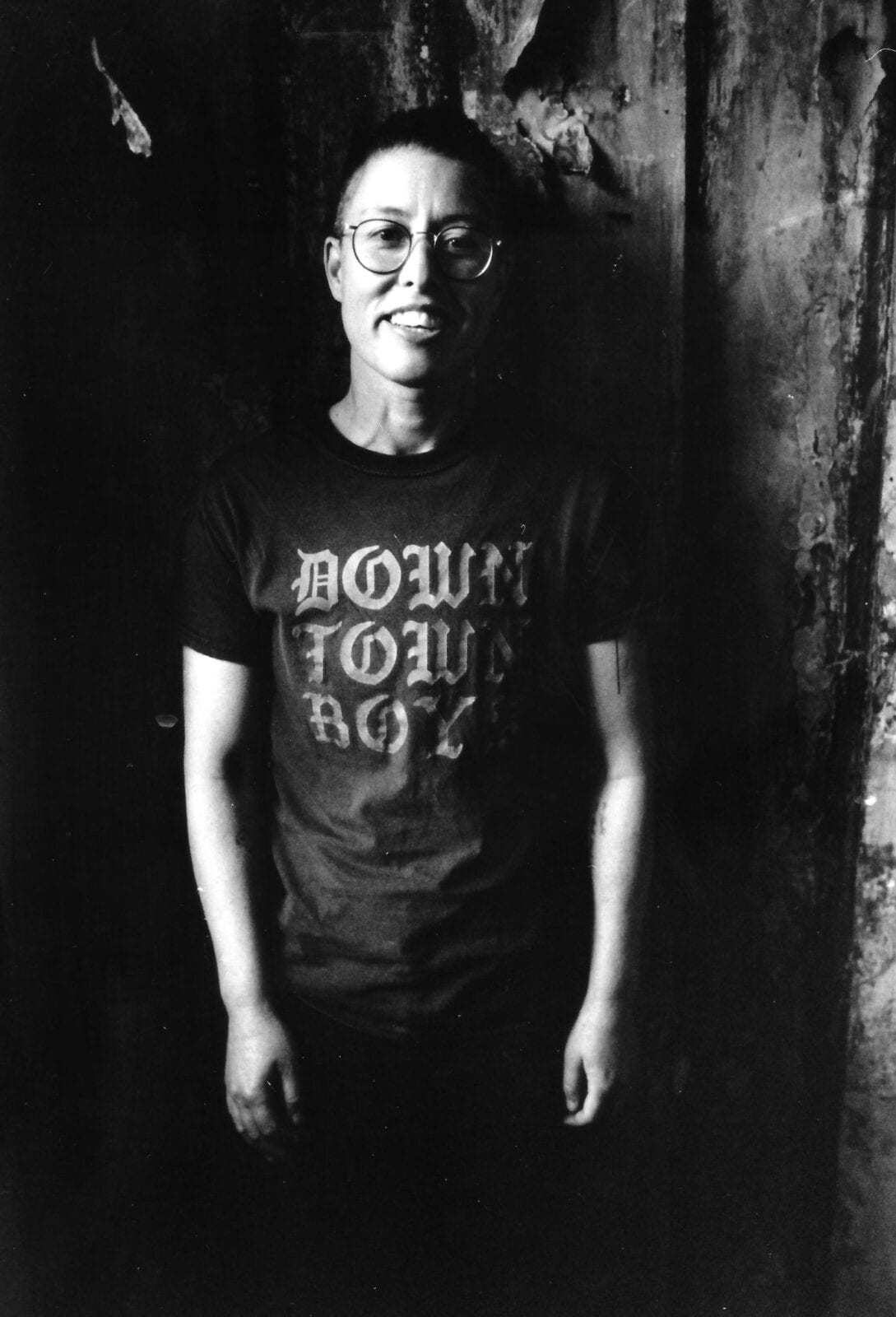
Model: Keenan Lew
SM: I know what you mean. When I was doing my postgraduate work it sometimes felt like there was a gulf between what you got from formal workshops and critiques, and what you got sneaking a fag between classes.
Do you ever worry about the idea of trans writing becoming institutionalised, the way that American MFA programmes spit out a bunch of Raymond Carver impersonators?
EL: It is a priority when we select a cohort that the students have a variation of styles: autofictional, journalistic essays, poetry, and commercial fiction for example. People become better writers by reading and understanding writing that is fundamentally different to their own.
It is probably more of a risk with independent publishers because the margins are smaller; you have to find your audience and stick with it. We don’t take financial risks when we select a cohort. Currently, independently published writing tends to be auto-theory-fiction. At the same time there are no trans women editors in the big commercial publishing houses. I am excited about Sarah Harpy’s Transfeminist Notes 01 (2025) published by Elsewhere Press as an antidote.
Morgan M. Page said it is important we create a culture where we take each other’s work seriously, review each other, and nurture a culture of criticism. If anything, having a group of trans writers who critically engage with each other’s work will create a plurality of work.
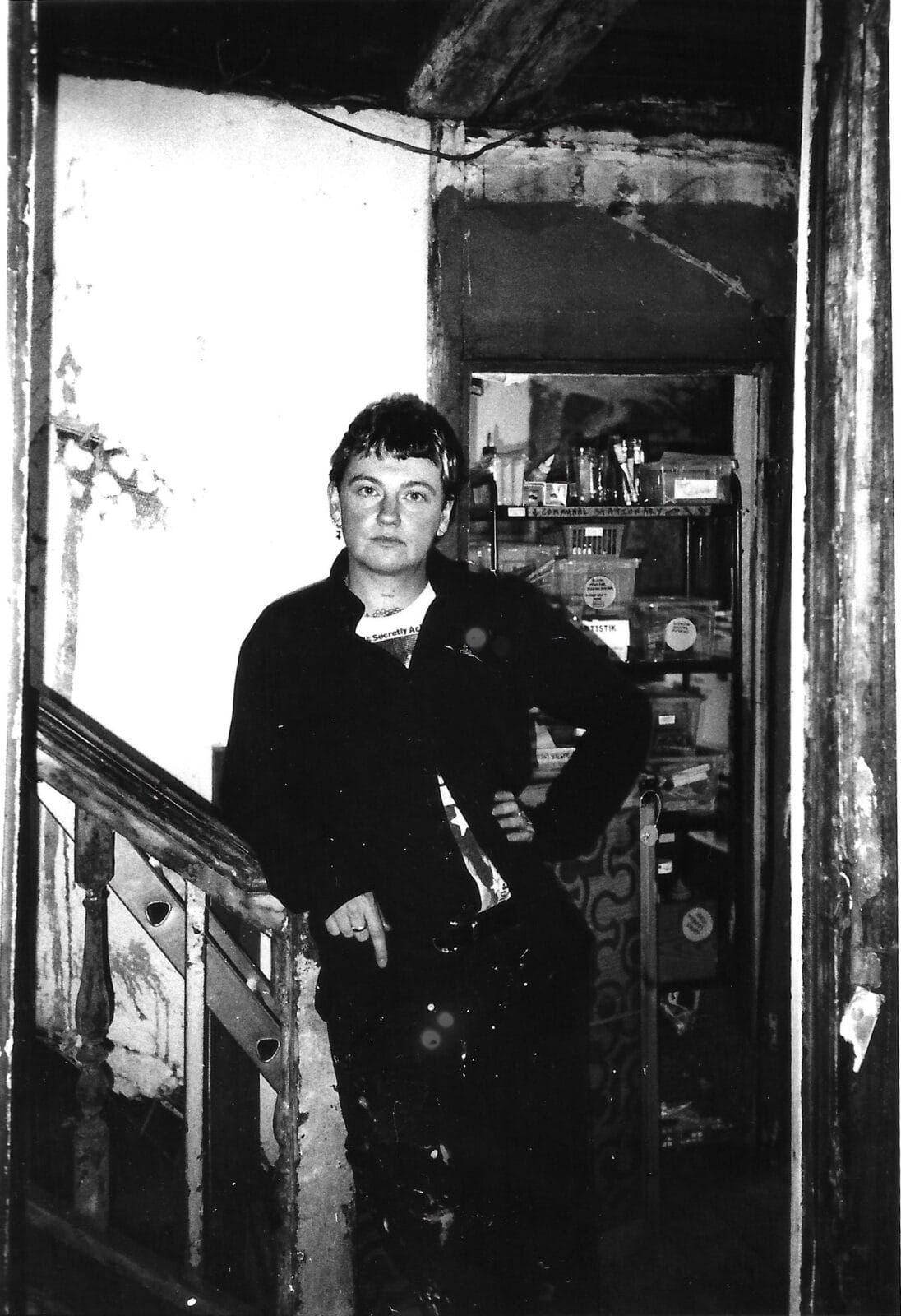
Model: Ⓐ DUDLEY Ⓔ
DMD: As Elliot says, I think we’d need more infrastructural power in publishing to start to institutionalise trans writing. The American MFAs had so much government funding, so whilst I have no doubt our little scene will come to be interested in overlapping forms, methodologies, tones, and tactics (as is often the case with localised literary scenes), institutionalisation isn’t something I’m too worried about yet.
Besides, if trans writers have any throughline, it’s that they seek to be a little contrarian. I’ve already seen enough critical back and forth between the merits of autofiction – a contemporary “house style” of trans writing if ever there was one. If other types of writing start to repeat, I have no doubt dissenters will swiftly and gleefully come to rock the boat.
SM: What kind of impact are you hopeful about the School having – not just on its alumni and teachers, but on publishing more broadly?
EL: It would be nice to have more trans femme led independent presses, and trans women editors at large publishing houses; a less racially segregated trans community, where whiteness is decentralised.
As trans people live in more financial precarity, having publisher support and funding that give people the space to write, so working class trans writers are not a rarity. That is not a two person show but something we do together. I hope the School of Cvntology will not be clique but a foundation for connections and inspiration that reaches beyond it.
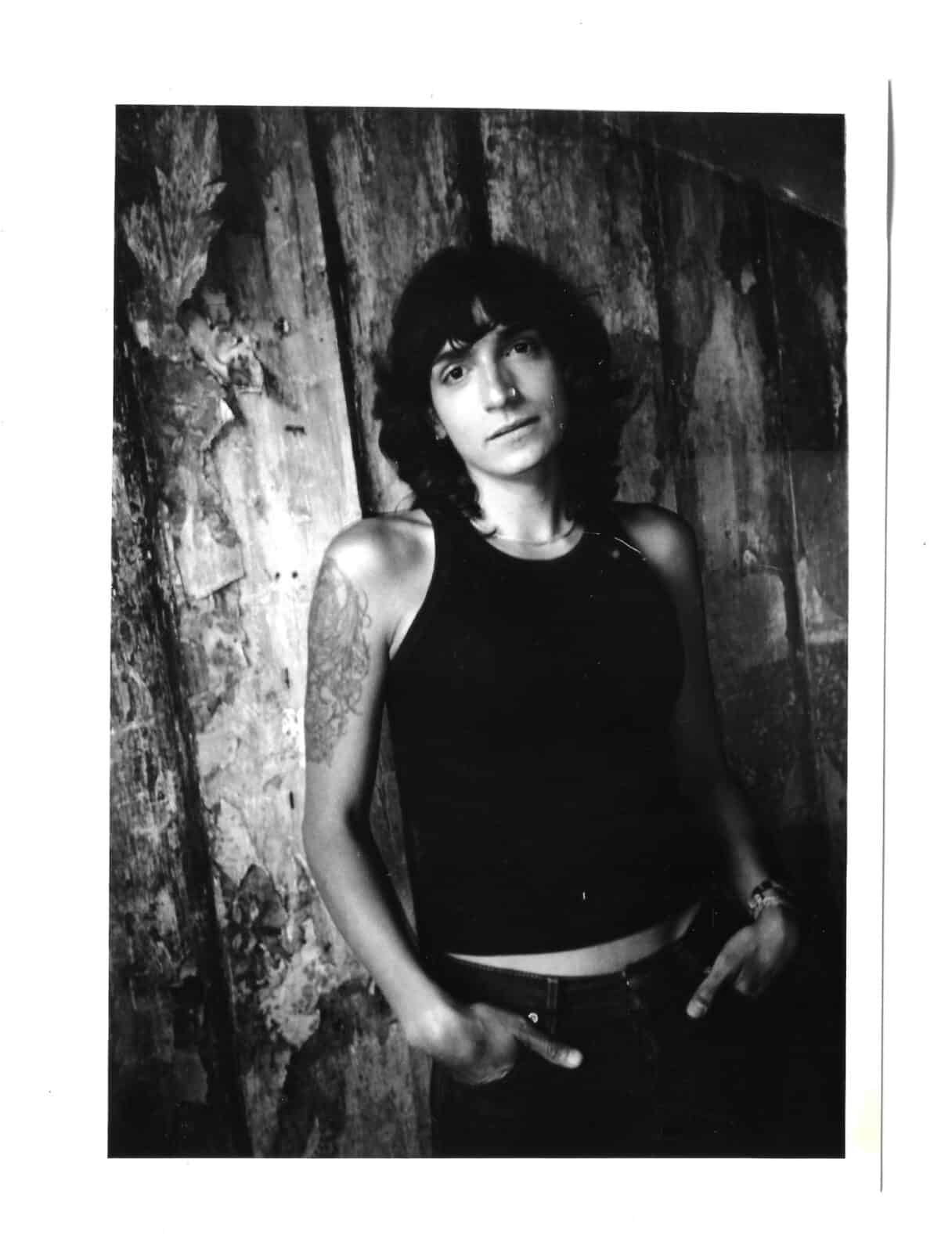
Model: Nora Padilla
DMD: On the one hand, there’s a hope that the school will help support the production of books that don’t fit into the expected tropes of trans literature, and that there might be a new set of voices that can speak to this moment for the trans community in the UK.
Topside Press did this in 2010s New York, maybe now we can do something similar in London. Each age and place has its own problems, vibes, and cultural concerns; supporting writers to help them reflect something accurate and contemporary feels important and possible. We just need the publishers to take the risk!
That withstanding, it’s already exciting to see the types of independent projects that’ve come out of the School. June Aspell, a graduate from 2025, has since started DRECK, a small pamphlet she puts together sporadically. Her only rule is that she only publishes people she knows, which a) makes her go out seeking more trans writers and b) puts pressure on her friends to publish more.
It makes me happy to see this emphasis on friendship and sociality at the heart of June’s publishing practice, as it feels in line with what we’re trying to do with the School of Cvntology. What is writing without friends and a good time?
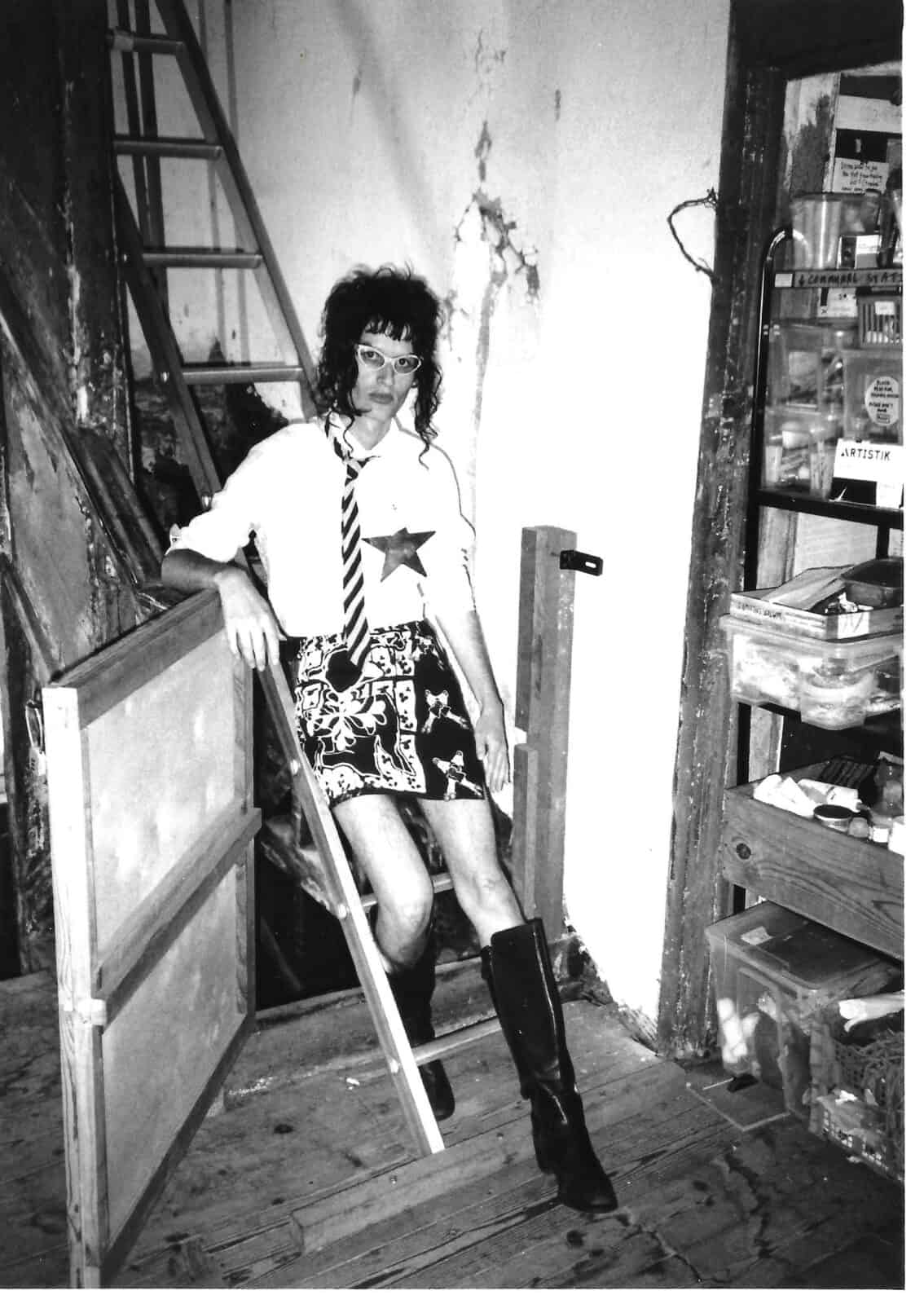
Model: Joni (a.k.a Biogal)
SM: I know that TISSUE has been touring beyond London to Brighton and Glasgow. Is there a way that you see the School of Cvntology offering things to people from outside the capital?
EL: I started talking last summer about touring the UK and Ireland and doing workshops and readings with local trans writers. I was inspired by Sister Spit. I moved to London six years ago during lockdown, and I haven’t travelled a lot beyond Brighton. A big issue is money, but hopefully it will happen.
We decided early on to have the course take place in person, rather than online, but depending on funding and resources we might be able to do an online component for accessibility in the future. So far we have had people come from Brighton, Hastings, and Glasgow, and helped host some of them.
DMD: It would be a dream to establish centres outside of London. In Brighton and Glasgow especially, we know amazing networks of trans writers, and I’m certain there are many more we don’t know about yet. As Elliot says, funding is the largest problem, but if someone out there has an idea, or an institution wants to support some high class education for a local trans community, Elliot and I would jump at the chance I’m sure!
You can find The School of Cvntology, their supporters, and the team behind the School on Instagram:
School of Cvntology: @schoolofcvntology
Donna Marcus Duke: @donna.the.first
Elliot Lind: @elliotlindx
Camp Trans: @camptrans
TISSUE: @Ti55ue
Grab tickets to the TISSUE Summer Party at The Horse Hospital, London on the 14th August. The event will be fundraising healthcare funds for one of last year’s graduates of The School of Cvntology, Matti Griso.


