
At the turn of the millenium, an influx of (predominantly American) cinematic releases set out to explore a critical sense of disillusionment amongst society. Fincher-esque themes of corporate pessimism and anti-consumerism hit our screens in excess, bolstering the perspective of alienated, male leads, battling their nihilistic views of an unfair world.
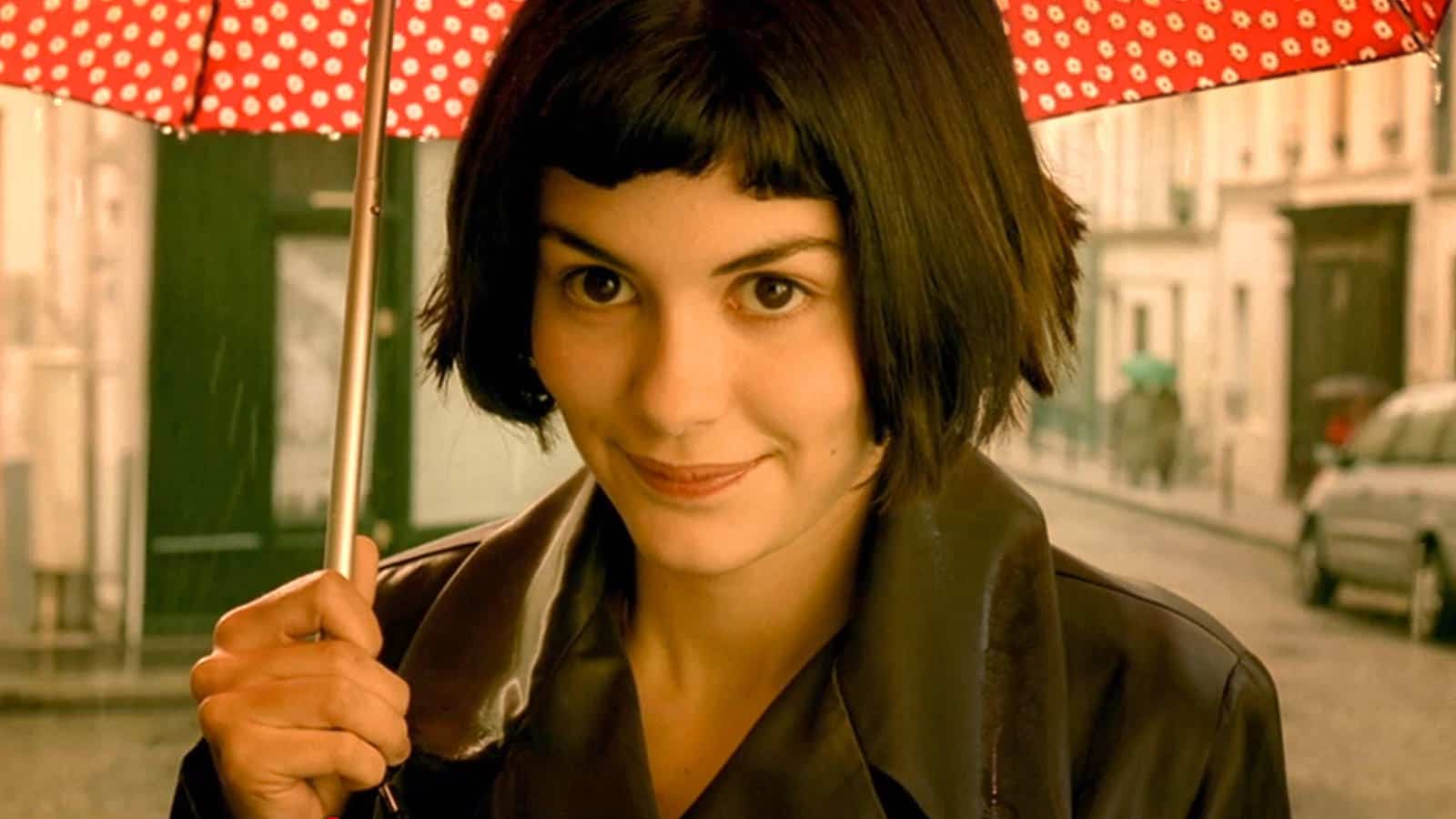
Then came Jean-Pierre Jeunet’s Amelié (2001); a refreshing antithesis to the latter, entrenched in an emboldening optimism that, 25 years later, still leaves audiences enchanted. The ever-so-French romantic comedy follows the life of Amelié Poulain, played by Audrey Tautou, a 23-year-old café-worker who medicates her unbridled existentialism with her playful ways of helping her friends and neighbours. At the same time, she falls in love with the just-as-quirky Nino, who collects discarded photobooth pictures near Gare de l’Est.
What starts as a dark, and rather bleak, analysis of the harsh realities of life, soon turns into a narrative fuelled by curiosity and imagination. The film begins with a montage of Amelié’s childhood, saturated with memories of isolation, frustration and loss, that feel far removed from the fantasy of her adulthood. In it we’re introduced to the source of her vivid imagination: a loneliness onset by parental absence. Amelié’s father forces her to be homeschooled after misdiagnosing her with a raised heart-rate (a symptom actually caused by Amelié’s desire for affection from him), and her mother is tragically killed after a Canadian tourist jumps from the rafts of Notre Dame.

For most, Amelié’s charm lies in its whimsy. It takes place in Paris, but it doesn’t truly exist there. Instead, Jeunet creates a city seemingly devoid of crime and graffiti, where the homeless refuse to take change because they “don’t work on Sundays”. Its colour palette – a vibrant selection of reds, greens and yellows, alongside the occasional pop of blue – evokes a sense of surrealism in a way that recalls Wes Anderson. Even the music, composed by French musician Yann Tiersen, is enchanting, with songs like Comptine d’un autre été: L’Après-midi evoking a nostalgic, yet melancholic veil over Amelié’s childhood. All of this harmonises with Amelié’s storybook-like expeditions. She steals her father’s garden gnome and sends the ornament on a journey around the world to remind him of his dreams of travelling, and embarks on a game of cat and mouse with Nino, leading him on a treasure-hunt across Montmartre by leaving secret clues in photobooths.
If I wanted to, I could list all of the ways in which Amelié changed my life, aware that by doing so, I run the risk of being lost amongst the many others who also felt connected to it. I wasn’t born when Amelié was first released in cinema’s, nor did I actually watch it until I was in my late teens. Yet, the phenomenon that transcends Jeunet’s creation was not lost on me, or the millions of others that insist it’s one of the greatest films of all time.
Now the same age as she is in the film, the philosophy of Amelié’s universe has never felt more pertinent. The film has taught me many things, but nothing more than the pleasures that can be found in the mundane: the feeling of putting your hand into a sack of grains, the satisfaction of cracking the top of a creme-brulée with a teaspoon, or even the comfort that comes with inspecting people’s faces in a theatre, as the light of the screen shines back on them. In an age that’s constantly defined by showcasing our achievements, or bragging about how busy we are, Amelié forces us to appreciate the beauty in what happens when you simply let life pass. We’re shown that there is something romantic in our boredom; something special in those moments between the chaos and excitement of ‘life defining’ events.

While it’s hard to know whether Jeunet would have been able to comprehend the cultural hurricane that Amelié would inflict on us, one thing he couldn’t have understood is how the world would have changed in those 25 years. Similar to the time surrounding the film’s release, we have entered an era increasingly defined by ‘doomerism’ and digital critique; advancements in technology leave us anxious about our future, and our attention is increasingly taken up by time on our screens. Concepts like ‘escapism’ have become somewhat of a buzzword, defined in large (and ironically) by time spent turning into ourselves and on to our phones instead of facing reality. If anything should be taken from Amelié in 2026, it’s that the world can be an escape within itself, when we will it to do so.
Whether he means to or not, Jeunet forces us to question if connection with others could be the antidote to our growing disjointedness. Perhaps, then, if we heed this message, Amelié becomes much more than a tale about an introverted woman looking to escape the terrors of normality. There’s a sense of magic that transcends its frames all these years on, as they teach us a lesson about what can happen when you pursue fulfillment from the kind you do for others.


