
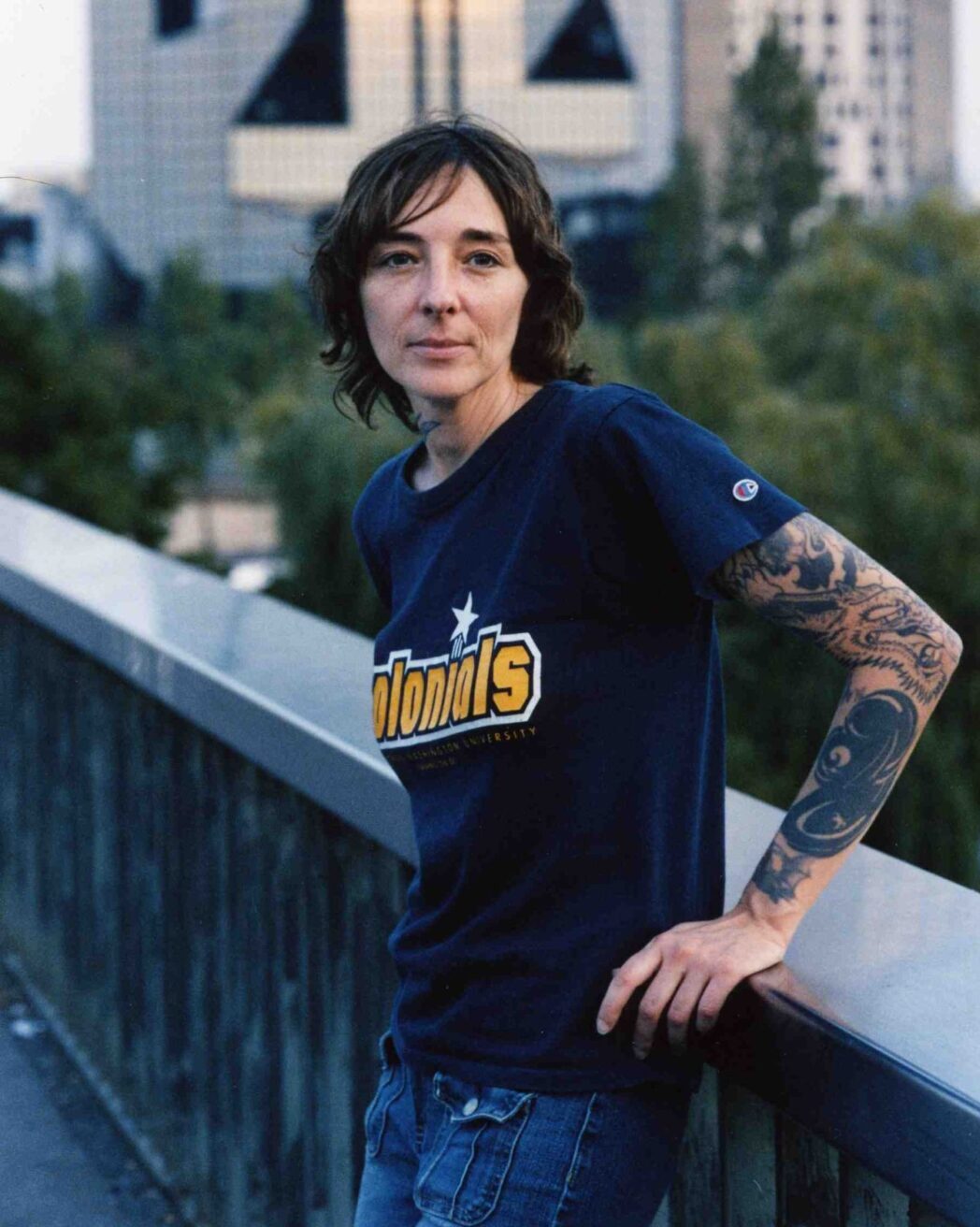
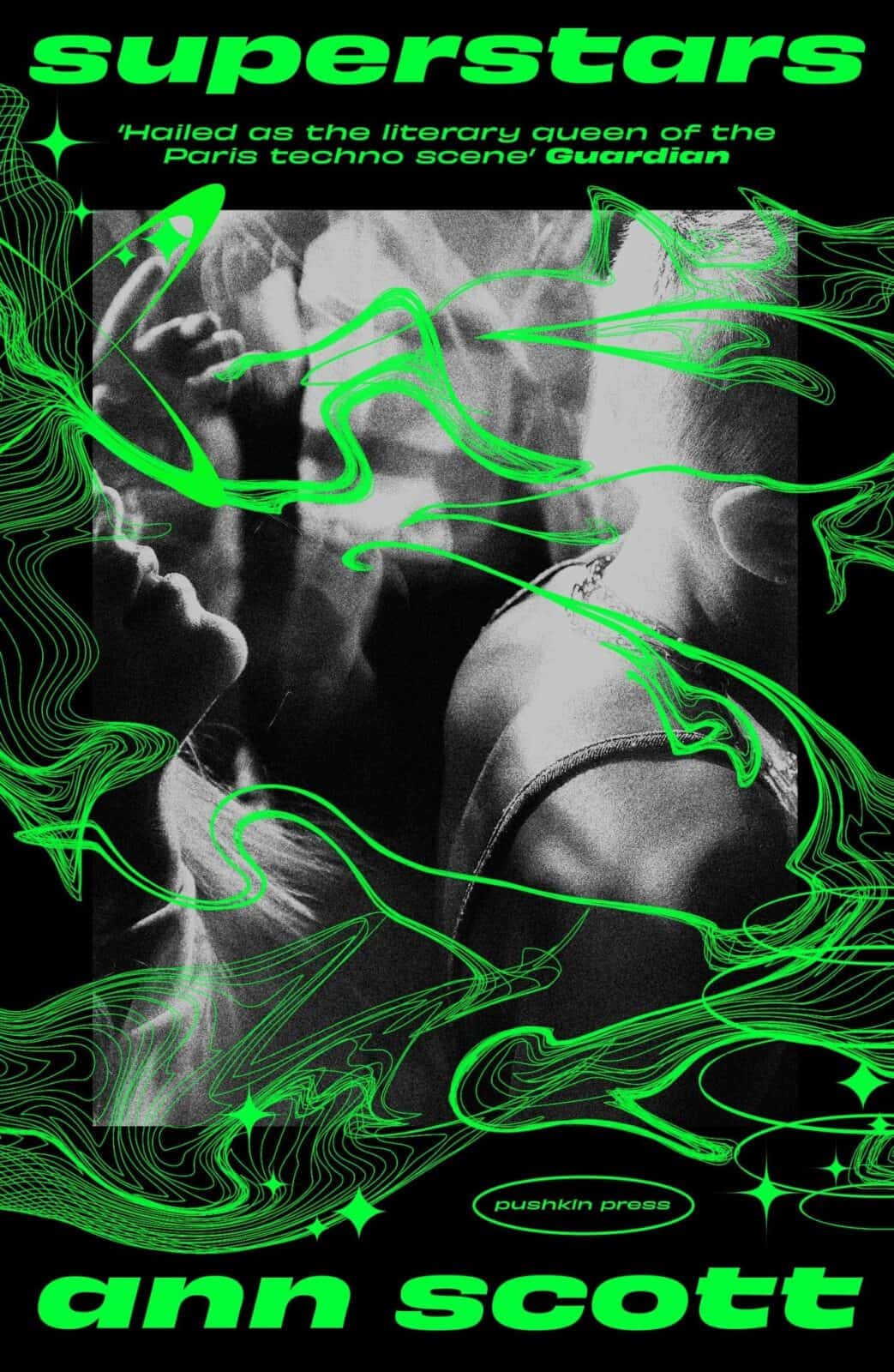
In 2000, Ann Scott’s Superstars was released in France and quickly became a cult classic. Diaristic, hedonistic, full of sex, drugs, and techno music, Superstars follows a group of queer women chasing fame, and love, as they stand on the cusp of a new millennium.
Louise, our protagonist, has just received a life-changing record deal. But when her ex-girlfriend, a DJ named Alex, pops back up with a new teenage lover, 30-year-old Louise starts to spiral. This toxic love triangle plays out on sweaty dancefloors, cramped DJ booths, and Louise’s Parisian apartment clouded with cigarette smoke and the sounds of MTV. There’s not an iPhone in sight.
In the twenty-six years since Superstars was first published, Ann Scott has become one of France’s most celebrated novelists. She has written ten books and has won the Prix Renaudot. Now, Superstars is finally available in English. But will the Gen-Z lesbians of London relate to this time capsule of a bygone era? Or are the jealousies, confusions, and ambitions in Superstars relevant to queer women now more than ever?
Looking back on the book that made her name, Ann reflects on music, ambition, ageing, and the lessons we can learn from heartbreak.
The Cold Magazine (CM:) Superstars was a sleeper hit in France. More than two decades after it was published, people still describe it as a cult novel. Why do you think readers have kept returning to it?
Ann Scott (AS): I honestly don’t know. I haven’t reread it for more than twenty years. It’s so far away from me now that it doesn’t hurt when people criticise it – it just interests me. I’m not writing the same books anymore. I’m not even the same person.
What’s fascinating is hearing younger readers talk about Louise. They ask, “Where’s her brain?” And they’re right. When I wrote the book, I didn’t realise how immature she was, because I was too.
CM: Louise seems to drift through life. She’s pulled from one relationship to another, one music scene to the next. She can be a frustrating protagonist to follow.
AS: That’s interesting because I couldn’t see that at the time. I remember one of the first journalists who interviewed me asking what the characters’ political beliefs were. I just thought, “What?” I had no answer. I was already thirty-five.
Looking back, maybe I only became mature at forty, or even forty-five. That’s very late. So when younger readers point out Louise’s blind spots, I don’t feel defensive. They’re seeing something I couldn’t see because I was still living it.
CM: Do you think Louise is superficial?
AS: I don’t think she’s superficial exactly. I think she’s surrounded by superficial people. She’s a tourist moving through different worlds – rock music, techno, different relationships – but she never really belongs anywhere. That’s why I’m always curious when people dislike her. I can’t quite step outside the novel enough to judge her.
CM: I don’t dislike her. I think she’s frustrating because she doesn’t seem to have much of an instinct for self-preservation.
AS: That’s a better way of putting it. She falls in love with the wrong people. She keeps repeating patterns, but, at the time, I genuinely believed what she believed.
The biggest thing I realise now is that what she calls love isn’t love at all. It’s possession. It’s obsession. It’s wanting somebody to belong to you. Real love is listening to another person, growing alongside them, sharing a life.
When I wrote Superstars, I thought obsession was love. How ridiculous is that?
CM: Have you read the English translation?
AS: No. Jonathan Woollen, the translator, sent me the manuscript. I started reading it and immediately wanted to change words. Not because he’d done anything wrong, but because translation is another person’s work.
I realised very quickly that if I carried on I’d make his life miserable, so I stopped reading. Once a book belongs to a translator, it belongs to them as well. It’s no longer entirely yours.
CM: Do you think young people discovering the novel for the first time now will respond differently to the novel?
AS: I’m realising that the reason the book became a cult novel might be the same reason some readers won’t like it today. Louise can be superficial.
And, for example, I read a book about drugs when I was sixteen or seventeen and it made me want to take them. I don’t want this book to tempt anyone. Nothing good comes out of drugs. If you have to go through that period, you go through it, but I would never recommend it.
CM: Do you see Superstars as a novel about addiction?
AS: Addiction to clichés, maybe. The title comes from Andy Warhol’s “superstars”. It’s about those fifteen minutes of fame – wanting to shine, wanting to be the king or queen of the night. When I lived in London in the ‘80s, during the New Romantic era, you’d go to clubs and everyone wanted to be somebody. In Superstars, it’s the same. Who’s going to become famous? Who’s going to be the next great artist?
That’s superficial if there’s no work behind it. It’s all about celebrity. What Louise really needs to do is work, not worry about looking good in pictures.
CM: That comes across in the character of Nikki, Louise’s ex-boyfriend from her rocker days. Part of the sadness surrounding him is that he almost became somebody.
AS: Yes, but Nikki belongs to another era. He’s from punk, and punk was never about money. Techno was different. The techno world happened to be around me, so it entered the book because it was the backdrop to my heartbreak. I didn’t set out thinking, “I’m going to write a book about the techno scene”.
I wrote about my stupid little broken heart, the people orbiting around it, and the music that happened to be playing in the background. If I were writing the same story today, maybe the soundtrack would be Billie Eilish instead. The emotional story wouldn’t really change.
CM: Why did music become so central to your life?
AS: Because music talks to you. It tells you about yourself. Think about Bronski Beat. How many young boys heard “Smalltown Boy” and realised they weren’t alone?
Music saves people. Radiohead did that for another generation. When I was sixteen I discovered Patti Smith, the New York Dolls and the Heartbreakers, and suddenly I felt I’d found my family. Not my biological family – a family I’d chosen.
Of course my mother played The Beatles when I was growing up, so whenever I hear them it still feels like home. That music shaped me, but as a teenager you start making your own choices, and those choices become part of who you are. Sometimes you choose the wrong things and you get hurt. That’s part of growing up too.
CM: It’s interesting that Superstars is so saturated with music, and yet so much of that music, techno especially, is almost entirely wordless.
AS: I remember one review saying that because I was writing about modern electronic music, the prose should have been experimental too. I thought, “Why?”
I’m a novelist. I tell stories. I wasn’t interested in performing some literary version of techno. I wanted to write in the tradition of the writers I loved.
CM: Looking back now, what would you say to Louise?
AS: I’d tell her she’s going to be okay. I’d tell her she’ll get over this girl. That the obsession will fade. That she won’t spend the rest of her life chasing intensity. Most importantly, I’d tell her to start creating.
People think characters like Louise are going to end up dead and that drugs will destroy them, that they’ll waste whatever talent they have. But that’s not what happens. You survive, your heart mends. Then it’s time to make the work.
There’s a time for everything. At some point you have to stop partying and stop wasting your energy. Just make the record, write the book, do the thing you’ve been avoiding. That’s all that really matters.
CM: When you compare Superstars to the novels you’re writing now, what feels most different?
AS: When I wrote Superstars, I wasn’t reading the right people yet. I was reading stories that appealed to me, but I hadn’t yet found the writers who would take me somewhere.
Today I’m older. I’ve read more, I’ve written more. I want more. It’s just ageing. If it doesn’t change you, what’s the point?
It’s interesting to still be alive after decades, because you get to see a new you all the time. Otherwise, if you’re always the same person, what’s the point?
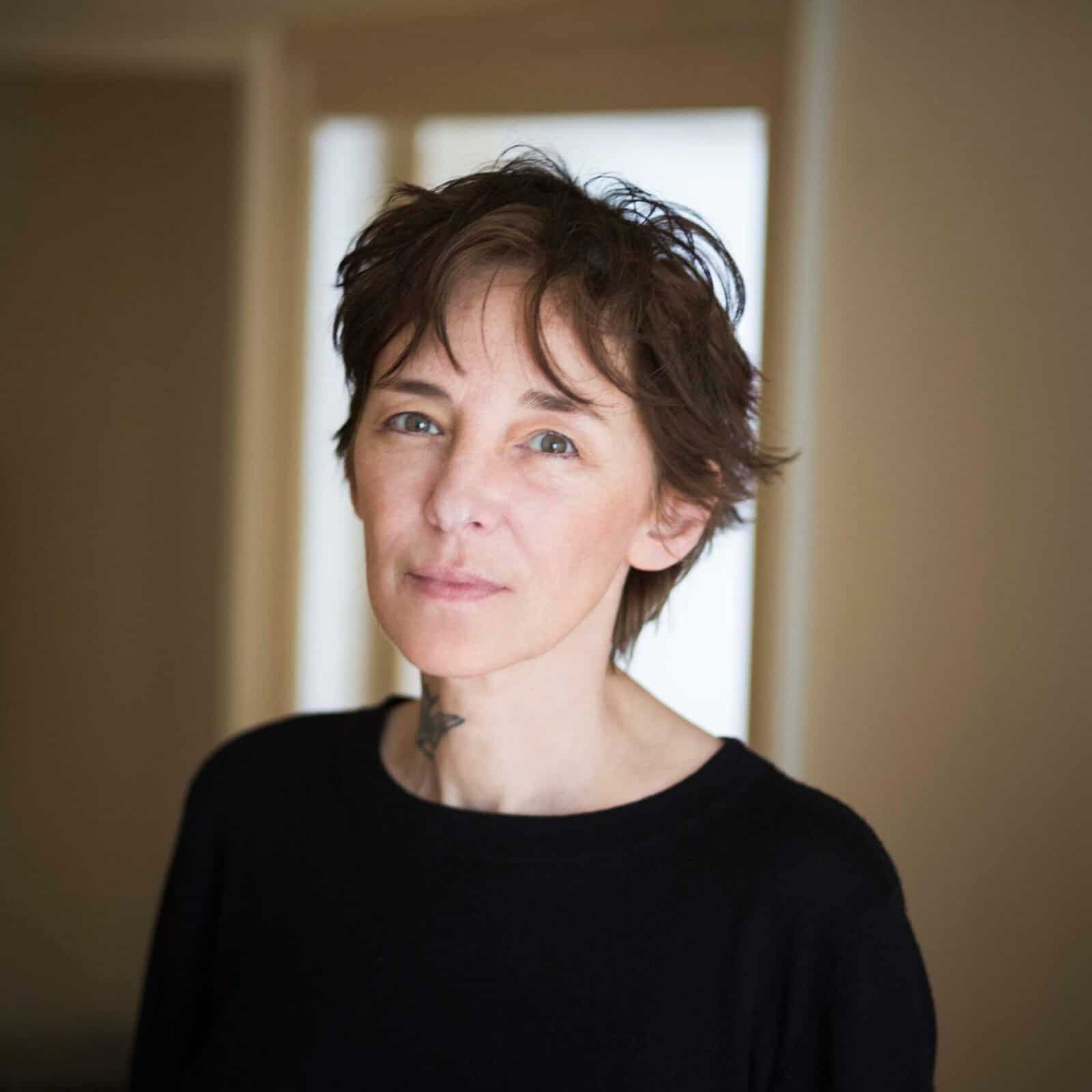
Photo by Philippe Matsas
CM: We live in a culture that seems terrified of ageing.
AS: I don’t understand that.
I love films, and the most interesting characters are almost always older than I am. You need people to look up to. Once you’ve lived through your twenties and thirties, why would you still be fascinated by someone trying to seduce somebody on a beach? You’ve already done that. What’s interesting is seeing someone who’s sixty or seventy and thinking, “I hope I become like that”.
The person you have to care about most is yourself, because you’re the one you’ll spend your whole life with.
I’m an only child. My parents are gone. My friends are my age. If you’re lucky enough to live a long life, eventually you will be alone. So you’d better learn to enjoy your own company.
Everything you do stays with you. When you’re ninety-five and sitting on a bench looking at the clouds, all you’ll really have left are your memories.
CM: One thing that struck me while rereading Superstars is how differently younger readers might respond to some of its relationships. Conversations around power, consent, and emotional harm have changed enormously since 2000.
AS: I think there’s a difference between relationships that hurt you and experiences that truly destroy you. Not every failed relationship needs to become a trauma.
When I was younger I dated difficult people. I argued, I shouted. People shouted back. Today there are many more words for those experiences. I think the important thing is: if somebody treats you badly, leave.
You can’t change people. Take them as they are or walk away. It’s up to them to change, not you.
CM: Inès, Alex’s 17-year-old girlfriend who stands at the centre of the novel’s love triangle, was inspired by a real person. Has the real woman ever reached out to you?
AS: Last July, she sent me an email. I hadn’t heard from her for twenty-five years.
She’d heard I had cancer. I’m fine now, but she must have thought I was in the middle of it. We exchanged a few emails and then she called me. The funny thing was that she behaved exactly as she had thirty years ago. Exactly the same.
Thirty years ago I would probably have found that attractive. This time I just thought, I’m too old. I don’t find that attractive anymore.
CM: Finally, if someone young has just had their heart broken and thinks they have a novel inside them, what would you tell them?
AS: Start creating. That’s all that matters.
When you’re young, you can spend so much time chasing people, chasing love, chasing excitement. But there comes a point where you have to stop wasting your energy and make something.
Write the book. Make the record. Paint the painting. Whatever it is, do it. Your heart will mend. You won’t always need that intensity.
Ann Scott’s Superstars, translated into English by Jonathan Woollen, was published by Pushkin Press on 18 June 2026


